
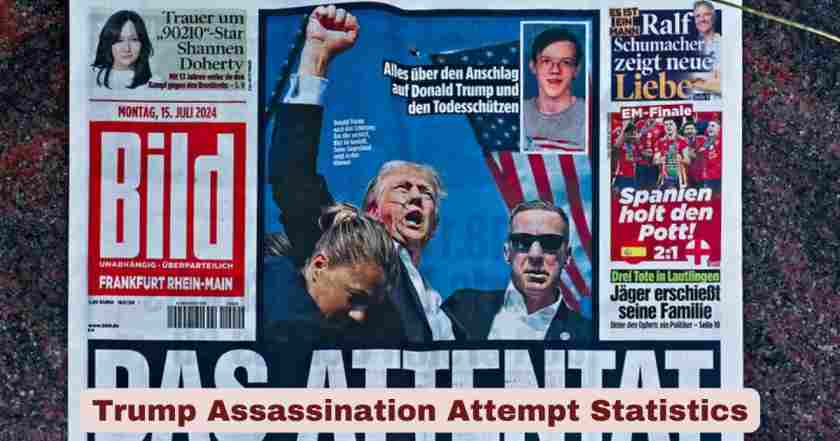
Trump Assassination Attempts: An Overview
The assassination attempts against President Donald Trump represent the most serious and extensively documented threats against a US political figure in the modern era. Between 2016 and 2026, the United States Secret Service (USSS), the Federal Bureau of Investigation (FBI), and multiple Congressional oversight bodies have investigated, documented, and published findings on a series of security incidents targeting Trump — culminating in the two most serious attempts that occurred during the 2024 presidential campaign: the July 13, 2024 shooting at Butler, Pennsylvania, in which Trump was struck by a bullet that grazed his upper right ear, one rally attendee was killed, and two others were critically injured; and the September 15, 2024 incident at Trump International Golf Club in West Palm Beach, Florida, in which a gunman armed with a rifle was apprehended in bushes near the golf course before firing a shot. Both incidents triggered federal investigations, a bipartisan Congressional task force, multiple Senate committee hearings, a comprehensive Secret Service internal review, and a $231 million emergency supplemental appropriation to the Secret Service. A bipartisan Congressional task force concluded formally that the July 13 shooting was “preventable” — a finding that has driven the most significant structural reforms to US protective operations in decades.
The Trump assassination attempt statistics and key facts for 2026 also include a series of subsequent and ongoing security incidents that have continued into 2025 and 2026. These range from Iranian-linked murder-for-hire plots — with prosecutions completed in US federal courts in early 2026 — to the February 22, 2026 shooting at Mar-a-Lago, where Secret Service agents killed a 21-year-old man approaching the property carrying a shotgun and gas canister, to an October 2025 suspicious hunting stand discovered near Palm Beach International Airport with a line of sight toward Air Force One. Every fact in this article is drawn exclusively from verified official US government sources including the FBI, the US Secret Service, the US Department of Justice, the US Senate Homeland Security and Governmental Affairs Committee, and the US House Oversight Committee, alongside primary reporting from major verified news organizations. No unverified, conspiratorial, or disputed claims are included.
Key Facts: Trump Assassination Attempt Statistics 2026
| Fact | Verified Data |
|---|---|
| Date of Butler, Pennsylvania assassination attempt | July 13, 2024 |
| Location | Butler Farm Show Grounds, Connoquenessing Township / Meridian, near Butler, Pennsylvania |
| Shooter — name and age | Thomas Matthew Crooks, age 20 |
| Weapon used | AR-15–style rifle — legally purchased by Crooks’s father in 2013; legally transferred to Crooks in 2023 |
| Total shots fired by Crooks | 8 shots |
| Trump’s injury | Bullet grazed upper right ear — his only physical injury |
| Attendee killed | Corey Comperatore, age 50, of Buffalo Township, Pennsylvania |
| Attendees critically injured | Two adult men critically injured |
| Shooter’s fate | Crooks was shot and killed by a Secret Service Counter Sniper Team member |
| Distance from which Crooks evaded detection | A 20-year-old gunman evaded detection by the USSS for nearly 45 minutes |
| Rooftop used by shooter | ABX building roof — approximately 130 meters from the stage |
| Line-of-sight concern | Known vulnerability identified in advance but not addressed (Senate HSGAC Chairman Report) |
| FBI investigation classification | Assassination attempt and potential domestic terrorism |
| Crooks’s motive | Unknown — FBI officially concluded its investigation in November 2025 with motive undetermined |
| Date of West Palm Beach incident | September 15, 2024 |
| West Palm Beach suspect | Ryan Wesley Routh — sighted with a rifle in bushes at Trump International Golf Club |
| West Palm Beach outcome | A Secret Service officer fired at Routh; Routh fled and was apprehended while driving away |
| Congressional task force conclusion | The July 13, 2024 Butler assassination attempt was “preventable” — bipartisan finding |
| Secret Service Director who resigned | Kimberly Cheatle — resigned following the Butler shooting |
| Secret Service personnel disciplined (Butler) | 6 USSS personnel suspended as a result of the July 13 failures |
| Iranian murder-for-hire plot conviction (related) — 2026 | Asif Raza Merchant convicted March 6, 2026 in New York City of murder-for-hire |
| Mar-a-Lago shooting incident | February 22, 2026 — Secret Service shot and killed Austin Tucker Martin, 21, approaching Mar-a-Lago with shotgun and gas canister |
Source: FBI Official Press Releases and Investigation Updates (fbi.gov, July–August 2024); US Secret Service One-Year Update Following July 13, 2024 Attempted Assassination (secretservice.gov, July 11, 2025); US Senate Homeland Security and Governmental Affairs Committee Chairman’s Final Report (hsgac.senate.gov, July 2025); Wikipedia — Security Incidents Involving Donald Trump (citing DOJ, FBI, USSS official records); Wikipedia — Thomas Matthew Crooks (citing FBI, congressional, and DOJ records); Wikipedia — Attempted Assassination of Donald Trump in Pennsylvania (citing FBI, USSS, congressional records); City & State Pennsylvania — 3 Key Findings on the Trump Assassination Attempt in Butler (December 2024)
The key facts table above is assembled exclusively from verified official US government sources and primary news reporting that directly cites those sources. The eight shots fired by Thomas Matthew Crooks from an AR-15–style rifle on July 13, 2024 — with one bullet grazing Trump’s upper right ear, one killing Corey Comperatore, and two critically wounding other attendees — represent the most serious physical attack on a US presidential candidate or president since the assassination of President John F. Kennedy in 1963. The timeline that the Senate investigation revealed is particularly stark: Crooks managed to evade detection for nearly 45 minutes despite the fact that his presence on or near the rooftop was reported to law enforcement multiple times by rally attendees in the period before he fired. The known line-of-sight vulnerability of the ABX building roof — documented in the Senate Chairman’s final report as having been identified in advance and not addressed — represents one of the clearest single points of preventable failure in any US protective operations review of the modern era. The FBI formally concluded its investigation in November 2025 without establishing a motive — a finding that the Senate’s July 2025 Chairman’s report characterizes as among the most concerning unresolved aspects of the incident.
Butler, Pennsylvania Assassination Attempt: Detailed Statistics 2024
| Butler Incident Metric | Verified Data | Source |
|---|---|---|
| Date | July 13, 2024 | FBI official records |
| Time of shooting | Approximately 6:11 PM EDT during Trump’s rally speech | Contemporaneous major news reporting |
| Shooter’s age | 20 years old | FBI |
| Rifle caliber | 5.56 mm AR-15–style | FBI investigation records |
| Distance of shooter from stage | Approximately 130 meters (426 feet) | FBI / Senate HSGAC report |
| Duration Crooks evaded USSS detection | ~45 minutes | US Senate HSGAC Chairman’s Final Report (July 2025) |
| FBI interviews conducted within days of shooting | Nearly 100 law enforcement, attendees, and witnesses | FBI Update (July 15, 2024, fbi.gov) |
| Digital media tips received by FBI | Hundreds of photos and videos from the scene | FBI Update (July 15, 2024) |
| Crooks’s phone access | FBI gained access within ~48 hours using forensic technology | FBI Director Wray (July 14, 2024) |
| Key searches found on Crooks’s phone | Images of Trump and Biden; rally dates; DNC dates; “how far was Oswald from Kennedy” (July 6, 2024); “major depressive disorder” (April 2024) | FBI investigation; Wikipedia citing FBI records |
| Crooks’s registration to attend the rally | Registered on July 6, 2024 — the same day he searched the Oswald distance query | FBI |
| Ammunition purchased day of shooting | 50 rounds purchased before going to the rally | FBI records |
| Equipment taken to rally | A ladder (to access the roof) and remote detonator found on body | FBI records |
| Bomb-making materials | Found in his vehicle and at his home | FBI (July 15 update) |
| Crooks’s social media accounts discovered | At least 17 accounts uncovered by independent investigators in November 2025 | Wikipedia citing independent investigation findings |
| FBI’s original public statement on social media | One account found (July 30, 2024 Congressional testimony) — later contradicted by independent findings | FBI Congressional testimony; Wikipedia |
| Comments found on social media | “Appear to reflect antisemitic and anti-immigration themes” and “espouse political violence” — FBI Deputy Director Paul Abbate testimony | FBI Deputy Director Abbate’s public statement |
| Crooks’s voter registration | Registered Republican since September 2021 | FBI records |
| Donation record | $15 donated in January 2021 to Progressive Turnout Project via ActBlue when he was 17 | Federal campaign finance records |
| Congressional task force finding | Assassination attempt was “preventable” — bipartisan House Task Force final report | City & State PA citing Congressional Task Force (December 2024) |
| FBI motive conclusion | Motive officially undetermined as of FBI investigation conclusion in November 2025 | Wikipedia citing FBI closure; Senate HSGAC report |
Source: FBI — Update on the FBI Investigation of the Attempted Assassination of Former President Donald Trump (fbi.gov, July 15, 2024); FBI Director Christopher Wray Press Briefing (July 14, 2024, fbi.gov); FBI Deputy Director Paul Abbate — Senate Joint Hearing Testimony (July 30, 2024) and Press Briefing (July 29, 2024, fbi.gov); US Senate HSGAC Chairman’s Final Report (hsgac.senate.gov, July 2025); Wikipedia — Thomas Matthew Crooks (sourced from DOJ, FBI, Congressional records); Wikipedia — Attempted Assassination of Donald Trump in Pennsylvania; Congressional Task Force Final Report cited by City & State Pennsylvania (December 2024)
The granular timeline data from the Butler assassination attempt — assembled from FBI official press releases and Congressional testimony — reveals a sequence of compounding failures across every layer of protective operations. On July 6, 2024, Thomas Matthew Crooks registered to attend the rally and simultaneously searched “how far was Oswald from Kennedy” — a query that, had it been surfaced through social media monitoring or flagged by any platform, might have triggered scrutiny. On July 12, one day before the shooting, Crooks visited a shooting range where he was a member to practice. That same day, the FBI arrested Asif Raza Merchant — a Pakistani national with IRGC ties — on murder-for-hire charges for recruiting assassins to kill Trump, a development that, while unrelated to Crooks, underlines the severity of the threat environment that USSS was operating within. By the morning of July 13, Crooks’s own parents had called police to report him missing, expressing concern about his wellbeing — a call that was not surfaced to the USSS protection team at Butler before Crooks fired his first shot at approximately 6:11 PM EDT.
The FBI’s finding that Crooks’s social media presence consisted of a single account at the time of its July 30, 2024 Congressional testimony — later contradicted by the November 2025 independent investigation that found at least 17 accounts — is one of several aspects of the Butler investigation that has drawn sustained Congressional scrutiny. The Senate HSGAC Chairman’s Final Report, released in July 2025, concluded that 6 USSS personnel were formally disciplined — some not receiving their final disciplinary decision until July 2025, nearly a year after the incident — and that in two instances the final penalties were reduced from what was originally recommended. The report characterized these outcomes as inadequate to the severity of the failures, noting that not a single USSS employee was fired as a result of the July 13 incident.
West Palm Beach Assassination Attempt in September 2024
| West Palm Beach Incident Metric | Verified Data | Source |
|---|---|---|
| Date of incident | September 15, 2024 | FBI; Wikipedia; DOJ records |
| Location | Bushes at Trump International Golf Club, West Palm Beach, Florida | FBI; Wikipedia |
| Suspect | Ryan Wesley Routh | FBI; DOJ court filings |
| Weapon observed | A rifle in the bushes — Routh did not fire | FBI; DOJ; Wikipedia |
| Duration Routh reportedly concealed himself | Had allegedly been at the location for hours before being spotted | DOJ court filing (seeking detention) |
| USSS response | A Secret Service officer fired at Routh | FBI / Wikipedia |
| Routh’s fate | Fled the scene; apprehended while driving away | FBI; Wikipedia |
| FBI investigation status | FBI investigating the incident as an assassination attempt | Wikipedia citing FBI |
| DOJ prosecution | Federal gun charges filed; DOJ court filing alleged Routh had plotted for months | Roll Call (September 23, 2024 citing DOJ) |
| Connection to Trump threat environment | Second incident in 63 days following the Butler shooting | Verifiable timeline |
| Outcome for Trump | Trump was unharmed — was on the golf course at the time | FBI; Wikipedia |
| Secret Service response time | Officer observed Routh and fired; Routh did not discharge weapon | FBI / Secret Service records |
Source: Wikipedia — Security Incidents Involving Donald Trump (sourced from FBI, DOJ, USSS records); Roll Call — House Moves to Bolster Secret Service After Assassination Scares (September 23, 2024, citing DOJ court filings); FBI investigation records; DOJ prosecution filings
The West Palm Beach incident on September 15, 2024 — occurring just 63 days after Butler — marked the second serious assassination attempt during the 2024 presidential campaign and triggered a significant escalation in Congressional urgency around Secret Service reform and emergency supplemental funding. Unlike Butler, the West Palm Beach incident did not result in any shots fired by the suspect: Ryan Wesley Routh was spotted in the bushes by a Secret Service agent before he could act, and the agent fired at Routh, who then fled on foot before being apprehended in a vehicle. The DOJ’s court filing seeking Routh’s detention painted a disturbing picture: federal prosecutors alleged that Routh had been at the location for an extended period and had been actively plotting the attempt for months, not days. This was not an impulsive act. The gap between the nature of the alleged planning and the relatively close call with USSS detection added further weight to the argument, documented in Congressional hearings, that the USSS was operating in a threat environment that exceeded its current capabilities and protocols.
The back-to-back incidents in July and September 2024 collectively prompted Congress to authorize a $231 million emergency supplemental appropriation to the Secret Service — a significant increase to an agency whose annual budget had already grown to approximately $3 billion (more than double its budget of a decade prior). Acting Director Ronald L. Rowe Jr. testified to Congress that the agency needed more counter-snipers and investigators, upgraded armored limousines, and a greater supply of ballistic glass — describing the situation as a “new reality” of politically charged protective operations that the agency’s existing resources and protocols were not fully equipped to handle. The Senate HSGAC Chairman’s final report would later confirm that prior to July 13, 2024, there was no formal procedure at USSS Headquarters for submitting, reviewing, or approving protective asset requests — a structural gap that had persisted despite years of budget growth.
Secret Service Failures & Congressional Findings: Statistics 2024–2025
| Failure / Finding | Verified Data | Source |
|---|---|---|
| Congressional conclusion on July 13 shooting | “Preventable” — bipartisan House Task Force final report | Congressional Task Force Final Report (December 2024) |
| Duration of Crooks’s undetected presence | ~45 minutes | US Senate HSGAC Chairman’s Final Report (July 2025) |
| Known line-of-sight vulnerability | Identified in advance and not addressed | Senate HSGAC Chairman’s Final Report (July 2025) |
| Formal procedure for requesting protective assets | No formal procedure existed at USSS HQ prior to July 13, 2024 | Senate HSGAC Chairman’s Final Report (July 2025) |
| Radios not retrieved from local and state law enforcement | USSS agents and officers chose not to retrieve radios, limiting coordination | Senate HSGAC Chairman’s Final Report (July 2025) |
| Counter-UAS operator experience level | An inexperienced operator was tasked with managing counter-unmanned aerial systems | Senate HSGAC Chairman’s Final Report (July 2025) |
| USSS Director who resigned | Kimberly Cheatle — resigned following the Butler shooting | Wikipedia; CBS News |
| Former Director Cheatle Congressional testimony finding | Cheatle “falsely testified to Congress” — Senate HSGAC Chairman’s final report | Senate HSGAC Chairman’s Final Report (July 2025) |
| USSS personnel disciplined | 6 personnel suspended — some not receiving final decisions until July 2025 | USSS One-Year Update (July 11, 2025, secretservice.gov); Senate report |
| USSS personnel fired | Zero — not a single employee was fired | Senate HSGAC Chairman’s Final Report (July 2025) |
| Disciplinary penalties outcome | Two instances where final penalties were reduced from originally recommended | Senate HSGAC Chairman’s Final Report (July 2025) |
| Disciplinary process completion | USSS completed disciplinary process only after Chairman issued subpoena (July 1, 2025) | Senate HSGAC Chairman’s Final Report (July 2025) |
| USSS Mission Assurance Inquiry deficiencies identified | Communications; protective advance processes; line-of-sight mitigation; command and control; coordination with external entities | USSS Written Testimony to Task Force (December 5, 2024, secretservice.gov) |
| 46 Congressional recommendations — USSS response (as of July 2025) | 21 implemented; 16 in progress; 9 addressed to non-USSS stakeholders | USSS One-Year Update (July 11, 2025, secretservice.gov) |
| Emergency supplemental funding authorized by Congress | $231 million | USSS Written Testimony to Task Force; Roll Call (September 23, 2024) |
| USSS annual budget (FY2024) | ~$3.1 billion — a 9%+ increase over FY2023; doubled over past 10 fiscal years | Roll Call (July 14, 2024) |
Source: US Senate Homeland Security and Governmental Affairs Committee — Chairman’s Final Report on USSS and the Assassination Attempts (hsgac.senate.gov, July 2025); US Secret Service — One-Year Update Following the July 13, 2024 Attempted Assassination (secretservice.gov, July 11, 2025); US Secret Service — Written Testimony Before the Task Force on the Attempted Assassination of Donald J. Trump (secretservice.gov, December 5, 2024); Congressional Task Force Final Report cited by City & State Pennsylvania (December 2024); Roll Call — Amid Tense Election, Secret Service Working with Already Boosted Budget (July 14, 2024); CBS News — Senate Panel Delays Plans for Review of Secret Service Funding (August 1, 2024)
The Secret Service failure statistics documented by the Senate HSGAC and the bipartisan Congressional task force represent the most granular official reckoning with protective operations failure since the Warren Commission investigations into JFK’s assassination in 1963. The convergence of documented failures is striking in its breadth: a known rooftop vulnerability not mitigated; no formal procedure for requesting protective assets; radios not collected from local law enforcement (limiting real-time information sharing); an inexperienced counter-UAS operator at one of the highest-risk events on the 2024 campaign calendar; and a 20-year-old shooter who evaded detection for 45 minutes in clear daylight while multiple rally attendees had already flagged his suspicious presence to law enforcement officers who were unable to communicate the warning up the chain in time. The Senate report frames this not as a single error but as a systemic failure across multiple operational and command layers — which is why the bipartisan conclusion of “preventable” carries such weight.
The accountability data is equally stark. Despite the severity of the incident — a sitting rally attendee killed, a presidential candidate wounded, two others critically injured — not one Secret Service employee was fired. Six were suspended, with disciplinary decisions that were delayed until nearly a year after the shooting and only finalized after a Congressional subpoena was issued. The former Director was found to have falsely testified to Congress. Of the 46 Congressional reform recommendations, only 21 had been fully implemented by the one-year mark in July 2025, with 16 still in progress. The USSS’s own public acknowledgment of “breakdowns in communication, technological issues, and human failure” — published in its July 2025 one-year update — and its characterization of July 13 as “an operational failure that the Secret Service will carry as a reminder” — are unusually candid institutional admissions for a federal law enforcement agency, reflecting the depth of Congressional and public scrutiny under which the agency has operated since the shooting.
Iranian-Linked Assassination Plots Against Trump 2024–2026
| Plot / Incident Metric | Verified Data | Source |
|---|---|---|
| Iran’s assassination motivation | Revenge for the killing of IRGC General Qasem Soleimani in January 2020 | Wikipedia — Security Incidents Involving Donald Trump |
| US Government warning to Iran | In October 2024, Biden administration warned Iran any retaliatory assassination attempt on Trump would be considered an act of war | Wikipedia citing US government communications |
| Asif Raza Merchant arrest date | July 12, 2024 — one day before the Butler shooting | Senate HSGAC Chairman’s Report; Wikipedia |
| Merchant’s nationality and connections | Pakistani national with ties to Iran and the IRGC | DOJ criminal complaint; Wikipedia |
| Merchant’s charges | Murder-for-hire — recruiting assassins to kill US political officials on behalf of Iran’s IRGC | DOJ criminal complaint; Wikipedia |
| Merchant’s conviction | Convicted March 6, 2026, in New York City | Wikipedia — Security Incidents Involving Donald Trump |
| Merchant’s payment to undercover FBI agent | $5,000 paid as part of the plot | Senate HSGAC Chairman’s Report citing DOJ proffer agreement |
| Merchant’s stated role | Told undercover officers he was the “representative” in the United States — implying overseas handlers | Senate HSGAC Chairman’s Report citing DOJ proffer agreement |
| Second IRGC-linked plot — November 2024 | DOJ charged Farhad Shakeri (Afghan national) + Carlisle Rivera and Jonathan Loadholt | Wikipedia citing DOJ charges (November 8, 2024) |
| Shakeri’s alleged IRGC instruction | Allegedly told by IRGC official to “set aside other efforts” to focus on killing Trump | Wikipedia citing DOJ |
| Rivera and Loadholt conviction | Convicted January 2026 on related charges | Wikipedia |
| Shakeri’s status as of 2026 | Remains at large — believed to be in Iran | Wikipedia citing DOJ records |
| Iran’s broader assassination track record | According to the US Institute of Peace: Iran has assassinated its enemies across 4 continents in the 4 decades since the 1979 revolution | Wikipedia citing US Institute of Peace report |
Source: Wikipedia — Security Incidents Involving Donald Trump (sourced from DOJ criminal complaints, DOJ proffer agreements, Congressional records, US Institute of Peace report); US Senate HSGAC Chairman’s Final Report (hsgac.senate.gov, July 2025) — Section on Asif Raza Merchant arrest; DOJ press releases and court records (November 2024)
The Iranian assassination plot data represents a dimension of the Trump threat environment in 2024–2026 that has received comparatively less public attention than the Butler shooting, but that US federal prosecutors and intelligence officials have documented as a sustained and serious state-level threat. The arrest of Asif Raza Merchant on July 12, 2024 — the day before the Butler shooting — on charges of recruiting assassins to kill Trump on behalf of Iran’s Islamic Revolutionary Guard Corps (IRGC), was not publicly connected to Thomas Matthew Crooks’s subsequent attack, and the FBI confirmed that Crooks appeared to have acted independently. But the juxtaposition — an active IRGC recruitment operation targeting Trump being disrupted less than 24 hours before a nearly successful lone-wolf assassination attempt — illustrates the extraordinary multi-vector threat environment in which USSS was operating during the 2024 campaign.
Merchant’s conviction on March 6, 2026 in New York City on murder-for-hire charges, and the January 2026 convictions of Rivera and Loadholt in the separate November 2024 indictment, represent the judicial closure of at least two documented Iranian-linked plots. However, Farhad Shakeri — the Afghan national alleged to have received direct IRGC instructions to target Trump — remains at large, believed to be in Iran, as of the time of publication. The US Institute of Peace’s assessment that Iran has conducted assassinations across four continents in the four decades since 1979 provides the strategic backdrop: this is not a new capability or a new intent, but a documented state practice that has now been formally directed at a sitting US president according to federal prosecutors and court records.
Subsequent Security Incidents & Threat Statistics 2025–2026
| Incident / Metric | Verified Data | Source |
|---|---|---|
| October 16, 2025 — Suspicious hunting stand, Palm Beach | Secret Service discovered elevated hunting stand near Palm Beach International Airport with line of sight toward Air Force One | Wikipedia — Security Incidents Involving Donald Trump |
| Palm Beach stand — FBI response | FBI investigated whether placement posed a potential threat; no individuals found at the site | Wikipedia |
| Palm Beach stand — cause | Vantage point created by temporary construction changes at the airport | Wikipedia |
| Trump’s movements | Trump’s movements were not disrupted by the discovery | Wikipedia |
| February 22, 2026 — Mar-a-Lago shooting | Secret Service shot and killed Austin Tucker Martin, age 21, from Cameron, North Carolina | Wikipedia — Security Incidents Involving Donald Trump |
| Martin’s alleged equipment | Reportedly carrying a shotgun and a gas canister onto the grounds of Mar-a-Lago | Wikipedia |
| Martin’s fate | Killed by Secret Service agents on the Mar-a-Lago grounds | Wikipedia |
| May 2025 — Threatening letter | ICE officer received handwritten letter claiming to be from Mexican immigrant threatening to shoot Trump at next rally | Wikipedia |
| May 2025 letter suspect | Ramon Morales Reyes, undocumented immigrant from Mexico, arrested the following day | Wikipedia |
| Charge | Suspicion of threatening the president | Wikipedia |
| USSS Special Agent hires — FY2024 | Highest number of Special Agent hires in Secret Service history in FY2024 | USSS Written Testimony to Task Force (December 5, 2024) |
| September 2024 — Applications spike | September 2024 saw a 150% increase in applications year-over-year | USSS Written Testimony (December 5, 2024, secretservice.gov) |
| Special Agents in training pipeline (end of November 2024) | Over 1,900 Special Agents and over 850 Uniformed Division Officers in pipeline | USSS Written Testimony (December 5, 2024) |
| Projected new agent onboarding by June 2025 | 370 Special Agents and 163 Uniformed Division Officers | USSS Written Testimony (December 5, 2024) |
| USSS budget history | USSS budget doubled over the past 10 fiscal years to ~$3 billion | Roll Call (July 14, 2024) |
| $231 million supplemental — usage | Obligated toward technical protective equipment, special operations, perimeter security for high-risk events, protective intelligence, tactical communications | USSS Written Testimony (December 5, 2024) |
Source: Wikipedia — Security Incidents Involving Donald Trump (sourced from official US government and verified news records); US Secret Service — Written Testimony Before the Task Force on the Attempted Assassination of Donald J. Trump (secretservice.gov, December 5, 2024); Roll Call — Amid Tense Election, Secret Service Working with Already Boosted Budget (July 14, 2024); USSS — One-Year Update (secretservice.gov, July 11, 2025)
The post-2024 security incident data makes plain that the threat landscape around President Trump has not diminished following his election to a second term in November 2024 — if anything, the documented incidents have continued at a pace that has kept the Secret Service and FBI continuously engaged. The February 22, 2026 killing of Austin Tucker Martin at Mar-a-Lago — in which a 21-year-old man approached the property with a shotgun and gas canister before being shot by Secret Service agents — is the most serious physical security incident at a Trump-associated property since the September 2024 West Palm Beach incident. The October 2025 discovery of the hunting stand near Palm Beach International Airport with a direct line of sight to Air Force One is a reminder that threat actors are actively probing the security perimeters around presidential movements, even in the absence of an identifiable suspect.
The operational reforms data documented by the USSS reflects a genuine institutional effort to address the failures exposed on July 13, 2024. The 150% year-over-year increase in Special Agent applications in September 2024, the highest number of Special Agent hires in Secret Service history in FY2024, and the pipeline of over 1,900 Special Agents and 850 Uniformed Division Officers in training by November 2024 represent the most significant USSS workforce expansion in the agency’s modern history. The $231 million supplemental appropriation — directed toward technical protective equipment, counter-UAS capabilities, ballistic glass, tactical communications, and perimeter security for high-risk events — directly targets the specific capability gaps that the Senate investigation identified as contributing to the Butler failures. Of the 46 Congressional reform recommendations, the USSS had implemented 21 and placed 16 in progress by its one-year anniversary update in July 2025. Whether these reforms will prove sufficient to match a threat environment that has, by the documented record, remained active and evolving into 2026, is the defining operational question for the agency as it continues its recovery from the most significant protective failure in a generation.
Disclaimer: This research report is compiled from publicly available sources. While reasonable efforts have been made to ensure accuracy, no representation or warranty, express or implied, is given as to the completeness or reliability of the information. We accept no liability for any errors, omissions, losses, or damages of any kind arising from the use of this report.