
What Is the Space Launch System and Why It Matters?
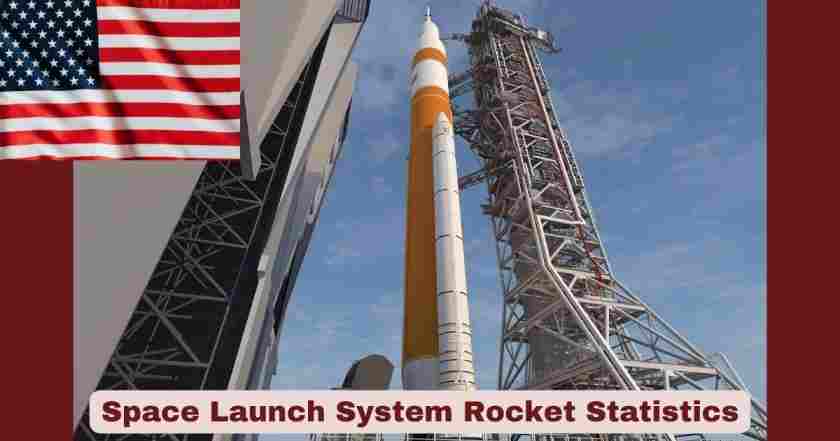
The Space Launch System (SLS) is NASA’s super heavy-lift expendable rocket — the most powerful launch vehicle ever to carry human beings into space. Built around a legacy of shuttle-era propulsion and constructed over more than a decade at a cost exceeding $31.6 billion as of 2025, the SLS represents both the pinnacle of American government-led space engineering and the most debated rocket programme in the modern history of spaceflight. It stands 322 feet (98.1 meters) tall in its Block 1 crew configuration, generates 8.8 million pounds of thrust at liftoff — more than any other rocket ever launched with a crew aboard — and can deliver 27 metric tons (59,500 lbs) of payload to a trans-lunar injection trajectory in a single launch. The SLS is the only rocket in the world capable of sending NASA’s Orion spacecraft, four astronauts, and large cargo directly to the Moon in one launch, a capability that has been central to every phase of the Artemis programme. Development formally began in 2011 as a congressionally mandated successor to the Space Shuttle, incorporating shuttle-derived RS-25 engines, upgraded solid rocket boosters, and a new Boeing-built core stage. After more than 26 schedule slips and nearly six years of delays to its first launch, the SLS finally flew on November 16, 2022, on the uncrewed Artemis I mission — and then carried the first crew beyond low Earth orbit in more than 53 years on April 1, 2026, when the Artemis II mission lifted off from Kennedy Space Center’s Launch Complex 39B at 6:35 p.m. EDT.
The events of 2026 have transformed the SLS from a long-running political and engineering controversy into a rocket with a real mission record — and a deeply uncertain future. On May 2, 2025, the Trump administration’s FY2026 budget proposal called for terminating SLS and Orion after Artemis III, describing SLS as “grossly expensive” and noting it had exceeded its original budget by 140 percent. The proposal cited a per-launch cost of $4 billion and projected $879 million in savings from transitioning to commercial alternatives. Congress ultimately pushed back: the 2025 One Big Beautiful Bill Act included $4.1 billion to fund SLS rockets for the Artemis IV and V missions, with mandated minimum spending of $1.025 billion per year from FY2026 through FY2029. Simultaneously, NASA announced in February 2026 that it was cancelling plans for the Block 1B and Block 2 SLS variants, standardising on the Block 1 configuration to reduce cost and schedule risk. The Centaur V upper stage — rather than the Exploration Upper Stage — was selected as the future SLS second stage in early 2026. As of today, April 12, 2026, the SLS has flown twice, carried humans for the first time, and sits at the centre of a congressional and commercial reckoning over the future of American deep space exploration.
Interesting Key Facts About the Space Launch System 2026
| Key Fact | Detail |
|---|---|
| SLS first launch date | November 16, 2022 — Artemis I, uncrewed lunar flyby (25.5 days in space) |
| SLS second launch / first crewed flight | April 1, 2026, at 6:35 p.m. EDT — Artemis II, first crewed lunar flyby since Apollo 17 (December 1972) |
| Most powerful human-rated rocket | At 39 meganewtons (8.8 million lbs) at liftoff, SLS is the most powerful rocket ever to carry humans |
| Height (Block 1 crew) | 322 feet (98.1 meters) — taller than the Statue of Liberty |
| Liftoff weight (Block 1) | 5.75 million pounds (2.6 million kg) — equivalent to about 8 fully-loaded Boeing 747 jets |
| Liftoff thrust (Block 1) | 8.8 million pounds of thrust — more than 31 times the total thrust of a Boeing 747 |
| Payload to trans-lunar injection (Block 1) | 27 metric tons (59,500 lbs) — approximately 12 fully grown elephants’ worth of cargo |
| Core stage main engines | 4 RS-25 engines (shuttle-heritage, upgraded) — generating ~2 million lbs of combined vacuum thrust |
| Solid rocket boosters | Twin 5-segment SRBs — each 177 feet tall, generating 3.6 million lbs of thrust each; together provide more than 75% of total liftoff thrust |
| Total programme cost as of 2025 | $29.0 billion in nominal dollars on SLS development from 2011–2024 ($35.4 billion in 2025 dollars) |
| Per-launch cost (Artemis I–IV) | $4.1 billion per launch including SLS and Orion production and operations — described by NASA Inspector General as “unsustainable” |
| Development budget overrun | SLS development cost 42.5% more than originally projected through Artemis I; initial 2012 estimates were ~$500 million per mission |
| Artemis programme total cost (through 2025) | $93 billion — total Artemis programme cost through 2025 according to NASA Office of Inspector General |
| Congressional rescue funding (2025) | 2025 One Big Beautiful Bill Act included $4.1 billion to fund SLS for Artemis IV and V |
| SLS gap since last human deep space | Artemis II ended a 53-year gap since Apollo 17 (December 1972) in human travel beyond low Earth orbit |
| Supplier network | More than 2,700 suppliers across 47 US states contribute to Artemis programme elements including SLS |
| California alone | California has over 500 companies and 16,000 workers contributing to Artemis missions |
| RS-25 engine heritage | The RS-25 powered the Space Shuttle for over three decades, completing 135 missions |
| SLS vs. Saturn V thrust | SLS Block 1 produces 15% more thrust than the Saturn V but carries approximately half the Saturn V’s payload to trans-lunar injection |
| Future operations transfer | Beginning from Artemis V, NASA plans to transfer SLS operations to Deep Space Transport LLC — a commercial consortium of Boeing and Northrop Grumman |
Source: NASA SLS Fact Sheet (December 2025 update); NASA RS-25 Core Stage Engine page; NASA Artemis II Launch Day Blog (April 1, 2026); Wikipedia Space Launch System (updated April 2026); Wikipedia Artemis II (updated April 2026); Wikipedia Artemis programme (updated April 2026); NASA AIAA SciTech paper 2024 (SLS Artemis I results); NASA OIG November 2021 report; NASA Artemis Partners page; The Planetary Society SLS cost analysis; Spaceline.org SLS/Orion/Artemis Fact Sheet; Governor Newsom press release April 2, 2026; CBS News
The liftoff of Artemis II on April 1, 2026 turned more than a decade of engineering debate into physical reality. 8.8 million pounds of thrust is a number that looks like engineering data on a spec sheet but becomes something else entirely when you are standing near Launch Complex 39B — roughly equivalent to 31 Boeing 747s at maximum power simultaneously lifting 5.75 million pounds from a dead stop to orbital velocity in eight minutes. That force moved four human beings — Commander Reid Wiseman, Pilot Victor Glover, Mission Specialist Christina Koch, and Canadian Space Agency astronaut Jeremy Hansen — farther from Earth than any humans had travelled since Apollo 17 lifted off from the Moon on December 14, 1972. The 53-year gap between those two events is the fundamental measure of how long it took American space policy, budget cycles, contractor dynamics, and engineering reality to produce a rocket capable of doing what the Saturn V last did in 1972. Whether that gap was necessary, or whether commercial alternatives could have achieved the same result far sooner and at far lower cost, is the argument that will define the next chapter of SLS’s story.
The $93 billion total Artemis programme cost through 2025 — and the $4.1 billion per-launch price tag that the NASA Inspector General called “unsustainable” — have made the SLS the most cost-scrutinised rocket in American history. To provide context: NASA’s own 2012 estimates put the per-mission cost at approximately $500 million — meaning the actual cost came in roughly eight times higher than originally projected. The cost-plus contracting structure that governs SLS and Orion, under which contractors like Boeing are reimbursed for all costs plus a profit fee regardless of performance, has been identified by both the NASA Inspector General and multiple congressional auditors as the fundamental driver of this cost explosion. Boeing’s SLS core stage took 8 years to deliver and came in 140% over budget — and every dollar of that overrun was paid by the taxpayer under the terms of the contract. These are the uncomfortable facts that sit alongside the extraordinary engineering achievement of April 1, 2026.
SLS Rocket Technical Specifications — Key Facts 2026
| Technical Parameter | Block 1 (Artemis I, II, III) |
|---|---|
| Height (crew configuration) | 322 feet (98.1 meters) — taller than a 30-story building |
| Liftoff weight | 5.75 million pounds (2.6 million kg) |
| Liftoff thrust | 8.8 million pounds (39,100 kilonewtons) |
| Solid rocket booster thrust at liftoff | Each booster: 3.6 million lbs of thrust; together provide >75% of total liftoff thrust |
| SRB height | Each SRB: 177 feet tall |
| Core stage RS-25 engine thrust (vacuum) | 4 engines together: approximately 2 million lbs (512,000 lbs each at max power) |
| Core stage height | More than 200 feet (61 meters) |
| Core stage diameter | 27.5 feet (8.4 meters) |
| Core stage propellant capacity | More than 730,000 gallons of super-cooled liquid oxygen and liquid hydrogen |
| Payload to trans-lunar injection (TLI) | 27 metric tons (59,500 lbs / ~77 pickup trucks) — crew configuration |
| Payload to low Earth orbit (Block 1) | 70 metric tons |
| Upper stage (Artemis I, II, III) | Interim Cryogenic Propulsion Stage (ICPS) — powered by a single RL10B-2 engine |
| ICPS contract value | $412 million |
| RS-25 engine type (Artemis I–IV) | RS-25D — heritage shuttle engines, refurbished with new controllers and insulation |
| RS-25D thrust at SLS conditions | Increased from 492,000 to 513,000 lbf per engine (upgraded from shuttle configuration) |
| RS-25E thrust (new production, Artemis V+) | 522,000 lbf per engine; first test firing June 2025 declared successful |
| RS-25 total shuttle-era engines available | 16 remaining RS-25D engines from Shuttle programme — first four missions each use four |
| RS-25E contract (new production) | Aerojet Rocketdyne contract for 18 additional RS-25E engines valued at $1.79 billion — total RS-25 contract value: nearly $3.5 billion |
| SRB propellant type | Ammonium perchlorate composite propellant (aluminum fuel + ammonium perchlorate oxidizer) — PBAN-bound |
| SRB segments | 5 segments (vs. 4 on Space Shuttle) — approximately 25% more fuel and greater thrust/burn time |
| SRBs recovery | Not recovered — expended after launch (unlike Shuttle boosters) |
| Flight duration — boost phase | SRB burn: approximately 2 minutes; Core stage: approximately 8 minutes to orbital insertion |
| Crawler-transporter journey to pad | 4.2 miles (6.4 km) taking approximately 11 hours |
| Crawler-transporter weight | 6.6 million pounds (3 million kg) |
| Launch pad | Launch Complex 39B, Kennedy Space Center, Florida — all SLS launches |
| Vehicle Assembly Building (VAB) door height | 456 feet (139 meters) — through which the full rocket stack is moved |
Source: NASA SLS Fact Sheet (December 2025); NASA SLS Reference page; NASA RS-25 Core Stage Engine page; NASA Launch Day Blog Artemis II (April 1, 2026); Boeing SLS page; Spaceline.org SLS/Orion/Artemis Fact Sheet; Wikipedia Space Launch System (updated April 2026); Wikipedia RS-25; AIAA SciTech 2024 paper “NASA’s Space Launch System: Artemis I Results and the Path Forward” (NASA NTRS 20230017105); Space Launchers (Braeunig.us)
The technical architecture of the SLS is a deliberate act of engineering conservatism. The decision to build around shuttle-heritage RS-25 engines and shuttle-derived solid rocket boosters — rather than developing entirely new propulsion systems from scratch — was driven by Congress’s direction to achieve operational capability as quickly as possible using existing hardware and production knowledge. In practice, the trade-off has been mixed. The RS-25D engines used on Artemis I and II have a deep operational heritage: they powered the Space Shuttle for over three decades and 135 missions, giving SLS engineers a degree of confidence in their performance that would have taken years to achieve with new engines. That heritage showed up in the data from Artemis I: NASA’s post-flight analysis confirmed that all four RS-25 engine controllers executed 82 commands during countdown through the flight profile with no errors, and that internal pressures and temperatures were within two percent of pre-flight predicted values — essentially perfect performance from engines that had been adapted for a new rocket and a different thermal environment.
The solid rocket boosters represent the single largest source of thrust in the SLS system, delivering more than 75% of total liftoff thrust during the first two minutes of flight. The five-segment configuration — one segment longer than the four-segment shuttle SRBs — provides approximately 25% greater total impulse than their predecessors, which is what makes the SLS capable of the lunar injection trajectories that were beyond the Shuttle’s reach. Their size is genuinely difficult to internalise: each booster standing 177 feet tall contains millions of pounds of solid propellant with the consistency of a rubber eraser, which burns in a single two-minute continuous combustion event that cannot be throttled or stopped once ignited. The next evolution — the BOLE (Booster Obsolescence and Life Extension) booster being developed by Northrop Grumman under a $3.2 billion contract — will replace the shuttle-era steel motor cases with carbon-fibre composite cases, producing approximately 19% more thrust per booster than the current design when it enters service on Artemis IX and beyond.
SLS Mission Record and Artemis Programme Statistics 2026
| Mission / Milestone | Key Statistics |
|---|---|
| Artemis I — Launch | November 16, 2022, at 1:47 a.m. EST; Launch Complex 39B, Kennedy Space Center |
| Artemis I — Mission duration | 25.5 days in space |
| Artemis I — Maximum distance from Earth | 432,210 km (268,563 miles) — the farthest any spacecraft built for humans had ever travelled |
| Artemis I — Closest lunar approach | Approximately 130 km (80 miles) from the lunar surface |
| Artemis I — Orion orbit | Approximately 6 days in a distant retrograde orbit (DRO) around the Moon |
| Artemis I — Post-flight verdict | SLS met or exceeded all performance expectations; boosters performed consistent with pre-flight predictions |
| Artemis I — CubeSats | 10 CubeSats deployed via timer from the stage adapter into deep space for various science missions |
| Artemis I — Recovery | Orion recovered by USS Portland off the coast of Baja California, December 11, 2022 |
| Artemis I — Heat shield issue | Post-flight inspections found unexpected erosion of Orion’s AVCOAT ablative heat shield — char loss more extensive than predicted by pre-flight models |
| Artemis II — Launch | April 1, 2026, at 6:35 p.m. EDT; Launch Complex 39B, Kennedy Space Center |
| Artemis II — Mission type | First crewed flight of SLS and Orion; first human travel beyond low Earth orbit since Apollo 17 (December 1972) |
| Artemis II — Mission duration | Approximately 9–10 days (nine-day crewed lunar flyby) |
| Artemis II — Crew | Commander Reid Wiseman, Pilot Victor Glover, Mission Specialist Christina Koch (all NASA), Mission Specialist Jeremy Hansen (Canadian Space Agency) |
| Artemis II — Orion name | The crew named their Orion spacecraft “Integrity” |
| Artemis II — Number of SLS firsts | First crewed SLS; first crewed Orion; first woman (Koch) and first Black pilot (Glover) in deep space; first non-American citizen (Hansen) beyond LEO |
| Artemis II — Trajectory type | Free-return trajectory around the Moon — similar to Apollo 13 (1970); crew tested spacecraft systems before lunar injection |
| Artemis II — Rocket stacking start | Began November 20, 2024; completed October 20, 2025 |
| Artemis II — Rollout to pad | January 18, 2026 — 4.2-mile journey taking ~11 hours |
| Artemis II — Delays in 2026 pre-launch | Feb 2: liquid hydrogen leak during wet dress rehearsal; Feb 21: helium flow issue → rollback to VAB; final launch April 1 |
| Artemis III — Status (as of April 2026) | Planned for mid-2027; will be an Earth-orbit test of the human landing system rather than a lunar landing |
| Artemis IV — Status | Targeted for early 2028; first planned lunar landing of Artemis programme; first use of Centaur V upper stage |
| Artemis V — Status | Targeted for late 2028; first flight of new-production RS-25E engines |
| Number of SLS launches (as of April 2026) | 2 (Artemis I: November 2022; Artemis II: April 2026) |
| Number of SLS schedule slips before first launch | The first launch of SLS slipped more than 26 times and was nearly six years late from its original 2016 target |
| SLS second launch — historical significance | SLS became the second launch vehicle in history (after Saturn V) to carry humans beyond low Earth orbit |
| Artemis Accords signatories | As of early 2026, 61 countries have signed the Artemis Accords |
Source: NASA Artemis I Mission Timeline; NASA Artemis II Launch Day Blog (April 1, 2026); Wikipedia Artemis I (updated 2026); Wikipedia Artemis II (updated April 2026); Wikipedia Artemis programme (updated April 2026); Wikipedia Space Launch System (updated April 2026); NASA Moon to Mars page; The World Data Artemis II launch statistics; AIAA SciTech 2024 paper
The Artemis I mission was the proof-of-concept that made Artemis II possible. 432,210 km from Earth is farther than any spacecraft designed to carry humans had ever ventured — pushing the Orion heat shield to the velocity conditions of lunar return, validating the SLS flight profile from liftoff through translunar injection, and deploying 10 CubeSats along the way. The mission’s 25.5-day duration gave engineers an extraordinary dataset on how both the rocket and the spacecraft behaved in the deep space environment. The fact that SLS met or exceeded all performance expectations on its very first flight — itself a rare achievement for any new launch vehicle — gave NASA the confidence to move forward with a crewed Artemis II without an additional uncrewed demonstration mission. The heat shield erosion issue, while serious enough to delay Artemis II and require modifications for future missions, did not breach the crew module thermal limits and did not prevent the crewed flight from proceeding.
The Artemis II crew is the most symbolically significant in American space history since Apollo 11. Reid Wiseman commands the mission as an experienced astronaut, but it is Victor Glover, Christina Koch, and Jeremy Hansen who make history in new ways. Glover became the first Black pilot of a crewed lunar mission and the first Black person to travel beyond low Earth orbit. Koch became the first woman to travel beyond Earth orbit in the history of spaceflight. Hansen became the first non-American citizen to travel to deep space. These are not simply demographic milestones — they reflect a deliberate policy decision by NASA and Congress to broaden who participates in the exploration of deep space. The naming of the spacecraft “Integrity” by the crew captures something genuine about what this mission represents: after more than 50 years, four human beings launched from American soil on an American rocket toward the Moon, and the system worked.
SLS Programme Costs, Budget and Political Context 2026
| Cost / Budget / Political Metric | Figure / Detail |
|---|---|
| Total SLS development cost (nominal, 2011–2024) | $29.0 billion in nominal dollars |
| Total SLS development cost (2025 dollars) | $35.4 billion (using NASA New Start Inflation Indices) |
| Official NASA SLS development cost (through Artemis I) | $11.8 billion — NASA’s own figure for the first launch only, excluding pre-formulation and future production |
| SLS development budget overrun | Development cost 42.5% more than originally projected through Artemis I |
| Initial 2012 per-mission cost estimate | Approximately $500 million per mission — later confirmed to be roughly 8× too low |
| Per-launch cost (Artemis I–IV, OIG estimate) | $4.1 billion per launch — SLS + Orion production and operations combined |
| SLS alone per-launch production cost (OIG) | Approximately $2.2 billion per launch for SLS rocket alone (excluding Orion) |
| October 2023 OIG production cost estimate | Recurring production costs for SLS, excluding development and integration, at least $2.5 billion per launch |
| Trump administration FY2026 budget | Proposed terminating SLS and Orion after Artemis III; described SLS as “grossly expensive” and exceeding budget by 140% |
| Budget savings claimed from termination | White House OMB projected $879 million in savings from transitioning to commercial systems |
| Congressional response (2025) | 2025 One Big Beautiful Bill Act included $4.1 billion for SLS Artemis IV and V |
| Mandated minimum annual SLS spending | $1.025 billion per year from FY2026 through FY2029 under the One Big Beautiful Bill Act |
| Total Artemis programme cost through 2025 (OIG) | $93 billion across all Artemis elements from FY2012 through FY2025 |
| FY2025 NASA enacted budget | Approximately $24.8 billion — of which $7.8 billion allocated to Artemis missions through Artemis XII |
| Exploration Ground Systems annual cost | Approximately $600 million per year (excluded from SLS development cost figures) |
| RS-25E engine contract (new production) | $1.79 billion for 18 additional RS-25E engines from Aerojet Rocketdyne — total RS-25 contract: nearly $3.5 billion |
| Northrop Grumman BOLE booster contract | $3.2 billion for shuttle-derived boosters for five Artemis missions and new BOLE design, development, and test |
| Mobile Launcher 2 (ML-2) cost growth | FY2025 budget projected $415.5 million for ML-2 in FY2025–2027 — a 72% increase from the FY2024 request; OIG projected shortfall of nearly $400 million |
| GAO assessment | Senior NASA officials told GAO that at current cost levels, the SLS programme is “unaffordable” |
| Contracting structure | SLS and Orion built under cost-plus contracts — reimbursing all contractor costs plus a profit fee, providing no incentive to reduce costs |
| Block 1B and Block 2 cancellation | NASA cancelled plans for Block 1B (EUS) and Block 2 variants in February 2026, standardising on Block 1 |
| Centaur V upper stage selection | Centaur V selected as future SLS upper stage in early 2026, replacing the Exploration Upper Stage |
| Artemis V commercial transfer | Beginning from Artemis V, SLS operations to transfer to Deep Space Transport LLC (Boeing + Northrop Grumman consortium) |
Source: Wikipedia Space Launch System (updated April 2026); NASA OIG November 2021 report; CBS News; Space.com NASA Artemis moon programme cost articles; The Planetary Society SLS and Orion cost analysis; U.S. GAO report GAO-23-105609 (September 2023); SpaceNews ML-2 OIG report (August 2024); Wikipedia Artemis programme (updated April 2026); CNBC NASA auditor Congress testimony; Universe Today; Medium / The Gravity (April 2026 analysis); White House FY2026 budget proposal (May 2, 2025)
The $4.1 billion per-launch cost is the number that has defined SLS’s political reality more than any other. NASA Inspector General Paul Martin told a House subcommittee in March 2022 that he found this price tag “unsustainable” — a word he chose carefully, because it implies the programme cannot continue at this cost indefinitely without either dramatically higher funding or a fundamental restructuring. For comparison: the original 2012 NASA estimate was approximately $500 million per mission. SpaceX’s Starship, which NASA has selected as the Human Landing System for Artemis III and IV, has an aspirational cost target that CEO Elon Musk has suggested could eventually reach as low as $10 per kilogram to orbit — compared to SLS’s $58,000 per kilogram to low Earth orbit calculated by the NASA Inspector General. These figures represent not just a cost difference but a philosophical difference about how launch vehicles should be designed, contracted, and operated.
The cost-plus contracting structure that underpins SLS is the mechanism through which the cost gap grew from $500 million to $4.1 billion per mission. Under cost-plus contracts, Boeing, Northrop Grumman, and other prime contractors are reimbursed for every dollar they spend plus a fixed profit fee. There is no financial penalty for schedule slips, no reward for delivering under budget, and no commercial pressure to find cheaper manufacturing solutions. Boeing’s SLS core stage contract is the most prominent example: the stage took eight years to deliver and came in 140% over budget, with every dollar of that overrun charged to NASA — and ultimately to American taxpayers. The GAO’s September 2023 report found that senior NASA officials themselves acknowledge the SLS programme is “unaffordable” at current cost levels, yet noted that the agency had no formal cost baseline against which to measure production efficiency, making systematic cost reduction essentially impossible to mandate or monitor. Whether the transition to commercial operations beginning with Artemis V represents a genuine change in this dynamic, or simply a rebranding of the same cost structure under a new corporate entity, will be the defining financial question of the SLS programme’s remaining life.
SLS Contractors, Workforce and US Economic Impact 2026
| Contractor / Workforce Metric | Detail |
|---|---|
| SLS prime contractors | Boeing (core stage), Northrop Grumman (solid rocket boosters), Aerojet Rocketdyne / L3Harris (RS-25 engines), Teledyne Brown Engineering (avionics) |
| Orion prime contractor | Lockheed Martin — lead contractor for design, development, testing, and production |
| Boeing — core stage role | Builds the SLS core stage at Michoud Assembly Facility, New Orleans, Louisiana |
| Northrop Grumman — SRB role | Produces the five-segment solid rocket boosters; also builds the Orion launch abort motor and attitude control motor |
| Aerojet Rocketdyne — RS-25 role | Lead engines contractor for SLS; upgrading 16 RS-25 engines from Shuttle inventory; producing new RS-25E engines; also provides 8 auxiliary engines and 12 reaction control thrusters for Orion |
| Exploration Ground Systems prime contractors | Amentum (integration, processing, testing, launch, and recovery) and Bechtel (Mobile Launcher 2 design, build, test, commission) |
| Artemis programme full contractor list | Axiom Space, Bechtel, Blue Origin, Boeing, Amentum, Jacobs, Lockheed Martin, Maxar Space Systems, Northrop Grumman, SpaceX, and hundreds of subcontractors |
| US state supplier network | More than 2,700 suppliers across 47 US states contribute to the lunar spaceport, SLS, Orion, Gateway, HLS, and spacesuits |
| California contribution | More than 500 California companies and 16,000 workers contribute to Artemis missions; California is home to one-third of US space technology companies |
| Core stage manufacturing technology | Built using a friction stir welding tool — the largest of its kind in the world — at Michoud Assembly Facility |
| RS-25 avionics software | SLS avionics computer software developed at NASA’s Marshall Space Flight Center, Huntsville, Alabama |
| Artemis II core stage delivery | Core stage delivered to Kennedy Space Center July 16–25, 2024 |
| Boeing layoff risk | On February 7, 2025, Boeing informed SLS employees they may face layoffs when contract expires in March — coinciding with Trump administration budget threat |
| Cost-plus contract structure | All major SLS contractors work under cost-plus contracts — reimbursed for all expenses plus profit fee regardless of cost or schedule performance |
| New RS-25E engines — production restart | Aerojet Rocketdyne has restarted production of new RS-25E engines; the first new RS-25E was hot-fire tested in June 2025 and declared successful |
| RS-25E performance improvement | New-production RS-25E rated at 522,000 lbf vs. 513,000 lbf for refurbished RS-25D; will contribute approximately 0.5 metric ton (1,100 lbs) of additional lunar payload on Block 1 |
| BOLE booster development | Northrop Grumman developing carbon-fibre composite BOLE boosters under $3.2 billion contract; BOLE designed to produce approximately 3.9 million lbf per booster — ~19% more than current SRBs |
| European Service Module | Orion’s European Service Module built by Airbus under European Space Agency contract |
| International partners | Contributions from Japan Aerospace Exploration Agency, Canadian Space Agency, UAE Mohammed Bin Rashid Space Centre, and others |
| Kennedy Space Center upgrades | Existing KSC infrastructure modernised to support SLS and commercial launch vehicles — a “lunar spaceport” capable of launching both government and private spacecraft |
Source: NASA Artemis Partners page (updated 2025); Boeing SLS page; Manufacturing Digital (Artemis II contractors); Governor Newsom press release April 2, 2026; California news agencies April 2026; Wikipedia SLS (updated April 2026); NASA RS-25 Core Stage Engine page; NASA SLS Block 1B page; Supply Chain Magazine Artemis II supply chains; NASA SLS Reference page
The industrial geography of SLS spans the entire United States in a way that is not accidental. The programme’s distribution of contracts and subcontracts across 47 of 50 states — with primary manufacturing hubs in Louisiana (core stage), California (RS-25 engines), Utah (SRBs), Alabama (programme management and avionics), Florida (launch and ground systems), and Texas (mission control) — reflects decades of deliberate political engineering as much as engineering engineering. Congress has consistently defended SLS funding in part because virtually every senator and representative can point to Artemis jobs in their district or state. The 500+ California companies and 16,000 workers that Governor Newsom highlighted immediately after the Artemis II launch are the human reality behind the aggregate supply chain statistics. From the friction stir welding operators at Michoud in New Orleans who built the core stage with the world’s largest welding tool of its kind, to the Precision Aerospace machinists in Rancho Cucamonga who mill the ultra-thin RS-25 nozzle jackets, the SLS represents a vertically integrated American aerospace workforce operating at the edge of what large-scale manufacturing can achieve.
The restart of RS-25E production is one of the most significant long-term developments in the SLS programme. The original 14 RS-25D engines left over from the Space Shuttle programme were always finite — enough for approximately the first four SLS missions, after which new-production engines were essential. The $1.79 billion Aerojet Rocketdyne contract for 18 RS-25E engines, while controversial in terms of per-unit cost, has produced a genuinely improved engine: the RS-25E is rated at 522,000 lbf of thrust versus the refurbished RS-25D’s 513,000 lbf, and is designed to be faster to manufacture and 30% less expensive than the refurbished shuttle engines. The successful first hot-fire test of an RS-25E in June 2025 — after years of development testing — cleared the path for the new engines to debut on Artemis V. The switch from the Exploration Upper Stage to Centaur V as the future SLS upper stage, announced in early 2026, will further change the programme’s supply chain and contractor relationships, with United Launch Alliance entering the SLS ecosystem in a meaningful way for the first time.
SLS Compared to Other Rockets and Future Outlook 2026
| Comparison / Future Metric | Detail |
|---|---|
| Thrust comparison — SLS vs. Saturn V | SLS Block 1: 8.8 million lbs / 39 MN thrust; Saturn V: 7.5 million lbs / 33.4 MN; SLS is ~15% more thrust at liftoff |
| Payload comparison — SLS vs. Saturn V | Saturn V: ~130 metric tons to LEO / ~48 metric tons to TLI; SLS Block 1: ~70 metric tons to LEO / 27 metric tons to TLI — approximately half Saturn V’s lunar payload |
| SLS vs. Space Shuttle mass | SLS Block 1 liftoff weight of 5.75 million lbs is more than 3 times the mass of the Space Shuttle at launch |
| SLS Block 2 specifications (cancelled) | Would have produced 9.4 million lbs of liftoff thrust and lifted approximately 286,000 lbs (130 metric tons) to orbit — cancelled in February 2026 |
| SLS vs. SpaceX Starship cost target | SLS: approximately $58,000 per kg to LEO (OIG estimate); SpaceX Starship aspirational target: as low as ~$10 per kg |
| SLS launch cadence | Approximately once every 2 years based on current production rates |
| SLS per-launch cost vs. original estimate | Original 2012 estimate: ~$500 million per mission; actual: $4.1 billion — approximately 8× the original projection |
| SLS Block 1B (crew config, now cancelled) specifications | Would have stood 366 feet (111.6 m) tall; sent 38 metric tons (84,000 lbs) to deep space; used 4 RL10C-3 EUS engines |
| Artemis III target | Mid-2027 — Earth-orbit HLS test flight; will NOT involve a lunar landing |
| First Artemis lunar landing target | Early 2028 — Artemis IV; requires SpaceX Starship HLS (or Blue Origin Blue Moon) to pre-position in lunar orbit |
| Post-Artemis IV cadence | NASA targets approximately annual lunar landings thereafter |
| Deep Space Transport LLC | Beginning from Artemis V, SLS operations transfer to commercial consortium of Boeing and Northrop Grumman |
| Centaur V as future upper stage | Centaur V — developed for Vulcan Centaur rocket — selected to replace ICPS from Artemis IV onward |
| Trump budget proposal impact | FY2026 budget proposed terminating SLS and Orion after Artemis III; Congress overrode with $4.1 billion for Artemis IV–V |
| Potential savings from SLS termination | White House OMB projected $879 million in savings from commercial transition |
| SLS vs. commercial alternatives | NASA selected SpaceX Falcon Heavy for Europa Clipper and other missions due to cost; SLS considered too expensive for science missions |
| BOLE booster design | Carbon-fibre composite cases; electronic thrust vector control; different propellant; ~3.9 million lbf per booster — 19% more thrust per booster than current SRBs |
| China Moon programme | China plans to land on the Moon by 2030 — cited by NASA Administrator Isaacman as strategic rationale for maintaining Artemis pace |
| Artemis Accords (international support) | 61 countries have signed the Artemis Accords — peaceful cooperation framework for lunar exploration |
Source: Wikipedia Artemis programme (updated April 2026); Wikipedia Space Launch System (updated April 2026); NASA SLS Block 1B page; NASA Moon to Mars page; NASA SLS Fact Sheet (December 2025); Spaceline.org; Space Launchers Braeunig.us; Universe Today; CNBC; The World Data; Medium / The Gravity (April 2026); White House FY2026 NASA budget proposal (May 2025); NASA Administrator Isaacman news conference February 27, 2026
The comparison between SLS and Saturn V is one of the most instructive ways to understand both what the programme has achieved and what its design trade-offs have cost. SLS generates approximately 15% more thrust at liftoff than the Saturn V — genuinely impressive for a rocket operating more than 50 years after the Moon programme. But Saturn V could deliver approximately 48 metric tons to trans-lunar injection, while SLS Block 1 manages only 27 metric tons to the same trajectory — meaning SLS sends only about 56% of Saturn V’s lunar payload despite generating more thrust. The reason is the upper stage: Saturn V’s S-IVB third stage was enormously powerful, while SLS Block 1’s ICPS is a comparatively modest system derived from the Delta IV upper stage. This payload gap is why the Artemis lunar landing architecture requires separate commercial launches of the human landing system — SLS cannot carry both the crew in Orion and the lander in the same flight. The Block 1B with Exploration Upper Stage would have partially closed this gap, sending 38 metric tons to deep space, but that variant’s cancellation in February 2026 means the ICPS-limited Block 1 will be the SLS standard for the foreseeable future.
The future of SLS after Artemis V is genuinely uncertain in a way that would have seemed impossible a year ago. The Trump administration’s FY2026 budget proposal to terminate the programme after Artemis III represented the most serious existential threat to SLS since its creation — and while Congress ultimately funded Artemis IV and V, the debate over whether the US should continue investing in SLS or redirect those resources toward commercial alternatives like SpaceX Starship is no longer a fringe position. NASA Administrator Jared Isaacman’s statement that “America will never again give up the moon” is the political commitment that distinguishes today’s Artemis programme from the cancelled Constellation before it. But the $4.1 billion per-launch cost, the approximately twice-per-decade launch cadence, and the extraordinary performance of commercial alternatives — particularly after Artemis itself has been partly enabled by commercial partnerships with SpaceX — make the long-term case for SLS as the primary American deep space launch vehicle increasingly difficult to sustain on pure economic grounds. Whatever its future, the SLS has already accomplished the mission that defined its existence: it carried human beings beyond Earth orbit for the first time in more than half a century. That fact, whatever comes next, belongs permanently to the record of American spaceflight.
Disclaimer: This research report is compiled from publicly available sources. While reasonable efforts have been made to ensure accuracy, no representation or warranty, express or implied, is given as to the completeness or reliability of the information. We accept no liability for any errors, omissions, losses, or damages of any kind arising from the use of this report.