
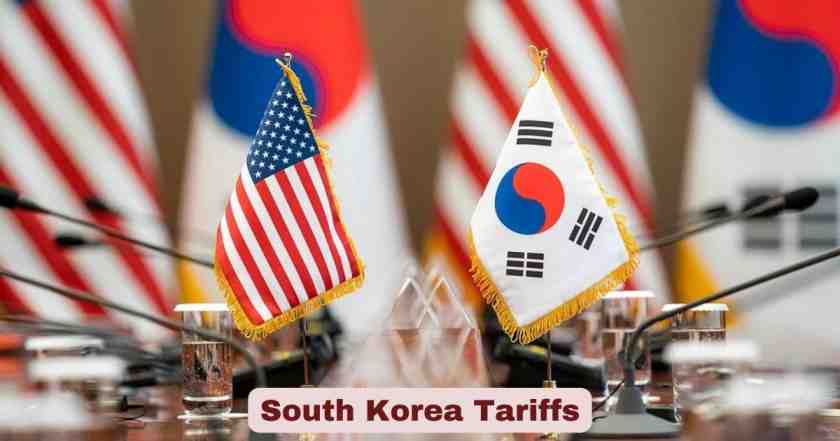
South Korea Tariffs 2026
The trade relationship between the United States and South Korea has entered a period of unprecedented volatility as President Donald Trump imposed sweeping tariff increases on January 27, 2026. The announcement raised tariffs on South Korean imports from 15% to 25%, affecting automobiles, pharmaceuticals, lumber, and all goods covered under reciprocal tariff agreements. This dramatic escalation represents the latest chapter in a turbulent trade relationship that has seen multiple tariff adjustments throughout 2025 and into 2026, creating significant uncertainty for businesses on both sides of the Pacific. South Korea remains the sixth-largest trading partner of the United States with bilateral trade totaling approximately $200 billion in 2024, making any tariff changes profoundly consequential for both economies.
The tariff increase to 25% came after President Trump accused South Korea’s National Assembly of failing to ratify a comprehensive trade agreement reached between the two nations in July 2025 and reaffirmed during Trump’s visit to Seoul in October 2025. Under that agreement, the United States had initially reduced tariffs on South Korean goods from 25% to 15%, while South Korea committed to investing $350 billion in American sectors including semiconductors, shipbuilding, and biotechnology. The breakdown of this agreement and the subsequent tariff hike highlights the fragile nature of contemporary trade relationships and the vulnerability of export-dependent economies like South Korea to unilateral trade policy shifts. As the United States Supreme Court continues deliberating on the legality of Trump’s country-specific tariffs imposed under the International Emergency Economic Powers Act, businesses face mounting uncertainty about future trade conditions and the stability of supply chains that have developed over decades of deepening economic integration.
Interesting Facts About South Korea Tariffs in the US 2026
| Fact Category | Statistical Data | Year |
|---|---|---|
| Current US Tariff Rate on South Korea | 25% on automobiles, pharmaceuticals, lumber | 2026 |
| Previous Tariff Rate | 15% under July 2025 trade deal | 2025 |
| Original Liberation Day Tariff | 25% announced in April 2025 | 2025 |
| Total US-South Korea Trade | $200 billion bilateral trade | 2024 |
| US Imports from South Korea | $135.46 billion | 2024 |
| US Exports to South Korea | $65.54 billion | 2024 |
| Trade Deficit with South Korea | $66 billion total deficit | 2024 |
| Auto Trade Deficit | $44.1 billion from auto exports alone | 2024 |
| South Korea Ranking as Trading Partner | 6th-largest US goods trading partner | 2024 |
| Auto Exports Share | 27% of South Korea’s total US exports | 2024 |
| South Korean Investment Commitment | $350 billion in US sectors | 2025 |
| South Korea Vehicle Exports to US | 1.43 million units | 2024 |
| Semiconductor Exports | $141.9 billion total chip exports | 2024 |
| Steel Tariff Rate | 50% on steel imports | 2025 |
| Aluminum Tariff Rate | 50% on aluminum imports | 2025 |
| South Korea Export Ranking | 2nd-largest auto exporter to US | 2024 |
| Hyundai/Kia Market Share in US | Significant portion of 1.43 million vehicles | 2024 |
| South Korea Trade Surplus | $51.8 billion overall trade surplus | 2024 |
| Supreme Court Tariff Case | Pending decision on tariff legality | 2025-2026 |
| South Korea Rank Among US Suppliers | 8th-largest trading partner overall | 2025 |
Data sources: NBC News January 2026, CBS News January 2026, CNBC January 2026, UN COMTRADE 2024, US Census Bureau 2024, Congressional Research Service 2025
The Trump administration’s tariff policy toward South Korea in 2026 represents one of the most dramatic shifts in bilateral trade relations between these longstanding allies. The 25% tariff rate announced on January 27, 2026, marks a 10-percentage-point increase from the 15% rate that had been negotiated just six months earlier in the July 2025 trade deal. This tariff escalation affects critical sectors of the South Korean economy, particularly the automobile industry, which accounts for 27% of South Korea’s exports to the United States. With 1.43 million South Korean vehicles shipped to American consumers in 2024, representing more than half of South Korea’s total 2.78 million unit export volume, the automotive sector faces potentially devastating consequences from the new tariff regime.
The trade relationship’s magnitude underscores why tariff changes matter so profoundly. US imports from South Korea totaled $135.46 billion in 2024, while American exports to South Korea reached $65.54 billion, creating a $66 billion trade deficit that President Trump has repeatedly cited as justification for protective tariffs. The auto trade deficit of $44.1 billion alone represents two-thirds of the total bilateral trade imbalance, making the automotive sector the primary target of Trump’s trade policy. Beyond automobiles, the 25% tariff applies to pharmaceuticals, lumber, and other products covered under reciprocal tariff agreements, potentially affecting hundreds of billions of dollars in commerce. The Supreme Court heard arguments in November 2025 challenging the President’s authority to impose such tariffs unilaterally without congressional authorization, but no decision has been issued as of January 2026, leaving businesses in limbo. Meanwhile, South Korea’s commitment to invest $350 billion in US sectors including semiconductors, shipbuilding, and biotechnology remains unfulfilled as the country’s National Assembly debates ratification of the comprehensive trade agreement that would formalize these commitments and potentially restore the lower 15% tariff rate.
US Tariffs on South Korean Goods in the US 2026
| Product Category | Current Tariff Rate | Previous Rate | Impact |
|---|---|---|---|
| Automobiles | 25% | 15% (July 2025) | Major impact on Hyundai, Kia, GM Korea |
| Auto Parts | 25% | 15% (July 2025) | Supply chain disruptions |
| Pharmaceuticals | 25% | 15% (July 2025) | Increased medication costs |
| Lumber Products | 25% | 15% (July 2025) | Construction cost increases |
| Steel Products | 50% | 25% (Section 232) | Highest tariff category |
| Aluminum Products | 50% | 25% (Section 232) | Manufacturing cost impacts |
| Copper Imports | 50% | Various | Effective August 2025 |
| Semiconductors | Exempted | Under investigation | Critical AI supply chain component |
| Electronics | 25% | 15% (reciprocal tariff) | Consumer electronics pricing |
| Machinery | 25% | 15% (reciprocal tariff) | Industrial equipment |
Data source: CBS News January 2026, NBC News January 2026, Congressional Research Service 2025, CNBC January 2026
The tariff structure imposed on South Korean imports in 2026 reflects a complex, multi-layered approach combining reciprocal tariffs, national security tariffs under Section 232, and investigation-based duties targeting specific industries. The cornerstone of the current policy is the 25% tariff on automobiles, pharmaceuticals, lumber, and general goods announced on January 27, 2026. This rate applies across broad categories and represents a 67% increase from the 15% rate that had been in effect since the July 2025 trade deal. The automotive sector bears the heaviest burden, with Hyundai Motor Company and Kia Corporation facing dramatically higher costs on the 1.43 million vehicles they exported to the United States in 2024. General Motors, which produces more than 407,000 vehicles annually at its South Korean facilities for the American market, also confronts significant challenges as these tariffs erode the cost advantages that made offshore production attractive.
Steel and aluminum face even steeper duties at 50% following President Trump’s elimination of country exemptions and expansion of covered products under Section 232 national security provisions in March 2025. South Korea exported $2.9 billion worth of steel to the United States in 2024, making it the fourth-largest US steel supplier. The 50% tariff on these products has profound implications for South Korean steel producers and American manufacturers who rely on high-quality Korean steel for automotive, construction, and industrial applications. Similarly, copper imports face 50% tariffs following completion of a Section 232 investigation in June 2025, affecting South Korean companies that have invested heavily in US semiconductor and advanced battery industries, both of which use copper extensively in their supply chains.
Notably, semiconductors remain exempt from the reciprocal tariff framework as of January 2026, though the US Commerce Department announced investigations into whether chip imports pose national security risks. This exemption carries enormous significance given that semiconductor exports totaled $141.9 billion in 2024, representing 20.8% of South Korea’s total exports. However, President Trump’s January 26, 2026 social media post announcing he would investigate “the whole electronics supply chain” suggests that semiconductor tariffs may be forthcoming, creating profound uncertainty for Samsung Electronics and SK Hynix, which supply critical memory chips to American tech giants including Nvidia, Microsoft, Broadcom, and Tesla. The investigations could reshape global technology supply chains if tariffs are ultimately imposed on these products.
South Korea-US Trade Statistics in the US 2026
| Trade Metric | Value (2024) | Change from 2023 | 2025 Projection |
|---|---|---|---|
| Total Bilateral Trade | $200 billion | Record high | Declining |
| US Imports from South Korea | $135.46 billion | +13.1% | Lower due to tariffs |
| US Exports to South Korea | $65.54 billion | +1.0% | Modest growth |
| US Trade Deficit | $66 billion | Increased | Continuing deficit |
| South Korea Total Exports | $683.76 billion | +8.2% | $709.7 billion |
| South Korea Trade Surplus | $51.8 billion | +$62.1 billion improvement | $78 billion |
| Daily Average Exports | $2.53 billion | New high | Stable |
| Exports to China | $133 billion | +6.6% | Growing |
| South Korea Ranking | 6th-largest US partner | Stable | Stable |
| Share of South Korea Exports to US | 18.7% of total | Significant | At risk |
Data source: UN COMTRADE 2024, US Census Bureau 2024, South Korea Ministry of Trade 2025, Trading Economics 2024
The trade statistics between the United States and South Korea in 2024 reveal a relationship characterized by substantial volume, growing imbalances, and increasing South Korean export success despite mounting trade tensions. Total bilateral trade reached $200 billion in 2024, with the United States importing $135.46 billion in South Korean goods while exporting only $65.54 billion, creating the $66 billion trade deficit that animates much of Trump’s trade policy. The 13.1% year-over-year increase in US imports from South Korea demonstrates the continued competitiveness and appeal of Korean products in the American market, particularly in automobiles, electronics, and machinery sectors.
South Korea’s overall export performance in 2024 was exceptional, with total global exports reaching $683.76 billion, an 8.2% increase from the previous year. This growth translated into a $51.8 billion trade surplus for 2024, representing a dramatic $62.1 billion improvement from the $10.3 billion deficit recorded in 2023 and marking the highest surplus since 2018. The daily average export value reached a new high of $2.53 billion, surpassing even the $2.51 billion achieved in 2022 before the global economic slowdown. However, these impressive figures mask growing vulnerability to American tariff policy, as the United States remains South Korea’s second-largest export destination after China, accounting for approximately 18.7% of total exports.
The 2025 performance extended this growth trajectory, with preliminary data showing total South Korean exports reached $709.7 billion, a 3.8% increase over 2024. The trade surplus expanded to $78 billion as imports declined slightly to $631.7 billion. However, the January 27, 2026 tariff increase to 25% threatens to disrupt this positive momentum. Analysts predict that American consumers will reduce purchases of South Korean vehicles, electronics, and other goods as prices rise, while South Korean manufacturers may shift production to other markets or establish additional manufacturing facilities in the United States to avoid tariffs. The ultimate impact depends heavily on whether the South Korean National Assembly ratifies the comprehensive trade agreement and whether the Supreme Court strikes down Trump’s unilateral tariff authority, both of which remain uncertain as businesses navigate heightened trade policy volatility.
South Korean Automobile Exports to the US in 2025-2026
| Automobile Metric | Value/Volume | Year | Details |
|---|---|---|---|
| Total Vehicle Exports to US | 1.43 million units | 2024 | Over half of total exports |
| Auto Export Value | $72.0 billion | 2025 | +2% from 2024 |
| Share of Total Exports to US | 27% | 2024 | Largest single category |
| Auto Trade Deficit | $44.1 billion | 2024 | Two-thirds of total deficit |
| Total Vehicle Production | 4.1 million units | 2025 | -0.6% from 2024 |
| Vehicle Export Volume | 2.7 million units | 2025 | -1.7% year-over-year |
| Exports as % of Production | 67% | 2025 | Export-dependent industry |
| Eco-Friendly Vehicle Exports | $25.8 billion | 2025 | +11% growth |
| Hybrid Vehicle Exports | $14.8 billion | 2025 | +30% increase |
| Used Car Exports | $8.9 billion | 2025 | +75% surge |
| February 2025 Export Value | $6.1 billion | February 2025 | Record for February |
| Hyundai/Kia Combined Exports | 707,000+ units | 2024 | Green vehicles only |
| US Market Share | 55.6% of exports | 2024-2025 | Largest destination |
Data source: South Korea Ministry of Trade 2025, Just Auto January 2026, KED Global March 2025, Hyundai Motor Group January 2025
The South Korean automobile industry’s export performance to the United States demonstrates both remarkable strength and profound vulnerability to tariff policy shifts. In 2024, South Korean automakers shipped 1.43 million vehicles to American consumers, representing more than half of the country’s total 2.78 million unit export volume and solidifying South Korea’s position as the second-largest exporter of new cars to the United States after Mexico. The $72.0 billion export value in 2025 represented a 2% increase from 2024’s $70.8 billion, driven primarily by strong demand for hybrid vehicles and continued popularity of sport utility vehicles from Hyundai and Kia. This automotive trade accounts for 27% of all South Korean exports to the United States, making it far and away the single largest product category in the bilateral relationship.
The industry’s export orientation makes it extremely sensitive to market access conditions. Of the 4.1 million vehicles produced in South Korea in 2025, approximately 67% were destined for export markets, with the United States absorbing 55.6% of all automobile exports. This concentration creates enormous vulnerability to American tariff policy, as the $44.1 billion auto trade deficit with South Korea represents nearly two-thirds of the total $66 billion bilateral trade imbalance. Hyundai Motor Company emerged as the largest exporter of vehicles to the United States among South Korean automakers, followed by General Motors Korea which has dramatically increased its American-bound shipments from 173,000 units in 2019 to more than 407,000 units in 2024, and Kia Corporation which largely operates separately from Hyundai in the US market despite being part of Hyundai Motor Group.
The green vehicle segment showed particular strength in 2024-2025, with eco-friendly vehicle exports totaling $25.8 billion in 2025, an 11% increase driven by 30% growth in hybrid vehicle shipments to $14.8 billion. Hyundai and Kia together exported 707,853 units of green cars in 2024, accounting for 32.5% of their total exports, with the Hyundai Tucson Hybrid (93,547 units), Hyundai KONA Hybrid (70,353 units), and Kia Niro Hybrid (69,545 units) leading sales. However, the February 2025 surge to a record $6.1 billion in monthly exports reflected American consumers and dealers rushing to purchase vehicles ahead of the anticipated April 2 tariff implementation, suggesting that demand was being pulled forward rather than reflecting sustainable growth. The January 27, 2026 tariff increase to 25% threatens to dramatically reduce American purchases of South Korean vehicles by raising prices, forcing automakers to either absorb the tariff costs and accept reduced profitability or pass increases to consumers and accept reduced market share. Both Hyundai and General Motors have substantial US manufacturing operations that may partially insulate them from tariffs, but the scale of Korean imports means significant disruption is inevitable regardless of how companies respond.
South Korean Semiconductor Exports in the US 2024-2026
| Semiconductor Metric | Value | Year | Growth Rate |
|---|---|---|---|
| Total Chip Exports | $141.9 billion | 2024 | +43.9% |
| Chip Exports | $173.4 billion | 2025 | +22.2% |
| Share of Total Exports | 20.8% | 2024 | Major export category |
| Share of Total Exports | 24.4% | 2025 | Increasing dominance |
| December 2024 Chip Exports | $14.5 billion | December 2024 | Monthly record |
| August 2025 Chip Exports | $15 billion | August 2025 | +33% from 2024 |
| Chip Exports to China | $46.6 billion | 2024 | 32.8% of total |
| Chip Exports to US | $10.7 billion | 2024 | 7.5% of total |
| Global Semiconductor Market | $677.2 billion | 2024 | Growing with AI |
| South Korea Market Share | 20% | 2024 | Production capacity |
| DRAM Market Share (SK Hynix) | 36% | Q1 2025 | Global leader |
| DRAM Market Share (Samsung) | 34% | Q1 2025 | Second place |
| Government Support Package | $23.25 billion | April 2025 | Industry support |
| Semiconductor Investment Plan | $470 billion | 2024-2047 | 23-year cluster plan |
Data source: South Korea Ministry of Trade 2025, Wikipedia January 2026, ITIF September 2025, CNBC April 2025, Businesskorea January 2026
The semiconductor industry stands as South Korea’s most valuable and strategically important export sector, with chip exports reaching $141.9 billion in 2024, representing 20.8% of total exports and surpassing the previous record of $129.2 billion set in 2022. The 43.9% year-over-year growth reflected surging global demand for advanced memory chips driven by artificial intelligence applications, cloud computing infrastructure, and data center expansion. Samsung Electronics and SK Hynix dominate global memory chip production, together controlling 73% of the DRAM market and 51% of NAND flash memory as of 2024. Remarkably, SK Hynix overtook Samsung in Q1 2025 to become the world’s top DRAM chipmaker with a 36% market share compared to Samsung’s 34%, driven by a 158% increase in operating profit fueled by strong sales of high-bandwidth memory (HBM) chips essential for AI applications.
The 2025 performance exceeded even these impressive figures, with semiconductor exports reaching $173.4 billion, a 22.2% increase over 2024. This growth elevated semiconductors’ share of total exports to 24.4%, the highest proportion since 2018 when the sector accounted for 20.9% of exports before declining to 15.6% in 2023 during the global chip downturn. Monthly export records fell repeatedly throughout 2025, with December 2024 reaching $14.5 billion and August 2025 hitting $15 billion, representing increases of approximately one-third compared to the same months in the previous year. The boom was driven primarily by HBM chips and DDR5 memory products that command premium prices due to their critical role in AI infrastructure.
However, the semiconductor industry faces significant tariff-related risks despite current exemptions. China absorbs $46.6 billion (32.8%) of South Korean chip exports, far exceeding the $10.7 billion (7.5%) shipped to the United States, but American companies like Nvidia, Microsoft, Broadcom, and Tesla depend heavily on South Korean memory chips for their AI hardware and data center operations. President Trump’s January 26, 2026 announcement that he would investigate “the whole electronics supply chain” on national security grounds, combined with the Commerce Department’s formal notice of investigations into “semiconductors, semiconductor manufacturing equipment, and their derivative products,” creates profound uncertainty. The South Korean government responded by announcing a $23.25 billion support package in April 2025 and reaffirming its commitment to the $470 billion, 23-year investment plan to build the world’s largest semiconductor cluster in Gyeonggi Province. If tariffs are ultimately imposed on semiconductor imports, the consequences would ripple throughout global technology supply chains, disrupting AI development, consumer electronics production, and the broader digital economy that depends on South Korean memory chips.
KORUS Free Trade Agreement and Tariff History in the US 2025-2026
| Agreement/Event | Date | Tariff Rate | Key Details |
|---|---|---|---|
| KORUS FTA Entry | March 2012 | 0% tariff on most goods | Second-largest US FTA by value |
| Section 232 Steel Tariffs | March 2018 | 25% on steel | National security justification |
| Steel Quota Negotiation | 2018 | Quota in lieu of tariff | Alternative to 25% steel tariff |
| KORUS FTA Revision | 2018 | Various changes | Extended 25% truck tariff to 2041 |
| Liberation Day Tariffs | April 2025 | 25% announced | Market tailspin |
| July 2025 Trade Deal | July 30, 2025 | 15% reduction | $350 billion investment commitment |
| October 2025 Reaffirmation | October 29, 2025 | 15% confirmed | Trump visit to Seoul |
| November 2025 Fact Sheet | November 2025 | 15% implemented | Deal put in motion |
| Section 232 Steel Expansion | March 2025 | 50% on steel/aluminum | All exemptions eliminated |
| Auto Tariffs | March 2025 | 25% on autos | Section 232 investigation |
| Copper Tariffs | August 1, 2025 | 50% on copper | Section 232 completion |
| Current Tariff Rate | January 27, 2026 | 25% increase | Assembly failed to ratify deal |
Data source: Congressional Research Service 2025, NBC News January 2026, CBS News January 2026, CNBC January 2026
The Korea-United States Free Trade Agreement (KORUS FTA), which entered into force in March 2012, represents the second-largest comprehensive US free trade agreement by value and originally eliminated virtually all tariffs on imports from both countries. For over a decade, this agreement facilitated the growth of bilateral trade to $200 billion annually by removing tariff barriers and creating predictable rules for businesses operating across the Pacific. However, the Trump administration’s aggressive use of national security tariffs under Section 232 of the Trade Expansion Act of 1962 has effectively suspended many KORUS FTA provisions, replacing negotiated tariff eliminations with unilateral American duties that South Korea has limited ability to contest.
The tariff escalation timeline began in March 2018 when President Trump invoked Section 232 to impose 25% tariffs on steel imports after the Commerce Department determined that such imports “threaten to impair” US national security. South Korea negotiated an import quota in lieu of the 25% tariff, but in March 2025, President Trump eliminated all country exemptions and raised steel and aluminum tariffs to 50%, ending the quota arrangement. Similarly, Trump announced 25% tariffs on automobiles in March 2025 based on a 2019 Section 232 investigation, arguing that 2018 KORUS FTA revisions that included provisions designed to support US auto exports were insufficient to address national security concerns.
The April 2025 “Liberation Day” announcement of 25% tariffs sent markets into turmoil before negotiations produced the July 30, 2025 trade deal that reduced the rate to 15% in exchange for South Korea’s commitment to invest $350 billion in US sectors. President Trump and South Korean President Lee Jae Myung reaffirmed this agreement during Trump’s October 29, 2025 visit to Seoul, and the two governments released a November 2025 fact sheet detailing implementation plans. However, when South Korea’s National Assembly failed to ratify the agreement, Trump announced the January 27, 2026 increase back to 25%, declaring that “South Korea’s Legislature is not living up to its Deal with the United States.” The Supreme Court heard arguments in November 2025 challenging Trump’s authority to impose such tariffs without congressional authorization, with justices expressing skepticism about presidential power to levy duties unilaterally. No decision has been issued, leaving the legal framework governing tariffs uncertain and businesses unable to plan confidently for future trade conditions.
South Korea Economic Impact of Tariffs in the US 2026
| Economic Impact Category | Effect | Details |
|---|---|---|
| GDP Growth Projection 2026 | 1.8% estimated | Down from stronger 2025 |
| Export Growth Projection 2026 | 1.3% estimated | Slowing under tariff pressure |
| Private Consumption Growth | 1.6% projected | Lower interest rates supporting |
| Equipment Investment Growth | 2% estimated | Semiconductor strength |
| Hyundai Stock Impact | -4.77% initial drop | Pared to -0.81% |
| Auto Industry Uncertainty | High | Tariff policy changes |
| Semiconductor Demand Uncertainty | Increasing | Tariff policy concerns |
| Trade Surplus 2024 | $51.8 billion | Improvement from 2023 |
| Trade Surplus 2025 | $78 billion | Continued growth |
| Total Exports 2025 | $709.7 billion | Record high |
| Political Risk | Elevated | Impeachment proceedings |
| Supply Chain Disruption | Significant | Tariff-driven changes |
| SK Hynix Operating Profit | +158% Q1 2025 | HBM chip demand |
Data source: Focus2move December 2025, CNBC January 2026, KED Global January 2025, South Korea Ministry of Trade 2025
The economic impact of US tariffs on South Korea extends far beyond simple price increases, threatening to slow the export-driven growth that has characterized the Korean economy for decades. Economic projections for 2026 estimate GDP growth of approximately 1.8%, down from stronger performance in 2025, as export growth is expected to slow to just 1.3% due to mounting US tariff pressures and global economic uncertainty. The private consumption outlook shows 1.6% growth supported by lower interest rates and expansionary fiscal policy, while equipment investment is projected to grow around 2% on semiconductor industry strength. However, these modest growth rates reflect significant headwinds from trade policy volatility that could worsen if additional tariffs are imposed or if the National Assembly fails to ratify the comprehensive trade agreement.
The immediate market reaction to tariff announcements demonstrates business and investor concerns about the policy’s economic consequences. Hyundai Motor shares fell as much as 4.77% on news of the January 27, 2026 tariff increase before paring losses to close down 0.81% in volatile trading. Industry analysts warn that demand uncertainty will increase because of tariff policy changes, with Kyu Hyun Kim, head of DRAM marketing at SK Hynix, cautioning that trade restrictions create planning challenges for semiconductor companies despite their strong current performance. The broader KOSPI index has shown sensitivity to tariff news throughout 2025 and into 2026, reflecting investor recognition that South Korea’s export-dependent economy remains vulnerable to American trade policy shifts.
Despite these challenges, South Korea’s economic fundamentals remain relatively strong. The 2025 export performance reached a record $709.7 billion, with the $78 billion trade surplus providing a substantial cushion against external shocks. The semiconductor boom driven by AI infrastructure demand has boosted SK Hynix to 158% operating profit growth in Q1 2025 and elevated chips to 24.4% of total exports, providing critical support to the overall economy. However, government officials and private analysts agree that South Korea faces “difficult” export conditions in 2026 as uncertainties persist in the trade environment. The concentration of exports in automobiles (27% of US exports) and semiconductors (24.4% of total exports) creates vulnerability to sector-specific tariffs, while dependence on the US market for 18.7% of total exports means that American trade policy has outsized influence on South Korean economic performance. The ultimate economic impact depends heavily on factors beyond South Korea’s control, including Supreme Court decisions on tariff legality, whether the National Assembly ratifies the trade agreement, and whether the Trump administration follows through on threats to investigate semiconductors and the broader electronics supply chain.
Disclaimer: This research report is compiled from publicly available sources. While reasonable efforts have been made to ensure accuracy, no representation or warranty, express or implied, is given as to the completeness or reliability of the information. We accept no liability for any errors, omissions, losses, or damages of any kind arising from the use of this report.