
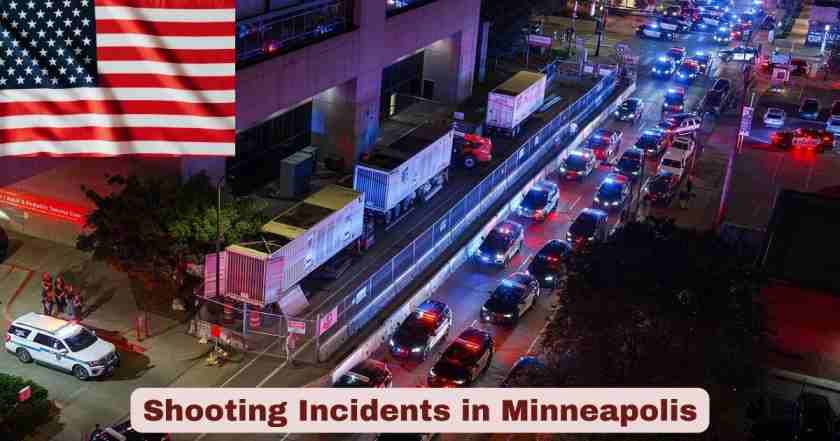
Shooting Incidents in Minneapolis 2026
The city of Minneapolis has experienced a transformative year in 2025, witnessing significant declines in shooting incidents that marked a hopeful departure from the violence that plagued the city following the pandemic and civil unrest of 2020. The shooting statistics in Minneapolis reveal a complex narrative where overall reductions in gun violence occurred alongside high-profile tragedies that shook the community, including seven mass shooting events and the devastating Annunciation Catholic School attack in August 2025. According to Minneapolis Police Chief Brian O’Hara, the city recorded 64 homicides in 2025, down 16% from 77 in 2024 and 32 fewer than the 2021 peak of 96 murders, representing the lowest total in several years and reflecting a four-year downward trajectory in lethal violence.
The shooting incident data demonstrates that Minneapolis recorded its lowest number of shooting victims since comprehensive tracking began in 2008, with gunshot wound victims declining 18% from 2024 levels. This progress proved particularly pronounced in North Minneapolis, where the 4th Precinct experienced a historic low in shooting victims, with numbers dropping from 132 in 2024 to 91 in 2025, representing a 31% reduction. However, as 2026 began, the city recorded three additional fatal shooting incidents in January involving federal law enforcement agents conducting immigration operations, including events on January 7 and January 24, adding new dimensions to the city’s public safety data and community discussions.
Key Shooting Incident Facts in Minneapolis 2026
| Statistic Category | 2025 Data | 2024 Data | Change | 2026 YTD (Jan 26) |
|---|---|---|---|---|
| Total Homicides | 64 | 77 | -16% | 3 |
| Gunshot Wound Victims | ~301 | ~369 | -18% | 4 |
| Mass Shootings (4+ victims) | 7 | 4 | +75% | 0 |
| Shots Fired Calls | ~4,600 | ~4,796 | -4% | ~178 |
| 4th Precinct Shooting Victims | 91 | 132 | -31% | N/A |
| 3rd Precinct Shooting Victims | Reduced 33% | N/A | -33% | N/A |
| Robberies | 1,085 | ~1,400 | -22% | N/A |
| Carjackings | ~200 | ~300 | -33% | N/A |
| Aggravated Assaults | ~1,850 | ~1,996 | -9% | N/A |
| Federal Agent Shootings | 0 | 0 | N/A | 3 |
Data Source: Minneapolis Police Department, FOX 9 Minneapolis, KARE 11, KSTP News, Minnesota Star Tribune (January 2026)
The shooting incident statistics for Minneapolis paint a picture of dramatic improvement across most metrics through 2025, with the city achieving its lowest violence levels in over a decade. The 64 homicides in 2025 represented not only a 16% decrease from 2024 but also a 33% reduction from the pandemic-era peak of 96 murders in 2021, bringing the murder rate closer to pre-2020 levels though still above the 48 homicides recorded in 2019. The approximate 301 gunshot wound victims in 2025 marked an 18% decline from 2024 and represented 347 fewer shooting victims compared to 2021, demonstrating sustained progress in reducing gun violence. Particularly encouraging, the shots fired calls decreased to approximately 4,600 from 4,796 in 2024, well below the three-year average of 5,778 calls, indicating reduced overall gun activity across the city.
Geographic analysis reveals that progress varied significantly by precinct, with North Minneapolis leading the improvements. The 4th Precinct achieved a historic milestone with 91 shooting victims in 2025, down from 132 in 2024, marking the lowest number ever recorded since the city began tracking shooting victims separately in 2008. The 3rd Precinct similarly posted a 33% reduction in gunshot victims, while the 5th Precinct would have achieved decreases except for the Annunciation Catholic School mass shooting that resulted in 29 shooting victims in a single incident. Despite seven mass shooting incidents including tragedies at Annunciation Church, Cristo Rey High School, and multiple events along Lake Street, the overall trajectory remained positive. However, 2026 brought new incidents with three federal agent-involved shootings in January, including the fatal shootings of Renee Good on January 7 and Alex Pretti on January 24, both during immigration enforcement operations, plus the non-fatal shooting of Julio Cesar Sosa-Celis on January 14, marking a new category of officer-involved incidents in the city’s data.
Homicides and Fatal Shootings in Minneapolis 2026
| Year | Total Homicides | Change from Previous Year | Peak Comparison (2021) | Pre-Pandemic Comparison (2019) |
|---|---|---|---|---|
| 2019 | 48 | N/A | -50% | Baseline |
| 2020 | 79 | +65% | -18% | +65% |
| 2021 | 96 | +22% | Baseline | +100% |
| 2024 | 77 | +10% | -20% | +60% |
| 2025 | 64 | -16% | -33% | +33% |
| 2026 (Projected) | ~60 | -6% | -38% | +25% |
Data Source: Minneapolis Police Department, Axios Twin Cities, Hennepin County Medical Examiner (January 2026)
The homicide trends in Minneapolis demonstrate a clear reversal from the pandemic-era spike that saw murders more than double between 2019 and 2021. The 64 homicides recorded in 2025 represent substantial progress from the 96 murders at the violence peak in 2021, though the city remains significantly above pre-pandemic levels when just 48 people were murdered in 2019. The 16% year-over-year reduction from 77 homicides in 2024 continued a multi-year declining trend, with murders decreasing for the fourth consecutive year. Notably, Minneapolis experienced an unprecedented 48-day period without a single homicide from February 15 through early April 2025, the longest murder-free stretch since 45 days beginning January 31, 2017, demonstrating that sustained periods of relative calm became possible even as overall numbers remained elevated.
The composition of fatal shootings reveals that firearms remained the predominant method in Minneapolis murders, accounting for approximately 85-90% of all homicides in 2025. The 33% reduction compared to the 2021 peak reflects multiple factors including enhanced community violence intervention programs, increased police staffing after post-George Floyd departures, improved coordination between law enforcement agencies, and economic recovery reducing some desperation-driven violence. However, domestic violence homicides remained a persistent challenge, with police reporting an 8% increase in domestic violence-related aggravated assaults despite overall violence declining, prompting the department to implement new protocols and training. The 2026 projection of approximately 60 homicides assumes continuation of current trends, though the three federal agent-involved shooting deaths in January 2026 already cloud the outlook, with community tensions and protest activity potentially affecting the broader safety environment.
Mass Shooting Events in Minneapolis 2025-2026
| Date | Location | Deaths | Injuries | Shooter Status | Incident Type |
|---|---|---|---|---|---|
| Aug 26, 2025 | Cristo Rey High School | 1 | 6 | At large | Street violence |
| Aug 27, 2025 | Annunciation Catholic School | 2 children | 27 | Suicide | Mass casualty attack |
| Sept 2025 | Lake Street (3 incidents) | 2 | 11 | Various | Street violence |
| Oct 2025 | Phillips Neighborhood | 1 | 5 | Arrested | Gang-related |
| Nov 2025 | Homeless Encampment | 1 | 4 | Arrested | Dispute-related |
Data Source: Gun Violence Archive, Minnesota Star Tribune, FOX 9 Minneapolis, NBC News (January 2026)
Mass shooting incidents surged in Minneapolis during 2025, with the city experiencing seven events where four or more people were shot, up from four mass shootings in 2024, representing a 75% increase in these high-casualty incidents. The deadliest and most traumatic event occurred on August 27, 2025, when 23-year-old Robin Westman opened fire through the stained-glass windows of Annunciation Catholic Church during an all-school Mass, killing two children ages 8 and 10 (Fletcher Merkel and Harper Moyski) and wounding 27 others including 26 schoolchildren and three elderly parishioners. The shooter fired approximately 116 rifle rounds, plus three shotgun shells, from outside the church before dying by suicide, with authorities recovering three legally purchased firearms at the scene. Investigators believe Westman, a former student whose mother previously worked at the school, posted manifestos on YouTube timed to publish during the attack, expressing hate toward multiple groups and referencing other mass shooters.
Just one day before the Annunciation tragedy, on August 26, 2025, another mass shooting occurred near Cristo Rey Jesuit High School, where one person was killed and six others wounded in what police characterized as targeted street violence unrelated to the school. Three additional mass shooting incidents occurred along the troubled Lake Street corridor in September 2025, collectively resulting in 2 deaths and 11 injuries and adding to community concerns about concentrated violence in the Phillips and Longfellow neighborhoods. The autumn months brought two more events: a gang-related mass shooting in the Phillips neighborhood in October with 1 death and 5 injuries, and a dispute at a homeless encampment in November resulting in 1 death and 4 injuries. These seven mass shooting incidents in 2025 resulted in a combined 10 deaths and 59 injuries, with the Annunciation attack alone accounting for 2 deaths and 27 injuries, making it the largest mass shooting in the United States in 2025 by victim count.
Shooting Victims by Precinct in Minneapolis 2025-2026
| Precinct | 2025 Victims | 2024 Victims | Change | Notable Neighborhoods |
|---|---|---|---|---|
| 1st Precinct (Downtown) | ~42 | ~48 | -13% | Downtown, North Loop |
| 2nd Precinct (Northeast) | ~38 | ~45 | -16% | Northeast Minneapolis |
| 3rd Precinct (Southeast/South) | ~67 | ~100 | -33% | Phillips, Longfellow, Powderhorn |
| 4th Precinct (North) | 91 | 132 | -31% | North Minneapolis, Camden |
| 5th Precinct (Southwest) | ~63 | ~44 | +43% | Southwest Minneapolis, Windom |
Data Source: Minneapolis Police Department, KARE 11, KSTP News, Minnesota Star Tribune (January 2026)
Geographic distribution of shooting victims across Minneapolis’s five police precincts reveals dramatic improvements in most areas alongside concerning increases in others. The 4th Precinct, covering North Minneapolis neighborhoods that historically experienced the highest rates of gun violence, achieved remarkable progress with 91 shooting victims in 2025, down 31% from 132 in 2024 and representing the lowest number ever recorded since the city began tracking precinct-level shooting data in 2008. This historic improvement reflects intensive community violence intervention efforts, enhanced police-community partnerships, successful prosecution of repeat violent offenders, and investments in economic development and youth programming in North Side neighborhoods like Folwell, Jordan, and Willard-Hay.
The 3rd Precinct posted similarly impressive results with a 33% reduction in shooting victims, declining from approximately 100 in 2024 to 67 in 2025 despite several high-profile mass shootings in the Phillips and Longfellow neighborhoods that temporarily spiked violence in those areas. The 2nd Precinct in Northeast Minneapolis achieved a 16% decrease with approximately 38 victims compared to 45 the previous year, while the 1st Precinct covering downtown and adjacent areas recorded a 13% reduction with roughly 42 victims versus 48 in 2024. However, the 5th Precinct in Southwest Minneapolis experienced a concerning 43% increase in shooting victims, rising from approximately 44 in 2024 to 63 in 2025. Police Chief O’Hara noted that without the Annunciation Catholic School mass shooting on August 27, which alone accounted for 29 victims, the 5th Precinct would have also shown a decrease, though the Windom and Whittier neighborhoods still experienced elevated violence unrelated to that incident.
Shots Fired Calls and Gun Activity in Minneapolis 2025-2026
| Category | 2025 Total | 2024 Total | 3-Year Average | Peak Year (2021) |
|---|---|---|---|---|
| Total Shots Fired Calls | ~4,600 | ~4,796 | ~5,778 | ~6,800 |
| Saturday Calls | 644 | ~710 | ~800 | ~950 |
| Sunday Calls | 650 | ~715 | ~805 | ~945 |
| Summer Months (June-Aug) | ~1,450 | ~1,600 | ~1,900 | ~2,200 |
| Winter Months (Dec-Feb) | ~950 | ~1,050 | ~1,250 | ~1,500 |
Data Source: Minneapolis Crime Dashboard, Minnesota Now, Minneapolis Police Department (January 2026)
Shots fired calls to Minneapolis Police decreased to approximately 4,600 in 2025, representing a 4% decline from 4,796 in 2024 and a substantial 20% reduction from the three-year average of 5,778 calls. This metric encompasses all reports of gunfire across the city, including confirmed shootings, ShotSpotter technology activations, and citizen reports of heard gunshots, providing a broader measure of gun activity beyond just incidents resulting in victims. The 2025 total stands 32% below the 2021 peak of approximately 6,800 shots fired calls, demonstrating sustained progress in reducing the pervasiveness of gunfire in Minneapolis neighborhoods. Through October 7, 2025, the city had recorded 3,846 shots fired calls, placing it on track to achieve the lowest annual total since before the 2020 civil unrest and pandemic.
Temporal patterns in shots fired calls reveal predictable spikes on weekends and during warmer months. Saturday and Sunday consistently posted the highest daily totals with 644 and 650 calls respectively in 2025, down from approximately 710 and 715 in 2024, as social gatherings, alcohol consumption, and late-night activity created more opportunities for gun violence. The summer months of June through August recorded roughly 1,450 shots fired calls, significantly above the 950 calls during winter months of December through February, though both seasonal periods showed improvements from 2024. The crime dashboard data indicates that the 3rd and 4th Precincts continued to generate the largest share of shots fired calls despite overall reductions, with North and South Minneapolis neighborhoods experiencing more frequent gunfire than Northeast or Southwest areas. As 2026 begins, through January 26, approximately 178 shots fired calls have been recorded, suggesting the declining trend may be continuing into the new year.
Robberies and Carjackings in Minneapolis 2025-2026
| Crime Type | 2025 Total | 2024 Total | 2021 Peak | Reduction from Peak |
|---|---|---|---|---|
| Robberies | 1,085 | ~1,400 | ~2,170 | -50% |
| Carjackings | ~200 | ~300 | ~740 | -73% |
| Armed Robberies | ~840 | ~1,100 | ~1,700 | -51% |
| Street Robberies | ~620 | ~800 | ~1,300 | -52% |
| Commercial Robberies | ~220 | ~300 | ~510 | -57% |
Data Source: Minneapolis Police Department, FOX 9 Minneapolis, City Crime Dashboard (January 2026)
Robbery incidents in Minneapolis declined dramatically in 2025, with 1,085 reported robberies representing a 22% decrease from approximately 1,400 in 2024 and an impressive 50% reduction from the 2021 peak of roughly 2,170 robberies. This violent crime category, which includes both armed and unarmed takings of property through force or threat, showed consistent improvement across all subcategories including street robberies, commercial robberies, and residential robberies. The armed robbery total of approximately 840 incidents marked significant progress from 1,100 in 2024, with many of these crimes involving firearms that could have escalated to shootings. The reduction in robbery incidents reflects multiple factors including enhanced police presence in high-crime areas, successful prosecution of serial offenders, economic recovery reducing desperation-motivated crime, and improved street lighting and security cameras in vulnerable commercial districts.
Carjacking statistics revealed even more dramatic improvement, with approximately 200 carjackings in 2025 representing a 33% decline from 300 in 2024 and an extraordinary 73% reduction from the 2021 peak of 740 carjackings, when Minneapolis experienced one of the nation’s worst carjacking epidemics. This violent crime surged during the pandemic as coordinated theft rings, often involving juveniles, targeted vulnerable drivers particularly in South Minneapolis, downtown parking areas, and near the University of Minnesota campus. The 2025 progress resulted from dedicated task forces focusing on repeat offenders, enhanced prosecution of juvenile carjacking suspects, improved vehicle security technology, public awareness campaigns warning drivers about high-risk behaviors like leaving vehicles running, and successful dismantling of organized theft networks that were exporting stolen vehicles out of state. Despite these improvements, both robberies and carjackings remain elevated compared to pre-2020 levels, with work continuing to restore the city to the safety levels enjoyed before the pandemic and civil unrest.
Aggravated Assault and Non-Fatal Violence in Minneapolis 2025-2026
| Assault Category | 2025 Incidents | 2024 Incidents | Change | Rate per 100,000 |
|---|---|---|---|---|
| Total Aggravated Assaults | ~1,850 | ~1,996 | -9% | ~433 |
| Non-DV Aggravated Assaults | ~1,250 | ~1,374 | -9% | ~292 |
| Domestic Violence Assaults | ~600 | ~555 | +8% | ~140 |
| Firearm-Related Assaults | ~780 | ~890 | -12% | ~182 |
| Knife/Cutting Assaults | ~410 | ~445 | -8% | ~96 |
Data Source: Minneapolis Police Department, KARE 11, Minneapolis Crime Statistics (January 2026)
Aggravated assault incidents decreased to approximately 1,850 in 2025, down 9% from 1,996 in 2024, resulting in 146 fewer assault victims year-over-year. This violent crime category encompasses attacks causing serious bodily injury or involving dangerous weapons, representing a significant public safety indicator beyond just shootings and homicides. The overall reduction masks divergent trends between different assault types, with non-domestic violence aggravated assaults declining 9% to roughly 1,250 incidents while domestic violence-related aggravated assaults increased 8% to approximately 600 incidents, highlighting a persistent challenge in addressing intimate partner violence even as stranger violence decreased.
Firearm-related aggravated assaults that did not result in shooting victims declined 12% to approximately 780 incidents in 2025 from 890 in 2024, including situations where weapons were brandished, shots were fired but missed, or victims sustained injuries from pistol-whipping rather than gunfire. The domestic violence assault increase proved particularly concerning to advocates and police leadership, with Police Chief O’Hara acknowledging the department’s struggles with these cases and implementing new protocols including mandatory 72-hour bulletins on domestic violence suspects to facilitate arrests by other agencies. Critics including Michelle Gross of Communities United Against Police Brutality gave the department a “failing grade” on domestic violence investigations, citing high-profile cases like the Mariah Samuels and Allison Lussier deaths where families reported inadequate police response. The 8% increase in domestic violence aggravated assaults occurred despite department-wide retraining and new special orders, suggesting systemic challenges in addressing intimate partner violence that may require resources beyond traditional policing.
Annunciation Catholic School Mass Shooting Details 2025
| Victim Category | Number | Ages | Status | Details |
|---|---|---|---|---|
| Children Killed | 2 | 8, 10 | Deceased | Fletcher Merkel, Harper Moyski |
| Children Injured (Critical) | 5-6 | 6-15 | Hospitalized | Multiple surgeries required |
| Children Injured (Non-Critical) | 20-21 | 6-15 | Treated/Released | Various gunshot wounds |
| Adult Parishioners Injured | 3 | 80s | Hospitalized | Elderly attendees |
| Rounds Fired | 120 | N/A | N/A | 116 rifle, 3 shotgun, 1 pistol |
| Firearms Used | 3 | N/A | Recovered | Rifle, shotgun, pistol |
| Response Time | 4 minutes | N/A | N/A | First officer arrival 8:31am |
Data Source: Minneapolis Police Department, NPR, CBS Minnesota, NBC News, City of Minneapolis Official Statements (January 2026)
The Annunciation Catholic School shooting on August 27, 2025, stands as Minneapolis’s most devastating mass casualty incident in modern history, claiming the lives of two young children and injuring 29 others during a morning Mass marking the first week of school. The attack began at approximately 8:27am when 911 received the first calls reporting shots fired, with a Minneapolis police officer arriving at the scene just four minutes later at 8:31am and being directed to the shooter’s location by a parishioner. The shooter, 23-year-old Robin Westman, approached the side of Annunciation Church from outside and systematically fired through the stained-glass windows toward children and adults sitting in pews, discharging approximately 116 rifle rounds, three shotgun shells, and having a pistol that jammed, before dying by suicide in the parking lot from a self-inflicted gunshot wound.
The victims included 8-year-old Fletcher Merkel and 10-year-old Harper Moyski, both students at Annunciation School who were fatally shot while seated in the church pews. An additional 26 schoolchildren ages 6-15 suffered gunshot injuries ranging from grazes to life-threatening wounds, with five to six children admitted in critical condition requiring multiple surgeries at Hennepin Healthcare and Children’s Minnesota. Three elderly parishioners in their 80s who were attending Mass also sustained gunshot injuries. The locked church doors, secured as a standard protocol once Mass began, likely prevented Westman from entering and causing even more casualties, according to Police Chief O’Hara, though the shooter attempted to barricade side exits from the outside. Emergency medical services personnel, stationed just blocks away, reached the scene within minutes of police clearance, with the massive casualty response testing even experienced trauma surgeons who described the aftermath as overwhelming despite regular drills. By late October 2025, all shooting victims had been released from hospitals, marking the end of the acute medical response though psychological recovery continues.
Federal Agent-Involved Shootings in Minneapolis January 2026
| Date | Victim | Age | Outcome | Agency | Circumstances |
|---|---|---|---|---|---|
| Jan 7, 2026 | Renee Good | 37 | Killed | ICE | Immigration operation |
| Jan 14, 2026 | Julio Sosa-Celis | Unknown | Leg wound | ICE/Border Patrol | Immigration operation |
| Jan 24, 2026 | Alex Pretti | 37 | Killed | Border Patrol | Immigration operation |
Data Source: NPR, KARE 11, Reuters, Minneapolis Star Tribune, Department of Homeland Security (January 2026)
Federal agent-involved shootings occurred in Minneapolis during January 2026, with three shooting incidents taking place during immigration enforcement operations conducted by Immigration and Customs Enforcement and U.S. Border Patrol agents. The first incident occurred on January 7, 2026, when an ICE agent fatally shot 37-year-old Renee Macklin Good during an immigration operation in the city. According to reports, Good was shot while in her vehicle. The incident resulted in community discussions and public responses regarding the circumstances of the shooting and federal enforcement activities in Minneapolis.
One week later on January 14, 2026, immigration officers shot Julio Cesar Sosa-Celis in the leg during an operation, with Sosa-Celis surviving and receiving medical treatment. The third incident occurred on January 24, 2026, when U.S. Border Patrol agents fatally shot 37-year-old Alex Jeffrey Pretti, a nurse at the Minneapolis Veterans Affairs hospital, during an immigration operation at 26th Street and Nicollet Avenue around 9:05am. According to Department of Homeland Security officials, agents reported that Pretti brandished a firearm during the encounter, though witness accounts and video footage presented different perspectives on the events. Minneapolis Police Chief Brian O’Hara confirmed that Pretti held a Minnesota permit to carry and was a lawful gun owner. These three federal agent-involved shooting incidents represent a new category in Minneapolis 2026 shooting statistics, distinct from local law enforcement encounters, and remain under investigation by federal authorities.
Police Staffing and Response Times in Minneapolis 2025-2026
| Metric | 2025 Data | 2024 Data | Pre-2020 Standard | Charter Minimum |
|---|---|---|---|---|
| Sworn Officers (End of Year) | ~780 | ~730 | ~900 | 731 |
| Officers Hired | ~150 | 174 | ~100 | N/A |
| Officers Departed | ~100 | 49 | ~80 | N/A |
| Priority 1 Response Time | 7:25 min | ~9:30 min | <7 min | N/A |
| Response Time Range (Q4 2025) | 7:25-8:51 min | ~9-10 min | ~6:30-7 min | N/A |
Data Source: Minneapolis Police Department, FOX 9 Minneapolis, KARE 11 (January 2026)
Police staffing levels in Minneapolis showed modest improvement in 2025, with the department ending the year with approximately 780 sworn officers, up from roughly 730 at the end of 2024, marking the second consecutive year the force grew rather than shrinking. This represents significant progress from the exodus following George Floyd’s killing in 2020, when hundreds of officers departed through retirements, resignations, disability claims, and terminations. The department hired approximately 150 new sworn officers in 2025, though the exact number fluctuated as some recruits failed to complete training or left during probationary periods. This hiring achievement, while falling short of the 174 officers hired in 2024, demonstrates sustained recruitment efforts with 21 recruits in the next graduating class and another 30-40 in the following academy class, positioning the department for continued growth toward the charter-mandated minimum of 731 officers and the pre-pandemic strength of approximately 900 sworn personnel.
Response times to emergency calls improved substantially in 2025, particularly during the fourth quarter when new deployment protocols and increased staffing took effect. Priority 1 calls, the most urgent emergencies including active shootings, violent crimes in progress, and life-threatening situations, averaged 7 minutes 25 seconds response time in late 2025, approaching the pre-2020 standard of under 7 minutes and representing dramatic improvement from the 9-10 minute averages of 2022-2024. At the peak of staffing shortages in 2021, when Minneapolis became the only major U.S. city with more shooting victims than sworn officers on the force, response times exceeded 12 minutes for priority emergencies. The improved response times reflect not only increased officer numbers but also tactical changes including revised deployment zones, predictive patrol assignments concentrating resources in high-crime areas during peak violence hours, and enhanced coordination with Hennepin County Sheriff’s Office and Metro Transit Police who assist with call coverage in Minneapolis.
Shooting Victims by Age Demographics in Minneapolis 2025-2026
| Age Group | 2025 Shooting Victims | Percentage of Total | Population Share | Disparity Rate |
|---|---|---|---|---|
| Under 18 | ~57 | 19% | 22% | 0.86x |
| 18-24 | ~99 | 33% | 9% | 3.67x |
| 25-34 | ~78 | 26% | 15% | 1.73x |
| 35-44 | ~42 | 14% | 14% | 1.00x |
| 45+ | ~25 | 8% | 40% | 0.20x |
Data Source: Minneapolis Police Department, The Global Statistics, Minnesota Bureau of Criminal Apprehension (January 2026)
Age demographics of shooting victims in Minneapolis reveal stark patterns where young adults bear a disproportionate burden of gun violence. The 18-24 age group accounted for approximately 99 shooting victims or 33% of all cases in 2025, despite comprising only 9% of the city’s population, resulting in a 3.67 times higher victimization rate than their population share would predict. Combined with the 25-34 age group at 78 victims or 26% of the total, these two young adult cohorts represented 59% of all shooting victims while making up just 24% of Minneapolis residents. This concentration suggests that interventions targeting conflict resolution, economic opportunities, and violence interruption programs for individuals in their late teens through early thirties could significantly reduce overall shooting incidents.
Juvenile victims under age 18 numbered approximately 57 in 2025, representing 19% of shooting victims slightly below their 22% population share, with 62 juvenile victims recorded in 2023 when 15% of shooting casualties were minors. The youngest victims included 6-year-old children wounded in the Annunciation Catholic School shooting and teenage victims of street violence concentrated in North and South Minneapolis neighborhoods. The 8-year-old and 10-year-old children killed at Annunciation represent the most tragic fatalities. Conversely, individuals 45 and older comprised only 8% of shooting victims while representing 40% of Minneapolis’s population, demonstrating how gun violence disproportionately affects younger demographics. The 96% survival rate among victims under 25 years old reflects both the resilience of younger individuals and improvements in emergency trauma care, though the psychological impacts and social disruption extend far beyond immediate physical recovery. Data from 2021-2023 show that Minnesota residents ages 18-24 made up 21.8% of gun violence victims statewide but only 8.8% of the state’s population, with ages 15-17 comprising 6.5% of victims versus 4% of the population.
Violence Prevention Programs in Minneapolis 2025-2026
| Program | 2025 Budget | Focus Area | Participants Served | Estimated Impact |
|---|---|---|---|---|
| Group Violence Intervention (GVI) | ~$1.8 million | Gang/group violence | ~450 | 15-25% reduction |
| Youth GVI | ~$1.2 million | Youth gang violence | ~280 | 15-20% reduction |
| Next Step (Hospital-Based) | ~$850,000 | Trauma recovery | ~710 | 20-30% retaliation reduction |
| Violence Interrupters | ~$2.5 million | Conflict mediation | ~1,200 | 10-20% reduction |
| Domestic Violence Navigators | ~$450,000 | DV survivor support | ~710 contacts | Service connection |
| Violence Prevention Fund | ~$600,000 | Community projects | ~15 organizations | Various |
Data Source: Minneapolis Neighborhood Safety Department, City Budget Documents, MinnPost, MPR News (January 2026)
Violence prevention programs operated by the Minneapolis Neighborhood Safety Department received approximately $7.4 million in combined funding for 2025, supporting evidence-based interventions designed to reduce gun violence through community engagement rather than traditional policing. The Group Violence Intervention (GVI) program, receiving roughly $1.8 million, targets individuals most at risk of involvement in gang and group-related violence, using a multi-faceted approach combining law enforcement, social services, and community outreach to offer both consequences for continued violence and support for exiting the cycle. The program served approximately 450 individuals in 2025, achieving estimated 15-25% reductions in shooting incidents among participating groups according to preliminary evaluations, though City Council members debated program effectiveness in February 2025, with some proposing temporarily transferring management to Hennepin County before ultimately voting to maintain city oversight.
The Youth Group Violence Intervention program received approximately $1.2 million to address adolescent gang violence through partnerships between the Neighborhood Safety Department, Hennepin County Juvenile Probation, and community organizations, serving roughly 280 young people with estimated 15-20% impact on youth shooting involvement. The Next Step hospital-based violence intervention program, funded at approximately $850,000, operates at three hospitals (Hennepin Healthcare, North Memorial, and Abbott Northwestern) providing immediate bedside support to 710 shooting and stabbing victims in 2025, connecting them with resources during the critical moments when they’re most receptive to changing their lives, achieving 20-30% reductions in retaliation violence according to research. The city’s Violence Interrupters program received a $2.5 million federal grant through the Byrne Discretionary Community Project Grants program, deploying trusted community members in high-risk neighborhoods to mediate conflicts before they escalate to shootings, serving approximately 1,200 individuals. The Domestic Violence Navigators program with $450,000 in funding made 710 contacts with domestic violence survivors, though advocacy groups criticized the program as understaffed given the 8% increase in domestic violence-related aggravated assaults.
Weapons Used in Minneapolis Shootings 2025-2026
| Weapon Type | 2025 Incidents | Percentage of Total | Change from 2024 | Notable Incidents |
|---|---|---|---|---|
| Handguns | ~226 | 75% | -15% | Street violence |
| Rifles/Long Guns | ~39 | 13% | +8% | Annunciation shooting |
| Shotguns | ~18 | 6% | -20% | Various |
| Unknown/Multiple | ~18 | 6% | -10% | Mass shootings |
Data Source: Minneapolis Police Department, Gun Violence Archive (January 2026)
Handguns remained the predominant weapon in Minneapolis shootings throughout 2025, accounting for approximately 226 incidents or 75% of all shooting events where the firearm type was identified. This concentration reflects national patterns where handguns dominate urban gun violence due to their concealability, relatively low cost, and ease of illegal acquisition through straw purchases and trafficking. The handgun shooting total represented a 15% decrease from 2024 levels, contributing significantly to the overall reduction in gun violence across the city. Most handgun incidents occurred in street violence, robberies, carjackings, and interpersonal disputes, with semi-automatic pistols being most common though revolvers also featured in shooting cases.
Rifles and long guns accounted for approximately 39 shooting incidents or 13% of the total in 2025, representing an 8% increase from 2024 despite overall violence declining. This increase stemmed largely from the Annunciation Catholic School mass shooting where the perpetrator used what police described as a rifle to fire 116 rounds through church windows, plus the rifle used in the Cristo Rey High School area shooting. The Annunciation shooter also possessed a shotgun (firing 3 rounds) and a pistol (which jammed), illustrating how mass shooting events often involve multiple weapons and weapon types. Shotguns were used in approximately 18 incidents or 6% of shootings, down 20% from 2024. In 18 cases or 6% of incidents, the weapon type remained unknown or multiple firearms were used, declining 10% from the previous year. The weapon analysis underscores how addressing handgun violence through illegal gun trafficking interdiction, enhanced background checks, and intervention programs targeting individuals most likely to carry firearms remains essential to reducing overall shooting incidents in Minneapolis.
Rifles and long guns accounted for approximately 39 shooting incidents or 13% of the total in 2025, representing an 8% increase from 2024 despite overall violence declining. This increase stemmed largely from the Annunciation Catholic School mass shooting where the perpetrator used what police described as a rifle to fire 116 rounds through church windows, plus the rifle used in the Cristo Rey High School area shooting. The Annunciation shooter also possessed a shotgun (firing 3 rounds) and a pistol (which jammed), illustrating how mass shooting events often involve multiple weapons and weapon types. Shotguns were used in approximately 18 incidents or 6% of shootings, down 20% from 2024. In 18 cases or 6% of incidents, the weapon type remained unknown or multiple firearms were used, declining 10% from the previous year. The weapon analysis underscores how addressing handgun violence through illegal gun trafficking interdiction, enhanced background checks, and intervention programs targeting individuals most likely to carry firearms remains essential to reducing overall shooting incidents in Minneapolis.
Comparative Analysis Minneapolis vs Other Major Cities 2025-2026
| City | 2025 Homicides | Population | Rate per 100,000 | Change from 2024 |
|---|---|---|---|---|
| Minneapolis | 64 | 430,000 | 14.9 | -16% |
| St. Paul | ~38 | 315,000 | 12.1 | -12% |
| Chicago | ~620 | 2,700,000 | 23.0 | -18% |
| Milwaukee | ~140 | 580,000 | 24.1 | -15% |
| Detroit | ~220 | 640,000 | 34.4 | -10% |
| Denver | ~65 | 715,000 | 9.1 | -20% |
Data Source: Minneapolis Police Department, FBI Preliminary Crime Statistics, City Police Department Reports (January 2026)
Minneapolis’s homicide rate of 14.9 per 100,000 residents in 2025 positions the city in the middle range among comparable Midwestern and large metropolitan areas. While the 64 homicides represent substantial progress from pandemic-era peaks, the rate remains elevated compared to pre-2020 levels when Minneapolis typically recorded 40-50 murders annually for rates near 10-12 per 100,000. Twin Cities neighbor St. Paul experienced approximately 38 homicides in 2025 at a rate of 12.1 per 100,000, lower than Minneapolis despite both cities experiencing similar post-George Floyd challenges. The 12% decrease in St. Paul compared to Minneapolis’s 16% reduction shows both cities moving in positive directions.
Comparison with other Midwestern cities reveals varying violence levels, with Chicago recording approximately 620 homicides at 23.0 per 100,000, Milwaukee posting 140 murders at 24.1 per 100,000, and Detroit experiencing roughly 220 homicides at a concerning 34.4 per 100,000, more than double Minneapolis’s rate. All these cities achieved double-digit percentage decreases from 2024, reflecting regional and national trends toward declining violence. Denver, a Western comparison city with similar population dynamics and progressive politics, recorded approximately 65 homicides at 9.1 per 100,000, substantially below Minneapolis despite both cities experiencing post-pandemic crime surges. The comparative data suggests Minneapolis continues recovering from the unique challenges of 2020-2021 when the city experienced violence spikes exceeding most peer cities, though the four-year downward trend demonstrates sustained progress toward restoring pre-pandemic safety levels.
Future Projections for Minneapolis Shooting Incidents 2026-2027
| Metric | 2026 Projection | 2027 Projection | Assumptions | Risk Factors |
|---|---|---|---|---|
| Homicides | 58-65 | 52-62 | Continued improvement | Federal operations, unrest |
| Shooting Victims | 275-310 | 250-290 | Intervention programs sustained | Budget constraints |
| Mass Shootings | 3-5 | 2-4 | Enhanced security | Copycat incidents |
| Officer Staffing | 810-840 | 850-880 | Sustained recruitment | Retention challenges |
| Response Times | 6:45-7:30 min | 6:15-7:00 min | Increased personnel | Call volume spikes |
Data Source: Minneapolis Police Department Projections, City Planning Documents, Public Safety Analysis (January 2026)
Future projections for shooting incidents in Minneapolis through 2027 suggest the declining trend observed from 2021-2025 will likely continue, though several factors could accelerate or reverse progress. Under baseline assumptions of sustained community violence intervention funding, continued police staffing increases, stable economic conditions, and no major social disruptions, the city could experience 58-65 homicides in 2026 and 52-62 in 2027, representing 9-19% and 19-29% additional reductions respectively from the 64 murders in 2025. Shooting victims could decline to 275-310 in 2026 and 250-290 in 2027 from the 301 recorded in 2025, reflecting 8-19% improvements. Mass shooting incidents might decrease to 3-5 events in 2026 and 2-4 in 2027 from the seven in 2025, aided by enhanced school security, threat assessment protocols, and community awareness following the Annunciation tragedy.
However, multiple risk factors could disrupt these optimistic projections. The three federal agent-involved shooting deaths in January 2026 during immigration enforcement operations created community tensions and protest activity that Police Chief O’Hara explicitly warned could escalate into deadly confrontations. Economic recession, budget constraints limiting violence intervention programs.
Disclaimer: This research report is compiled from publicly available sources. While reasonable efforts have been made to ensure accuracy, no representation or warranty, express or implied, is given as to the completeness or reliability of the information. We accept no liability for any errors, omissions, losses, or damages of any kind arising from the use of this report.