
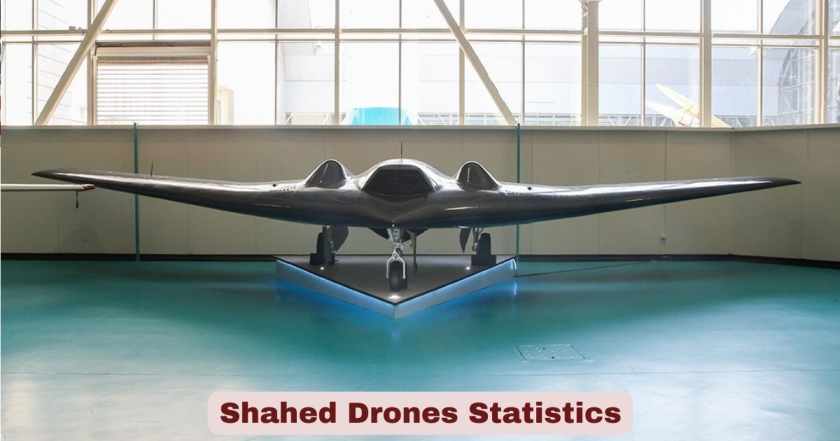
What Is Shahed Drones?
The Shahed drone — officially designated the HESA Shahed-136 and known by its Russian battlefield name Geran-2 — is one of the most consequential weapons systems reshaping modern warfare in 2026. Originally engineered by Iran’s state-owned HESA (Iran Aircraft Manufacturing Industrial Company) in partnership with Shahed Aviation Industries, this Iranian-designed one-way attack drone is a loitering munition built for a single, terminal mission: fly to a pre-programmed coordinate and detonate on impact. What began as an Iranian asymmetric warfare asset has, since the Russian full-scale invasion of Ukraine in February 2022, transformed into a factory-scale geopolitical weapon deployed by Moscow in the thousands. By early 2026, the Shahed/Geran family of drones spans at least five confirmed variants — from the propeller-driven Geran-2 to the jet-powered Geran-5 — representing a rapid, iterative evolution that no military planner anticipated a mere three years ago.
What makes the Shahed drone’s rise in 2026 truly alarming from a global security standpoint is not just its use in Ukraine, but its sudden relevance across entirely new theaters of conflict. When Iran deployed the same platform against U.S. and allied forces during the 2026 Iran war, it exposed how poorly the western world had prepared to counter mass drone saturation outside the Ukraine laboratory. Russia, meanwhile, has scaled domestic production of the Geran/Shahed series to over 5,500 units per month at the Alabuga Special Economic Zone — a figure that would have seemed implausible even in mid-2024. The Shahed drone in 2026 is no longer just a weapon of the Russia-Ukraine war; it is a benchmark for the new age of asymmetric, cost-driven aerial warfare.
Interesting Facts: Shahed Drones 2026
| Fact | Detail |
|---|---|
| Original designer | HESA (Iran Aircraft Manufacturing Industrial Company) |
| Russian designation | Geran-2 (Герань-2, meaning “Geranium-2”) |
| First combat use by Russia in Ukraine | October 17, 2022 (attack on Kyiv, 4 civilians killed) |
| Word “Shahed” meaning | “Witness” in both Persian and Arabic |
| Factory location in Russia | Alabuga Special Economic Zone, Tatarstan (~1,300 km from Ukraine border) |
| Monthly production at Alabuga (2025–2026) | Over 5,500 units per month |
| Daily production rate (late spring 2025) | ~170 Geran-2 drones per day |
| Russia’s planned daily output target | 1,000 drones per day |
| Largest single-night drone attack on record | 810 Shahed-type drones (September 6–7, 2025) |
| Drones launched by Russia: winter 2025–2026 | Nearly 19,000 attack drones (per Zelenskyy) |
| Interception rate of Shaheds | ~90% intercepted or failed to reach targets |
| Strike effectiveness in January 2026 | 14.61% of all UAVs hit targets; 22.26% of strike-type UAVs |
| Ukraine interceptor drones downing Shaheds (Kyiv, Feb 2026) | Over 70% of Shahed downings attributed to interceptor drones |
| Average daily strike UAV launches (Jan 2026) | ~94 strike drones per day |
| Russia–Iran initial drone deal value | $1.75 billion franchise contract (early 2023) |
| New Geran-5 deployed | January 11, 2026 — 600 km/h, 90 kg warhead, 1,000 km range |
| Geran-2 connectivity upgrade (early 2026) | Starlink internet used to remotely control drones mid-flight |
| U.S. clone of Shahed (LUCAS drone) | Deployed in Middle East by CENTCOM, December 2025 |
| Ukrainian interceptor drones produced in 2025 | 100,000 units |
| Iranian drone attacks fall in Middle East (March 2026) | Down 82% since start of Operation Epic Fury (CENTCOM) |
Source: Institute for Science and International Security (ISIS), CSIS, Ukrainian Air Force, Wikipedia (HESA Shahed 136), Foreign Policy Research Institute, Defense News, War on the Rocks
The table above makes clear that the Shahed drone in 2026 is far more than a single product — it is an evolving weapons ecosystem. The jump from 170 drones per day in production to a declared target of 1,000 per day signals Russia’s long-term strategic intent: to overwhelm Ukrainian and, now, U.S. air defense networks through sheer numerical volume. The $1.75 billion Russia-Iran franchise deal signed in early 2023 laid the financial foundation for what has become one of the fastest military production scale-ups in modern history, delivering the initial contractual batch of 6,000 drones ahead of schedule by mid-2024.
Perhaps the most operationally significant fact in this table is the 22.26% strike UAV hit effectiveness recorded in January 2026. This figure, calculated by ISIS on the basis of Ukrainian Air Force data, reveals a troubling trend: even as Ukraine’s interceptor drone fleet neutralizes over 70% of Shaheds near Kyiv, the ones that get through are causing disproportionate damage. The 810-drone single-night attack in September 2025 remains the largest recorded drone assault in history, and it took place not in a sci-fi future but just six months ago. These are not incremental statistics — they represent a fundamental shift in what states can afford to field in mass aerial conflict.
Shahed Drone Technical Specifications 2026 | Model-by-Model Data
| Model | Length | Wingspan | Speed | Range | Warhead | Propulsion | Russian Name |
|---|---|---|---|---|---|---|---|
| Shahed-131 | ~2.0 m | ~2.0 m | 185 km/h | 900 km | 10–20 kg | Serat-1 Wankel engine | Geran-1 |
| Shahed-136 | 3.5 m | 2.5 m | 185+ km/h | 1,000–2,500 km | 40–50 kg | Mado MD-550 piston | Geran-2 |
| Shahed-238 / Geran-3 | N/A | N/A | 500–600 km/h | ~2,000–2,500 km | 50 kg+ | Telefly turbojet (Chinese-made) | Geran-3 |
| Geran-5 (new, 2026) | 6.0 m | 5.5 m | 600 km/h | 1,000 km | 90 kg | Chinese Telefly jet engine | Geran-5 |
| Gerbera / Parody (decoy) | Varies | Varies | ~185 km/h | Varies | None (decoy only) | Piston | Decoy/Imitation UAV |
Source: Wikipedia (HESA Shahed 136, Shahed 131, Shahed Drones), Covert Shores / H.I. Sutton, Ukraine Defense Intelligence (HUR), RBC Ukraine
The Shahed-136 (Geran-2) remains the backbone of Russia’s drone campaign, distinguished by its 3.5-meter fuselage, 40–50 kg explosive warhead, and operational range stretching up to 2,500 kilometers — more than enough to reach any point in Ukraine from Russian-held territory. Its MD-550 four-cylinder piston engine, reverse-engineered from a German Limbach L550E design, gives it a distinctive buzzing sound that Ukrainians have learned to recognize. The relatively low cruise speed of 185+ km/h, however, is precisely what has made it so vulnerable to interceptor drones, prompting Russia to accelerate the development of jet-powered variants.
The Geran-5, first deployed on January 11, 2026, marks the sharpest technological leap in the Shahed family. Its 600 km/h top speed — more than triple the propeller-driven Geran-2 — combined with a 90-kilogram warhead and the capability to be air-launched from Su-25 aircraft, makes it a far more complex interception challenge. Ukrainian intelligence confirmed the use of a Chinese-made Telefly jet engine powering both the Geran-3 and Geran-5, highlighting how deeply embedded Chinese component supply chains are in Russia’s drone warfare infrastructure. The emergence of decoy drones (Gerbera/Parody) — foam-and-plywood constructions specifically designed to look like real Shaheds — further complicates the air defense picture, constituting roughly one-third of all Russian mass attack launches by late 2025.
Shahed Drones in the 2026 Iran War | Current Conflict Data
| Event / Metric | Data | Source / Date |
|---|---|---|
| War start date | February 28, 2026 | Wikipedia (2026 Iran war) |
| Iranian drones launched at UAE (Feb 28 – Mar 4, 2026) | 941 drone attacks | UAE Ministry of Defense |
| UAE drones intercepted (of 689 detected) | 645 intercepted | UAE Ministry of Defense, Mar 2 |
| UAE drones that caused damage | 65 drones | UAE MoD |
| UAE civilian deaths | 6 killed, 131 injured (as of Mar 10, 2026) | UAE Defense Ministry |
| Jordan: Iranian missiles and drones received | 119 (14 injured) | Jordanian government |
| Saudi Arabia: drones intercepted (Mar 13, 2026 alone) | 51 drones destroyed in single day | Saudi MoD / The National |
| Iran ballistic missile launchers destroyed by combined forces | ~300 (as of Mar 3, 2026) | IDF assessment |
| U.S. confirmed military fatalities | 11 confirmed | Al Jazeera tracker, Mar 14 |
| French soldier killed by Shahed drone | 1 (Arnaud Frion, 42, in Erbil, Kurdistan) | President Macron / Euronews, Mar 13 |
| U.S. servicemembers killed at Port Shuaiba, Kuwait | 6 | Al Jazeera tracker |
| U.S. targets struck inside Iran (by Mar 10, 2026) | Over 5,000 | CENTCOM |
| Shahed production cost cited in 2026 Iran war analysis | $20,000–$50,000 per drone | CSIS / The Hill |
| Patriot interceptor cost (for comparison) | ~$4 million per shot | CSIS / ABC News |
| THAAD interceptor cost | ~$12 million per shot | Wikipedia (2026 Iran war) |
| LUCAS drone (U.S. Shahed clone) cost | ~$35,000 per unit | CSIS / ABC News |
| Ukrainian anti-drone teams deployed in Qatar, UAE, Saudi Arabia | Confirmed active (day 12) | Zelenskyy / Al Jazeera |
| Iranian drone attacks: decrease since Operation Epic Fury | Down 82% | CENTCOM Admiral Brad Cooper |
Source: UAE Ministry of Defense, IDF, Al Jazeera (2026 Iran war live tracker), Wikipedia (2026 Iran war), CENTCOM, Euronews, The National, CSIS, ABC News, The Hill
The 2026 Iran war — ignited on February 28, 2026, by a coordinated U.S.-Israeli strike campaign that killed Supreme Leader Ayatollah Ali Khamenei — has delivered the most comprehensive real-world test of Shahed drone warfare against a Western military alliance in history. Within the first four days alone, Iran launched a staggering 941 drone attacks against the UAE — alongside 189 ballistic missiles and 3 cruise missiles — targeting U.S. bases at Al Dhafra, Al Minhad, and the U.S. Navy Fifth Fleet headquarters in Bahrain. The UAE intercepted 645 of the detected 689 drones, but 65 still caused damage, striking locations including the Dubai International Airport, the U.S. Consulate in Dubai, and infrastructure near the Burj Al Arab hotel and Palm Jumeirah. Saudi Arabia faced 51 Iranian Shaheds in a single day on March 13, 2026, and Jordan intercepted 119 Iranian missiles and drones in the opening phase of the conflict. The cost asymmetry that had defined the Ukraine war has been replicated directly: Iran produces each Shahed drone for $20,000–$50,000, while the U.S. burns through $4 million Patriot interceptors and $12 million THAAD rounds to shoot them down, prompting President Trump to meet with defense contractors to demand quadrupled interceptor production.
The human dimension of the Shahed’s role in the Iran war is now being written in blood across a dozen countries simultaneously. A French soldier, Arnaud Frion, 42, became the first European fatality of the conflict on March 13, 2026, killed by a Shahed drone strike in Erbil, Iraqi Kurdistan. Six American servicemembers were killed at Port Shuaiba, Kuwait, by Iranian drone strikes, and the U.S. has confirmed 11 military fatalities in total as of March 14. Meanwhile, the strategic irony shaping the entire conflict is that Ukraine’s four years of hard-won counter-Shahed expertise is now being directly exported to the Gulf: Ukrainian anti-drone teams are actively operating in Qatar, the UAE, and Saudi Arabia, as confirmed by President Zelenskyy and Al Jazeera on day 12 of the war. As The Hill’s defence analysts and Kelly Grieco of the Stimson Center pointed out, the United States — which had four years of watching Ukraine fight Iranian Shahed drones — should not have been surprised by this threat. The Shahed drone in the 2026 Iran war is not a new weapon. It is the same weapon. The world simply wasn’t ready for it.
Shahed Drone Production Statistics 2026 | Russia’s Manufacturing Scale
| Metric | Data Point | Period / Source |
|---|---|---|
| Initial Russia-Iran franchise deal | $1.75 billion | Early 2023 |
| Original contracted production target | 6,000 drones by September 2025 | ISIS / Alabuga contract |
| Actual fulfillment of 6,000-unit target | Completed ~1 year ahead of schedule (by mid-August 2024) | ISIS, CNN |
| Monthly production capacity (Sep 2025) | ~2,700 Shahed-type drones/month | Ukraine HUR (Andriy Yusov) |
| Monthly production capacity (late 2025) | Over 5,500 units/month | Ukraine Defense Intelligence / CNN |
| Daily production rate (late spring 2025) | ~170 Geran-2 drones per day | Wikipedia (Shahed 136) |
| Daily production rate (current output per Syrskyi, Jan 2026) | 404 Shahed-type drones/day | Commander-in-Chief Syrskyi, LB.ua interview |
| Russia’s planned production target | 1,000 drones per day | Syrskyi, January 18, 2026 |
| Total Gerans produced by Yelabuga factory (by late spring 2025) | ~26,000 units | Wikipedia (HESA Shahed 136) |
| Cost per drone in 2022 (imported from Iran) | ~$200,000 | Ukraine Defense Intelligence |
| Cost per drone in 2025 (domestically produced) | ~$70,000 | Ukraine Defense Intelligence / CNN |
| Cost per drone (CSIS estimate) | $20,000–$50,000 | CSIS analysis |
| Percentage of production stages now at Alabuga or Russian facilities | ~90% | Western intelligence sources / CNN |
Source: Institute for Science and International Security (ISIS), CNN, Ukraine Defense Intelligence (HUR), CSIS, Wikipedia (Yelabuga Drone Factory), LB.ua / Medium (Haye Kesteloo)
The production trajectory of Shahed drones in Russia tells a story of industrial warfare that has outpaced almost every Western intelligence estimate. When the $1.75 billion Russia-Iran franchise was signed in early 2023, the initial plan called for just 7 to 10 drones per workday at the Alabuga factory. Within months, that had tripled to 20 drones per workday across two shifts. By late spring 2025, daily output had climbed to 170 Geran-2 drones per day, and by January 2026, Commander-in-Chief Syrskyi put Russia’s actual output at 404 drones per day — with a production target of 1,000 per day being actively pursued. If that ceiling is reached, Russia could theoretically launch ~30,000 attack drones per month, transforming nightly drone raids into something far more catastrophic.
The cost dynamics are equally striking. In 2022, Russia paid an average of $200,000 per drone to Iran. By 2025, domestic production had driven that figure down to approximately $70,000, and some CSIS estimates suggest the real figure per basic Geran-2 unit is as low as $35,000. This cost compression is the strategic logic of the entire campaign: force Ukraine and its Western partners to spend millions in interceptor missiles against drones that cost tens of thousands to produce. The darker side of this production surge is its human cost — over 1,000 African women, primarily from Uganda, were reportedly lured to the Alabuga factory under false pretenses, according to the Wall Street Journal.
Shahed Drone Attack Statistics 2026 – Deployment & Strike Data in Ukraine
| Metric | Data | Source / Period |
|---|---|---|
| Total attack drones launched (winter 2025–2026) | Nearly 19,000 | President Zelenskyy |
| Guided aerial bombs launched (winter 2025–2026) | Over 14,670 | President Zelenskyy |
| Missiles launched (winter 2025–2026) | 738 | President Zelenskyy |
| Attack drones launched in final week of winter alone | Over 1,720 | Zelenskyy, March 1, 2026 |
| Largest single-night attack (Sep 6–7, 2025) | 810 Shahed-type drones | IRIA News / Ukrainian officials |
| Aug 27, 2025 single-day launch count | 598 drones | Ukrainian officials |
| Aug 29, 2025 single-day launch count | 537 drones | Ukrainian officials |
| Sep 2, 2025 single-day launch count | 502 drones | Ukrainian officials |
| Average daily Shahed-type launch rate (Dec 2025) | ~166 drones/day | ISIS |
| Average daily strike UAV launches (Jan 2026) | ~94 strike drones/day | ISIS |
| Total Shahed-type launches (Sep 2024 to Mar 2025) | Increased from ~200/week to 1,000+/week | CSIS |
| Decoy drone share of mass attacks (late 2025) | ~one-third of all launches | Defence-UA / ISIS |
| Percentage of Shahed-type UAVs: strike vs. total in Q4 2025 | ~60% strike-type (58% Oct, 62% Nov, 60% Dec) | ISIS |
| Overall Shahed interception / failure rate | ~90% did not reach targets | CSIS |
| Strike-type UAV hit effectiveness (Jan 2026) | 22.26% | ISIS |
| Overall (all UAV) hit effectiveness (Jan 2026) | 14.61% | ISIS |
Source: ISIS (Institute for Science and International Security), CSIS, Ukrainian Air Force, President Zelenskyy (official statements), IRIA News, Defence-UA
The raw scale of Shahed drone attacks in 2026 is almost numbing in its enormity. Nearly 19,000 attack drones in a single winter campaign — from October 2025 through early March 2026 — represents an aerial bombardment campaign that has lasted, by CSIS’s reckoning, longer than the infamous London Blitz of World War II. The 810-drone single-night attack on September 6–7, 2025 set a new benchmark in drone warfare, and the cadence of attacks exceeding 500 drones per sortie across late August 2025 makes clear this was not a one-off. These figures reveal a deliberate Russian strategic posture: launch enough drones, often enough, to grind down Ukrainian air defenses, energy infrastructure, and civilian morale simultaneously.
What is equally important, however, is what these numbers say about Ukrainian resilience. Despite the relentless pace, the overall interception rate of ~90% demonstrates that Ukraine’s layered air defense — combining missile systems, interceptor drones, electronic warfare, and even truck-mounted machine guns — has held remarkably firm. The jump in strike UAV effectiveness from just 2–3% in January–February 2025 to 22.26% in January 2026, however, signals a worrying trend: Russia’s ongoing technical upgrades — Starlink connectivity, CRPA antennas, AI-guided cameras — are beginning to translate into meaningfully higher lethality for the fraction of drones that do break through.
Shahed Drone Interception & Counter-Drone Statistics 2026 | Ukraine’s Defense Data
| Metric | Data | Source / Period |
|---|---|---|
| Share of Russian aerial threats neutralized by interceptor drones | ~one-third of all neutralized threats | Ukrainian defense sources |
| Interceptor drone missions flown (Feb 2026) | ~6,300 missions | Syrskyi, March 3, 2026 |
| Russian drones destroyed by interceptors (Feb 2026) | Over 1,500 | Syrskyi, March 3, 2026 |
| Shahed downings by interceptor drones over Kyiv (Feb 2026) | Over 70% | Syrskyi, February 2026 |
| Ukraine interceptor drone production (2025) | 100,000 units | National Security and Defense Council (NSDC) |
| Production growth of interceptor drones | 8x increase vs. prior period | NSDC |
| Average interceptor drones delivered to frontline (Dec–Jan) | Over 1,500 per day | Ukraine MOD |
| Cost of interceptor drones (Ukraine’s FPV/pursuit types) | $800–$3,000 per unit | War on the Rocks |
| Cost of a single Patriot interceptor (comparison) | Over $3 million | Defense News / CSIS |
| Cost of a single NASAMS round (comparison) | ~$1 million+ | Defense News |
| Shahed cost to manufacture (Russia, CSIS estimate) | ~$35,000 | CSIS |
| AI-powered interceptor success rate (Ukraine) | Over 60% interception rate | RBC Ukraine |
| Key Ukrainian interceptor drone models | General Cherry Bullet, Sting, Octopus | FPRI |
| Geran-2 interception by Ukrainian helicopters (Syrskyi, Sep 2025) | Helicopters responsible for ~40% of drone kills | Wikipedia (HESA Shahed 136) |
Source: Commander-in-Chief Oleksandr Syrskyi (official statements), Ukrainian NSDC, Defense News, War on the Rocks, FPRI, CSIS, RBC Ukraine
The emergence of Ukrainian interceptor drones as the primary counter to the Shahed/Geran campaign in 2026 is arguably the most important tactical development of the war. For most of 2022–2024, Ukraine relied predominantly on expensive surface-to-air missile systems — Patriots at over $3 million per interceptor and NASAMS rounds at over $1 million — to shoot down drones costing Russia as little as $35,000. That cost-exchange ratio was catastrophically unfavorable. The deployment of FPV-type interceptor drones at $800–$3,000 each fundamentally changes the arithmetic, allowing Ukraine to sustain attrition of Shahed-type drones at scale without burning through scarce Western missile stocks.
The data from February 2026 illustrates just how dramatically this shift has materialized. Ukraine’s interceptor drones flew ~6,300 missions in a single month, destroying over 1,500 Russian drones — and accounting for more than 70% of Shahed downings in the Kyiv area alone. The National Security and Defense Council confirmed 100,000 interceptor drones produced in 2025 — an eightfold increase over the prior production period — with deliveries to frontline units averaging over 1,500 per day by December 2025. The strategic implication is profound: Ukraine has essentially industrialized counter-drone warfare, turning the volume-versus-cost equation back against Russia. This Ukrainian model is now being exported, with U.S. and Gulf allies racing to adopt Ukrainian interceptor expertise in response to Iranian Shahed attacks in the Middle East conflict.
Shahed Drone Global Spread & Middle East 2026 | Use Beyond Ukraine
| Event / Development | Date | Detail |
|---|---|---|
| Iran deploys Shahed-136 at massive scale in Middle East | February–March 2026 | Response to U.S.-Israeli Operation Epic Fury / Operation Roaring Lion |
| Iranian Shahed strike on U.S. facility in Bahrain | Early 2026 | First Shahed strike on U.S. Navy’s nerve center; multiple fatalities |
| U.S. fatalities from Iranian drone strike (Port Shuaiba, Kuwait) | March 3, 2026 | 6 American servicemembers killed by drone strike |
| Iranian drone attacks fall since Operation Epic Fury | March 2026 | Down 82% (CENTCOM Admiral Brad Cooper) |
| U.S. LUCAS drone deployed in Middle East | December 3, 2025 | Clone of Shahed-136; deployed by CENTCOM Task Force Scorpion Strike |
| Qatar intercepts Iranian Su-24 aircraft | March 2, 2026 | Qatari air defense active in regional conflict |
| Zelenskyy confirms U.S. request for Ukrainian counter-Shahed assistance | 2026 Iran war period | Ukraine to deploy systems and experts to Middle East |
| Russia–Iran rift over drone technology | 2025–2026 | Tehran increasingly sidelined; ~90% of Alabuga production now localized |
| Geran-2 used to target merchant vessels in open water | 2025–2026 | New capability extending beyond land-strike roles |
| Gerbera/Parody decoys with Luneburg lens (radar imitation) | 2025–early 2026 | Designed to mimic larger drones and draw anti-aircraft fire |
Source: Foreign Policy Research Institute (FPRI), War on the Rocks, Wikipedia (HESA Shahed 136 / Shahed Drones), Army Technology, Shahed-136 Wikipedia
The Shahed drone’s global footprint in 2026 has expanded far beyond what anyone anticipated when Russia first deployed Iranian-made units in October 2022. The 2026 Iran war — triggered by the U.S.-Israeli joint campaign Operation Epic Fury and Operation Roaring Lion beginning in February 2026 — brought the Shahed-136 directly into conflict with American forces for the first time. The strike on the U.S. Navy’s installation in Bahrain and the killing of six American servicemembers at Port Shuaiba, Kuwait, in March 2026 validated what Ukraine had warned about for years: that Shahed drones would proliferate beyond Ukraine and pose a direct threat to Western military assets. The fact that Iran deployed them at scale against one of the world’s most sophisticated air defense networks — and still achieved hits — underscores the systemic gap in Western counter-drone readiness outside the Ukrainian theater.
Meanwhile, the Russia-Iran relationship that built this weapons ecosystem is itself fracturing. Western intelligence sources confirm that Russia’s drive to localize ~90% of Geran production at Alabuga has effectively marginalized Tehran. Iran received little meaningful military support from Moscow during Israel’s bombing campaign of its nuclear program in June 2025, despite years of supplying drones and technology to Russia. The $1.75 billion deal that launched mass production has now left Iran watching as Russia iterates freely on the Geran platform — developing new variants like the Geran-4 and Geran-5 without Iranian input — while China fills the critical component supply chain through engine exports and electronics. This is the geopolitical inheritance of the Shahed drone in 2026: a weapon that has reshaped three separate conflicts and strained the very alliance that produced it.
Shahed Drone Technological Upgrades & AI Integration 2026 | Innovation Data
| Upgrade / Technology | Detail | Timeframe |
|---|---|---|
| 2G/3G/4G antenna integration | Almost all Geran-2 drones observed in early 2026 equipped | Early 2026 |
| Starlink satellite connectivity | Russia mastered remote control of Geran-2 via Starlink | January 2026 |
| Starlink-guided train attack | 3 Geran-2 drones hit a moving passenger train near Kharkiv | Late January 2026 |
| 16-element CRPA antennas | Significantly improves resistance to Ukrainian electronic warfare (EW) | Since 2025 |
| Airborne mesh network (relay drones) | Relay drones carrying radio modems form decentralized airborne network alongside strike UAVs | 2025–2026 |
| Online cameras and radio modems | Enable real-time flight monitoring from operator stations | 2025–2026 |
| Raspberry Pi 5 microcomputer + Windows 11 PC | Found in reconnaissance Geran-2 variant (Feb 2026); used for vision processing | February 2026 |
| Nvidia Jetson Orin supercomputer | Found inside Geran drones; AI-capable onboard processing | 2025–2026 |
| Geran-2 (Series E) with Verba MANPADS | 18-kg 9K333 Verba surface-to-air missile mounted on back of drone | Identified by early 2026 |
| R-60 air-to-air missile integration | Geran-2 carrying Cold War-era AA missile to ambush Ukrainian interceptor aircraft | 2025–2026 |
| AI trajectory correction | AI-based autonomous trajectory adjustment in final flight stage | 2025–2026 |
| Geran-5 air-launch capability | Can be launched in flight by Su-25 ground-attack aircraft | January 11, 2026 |
| PTM-3 anti-tank mines | Observed carried under Geran-2 wings for secondary area-denial effect | 2025–2026 |
Source: Wikipedia (HESA Shahed 136), Ukraine Defense Intelligence (HUR), War on the Rocks, Covert Shores (H.I. Sutton), RBC Ukraine, ISIS
The technological trajectory of the Shahed/Geran drone family in 2026 is one of the most rapid military-technology evolution stories of the current decade. What started as a GPS-guided, piston-engine drone with basic inertial navigation has transformed into a platform integrating Starlink satellite connectivity, Nvidia Jetson Orin AI processors, 16-element CRPA anti-jamming antennas, and real-time video streaming. The discovery in February 2026 of a reconnaissance Geran-2 carrying a Raspberry Pi 5 microcomputer and a Windows 11 mini-PC made in China illustrates the improvised but surprisingly effective nature of Russia’s drone upgrade program — combining commercial off-the-shelf tech with military-grade components to build capability faster than Western sanctions can stop it.
Perhaps the most concerning development is the arming of Geran-2 drones with self-defense missiles — including the 9K333 Verba MANPADS and the R-60 air-to-air missile — turning what was a one-way expendable weapon into a platform capable of engaging the Ukrainian interceptor aircraft and helicopters sent to shoot it down. Commander-in-Chief Syrskyi had noted in September 2025 that helicopters accounted for ~40% of drone kills, making them prime targets for this countermeasure. The airborne mesh network — relay drones forming a decentralized communication web alongside strike formations — further ensures that Starlink-guided Shaheds can maintain communication even when electronic warfare systems attempt to cut their links. These innovations collectively mean that intercepting the 2026 Shahed drone requires far more sophisticated responses than were needed in 2022.
Shahed Drone Cost & Economic Impact Statistics 2026 | Warfare Economics
| Metric | Figure | Source |
|---|---|---|
| Shahed-136 cost per unit (early war, 2022) | $20,000–$50,000 (Western estimate) | CSIS |
| Price Russia paid Iran in 2023 contract | $193,000 per drone (6,000-unit deal) | Leaked documents |
| Russia’s average purchase price from Iran (2022) | ~$200,000 per drone | Ukraine Defense Intelligence |
| Russia domestic production cost (2025) | ~$70,000 per drone | Ukraine Defense Intelligence / CNN |
| Predicted domestic cost at Alabuga (initial) | $48,000 per unit | Yelabuga factory plan |
| Production cost after upgrades (April 2024) | ~$80,000 per unit | Western intelligence / Wikipedia |
| Cost of single Patriot SAM interceptor | Over $3 million | CSIS / Defense News |
| Cost of single NASAMS round | ~Over $1 million | Defense News |
| Ukrainian interceptor drone cost | $800–$3,000 | War on the Rocks |
| Russian equipment destroyed by one Ukrainian unit (full-scale invasion total) | Over $15 billion | Military Times (Lazar’s Group) |
| Total value of Russia-Iran franchise deal | $1.75 billion | ISIS / multiple sources |
Source: CSIS, CNN, Ukraine Defense Intelligence, Defense News, War on the Rocks, ISIS, Military Times
The economics of the Shahed drone war in 2026 expose one of the starkest cost asymmetries in modern military history. Russia manufactures each Geran-2 drone for approximately $70,000 in 2025, while Ukraine was initially forced to use $3 million Patriot interceptors and $1 million NASAMS rounds to shoot them down. This meant that for every dollar Russia spent on a Shahed drone attack, Ukraine and its allies had to spend forty to eighty dollars on defense. The math was ruinous — and it drove the urgency behind Ukraine’s interceptor drone industrialization at $800–$3,000 per unit, fundamentally restructuring the cost-exchange ratio back toward parity.
The bigger economic picture reveals how dramatically Russia has optimized its Shahed drone supply chain. From paying ~$200,000 per drone imported from Iran in 2022, Russia drove that number down to approximately $70,000 within three years through domestic production at Alabuga. Meanwhile, the leaked $193,000 per unit figure from the 2023 bulk contract with Iran shows how significantly Russia had already been overcharged before establishing domestic capacity. With Alabuga producing over 5,500 units per month and costs continuing to compress, Russia’s Shahed drone campaign remains economically viable for sustained mass deployment — even with the ~90% interception rate — as long as the cumulative damage inflicted on Ukrainian infrastructure and morale justifies the expenditure. CSIS analysts confirmed this brutal logic: the Shahed is the most cost-effective munition in Russia’s firepower strike arsenal, precisely because its low cost turns the interception game into a war of attrition that Ukraine cannot win on missile stocks alone.
Disclaimer: This research report is compiled from publicly available sources. While reasonable efforts have been made to ensure accuracy, no representation or warranty, express or implied, is given as to the completeness or reliability of the information. We accept no liability for any errors, omissions, losses, or damages of any kind arising from the use of this report.