
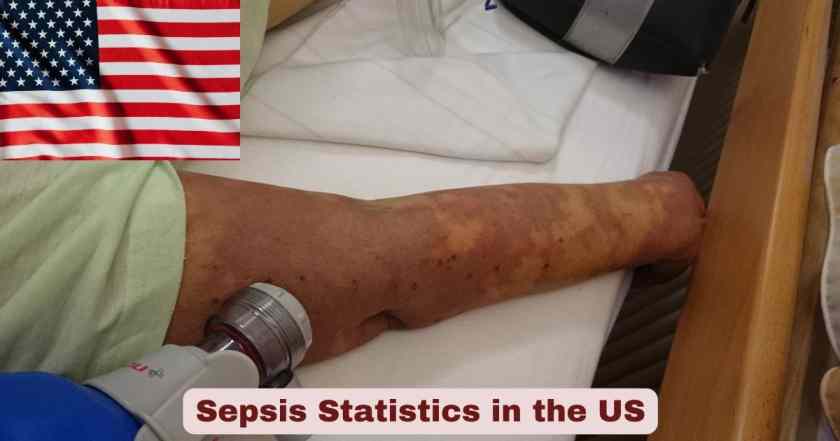
Sepsis in the US 2026
Sepsis is the body’s extreme, life-threatening response to an infection — a condition in which the immune system goes into overdrive and begins to attack the body’s own tissues and organs. What makes it especially dangerous is how quickly it can escalate. An untreated infection can spiral into sepsis, then into septic shock, then into multi-organ failure — sometimes within hours. According to the Centers for Disease Control and Prevention (CDC), at least 1.7 million adults in the United States develop sepsis every year, and at least 350,000 of them die from it. In terms of sheer scale, that makes sepsis one of the most lethal medical crises the American healthcare system faces, quietly claiming more lives annually than many of the diseases that dominate national headlines. As of 2026, the disease accounts for more hospital deaths than almost any other condition, and the financial cost it inflicts on the U.S. healthcare system now surpasses $52 billion per year.
What makes sepsis statistics in the US in 2026 particularly urgent is a landmark report released by the Agency for Healthcare Research and Quality (AHRQ) in September 2024, commissioned directly by Congress under the Fiscal Year 2023 Omnibus Spending Bill. The report — the most comprehensive federal analysis of sepsis burden ever published — revealed that sepsis-related hospitalizations surged by 40% between 2016 and 2021, rising from 1.8 million to 2.5 million inpatient stays. COVID-19 accelerated that trend dramatically. The disease disproportionately devastates elderly adults, racial and ethnic minorities, children under five, and patients with pre-existing conditions. And despite years of awareness campaigns, the Sepsis Alliance continues to report that fewer than half of all American adults have ever heard of sepsis — a statistic that sits at the heart of why the death toll has remained so stubbornly high.
Interesting Facts About Sepsis in the US 2026
| Fact | Detail |
|---|---|
| Annual adult sepsis cases in the US | At least 1.7 million adults per year |
| Annual adult sepsis deaths in the US | At least 350,000 deaths per year |
| Total sepsis inpatient hospital stays (2021) | 2.5 million stays (up from 1.8 million in 2016) |
| Growth in hospitalizations (2016–2021) | +40% increase |
| In-hospital sepsis deaths (2021) | ~300,000 |
| Total US hospital costs for sepsis (2021) | $52.1 billion (up from $31.2 billion in 2016) |
| Share of all US hospital costs | Over 14% of all US hospital costs (2021) |
| Medicare/Medicaid share of sepsis costs | More than $37.9 billion of the $52.1 billion total |
| Sepsis as cause of US hospital deaths | Accounts for more than 50% of all in-hospital deaths |
| 1 in 3 ICU deaths | Sepsis is involved in about 1 in 3 ICU deaths in the US |
| Children hospitalized for sepsis (annual) | More than 72,000 children per year |
| Children who die from sepsis daily (US) | More than 18 children every day |
| Pregnant women hospitalized with sepsis (2021) | Approximately 8,000 maternal cases |
| 1 in 25 pregnant sepsis patients | Died in hospital in 2021 |
| Average age of sepsis patient | 65 years |
| Adults 65+ share of sepsis stays (2021) | More than 1.4 million (over half of all stays) |
| 1 in 6 older sepsis patients | Died in hospital in 2021 |
| Adults who have heard of sepsis (survey) | Fewer than half of all American adults |
| Most common reason for hospitalization after birth | Sepsis (2021, AHRQ) |
| World Sepsis Day | September 13 each year |
| Sepsis recognition year (modern definition, Sepsis-3) | 2016 — updated by SCCM/ESICM international consensus |
| COVID-19 impact on sepsis deaths (2020) | Sepsis deaths rose by nearly 36,000 beyond expected numbers |
| First FDA-approved AI sepsis diagnosis tool | Sepsis ImmunoScore (developed with NIH NIGMS funding) |
Source: CDC (cdc.gov/sepsis, updated August 19, 2025); AHRQ Report to Congress, September 2024 (ahrq.gov/patient-safety/reports/sepsis); AHRQ HCUP Statistical Brief #306, April 2024 (hcup-us.ahrq.gov); NIH NIGMS Sepsis Fact Sheet (nigms.nih.gov); Sepsis Alliance (sepsis.org, 2024); End Sepsis (endsepsis.org, October 2024)
The numbers above reflect what federal researchers and clinicians call a national crisis hiding in plain sight. The fact that sepsis causes more than 50% of all in-hospital deaths in the United States each year — while fewer than half of Americans can even name the condition — points to one of the most severe public awareness gaps in modern medicine. The $52.1 billion in annual hospital costs in 2021 represents a 66.8% increase over the $31.2 billion recorded just five years earlier in 2016, and that figure only covers direct inpatient costs. It does not account for emergency department visits, post-acute rehabilitation, long-term nursing care, or the enormous indirect costs of cognitive and physical disability that affect sepsis survivors for years after discharge.
The COVID-19 pandemic warped the trajectory of sepsis in the United States more than any single event since the establishment of modern hospital surveillance. During 2020 and 2021, COVID-19 infections functioned as a mass on-ramp to sepsis, with the virus triggering systemic inflammatory responses in millions of patients and driving a near-vertical spike in hospitalizations and costs. When sepsis stays with a concurrent COVID-19 diagnosis are excluded from the 2020 and 2021 data, aggregate hospital costs actually remained relatively stable at approximately $36.9 billion — confirming that the pandemic years represent a catastrophic outlier that skewed every key indicator upward. As COVID-19 becomes endemic, healthcare systems must now determine how much of the surge in sepsis hospitalizations will persist and how much was driven by the pandemic.
Sepsis Hospitalizations and Deaths in the US 2026
| Metric | 2016 | 2019 | 2021 |
|---|---|---|---|
| Total sepsis inpatient stays | 1.8 million | Data available | 2.5 million |
| Aggregate hospital costs | $31.2 billion | $38.2 billion | $52.1 billion |
| In-hospital mortality rate (adults, principal dx) | Higher (pre-improvement) | Declining trend | 16.5 per 100 stays |
| Sepsis stays – adults 65+ | 1.0 million | — | 1.4 million |
| Sepsis stays – adults 18–64 | Baseline | — | +52% vs. 2016 |
| In-hospital deaths (approx.) | Estimated | — | ~300,000 |
| In-hospital deaths 65+ (increase 2016–2021) | Baseline | — | +37.5% |
| In-hospital deaths 18–64 (increase 2016–2021) | Baseline | — | +44% |
| Pediatric aggregate costs | $704 million | $1.0 billion | ~$1.0 billion |
| Maternal sepsis hospitalizations (2021) | — | — | ~8,000 |
Source: AHRQ HCUP Statistical Brief #306: Overview of Outcomes for Inpatient Stays Involving Sepsis, 2016–2021 (April 2024) — hcup-us.ahrq.gov/reports/statbriefs/sb306.pdf; AHRQ Report to Congress on Sepsis, September 2024 — AHRQ Pub No. 24-0087; End Sepsis (endsepsis.org, October 2024)
The 2016-to-2021 trajectory of sepsis hospitalizations in the US is one of the starkest trends in recent American healthcare data. A 40% increase in inpatient stays in just five years — combined with a 66.8% spike in aggregate hospital costs — tells the story of a disease accelerating faster than the healthcare system’s ability to contain it. The 1.4 million stays involving adults aged 65 and older in 2021 represent the single largest patient population, driven largely by the immune vulnerability that comes with age, the accumulation of comorbidities, and the fact that older patients are more likely to experience infection complications that escalate to sepsis before early warning signs are caught. Among working-age adults aged 18 to 64, the 52% increase in sepsis stays over the same period is arguably the more alarming trend — it signals that sepsis is increasingly not just a disease of the elderly.
The in-hospital mortality data carries a brutal internal arithmetic. ~300,000 deaths within US hospitals in 2021 means that about 1 in 8 sepsis patients admitted to a hospital died before they could be discharged. The +37.5% increase in deaths among adults 65 and older and +44% increase among those aged 18–64 between 2016 and 2021 show that the raw number of people dying from sepsis in American hospitals is growing — even as clinicians continue to improve early detection and bundle protocols. Much of that increase is COVID-driven, but the underlying trend was already upward before the pandemic arrived.
Sepsis Economic Burden in the US 2026
| Cost Metric | Data |
|---|---|
| Total aggregate hospital costs for sepsis (2021) | $52.1 billion |
| Total aggregate hospital costs for sepsis (2016) | $31.2 billion |
| Cost increase (2016–2021) | +66.8% |
| Sepsis share of all US hospital costs (2021) | Over 14% |
| Medicare and Medicaid share of sepsis costs | More than $37.9 billion of $52.1 billion |
| Average cost per adult sepsis hospitalization (approx.) | ~$22,000–$26,000 |
| Average cost per pediatric sepsis hospitalization | ~12x the average of all other pediatric hospitalizations |
| Pediatric aggregate sepsis costs (2021) | ~$1.0 billion |
| Maternal aggregate sepsis costs (2016–2021) | Ranged from $27 million to $47 million annually |
| Adult ages 65+ aggregate costs (2021) | $26.3 billion (up from $16.7 billion in 2016) |
| Adult ages 18–64 aggregate costs (2021) | $24.5 billion (up from $13.6 billion in 2016) |
| Sepsis as most expensive hospital condition | #1 most costly condition in US hospitals |
| Average LOS: sepsis without organ dysfunction | 4.5 days |
| Average LOS: severe sepsis | 6.5 days |
| Average LOS: septic shock | 16.5 days |
Source: AHRQ HCUP Statistical Brief #306 (April 2024) — hcup-us.ahrq.gov; AHRQ Report to Congress on Sepsis, September 2024 — ahrq.gov; Paoli et al., Critical Care Medicine (2018), PMC6250243 — pmc.ncbi.nlm.nih.gov; End Sepsis (endsepsis.org, May 2024)
Sepsis holds a distinction that no hospital administrator wants associated with their institution: it is the single most expensive condition to treat in American hospitals, ranking above both osteoarthritis and childbirth in total cost burden. The $52.1 billion in aggregate hospital costs recorded in 2021 — of which more than $37.9 billion was billed to Medicare and Medicaid — represents a financial drain that falls disproportionately on the public sector and the taxpayer. The aging of the baby boomer generation means the Medicare-enrolled population will continue to grow as a share of sepsis patients, making cost containment increasingly difficult without dramatic improvements in early detection and prevention. The stark length-of-stay data also tells its own story: a patient progressing from sepsis to septic shock stays in the hospital an average of 16.5 days — more than three and a half times longer than a patient who never develops organ dysfunction.
The pediatric sepsis cost burden is often overlooked in national conversation but is equally alarming in its own scale. Treating a child with sepsis in a US hospital costs approximately 12 times the average of all other pediatric hospitalizations, ranking it among the top three most expensive pediatric conditions in American children’s hospitals. The $1.0 billion aggregate annual cost for pediatric sepsis by 2019 (with no significant decline through 2021) reflects both the intensity of care required and the tendency for pediatric sepsis to occur in the highest-acuity settings. Adding the $47 million annual floor for maternal sepsis costs and the nearly $26 billion for elderly patients, the total economic footprint of sepsis across all populations is far larger than the headline hospitalization figure alone suggests.
Sepsis Mortality by Age in the US 2026
| Age Group | Sepsis-Related Death Rate (per 100,000) | Notes |
|---|---|---|
| All adults (general) | At least 350,000 deaths/year (CDC) | All adult cases combined |
| Adults 65–74 | 150.7 per 100,000 (2019) | CDC NCHS data |
| Adults 75–84 | 331.8 per 100,000 (2019) | CDC NCHS data |
| Adults 85+ | 750.0 per 100,000 (2019) | ~5x rate of 65–74 group |
| Males 65+ overall | 306.0 per 100,000 | Higher than females |
| Females 65+ overall | 254.5 per 100,000 | Lower than males |
| Males 85+ | 892.4 per 100,000 | Highest male subgroup |
| Females 85+ | 669.9 per 100,000 | Highest female subgroup |
| In-hospital mortality rate (2021 all patients) | 16.5 per 100 sepsis stays | AHRQ HCUP NIS data |
| 1 in 6 older patients | Died in hospital from sepsis (2021) | Adults 65+ |
| Children dying from sepsis (annual) | More than 7,000 per year | Across the US |
| Children dying from sepsis (daily) | More than 18 children per day | Sepsis Alliance data |
| 85% of pediatric sepsis deaths | Occur in children under age 5 | Sepsis Alliance |
Source: CDC National Center for Health Statistics Data Brief #422 — cdc.gov/nchs/products/databriefs/db422.htm; AHRQ HCUP Statistical Brief #306, April 2024 — hcup-us.ahrq.gov; Sepsis Alliance — sepsis.org/sepsisand/children (updated March 2024)
The age gradient in sepsis mortality is one of the most consistent and well-documented patterns in American public health data. At each decade of life past age 65, the death rate roughly doubles — from 150.7 per 100,000 among those aged 65–74, to 331.8 for ages 75–84, to 750.0 for those aged 85 and over. Put another way, an adult over 85 is nearly five times more likely to die from sepsis than an adult between 65 and 74. The male-female gap is similarly consistent: across every age group within the elderly population, men have higher sepsis death rates than women — 306.0 versus 254.5 per 100,000 overall among those 65 and older, a gap that widens to 892.4 versus 669.9 at the 85+ threshold. These patterns are driven by immune system deterioration, higher rates of cardiovascular disease and kidney disease in men, and the accumulation of chronic comorbidities that both increase sepsis risk and limit the body’s recovery capacity.
The pediatric data is equally harrowing in its own way. More than 18 children die from sepsis every day in the United States — a figure that equates to more than 7,000 deaths per year in children alone. Critically, 85% of those deaths occur in children under five, reflecting the particular vulnerability of developing immune systems and the difficulty of diagnosing sepsis in very young patients whose symptoms closely resemble those of common childhood illnesses. The in-hospital mortality rate of 25% for pediatric severe sepsis is among the highest of any pediatric condition in US hospitals, and the cost of treating a child with sepsis — at roughly 12 times the average hospitalization cost — means the burden on both families and hospital systems is extraordinary.
Sepsis by Race and Ethnicity in the US 2026
| Racial/Ethnic Group | Key Statistic | Source Year |
|---|---|---|
| Black / African American incidence | 1.7x higher rate of severe sepsis than White patients | Published studies via NIGMS/AHRQ |
| Black patients’ odds of septic shock mortality | 23% higher odds than White patients (aOR 1.23) | PubMed 2025 (HCUP NIS 2016–2020) |
| Black patients: mechanical ventilation | 42% higher odds (aOR 1.42) vs. White patients | PubMed 2025 |
| Black patients: hemodialysis | 96% higher odds (aOR 1.96) vs. White patients | PubMed 2025 |
| Hispanic in-hospital mortality increase (2019–2021) | +64.3% — highest increase of any ethnic group | AHRQ HCUP SB #309 (2024) |
| Hispanic incidence of severe sepsis | 1.1x rate of White patients | Sepsis Alliance data |
| Black children vs. White children (sepsis risk post-surgery) | Black children 30% more likely to develop sepsis | Sepsis Alliance (2024) |
| Black women vs. White women (maternal sepsis) | Black women have >2x the risk of severe maternal sepsis | Sepsis Alliance (2024) |
| Native American patients | Highest odds of acute respiratory distress (aOR 2.03) | HCUP NIS 2016–2020 |
| Average cost of sepsis stay: Hispanic patients (2021) | $36,400 per stay — among highest of all groups | AHRQ HCUP SB #309 (2024) |
| Average cost of sepsis stay: Asian/Pacific Islander (2021) | $37,600 per stay — highest among all groups | AHRQ HCUP SB #309 (2024) |
| SEP-1 policy shift to pay-for-performance | Went into effect 2024 — impacts hospitals serving minority patients most | CMS/AHRQ |
Source: AHRQ HCUP Statistical Brief #309: Racial and Ethnic Differences in Inpatient Stays Involving Sepsis, 2016–2021 (August 2024) — ahrq.gov/news/hcup-stats-sepsis.html; NIH National Institute of General Medical Sciences Sepsis Fact Sheet — nigms.nih.gov/education/fact-sheets/Pages/sepsis; Sepsis Alliance Racial Equity Fact Sheet (March 2025) — sepsis.org; Racial Disparities in Septic Shock Outcomes study, PubMed 2025 (PMID 40229604)
The racial and ethnic disparities embedded in sepsis outcomes in the US are both well-documented and persistently resistant to improvement. Black patients with septic shock have 23% higher odds of mortality than White patients even after adjustment for age, sex, and comorbidities — and the odds of requiring mechanical ventilation are 42% higher and hemodialysis 96% higher, reflecting more severe physiological deterioration by the time many Black patients reach the ICU. These gaps are linked to a convergence of structural factors: disproportionately lower access to primary care, higher rates of uninsured status among working-age Black adults, concentration of care in under-resourced hospitals, and the accumulated burden of chronic disease that comes with living in communities shaped by economic and environmental inequality. Black children are 30% more likely to develop sepsis after surgery than White children, and Black women face more than twice the risk of severe maternal sepsis.
The Hispanic population presents a different and worsening picture in the most recent data. Despite historically lower sepsis incidence than Black patients, Hispanic patients experienced a 64.3% increase in in-hospital sepsis mortality between 2019 and 2021 — the steepest increase recorded for any racial or ethnic group during that period — driven substantially by COVID-19, which had devastating and disproportionate impact on Hispanic communities. The average hospital cost of $36,400 per sepsis stay for Hispanic patients and $37,600 for Asian/Pacific Islander patients reflects both the higher severity of illness these groups present with and the more resource-intensive care their hospitalizations require. The CMS shift to pay-for-performance on the SEP-1 bundle in 2024 carries real risk of worsening disparities if the financial penalties fall hardest on safety-net hospitals that serve predominantly minority patient populations.
Sepsis in Children and Maternal Patients in the US 2026
| Population / Metric | Data |
|---|---|
| Children hospitalized for sepsis annually | More than 72,000 per year |
| Pediatric sepsis mortality rate (severe sepsis) | Approximately 25% |
| Children who die daily from sepsis in the US | More than 18 per day |
| Annual child deaths from sepsis in the US | More than 7,000 |
| 85% of pediatric deaths | In children under 5 years old |
| Pediatric sepsis economic cost (annual) | Estimated $1.0 billion+ (2019–2021) |
| Cost vs. all other pediatric hospitalizations | ~12x higher per patient |
| Near half of pediatric survivors | Readmitted to hospital at least once (approx. 47%) |
| 1 in 3 child survivors | Experienced change in cognitive skills at 28 days post-discharge |
| Incidence in infants under 1 year | 5.16 per 1,000 — highest of all pediatric age groups |
| Incidence in children 10–14 years | 0.20 per 1,000 — lowest pediatric subgroup |
| Boys vs. girls | Boys have 15% higher incidence than girls |
| AHRQ pediatric sepsis stays (2016–2021 for neonates) | Decreased for neonates, but in-hospital mortality increased |
| Maternal sepsis hospitalizations (2021) | Approximately 8,000 pregnant women |
| Maternal in-hospital mortality rate | 1 in 25 pregnant women hospitalized with sepsis died (2021) |
| Black vs. White women: maternal sepsis risk | Black women have >2x the risk of severe maternal sepsis |
Source: Sepsis Alliance — sepsis.org/sepsisand/children (updated March 2024); Children’s Hospital Association — childrenshospitals.org/content/quality/fact-sheet/what-is-sepsis; AHRQ Report to Congress on Sepsis, September 2024 — AHRQ Pub No. 24-0087 — ahrq.gov; Wolfson et al., American Journal of Respiratory and Critical Care Medicine (AJRCCM); CDC/NIH NIGMS Sepsis Fact Sheet
The data on pediatric sepsis in the US forces a hard recalibration of how this disease is typically discussed. Of the 72,000+ children hospitalized with sepsis annually, the staggering reality is that 85% of the children who die are under five years old — a demographic defined by pre-verbal symptoms, immature immune defenses, and a narrow physiological window for early intervention. Infants experience sepsis at a rate of 5.16 per 1,000 — the highest of any pediatric age group — and boys are consistently 15% more likely than girls to develop the condition, a gender difference that mirrors the pattern seen in adult populations. The long-term sequelae of surviving pediatric sepsis compound the immediate mortality toll: nearly 1 in 3 survivors showed cognitive changes at 28 days post-discharge, and approximately 47% are readmitted to the hospital within the first year.
The maternal sepsis data from the 2024 AHRQ congressional report adds a dimension that is too often absent from national discussions. Approximately 8,000 pregnant women were hospitalized with sepsis in 2021, and 1 in 25 of those women died in the hospital — a mortality ratio that exposes a major failure point in maternal care systems. Black women face more than twice the risk of severe maternal sepsis compared to White women, a disparity that reflects the broader pattern of maternal health inequity that has been extensively documented in US data but inadequately addressed in policy. The AHRQ’s identification of maternal sepsis as a distinct, trackable population within its congressional report represents an important step toward making this invisible crisis visible.
Sepsis Hospital Burden and Geographic Variation in the US 2026
| Metric | Data |
|---|---|
| Sepsis: most common reason for hospitalization (non-birth) | #1 most common inpatient reason in the US (2021) |
| Share of all US hospital costs attributed to sepsis (2021) | More than 14% of all hospital costs |
| Medicare/Medicaid share of those costs | More than $37.9 billion |
| Sepsis stays starting in the ED | Majority of cases — most begin before hospital arrival |
| Hospital variation in in-hospital mortality (2021) | Wide variation across hospitals nationally (per AHRQ) |
| State-level variation in sepsis hospitalizations | Significant variation — analyzed in AHRQ HCUP SB #310 |
| Rural vs. urban hospitals | Rural hospitals face distinct sepsis challenges (HCUP SB #308) |
| Hospitals with dedicated sepsis programs (2023 survey) | 73% of hospitals maintain dedicated programs |
| Hospitals using EHR alerts for early sepsis recognition | 65% use electronic alerts |
| Hospitals with diagnostic protocol implementation | 85% have diagnostic protocols in place |
| SEP-1 bundle compliance | Shifted from pay-for-reporting to pay-for-performance in 2024 (CMS) |
| Northeast geographic trend | Only US region to show declining sepsis-associated CVD mortality (1999–2019) |
| Midwest/Northwest states | Most clustered increases in sepsis-associated CVD mortality (1999–2019) |
| COVID impact on Northeast (2019–2021) | All but 3 Northeastern states saw mortality rate jump in this period |
Source: AHRQ Report to Congress, September 2024 — ahrq.gov/patient-safety/reports/sepsis/index.html; AHRQ HCUP Statistical Brief #308: Rural and Urban Hospital Differences (2024) — hcup-us.ahrq.gov; AHRQ HCUP Statistical Brief #310: State Variation in Inpatient Stays (2024) — hcup-us.ahrq.gov; Frontiers in Cardiovascular Medicine (November 2024) — frontiersin.org; CDC Hospital Sepsis Program Core Elements (2025 Awareness Month presentation) — cdc.gov
The geographic distribution of sepsis outcomes in the United States is neither random nor uniform — it is shaped by the distribution of healthcare infrastructure, hospital resources, racial demographics, poverty rates, and access to primary care. Northeastern states stood out as the only regional cluster to show a consistent long-term decline in sepsis-associated cardiovascular disease mortality between 1999 and 2019, a pattern likely linked to higher rates of urban hospital density, better primary care access, and earlier adoption of sepsis protocols. By contrast, Midwestern and Northwestern states recorded the most dramatic mortality increases over the same 20-year period, reflecting gaps in rural care capacity and the later rollout of standardized bundles in community and critical access hospitals. COVID-19 then disrupted even the Northeast’s progress, as all but three Northeastern states saw mortality jump between 2019 and 2021.
Hospital-level capacity to handle sepsis has improved meaningfully over the past decade, but the gap between high-performing and low-performing institutions remains wide. 73% of US hospitals now have dedicated sepsis programs, 65% use electronic health record alerts for early recognition, and 85% have diagnostic protocols in place. The CMS transition of the SEP-1 Early Management Bundle from pay-for-reporting to pay-for-performance in 2024 introduced financial stakes directly tied to bundle compliance for the first time — a policy change with significant implications for safety-net hospitals that serve high-risk populations and may face financial penalties precisely because their patient mix is harder to treat. The CDC’s Hospital Sepsis Program Core Elements, which had been submitted to the 2026 CMS Measures Under Consideration list as of the September 2025 Awareness Month call, represents the federal government’s latest effort to standardize sepsis program quality benchmarking nationally.
Disclaimer: This research report is compiled from publicly available sources. While reasonable efforts have been made to ensure accuracy, no representation or warranty, express or implied, is given as to the completeness or reliability of the information. We accept no liability for any errors, omissions, losses, or damages of any kind arising from the use of this report.