
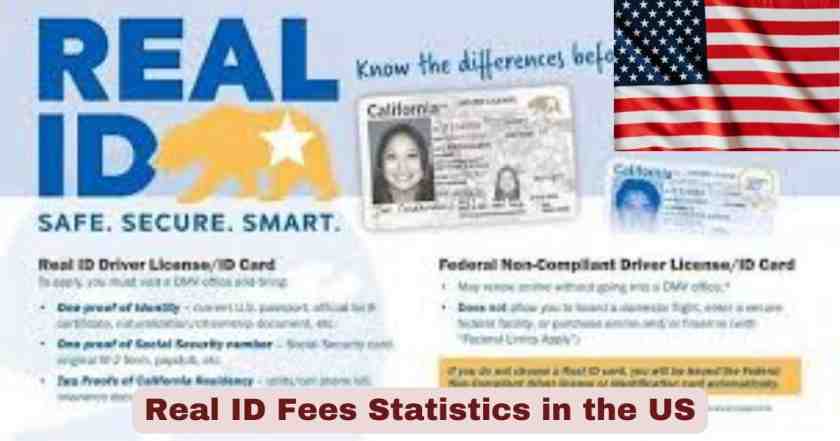
Real ID Fees in the US 2026
If you have flown domestically in the United States at any point since May 7, 2025, you already know that the landscape of airport identification has changed — permanently. The Real ID Act, a federal law originally passed by Congress back in 2005 in the direct aftermath of the September 11 attacks, has finally, after nearly two decades of delays, begun its real enforcement phase. And now, as of February 1, 2026, the stakes have been raised even further. The Transportation Security Administration (TSA) has introduced a brand-new $45 fee — officially called the TSA ConfirmID fee — that applies to every domestic air traveler aged 18 and older who shows up at an airport security checkpoint without a Real ID-compliant driver’s license, state ID, passport, or any other TSA-approved form of identification. This is not a penalty, and it is not a fine. It is a payment required to access a modernized identity verification system that allows non-compliant travelers to still attempt to board their flights — but only after paying up and going through an additional screening process that could add 30 minutes or more to their journey through the airport.
The rollout of the $45 TSA ConfirmID fee is the single most significant policy move in the Real ID timeline since the law was first signed into existence. It arrives at a moment when 94% of travelers at TSA checkpoints are already presenting compliant identification — meaning the fee will directly impact roughly 6% of the flying public, which still translates to millions of individual trips over the course of a year. The Department of Homeland Security (DHS) and the TSA have been abundantly clear: the purpose of this fee is to shift the cost of processing non-compliant travelers away from taxpayers and onto the individuals who choose not to obtain a Real ID before traveling. Meanwhile, state-level Real ID fees for obtaining a compliant driver’s license or state ID vary enormously — from as low as $5 in New Mexico for a basic identification card conversion, all the way up to $129 in Washington State for an 8-year compliant license. Understanding exactly what you will pay — and when — has become one of the most important pieces of travel knowledge any American can have heading into 2026.
Interesting Facts About Real ID Fees in the US 2026
| Fact | Detail |
|---|---|
| Federal Law Name | Real ID Act of 2005 |
| Signed Into Law By | President George W. Bush |
| Date Signed | May 11, 2005 |
| Legislative Origin | Passed as a rider on H.R. 1268, Emergency Supplemental Appropriations Act |
| Catalyst for the Law | September 11, 2001 terrorist attacks; 9/11 Commission recommendation |
| Key Finding (9/11 Commission) | 18 of the 19 hijackers used fraudulent identification documents |
| Original Enforcement Date | May 11, 2008 |
| Number of Times Deadline Was Delayed | 5 official postponements between 2008 and 2025 |
| Actual Full Enforcement Start Date | May 7, 2025 |
| Full Enforcement Completion Deadline | May 5, 2027 (phased enforcement window) |
| TSA ConfirmID Fee Launch Date | February 1, 2026 |
| TSA ConfirmID Fee Amount | $45 per traveler |
| ConfirmID Fee Validity Period | 10 days from start of travel |
| ConfirmID Fee – Originally Proposed Amount | $18 (announced November 20, 2025; raised to $45 on December 1, 2025) |
| ConfirmID Fee – Refundable? | No — non-refundable even if identity verification fails |
| Who Must Pay the Fee | All domestic travelers aged 18+ without acceptable ID |
| Children Under 18 | Not required to present any ID at TSA checkpoints |
| Current TSA Checkpoint Compliance Rate | 94% of travelers presenting compliant ID (as of late 2025) |
| Percentage of Travelers Without Compliant ID | Approximately 6% |
| States Issuing Real ID | All 50 states + District of Columbia + 5 U.S. territories |
| Year All 50 States Became Compliant (Issuing) | 2020 |
| Year All U.S. Territories Became Compliant | 2024 |
| Real ID Identifier on Card | A star (black, gold, or white inside a circle) in the upper right corner |
| Estimated Federal Cost to States for Implementation | $11 billion (projected by federal government in 2007) |
| Real ID Valid For | Domestic air travel and entry into certain federal facilities only |
| Real ID Valid For International Travel? | No — a passport is required for international travel |
Source: TSA.gov – Official Press Releases (Dec. 1, 2025 & Jan. 15, 2026); DHS.gov – REAL ID Enforcement Announcement (May 7, 2025); DHS Year in Review 2025; Wikipedia – Real ID Act; NPR (April 10, 2025); CBS News (Jan. 30, 2026); ABC News (Jan. 8, 2026); Federal Register (Jan. 14, 2025)
The facts laid out in the table above reveal just how long and winding the road to Real ID enforcement has actually been in the United States. What was supposed to happen in 2008 — just three years after the law was signed — did not actually begin in earnest until May 7, 2025, a full 17 years later. The reason for the repeated delays is a combination of state-level resistance driven by cost and privacy concerns, logistical challenges in getting every single state to update its DMV systems, and then the massive disruption caused by the COVID-19 pandemic, which forced most state licensing facilities to close or severely limit their hours for extended periods. It was not until 2020 that all 50 states even began issuing compliant licenses, and it took until 2024 for every U.S. territory to follow suit.
The $45 TSA ConfirmID fee is where the story gets genuinely urgent for everyday Americans in 2026. Originally floated at just $18 when TSA first announced the alternative verification system on November 20, 2025, the fee was more than doubled to $45 just eleven days later on December 1, 2025, when the TSA officially launched the program. TSA officials explained that actual administrative and technology costs exceeded the initial projections. What makes this fee particularly consequential is that it is completely non-refundable — if you pay the $45, go through the ConfirmID process, and your identity still cannot be verified, you lose the money and you do not get to board your flight. The 9/11 Commission’s original finding that 18 of the 19 hijackers carried fraudulent IDs is the reason this entire system exists, and that context gives every dollar of the Real ID fee structure a weight that goes far beyond a simple bureaucratic inconvenience.
Real ID Driver’s License & State ID Fee Comparison Across Major States in the US 2026
| State | Real ID Driver’s License Fee | Real ID State ID Fee | Supplemental / One-Time Fee | License Validity |
|---|---|---|---|---|
| California | $45 | $39 | None (included) | 5 years |
| New York | $64.25 | Up to $14 | None (included) | 8 years |
| Texas | $33 | $16 (age 59 & under) | None (included) | 8 years |
| Florida | $48 | $25 | None (included) | 8 years |
| Pennsylvania | $39.50 | $62.50 | $30 one-time Real ID fee | 4 years |
| Illinois | $30 (ages 21–68) | $10 (adults) | None (included) | 4 years |
| Ohio | $48 (8-year) | $19 (8-year) | None (included) | 8 years |
| Georgia | $32 | $32 | None (included) | 8 years |
| Michigan | $25 | $10 | None (included) | 4 years |
| Washington | $97 (6-year) / $129 (8-year) | $55 (6-year) | None (included) | 6 or 8 years |
| Oregon | $54 + $30 surcharge = $84 | $43 + $30 surcharge = $73 | $30 supplemental fee (every renewal) | 8 years |
| Connecticut | $72 (6-year) / $96 (8-year) | $24 (6-year) / $32 (8-year) | $30 one-time Real ID fee | 6 or 8 years |
| New Mexico | $18 (4-year) / $34 (8-year) | $5 (4-year) / $10 (8-year) | None (included) | 4 or 8 years |
| Mississippi | $24 | $17 | None (included) | 4 years |
| North Dakota | $15 (4-year) | $8 | None (included) | 4 years |
Source: Kelley Blue Book – Real ID State-by-State Fee Guide (updated April 2025); individual state DMV websites (California DMV, New York DMV, Texas DPS, Florida DHSMV, Pennsylvania PennDOT, Oregon DOT, Oregon.gov); CBS News (April 23, 2025)
The sheer variation in Real ID fees from one state to the next is one of the most striking and frustrating realities of the current system. Because the Real ID Act is a federal law but the licenses themselves are issued and paid for at the state level, there is no single national price. A resident of New Mexico can obtain a 4-year Real ID state identification card for just $5, while someone living in Washington State might pay as much as $129 for an 8-year compliant driver’s license. Pennsylvania and Connecticut are two states that stack an additional one-time $30 fee on top of their standard renewal charges specifically for the Real ID upgrade, making the true cost higher than it appears at first glance. Oregon takes a different approach entirely, charging a recurring $30 supplemental fee every single time you renew or replace a Real ID credential — meaning the surcharge compounds over a lifetime of renewals rather than being a one-and-done charge.
What is important to understand is that in the majority of states, the cost of a Real ID-compliant license is exactly the same as a standard, non-compliant renewal. States like Texas, Florida, Georgia, and Michigan have folded the Real ID upgrade into their normal licensing fee with no additional charge whatsoever. This means that for most Americans, simply showing up to the DMV with the right documents at your next regular renewal is all it takes — and the cost stays flat. The states that do charge extra tend to be the ones where the Real ID program was implemented later, and the supplemental fees were added as a way to offset the administrative costs of upgrading the system. For budget-conscious travelers, the math is clear: the $45 TSA ConfirmID fee applies every 10 days you travel without compliant ID, which means even two round trips without a Real ID in a single month would already exceed the cost of obtaining one in almost every single state in the country.
TSA Checkpoint Traveler Volume & Real ID Compliance Stats in the US 2026
| Metric | Figure | Source / Context |
|---|---|---|
| 2025 Average Daily TSA Checkpoint Screenings | 2.48 million travelers per day | Up from 2.47 million daily average in 2024 |
| Year-over-Year Daily Increase (2025 vs. 2024) | +14,000 travelers per day | Steady growth in domestic air travel |
| Single-Day All-Time Record (2025) | ~3.1 million travelers | Set on Sunday, June 22, 2025 |
| Holiday Travel Window (Dec. 19, 2025 – Jan. 4, 2026) | 44.3 million projected travelers | TSA fully staffed for the period |
| Busiest Single Day in Holiday Window | ~2.86 million (Dec. 28, 2025) | Projected by TSA |
| 8 of Top 10 Busiest Days in TSA History | All occurred in 2025 | Record-breaking year for air travel |
| Real ID Compliance Rate at Checkpoints | 94% | Reported by TSA (Dec. 2025) and confirmed by DHS Year in Review 2025 |
| Non-Compliant Traveler Rate | ~6% | Approximately 6% do not present Real ID or other acceptable ID |
| Estimated Non-Compliant Travelers Per Day | ~148,800 | 6% of 2.48 million daily average |
| TSA PreCheck Average Wait Time (2025) | 3 minutes | Far below operational limits |
| Standard Screening Average Wait Time (2025) | 5–6 minutes | Maintained throughout record travel year |
| ConfirmID Processing Time (Estimated) | 30 minutes or more | Per TSA guidance; travelers advised to arrive 1 hour early |
| ConfirmID Fee Payment Methods | Credit/Debit Card, PayPal, Venmo, Bank Account (ACH) | Available online at tsa.gov/ConfirmID and at airport |
Source: TSA.gov – Passenger Volumes & Press Releases (Nov. 21, 2025 & Dec. 22, 2025); DHS Year in Review 2025; CBS News (Jan. 30, 2026); NBC News (Jan. 31, 2026); The Hill (Jan. 30, 2026); Statista – TSA Checkpoint Data
The volume of Americans passing through TSA security checkpoints every single day is staggering, and it puts the Real ID compliance conversation in sharp perspective. With an average of 2.48 million travelers screened daily in 2025 — and 8 of the 10 busiest days in TSA history all occurring within that single calendar year — the United States is living through what the agency itself has called a “golden age of travel.” At that daily volume, even a 6% non-compliance rate translates to roughly 148,800 travelers per day who will now be directed to the ConfirmID process and asked to pay the $45 fee if they want to continue on to their flights. That is not a small number. Spread across an entire year, it could mean tens of millions of fee-triggering encounters at checkpoints nationwide.
The contrast between the ConfirmID processing time and the speed of standard screening tells its own story about why TSA is pushing so hard for compliance. While TSA PreCheck holders sail through in an average of just 3 minutes, and standard screened travelers average 5 to 6 minutes, the ConfirmID alternative identity verification process can take 30 minutes or more. TSA has specifically advised non-compliant travelers to arrive at the airport at least one hour earlier than they normally would to account for this delay — and even then, there is no guarantee the verification will succeed. The $45 fee is non-refundable regardless of outcome, which creates a real financial and logistical risk for anyone who does not plan ahead. The math strongly favors simply getting a Real ID before the next trip, but for the ~6% of travelers who have not yet done so, the ConfirmID system now functions as both a safety net and a financial nudge toward compliance.
Real ID Enforcement Timeline & Delay History in the US 2026
| Scheduled Date | What Was Supposed to Happen | Actual Outcome |
|---|---|---|
| May 11, 2008 | Original enforcement date per the Real ID Act | Delayed — widespread state opposition and implementation challenges |
| 2011 | First rescheduled enforcement target | Delayed again — states still not ready |
| January 22, 2013 | DHS phased enforcement plan announced | Implementation began in phases by state/territory |
| 2014–2018 | Facility-based enforcement began (state by state) | Rolled out gradually; not all states compliant |
| 2020 | All 50 states + D.C. certified as compliant (issuing Real IDs) | Milestone reached — but individual compliance remained low |
| October 1, 2021 | Enforcement deadline (pre-COVID extension) | Delayed due to lingering COVID-19 pandemic impacts |
| May 3, 2023 | Next rescheduled enforcement date | Delayed again — only 43% of licenses in circulation were compliant |
| May 7, 2025 | Current enforcement start date | Enforced — phased approach allowed; 81% checkpoint compliance at launch |
| May 7, 2025 (post-enforcement) | Compliance rate climbed post-enforcement | Rose from 81% at launch to 94% by late 2025 |
| November 20, 2025 | TSA announced ConfirmID system; fee set at $18 | Fee proposed as alternative for non-compliant travelers |
| December 1, 2025 | Fee increased to $45; program formally named TSA ConfirmID | TSA cited higher-than-projected admin and tech costs |
| February 1, 2026 | TSA ConfirmID $45 fee goes live | First time a fee has ever been charged for non-compliant travel |
| May 5, 2027 | Full enforcement completion deadline | All phased-enforcement discretion expires; strict denial expected |
Source: DHS.gov – REAL ID Enforcement Announcements (2013–2025); TSA.gov – Press Releases (Nov. & Dec. 2025); Federal Register – Final Rule (Jan. 14, 2025); Wikipedia – Real ID Act; NPR (April 10 & Dec. 5, 2022); CNBC (Dec. 5, 2022); CBS News (April 23, 2025); ABC10 Fact Check (2025)
The Real ID enforcement timeline reads less like a policy rollout and more like a slow-motion saga that has stretched across three presidential administrations and nearly two full decades. The original 2008 deadline came and went without a single consequence for non-compliant travelers, and the pattern of delay after delay became so familiar that many Americans simply stopped paying attention — which, paradoxically, is one of the reasons compliance remained so stubbornly low for so long. The COVID-19 pandemic was the single biggest setback in the entire process. States that had been steadily working toward compliance suddenly had to shut down or drastically limit their DMV operations, meaning millions of Americans who would have naturally upgraded their licenses during routine renewals simply could not do so.
What changed everything was the May 7, 2025 enforcement date, which — for the first time — actually held. Compliance at TSA checkpoints jumped from 81% on enforcement day to 94% by late 2025, a 13 percentage point surge in under seven months. That kind of rapid movement proves that Americans do respond to real consequences, even if it takes years to get to the point where those consequences actually arrive. The February 1, 2026 launch of the $45 ConfirmID fee is the next escalation in that same pattern — and the May 5, 2027 full enforcement deadline, after which even the phased-approach flexibility disappears entirely, is the final line in the sand. After that date, travelers without compliant ID and without another acceptable document like a passport are expected to be denied entry to the security checkpoint altogether, with no fee-based workaround available.
State-Level Real ID Compliance Rates & Adoption Data in the US 2026
| State / Region | Compliance Rate (Approx.) | Notable Context |
|---|---|---|
| Texas | 98% | Among the highest in the nation; early Real ID implementation |
| Mississippi | 97% | Consistent high adoption; low supplemental fee structure |
| Hawaii | 96% | Strong compliance; 8-year license cycle aids retention |
| Utah | 96% | Early adopter state; 5-year renewal cycle |
| Vermont | 92% | Enhanced driver’s license option boosts overall compliance |
| Colorado | ~100% (eligible residents) | 10-year renewal cycle; began compliant issuance in 2009 |
| Florida | ~100% (eligible residents) | Aggressive early rollout; virtually all current licenses compliant |
| Georgia | ~100% (eligible residents) | Same as Florida — early and thorough implementation |
| Nebraska | ~100% (eligible residents) | Mandatory transition began in 2009; near-universal compliance |
| District of Columbia | ~100% | Small jurisdiction; full compliance achieved |
| California | ~55% | Large population; slower rollout; significant backlog reported |
| New York | 43% | Major metro areas drove demand surges; compliance still climbing |
| Illinois | ~35% (as of April 2025) | Opened special “Real ID Super Center” in Chicago to process 1,500/day |
| Pennsylvania | 26% | Long lines reported; one-time $30 surcharge may have slowed uptake |
| Washington State | 27% | High license fees ($97–$129) cited as a factor in slower compliance |
| Maine | 27% | Rural population; fewer DMV locations per capita |
| New Jersey | 17% (lowest in nation) | Smallest compliance rate as of spring 2025; aggressive catch-up efforts underway |
| National Checkpoint Compliance | 94% | Reflects travelers presenting any acceptable ID, not just Real ID |
Source: CBS News – Data Analysis (April 7–18, 2025); DHS.gov – REAL ID Full Enforcement Announcement (May 7, 2025); TSA.gov – Chicago O’Hare Press Release (June 24, 2025); Colorado DMV (CBS News interview, April 2025); World Population Review – Real ID Compliant States (2025)
The gap between states like Texas at 98% and New Jersey at just 17% is one of the starkest illustrations of how unevenly the Real ID rollout landed across the country. States that began issuing compliant licenses early — some as far back as 2009 — had the advantage of time and natural license renewal cycles to bring their populations into compliance without any dramatic last-minute scramble. Colorado, for example, operates on a 10-year renewal cycle, which meant that residents who renewed during the long lead-up period were automatically upgraded without needing to do anything special or pay anything extra. On the other end of the spectrum, states like New Jersey, Pennsylvania, and Illinois found themselves in genuine crisis mode as the May 7, 2025 deadline approached. Illinois went so far as to open a dedicated “Real ID Super Center” in a converted downtown Chicago Walgreens location, with the capacity to process up to 1,500 new Real IDs per day, just to try to chip away at the backlog.
It is critical to note that the 94% compliance rate reported at TSA checkpoints does not mean 94% of all state-issued licenses in circulation are Real ID-compliant. It means that 94% of the people who show up at airport security are presenting some form of acceptable identification — which could be a Real ID, a U.S. passport, a military ID, an enhanced driver’s license, or a trusted traveler card. Many Americans who fly regularly already carry a passport as their go-to travel document and may not even realize they are in compliance without ever having upgraded their driver’s license. The states with the lowest Real ID issuance rates are disproportionately populated states with large urban centers, where DMV wait times, appointment availability, and sheer volume of residents all combine to slow the process down significantly.
Financial Impact & Cost Analysis of Real ID Fees in the US 2026
| Scenario | Estimated Cost | Timeframe |
|---|---|---|
| One-time TSA ConfirmID Fee (single use) | $45 | Valid for 10 days |
| ConfirmID Fee – Family of 4 (all 18+, one trip) | $180 | Per trip (4 x $45) |
| ConfirmID Fee – Round Trip (2 uses, 1 traveler) | $90 | If trips are more than 10 days apart |
| ConfirmID Fee – Monthly Traveler (4 trips/month) | $180 | 4 x $45 per month |
| ConfirmID Fee – Annual Frequent Traveler (weekly flights) | $2,340+ | 52 x $45 (if non-compliant all year) |
| Average Real ID Driver’s License Fee (national range) | $15 – $129 | One-time or per renewal cycle |
| Average Real ID State ID Fee (national range) | $5 – $73 | One-time or per renewal cycle |
| States with $0 Extra Fee for Real ID Upgrade | Majority of states | Cost same as standard renewal |
| Most Expensive Real ID DL (Washington State) | $129 (8-year) | Single payment; valid 8 years |
| Least Expensive Real ID DL (North Dakota) | $15 (4-year) | Single payment; valid 4 years |
| Break-Even Point: ConfirmID vs. Getting a Real ID | 1–3 trips | ConfirmID cost exceeds Real ID cost after very few uses |
Source: TSA.gov – ConfirmID Fee Announcement (Dec. 1, 2025); CNBC (Jan. 31, 2026); CBS News (Jan. 30, 2026); Kelley Blue Book – State Fee Guide (April 2025); The Hill (Jan. 30, 2026); NBC News – Associated Press (Jan. 31, 2026)
The financial logic behind obtaining a Real ID versus repeatedly paying the $45 TSA ConfirmID fee is about as straightforward as it gets. A family of four where all members are 18 or older would pay a combined $180 in ConfirmID fees for a single domestic trip — and that is before factoring in the 30-minute-plus delays, the risk of a failed verification, and the stress of potentially missing a flight. Meanwhile, the actual cost of obtaining a Real ID driver’s license in most states falls somewhere between $15 and $65, covers you for 4 to 10 years depending on the state, and eliminates any airport ID friction entirely. Even in the most expensive states like Washington at $129, that single payment buys you 8 years of uninterrupted, stress-free travel. The break-even math is brutal for anyone who flies more than once or twice a year without compliant ID: after just 2 to 3 trips, the cumulative ConfirmID fees will have already exceeded the cost of simply getting a Real ID.
Consumer advocates have raised legitimate concerns about who bears the burden of these fees most heavily. As Matt Breyault, a consumer policy expert quoted by CNBC, pointed out, the $45 charge falls hardest on low- to moderate-income travelers and families — precisely the demographics most likely to lack the documentation flexibility or DMV access to obtain a Real ID quickly. A working parent who cannot take time off to sit in a DMV line, or someone without easy access to a certified copy of their birth certificate, faces a compounding set of barriers that the fee structure does nothing to accommodate. The TSA has acknowledged this tension but maintains that the fee is the most effective tool available to encourage compliance while still allowing non-compliant Americans to fly — just at a cost. The agency’s position is firm: non-compliant travelers, not taxpayers, must cover the cost of processing them.
Disclaimer: This research report is compiled from publicly available sources. While reasonable efforts have been made to ensure accuracy, no representation or warranty, express or implied, is given as to the completeness or reliability of the information. We accept no liability for any errors, omissions, losses, or damages of any kind arising from the use of this report.