
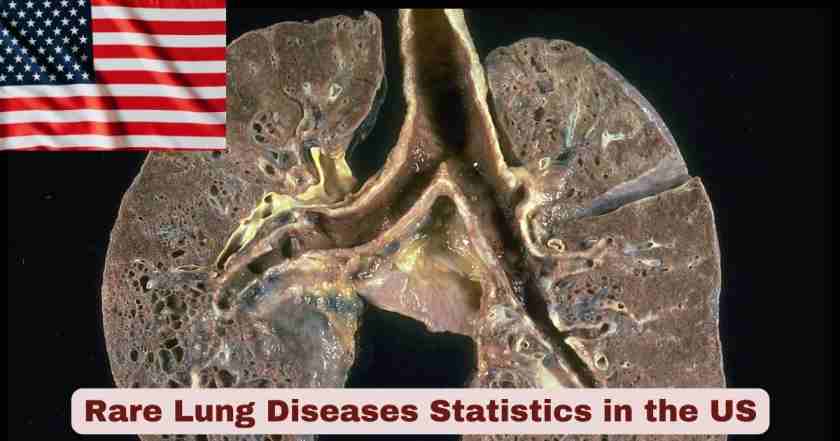
Rare Lung Diseases in the US 2026
Rare lung diseases represent one of the most underrecognized public health burdens in the United States — conditions that, by sheer definition, affect fewer people than the major killers like COPD or lung cancer, yet carry a mortality and disability toll that is profoundly disproportionate to their numbers. The broad umbrella of interstitial lung diseases (ILDs) alone — a group of more than 200 disorders that cause progressive scarring of lung tissue — accounts for tens of thousands of deaths in the United States every year, and that figure has been climbing steadily. The National Heart, Lung, and Blood Institute (NHLBI), through its Restrictive and Vascular Lung Diseases Branch, actively funds research and supports registries across the most serious of these conditions: idiopathic pulmonary fibrosis (IPF), pulmonary arterial hypertension (PAH), sarcoidosis, lymphangioleiomyomatosis (LAM), and childhood interstitial lung disease (chILD), among others. What makes rare lung diseases especially challenging from a public health standpoint is that nearly every major condition in this category shares the same cruel feature: they are difficult to diagnose, have no cure, and disproportionately strike specific demographic groups — older men for IPF, women of childbearing age for LAM, Black Americans for sarcoidosis.
The statistics surrounding rare lung diseases in the US in 2026 reflect both the real progress being made in monitoring and treating these conditions and the enormous unmet need that remains. The OPTN/SRTR 2023 Annual Data Report — the most comprehensive government data source on end-stage lung disease in the US — recorded 3,049 adult lung transplants performed in 2023 alone, the highest single-year total in American history, with transplant rates reaching an all-time high of 307.6 per 100 patient-years on the waitlist. IPF deaths in the US across the three-year period from 2020 to 2022 totaled 67,843 — a number that makes clear the scale of mortality even within a disease considered “rare.” Meanwhile, sarcoidosis-related deaths tracked through CDC mortality data from 1999 through 2020 accumulated to 37,956 deaths, with the age-standardized mortality rate rising from 3.9 per million population in 1999 to 6.42 per million by 2020 — a sobering upward trend across two decades. This article draws exclusively on verified, peer-reviewed, and government-sourced data to present the most accurate and current picture of rare lung disease statistics in the US in 2026.
Key Interesting Facts: Rare Lung Diseases in the US 2026
| Fact | Verified Data / Figure |
|---|---|
| Most common rare ILD in the US | Idiopathic pulmonary fibrosis (IPF) — the most common form of progressive fibrotic ILD |
| IPF median survival after diagnosis | 2.8–5 years from diagnosis; range confirmed across multiple US registry and claims studies |
| IPF 5-year survival | Estimated at 20–40% |
| Total IPF deaths in the US, 2020–2022 | 67,843 deaths (39,712 male; 28,131 female) — CDC multiple cause-of-death data |
| IPF age-adjusted death rate (2017) | 5.4 per 100,000 overall (7.2 for men; 4.0 for women) — CDC |
| IPF prevalence (US, 2022 estimate) | Up to 96.2 per 100,000 using broad definition — Annals of ATS / Chest, 2024 |
| IPF cases projected in US by 2034 | ~134,778 diagnosed cases — GlobalData epidemiology forecast, 2024 |
| Sarcoidosis incidence — Black Americans vs. White Americans | 17.8 vs. 8.1 per 100,000 — Annals of ATS (Optum database, 2009–2013) |
| Sarcoidosis prevalence — Black American women | 178.5 per 100,000 — highest prevalence of any racial/sex group in the US |
| Sarcoidosis age-adjusted mortality rate, African Americans vs. Whites | 23.84 vs. 2.87 per million — CDC WONDER data, 1999–2020 (Chest, 2023) |
| PAH estimated prevalence (US/Europe) | 15–50 cases per million adults — well-established clinical range |
| PAH female-to-male ratio (REVEAL Registry) | 4.8:1 — females predominate strongly |
| LAM estimated prevalence | Approximately 5 per million women (US-based estimate); newer European data suggests up to 23.5 per million adult women |
| LAM median transplant-free survival (LAM Foundation Registry) | 29 years from symptom onset; 23 years from diagnosis |
| US adult lung transplants in 2023 | 3,049 — all-time record (OPTN/SRTR 2023 Annual Data Report) |
| 1-year survival after lung transplant (2022 cohort) | 88.5% — OPTN/SRTR 2023 |
| IPF occupational deaths, 2020–2022 | An estimated 21% of IPF deaths may be attributable to occupational exposures |
Data Sources: CDC MMWR — “Idiopathic Pulmonary Fibrosis Mortality by Industry and Occupation — United States, 2020–2022,” March 2025. Annals of ATS — “Sarcoidosis in America,” Gerke et al., 2017. Chest — “Sex, Race, and Ethnic Disparities in Sarcoidosis-Related Mortality,” 2023. OPTN/SRTR 2023 Annual Data Report: Lung (American Journal of Transplantation, 2025). GlobalData — “Idiopathic Pulmonary Fibrosis (IPF) – Epidemiology Forecast to 2034,” 2024. NHLBI — Restrictive and Vascular Lung Diseases Branch program descriptions. Rare Disease Advisor — “Pulmonary Arterial Hypertension Epidemiology,” citing REVEAL Registry and NIH registry data.
The headline numbers for rare lung diseases in the United States in 2026 cut through the clinical complexity and reveal a clear picture: these conditions are far from trivial in their combined burden. The fact that IPF alone produced 67,843 deaths in just three years — 2020, 2021, and 2022 — in a country where this disease is officially classified as “rare” should recalibrate anyone’s sense of how much weight that word carries. The 5-year survival rate of 20–40% for IPF is worse than many common cancers, yet IPF receives a fraction of the public awareness or research funding. The sarcoidosis mortality data is equally striking: the age-standardized mortality rate for African Americans is 23.84 per million — more than eight times the rate for White Americans at 2.87 per million — representing one of the most severe racial health disparities in any lung disease category in the United States.
For conditions like PAH and LAM, the numbers are smaller in absolute terms but no less impactful in human terms. PAH affects an estimated 15 to 50 adults per million in the US and Europe, carries no cure, and leads to right heart failure and premature death in the majority of patients without treatment. LAM, affecting primarily women of childbearing age with a prevalence of roughly 5 per million women by the most commonly cited US estimate, has historically been severely underdiagnosed — the true number may be substantially higher, as recent European data using national referral centers found prevalence as high as 23.5 per million adult women. What unites all of these conditions is the landmark shift in outcomes now being driven by US lung transplantation: 3,049 adults received lung transplants in 2023, a record high, with 88.5% surviving to one year — a 10-year improvement over the 87.2% one-year survival rate recorded in 2013.
Idiopathic Pulmonary Fibrosis (IPF) Statistics in the US 2026
| IPF Indicator | Verified Data |
|---|---|
| IPF definition | Progressive, irreversible fibrotic ILD with usual interstitial pneumonia pattern; no identified cause |
| Most common ILD type | IPF is the most common form of progressive fibrotic ILD — NHLBI |
| IPF median survival after diagnosis | 2.8 years — BMC Pulmonary Medicine US Medicare cohort (2023); 3–5 years — NHLBI/CDC range |
| IPF 5-year survival estimate | 20–40% — meta-analysis range (PMC, systematic review) |
| IPF age-adjusted death rate, US (2017) | 5.4 per 100,000 overall; 7.2 per 100,000 in men; 4.0 per 100,000 in women — CDC |
| IPF deaths in US workers, 2020–2022 | 67,843 total (59% male, 41% female) — CDC MMWR, March 2025 |
| IPF deaths potentially work-related, 2020–2022 | ~8,340 in males and ~5,908 in females may be linked to occupational exposures |
| IPF prevalence (US, 2022, broad definition) | 96.2 per 100,000 persons (crude), 67.1 per 100,000 (age/sex adjusted) — Chest / Annals ATS, 2024 |
| IPF incidence rate (US, 2017–2022) | 13.2–26.1 per 100,000 person-years (crude); 9.0–18.4 per 100,000 adjusted — 2024 claims study |
| IPF diagnosed cases in US (2024 estimate) | Approximately 100,000+ — with projections to ~134,778 by 2034 |
| IPF typical age at diagnosis | 7th decade of life (onset generally after age 60); onset uncommon before age 50 |
| IPF sex ratio | Higher in men; male-to-female ratio approximately 3:1 — PMC meta-analysis |
| IPF risk factors | Age, male sex, cigarette smoking, family history, occupational dust exposure (wood, metal), viral infections |
| Average delay to diagnosis | 2.7 years after first respiratory symptom — BMC Pulmonary Medicine (US Medicare cohort, 2023) |
| IPF patients on anti-fibrotic therapy | Only 10.4% treated with anti-fibrotics in US Medicare cohort — BMC Pulmonary Medicine, 2023 |
| IPF and oxygen before diagnosis | 37% of patients prescribed supplemental oxygen before receiving their IPF diagnosis |
| Occupational sector with highest IPF male mortality | Utilities industry (proportionate mortality ratio 1.15) — CDC MMWR, 2025 |
Data Sources: CDC MMWR — “Idiopathic Pulmonary Fibrosis Mortality by Industry and Occupation — United States, 2020–2022,” March 6, 2025 (PMID 40048397). BMC Pulmonary Medicine — “Idiopathic Pulmonary Fibrosis in the United States: Time to Diagnosis and Treatment,” August 2023. Chest (journal.chestnet.org) — “Incidence and Prevalence of IPF in the US Between 2017 and 2022,” October 2024 (CHEST abstract). Annals of the American Thoracic Society — “Incidence Rate and Prevalence of IPF in the US 2017–2022,” ATS, 2025 articles in press. NHLBI BioLINCC Lung Tissue Research Consortium — prevalence of IPF approximately 28 per 100,000. GlobalData — “IPF Epidemiology Forecast to 2034,” 2024.
The IPF data for the United States paints a consistent and troubling picture: this is a disease that kills at scale, is routinely diagnosed late, and remains dramatically undertreated despite the availability of approved anti-fibrotic drugs. The CDC’s 2025 MMWR analysis, which examined three full years of US multiple cause-of-death data (2020–2022), counted 67,843 Americans who died with IPF over that period — roughly 22,600 deaths per year on average. That figure makes IPF one of the most lethal conditions in its category. Yet a large US Medicare cohort study published in BMC Pulmonary Medicine found that the average patient waited 2.7 years after their first respiratory complaint before receiving a diagnosis, and once diagnosed, only 1 in 10 patients — just 10.4% — was treated with anti-fibrotics, despite pirfenidone and nintedanib being FDA-approved to slow disease progression. These numbers point directly to a care gap that is driving preventable deaths.
The prevalence trend is also moving in the wrong direction over time. Using a broad claims-based definition that captured any patient with an IPF ICD-10 code and no competing ILD diagnoses, the 2024 Chest/Annals of ATS analysis found that the crude prevalence of IPF in the US increased each year from 2017 to 2022, reaching 96.2 per 100,000 persons in 2022 under the broadest definition. Both prevalence and incidence increased sharply with age, and the data confirmed a persistent demographic gradient: Caucasian and Hispanic populations had higher measured prevalence than Black and Asian populations, though researchers acknowledge this likely reflects diagnostic patterns and access-to-care differences rather than true lower disease burden. The forecast from GlobalData projects that diagnosed IPF cases in the US will rise to approximately 134,778 by 2034, reflecting both an aging population and improving (but still imperfect) diagnostic rates.
Sarcoidosis Statistics in the US 2026
| Sarcoidosis Indicator | Verified Data |
|---|---|
| US annual incidence (overall) | 8–11 per 100,000 — American Family Physician, January 2024 |
| US prevalence (overall) | 60–100 per 100,000 — American Family Physician, January 2024 |
| Incidence — Black Americans | 17.8 per 100,000 — Annals of ATS (Optum US managed care database, 2009–2013) |
| Incidence — White Americans | 8.1 per 100,000 |
| Incidence — Hispanic Americans | 4.3 per 100,000 |
| Incidence — Asian Americans | 3.2 per 100,000 |
| Prevalence — Black Americans | 141.4 per 100,000 |
| Prevalence — White Americans | 49.8 per 100,000 |
| Prevalence — Black American women (highest US group) | 178.5 per 100,000 — Annals of ATS |
| Female-to-male incidence ratio | Women approximately 2 times more likely to have sarcoidosis |
| Black American women incidence (Black Women’s Health Study) | Up to 71 per 100,000 per year |
| Age-standardized mortality rate, 1999–2020 (overall) | 5.19 per million — CDC WONDER data (Chest, 2023) |
| Age-standardized mortality rate — African Americans | 23.84 per million |
| Age-standardized mortality rate — White Americans | 2.87 per million |
| Mortality rate trend, 1999–2020 | Rose from 3.9 to 6.42 per million (AAPC +2.1% per year) |
| Total sarcoidosis deaths, 1999–2020 | 37,956 deaths — CDC WONDER MCOD data (Chest, 2023) |
| Mean age of death — Black patients | 52 years vs. 65 years in White patients |
| Geography with highest incidence/prevalence | Northeast US and urban areas — consistent across multiple studies |
| Spontaneous remission rate | Approximately 50% within 2 years — American Family Physician, 2024 |
| Sarcoidosis-related death as % of patients | Significant organ impairment and death in approximately 5% of patients — Annals ATS |
Data Sources: American Family Physician — “Sarcoidosis,” January 2024, Vol. 109 No. 1 (Penn State Health). Annals of the American Thoracic Society — “Sarcoidosis in America: Analysis Based on Health Care Use,” Gerke et al., 2017. Chest — “Sex, Race, and Ethnic Disparities in Sarcoidosis-Related Mortality in the United States,” October 2023 (CDC WONDER 1999–2020 analysis). PMC — “Progress For All: Addressing Disparities in Sarcoidosis,” August 2024. PMC — “Racial Difference in Sarcoidosis Mortality in the United States,” CDC National Center for Health Statistics data, 1999–2010.
The sarcoidosis statistics in the United States are defined above all else by race — a disparity so large and consistent across decades of data that it qualifies as one of the most striking racial health inequities in American pulmonology. The national incidence figures from the landmark Annals of ATS analysis (using the Optum managed care database covering approximately 15% of US residents) establish the baseline clearly: Black Americans develop sarcoidosis at more than twice the rate of White Americans — 17.8 versus 8.1 per 100,000 — and carry a prevalence of 141.4 per 100,000 versus 49.8 per 100,000 for White Americans. Among Black American women specifically, the figures are even higher, with the prevalence reaching 178.5 per 100,000 — the highest of any racial/sex group in the country. Most striking of all is the mortality gap: the CDC WONDER analysis covering 1999–2020 found that the age-standardized mortality rate for African Americans was 23.84 per million, compared to 2.87 per million for White Americans — a ratio of more than 8 to 1. Black patients with sarcoidosis also die younger, with a mean age of death of 52 years versus 65 years in White patients.
The overall population trajectory of sarcoidosis mortality is also worsening. The age-standardized mortality rate climbed from 3.9 per million in 1999 to 6.42 per million in 2020, an average annual percent change of +2.1% — a consistent upward trend over two full decades. The total death toll from 1999 through 2020 was 37,956 Americans whose deaths involved sarcoidosis. Importantly, the American Family Physician’s 2024 clinical review confirms that the US annual incidence is 8–11 per 100,000 overall and prevalence is 60–100 per 100,000 — figures that, if applied to the current US population of approximately 340 million, imply somewhere between 200,000 and 340,000 Americans living with sarcoidosis at any given time. Approximately half experience spontaneous remission within two years, but the other half face a chronic, potentially progressive course — and for those in the Black American population, the chances of severe disease, multiorgan involvement, and early death are dramatically elevated.
Pulmonary Arterial Hypertension (PAH) Statistics in the US 2026
| PAH Indicator | Verified Data |
|---|---|
| PAH clinical classification | Group 1 pulmonary hypertension — WHO/World Symposium on Pulmonary Hypertension classification |
| PAH prevalence — US and Europe | 15–50 cases per million adults — well-established clinical range (Rare Disease Advisor; Sci Direct, 2022) |
| PAH incidence — national systematic registries | Approximately 5.8 cases per million adults per year — systematic review meta-analysis (PMC, 2021) |
| PAH prevalence — national systematic registries | 47.6–54.7 cases per million adults — same meta-analysis |
| Idiopathic PAH prevalence | 6–10 cases per million in Western countries |
| Global prevalent PAH cases (2021) | ~192,000 globally (95% UI: 155,000–236,000) — GBD Lancet Respiratory Medicine, 2024 |
| PAH sex ratio | Predominantly female — 4.8:1 female-to-male ratio in REVEAL Registry |
| REVEAL Registry female prevalence | 79.5% of PAH patients were female |
| PAH mean age at diagnosis (REVEAL) | 53 years — REVEAL Registry (2006 US-based) |
| Overall pulmonary hypertension (all groups) age-adjusted mortality rate, US 1999–2019 | 7.9 per 100,000 — CDC WONDER data (ScienceDirect, 2022) |
| PH mortality trend, 1999–2019 | Increased by +1.9% per year on average |
| Total PH-associated deaths, US 1999–2019 | 429,105 deaths where PH appeared as a contributing cause — CDC WONDER |
| PAH subtype by etiology (most common) | ~52.6% are idiopathic, heritable, or anorexigen-induced |
| Systemic sclerosis (SSc) and PAH | PAH develops in 8–12% of SSc patients — most common connective tissue disease-associated PAH |
| Current cure status | No cure — PAH is progressive, ultimately leading to right heart failure and death without treatment |
| Age distribution | Prevalence increasing among ages 50–65 years; highest prevalence in ages 75–79 (GBD 2021) |
Data Sources: ScienceDirect / PMC — “Pulmonary Hypertension Mortality Trends in United States 1999–2019,” September 2022, using CDC WONDER Multiple Cause of Death data. Rare Disease Advisor — “Pulmonary Arterial Hypertension Epidemiology,” citing REVEAL Registry, NIH PAH Registry (1981–1985), and Levine DJ, AJMC, 2021. PMC — “Epidemiology of PAH and CTEPH: Identification of the Most Accurate Estimates from a Systematic Literature Review,” 2021. The Lancet Respiratory Medicine — “Global, Regional, and National Burden of PAH, 1990–2021: GBD Study 2021,” October 2024. AJMC — “Pulmonary Arterial Hypertension: Updates in Epidemiology and Evaluation of Patients,” 2021.
Pulmonary arterial hypertension in the United States occupies a unique position in the landscape of rare lung diseases: it is comparatively small in prevalence — affecting an estimated 15 to 50 adults per million by established clinical range — but carries an outsized mortality burden and disproportionately strikes women between the ages of 30 and 60. The REVEAL Registry, the largest US-based observational registry of PAH patients, found that 79.5% of enrolled PAH patients were female, with a female-to-male ratio of 4.8:1 — a demographic dominance that makes PAH one of the most gender-skewed serious cardiopulmonary diseases in the country. The mean age at REVEAL enrollment was 53 years, a shift from earlier registry data showing a mean of 36 years at presentation, reflecting better detection in the older population and a changing clinical phenotype. Despite decades of approved therapies targeting three PAH-specific pathways, the disease remains incurable, and the majority of patients will develop right heart failure and early death without ongoing treatment.
The broader pulmonary hypertension (PH) mortality data — which captures all five WHO groups, not just PAH — gives a sense of the population-level scope. CDC WONDER data covering 1999 to 2019 found 429,105 deaths in the US where PH appeared as a contributing cause, with an average age-adjusted mortality rate of 7.9 per 100,000 individuals and an annual increase of +1.9% per year. The Global Burden of Disease Study 2021, published in The Lancet Respiratory Medicine in October 2024, estimated approximately 192,000 prevalent PAH cases globally, with 62% in females and a global age-standardized prevalence rate of 2.28 per 100 000 population. For the United States specifically, clinically validated registries consistently point to prevalence in the 15–50 per million adult range, and the trajectory is upward — particularly in the 50–65 age group, where new PAH diagnoses are increasingly common and patients tend to present with more advanced disease and higher comorbidity burden.
Lymphangioleiomyomatosis (LAM) Statistics in the US 2026
| LAM Indicator | Verified Data |
|---|---|
| What is LAM | Rare, progressive cystic lung disease caused by abnormal smooth muscle-like cell proliferation; affects predominantly women |
| Two forms | Sporadic LAM (S-LAM) — somatic TSC2 mutation; TSC-LAM — associated with tuberous sclerosis complex |
| S-LAM estimated prevalence | Approximately 3.3–7.7 per million women (NIH/NHLBI-cited range) |
| 7-country study prevalence | 3.4–7.8 per million women (range across countries including the US) — Harknett et al., QJM, 2011 |
| European national referral center estimate (2024) | 19–23.5 per million adult women — Lynn et al., pooled 4-country estimate (Denmark, Ireland, Netherlands, Norway); suggests significant underdiagnosis globally |
| LAM incidence (US, 2004–2008) | 0.23–0.31 per million women per year — Harknett et al., QJM, 2011 |
| Sex distribution | Almost exclusively women — male cases very rare, primarily in tuberous sclerosis complex |
| Typical age of onset | Early-to-mid 30s — average onset during reproductive years |
| LAM Foundation Registry enrolled patients | Approximately 1,149 registered patients (LAM Foundation) |
| Median transplant-free survival from symptom onset | 29 years — LAM Foundation Registry, US population-based study |
| Median transplant-free survival from diagnosis | 23 years — same registry |
| 10-year transplant-free survival | 86% — LAM Foundation Registry |
| Pneumothorax occurrence | Approximately 50–60% of LAM patients experience pneumothorax; tends to recur |
| Most common presenting symptom | Dyspnea (shortness of breath) on exertion — worsens progressively |
| TSC-LAM lung cysts prevalence | 30% of female TSC patients have cystic lung changes consistent with LAM |
| FDA-approved treatment | Sirolimus (rapamycin) — stabilizes lung function (FDA-approved based on MILES trial) |
| LAM and TSC prevalence | TSC affects approximately 1 in 6,000 births worldwide; associated with 1.5–2 million cases globally |
Data Sources: NIH StatPearls — “Lymphangioleiomyomatosis,” June 2023 (NCBI NBK534231). PMC — “Clinical Features, Epidemiology, and Therapy of Lymphangioleiomyomatosis,” Taveira-DaSilva and Moss, NHLBI/NIH, 2015. QJM / PubMed — Harknett EC et al., “Use of Variability in National and Regional Data to Estimate the Prevalence of LAM,” November 2011. PubMed — “Clinical Predictors of Mortality and Cause of Death in LAM: A Population-Based Registry,” LAM Foundation Registry data. American Journal of Respiratory and Critical Care Medicine (AJRCCM) — “Lymphangioleiomyomatosis: No Longer Ultra-rare,” PMC, January 2024, citing Lynn et al. NHLBI LAM Registry (NHLBI-led, 5-year US multicenter study, 230 patients).
Lymphangioleiomyomatosis in the United States is in some ways the most precisely defined of the rare lung diseases covered in this article: it affects almost exclusively women, almost always during their childbearing years, and is driven by abnormal proliferation of smooth muscle-like cells that produce the characteristic bilateral cystic destruction of the lung parenchyma. The prevalence figures have historically been estimated in the range of 3.3 to 7.8 per million women using US and multi-country patient advocacy data — translating to approximately 700 to 1,300 women in the United States at any given time, based on a female population of roughly 170 million. However, a January 2024 commentary in the American Journal of Respiratory and Critical Care Medicine highlighted striking new European national referral center data showing prevalence as high as 19–23.5 per million adult women — a 3 to 5-fold higher figure that the authors attribute to more systematic case identification through national referral networks and suggests that current US estimates may significantly undercount true disease burden due to missed or delayed diagnoses.
The survival outlook for LAM has improved considerably since the disease was historically characterized as fatal within a decade. The LAM Foundation Registry, a population-based US study of 410 patients, found a median transplant-free survival of 29 years from symptom onset and 23 years from diagnosis, with a 10-year transplant-free survival of 86% — a dramatic revision upward from older retrospective cohort studies that estimated 10-year mortality as high as 80%. This improvement reflects better detection, the availability of sirolimus (FDA-approved following the MILES trial for patients with abnormal lung function), and longer follow-up in healthier populations. That said, the disease carries substantial morbidity: approximately 50–60% of LAM patients will experience at least one pneumothorax, and progressive dyspnea on exertion is a near-universal feature of advancing disease, with airflow obstruction documented in 61% of sporadic LAM patients at enrollment in the NHLBI LAM Registry.
Lung Transplant Statistics for Rare Lung Diseases in the US 2026
| Lung Transplant Indicator | Verified Data |
|---|---|
| Total adult lung transplants in 2023 | 3,049 — all-time record (OPTN/SRTR 2023 Annual Data Report) |
| Transplant rate per 100 patient-years (2023) | 307.6 — highest ever recorded |
| Adult lung transplant candidates listed by 1 year who received transplant | 81.2% received a deceased donor lung transplant within 1 year of listing |
| Percentage who waited 3 months or less | 62.6% of transplanted adults waited 3 months or fewer |
| Adult waitlist mortality rate (2023) | 13.3 deaths per 100 patient-years — lowest ever recorded |
| 1-year post-transplant survival (2022 transplant cohort) | 88.5% |
| 1-year post-transplant survival (2013 cohort, for comparison) | 87.2% — modest but stable improvement over a decade |
| 3-year post-transplant survival | 67% — OPTN/SRTR data |
| 5-year post-transplant survival | 54.3% — OPTN/SRTR data |
| Most common adult diagnosis group — lung transplant | Restrictive lung disease (Group D) — includes IPF and ILDs; largest transplant group |
| Bilateral vs. single lung transplants | Majority performed are bilateral (2,063 bilateral vs. 506 single in 2021 SRTR data) |
| Largest age group receiving transplants | Ages 50–64 years (highest volume) followed by 65+ |
| Pediatric lung transplants in 2023 | 31 pediatric transplants (20 aged 12–17; 8 aged 6–11) |
| New organ allocation system (as of March 2023) | Composite Allocation Score (CAS) replaced Lung Allocation Score (LAS) |
| Lung transplant 1-year survival, IPF recipients | Generally consistent with overall average — IPF is the leading indication in restrictive lung disease group |
Data Sources: OPTN/SRTR 2023 Annual Data Report: Lung — published in American Journal of Transplantation, February 2025 (PMC12334194 / PMID 39947808). OPTN/SRTR 2021 Annual Data Report: Lung — PMC9970343. Organ Donation Statistics — organdonor.gov (HRSA/OPTN, over 103,000 total national transplant waitlist as of September 2024).
The lung transplant data in the United States represents the most quantified and systematically tracked outcome pipeline for end-stage rare lung disease in the country. The OPTN/SRTR 2023 Annual Data Report marks 2023 as a landmark year: 3,049 adult lung transplants were performed — the highest in a single year — alongside the highest-ever transplant rate of 307.6 per 100 patient-years and the lowest-ever waitlist mortality at 13.3 deaths per 100 patient-years. This confluence of records reflects the transition to the Continuous Allocation Score (CAS) system adopted in March 2023, which was designed to better match the sickest patients with available donor organs regardless of geographic boundaries. The fact that 62.6% of patients were transplanted within 3 months of listing and 81.2% within one year marks a significant reduction in the years of waiting that previously characterized many ILD patients’ pre-transplant experience.
The long-term survival figures are sobering but improving. A patient who receives a lung transplant today has an 88.5% probability of surviving to one year, 67% to three years, and 54.3% to five years — numbers that are meaningfully better than the natural history of advanced IPF (median survival under 3 years) or end-stage PAH, but that also make clear how high the stakes are for patients awaiting organs. IPF and restrictive lung diseases collectively constitute the largest diagnostic group among lung transplant recipients, a reflection of both the high prevalence of IPF relative to other rare ILDs and the fact that IPF patients typically have no viable pharmacological alternative to transplant once disease reaches an advanced stage. The pediatric transplant landscape remains small — 31 pediatric lung transplants in 2023 — with pulmonary hypertension being the second most common indication after unspecified/other diagnoses, a reminder that rare lung diseases in the US reach patients of every age.
Rare Lung Disease Mortality and Diagnosis Disparities in the US 2026
| Disparity Indicator | Verified Data |
|---|---|
| IPF average delay from first symptom to diagnosis | 2.7 years — US Medicare claims-based study (BMC Pulmonary Medicine, 2023) |
| IPF patients receiving anti-fibrotic therapy | Only 10.4% in US Medicare cohort despite approved therapies available |
| IPF patients on supplemental oxygen before diagnosis | 37% — indicating advanced disease at time of formal diagnosis |
| IPF male-to-female death ratio, 2020–2022 | 59% male deaths vs. 41% female deaths — CDC MMWR |
| Sarcoidosis mortality gap: Black vs. White | African Americans: 23.84 per million vs. White: 2.87 per million (8.3x higher) |
| Sarcoidosis mean age of death: Black vs. White patients | 52 years (Black) vs. 65 years (White) — 13 years earlier |
| PAH racial disparity (REVEAL Registry) | Hispanic patients underrepresented in REVEAL vs. expected US population share |
| PH mortality — females vs. males | Higher age-adjusted mortality rates in females — CDC WONDER 1999–2019 |
| PH mortality — rural vs. urban | Rural PH-related age-adjusted mortality rate 10.75 per 100,000 (2004–2019) — ScienceDirect |
| LAM misdiagnosis | LAM often initially misdiagnosed as asthma or COPD — NIH StatPearls |
| Sarcoidosis geography | Northeast US and urban clusters show significantly higher sarcoidosis prevalence |
| IPF occupational attribution by sex | An estimated 21% of IPF deaths may be attributable to occupational exposures; male-dominated sectors (utilities) carry highest risk |
| PH mortality — racial disparity | Higher age-adjusted PH mortality rates in non-Hispanic Black persons — CDC WONDER |
| IPF prevalence trend (2017–2022) | IPF prevalence increased every year from 2017 to 2022 — claims study (Chest, 2024) |
| Lung transplant access disparity | Waitlist and access data monitored by OPTN through dedicated equity/access dashboard |
Data Sources: BMC Pulmonary Medicine — “IPF in the United States: Time to Diagnosis and Treatment,” August 2023. CDC MMWR — “IPF Mortality by Industry and Occupation,” March 2025. Chest/AJMC — US IPF incidence and prevalence claims study, 2024. PMC/ScienceDirect — “Pulmonary Hypertension Mortality Trends in United States 1999–2019,” 2022. PMC — “Progress For All: Addressing Disparities in Sarcoidosis,” August 2024. PMC — “Racial Differences in Sarcoidosis Mortality,” National Center for Health Statistics data. NIH StatPearls — “Lymphangioleiomyomatosis,” June 2023.
The disparities embedded in rare lung disease statistics in the United States are not incidental — they are structural, persistent, and in several cases worsening. For IPF, the diagnostic delay alone stands as a major preventable harm: with a median survival of fewer than 3 years from diagnosis, a 2.7-year average delay in reaching that diagnosis represents a devastating loss of the treatment window. The finding that just 10.4% of US Medicare patients with IPF were receiving anti-fibrotic medication — despite pirfenidone and nintedanib being FDA-approved specifically to slow IPF progression — suggests that the gap between what medicine can offer and what patients are actually receiving remains enormous. The fact that 37% of IPF patients were already on supplemental oxygen before their diagnosis was confirmed illustrates how advanced the disease often is before physicians arrive at the correct conclusion.
For sarcoidosis, the racial mortality gap is one of the most well-documented and most stubborn disparities in American pulmonary medicine. The 8-fold difference in age-standardized mortality between Black and White Americans — 23.84 vs. 2.87 per million — and the 13-year gap in mean age of death (52 vs. 65 years) are not explained by disease biology alone. Research published in PMC in August 2024 explicitly identifies healthcare access disparities, physician implicit bias, socioeconomic barriers, and geographic concentration of Black patients in underserved areas as co-drivers of these outcomes. The fact that sarcoidosis mortality has been rising at +2.1% per year over two full decades — from 1999 through 2020 — without convergence in racial outcomes underscores the scale of the ongoing failure to address these disparities at the system level.
Disclaimer: This research report is compiled from publicly available sources. While reasonable efforts have been made to ensure accuracy, no representation or warranty, express or implied, is given as to the completeness or reliability of the information. We accept no liability for any errors, omissions, losses, or damages of any kind arising from the use of this report.