
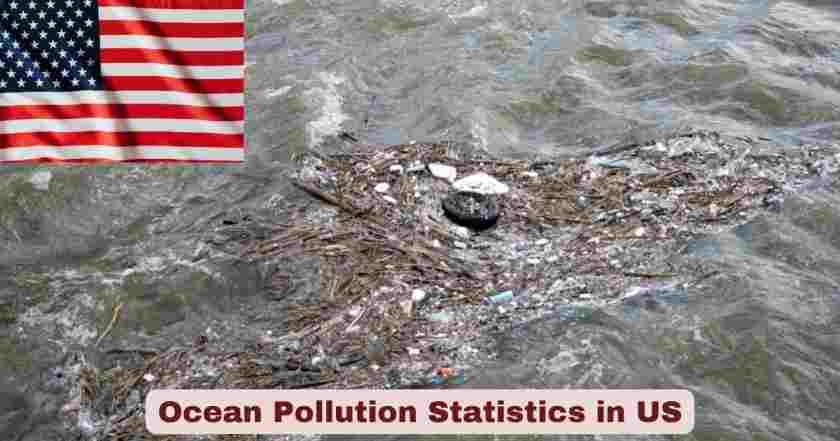
Ocean Pollution in America 2026
Ocean pollution is the broad term for the contamination of marine environments by human-generated waste, chemicals, nutrients, noise, and debris — a crisis so pervasive that today there is no ocean, no sea, no bay, and no coastal water body on Earth that is free from measurable human-caused pollution. The world’s oceans cover more than 78% of the Earth’s surface, contain 97% of Earth’s water, absorb approximately 30–40% of all human CO₂ emissions, and support the livelihoods of more than 3 billion people globally who depend on marine ecosystems for food, income, and energy. Yet despite this extraordinary ecological and economic value, the oceans have simultaneously served as the world’s largest unregulated dumping ground for centuries — and the volume and variety of pollutants now entering marine waters every year is accelerating, not declining. Ocean pollution does not arrive from a single source. It is the cumulative product of nonpoint source runoff from millions of agricultural fields, lawns, parking lots, and roads; point source discharges from industrial facilities, wastewater treatment plants, and storm drains; marine debris including plastic, fishing gear, and derelict vessels; oil spills from tankers, pipelines, and offshore platforms; chemical contamination from pesticides, heavy metals, PFAS, PCBs, and pharmaceuticals; nutrient overloading from fertilizer runoff that creates oxygen-depleted dead zones; and the radiating effects of climate change — warming ocean temperatures, rising sea levels, and ocean acidification — that amplify every other form of ocean stress. As NOAA states plainly: every year, billions of pounds of trash and other pollutants enter the ocean — and the vast majority of that pollution originates on land, far from any coastline.
As of March 26, 2026, the ocean pollution crisis in America and globally shows no sign of the systemic reversal that scientists say is needed to prevent permanent ecological damage at scale. Every US coastal state and territory is affected by marine debris, according to NOAA’s Marine Debris Program — which has documented plastic as the most abundant type of marine debris in shoreline and oceanic surveys across the United States. The Great Pacific Garbage Patch, the world’s largest concentration of ocean plastic, now covers an estimated 1.6 million square kilometres — roughly twice the size of Texas — and contains approximately 1.9 million pieces of plastic per square metre according to University of Manchester analysis. The Gulf of Mexico dead zone, fed primarily by nitrogen and phosphorus runoff flowing down the Mississippi River from agricultural operations across 31 states, was the largest ever measured when NOAA recorded it in 2017 at nearly the size of New Jersey — and the EPA has acknowledged that its own target of reducing nitrogen runoff by 45% to shrink the dead zone has made little progress. The international UN Intergovernmental Negotiating Committee (INC-5.2) adjourned in August 2025 without consensus on a legally binding global plastics treaty, leaving the world without the primary policy tool that UNEP estimates could reduce plastic pollution entering the environment by 96% by 2040 if fully implemented. The data documented in this article tells the full, verified story of ocean pollution in America and the world in 2026 — across plastic debris, chemical contamination, nutrient runoff, oil spills, marine wildlife impacts, and the economic costs that flow from them all.
Ocean Pollution Facts 2026
| Key Fact | Verified Statistic / Detail |
|---|---|
| Pollutants entering ocean annually | Billions of pounds of trash and pollutants — NOAA official statement |
| Land-based sources of marine pollution | 70–80% of all ocean pollution originates on land — NOAA / GESAMP / PMC |
| Marine litter that is plastic | Plastic waste represents ~80% of all marine litter — UNEP / PMC |
| Plastic currently in ocean (2025 estimate) | 75–199 million metric tons accumulated — UNEP / Greenmatch 2025 |
| Annual plastic entering ocean | 8–10 million metric tons/year (4.8–12.7M range) — Conservation International / PMC |
| Daily ocean plastic equivalent | ~33 billion pounds per year entering marine environment — MSMF |
| Great Pacific Garbage Patch size | 1.6 million km² — twice the size of Texas — Ocean Cleanup / multiple sources |
| Plastic pieces per m² in oceans | 1.9 million pieces per m² — University of Manchester analysis |
| Plastic below ocean surface | 70% of marine debris is beneath the surface — Greenmatch 2025 |
| Every person on Earth — ocean plastic share | 21,000 pieces of plastic per person in the world’s oceans — Condor Ferries 2025 |
| Marine species impacted by ocean pollution | ~1,000 species affected — Condor Ferries 2025 |
| Marine animals killed by ocean pollution per year | Over 100 million marine animals annually — Condor Ferries 2025 / WWF |
| Marine mammals killed by plastic (entanglement/ingestion) | ~100,000 per year — WWF |
| Seabirds — plastic ingestion rate | 60% of all seabird species have ingested plastic — Conservation International |
| Dead zones globally (2025) | 500+ recorded dead zones where marine life cannot survive — Condor Ferries 2025 |
| Dead zones in 2004 (comparison) | 146 hypoxic zones in 2004 — jumped to 400+ by 2008 — Conservation International |
| Gulf of Mexico dead zone (largest recorded, 2017) | ~22,720 km² — nearly size of New Jersey — NOAA (largest ever at measurement) |
| Mississippi River nitrogen to Gulf annually | 1.5 million tons of nitrogen pollution per year — Condor Ferries 2025 |
| EPA’s Gulf dead zone nitrogen reduction target | 45% nitrogen reduction needed — little progress made — EPA / WVU research 2025 |
| Coral reefs impacted by bleaching (2024–25) | 75% of world’s coral reefs — Greenmatch 2025 |
| Ocean surface temperatures — 2024 | 0.97°C warmer than 20th-century average — Greenmatch 2025 |
| Oil entering ocean via runoff vs. spills | Runoff carries 2–3× more oil than headline spills — Conservation International |
| Major oil tanker spills globally — 2023 | Only 2 major spills (>700 tonnes) — down from 5 in 2014 — ITOPF |
| US Oil Pollution Act (OPA) enforcement | Stricter since 2016 — bigger penalties; improved prevention — ITOPF / ScienceDirect |
| Ocean cleaning by The Ocean Cleanup (to 2024) | 10 million kg removed from oceans and rivers — Ocean Cleanup |
| Harmful algal blooms increase since 1984 | Tripled since 1984 — closing beaches, killing fish — Condor Ferries 2025 |
| By 2050 — plastic vs. fish in ocean | Plastic will outweigh all fish by weight — UNEP / Conservation International |
| Oceans’ annual economic contribution | $1.5 trillion to the economy; 40 million jobs — OECD / MSMF 2025 |
| Alabama beach — pollution economic loss | 1 million fewer visitors/day; $113 million loss; 2,200 jobs lost — NOAA-funded study |
| NOAA Marine Debris grants (FY2025) | Up to $54 million — Bipartisan Infrastructure Law (NOAA Marine Debris Program) |
| Plastic bottles degrade in ocean | 450 years to degrade — fishing line 600 years — Condor Ferries 2025 |
| UN Global Plastics Treaty — INC-5.2 result (Aug 2025) | No consensus reached — 183 countries, 400+ organizations — adjourned without binding agreement |
Source: NOAA — Ocean Pollution and Marine Debris (NOAA.gov official education resource); NOAA Marine Debris Program (marinedebris.noaa.gov); EPA Trash Free Waters Newsletter (November–December 2024); PMC / NCBI — “Human Health and Ocean Pollution” (PMC7731724, widely cited); UNEP — Global Plastics and Marine Litter data; Conservation International — Ocean Pollution Facts; Greenmatch — Ocean Pollution Key Facts and Trends 2026 (March 3, 2025); Condor Ferries — 100+ Ocean Pollution Statistics & Facts 2025; MSMF — Economic Costs of Marine Pollution (April 14, 2025); Our Shared Seas — Pollution Threats (updated June 2025); Springer Nature — Marine Pollution: The Global Challenge (January 16, 2026); The Ocean Cleanup — cumulative removal data (2024); ITOPF — Oil Spill Statistics 2014–2024; Conservation International — Ocean Pollution Facts; WVU Today — Dead Zones Research (January 30, 2025)
The density and range of these key statistics tells a story that is both global in scale and urgently local in consequence. The headline figure — that over 100 million marine animals die every year from ocean pollution, with ~100,000 of those being marine mammals specifically — puts a biological cost on humanity’s failure to manage its waste that no GDP number can adequately represent. The finding that plastic will outweigh all fish in the ocean by 2050 is not a projection designed to shock — it is the mathematically inevitable outcome of the current trajectory of 8–10 million metric tonnes of new plastic entering the ocean every single year against a fish biomass that is simultaneously declining from overfishing, habitat loss, and pollution-induced ecosystem collapse. The 21,000 pieces of ocean plastic per person alive on Earth today is perhaps the single most disorienting data point in all of ocean pollution statistics — it forces the realization that the ocean pollution problem is not distant or abstract. It is an arithmetic consequence of every piece of plastic ever manufactured that was not captured, recycled, or incinerated.
The 500+ recorded dead zones where marine life cannot survive — up from just 146 in 2004 and now spread across every ocean basin — represent one of the most rapidly worsening indicators in the entire ocean pollution data set. Dead zones are not a problem that disappears when pollution stops: once a body of water enters a hypoxic state, recovery can take years or decades even after nutrient inputs are reduced, because the oxygen-depleted sediment continues releasing nutrients that sustain algal growth. The Gulf of Mexico dead zone — fed by 1.5 million tons of nitrogen flowing down the Mississippi River every year from agricultural operations across 31 US states — is the most studied and most politically contested of all US hypoxic zones, and the EPA’s acknowledgment that its own 45% nitrogen reduction target has made little progress is a verdict on three decades of voluntary best-practice approaches that have failed to achieve the systemic change that binding regulation could compel. The WVU research team’s January 2025 modelling adds a further complication: reducing nitrogen runoff to the Gulf by 45% would increase runoff to Lake Erie and the Chesapeake Bay by 4–5%, because corn production — the primary nitrogen source — would simply shift to less-regulated watersheds.
Ocean Plastic Pollution Statistics in the US 2026
Ocean Plastic — Accumulation, Sources, Garbage Patches & Degradation Timelines
| Ocean Plastic Metric | Figure | Source |
|---|---|---|
| Total plastic in world’s oceans (2025) | 75–199 million metric tons | UNEP / Greenmatch 2025 |
| Annual new plastic entering ocean | 8–10 million metric tons (range: 4.8–12.7M) | PMC (GESAMP estimate) |
| Daily plastic entering oceans | Equivalent of 2,000 garbage trucks per day | UNEP |
| Land-based plastic entering ocean via rivers | Rivers carry 1.15–2.41 million metric tons/year = 9–50% of all ocean plastic | PMC (riverine input estimates) |
| Land vs. marine source split | 70–80% land-based; 20–30% marine (fishing, vessels) | NOAA / GESAMP / PMC |
| Plastic as share of all marine litter | ~80% | UNEP / PMC |
| Great Pacific Garbage Patch area | 1.6 million km² — ~twice the size of Texas | The Ocean Cleanup / Greenmatch 2025 |
| Great Pacific Garbage Patch — plastic concentration | 1.9 million pieces/m² | University of Manchester analysis — Greenmatch 2025 |
| Total ocean garbage patches | 5 major garbage patches in the ocean | Greenmatch 2025 |
| Plastic beneath ocean surface | 70% of all marine debris is subsurface | Greenmatch 2025 |
| Mariana Trench — deepest ocean point | Plastic bag found there — pollution reaches maximum depth | Greenmatch 2025 |
| Ocean plastic by 2040 (OECD projection) | ~76 million metric tons accumulated total | OECD Global Plastics Outlook |
| Ocean plastic by 2060 (OECD projection) | ~141 million metric tons | OECD Global Plastics Outlook |
| By 2050 — plastic vs. fish | Plastic will outweigh all ocean fish by mass | UNEP / Conservation International |
| Plastic per person in ocean | 21,000 pieces per person alive on Earth | Condor Ferries 2025 |
| Over 40% of plastic — single use; discarded within 1 year | Designed for brief use; permanent consequence | PMC (NCBI ocean health review) |
| Plastic bottle — ocean degradation time | 450 years | Condor Ferries 2025 |
| Fishing line — ocean degradation time | 600 years | Condor Ferries 2025 |
| Styrofoam cup — degradation time | 50 years | Condor Ferries 2025 |
| Nappies / diapers — degradation time | 450 years | Condor Ferries 2025 |
| Aluminum cans — degradation time | 200 years | Condor Ferries 2025 |
| The Ocean Cleanup — total removed (to 2024) | 10 million kg from oceans and rivers globally | The Ocean Cleanup (confirmed 2024) |
| Pacific Ocean — marine life consuming plastic (2022 study) | Almost half of marine life in Pacific consumes plastic | Greenmatch 2025 |
| NOAA marine debris — impacts every US coastal state | Every US coastal state and territory affected | NOAA Marine Debris Program (marinedebris.noaa.gov) |
| US — plastic most abundant marine debris type | Confirmed as most abundant in US shoreline and oceanic surveys | NOAA (per Congressional Research Service, March 2025) |
Source: NOAA Marine Debris Program (marinedebris.noaa.gov); Congressional Research Service — Plastic Pollution FAQ (March 7, 2025); PMC / NCBI — Human Health and Ocean Pollution (PMC7731724); UNEP Marine Debris data; OECD Global Plastics Outlook 2022/2024; Greenmatch — Ocean Pollution Key Facts 2026 (March 3, 2025); Condor Ferries — Marine Pollution Statistics 2025; Conservation International — Ocean Pollution Facts; The Ocean Cleanup — removal statistics (2024); Our Shared Seas — Pollution Threats (June 2025)
The ocean plastic statistics in 2026 represent the most visible, most documented, and — in terms of public awareness — the most politically activated dimension of the ocean pollution crisis. Yet even with that visibility, the scale of the problem defies intuitive comprehension. The Great Pacific Garbage Patch at 1.6 million square kilometres is larger than the combined landmass of Alaska and Texas, yet the common mental image of a floating island of garbage is wrong — most of the patch’s plastic is in the form of microplastic particles that make the water appear milky or soupy rather than creating a visible surface layer. The 70% of marine debris that sits beneath the ocean surface — including the plastic bag found at the bottom of the Mariana Trench, the deepest point in any ocean — confirms that the ocean’s plastic burden is vastly larger and more inaccessible than surface surveys alone can capture. The Mariana Trench discovery is perhaps the most powerful single symbol in all of ocean pollution science: when humanity’s debris reaches a location 11 kilometres below sea level in the most remote and biologically extreme environment on Earth, the concept of a pristine, pollution-free ocean has permanently ceased to be meaningful.
The 400+ million tonnes of plastic now being produced globally every year, of which over 40% is designed for single-use applications and discarded within one year, creates a throughput problem that cleanup efforts alone cannot solve. The Ocean Cleanup’s removal of 10 million kilograms of plastic by 2024 — an extraordinary logistical achievement — represents a fraction of a single month’s new plastic entering the ocean. At the current input rate of approximately 8–10 million metric tonnes per year, removing the accumulated ocean plastic stock would require not just cleanup but the immediate and permanent elimination of new plastic leakage — something no policy framework in the world has yet come close to achieving. The UN INC-5.2 adjournment without consensus in August 2025 removed the most promising near-term policy lever from the table, at least temporarily. NOAA’s confirmation that every single US coastal state and territory is affected by marine debris — tracked through its Marine Debris Monitoring and Assessment Project (MDMAP) — makes clear that ocean plastic pollution is not a distant, foreign problem. It is washing up on American shores, collecting in American bays, and contaminating American fisheries every single day.
Ocean Chemical & Nutrient Pollution Statistics in the US 2026
Chemical Contaminants, Nutrient Runoff & Dead Zones — US and Global Data
| Chemical / Nutrient Pollution Metric | Figure / Finding | Source |
|---|---|---|
| Land-based sources — share of all marine pollution | Up to 80% of all marine pollution is land-based — GESAMP | PMC (NCBI, PMC7731724) |
| Nonpoint source pollution — primary US marine pollutant | Runoff from septic tanks, vehicles, farms, livestock, timber — dominant source | NOAA Education — Ocean Pollution |
| Dead zones globally (2025) | 500+ recorded dead zones — oxygen too low for marine life | Condor Ferries 2025 |
| Dead zones in 2004 (baseline) | 146 hypoxic zones — tripled since then | Conservation International |
| Dead zones by 2008 | 400+ — rapid expansion documented | Conservation International |
| Gulf of Mexico dead zone — largest ever measured | ~22,720 km² (size of New Jersey) in August 2017 | NOAA press release (2017) — still referenced baseline |
| Mississippi River nitrogen to Gulf annually | 1.5 million tons of nitrogen | Condor Ferries 2025 |
| US agricultural nitrogen reduction needed (EPA target) | 45% reduction to meet Gulf dead zone goal | EPA / WVU Dead Zones Research (Jan 2025) |
| EPA target progress — Gulf dead zone | Little progress made — EPA acknowledged | WVU Today (January 30, 2025) |
| Dead zone nitrogen reduction → Lake Erie effect | 45% Gulf N-reduction → 4–5% increase in Lake Erie and Chesapeake Bay runoff | WVU / Iowa State / Texas Soil & Water Research (Jan 2025) |
| Over 700 coastal areas globally — eutrophication | Nutrient pollution affects 700+ coastal areas — well-documented in US Gulf + coastal Europe | Our Shared Seas (June 2025) |
| Harmful algal bloom growth — China coastal 1970–2015 | +40% per decade — warming amplifies eutrophication | Our Shared Seas (June 2025) |
| Harmful algal blooms in US since 1984 | Tripled since 1984 — closing beaches, killing fish | Condor Ferries 2025 |
| Chemical contaminants — persistent toxins in ocean | DDT, PCBs, heavy metals (Hg, Pb, Cd, Ni), pesticides, PFAS — do not disintegrate | Condor Ferries 2025 / Springer 2026 |
| PFAS — “forever chemicals” | Found in ground, surface, and drinking water — NOAA researching impact on marine life | NOAA Education resource |
| Heavy metals — sources | Mining, auto emissions, landfill leaching, manufacturing | Springer Nature Marine Pollution (January 16, 2026) |
| Mercury (Hg), Lead (Pb), Cadmium (Cd) | Severe risks to aquatic life via industrial discharge, mining, agricultural runoff | Springer Nature Marine Pollution (January 2026) |
| Sewage discharge — Mediterranean baseline | 80% of urban sewage into Mediterranean is untreated — pollution reference | Future Agenda / Plastic Oceans (Jan 2025) |
| US Fish consumption advisories — PCBs, toxaphene, dieldrin | Multiple US waters have consumption limits per PMC analysis | PMC — Human Health and Ocean Pollution |
| Fertilizer runoff — coastal algal blooms mechanism | Nitrogen + phosphorus → algae explosion → oxygen depletion → dead zone | NOAA Education (oceanservice.noaa.gov) |
| Coral reefs — plastic pollution effect | Large plastic smothers colonies, blocks light, causes physical damage | PMC (PMC7731724) |
| Coral bleaching — 75% of world’s reefs (2024–25) | 75% of global coral reefs impacted by bleaching | Greenmatch 2025 |
| Ocean acidification — pH dropping | CO₂ dissolving in ocean creates carbonic acid — impacts calcifying organisms (coral, shellfish) | Future Agenda / Conservation International |
| 30–40% of human CO₂ | Dissolves into oceans — creating carbonic acid, driving acidification | Future Agenda (January 2025) |
Source: NOAA Education — Ocean Pollution and Marine Debris (NOAA.gov); NOAA Nutrient Pollution Tutorial (oceanservice.noaa.gov); PMC — Human Health and Ocean Pollution (PMC7731724); WVU Today — Dead Zones Research (January 30, 2025); Our Shared Seas — Pollution Threats (June 2025); Springer Nature — Marine Pollution: The Global Challenge (January 16, 2026); Condor Ferries 2025; Conservation International — Ocean Pollution Facts; Future Agenda — Plastic Oceans (January 14, 2025); Greenmatch 2025
The chemical and nutrient pollution statistics for US ocean waters are, in many respects, the least visible and most insidious dimension of the ocean pollution problem — because unlike floating plastic, dissolved nitrogen, heavy metals, PCBs, and PFAS cannot be seen from a beach or captured by a cleanup boat. The 500+ dead zones now documented globally — more than three times the number that existed in 2004 — are the most concrete physical manifestation of nutrient pollution’s consequences: entire regions of the ocean where dissolved oxygen has fallen below 2 milligrams per litre, the threshold at which most marine organisms either suffocate and die or, if mobile, flee to less contaminated waters. The Gulf of Mexico dead zone is the most significant of all US hypoxic zones because of its enormous size, its direct connection to America’s agricultural heartland, and its impact on one of the nation’s most productive marine ecosystems. The WVU research team’s January 2025 modelling finding — that the only plausible way to hit the EPA’s 45% nitrogen reduction target involves trade-offs that increase nitrogen loading to the Great Lakes and Chesapeake Bay — illustrates the extraordinary difficulty of solving interconnected watershed pollution problems in a politically and economically complex system where the polluters (corn and soybean farmers across 31 states) are geographically remote from the ecosystem they are damaging.
The NOAA identification of PFAS “forever chemicals” as an emerging ocean pollution concern brings the chemical contamination picture into the present tense. PFAS compounds — used in everything from non-stick cookware to firefighting foam — have been detected in marine organisms across every ocean, including in deep-sea creatures that have never been near human habitation, because they accumulate through ocean currents and food chain bioaccumulation. The Springer Nature review published January 16, 2026 — the most recent peer-reviewed synthesis of global marine pollution — identifies heavy metal contamination from mining, automotive emissions, and industrial discharge as one of the most geographically concentrated and ecologically damaging forms of ocean chemical pollution, with mercury, lead, and cadmium accumulating in marine food webs in ways that ultimately cycle back into human exposure through fish consumption. The ocean acidification trajectory — driven by the 30–40% of all human CO₂ emissions that dissolve into seawater, creating carbonic acid and gradually lowering ocean pH — represents the intersection of climate change and ocean pollution, threatening the shell-forming capacity of mussels, clams, oysters, and coral that form the foundation of both marine food webs and multi-billion-dollar shellfish industries.
Ocean Oil Pollution Statistics in the US 2026
Oil Spills, Runoff & Petroleum Contamination in US Waters — Key Data
| Oil Pollution Metric | Figure | Source |
|---|---|---|
| Oil entering ocean via runoff vs. headline spills | Runoff accounts for 2–3× more oil than tanker spills — roads, rivers, drainpipes | Conservation International |
| Headline oil spills — share of ocean oil | Only 12% of oil in oceans comes from tanker/vessel spills | Conservation International |
| Major global oil spills (>700 tonnes) — 2014 | 5 major spills | ITOPF 2024 Statistics |
| Major global oil spills (>700 tonnes) — 2020 | Only 1 — COVID-19 reduced shipping activity | ITOPF 2024 Statistics |
| Major global oil spills (>700 tonnes) — 2023 | 2 major spills | ITOPF — Oil Spill Statistics 2014–2024 |
| Overall trend — major tanker spills 2014–2024 | Declining trend due to IMO regulations and technology | ITOPF / ScienceDirect (Sept 2025) |
| IMO new fuel regulations — 2025 | Cleaner fuels required — will further reduce tanker spills | ScienceDirect / ITOPF |
| US Oil Pollution Act (OPA) enforcement since 2016 | Stricter penalties — demonstrated in 2015 Texas spill prevention | ScienceDirect (Sept 2025) |
| US crude oil transportation — pipeline | ~70% of US crude transported by pipeline | ScienceDirect (Sept 2025) |
| US crude oil transportation — marine vessels/barges | ~23% via marine routes | ScienceDirect (Sept 2025) |
| Sanchi spill (2018) — volume | >100,000 tonnes released — condensate type | ITOPF / ScienceDirect |
| Sanchi spill — ecological impact | Fish populations in area reduced significantly by 2020 | ScienceDirect (Sept 2025) |
| Deep Water Horizon (2010) — US worst offshore spill | 4.9 million barrels — Gulf of Mexico; still impacting ecosystems | NOAA / historical |
| Deep Water Horizon cleanup cost | >$65 billion total (fines, cleanup, claims) — BP | Court records / historical data |
| Oil on ocean surface — cleanup robots | SeaSwarm robots + WasteShark aquatic drone technology | MSMF (April 2025) |
| Cleanup cost reduction via ocean robots | Expected 20% reduction in marine cleanup costs | MSMF / Andriolo et al. 2023 |
| Dispersants used in oil spills (Corexit example) | Controversial — toxic to marine life and potentially humans | NOAA / PMC |
| Oil spill impact — physical | Coats fur/feathers, clogs gills, smothers intertidal zones | NOAA Education |
| US waters oil spill reporting | NOAA OSPO Marine Pollution Surveillance Report upgraded March 23, 2026 | NOAA OSPO (March 2026) |
Source: Conservation International — Ocean Pollution Facts; ITOPF — Oil Spill Statistics 2014–2024; ScienceDirect — “Multidimensional Impacts of Oil Spills in Transit” (September 2025); NOAA OSPO — Marine Pollution Surveillance Report (updated March 23, 2026); NOAA Education — Ocean Pollution; MSMF — Economic Costs of Marine Pollution (April 2025)
The oil pollution statistics for US and global waters in 2026 contain one finding that consistently surprises the public: only 12% of the oil contaminating the world’s oceans comes from the headline-grabbing tanker spills that dominate media coverage. The remaining 88% comes from chronic, low-visibility sources — used motor oil poured down drains, automotive oil dripping from engines and washing off roads into storm drains, agricultural machinery leaks, pipeline seepage, and bilge pumping from vessels that are technically illegal but enormously difficult to monitor in open ocean. This 2–3× greater contribution from diffuse runoff versus dramatic spills completely reframes the policy question: the solution to ocean oil pollution is not primarily about preventing the next Exxon Valdez — it is about changing how millions of individual consumers, mechanics, farmers, and boat operators handle petroleum products every day. The ITOPF data showing a clear declining trend in major tanker spills over 2014–2024 — from 5 in 2014 to just 1 in 2020 and 2 in 2023 — reflects genuine progress from IMO regulation, double-hull requirements, improved navigation technology, and the US Oil Pollution Act’s stricter enforcement since 2016. This trend should be acknowledged as a policy success, even as the broader oil contamination picture remains concerning.
The NOAA OSPO announcement that it upgraded its Marine Pollution Surveillance Report system beginning March 23, 2026 — just three days ago — is the most current data point in this entire article, and it is significant for what it represents: the United States government is actively investing in real-time satellite-based oil spill detection and monitoring infrastructure, recognizing that enforcement of pollution law requires situational awareness that older reporting systems could not provide. The upgrade introduces new attribute fields for point and polygon features and improved public web mapping — tools that will allow NOAA analysts to detect, track, and document oil anomalies in US waters with greater speed and precision than the prior system allowed. The Deepwater Horizon disaster of 2010 — which released 4.9 million barrels of crude oil into the Gulf of Mexico and cost BP over $65 billion in cleanup, fines, and legal settlements — remains the most costly and ecologically damaging single oil pollution event in US history, and its long-term ecosystem impacts in the deep Gulf and in coastal marshes are still being monitored by NOAA researchers today, more than 15 years after the blowout.
Ocean Pollution Marine Wildlife & Biodiversity Statistics in the US 2026
Marine Wildlife & Ecosystem Impacts from Ocean Pollution — Key Numbers
| Wildlife / Biodiversity Metric | Statistic | Source |
|---|---|---|
| Total marine animal deaths from ocean pollution annually | Over 100 million marine animals | Condor Ferries 2025 |
| Marine mammals killed by plastic per year | ~100,000 (ingestion or entanglement) | WWF |
| Seabirds with plastic in their stomachs | 60% of all seabird species have ingested plastic | Conservation International |
| Sea turtles — impacted by plastic | All 7 known sea turtle species affected | UNEP / NOAA |
| Whales — plastic ingestion documented | Multiple species; stomach contents show large plastic volumes | Greenmatch 2025 / NOAA |
| Fish for human consumption with microplastics | >1 in 3 fish (36.5%) | ScienceDirect peer-reviewed |
| Seafood — microplastic content | 1.48 MP particles/gram of seafood | PMC systematic review |
| Pacific Ocean marine life — plastic consumption | Almost half consume plastic — 2022 study | Greenmatch 2025 |
| Abandoned fishing gear (ghost gear) annually | 640,000 tonnes/year continue trapping/killing | World Animal Protection |
| Species impacted by ocean pollution — total | ~1,000 marine species affected | Condor Ferries 2025 |
| Whale strandings — Navy sonar link | Documented — high-intensity sonar disorients whales | Condor Ferries 2025 / NOAA |
| Coral reefs — plastic pollution interaction | Plastic bags smother corals; block light; physical damage | PMC / NOAA |
| 75% of world’s coral reefs bleached (2024–25) | Largest global bleaching event ever documented | Greenmatch 2025 |
| Ocean surface temps 2024 — 0.97°C above average | Coral bleaching driven by marine heat waves | Greenmatch 2025 |
| Mangroves + seagrasses — habitat loss | Loss due to pollution, coastal development, and climate change | Springer Nature (Jan 2026) |
| Bioaccumulation of toxins in food chain | PCBs, mercury, dieldrin accumulate up the trophic chain into human diet | PMC (PMC7731724) |
| Ocean noise pollution — shipping + sonar + seismic | Disrupts marine mammal communication, navigation, behaviour | Springer Nature (Jan 2026) / Condor Ferries |
| Invasive species introduction via shipping | Ballast water transports non-native species into new ecosystems | Condor Ferries 2025 |
| People relying on ocean for livelihoods | More than 3 billion globally — ocean pollution directly threatens livelihoods | Greenmatch 2025 |
| Fish export value growth — $8B (1976) to $152B (2017) | Ocean economy’s enormous financial value at stake | MSMF / FAO 2024 |
Source: WWF — marine wildlife data; Conservation International — Ocean Pollution Facts; Condor Ferries — Marine Pollution Statistics 2025; PMC (PMC7731724) — Human Health and Ocean Pollution; Greenmatch 2025; UNEP; World Animal Protection; Springer Nature — Marine Pollution: The Global Challenge (January 16, 2026); MSMF — Economic Costs of Marine Pollution (April 14, 2025)
The marine wildlife impact statistics represent perhaps the most emotionally compelling dimension of the ocean pollution data — because the 100+ million marine animals dying every year from ocean pollution are not an abstraction. They are individual dolphins with stomachs packed with plastic bags, sea turtles with straws lodged in their nostrils, albatrosses feeding plastic debris to their chicks, and fish too contaminated with PCBs and mercury for humans to safely consume at recommended frequencies. The 60% of all seabird species that have now been documented to have ingested plastic represents an extraordinary statistic — not one specific species, not an exceptional population, but the majority of all known seabird species on Earth. This figure, combined with the documentation that all 7 known species of sea turtle are affected by plastic pollution, indicates that ocean plastic has permeated the marine food web from apex predators to filter feeders so comprehensively that no major group of marine vertebrates remains unaffected. The 640,000 tonnes of abandoned fishing gear entering the ocean annually — ghost nets, lines, traps, and cages that continue to fish autonomously for months or years — adds a form of pollution that is uniquely cruel in its mechanism: it was designed to capture marine life efficiently, and it continues doing exactly that long after all human oversight has ended.
The coral reef bleaching data is the ultimate indicator of how ocean pollution and climate change compound each other to create damage larger than either alone could produce. When 75% of the world’s coral reefs experienced bleaching in the 2024–25 bleaching event — the largest ever recorded — the mechanism was primarily elevated ocean temperatures driven by ocean surface temperatures 0.97°C above the 20th-century average in 2024. But chemical pollution, plastic debris, and nutrient runoff all weaken coral immune systems and reduce their resilience to thermal stress, meaning pollution-stressed reefs bleach at lower temperatures and recover more slowly than unpolluted reefs. The economic value at stake is enormous: coral reefs support fisheries, coastline protection from storm surge, and tourism industries estimated to be worth hundreds of billions of dollars annually to tropical economies. The OECD’s confirmation that oceans add $1.5 trillion to the global economy annually and support 40 million jobs puts the cost of ocean pollution not in the language of ecological grief but in the language of economic self-interest that policymakers increasingly respond to.
Ocean Pollution Economic Impact & Policy Statistics in the US 2026
Economic Costs, Policy Responses & Federal Programs — US 2024–2026
| Economic / Policy Metric | Figure | Source |
|---|---|---|
| Global ocean annual economic contribution | $1.5 trillion/year; 40 million jobs — OECD | MSMF (April 2025) |
| Alabama coast — ocean pollution economic loss | 1 million fewer visitors/day; −$113M revenue; −2,200 jobs | NOAA-funded study |
| Marine pollution sectors most impacted | Fisheries, tourism, shipping — dominant economic loss categories | MSMF (April 2025) |
| Plastic’s economic damage to fisheries (global, annual) | Estimated at $13 billion/year | UNEP (cited by multiple sources) |
| MV Wakashio oil spill cleanup cost (2020 Mauritius) | $40 million + long-term fisheries and tourism losses | MSMF / ScienceDirect |
| Deep Water Horizon total cost | >$65 billion (cleanup + fines + claims) — largest in US history | Historical court records |
| Ocean cleanup cost reduction via AI/robotics | Expected 20% reduction — SeaSwarm, WasteShark technology | MSMF / Andriolo et al. 2023 |
| NOAA Marine Debris grants (FY2025, BIL) | Up to $54 million for removal + interception tech | NOAA Marine Debris Program (Nov–Dec 2024) |
| NOAA Ocean Odyssey prevention grants (FY2025) | 10–15 grants totalling $100,000 for underserved communities | NOAA Marine Debris / National Marine Sanctuary Foundation |
| EPA Trash Free Waters program | Active — Dec 2024 newsletter confirms ongoing funding + projects | EPA Trash Free Waters (Dec 2024) |
| NOAA OSPO — Marine Pollution Surveillance upgrade | New data model live March 23, 2026 — improved mapping and monitoring | NOAA OSPO (March 2026) |
| Federal agencies on IMDCC | 12 agencies — NOAA (chair), EPA, DoD, DHS, DoI, DoS, DOE, DoJ, NASA, NSF, USAID, Marine Mammal Commission | G20 Marine Pollution Leaders’ Group / US State Dept. 2024 |
| UN INC-5.2 Global Plastics Treaty (Aug 2025) | 183 countries; 400+ organizations — NO CONSENSUS reached | UNEP / Multiple news sources (2025) |
| UNEP: policy mix could reduce plastic pollution 96% by 2040 | If fully implemented — includes EPR, reuse, recycling infrastructure | UNEP cited in NOAA EPA Trash Free Waters (Nov 2024) |
| Save Our Seas Act 2.0 | Passed December 2020 — expands interagency work, foreign engagement | US State Dept. / G20MPL |
| Marine Debris Act (2006) + 2012 and 2018 amendments | Natural disaster debris (2012); Save Our Seas Act — foreign engagement (2018) | G20 Marine Pollution Leaders (US page) |
| Blue bonds — investment model | Seychelles $15M; Barbados $73M; Galapagos Marine Bond $550M debt swap | MSMF (April 2025) |
| Single-use plastics — federal ops phase-out target | 2027 (food service events/packaging); 2035 (all federal operations) | Biden-era EO, July 19, 2024 (noted in G20MPL US page) |
| US Clean Water Act — TMDL for marine pollution | States must set Total Maximum Daily Loads for trash/plastic impairment | G20MPL / US State Dept. |
Source: NOAA Marine Debris Program (marinedebris.noaa.gov); EPA Trash Free Waters Newsletter (November–December 2024); G20 Marine Pollution Leaders’ Group — United States page (updated 2024); NOAA OSPO — Marine Pollution Surveillance Report upgrade (March 23, 2026); MSMF — Economic Costs of Marine Pollution (April 14, 2025); UNEP Global Plastics policy data; US State Department — Plastic Pollution policy page (2021–2025.state.gov)
The economic statistics on ocean pollution crystallise what the ecological data implies: ocean pollution is not only an environmental crisis but a direct and quantifiable threat to human economic welfare at every scale from a single Alabama beach resort to the global fishing industry. The NOAA-funded study showing that ocean pollution reduced visitor numbers at Alabama beaches by 1 million per day, costing $113 million in revenue and destroying 2,200 jobs is a microcosm of a pattern replicated across every polluted coastline in the country. Tourism, fisheries, and coastal real estate — industries worth trillions of dollars in aggregate to the US economy — are all directly sensitive to ocean water quality, shoreline cleanliness, and marine ecosystem health. The UNEP estimate of $13 billion per year in global fisheries damage from plastic pollution alone gives the fisheries dimension of ocean pollution its own staggering economic weight, separate from all the other forms of contamination that simultaneously degrade fish stocks, contaminate catch, and impose seafood safety restrictions on consumer markets.
The 12-agency Interagency Marine Debris Coordinating Committee (IMDCC) — chaired by NOAA, with EPA as vice-chair, and including the Department of Defense, Department of Homeland Security, NASA, and the Marine Mammal Commission — represents the broadest federal coordination structure for ocean pollution in US history. The NOAA OSPO Marine Pollution Surveillance Report upgrade activated on March 23, 2026 is the most recent concrete federal action in this space, providing upgraded real-time satellite monitoring of oil and pollution anomalies in US waters. The Save Our Seas Act 2.0 (December 2020) and the Marine Debris Act’s 2018 amendment mandating that marine debris be considered in all future US trade agreements represent the most significant US legislative actions on ocean pollution in the past decade. The UN INC-5.2 adjournment without consensus in August 2025 — representing the failure to agree a legally binding global plastics treaty despite two years of negotiations involving 183 nations — leaves the most powerful available international policy lever unused, and puts the burden back on national and subnational governments to act unilaterally while the window for keeping ocean plastic below ecological tipping points remains open.
Disclaimer: This research report is compiled from publicly available sources. While reasonable efforts have been made to ensure accuracy, no representation or warranty, express or implied, is given as to the completeness or reliability of the information. We accept no liability for any errors, omissions, losses, or damages of any kind arising from the use of this report.