
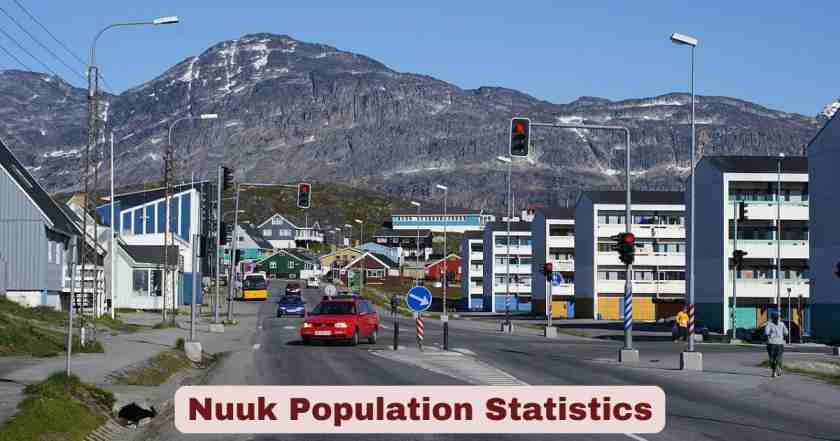
Nuuk Population
Nuuk population statistics reveal extraordinary demographic concentration in Greenland’s capital city, with 20,113 inhabitants as of January 2025, representing more than one-third (35.6%) of Greenland’s entire population of 56,542 residing in a single urban center. This makes Nuuk one of the most demographically dominant national capitals globally in proportional terms, comparable to Reykjavík containing 37% of Iceland’s population or Montevideo holding 42% of Uruguay’s residents. The city’s population has experienced dramatic growth, having doubled since 1977, increased by over a third since 1990, and risen by almost 21% since 2000 when the population stood at 13,445. World Population Review estimates Nuuk’s 2026 population at 20,288, suggesting continued modest growth despite Greenland’s overall population decline of 157 people during 2024.
The demographic transformation of Nuuk reflects Greenland’s broader urbanization trend, with 90.73% of the national population now living in urban settlements compared to rural areas, down from much higher rural percentages in previous decades. Within Greenland’s urban hierarchy, Nuuk’s dominance is overwhelming—the capital city contains more people than the next three largest towns combined: Sisimiut with 5,200 residents, Ilulissat with 4,400, and Qaqortoq with 3,000. Only 7% of Greenland’s population now lives in communities of 200 or fewer residents, reflecting five decades of sustained internal migration from remote settlements and smaller towns to Nuuk’s superior employment opportunities in government administration, services, education, healthcare, and commercial activities. The usual increase in Nuuk City slowed down to just 31 people in 2024 according to Statistics Greenland, marking a significant deceleration from historical growth patterns, though the city continues attracting migrants even as the national population stagnates. As of January 2025, 19,905 people resided in Nuuk according to the most recent official government data, with various measurement methodologies producing estimates ranging from 19,872 to 20,288 depending on timing and inclusion criteria.
Interesting Facts and Latest Statistics on Nuuk Population in Greenland 2025
| Key Statistic | Data Point | Year |
|---|---|---|
| Nuuk Population (Official) | 20,113 inhabitants | January 2025 |
| Nuuk Population (Wikipedia) | 19,872 to 19,905 | January 2024-2025 |
| Nuuk Population (Projected) | 20,288 | 2026 estimate |
| Percentage of Greenland | 35-36% of total population | 2025 |
| Greenland Total Population | 56,542 people | January 1, 2025 |
| Population Growth (2024) | Increased by 31 people | 2024 |
| Population Since 2000 | Increased 21% from 13,445 | 2000-2025 |
| Population Since 1977 | Doubled | 1977-2025 |
| Next Three Cities Combined | Nuuk larger than Sisimiut, Ilulissat, Qaqortoq | 2025 |
| Urban Population Percentage | 90.73% of Greenland | 2025 |
| Greenland Population Decrease | -157 people | 2024 |
| Born in Greenland (National) | 49,738 (88%) | 2025 |
Data sources: Statistics Greenland Official Publications (January 2025), Wikipedia Demographics (January 2025-2026), World Population Review (2026), Greenland Ministry Statistics
The Nuuk population in 2025 stands officially at 20,113 inhabitants according to Statistics Greenland’s January 2025 data, though different measurement methodologies produce a range from 19,872 (Wikipedia January 2024 figure) to 20,288 (World Population Review 2026 projection), all clustering around 20,000 residents. What remains consistent across all sources is Nuuk’s extraordinary dominance within Greenland’s demographic landscape: the capital contains 35-36% of Greenland’s entire population of 56,542, making it one of the most concentrated national capitals globally. To contextualize this dominance, Nuuk’s population exceeds the combined total of the next three largest Greenlandic towns—Sisimiut (5,200), Ilulissat (4,400), and Qaqortoq (3,000)—which together contain only 12,600 people compared to Nuuk’s 20,000+.
The growth trajectory reveals steady urbanization over nearly five decades. Nuuk’s population has doubled since 1977, demonstrating sustained long-term expansion driven by internal migration from Greenland’s remote settlements and smaller coastal communities. The population increased by over a third (33%+) since 1990 and rose by almost 21% since 2000 when 13,445 people lived in the capital. However, recent years show dramatic deceleration: the usual increase in Nuuk City slowed down to just 31 people in 2024, according to Statistics Greenland, marking one of the slowest annual growth rates in decades. This deceleration coincides with Greenland’s first national population decline in recent memory, with the country losing 157 people during 2024 to reach 56,542 on January 1, 2025. Of Greenland’s total population, 49,738 people (88%) were born in Greenland, while 6,804 were born outside the territory, reflecting both the Inuit majority and the presence of Danish and other foreign-born workers. The concentration in urban areas has reached 90.73% of the national population, with only 7% now living in communities of 200 or fewer residents, representing one of the world’s most urbanized populations despite the country’s Arctic geography.
Population Growth Trends in Nuuk in Greenland 1977-2026
| Year | Population | Growth Context |
|---|---|---|
| 1977 | ~10,000 (estimate) | Baseline for doubling |
| 1990 | ~15,000 (estimate) | Pre-major urbanization |
| 2000 | 13,445 | Official census figure |
| 2024 (Jan) | 19,872 | Wikipedia data |
| 2025 (Jan) | 20,113 | Official Statistics Greenland |
| 2025 (Jan alternate) | 19,905 | Government alternate count |
| 2026 (projected) | 20,288 | World Population Review |
| Growth Since 1977 | Doubled (100% increase) | Long-term trend |
| Growth Since 1990 | Over 33% increase | Accelerated urbanization |
| Growth Since 2000 | 21% increase | Recent expansion |
| 2024 Annual Growth | +31 people | Significant slowdown |
Data sources: Statistics Greenland Historical Data, Wikipedia Nuuk Demographics (January 2024-2026), World Population Review (2026), City Population Database
The population growth trends in Nuuk over nearly five decades demonstrate extraordinary urbanization, with the capital experiencing a complete doubling of population since 1977 when the city contained approximately 10,000 residents. This long-term growth reflects Greenland’s fundamental demographic transformation from a dispersed settlement pattern to concentrated urban living, driven by the abandonment of remote hunting and fishing settlements as traditional livelihoods became economically unviable and residents sought employment, education, and services available only in larger towns. The city experienced particularly rapid growth during the 1990s and 2000s, increasing by over a third (33%+) between 1990 and 2025 as government employment expanded and Greenland’s home rule government (established 1979) increasingly centralized functions in the capital.
From the 2000 baseline of 13,445 inhabitants, Nuuk has grown 21% to reach 20,113 by January 2025, representing sustained expansion despite periods of national population stagnation. However, the growth pattern shows clear deceleration in the most recent period. While the city had experienced annual increases of several hundred people during peak growth years, the 2024 annual increase slowed dramatically to just 31 people, marking one of the smallest one-year gains in decades according to Statistics Greenland. The 2026 projection of 20,288 from World Population Review suggests continued but very modest growth, adding only 175 people from the January 2025 baseline. This slowdown coincides with broader demographic challenges: Greenland’s overall population decreased by 157 people in 2024, the country recorded only 684 births in 2024—the lowest annual birth count since World War II—and the fertility rate has declined from 5.64 children per woman in the 1950s to just 1.8 children per woman in 2024, falling well below the 2.1 replacement level. Nuuk continues growing through internal migration from smaller Greenlandic communities despite national population decline, but the pool of potential migrants shrinks as rural areas depopulate and the overall population ages.
National Context for Nuuk Population in Greenland 2025
| Greenland Statistic | Figure | Context |
|---|---|---|
| Total Population (Jan 1, 2025) | 56,542 people | Entire country |
| Population Change (2024) | -157 people | First decline in years |
| Danish Citizens Decrease | -349 people | 2024 |
| Births (2024) | 684 children | Lowest since WWII |
| Fertility Rate (2024) | 1.8 children per woman | Below replacement |
| Born in Greenland | 49,738 (88%) | 2025 |
| Born Outside Greenland | 6,804 (12%) | 2025 |
| Age 60+ Increase | +434 people (4.5%) | 2024 growth |
| Age 60+ Total | 10,175 people | Aging population |
| Urban Population | 90.73% | Highly urbanized |
| Top 5 Towns Population | Over 65% of total | Concentrated |
Data sources: Statistics Greenland Population Estimates (January 2025), Official Vital Statistics (2024), National demographic tables
The national context for Nuuk’s population demonstrates that Greenland as a whole faces significant demographic challenges even as the capital maintains modest growth. On January 1, 2025, Greenland’s total population stood at 56,542 people, representing a decrease of 157 inhabitants during 2024—a concerning reversal after years of stability or slight growth. The decline was driven partly by Danish citizens decreasing by 349 people, suggesting significant out-migration of the foreign-born workforce that comprises a substantial portion of technical, professional, and specialized positions throughout Greenland’s economy. The preliminary count of 2024 births showed only 684 children were born, marking the lowest annual birth count since World War II and continuing a troubling fertility decline.
Greenland’s fertility rate has collapsed from 5.64 children per woman in the 1950s to just 1.8 children per woman in 2024, falling well below the 2.1 replacement level necessary to maintain population without immigration. This dramatic decline is partially attributable to the forced IUD sterilization program conducted by Danish authorities during the 1960s-1970s that affected at least 4,500 Inuit women—approximately half the fertile female population at that time—causing birthrates to plummet by 50% within a single generation. The population structure shows significant aging, with the 60 years and older age group increasing by 434 people (4.5%) from 9,741 to 10,175 during 2024, while younger cohorts stagnate or decline. Of the total population, 49,738 people (88%) were born in Greenland while 6,804 (12%) were born outside the territory. Greenland has achieved extraordinary urbanization with 90.73% of the population now living in urban settlements, and over 65% residing in just the five largest towns—Nuuk, Sisimiut, Ilulissat, Aasiaat, and Qaqortoq—representing one of the world’s most concentrated settlement patterns despite the country’s vast 2,166,090 square kilometer landmass.
Nuuk’s Share of Greenland Population in 2025
| Comparison Metric | Nuuk | Rest of Greenland |
|---|---|---|
| Population | 20,113 | 36,429 |
| Percentage of Total | 35.6% | 64.4% |
| Vs. Next 3 Cities | 20,113 | 12,600 (Sisimiut, Ilulissat, Qaqortoq) |
| Vs. Sisimiut | 20,113 | 5,200 |
| Vs. Ilulissat | 20,113 | 4,400 |
| Vs. Qaqortoq | 20,113 | 3,000 |
| Global Capital Comparison | 35.6% | Iceland (Reykjavík 37%), Uruguay (Montevideo 42%) |
| Income vs. Rest | Over 2x average | Reflects government/professional jobs |
Data sources: Statistics Greenland Municipality Data (2024-2025), Comparative capital city analyses, Income distribution data
Nuuk’s share of Greenland’s total population represents an extraordinary level of concentration rarely seen among national capitals globally. With 20,113 inhabitants out of Greenland’s 56,542 total population, the capital contains 35.6% of all residents—more than one in three Greenlanders live in a single city. This proportion places Nuuk among the world’s most dominant national capitals relative to country population, comparable only to small nations like Iceland where Reykjavík contains 37% of the population or Uruguay where Montevideo holds 42%. Unlike these comparisons where geographic constraints or historical patterns explain concentration, Greenland’s pattern reflects active choice: residents progressively abandon remote settlements for the opportunities available only in the capital.
The comparison with other Greenlandic cities demonstrates Nuuk’s overwhelming dominance within the national urban hierarchy. The capital’s 20,113 inhabitants vastly exceed the combined population of the next three largest towns: Sisimiut (5,200), Ilulissat (4,400), and Qaqortoq (3,000) together contain only 12,600 people—barely 60% of Nuuk’s population alone. Individually, Nuuk has nearly four times the population of Sisimiut, the second-largest town, over four and a half times the population of Ilulissat, and nearly seven times the population of Qaqortoq. No other Greenlandic settlement approaches these population levels, with most communities containing fewer than 1,000 residents. This concentration creates both opportunities and challenges: while Nuuk benefits from economies of scale that support the University of Greenland, specialized hospitals, cultural institutions including the Greenland National Museum, diverse retail and dining options, and varied employment sectors, smaller communities struggle with population decline, economic stagnation, and difficulty maintaining basic services. The average income of a Nuuk resident is more than twice the average for other parts of Greenland, reflecting the concentration of high-skilled government positions, professional services, and commercial activities in the capital, which in turn drives continued migration as Greenlanders seek economic opportunity unavailable in their home communities.
Demographic Composition of Nuuk in Greenland 2025
| Demographic Measure | Nuuk | Greenland Overall |
|---|---|---|
| Greenlandic (Inuit) Population | Majority (~85-90%) | 89.5% |
| Danish Population | Highest proportion in Greenland | 7.5% nationally |
| Other Nordic | Present | 1.1% nationally |
| Other Origins | Filipino, Thai, Chinese, Icelandic, Faroese | 1.9% nationally |
| Born in Greenland | High percentage | 88% (49,738) nationally |
| Born Outside | Concentrated in Nuuk | 12% (6,804) nationally |
| Church of Denmark Members | ~96% of Greenland-born | 91% nationally (2025) |
| Immigrants Church Members | ~53% | Lower than native-born |
Data sources: Statistics Greenland Ethnicity Estimates, Wikipedia Demographics (2025), Church of Denmark Greenland Diocese, Immigration data
The demographic composition of Nuuk reflects both Greenland’s indigenous Inuit majority and the capital’s role as the primary destination for foreign-born workers. While specific city-level ethnic data is limited, national statistics provide context: 89.5% of Greenland’s population is ethnically Greenlandic (Inuit), 7.5% is Danish, 1.1% other Nordic (Norwegian, Faroese, Icelandic), and 1.9% other origins. Within Nuuk, the proportion of Danish citizens and foreign-born residents is substantially higher than the national average, as the capital attracts skilled workers for government ministries, the university, healthcare facilities, and commercial enterprises that require expertise unavailable within Greenland’s small population.
Danish citizens continue settling in Nuuk, making it the Greenlandic city with the highest proportion of Danes in its population, with concentrations in professional, technical, and administrative roles. The multi-ethnic population of European-Inuit represents people of Danish, Norwegian, and to a lesser degree Faroese, Icelandic, Dutch (historical whalers), German and American descent, reflecting centuries of contact and intermarriage. Smaller contingents from the Philippines, Thailand, China, Iceland, and the Faroe Islands contribute to Nuuk’s cosmopolitan character, supporting restaurants, shops, and cultural events uncommon in Greenland’s smaller communities and reinforcing Nuuk’s status as the country’s sole true urban center capable of supporting metropolitan amenities. Regarding religion, 91% of Greenland’s population are members of the Church of Denmark (Lutheran) in 2025, though this varies by birthplace: 96% of the population born in Greenland are church members compared to only 53% of immigrants. The Bishop of Greenland Sofie Petersen estimates that 85% of the Greenlandic population actively participate in her congregation, indicating that while formal membership is near-universal among native-born Greenlanders, actual religious practice rates are somewhat lower. Small Roman Catholic and charismatic Protestant minorities exist primarily in Nuuk where the population concentration can support diverse religious communities.
Life Expectancy and Vital Statistics in Greenland 2024
| Vital Statistic | Figure | Comparison |
|---|---|---|
| Male Life Expectancy | 69.3 years | Below Western average |
| Female Life Expectancy | 73.9 years | Below Western average |
| Primary Causes of Low Expectancy | Accidents and suicide | High mortality rate |
| Births (2024) | 684 children | Lowest since WWII |
| Deaths (Annual) | ~500 people | Typical year |
| Fertility Rate (2024) | 1.8 children per woman | Below replacement |
| Fertility Rate (1950s) | 5.64 children per woman | Dramatic decline |
| Forced Sterilization Victims | ~4,500 Inuit women | 1960s-1970s program |
| Birth Rate Decline | 50% drop in one generation | Sterilization impact |
Data sources: Statistics Greenland Vital Statistics (2024), Historical fertility data, Danish colonial program documentation
Life expectancy in Greenland remains substantially below Western averages despite modern healthcare infrastructure concentrated primarily in Nuuk. Men born in Greenland live to an average age of 69.3 years, while women live to 73.9 years—both figures significantly lower than Denmark’s 79 years for men and 83 years for women or U.S. life expectancies of approximately 76 years for men and 81 years for women. This 5-10 year gap compared to Western nations is primarily attributable to high mortality rates caused by accidents and suicide, which affect Greenland at rates far exceeding most developed countries. The isolation, harsh climate, seasonal darkness, alcohol abuse, and social disruption from rapid cultural change all contribute to elevated rates of violent death, particularly among young and middle-aged men.
The fertility collapse represents one of Greenland’s most significant demographic challenges. Only 684 children were born in 2024, marking the lowest annual birth count since World War II and continuing a troubling downward trend. The fertility rate has plummeted from 5.64 children per woman in the 1950s—when traditional Inuit families were large and infant mortality high—to just 1.8 children per woman in 2024, well below the 2.1 replacement level necessary to maintain population without immigration. This dramatic decline is partially attributable to the forced IUD sterilization program conducted by Danish authorities during the 1960s and 1970s, which affected at least 4,500 Inuit women—approximately half the fertile female population at that time. This program caused birthrates to plummet by 50% within a single generation and produced multigenerational demographic effects that continue impacting Greenland’s population structure today. Approximately 500 people die annually, so with only 684 births, natural population increase stands at barely 184 people per year, insufficient to offset out-migration of Danish workers and other demographic losses. The fertility rate in settlements has historically been higher than in towns, but this pattern has reversed in the past five years, with the 2024 national rate of 1.8 reflecting uniformly low fertility across all settlement types.
Migration Patterns Affecting Nuuk in Greenland 2024
| Migration Type | Pattern | Impact on Nuuk |
|---|---|---|
| Internal Migration Direction | From outer districts to towns | Primarily to Nuuk |
| Duration of Internal Migration | Last 50 years | Ongoing trend |
| Majority of Migrants | Danish Kingdom citizens | Denmark to Greenland |
| Danish Citizens Change (2024) | -349 people | Out-migration |
| Foreign Workers | 2/3 men, 1/3 women | Gender imbalance |
| Foreign Net Immigration | At balance over time | ~700 annually counters emigration |
| Summoned Workforce | Continuous need | Specialized positions |
| Migration Impact | Significant relative to pop size | Compositional changes |
Data sources: Statistics Greenland Migration Data (1993-2024), Internal migration tables (BEEBAF series), External migration data (BEEBBIU series)
Migration patterns profoundly shape Nuuk’s demographic development, with both internal and external migration flows converging on the capital. Internal migration from outer districts to towns, primarily to Nuuk, has been ongoing for the last 50 years, fundamentally transforming Greenland’s settlement geography. Compared to Greenland’s small population size, these internal migrations are significant and have a big impact on the populace composition, progressively concentrating the population in the capital while depopulating remote coastal settlements and smaller towns. While Nuuk continues receiving internal migrants from other parts of Greenland, the 2024 slowdown to just 31 new residents suggests this migration stream may be diminishing as the pool of potential migrants shrinks and smaller communities reach critical population thresholds below which out-migration accelerates to complete abandonment.
External migration involves primarily citizens of the Danish Kingdom who move from Denmark to Greenland or vice versa, with this group constituting the majority of migrants crossing international boundaries. However, 2024 saw Danish citizens decrease by 349 people, indicating significant out-migration of foreign-born workers that likely disproportionately affected Nuuk where most Danish workers reside. Greenland’s constant need for summoned workforce requires that net emigration of foreign nationals be continuously countered by immigration, as the territory lacks sufficient domestic population with specialized skills in fields like medicine, engineering, university teaching, and advanced technical positions. Over time, foreign net immigration is at a balance, with approximately 700 persons entering annually to replace those departing. The workforce born outside Greenland consists of approximately 2/3 men and 1/3 women, creating a total populace overweight of men particularly in Nuuk where foreign workers concentrate, affecting the city’s gender balance and social dynamics. Statistics Greenland maintains detailed migration tables tracking movements between administrative units (BEEBAF series for internal, BEEBBIU series for external), enabling precise monitoring of population flows, but the 2024 decline in Danish workers combined with slowing internal migration suggests Nuuk’s era of rapid growth may be concluding.
Economic Structure of Nuuk in Greenland 2024
| Economic Sector | Characteristics | Employment Share |
|---|---|---|
| Public Sector | Dominant employer | 43-66% of workforce |
| Government Ministries | Concentrated in Nuuk | Largest single employer |
| Greenland Self-Government | Major employer | Administrative functions |
| State-Owned Companies | Significant employment | If included: 66% public sector |
| Fishing Industry | Limited in Nuuk | More important in coastal towns |
| Royal Greenland | Some Nuuk operations | Primarily Sisimiut/Ilulissat |
| Tourism | Growing sector | Hotels, tours, cultural sites |
| Retail and Services | Supports capital population | Nuuk Center, Pisiffik, Brugseni |
| University | Higher education | Ilisimatusarfik (University of Greenland) |
Data sources: Economy of Greenland analyses, Statistics Greenland Employment Data (2023-2024), Royal Greenland reports, Sectoral employment statistics
Nuuk’s economic structure is fundamentally dominated by public sector employment, reflecting Greenland’s broader economic model where 43% to 66% of the workforce (depending on whether state-owned companies are included) works for government entities. The Greenland Self-Government employs thousands in ministries and agencies concentrated in Nuuk, making government administration the city’s largest single employer and primary economic driver. This concentration of administrative functions creates high-skilled, well-compensated positions that drive Nuuk’s income levels to more than twice the average for other parts of Greenland, reinforcing the economic disparities that fuel continued migration to the capital.
Unlike Greenland’s coastal towns where the fishing industry dominates employment through companies like Royal Greenland (which operates major processing facilities in Sisimiut and Ilulissat), Nuuk’s economy relies more heavily on services, administration, education, and healthcare. The University of Greenland (Ilisimatusarfik), located in Nuuk, provides higher education and research employment, while the capital’s healthcare facilities include Greenland’s most advanced medical center serving as a referral hospital for the entire territory. Tourism represents a growing sector, with Nuuk serving as the international gateway through Nuuk Airport, which underwent major expansion in 2024 to accommodate larger aircraft and direct international flights. The city’s retail sector has modernized substantially, with Nuuk Center opening in 2012 as Greenland’s first shopping mall featuring underground parking, alongside supermarket chains including Pisiffik, Brugseni, and Spar. Cultural institutions including the Greenland National Museum, Hans Egede Church, the Katuaq Cultural Center, and various art galleries support a small but vibrant cultural economy. The concentration of these diverse economic activities in a single city creates opportunities unavailable elsewhere in Greenland, but also makes the capital economically vulnerable to public sector budget constraints and shifts in Danish subsidy levels that fund most government operations.
Climate and Geography of Nuuk in Greenland 2025
| Climate Factor | Measurement | Context |
|---|---|---|
| Climate Classification | Tundra (Köppen ET) | Severe Arctic climate |
| Annual Mean Temperature | -2.59°C to -0.7°C | Below freezing average |
| Latitude | 64°11′ N | World’s northernmost capital |
| Distance from Arctic Circle | ~240 km (150 miles) south | Just below Arctic Circle |
| Position | End of Nuup Kangerlua fjord | Labrador Sea eastern shore |
| Tree Growth Threshold | Below 0°C prevents trees | Treeless landscape |
| Maritime Influences | Moderate temperatures | Compared to interior |
| Persistent Weather | Cloud cover, wind, precipitation | Year-round |
Data sources: Climate-Data.org (2025), Weather Atlas, Köppen Climate Classification, Geographic coordinates
The climate and geography of Nuuk profoundly shape the city’s livability and demographic patterns. Nuuk sits at latitude 64°11′ North, making it the world’s northernmost national capital, though it lies approximately 240 kilometers (150 miles) south of the Arctic Circle, avoiding the extreme phenomena of polar night and midnight sun that affect settlements further north. The city occupies a strategic position at the end of the Nuup Kangerlua fjord on the eastern shore of the Labrador Sea, with the fjord system providing sheltered harbor facilities critical for maritime access in a country lacking road connections between settlements. The climate classification falls into the tundra category (Köppen ET), characterized by annual mean temperatures ranging from -2.59°C to -0.7°C depending on measurement period—consistently below the 0°C threshold necessary for tree growth, resulting in Nuuk’s treeless landscape of low shrubs, grasses, and Arctic vegetation.
Despite its Arctic location, Nuuk benefits from maritime influences that moderate temperatures compared to Greenland’s interior, where winter temperatures can plunge to -50°C. The city experiences persistent cloud cover, strong winds, and frequent precipitation year-round, with winter snowfall and summer rainfall creating challenging conditions that affect both daily life and infrastructure costs. The harsh climate contributes to Greenland’s high cost of living—goods must be imported by ship or plane, buildings require extreme insulation and heating, and outdoor work is seasonally constrained. These climate-driven costs create economic pressures that paradoxically reinforce Nuuk’s demographic dominance: only the capital possesses sufficient economic scale to support diverse employment opportunities, retail variety, cultural amenities, and infrastructure investments that make Arctic living tolerable. Smaller settlements lacking these advantages continue depopulating as residents relocate to Nuuk despite the capital’s own formidable climate challenges, demonstrating that relative urban advantages outweigh absolute environmental hardships in shaping Greenland’s settlement geography.
Educational and Cultural Institutions in Nuuk in Greenland 2025
| Institution | Type | Significance |
|---|---|---|
| University of Greenland | Ilisimatusarfik | Only university in Greenland |
| Greenland National Museum | Cultural/Historical | Preserves Greenlandic heritage |
| Katuaq Cultural Center | Arts venue | Opened 1997 |
| Hans Egede Church | Lutheran cathedral | Opened 1849 |
| National Library | Public library system | Research and lending |
| Greenland Institute of Natural Resources | Research facility | Scientific studies |
| Primary and Secondary Schools | Educational system | Serves capital region |
| Nuuk Art Museum | Visual arts | Contemporary and traditional |
Data sources: University of Greenland website, Greenland National Museum records, Cultural institution documentation
Educational and cultural institutions concentrated in Nuuk provide services unavailable elsewhere in Greenland, reinforcing the capital’s demographic pull. The University of Greenland (Ilisimatusarfik), founded in 1984 and located in Nuuk, stands as Greenland’s only university, offering programs in theology, social sciences, cultural and social history, and language. With approximately 150 students enrolled, the university serves as the territory’s sole higher education institution, compelling ambitious Greenlanders to either relocate to Nuuk for tertiary education or pursue studies in Denmark, with most choosing Nuuk to maintain cultural connections. The university also employs dozens of faculty and staff, contributing to Nuuk’s concentration of highly educated professionals.
The Greenland National Museum and Archives, established in 1966, houses extensive collections documenting Greenlandic cultural heritage from ancient Inuit artifacts through colonial Danish history to contemporary art and ethnographic materials. The museum’s famous exhibits include Qilakitsoq mummies from the 15th century, traditional kayaks and hunting equipment, and rotating exhibitions exploring Greenlandic identity and Arctic culture. The Katuaq Cultural Center, opened in 1997, serves as Greenland’s premier performing arts venue with a distinctive wave-shaped facade inspired by the northern lights, hosting concerts, theater productions, film screenings, and conferences. Hans Egede Church, built in 1849 and named for the Norwegian missionary who established Greenland’s first permanent European settlement in 1728, functions as Nuuk’s Lutheran cathedral and an important architectural landmark. The National Library of Greenland, Greenland Institute of Natural Resources conducting Arctic scientific research, Nuuk Art Museum featuring contemporary Greenlandic artists, and comprehensive primary and secondary schools create an educational and cultural infrastructure that smaller Greenlandic towns cannot replicate, making Nuuk the obligatory destination for families prioritizing educational opportunities for their children.
Infrastructure Development in Nuuk in Greenland 2024-2025
| Infrastructure Project | Status | Impact |
|---|---|---|
| Nuuk Airport Expansion | Completed 2024 | International flights |
| Runway Extension | 2,200 meters | Larger aircraft capability |
| Nuuk Center Shopping Mall | Opened 2012 | First mall in Greenland |
| Parking Facilities | Underground parking | Modern urban amenity |
| Port Facilities | Modernized | Container and passenger ships |
| Road Network | Limited to city | No intercity roads |
| Housing Development | Ongoing construction | Addressing demand |
| Healthcare Facilities | Queen Ingrid’s Hospital | Greenland’s largest |
Data sources: Mittarfeqarfiit (Greenland Airports), Infrastructure development reports, Municipal planning documents
Infrastructure development in Nuuk has accelerated in recent years, with major projects enhancing the capital’s connectivity and urban amenities. The most significant achievement is the Nuuk Airport expansion completed in 2024, which extended the runway to 2,200 meters and upgraded facilities to accommodate larger aircraft capable of direct international flights from North America and Europe. This development eliminates the previous requirement for passengers to connect through smaller regional airports or Iceland, dramatically improving Nuuk’s accessibility for both tourism and business travel. The expanded airport is expected to boost economic activity, strengthen Greenland’s international connections, and potentially attract additional residents by reducing the isolation that has historically discouraged settlement.
The Nuuk Center, Greenland’s first shopping mall, opened in 2012 and represents a milestone in urban development, featuring multiple retail stores, restaurants, and notably, underground parking—an unusual luxury in Arctic settlements where most communities lack private vehicle infrastructure entirely. The mall symbolizes Nuuk’s evolution from a colonial outpost to a modern Nordic city, offering consumer amenities comparable to small Danish towns. Port facilities have been modernized to handle increasing container ship traffic bringing consumer goods and construction materials, along with growing cruise ship tourism during summer months. Queen Ingrid’s Hospital, Greenland’s largest and most advanced medical facility, provides specialized services unavailable in smaller settlements, serving as the referral center for complex cases from throughout the territory. However, infrastructure challenges persist: Nuuk has no road connections to other Greenlandic settlements due to mountainous terrain and ice sheet barriers, making sea and air transport the only options for intercity travel. Housing construction struggles to keep pace with demand driven by internal migration, with new apartment blocks continually rising but chronic housing shortages persisting, pushing costs beyond affordability for many residents despite high average incomes. These infrastructure investments reinforce Nuuk’s advantages over smaller communities but also create expectations for urban services that strain municipal budgets and require continued Danish subsidies.
Housing and Cost of Living in Nuuk in Greenland 2025
| Cost Factor | Characteristics | Comparison |
|---|---|---|
| Housing Shortage | Chronic issue | Drives up costs |
| Apartment Construction | Ongoing development | Insufficient supply |
| Rental Costs | Very high | Among Arctic’s most expensive |
| Average Income | Over 2x rest of Greenland | Reflects high costs |
| Food Costs | Extremely high | Imported goods |
| Transportation | No private roads out | Isolated system |
| Heating Costs | Substantial | Arctic climate |
| Danish Subsidy | ~€480 million annually | National budget support |
Data sources: Greenland housing statistics, Cost of living analyses, Danish subsidy data (2024), Municipal economic reports
Housing and cost of living in Nuuk present formidable challenges despite the capital’s economic advantages. A chronic housing shortage affects the city as internal migration continually exceeds new construction capacity, with waiting lists for affordable housing extending months or years. While apartment construction proceeds continuously with new multi-story residential blocks rising in Nuuk’s expanding neighborhoods, supply lags persistently behind demand, driving rental and purchase costs to levels among the highest in the Arctic. The housing pressure creates a paradoxical barrier to the very migration that drives Nuuk’s growth: many Greenlanders from smaller communities desire to relocate to the capital for employment and educational opportunities but cannot secure affordable housing even when they obtain jobs.
The cost of living in Nuuk ranks among the world’s highest, with virtually all consumer goods requiring importation by ship or plane from Denmark or other suppliers thousands of kilometers away. Food costs are particularly severe, with fresh produce, dairy, and other perishables commanding premium prices that strain household budgets despite Nuuk’s high average incomes that exceed twice the Greenlandic average. Heating costs consume substantial portions of household budgets due to Arctic temperatures and fuel oil prices, while the lack of road connections to other settlements means Nuuk operates as an isolated economic system unable to benefit from regional integration that might moderate costs. Greenland receives approximately €480 million annually in subsidies from Denmark (roughly 60% of the government budget), with much of this funding concentrated in Nuuk through government employment, infrastructure investments, and social services. These subsidies enable a standard of living and urban development impossible with Greenland’s small tax base and limited private sector economy, but also create dependency vulnerabilities and questions about long-term fiscal sustainability, particularly as Denmark faces its own budgetary pressures and Greenland pursues greater autonomy or potential independence.
Future Demographic Projections for Nuuk in Greenland 2026-2030
| Projection Factor | Trend | Implications |
|---|---|---|
| 2026 Population | 20,288 (projected) | Modest continued growth |
| National Population Trend | Declining (-157 in 2024) | Limits Nuuk’s growth |
| Internal Migration Pool | Shrinking | Fewer rural residents to relocate |
| Fertility Rate | 1.8 (below replacement) | Long-term decline inevitable |
| Danish Worker Migration | Net outflow (-349 in 2024) | Threatens skilled workforce |
| Aging Population | 60+ increasing 4.5% annually | Growing dependency ratio |
| Birth Rate | 684 in 2024 (record low) | Insufficient replacement |
| Climate Change Impact | Uncertain | Could affect settlement patterns |
Data sources: World Population Review projections (2026), Statistics Greenland trend analyses, Demographic forecasting models
Future demographic projections for Nuuk suggest a slowing growth trajectory as the forces that drove half a century of expansion weaken. The 2026 projection of 20,288 inhabitants from World Population Review indicates continued but minimal growth of approximately 175 people from the January 2025 baseline of 20,113, representing less than 1% annual increase—dramatically slower than the 2-3% annual growth experienced during peak urbanization periods of the 1990s and 2000s. This deceleration reflects multiple constraining factors: Greenland’s national population declined by 157 people in 2024, meaning the overall pool from which Nuuk draws internal migrants is shrinking rather than growing.
The internal migration pool that historically fueled Nuuk’s expansion is approaching exhaustion. With only 7% of Greenland’s population now living in communities of 200 or fewer residents, the reservoir of rural inhabitants available to relocate to Nuuk diminishes each year. Many small settlements have already been abandoned entirely, their former residents having relocated to Nuuk or other larger towns decades ago. The fertility rate of 1.8 children per woman ensures long-term population decline absent substantial immigration, while the record low 684 births in 2024 demonstrates the immediate crisis in natural population increase. The net outflow of 349 Danish citizens in 2024 threatens Greenland’s skilled workforce, as many specialized positions in healthcare, engineering, education, and technical fields remain dependent on foreign-born workers whom Greenland’s small population cannot replace. The aging population, with those 60 and older increasing 4.5% annually, creates growing dependency ratios that stress social services and healthcare systems. Climate change introduces uncertainty, potentially making some currently inhabited areas uninhabitable while opening new settlement possibilities, though effects on Nuuk specifically remain difficult to predict. Most scenarios suggest Nuuk’s population will stabilize around 20,000-22,000 through the late 2020s, growing modestly through internal migration while Greenland’s overall population stagnates or slowly declines, further concentrating an ever-larger share of a shrinking national population in the capital city.
Disclaimer: This research report is compiled from publicly available sources. While reasonable efforts have been made to ensure accuracy, no representation or warranty, express or implied, is given as to the completeness or reliability of the information. We accept no liability for any errors, omissions, losses, or damages of any kind arising from the use of this report.