
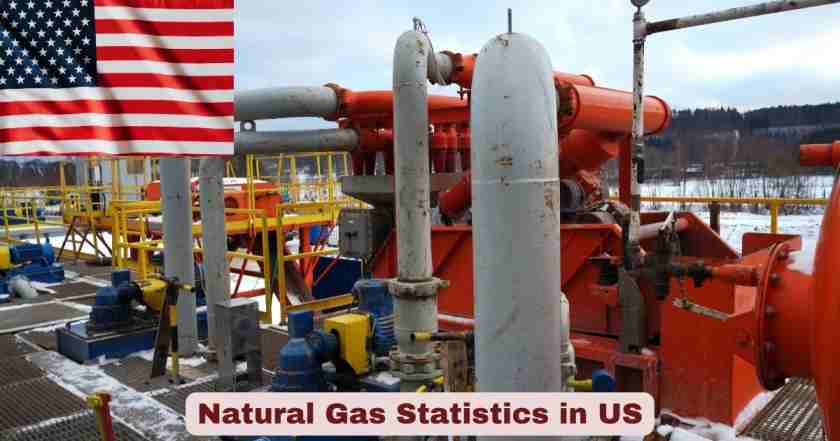
Natural Gas in America 2026
Natural gas is the single most important fuel in the United States energy system in 2026 — the country’s largest source of electricity generation, its dominant space heating fuel for homes and businesses, the feedstock that powers a $600 billion petrochemical and industrial manufacturing sector, and now the fastest-growing American export commodity, flowing to energy-hungry economies in Europe and Asia through a fleet of liquefied natural gas (LNG) terminals that are permanently reshaping global energy geopolitics. It is a naturally occurring mixture of hydrocarbon gases — primarily methane (CH₄), with smaller fractions of ethane, propane, butane, and pentane — that forms underground in sedimentary rock formations over millions of years and is extracted through vertical and horizontal drilling, increasingly combined with hydraulic fracturing (“fracking”) in tight shale formations, before being processed and delivered through a 3.3-million-mile pipeline network to end users across all 50 states. The shale revolution that began in earnest in the Marcellus and Haynesville formations in the late 2000s transformed the United States from a country that expected to become a major natural gas importer by 2020 into the world’s largest natural gas producer — a position the country has now held for more than a decade and extended to record levels in 2025, when dry natural gas production averaged 107.7 billion cubic feet per day (Bcf/d) — the highest annual production total in U.S. history since record-keeping began in 1930. In 2026, according to the EIA’s Short-Term Energy Outlook released March 10, 2026 — the most current and authoritative U.S. energy forecast in existence — marketed natural gas production is expected to average 118 Bcf/d, setting another record that would place the United States in a class of energy production that no other country on earth approaches.
The structural significance of natural gas in the American economy and geopolitical order in 2026 extends well beyond the domestic statistics. When Russia’s invasion of Ukraine in February 2022 severed Europe from its primary natural gas supply, it was U.S. LNG — loaded onto tankers at terminals in Louisiana, Texas, Maryland, and Georgia — that provided the emergency energy security lifeline that prevented European industrial collapse during the 2022–2023 heating seasons. That crisis permanently reoriented European energy policy toward long-term American LNG supply agreements, and the consequence is visible in the December 2025 U.S. export data: the United States exported 28.7 Bcf/d of natural gas in December 2025 — the highest daily export rate ever recorded in the country’s history — of which LNG shipments surged 38.4% year-over-year to a monthly record, with U.S. LNG delivered to 29 countries simultaneously. The United States exported 2.8 times more natural gas than it imported in December 2025, a net export position that would have been literally unimaginable to the energy analysts of 2010. Simultaneously, the March 10, 2026 EIA STEO noted a new geopolitical variable compressing the LNG market: Iran’s conflict with the United States has disrupted LNG flows through the Strait of Hormuz, pushing European and Asian natural gas prices sharply higher and creating extraordinary global demand pressure on American LNG capacity that is already operating at or near maximum utilization. Natural gas in 2026 is not merely a domestic energy commodity. It is an instrument of American foreign policy, a driver of domestic industrial competitiveness, and the fuel whose price, availability, and export trajectory shapes economies on five continents simultaneously.
Natural Gas Key Facts in the US 2026
| Fact Category | Key Fact / Data Point |
|---|---|
| US Dry Natural Gas Production (2025 Annual Record) | 107.7 Bcf/d — highest annual total ever recorded since 1930 — per EIA Natural Gas Monthly (released Feb 27, 2026) |
| US Marketed Natural Gas Production (2026 Forecast) | 118 Bcf/d — per EIA STEO March 10, 2026 |
| US Dry Natural Gas Production — Dec 2025 | 111.6 Bcf/d — highest daily rate for any month since 1973 |
| US Gross Withdrawals — Dec 2025 | 135.9 Bcf/d — highest daily rate for any month since 1980 |
| US Natural Gas Consumption (2025 Annual Record) | 92.0 Bcf/d — highest annual consumption ever recorded since 1949 — per EIA (March 18, 2026) |
| US Natural Gas Consumption Growth (2025 vs. 2024) | +2% (+1.7 Bcf/d) — from 90.3 Bcf/d in 2024 to 92.0 Bcf/d in 2025 |
| Winter Monthly Record — January 2025 | 126.6 Bcf/d — new all-time monthly consumption record |
| Henry Hub Spot Price (2025 Annual Average) | $3.52/MMBtu — up from 2024’s near-record low |
| Henry Hub Spot Price Forecast (2026) | ~$3.80/MMBtu — per EIA STEO March 10, 2026; revised down 13% from prior forecast due to mild February |
| Henry Hub Spot Price Forecast (2027) | ~$3.90/MMBtu — EIA STEO March 2026 |
| Winter Storm Fern — January 2026 | Historic storage withdrawals in January 2026; stocks dropped to 2,493 Bcf |
| US Natural Gas Storage (End-of-Winter Forecast) | 1,840 Bcf — near five-year average (2021–2025); per EIA STEO March 10, 2026 |
| US Net Natural Gas Exports — Dec 2025 | 18.4 Bcf/d — highest net export volume ever recorded since tracking began in 1973 |
| Total US Natural Gas Exports — Dec 2025 | 28.7 Bcf/d — highest daily export rate ever; +27.9% vs. Dec 2024 |
| US LNG Export Rate — Dec 2025 | +38.4% higher daily rate than Dec 2024 — record monthly LNG export level |
| LNG Destination Countries — Dec 2025 | US LNG delivered to 29 countries simultaneously |
| US Natural Gas Exports (Full Year 2025) | 24.6 Bcf/d — up 16.7% from 21.1 Bcf/d in 2024 |
| US LNG Exports (Full Year 2025) | 15.1 Bcf/d — up 26.5% from 11.9 Bcf/d in 2024 |
| Electric Power Sector — Largest Consuming Sector | 35.8 Bcf/d average in 2025 — despite 1.0 Bcf/d YoY decrease from solar displacement |
| Largest Producing Basin | Appalachia — approximately 32% of US Lower 48 production annually since 2016 |
| Strait of Hormuz LNG Disruption (March 2026) | Iran-US conflict reduced LNG flows through Strait of Hormuz — pushing European and Asian gas prices higher |
| US Pipeline Network | Approximately 3.3 million miles of natural gas pipelines |
| Mountain Valley Pipeline | Authorized operations June 2024 by FERC — added Appalachian export capacity |
Source: EIA Natural Gas Monthly (released February 27, 2026, eia.gov/naturalgas/monthly/); EIA Short-Term Energy Outlook March 10, 2026 (eia.gov/outlooks/steo/); EIA “U.S. natural gas consumption set a monthly and yearly record in 2025” (posted March 18, 2026, eia.gov/todayinenergy); EIA “U.S. natural gas production to reach record highs in 2026 and 2027” (eia.gov/todayinenergy); EIA “In 2025, U.S. natural gas spot prices increased from 2024’s record low” (eia.gov/todayinenergy)
The 2025 natural gas production record of 107.7 Bcf/d — the highest in the country’s nearly 100-year production history — was achieved against a backdrop of Henry Hub spot prices at $3.52/MMBtu, a price level that in any previous decade would have been considered too low to sustain significant production growth. The fact that American natural gas producers are setting production records at historically moderate price levels reflects the extraordinary efficiency gains that the shale industry has achieved over the past 15 years: longer laterals, more perforation clusters per well, more sophisticated hydraulic fracturing designs, and AI-assisted well placement have driven the cost of producing a unit of natural gas in the Appalachian, Haynesville, and Permian basins down to levels that allow profitable operation at prices that would have been commercially ruinous for the conventional gas industry of the 1990s and 2000s. The Haynesville shale in northwestern Louisiana and northeastern Texas — which is projected to grow production by 1.2 Bcf/d in 2026 and 1.6 Bcf/d in 2027 per EIA’s March forecast — is benefiting specifically from its proximity to the Gulf Coast LNG terminal complex, where the international price premium for LNG is translated back into higher netback prices for producers that deliver into the export pipeline system.
The LNG export surge of 26.5% in full-year 2025 — bringing U.S. LNG exports to 15.1 Bcf/d — and the extraordinary December 2025 record of 38.4% above the prior December is the geopolitical consequence of European energy policy colliding with American export capacity expansion. The Sabine Pass, Corpus Christi, Calcasieu Pass, Cove Point, Sabine Pass T6, Elba Island, and other Gulf Coast and East Coast LNG terminals are now collectively operating at or near maximum utilization, and the construction pipeline for additional LNG capacity remains among the most active infrastructure investment categories in the country. The March 2026 EIA STEO’s explicit acknowledgment that Iranian military conflict has disrupted LNG flows through the Strait of Hormuz — pushing European and Asian prices higher and increasing the premium value of American LNG that reaches those markets via alternative sea routes — adds a real-time geopolitical dimension to the U.S. natural gas export story that underscores how deeply the country’s domestic energy production has become integrated into international security and energy market dynamics.
US Natural Gas Production Statistics in 2026
| Production Metric | Data / Statistic |
|---|---|
| Dry Natural Gas Production — Full Year 2025 | 107.7 Bcf/d — record high since 1930; up 4.5% from 103.1 Bcf/d in 2024 |
| Gross Natural Gas Withdrawals — Full Year 2025 | Up 4.5% year-over-year — consistent with dry gas growth |
| Dry Natural Gas Production — December 2025 | 111.6 Bcf/d — highest monthly daily average in recorded US history (since 1973) |
| Gross Withdrawals — December 2025 | 135.9 Bcf/d — highest daily rate for any month since 1980 |
| Year-over-Year Growth — December 2025 | Production +5.6% (+5.9 Bcf/d) vs. December 2024 (105.7 Bcf/d); 10th consecutive month of YoY increase |
| Marketed Natural Gas Production Forecast (2026) | 118 Bcf/d — per EIA STEO March 10, 2026 |
| Marketed Natural Gas Production Forecast (2027) | 121 Bcf/d — per EIA STEO March 10, 2026 |
| Dry Gas Production Forecast (2026) | ~109–110 Bcf/d — per earlier EIA forecasts; marketed includes additional liquids |
| Appalachia’s Share of Lower 48 Production | ~32% — largest basin; slight growth of 0.3 Bcf/d in 2026; 0.5 Bcf/d in 2027 — Mountain Valley Pipeline enabling new capacity |
| Haynesville Production Growth (2026) | +1.2 Bcf/d in 2026 — driven by LNG terminal proximity and elevated price outlook |
| Haynesville Production Growth (2027) | +1.6 Bcf/d — continuing growth as LNG demand premium supports deeper well economics |
| Permian Basin Associated Gas Growth (2026) | +1.4 Bcf/d — associated gas from oil-directed drilling; gas-to-oil ratio (GOR) rising steadily |
| Permian Basin Associated Gas Growth (2027) | +0.6 Bcf/d — slowing as WTI oil price declines reduce oil-directed rig activity |
| US Gas-to-Oil Ratio (Permian) | GOR increasing steadily — EIA revised upward based on recent production data |
| Mountain Valley Pipeline | Began operations June 2024 — FERC authorized; enables Appalachian gas to reach Southeast US markets |
| Pipeline Capacity Constraint (Appalachia) | Production growth limited by pipeline capacity until Mountain Valley and successor projects come online |
| Key Producing States | West Virginia, Pennsylvania, Texas (Permian + Haynesville), Louisiana, Oklahoma, Wyoming |
| Dry vs. Marketed Production Difference | Marketed = dry gas + natural gas liquids extracted at processing; typically ~7–10 Bcf/d higher than dry gas |
Source: EIA Natural Gas Monthly (released February 27, 2026, eia.gov/naturalgas/monthly/); EIA STEO March 10, 2026 (eia.gov/outlooks/steo/); EIA “U.S. natural gas production to reach record highs in 2026 and 2027” (eia.gov/todayinenergy/detail.php?id=67166)
The December 2025 production record of 111.6 Bcf/d — the 10th consecutive month of year-over-year production increases — confirms that the U.S. natural gas production expansion is not a seasonal or cyclical phenomenon but a structural trend driven by basin-level economics that do not reverse easily. Each percentage point of efficiency gain in the Appalachian Marcellus and Utica shales, where production has averaged 32% of total Lower 48 output since 2016, represents billions of cubic feet per day of incremental supply that flows primarily to the Northeast and Mid-Atlantic population centers and, increasingly, to Mid-Atlantic and Southeast LNG terminals as pipeline expansions create new export pathways. The Haynesville’s 1.2 Bcf/d growth in 2026 is particularly important because the Haynesville is geographically uniquely positioned: its Louisiana and East Texas gas production can flow directly into the LNG terminal complex on the Gulf Coast with minimal transportation cost — effectively capturing a premium over Henry Hub that makes even the deeper, more expensive wells in the play economically rational as long as global LNG prices remain elevated. The March 2026 Strait of Hormuz disruption — by pushing European and Asian spot LNG prices sharply higher — has strengthened exactly the price signal that drives Haynesville operators to drill.
The EIA’s upward revision of Permian Basin gas-to-oil ratio (GOR) assumptions — a technical adjustment that reflects the reality that each barrel of Permian oil being produced is coming with a growing volume of associated natural gas — is one of the most consequential analytical judgments in American energy forecasting in 2026, even though it rarely makes general media coverage. As Permian oil wells age and gas caps expand, the ratio of gas produced per barrel of oil increases mechanically. This means that even at oil prices projected to fall from $65/barrel in 2025 to $53/barrel in 2026 — a decline that would normally reduce drilling activity — the rising GOR ensures that each well drilled for oil is producing progressively more natural gas as a byproduct. The Permian’s 1.4 Bcf/d of associated gas growth in 2026 does not require any new gas-directed drilling decisions by operators; it flows from oil-directed economics modified by the physical reality of maturing reservoir dynamics. This is why U.S. natural gas production growth in 2026 is structurally more resilient to oil price declines than it would have been a decade ago.
US Natural Gas Consumption Statistics in 2026
| Consumption Metric | Data / Statistic |
|---|---|
| Annual Consumption (2025 Record) | 92.0 Bcf/d — highest annual consumption since 1949; per EIA March 18, 2026 |
| Annual Consumption (2024) | 90.3 Bcf/d |
| Year-over-Year Change (2025 vs. 2024) | +1.7 Bcf/d (+2%) |
| Monthly Record — January 2025 | 126.6 Bcf/d — new all-time US monthly consumption record |
| Monthly Record — February 2025 | 115.9 Bcf/d — 5% more than prior February record (2021) |
| Consumption Change — Jan 2025 vs. Jan 2024 | +5% (+6.3 Bcf/d) |
| 2026 Consumption Forecast | Slight decrease from 2025 record — milder winter weather forecast; per EIA STEO March 2026 |
| Electric Power Sector (2025) | 35.8 Bcf/d average — largest consuming sector; down 1.0 Bcf/d from 2024 (36.8 Bcf/d) |
| Electric Power — 10-Year Trend | Electric power gas demand grew from 27.3 Bcf/d (2016) to 35.8 Bcf/d (2025) — strong long-term growth |
| Electric Power Decline Cause (2025) | Rapid solar and battery additions displaced gas-fired generation during many daytime hours |
| Electric Power Gas Demand — March 2025 | -2.9 Bcf/d vs. March 2024 — largest monthly decline |
| Electric Power Gas Demand — August 2025 | -2.8 Bcf/d vs. August 2024 — second largest monthly decline (fewer cooling degree days) |
| Electric Power Forecast (2026) | Total US gas-fired generation increases +0.5% (+8 BkWh) in 2026 despite higher gas price |
| Residential Consumption (2025) | 13.3 Bcf/d — +11% from 2024 (reflecting colder 2025 winter) |
| Commercial Consumption (2025) | 9.9 Bcf/d — +10% from 2024 |
| Industrial Consumption (2025) | Increased +0.2 Bcf/d from 2024 — modest growth |
| December 2025 Consumption | 112.7 Bcf/d |
| December 2025 Residential | 26.6 Bcf/d — +9% vs. Dec 2024 |
| December 2025 Commercial | 16.4 Bcf/d — +9.3% vs. Dec 2024 — record monthly commercial daily rate since 1973 |
| December 2025 Industrial | 25.71 Bcf/d — nearly flat (-0.1%) vs. Dec 2024 — 2nd highest since 2001 |
| Average Winter Heating Cost (Gas Home 2025–2026) | $671 for November–March period — 3% above prior winter |
| Winter Storm Fern Impact (January 2026) | Historic storage withdrawals; consumption spike; stocks fell to 2,493 Bcf |
Source: EIA “U.S. natural gas consumption set a monthly and yearly record in 2025” (posted March 18, 2026, eia.gov/todayinenergy/detail.php?id=67365); EIA Natural Gas Monthly through December 2025 (released February 27, 2026); EIA STEO March 10, 2026; S&P Global December 9, 2025 analysis
The 92.0 Bcf/d annual consumption record set in 2025 is the product of a meteorological anomaly layered on top of a structural demand trend — and separating the two is essential for understanding where U.S. gas demand goes in 2026. The colder-than-normal 2025 winter — which produced a February 2025 with 9.5 Bcf/d more combined residential and commercial consumption than February 2024 (itself one of the warmest Februaries on record) — added roughly 1 Bcf/d to the full-year average compared to what a weather-neutral year would have produced. The EIA’s March 2026 forecast of a slight 2026 consumption decrease reflects this dynamic: as the base effect of the cold 2025 winter normalizes and weather returns to more typical patterns, the residential and commercial sector’s contribution to year-over-year growth fades. The structural trend, however, is clearly upward: industrial consumption is growing modestly, LNG export-driven pipeline demand is growing rapidly, and even the temporary dip in electric power gas consumption from 2024 to 2025 — driven by solar and battery displacement during daytime hours — does not reverse the decade-long trend of electric power gas consumption growing from 27.3 Bcf/d in 2016 to 35.8 Bcf/d in 2025.
The December 2025 commercial consumption record — 16.4 Bcf/d, the highest daily rate for any December since 1973 — is a data point that reflects the extraordinary cold that gripped much of the United States during the final weeks of the year, following the polar vortex event in late November and early December 2025 that briefly pushed Henry Hub spot prices above $5.00/MMBtu — the highest price point of the year. The dual pressure of record production (supply pushing prices down over the summer) and record consumption spikes during cold weather events (demand pulling prices up in winter) defines the volatility pattern of the U.S. natural gas market in 2025–2026: a market where the annual average price can be relatively moderate at $3.52/MMBtu while individual winter weeks see spot prices exceeding $5, $8, or even $16/MMBtu in congested Northeastern markets. The Algonquin Citygate averaging $16.37/MMBtu in January 2025 — the highest January price since 2022 — illustrates this regional price divergence: the same physical commodity that trades at $3.52 at Henry Hub in Louisiana can simultaneously trade at four to five times that price in New England, where insufficient pipeline capacity meets cold winter demand in a market with almost no geographic escape valve.
US Natural Gas Export and LNG Statistics in 2026
| Export / LNG Metric | Data / Statistic |
|---|---|
| Total Natural Gas Exports (Full Year 2025) | 24.6 Bcf/d — up +16.7% from 21.1 Bcf/d in 2024 |
| LNG Exports (Full Year 2025) | 15.1 Bcf/d — up +26.5% from 11.9 Bcf/d in 2024 |
| LNG Exports as Share of Total Gas Exports (2025) | Approximately 61% of all US natural gas exports are LNG |
| Total Gas Imports (Full Year 2025) | 8.64 Bcf/d — up 0.6% from 8.59 Bcf/d in 2024 — highest since 2011 |
| Net Gas Exports (Full Year 2025) | 24.6 − 8.64 = ~16 Bcf/d net exported |
| December 2025 — Total Exports | 28.7 Bcf/d — +27.9% vs. Dec 2024; highest daily export rate ever recorded |
| December 2025 — LNG Exports Daily Rate | +38.4% above Dec 2024 — highest monthly LNG export rate in recorded US history |
| December 2025 — LNG Export Countries | 29 countries received US LNG simultaneously |
| December 2025 — Net Exports | 18.4 Bcf/d — highest net export volume ever (since 1973) |
| December 2025 — Export/Import Ratio | US exported 2.8 times more gas than it imported |
| US LNG Export Capacity (2026) | US is the world’s #1 LNG exporter — capacity approaching 15+ Bcf/d nameplate |
| US LNG Terminals Operating (Key) | Sabine Pass (LA), Corpus Christi (TX), Calcasieu Pass (LA), Cove Point (MD), Elba Island (GA), Freeport LNG (TX), Plaquemines LNG (partial ops 2024–2025) |
| Plaquemines LNG | First production late 2024; capacity buildout continuing through 2025–2026 — adds ~3 Bcf/d at full capacity |
| LNG Demand Driver — Europe | EU nations signed long-term US LNG supply agreements post-Ukraine invasion; US LNG replacing Russian pipeline gas |
| LNG Demand Driver — Asia | Japan, South Korea, China, India among top US LNG customers |
| Strait of Hormuz Impact (March 2026) | Iranian conflict disrupted LNG flows through Strait — pushed European/Asian prices up — increased US LNG price premium |
| US LNG — Global Context | US is world’s #1 LNG exporter (surpassed Qatar and Australia in 2023) |
| Pipeline Exports (Mexico) | US exports significant pipeline gas to Mexico — primary non-LNG export destination |
| Pipeline Exports (Canada) | Small net trade with Canada; US imports mostly NW Canadian supply |
Source: EIA Natural Gas Monthly (released February 27, 2026); EIA STEO March 10, 2026; EIA “U.S. natural gas production to reach record highs in 2026 and 2027”; EIA “In 2025, U.S. natural gas spot prices increased from 2024’s record low”
The US becoming the world’s #1 LNG exporter — surpassing Qatar and Australia in 2023 and maintaining that position through 2025 and 2026 — is one of the most consequential geopolitical energy transformations of the past decade, and one that the December 2025 export records quantify in concrete terms. The 28.7 Bcf/d of total exports in December 2025 — approximately 20% of total U.S. production leaving the country in that month alone — reflects the maturation of an export infrastructure that essentially did not exist before 2016, when the first LNG cargo left Sabine Pass. In less than a decade, the United States built the physical, financial, and commercial infrastructure to become the global LNG market’s swing supplier: the country that European utilities call when Russian gas stops flowing, that Asian importers bid against each other to access during cold winters, and that sets the marginal price in global spot LNG markets through its combination of flexible, destination-unrestricted cargoes and the sheer scale of export capacity it has built. The $671 winter heating cost for gas-heated American homes is the domestic consumer experience of a commodity whose global strategic importance is measured in hundreds of billions of dollars of international trade.
The Strait of Hormuz disruption documented in the EIA’s March 10, 2026 STEO adds an operational dimension to the U.S. LNG export story that was not present in any prior annual analysis. The Strait of Hormuz — through which approximately 20% of global LNG trade normally transits — has been partially closed or subject to insurance surcharges following the Iran-U.S. military conflict that began February 28, 2026. This affects primarily Middle Eastern LNG producers: Qatar, the UAE, and Oman, which collectively export tens of millions of tons of LNG per year through the Strait. As those supplies are diverted, delayed, or priced at conflict-risk premiums, the premium for U.S. LNG — which reaches Europe and Asia via Atlantic and Pacific routes that do not touch the Strait of Hormuz — increases in direct proportion. The immediate consequence is higher European and Asian spot LNG prices, which translate into higher netback prices for Gulf Coast LNG terminal operators, which in turn improve the economics of both operating existing terminals at maximum utilization and sanctioning new LNG projects that might have faced marginal financing decisions at the lower pre-conflict price levels. The Iranian conflict is, paradoxically, one of the strongest commercial tailwinds the U.S. LNG industry has experienced since the Ukraine invasion of 2022.
US Natural Gas Price Statistics in 2026
| Price Metric | Data / Statistic |
|---|---|
| Henry Hub Annual Average (2024) | ~$2.21/MMBtu — near record low (cited as context for 2025 recovery) |
| Henry Hub Annual Average (2025) | $3.52/MMBtu — up substantially from 2024 near-record low |
| Henry Hub Annual Forecast (2026) | ~$3.80/MMBtu — per EIA STEO March 10, 2026; 13% below prior monthly forecast due to mild February |
| Henry Hub Annual Forecast (2027) | ~$3.90/MMBtu — per EIA STEO March 10, 2026 |
| Henry Hub Q4 2026 Forecast | ~$4.50/MMBtu — winter premium expected |
| Henry Hub Polar Vortex Spike (Nov–Dec 2025) | Briefly exceeded $5.00/MMBtu during late November–early December cold snap |
| Henry Hub Q1 2025 (Winter Storm) | Spiked significantly during cold snap events |
| Algonquin Citygate (New England) — Jan 2025 | $16.37/MMBtu — highest January price since 2022 |
| Algonquin Citygate (New England) — Feb 2025 | $14.00/MMBtu |
| Northwest Sumas (Pacific Northwest) | Annual average fell $0.24/MMBtu in 2025 — ample Canadian supply, weak Pacific NW electricity demand |
| Gas Price Compared to Coal for Power Gen | US gas price delivered to generators increasing 3% in 2026 — slight coal competitiveness improvement |
| Winter Heating Cost (Gas Home, 2025–2026) | $671 for November–March period — 3% above prior winter — per EIA estimate |
| Winter Heating Cost (Electric Home, 2025–2026) | $1,144 for the winter — 5% above prior year |
| Haynesville Well Economics | $4.31/MMBtu in 2026 and $4.38/MMBtu in 2027 needed to remain economic for deeper wells — met by EIA forecast |
| Natural Gas Liquids (NGL) Price Context | Higher NGL prices support associated gas production economics in Permian and other oil basins |
| Residential Retail Gas Price (National Avg) | Varies; residential sector paid approximately $10–12/MMBtu on average at retail in 2025 |
| EIA Forecast Confidence (March 2026) | Forecast completed March 9, 2026 — next update April 7, 2026; acknowledges Strait of Hormuz uncertainty |
Source: EIA STEO March 10, 2026 (eia.gov/outlooks/steo/); EIA “In 2025, U.S. natural gas spot prices increased from 2024’s record low” (eia.gov/todayinenergy); EIA “U.S. natural gas production to reach record highs in 2026 and 2027” (eia.gov/todayinenergy); S&P Global December 9, 2025; EIA Press Release February 11, 2025
The EIA’s downward revision of the 2026 Henry Hub price forecast from its prior month’s projection — a 13% cut to $3.80/MMBtu — is one of the clearest examples of how weather patterns and storage dynamics can rapidly shift the natural gas price outlook even within a single month. The mild February 2026 — following the brutally cold January dominated by Winter Storm Fern — left more natural gas in storage heading into the spring “injection season” (April–October) than the prior month’s forecast had projected, which means the market will enter the summer with more cushion, reducing the upward price pressure that a tighter storage situation would have created. The EIA’s forecast mechanism translates this directly: more gas in storage coming out of winter → less need for price signals to curb summer production or stimulate summer drilling → lower annual average price. The $3.80/MMBtu 2026 forecast still represents a meaningfully higher annual average than the $3.52/MMBtu of 2025, reflecting the structural tailwinds of rising LNG export demand, the Strait of Hormuz supply disruption premium, and the baseline demand support from the continued AI data center electricity buildout — but it is not the $4.31/MMBtu that the February STEO had projected before mild weather updated the storage picture.
The regional price divergence in U.S. natural gas markets — with the Algonquin Citygate in New England averaging $16.37/MMBtu in January 2025 while Henry Hub in Louisiana was trading at a fraction of that level — is the physical expression of a pipeline infrastructure constraint that has persisted despite decades of debate about its resolution. New England sits at the end of the U.S. natural gas pipeline system, with limited import capacity and essentially no domestic production to draw on. During winter heating demand spikes, the region’s pipelines fill to capacity and prices spike to whatever level is necessary to clear the market — which in the coldest weeks can be ten or twenty times the Henry Hub benchmark price. The Mountain Valley Pipeline’s June 2024 authorization addresses part of this problem by moving Appalachian gas toward the Southeast U.S., relieving some pressure on the Mid-Atlantic system, but New England’s specific pipeline constraints remain among the most stubborn in the American energy infrastructure landscape. As more LNG export capacity draws additional volumes into the Gulf Coast pipeline system, the pressure on existing transmission infrastructure increases — making the regional price divergence story more relevant in 2026, not less.
US Natural Gas and Electric Power Sector Statistics in 2026
| Electric Power / Gas Metric | Data / Statistic |
|---|---|
| Electric Power Sector Gas Consumption (2025) | 35.8 Bcf/d — largest consuming sector; down -1.0 Bcf/d vs. 2024’s 36.8 Bcf/d |
| Decade Trend — Electric Power Gas Demand | 27.3 Bcf/d (2016) → 35.8 Bcf/d (2025) — +31% in 10 years |
| 2025 Decline Cause | Rapid solar and battery additions displaced gas during daytime hours; 73 fewer cooling degree days in summer 2025 |
| 2026 Electric Power Gas Forecast | Total US gas-fired generation up +0.5% (+8 BkWh) in 2026 — modest growth |
| Higher Gas Prices Impact on Generation (2026) | Gas prices up 3% to generators → slight shift toward coal in regions where coal remains available |
| Coal Retirement Offset | 4% of US coal-fired generating capacity retiring in 2026 — partially offsets gas competition advantage |
| Natural Gas vs. Coal for Electricity (2025) | Natural gas remains #1 electricity source; wind + solar now surpassed coal in generation |
| Gas Share of US Electricity Generation (2025) | Approximately 42–43% of total US electricity — largest single source |
| Gas-Fired Capacity — US Total (End-2026) | Approximately ~514,212.5 MW installed — largest generating capacity category until surpassed by renewables |
| New Gas Capacity Planned (2026) | 6.3 GW — Orange County Advanced Power Station (TX, 1,158 MW) and Trumbull Energy Center (OH, 900 MW) largest |
| AI Data Center Impact on Gas Demand | Growing; data centers creating new electricity demand that gas-fired plants help meet during solar off-hours |
| ERCOT Gas Generation Growth (2024–2026) | +2% — Texas grid adding new gas but also adding far more solar and battery |
| PJM Gas Generation Growth (2024–2026) | +2% — Mid-Atlantic/Midwest grid maintaining gas role as solar grows |
| Solar Displacing Gas — Peak Hours | Solar + battery additions in 2025 cut gas electric power demand most in March and August — off-peak and mild months |
| Gas Peakers at Risk | As battery storage scales beyond 40 GW, gas peaking plants increasingly displaced during evening peak |
| Natural Gas Net Metered Price Increase | 3% increase in gas delivered to generators in 2026 — modest coal competitiveness improvement in coal-heavy regions |
Source: EIA “U.S. natural gas consumption set a monthly and yearly record in 2025” (March 18, 2026); EIA STEO March 10, 2026; EIA Electric Power Monthly through December 2025 (released February 24, 2026); S&P Global STEO coverage December 2025
The electric power sector’s natural gas consumption trajectory — growing from 27.3 Bcf/d in 2016 to 35.8 Bcf/d in 2025, then dipping slightly in 2025 before resuming growth in 2026 — is one of the most important single trend lines in U.S. energy economics. This is the story of how cheap natural gas drove the coal-to-gas fuel switch that reduced U.S. electricity sector carbon emissions more rapidly than any federal climate policy could have achieved: as Henry Hub prices fell from their 2008 peak above $13/MMBtu to below $2/MMBtu during the shale glut years, gas-fired power plants became dramatically cheaper to operate than coal plants, and utility dispatchers simply ran gas instead of coal whenever the price signals allowed. The coal fleet’s capacity declining to approximately 163 GW by end-2026 from its prior peak above 300 GW is the direct consequence of that economic displacement. Now, in 2026, a partial role reversal is emerging at the margin: with Henry Hub at $3.80/MMBtu — higher than the ultra-low levels of 2020–2021 — and coal prices remaining relatively stable, the economic incentive to burn gas versus coal for electricity narrows slightly. But the 4% of coal-fired capacity retiring in 2026 makes this marginal economics story largely irrelevant: you cannot substitute coal generation that has been permanently retired.
The AI data center electricity demand story is the newest and perhaps fastest-growing driver of U.S. natural gas demand that the EIA’s current forecasts may be systematically underestimating. The EIA’s October 2024 analysis explicitly documented that data center electricity demand is growing fast enough to force upward revisions of regional load forecasts — with PJM revising its 10-year demand forecast upward by 40% in a single cycle. Each new gigawatt of data center load that comes online in Virginia, Texas, or Arizona requires backup generation capacity that can operate when solar and wind output drops below demand, and in 2026, that backup capacity is overwhelmingly natural gas combined-cycle and combustion turbine plants. The Stargate initiative — $500 billion of planned AI computing infrastructure across the United States — and the broader hyperscaler buildout by Microsoft, Amazon, Google, and Meta are each creating demand signals that translate directly into natural gas pipeline bookings, power purchase agreements with gas-fired generators, and new gas turbine orders. This is not a hypothetical future trend. It is already showing up in the forward capacity auction results of PJM, ERCOT, and MISO — the grid operators whose demand forecasts drive natural gas pipeline investment decisions — and it will continue to reshape the U.S. natural gas market throughout 2026 and beyond.
Disclaimer: This research report is compiled from publicly available sources. While reasonable efforts have been made to ensure accuracy, no representation or warranty, express or implied, is given as to the completeness or reliability of the information. We accept no liability for any errors, omissions, losses, or damages of any kind arising from the use of this report.