
National Guard Deployment in US Cities 2026
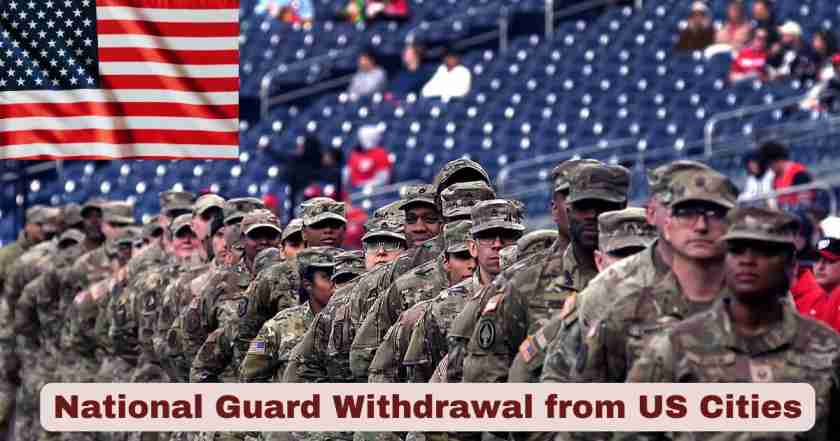
National Guard deployment in US cities reached a controversial conclusion on December 31, 2025, when President Donald Trump announced the withdrawal of troops from Chicago, Los Angeles, and Portland, following a series of legal setbacks that challenged the administration’s authority to federalize state Guard units. The president made the announcement on Truth Social, declaring that “we are removing the National Guard from Chicago, Los Angeles, and Portland, despite the fact that CRIME has been greatly reduced by having these great Patriots in those cities, and ONLY by that fact.” Trump claimed that these cities “were GONE if it weren’t for the Federal Government stepping in,” while simultaneously warning that federal forces “will come back, perhaps in a much different and stronger form, when crime begins to soar again – Only a question of time!” The withdrawal marks the end of a months-long confrontation between the Trump administration and Democratic-led jurisdictions over presidential authority to deploy military forces domestically.
The National Guard deployment controversy involved 300 Illinois Guardsmen activated in Chicago, 100 Oregon National Guardsmen activated in Portland, and 100 California National Guard troops assigned to federal protection missions for ICE agents in Los Angeles, according to U.S. Northern Command. However, most of these troops were not engaging in active operations due to pending court cases that blocked their deployment. The Trump administration had been fighting legal battles to maintain Guard presence in cities that opposed federal intervention, with courts in California, Illinois, and Oregon all issuing rulings that challenged or blocked the deployments. The U.S. Supreme Court last week left in place a federal ruling in Chicago that bars the administration from deploying National Guard troops in Illinois while a legal challenge moves forward. In early December 2025, a federal judge in California blocked the Trump administration from deploying members of the California National Guard in Los Angeles and directed the administration to return control of the Guard to Governor Gavin Newsom. In October 2025, a federal appeals court cleared the way for the administration to deploy the Oregon National Guard to Portland while a legal challenge progresses, though operations remained limited.
Interesting Facts and Statistics on National Guard Withdrawal in US Cities 2025
| Key Statistic | Data Point | Date |
|---|---|---|
| Withdrawal Announcement | 3 cities affected | December 31, 2025 |
| Cities Involved | Chicago, Los Angeles, Portland | 2025 |
| Illinois National Guard Activated | 300 troops | Chicago deployment |
| Oregon National Guard Activated | 100 troops | Portland deployment |
| California National Guard Deployed | 100 troops | Los Angeles ICE protection |
| Supreme Court Ruling | Blocked Chicago deployment | Last week (Dec 2025) |
| California Court Order | Blocked LA deployment | Early December 2025 |
| Oregon Appeals Court | Cleared Portland deployment | October 2025 |
| Chicago Homicides (2025) | 412 murders (as of Dec 28) | Down from 585 in 2024 |
| Chicago Murder Decline | Fewest since mid-1960s | 2025 record |
| Troops Actually Operating | None in Chicago/Portland | Due to court blocks |
| LA Operations Halted | December 15, 2025 | Federal mission ended |
Data sources: President Trump Truth Social announcement, U.S. Northern Command, U.S. Supreme Court rulings, Federal District Court orders, Chicago Police Department data
The National Guard withdrawal in 2025 affects three major American cities where President Trump attempted to deploy federal military forces amid claims of rising crime and the need to protect ICE agents conducting immigration enforcement operations. The announcement on December 31, 2025 came via Truth Social, Trump’s social media platform, where he simultaneously claimed credit for crime reductions while warning of potential future deployments. According to U.S. Northern Command, the actual deployment numbers included 300 Illinois Guardsmen activated for Chicago operations, 100 Oregon National Guardsmen for Portland, and 100 California National Guard troops for Los Angeles, though operational effectiveness was severely limited by court orders blocking or restricting their activities.
The legal landscape proved decisive in forcing the withdrawal. The U.S. Supreme Court left in place a federal ruling blocking Chicago deployment during the last week of December 2025, representing a major setback for the administration’s assertion of presidential authority to federalize state National Guard units. In early December 2025, a federal judge in California issued an order blocking the Trump administration from deploying California National Guard members in Los Angeles and directing return of Guard control to Governor Gavin Newsom. An October 2025 federal appeals court ruling cleared the way for Oregon National Guard deployment to Portland while legal challenges continued, though in practice, troops were not conducting active operations. The withdrawal came as crime statistics showed dramatic improvements, with Chicago recording 412 murders as of December 28, 2025, down from 585 in the same timeframe in 2024—representing the fewest homicides since the mid-1960s according to Chicago Mayor Brandon Johnson. The 100 California National Guard troops in Los Angeles had their federal protection mission operationally halted on December 15, 2025, according to Northern Command, even before Trump’s formal withdrawal announcement.
Legal Challenges to National Guard Deployment in the US 2025
| Legal Action | Jurisdiction | Outcome/Status |
|---|---|---|
| U.S. Supreme Court | Chicago/Illinois | Blocked deployment (Dec 2025) |
| Supreme Court Finding | Presidential authority | “Failed to identify source of authority” |
| Federal Judge (California) | Los Angeles | Blocked deployment (Early Dec 2025) |
| California Court Order | Guard control | Return to Governor Newsom |
| Federal Appeals Court | Portland/Oregon | Cleared deployment (Oct 2025) |
| Oregon Status | Legal challenge ongoing | Operations limited despite clearance |
| Lawsuits Filed | California, Illinois, Oregon | Seeking to block federal takeover |
| Constitutional Issue | Federal vs. State control | President’s federalization authority |
Data sources: U.S. Supreme Court unsigned order, Federal District Court rulings, Federal Appeals Court decisions, State Attorney General offices
The legal challenges to National Guard deployment created an insurmountable barrier to the Trump administration’s efforts to maintain federal military presence in Democratic-led cities. The U.S. Supreme Court dealt the administration its most significant blow in late December 2025 when it left in place a federal ruling in Chicago that bars deploying National Guard troops in Illinois while the legal challenge proceeds. In an unsigned order, the Supreme Court rejected the administration’s claim that circumstances on the ground in Illinois met the criteria for the president to invoke federal law allowing him to call up the National Guard to federal service, stating “At this preliminary stage, the Government has failed to identify a source of authority that would allow the military to execute the laws in Illinois.”
The Supreme Court’s ruling suggested that a president’s power to federalize the National Guard—which federal law allows when he can no longer execute U.S. laws with “regular forces”—would not apply to protecting agents enforcing immigration laws. In early December 2025, a federal judge in California blocked the Trump administration from deploying members of the California National Guard in Los Angeles and directed the administration to return control of the Guard to Governor Gavin Newsom, representing a sharp rebuke of federal overreach. California, Illinois, and Oregon all responded to the initial deployment orders with lawsuits seeking to block the move, challenging the constitutionality of federal takeover of state military forces. In October 2025, a federal appeals court cleared the way for the administration to deploy the Oregon National Guard to Portland while the legal challenge progresses, though in practice, the 100 Oregon Guardsmen activated were not engaging in operations because of the pending Supreme Court case involving Chicago, which established broader precedent. The constitutional issue at stake centered on the balance between presidential authority to deploy military forces domestically and state sovereignty over National Guard units, with courts consistently ruling that the administration had not met the high bar required to justify federal takeover.
State and Local Government Response to National Guard Withdrawal in the US 2025
| Official/Jurisdiction | Response | Statement |
|---|---|---|
| California AG Rob Bonta | Welcomed withdrawal | “Political pawns,” “President desperate to be a king” |
| California Gov. Gavin Newsom | Declared victory | “About time Trump admitted defeat” |
| Gov. Newsom | Illegality claim | “Federal takeover of California’s National Guard is illegal” |
| LA Mayor Karen Bass | Constitutional defense | “Constitution still applies to presidents who wish it didn’t” |
| Oregon Gov. Tina Kotek | Awaiting confirmation | “Office has not yet received official notification” |
| Chicago Mayor Brandon Johnson | Crime data emphasis | Fewest homicides “since mid-1960s” |
| Illinois | Lawsuit plaintiff | Sought to block deployment |
| California | Lawsuit plaintiff | Sought to block deployment |
| Oregon | Lawsuit plaintiff | Sought to block deployment |
Data sources: State Attorney General statements, Governor press releases, Mayor social media posts, Official government communications
State and local government responses to the National Guard withdrawal reflected a mix of vindication and continued wariness about federal overreach. California Attorney General Rob Bonta, a Democrat, welcomed the administration’s decision in a statement, saying the Trump administration was using the Guard as “political pawns” and blasting Trump as “a President desperate to be a king.” Bonta added: “While our rule of law remains under threat, our democratic institutions are holding. My office is not backing down — and we’re ready for whatever fights lie ahead.” Governor Gavin Newsom tweeted his response, saying “About time @realDonaldTrump admitted defeat” and declaring that “we’ve said it from day one: the federal takeover of California’s National Guard is illegal.”
Los Angeles Mayor Karen Bass wrote on social media platform X that “Trump is backing away because there was never a legal justification for deploying troops in L.A. and cities across the country,” adding that “The Constitution still applies to presidents who wish it didn’t. Angelenos stood together. We saw through it. The courts saw through it.” Oregon Governor Tina Kotek issued a statement to Fox News Digital saying “My office has not yet received official notification that the remaining federalized Oregon National Guard troops can return home,” indicating that as of the announcement, formal withdrawal procedures had not been completed. Chicago Mayor Brandon Johnson emphasized crime statistics in his response, writing on X that “Chicago recorded the fewest homicides in 2025 than in any year this century, with totals far below previous spikes. The city hasn’t recorded figures this low since the mid 1960’s,” suggesting the Guard presence was unnecessary given improving public safety. The three states—California, Illinois, and Oregon—had all filed lawsuits seeking to block the federal deployment, with state officials arguing that Trump’s federalization of National Guard units violated constitutional principles of federalism and state sovereignty over their own military forces absent extraordinary circumstances that clearly met statutory requirements.
Crime Statistics in Cities with National Guard Deployment in the US 2025
| City | Crime Data | Comparison |
|---|---|---|
| Chicago Homicides (2025) | 412 murders (as of Dec 28) | Down from 585 in 2024 |
| Chicago Murder Trend | Fewest since mid-1960s | Historic low for 21st century |
| Chicago Decline Percentage | Approximately 30% decrease | Year-over-year 2024-2025 |
| National Homicide Trend | 20% decrease projected | 2025 nationwide |
| Trump’s Claim | “CRIME has been greatly reduced” | Attributed to Guard presence |
| Alternative Explanation | National crime decline trend | Broader pattern beyond Guard cities |
| Portland Context | Anti-ICE protests occurred | Late 2025 demonstrations |
| Los Angeles Context | Violent resistance to ICE | Earlier 2025 anti-ICE protests |
Data sources: Chicago Police Department data, National crime statistics, News reports on protests and demonstrations
Crime statistics in cities where the National Guard was deployed show substantial improvements during 2025, though the connection between Guard presence and crime reduction remains disputed. Chicago recorded 412 murders as of December 28, 2025, compared to 585 in the same timeframe in 2024, representing approximately a 30% decrease year-over-year. Chicago Mayor Brandon Johnson noted that the city recorded the fewest homicides in 2025 than in any year this century, with totals far below previous spikes and figures not seen since the mid-1960s. This dramatic improvement aligns with broader national homicide trends, which show a projected 20% decrease nationwide in 2025, suggesting the Chicago decline may reflect larger forces beyond local National Guard deployment.
President Trump’s claim that “CRIME has been greatly reduced by having these great Patriots in those cities, and ONLY by that fact” attributes the crime reductions exclusively to National Guard presence, though this causation is challenged by the fact that many of the troops were not actually conducting active operations due to court blocks. In Chicago, the 300 Illinois Guardsmen were activated but not engaging in operations because of the pending Supreme Court case. In Los Angeles, the 100 California National Guard troops had their federal protection mission operationally halted on December 15, 2025, according to U.S. Northern Command, yet crime continued declining. The operational context in these cities involved significant civil unrest related to immigration enforcement: Portland saw reoccurring anti-ICE protests in late 2025, with demonstrators clashing with authorities, while in Los Angeles, federal authorities were sometimes met with violent resistance during anti-ICE protests earlier in the year as the Trump administration intensified its mass deportation program targeting criminal illegal immigrants. The crime improvements occurred during a period of national violent crime decline affecting cities with and without Guard presence, complicating efforts to isolate the specific impact of federal military deployment.
Presidential Authority and Future Deployment Possibilities in the US 2025
| Authority Mechanism | Status | Potential Application |
|---|---|---|
| Federalization of National Guard | Blocked by Supreme Court | Insufficient legal justification found |
| Regular Forces Requirement | Court interpretation | Guard use when “regular forces” inadequate |
| Immigration Enforcement Protection | Not qualifying circumstance | Courts ruled insufficient basis |
| Insurrection Act | Potential alternative | 19th century law, broad authority |
| Trump’s Warning | “We will come back” | “Much different and stronger form” |
| Insurrection Act Authority | Evades military restrictions | Controversial deployment mechanism |
| Campaign/Early Term Teasing | Repeatedly mentioned | Trump and aides signaled intent |
| Future Timeframe | “Only a question of time” | Contingent on crime increases |
Data sources: U.S. Supreme Court ruling interpretation, Legal analysis, Trump Truth Social statement, Campaign statements and interviews
Presidential authority to deploy military forces domestically faced significant constraints through the Supreme Court ruling on National Guard federalization, but alternative mechanisms remain available for future deployments. The Supreme Court suggested that a president’s power to federalize the National Guard—which federal law allows when he can no longer execute the laws of the United States with “regular forces”—would not apply to protecting agents enforcing immigration laws, establishing important limits on this particular authority. While the ruling was a blow to the administration’s efforts to crack down on illegal immigration through Guard-supported ICE operations, it appeared likely Trump could still invoke the Insurrection Act to deploy regular forces to Chicago and other cities.
Invoking the 19th century Insurrection Act—a controversial move that Trump and his aides repeatedly teased during the 2024 campaign and early in the second term—would give the president broad authority to evade restrictions on using the military domestically. Trump’s withdrawal announcement included an ominous warning about future action, stating “We will come back, perhaps in a much different and stronger form, when crime begins to soar again – Only a question of time!” The phrase “much different and stronger form” suggests potential use of the Insurrection Act or other authorities not subject to the same legal constraints that blocked National Guard federalization. The Supreme Court’s ruling specifically addressed Guard deployment for immigration enforcement, potentially leaving open other justifications for military deployment such as addressing civil disorder, insurrection, or other exigent circumstances. Trump’s statement that renewed deployment is “Only a question of time!” indicates the administration views the withdrawal as temporary and strategic rather than an abandonment of the underlying policy goal of federal military presence in cities the administration characterizes as crime-ridden, though current crime statistics show these cities experiencing historic declines in violent crime that make such deployments increasingly difficult to justify legally.
National Guard Deployment in Other US Cities 2025
| Location | Deployment Status | Context |
|---|---|---|
| New Orleans, LA | Deployment began Tuesday (Dec 31, 2025) | New Year’s security |
| New Orleans Attack Anniversary | One year since Bourbon Street | 14 people killed in 2024 |
| Washington, D.C. | No indication of withdrawal | Operating under different law |
| D.C. Legal Framework | Different federal law | Not subject to Supreme Court ruling |
| Immigration Operations | Guard protecting ICE agents | Stated purpose in Chicago, LA |
| Mass Deportation Program | Intensified enforcement | Administration priority |
| Chicago ICE Facility | Broadview facility | Guard deployment location |
| Guard Mission Focus | ICE agent protection | Immigration crackdown support |
Data sources: U.S. Northern Command, New Orleans deployment announcements, Trump administration policy statements, ICE facility information
National Guard deployment continues in other U.S. cities despite the withdrawal from Chicago, Los Angeles, and Portland. A separate National Guard deployment that Trump authorized in New Orleans began on Tuesday, December 31, 2025 as part of a heavy security presence for New Year’s celebrations, occurring exactly one year after a devastating attack on revelers on Bourbon Street killed 14 people in a car-ramming terrorist incident that traumatized the city. Trump gave no indication he is pulling back from using the National Guard in Washington, D.C., where it is operating under a different federal law that was not at issue before the Supreme Court, allowing continued military presence in the nation’s capital without the legal constraints that blocked operations in the three cities where withdrawal was announced.
The stated mission of the National Guard troops in the affected cities centered on protecting ICE agents conducting immigration enforcement operations as part of the administration’s intensified mass deportation program targeting criminal illegal immigrants. In Chicago, National Guard members were positioned at the U.S. Immigration and Customs Enforcement Broadview facility, where they were activated to provide security for federal agents conducting enforcement actions. The administration’s immigration enforcement priorities drove the deployment decisions, with Trump arguing that cities like Chicago, Los Angeles, and Portland were obstructing federal immigration law and that Guard presence was necessary to enable ICE operations. Portland experienced reoccurring anti-ICE protests in late 2025, with demonstrators clashing with authorities, while in Los Angeles, federal authorities faced violent resistance during anti-ICE protests earlier in the year, providing the administration’s rationale for military support. The differentiation between deployments withdrawn due to court challenges and those continuing in New Orleans and Washington D.C. highlights how different legal frameworks and stated missions affect the viability of National Guard use in domestic operations, with commemorative security and capital protection receiving different legal treatment than immigration enforcement support that courts found lacked sufficient statutory authorization.
Political Reactions to National Guard Withdrawal in the US 2025
| Political Figure/Group | Position | Key Message |
|---|---|---|
| President Trump | Claimed credit for crime reduction | “Great Patriots” reduced crime |
| Trump | Threatened future deployment | “We will come back” |
| California AG Bonta | Criticized administration | “Political pawns,” “desperate to be a king” |
| Democratic Governors | Opposed federal takeover | Violated state sovereignty |
| Republican Support | Backed deployment authority | Crime control justification |
| Civil Liberties Groups | Constitutional concerns | Domestic military use opposed |
| Immigration Hawks | Supported ICE protection | Necessary for enforcement |
| Immigration Advocates | Opposed military involvement | Militarization of immigration |
Data sources: Political statements, Attorney General press releases, News analysis of political positioning
Political reactions to the National Guard withdrawal divided sharply along partisan and ideological lines. President Trump framed the withdrawal as vindication of the deployments’ effectiveness, claiming on Truth Social that “CRIME has been greatly reduced by having these great Patriots in those cities, and ONLY by that fact” and arguing that “Portland, Los Angeles, and Chicago were GONE if it weren’t for the Federal Government stepping in.” His simultaneous threat that troops “will come back, perhaps in a much different and stronger form, when crime begins to soar again” maintained pressure on Democratic city and state leaders while preserving the option for future action.
Democratic officials celebrated the withdrawal as a victory for constitutional governance and state sovereignty. California Attorney General Rob Bonta issued one of the strongest rebukes, characterizing the administration as using National Guard members as “political pawns” and describing Trump as “a President desperate to be a king.” Bonta’s statement emphasized that “our democratic institutions are holding” despite threats to the rule of law, framing the court victories as vindication of checks and balances. The three Democratic governors—California’s Gavin Newsom, Illinois’s JB Pritzker, and Oregon’s Tina Kotek—had all filed lawsuits challenging the federal takeover of their National Guard units, arguing that the deployments violated principles of federalism absent extraordinary circumstances clearly meeting statutory requirements. Immigration enforcement advocates within the Republican coalition supported the original deployments as necessary to protect federal agents conducting lawful operations in jurisdictions they characterized as sanctuary cities obstructing federal law. Civil liberties organizations across the political spectrum raised concerns about the normalization of domestic military deployment and potential erosion of the Posse Comitatus Act restrictions on military involvement in civilian law enforcement, though these groups’ concerns were overshadowed by the partisan political battle between the Trump administration and Democratic state governments.
Disclaimer: This research report is compiled from publicly available sources. While reasonable efforts have been made to ensure accuracy, no representation or warranty, express or implied, is given as to the completeness or reliability of the information. We accept no liability for any errors, omissions, losses, or damages of any kind arising from the use of this report.