
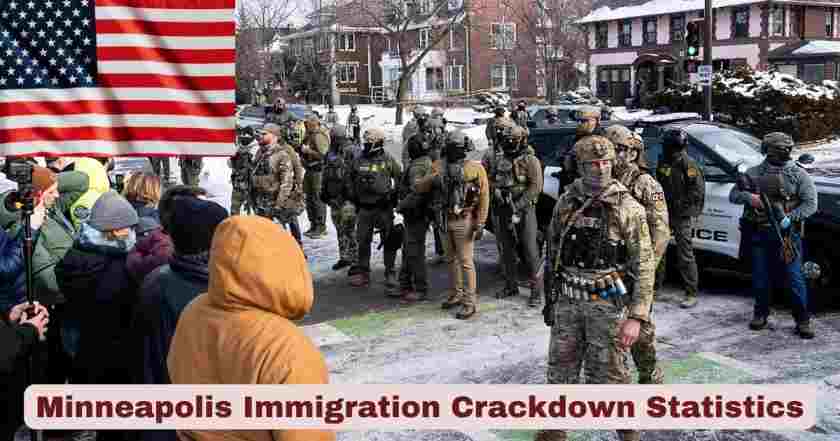
Immigration Crackdown in Minneapolis 2026
Minneapolis has become a central location for federal immigration enforcement activities in early 2026, with the Department of Homeland Security implementing what officials describe as the largest operation in agency history. The deployment of federal resources to the Twin Cities has created measurable changes across various sectors including education, business operations, and community services. Beginning in December 2025, Operation Metro Surge brought a substantial concentration of immigration enforcement personnel to Minnesota, with reports indicating deployment of over 2,000 federal agents conducting enforcement activities throughout the metropolitan region.
The enforcement operations in Minneapolis 2026 have generated documented impacts across multiple areas of civic infrastructure and economic activity. Educational institutions adjusted their operations, business establishments reported significant revenue fluctuations, and various organizations mobilized support networks. The operation has resulted in legal proceedings including federal lawsuits and ongoing examination of enforcement procedures and tactics. Understanding the factual landscape of this immigration enforcement requires analysis of verified arrest statistics, economic data, demographic information, and documented community responses based on official sources and verified media reporting.
Key Facts and Latest Statistics on Minneapolis Immigration Crackdown 2026
| Category | Statistic | Source/Date |
|---|---|---|
| Total Arrests Reported by DHS | 10,000+ arrests | DHS Secretary statement, January 19, 2026 |
| Recent Arrests (6-week period) | 3,000 arrests | DHS data, January 19, 2026 |
| Independently Verified Arrests | 2,400 individuals | Independent verification, January 2026 |
| Federal Agents Deployed | Over 2,000 agents active | NPR reporting, January 17, 2026 |
| Arrestees with Violent Crime Records | 103 out of 2,000 (5%) | ICE operational data, January 2026 |
| High-Priority Criminal Arrests | 212 convicted individuals listed | FOX 9 analysis, January 14, 2026 |
| Operation Launch Date | December 2025 | DHS announcement |
| Early Operation Arrests | 400 arrests by December 13, 2025 | DHS statement |
| Schools Affected | 100 schools closed temporarily | Minneapolis Public Schools |
| Students Impacted | 30,000 students | Minneapolis district data |
| Business Revenue Decline | 50-80% decrease reported | Minneapolis lawsuit, January 2026 |
| Businesses Closed for Protest | 700+ businesses | General strike, January 23, 2026 |
| Police Overtime Hours | 3,000+ hours (Jan 7-9) | Minneapolis Police Department |
| Police Overtime Cost | $2 million (4-day period) | City of Minneapolis data |
| Operation Weekly Cost | $18 million per week | North Star Policy Action study |
| General Strike Attendance | 50,000 estimated participants | Organizer estimates, January 24, 2026 |
| Clergy Arrested at Airport | 100 clergy members | Faith in Minnesota, January 24, 2026 |
| Federal Agent Shootings | 3 incidents since January 7 | Multiple news sources, January 24, 2026 |
| Fatalities from Enforcement | 2 US citizens killed | Verified reports, January 24, 2026 |
Data sources: U.S. Department of Homeland Security official statements, Minneapolis Police Department, Minneapolis Public Schools, FOX 9 News, NPR, North Star Policy Action, City of Minneapolis lawsuit filings, Al Jazeera, CBS News, Faith in Minnesota, Wikipedia
The statistics reveal significant discrepancies between government claims and independent verification regarding arrest totals. While DHS Secretary Kristi Noem announced that federal agents had arrested over 10,000 individuals in Minneapolis since the current administration took office, with 3,000 arrests occurring in the six-week period ending January 19, independent analysis documented approximately 2,400 total arrests during Operation Metro Surge. This gap between official statements and verified numbers has raised questions about data accuracy and transparency in federal enforcement reporting. The deployment of more than 2,000 federal agents represents an extraordinary concentration of immigration enforcement resources in a single metropolitan area, which DHS officials have characterized as the largest operation in agency history.
The criminal history data provides important context about arrestee populations. According to ICE operational reporting, 103 out of 2,000 arrestees had records of violent crimes, representing approximately 5 percent of those detained during the operation. DHS maintains a public list of 212 individuals considered high-priority criminals arrested in Minnesota, which FOX 9 News analyzed by crime category. These figures indicate that while some arrestees have serious criminal convictions, they constitute a small fraction of total enforcement actions. The operation’s impact extended across multiple sectors, with 100 schools serving nearly 30,000 students transitioning to remote learning temporarily, and customer-facing businesses reporting revenue declines between 50% and 80% according to data cited in the Minneapolis lawsuit against DHS. The general strike on January 23, 2026 saw an estimated 50,000 participants and resulted in over 700 businesses closing in protest, with 100 clergy members arrested at Minneapolis-Saint Paul International Airport.
Federal Agent Deployment and Operational Scale in Minneapolis 2026
| Deployment Metric | Number | Details |
|---|---|---|
| Total Federal Agents | 2,000+ | Currently operating in Minnesota |
| Operation Designation | Largest in DHS history | Official DHS statement |
| Geographic Focus | Minneapolis and Saint Paul | Twin Cities metropolitan area |
| Agencies Involved | Multiple federal agencies | ICE, Border Patrol, CBP, others |
| Operation Start | December 2025 | Official launch date |
| Initial Arrests | 400 by December 13 | Early operation results |
| Recent Daily Arrests | 150+ arrests reported | January 6, 2026 single-day total |
| Deployment Duration | Ongoing indefinitely | No announced end date |
Data sources: Department of Homeland Security, NPR, Minneapolis Police Department, ICE statements
The scale of federal agent deployment to Minneapolis represents unprecedented enforcement concentration in a single metropolitan area. With over 2,000 federal agents currently operating throughout Minnesota as of mid-January 2026, the Department of Homeland Security has designated this operation as the largest in agency history. The deployment involves multiple federal agencies including Immigration and Customs Enforcement, U.S. Border Patrol, and U.S. Customs and Border Protection, creating what officials describe as a comprehensive enforcement presence across the Twin Cities region. The operation officially launched in December 2025, with DHS reporting 400 arrests by December 13, demonstrating immediate operational intensity from the earliest stages of deployment.
Daily enforcement activities have shown substantial variation, with federal officials reporting more than 150 arrests on January 5, 2026 alone, indicating sustained high-volume enforcement operations. The geographic focus centers on Minneapolis and Saint Paul, though enforcement activities have expanded throughout the broader Minnesota region as operations continue. Federal officials have not announced a specific end date for the operation, stating that enforcement will continue until objectives are met. This indefinite timeline has created ongoing uncertainty for residents, businesses, and community organizations attempting to navigate the continued federal presence. The multi-agency nature of the deployment has raised questions about coordination, training standards, and operational protocols, particularly following multiple shooting incidents involving federal agents.
Arrest Statistics and Criminal History Data in Minneapolis 2026
| Arrest Category | Number | Percentage |
|---|---|---|
| Total Arrests (DHS Claim) | 10,000+ | 100% of claimed total |
| Six-Week Arrests | 3,000 | 30% of total claim |
| Verified Total Arrests | 2,400 | Independent verification |
| Arrestees with Violent Crime Records | 103 | 5% of 2,000 reviewed |
| High-Priority Criminal List | 212 | DHS public list |
| Murderers Arrested | Multiple individuals | Specific cases publicized |
| Sexual Assault Convictions | Multiple individuals | Specific cases publicized |
| Gang Members Arrested | Multiple individuals | DHS claims |
| Final Removal Orders | Various individuals | Immigration court orders |
Data sources: DHS Secretary Kristi Noem statements, ICE operational data, FOX 9 News analysis, Wikipedia verification
The arrest statistics present a complex picture with notable discrepancies between official government claims and independent verification efforts. DHS Secretary Kristi Noem stated on January 19, 2026 that federal agents had arrested over 10,000 individuals in Minneapolis since taking office, with 3,000 of those arrests occurring in the six-week period immediately prior to her statement. However, independent verification efforts documented approximately 2,400 total arrests during Operation Metro Surge, creating a significant gap between official claims and verified data. This discrepancy has raised questions among researchers, journalists, and advocacy organizations about the accuracy and methodology of federal reporting on enforcement activities.
Criminal history data from ICE operational reports indicates that 103 out of 2,000 arrestees reviewed had records of violent crimes, representing approximately 5 percent of that population. DHS maintains and publicly shares a list of 212 individuals arrested in Minnesota who are classified as high-priority criminals with serious convictions. FOX 9 News conducted detailed analysis of this list, categorizing individuals by offense type including murder, sexual assault, robbery, assault, and other serious crimes. Federal officials have emphasized these criminal convictions in public statements defending the operation’s scope and intensity. However, the data also indicates that the substantial majority of arrestees do not have violent crime convictions, raising questions about enforcement priorities and the targeting of individuals without serious criminal histories alongside those with documented violent offenses.
School Closures and Education Disruption in Minneapolis 2026
| Education Impact Metric | Number | Details |
|---|---|---|
| Schools Closed | 100 schools | Minneapolis Public Schools |
| Students Affected | 30,000 students | Total student population impacted |
| Closure Duration | Multiple days | Remote learning implemented |
| School Districts Impacted | Multiple districts | Twin Cities region |
| Safety Protocols Implemented | Various measures | Building lockdowns, communication plans |
| Remote Learning Transitions | District-wide | Emergency protocols activated |
| Parent Notifications | Mass communications | Safety alerts distributed |
Data sources: Minneapolis Public Schools, Columbia Heights Public Schools, school district statements
The impact on educational institutions across Minneapolis has been substantial, with 100 schools closing temporarily and affecting approximately 30,000 students across multiple school districts in the Twin Cities region. School administrators implemented emergency remote learning protocols in response to enforcement activities occurring near school buildings and along transportation routes used by students. The closures represented not only disruption to academic schedules but also created challenges for working parents who rely on regular school hours for childcare and family logistics. School officials cited safety concerns as the primary reason for transitioning to remote instruction, with some districts reporting enforcement activities occurring during school arrival and dismissal times when students are most vulnerable.
Columbia Heights Public Schools Superintendent Zena Stenvik publicly addressed a specific incident involving a five-year-old student who was detained along with his father, describing how the child was allegedly used in enforcement tactics. This incident, along with other reports of enforcement activities affecting families with school-age children, prompted many districts to implement enhanced safety protocols including building lockdowns, modified arrival and departure procedures, and increased communication with parents about enforcement activity in school neighborhoods. The educational disruption extended beyond classroom time to impact extracurricular activities, athletic events, and community programs typically hosted at school facilities. Some districts maintained closures for multiple consecutive days, while others implemented day-by-day decisions based on ongoing enforcement activity reports.
Economic Impact and Business Response in Minneapolis 2026
| Economic Impact Metric | Data | Source |
|---|---|---|
| Business Revenue Decline | 50-80% decrease | Minneapolis lawsuit data |
| Businesses Closed (Protest) | 700+ businesses | January 23 general strike |
| General Strike Date | January 23, 2026 | Statewide action |
| Strike Participants | 50,000 estimated | Organizer estimates |
| Police Overtime Cost | $2 million | Four-day period (Jan 7-10) |
| Police Overtime Hours | 3,000+ hours | Minneapolis Police Department |
| Operation Weekly Cost | $18 million | North Star Policy Action estimate |
| Economic Sectors Affected | Restaurants, retail, services | Multiple business types |
| Business Safety Measures | Door locks, limited hours | Asian Duck Cafe, others |
Data sources: City of Minneapolis lawsuit, FOX 9 News, North Star Policy Action, Minneapolis Police Department, Minnesota Monthly, Al Jazeera
The economic impact of Operation Metro Surge has been substantial across multiple sectors of Minneapolis’s economy. Customer-facing businesses reported revenue declines ranging from 50% to 80% according to data cited in the City of Minneapolis lawsuit against the Department of Homeland Security, with restaurants, retail establishments, and service providers experiencing the most severe financial impacts. The general strike held on January 23, 2026 saw more than 700 businesses across Minnesota close their doors in protest of federal enforcement operations, with organizers estimating 50,000 participants in associated marches and demonstrations. This coordinated economic action represented what organizers called an “economic blackout” intended to demonstrate the financial and social costs of the enforcement operation.
Municipal costs have also been significant, with Minneapolis Police Department overtime expenditures reaching $2 million during just a four-day period from January 7-10, 2026, representing over 3,000 overtime hours as local law enforcement responded to enforcement activities and protests. North Star Policy Action estimated the weekly operational cost of the federal presence at $18 million, though this figure includes federal personnel costs, equipment, and logistical support beyond local expenditures. Many businesses implemented safety measures in response to enforcement activities, with establishments like Asian Duck Cafe announcing locked-door policies during business hours, requiring customers to call for entry. Other businesses reduced operating hours, implemented modified service models, or temporarily closed to ensure employee safety. The Minnesota Monthly documented numerous restaurants and retail shops that closed for multiple days following specific enforcement incidents, with some establishments remaining shuttered for extended periods.
Community Response and Demonstrations in Minneapolis 2026
| Community Response Metric | Number | Details |
|---|---|---|
| January 23 Strike Participants | 50,000 estimated | Organizer estimates |
| Businesses Closed (Strike) | 700+ businesses | Economic blackout |
| Clergy Arrested (Airport) | 100 clergy members | Faith in Minnesota |
| Temperature During Protests | -29°C (-20°F) | January 24 weather |
| Protest Locations | Multiple sites | Airport, downtown, neighborhoods |
| Target Center Rally | 20,000 capacity venue | Indoor gathering |
| Cities with Solidarity Actions | 300 cities | Nationwide demonstrations |
| Faith Leaders Involved | Multiple denominations | Interfaith coalition |
| Community Organizations | Dozens of groups | Coordinated response |
Data sources: Al Jazeera, Faith in Minnesota, CBS News, MPR News, Payday Report, organizer statements
Community response to federal enforcement operations has been widespread and sustained, with the January 23, 2026 general strike representing a peak moment of organized resistance. Organizers estimated 50,000 participants in marches, demonstrations, and related activities across Minnesota, though exact attendance figures could not be independently verified. The scale of participation was notable given extreme weather conditions, with temperatures reaching -29°C (-20°F) on January 24 when protests continued. More than 700 businesses participated in the economic blackout, closing their doors to demonstrate solidarity with immigrant communities and opposition to federal enforcement tactics. The Target Center, a sports arena with 20,000 capacity, hosted an indoor rally as part of the day’s activities.
Faith communities played a prominent role in organized resistance, with 100 clergy members arrested at Minneapolis-Saint Paul International Airport on January 24 while protesting and demanding that airlines cease cooperation with federal enforcement operations. Faith in Minnesota coordinated this action, which involved clergy members from multiple denominations singing hymns, praying, and kneeling on airport roads despite sub-zero temperatures. Solidarity demonstrations occurred in approximately 300 cities nationwide according to Payday Report mapping of related actions, indicating that Minneapolis enforcement operations resonated beyond local communities. Community organizations mobilized mutual aid networks, legal observer teams, rapid response systems, and support services for affected families. The coordinated nature of community response reflected organizational infrastructure built over weeks of enforcement activity and demonstrated sustained capacity for mobilization across diverse constituencies.
Federal Shooting Incidents in Minneapolis 2026
| Shooting Incident Details | Data | Date |
|---|---|---|
| Total Shooting Incidents | 3 incidents | January 7-24, 2026 |
| Fatal Shootings | 2 deaths | Both US citizens |
| First Fatal Shooting Victim | Renée Good, age 37 | January 7, 2026 |
| Second Fatal Shooting Victim | Alex Pretti, age 37 | January 24, 2026 |
| Third Shooting Victim | Julio Cesar Sosa-Celis | Non-fatal, leg injury |
| Renée Good Profession | Community observer | Monitoring enforcement |
| Alex Pretti Profession | ICU nurse | Minneapolis VA Hospital |
| Federal Agencies Involved | ICE, Border Patrol | Different agencies |
| Investigations | Multiple ongoing | State and federal claims |
Data sources: Wikipedia, PBS News, CBS News, Al Jazeera, FOX 9, MPR News, family statements
Three shooting incidents involving federal agents occurred in Minneapolis between January 7-24, 2026, resulting in two fatalities and one non-fatal injury. The first fatal shooting occurred on January 7, 2026 when Immigration and Customs Enforcement agent Jonathan Ross shot and killed Renée Good, a 37-year-old US citizen who was observing enforcement activities as a community monitor. The Hennepin County Medical Examiner determined Good’s manner of death was homicide caused by multiple gunshot wounds. Good’s killing sparked immediate protests and intensified calls for federal agents to withdraw from Minneapolis. The second fatal shooting occurred on January 24, 2026 when US Border Patrol agents shot and killed Alex Pretti, also a 37-year-old US citizen who worked as an intensive care unit nurse at the Minneapolis VA Hospital.
Pretti’s family identified him and released a statement describing him as kindhearted and deeply committed to serving veterans through his nursing work. The third incident involved the non-fatal shooting of Julio Cesar Sosa-Celis, who was shot in the leg during a separate enforcement encounter. The shootings raised significant questions about use of force protocols, agent training, and accountability mechanisms for federal law enforcement operating in civilian environments. Minneapolis Police Chief Brian O’Hara reported that both Good and Pretti were US citizens, with Pretti having a legal permit to carry a firearm. Federal officials provided different accounts of the circumstances surrounding the shootings, while witness videos and statements contradicted some official claims. State officials including Governor Tim Walz and Minneapolis Mayor Jacob Frey called for state-led investigations, though federal authorities initially declined to grant access to crime scenes.
Legal Actions and Constitutional Challenges in Minneapolis 2026
| Legal Action | Filing Party | Date |
|---|---|---|
| City of Minneapolis Lawsuit | Minneapolis vs DHS | January 12, 2026 |
| ACLU First Lawsuit | Tincher et al. vs Noem | December 17, 2025 |
| ACLU Second Lawsuit | Class action, racial profiling | January 15, 2026 |
| Minnesota State Lawsuit | Minnesota vs DHS | January 12, 2026 |
| DOJ Investigation | Federal investigation | Announced January 21, 2026 |
| Habeas Corpus Filing | 2-year-old release case | January 2026 |
| Evidence Preservation Lawsuit | Hennepin County, BCA | January 24, 2026 |
| Claims | Constitutional violations | Multiple amendments |
Data sources: Wikipedia, City of Minneapolis, ACLU Minnesota, Al Jazeera, CBS News, court documents
Multiple legal actions have challenged various aspects of Operation Metro Surge through federal and state court systems. The City of Minneapolis filed a lawsuit against the Department of Homeland Security on January 12, 2026, challenging the operation under the Administrative Procedure Act and arguing that sudden designation of schools and hospitals as enforcement zones constituted arbitrary and capricious policy changes made without required public notice or comment periods. The American Civil Liberties Union of Minnesota filed its first class-action lawsuit (Tincher et al. vs Noem et al.) on December 17, 2025, alleging constitutional violations by federal agents including retaliatory arrests against observers and traffic stops conducted without reasonable suspicion, violating First and Fourth Amendment rights.
The ACLU filed a second class-action lawsuit on January 15, 2026 specifically alleging widespread racial profiling by federal immigration agents during enforcement operations. The Minnesota Attorney General’s office filed a state lawsuit on January 12, 2026 challenging what officials described as dangerous, illegal, and unconstitutional stops and arrests conducted under the guise of lawful immigration enforcement. The US Department of Justice announced on January 21, 2026 that it was investigating Minnesota state officials including Governor Tim Walz, Attorney General Keith Ellison, and Minneapolis Mayor Jacob Frey for potentially obstructing federal immigration enforcement operations. This federal investigation came one week after state officials filed their lawsuit against DHS, with Attorney General Ellison calling the timing highly irregular and suggesting it represented retaliation for legal challenges. Emergency habeas corpus petitions were filed for detained individuals including a two-year-old child taken into custody with her father, with a federal judge ordering the child’s release.
Demographic Context and Immigrant Population in Minneapolis 2026
| Demographic Metric | Number/Percentage | Context |
|---|---|---|
| Minnesota Immigrant Population | Approximately 8-10% | Estimated percentage |
| Major Immigrant Communities | Somali, Hmong, Latinx | Primary populations |
| Minneapolis Foreign-Born | Significant percentage | Urban concentration |
| Refugee Resettlement | Major destination | Historical context |
| Asylum Cases Affected | Multiple active cases | Current applications |
| Somali-American Population | Largest in US | Minneapolis concentration |
| Hmong-American Population | Major community | Twin Cities area |
| Immigration Court Backlogs | Thousands of cases | Pending proceedings |
Data sources: Migration Policy Institute estimates, community organization data, news reporting
Minnesota has historically been a major destination for refugee resettlement and immigration, creating diverse communities particularly concentrated in the Minneapolis-Saint Paul metropolitan area. The state is home to the largest Somali-American population in the United States, with significant concentrations in Minneapolis neighborhoods. The Hmong-American community in the Twin Cities represents one of the largest such populations nationally, with deep roots dating back to refugee resettlement following conflicts in Southeast Asia. The Latinx population has grown substantially in recent decades, contributing to economic, cultural, and social life across Minnesota. Estimates suggest immigrants comprise approximately 8-10 percent of Minnesota’s total population, though exact current figures require updated census data.
The foreign-born population in Minneapolis specifically shows higher concentrations than statewide averages, reflecting urban settlement patterns common across the United States. Many individuals in immigrant communities have active asylum cases pending in immigration courts, which typically face substantial backlogs with cases waiting years for resolution. The enforcement operations have particularly impacted families with pending legal proceedings, including asylum applicants who have not received final determinations on their cases. Community organizations report that fear and uncertainty have spread beyond undocumented populations to affect legal permanent residents and even US citizens from immigrant backgrounds who report feeling targeted or vulnerable. The demographic diversity of Minneapolis’s immigrant communities means enforcement operations have touched multiple nationalities, languages, and cultural groups, each with distinct migration histories and legal statuses.
Enforcement Tactics and Operational Methods in Minneapolis 2026
| Enforcement Tactic | Description | Frequency |
|---|---|---|
| Traffic Stops | Vehicle stops for immigration checks | Regular occurrence |
| Pedestrian Stops | Street-level questioning | Daily reports |
| Workplace Operations | Employment site enforcement | Multiple incidents |
| Residential Operations | Home-based enforcement | Regular occurrence |
| School Zone Enforcement | Activity near educational facilities | Documented cases |
| Hospital Zone Enforcement | Activity near medical facilities | Documented cases |
| Use of Force Incidents | Physical confrontations | Multiple documented |
| Chemical Agents Used | Tear gas, pepper spray | Protest responses |
| Flash-Bang Grenades | Crowd dispersal devices | Multiple incidents |
Data sources: NPR, GBH reporting, witness accounts, legal complaints, video evidence
Federal enforcement tactics during Operation Metro Surge have included a wide range of operational methods that have evolved as the operation continued. Traffic stops have become a regular enforcement mechanism, with agents stopping vehicles and questioning occupants about immigration status. NPR reporters documented federal agents pulling people off streets and out of vehicles, as well as questioning people of color about their immigration status in various public settings. Pedestrian stops occur regularly in neighborhoods with significant immigrant populations, with agents conducting street-level questioning and identification checks. Workplace operations have targeted employment sites, though the frequency and scale of such operations has varied throughout the enforcement period.
Residential enforcement operations involve agents approaching homes to locate and apprehend specific individuals, though reports indicate enforcement activities have sometimes affected people not specifically targeted. The enforcement activities near schools and hospitals represented a significant policy shift, as these locations were historically considered sensitive areas where enforcement was limited absent exceptional circumstances. Multiple documented incidents show enforcement activities occurring in school zones during times when students are present, and near medical facilities where patients and families are seeking care. Use of force incidents have been documented extensively, including physical confrontations between agents and both enforcement targets and observers. Chemical agents including tear gas and pepper spray have been deployed during enforcement operations and in response to protests, with witnesses reporting exposure even when not directly involved in confrontations. Flash-bang grenades and other crowd dispersal devices have been used during protests, particularly following the fatal shooting incidents that drew large numbers of demonstrators.
Federal-State Tensions and Jurisdictional Conflicts in Minneapolis 2026
| Tension Category | Specific Issues | Key Actors |
|---|---|---|
| Investigation Access | Crime scene control disputes | MPD, DHS, state agencies |
| Cooperation Demands | Federal requests for local support | Gov. Walz, Mayor Frey |
| DOJ Investigation | Federal probe of state officials | Attorney General Ellison |
| Evidence Preservation | Access to shooting scenes | BCA, FBI |
| Policy Disagreements | Sanctuary city positions | Multiple officials |
| Public Statements | Conflicting narratives | Various spokespersons |
| Legal Authority Claims | Jurisdictional assertions | Federal and state lawyers |
| Resource Coordination | Police support questions | MPD, federal agents |
Data sources: Al Jazeera, CBS News, MPR News, official statements, court filings
Tensions between federal immigration enforcement authorities and Minnesota state and local officials have escalated throughout Operation Metro Surge, creating ongoing jurisdictional conflicts. A primary point of contention involves investigation access and crime scene control, particularly following the fatal shootings of Renée Good and Alex Pretti. Minneapolis Police Chief Brian O’Hara publicly stated that DHS officials blocked local police from accessing shooting scenes, preventing municipal law enforcement from conducting their standard investigative procedures. The Minnesota Bureau of Criminal Apprehension similarly reported being denied access to investigate the shootings, with state officials arguing that local and state investigators should lead inquiries into incidents occurring within their jurisdiction.
Federal officials have publicly criticized Governor Tim Walz and Minneapolis Mayor Jacob Frey for what they characterize as lack of cooperation with enforcement operations. Border Patrol Commander Gregory Bovino specifically cited state and local leadership as creating a difficult operating environment by allegedly refusing to provide support to federal agents. The US Department of Justice announced on January 21, 2026 that it was investigating Minnesota officials including Governor Walz, Attorney General Keith Ellison, and Mayor Frey for potentially obstructing federal operations, with the investigation examining whether state officials conspired to prevent federal agents from carrying out their duties. This federal investigation came just one week after Minnesota filed its lawsuit against DHS, leading Attorney General Ellison to call the timing highly irregular and suggestive of retaliation. The evidence preservation lawsuit filed by Hennepin County and the Bureau of Criminal Apprehension sought court orders to ensure federal authorities preserved evidence from shooting scenes and allowed state investigators access for independent review.
Disclaimer: This research report is compiled from publicly available sources. While reasonable efforts have been made to ensure accuracy, no representation or warranty, express or implied, is given as to the completeness or reliability of the information. We accept no liability for any errors, omissions, losses, or damages of any kind arising from the use of this report.