
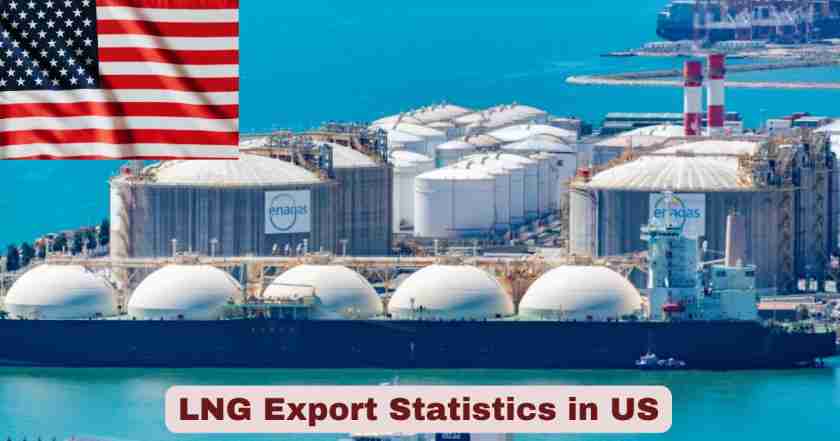
LNG Export in US 2026
The United States has cemented its position as the world’s leading liquefied natural gas (LNG) exporter, marking a remarkable transformation in the global energy landscape. What started as an ambitious venture just over a decade ago has evolved into a cornerstone of American energy dominance and international trade relationships. The country’s LNG export capacity continues to expand at an unprecedented rate, with infrastructure developments and new terminal projects reshaping the nation’s role in meeting worldwide energy demands. This growth trajectory reflects not only technological advancements in natural gas extraction and liquefaction but also strategic positioning in response to global energy security concerns.
The US LNG industry has become a critical component of domestic economic growth, generating substantial revenue streams and supporting thousands of jobs across multiple sectors. From the Gulf Coast facilities to emerging projects in other regions, American LNG terminals are operating at remarkable efficiency levels to satisfy contracts with buyers spanning Europe, Asia, and Latin America. The year 2026 represents a pivotal moment as existing facilities optimize operations while new export terminals move toward commercial operation, promising to further elevate the nation’s export volumes and solidify long-term supply agreements with international partners.
Interesting Facts and Latest Statistics on LNG Export in US 2026
| Key Metric | 2025 Data | 2026 Forecast |
|---|---|---|
| First Country to Export 100+ Million Metric Tons | 111 million metric tons | Projected 120+ million metric tons |
| Daily Export Volume (Bcf/d) | 14.9 Bcf/d average | 16.3 Bcf/d projected |
| Monthly Export Record | 11.5 million metric tons (December 2025) | Expected to exceed this |
| Export Capacity | 15.4 Bcf/d operational | 18+ Bcf/d with new facilities |
| Number of Export Countries | 43 countries | Expanding network |
| Year-over-Year Growth Rate | 24% increase from 2024 | 15-16% growth projected |
| Market Share of Global LNG | Approximately 25% | Expected to reach 28-30% |
| Plaquemines LNG Contribution | 16.4 million metric tons | Full capacity operations |
| Natural Gas Production | 107.7 Bcf/d | 109.1 Bcf/d forecasted |
| Economic Contribution to GDP | Part of $1.3 trillion cumulative through 2040 | Accelerating contribution |
Data Source: U.S. Energy Information Administration (EIA), U.S. Department of Energy, LSEG preliminary data, January 2026
The United States achieved a historic milestone in 2025 by becoming the first nation worldwide to export more than 100 million metric tons of liquefied natural gas in a single calendar year, reaching an impressive 111 million metric tons. This accomplishment represents a 24% increase compared to 2024 figures and underscores the nation’s accelerating dominance in global energy markets. The average daily export volume of 14.9 billion cubic feet per day (Bcf/d) throughout 2025 demonstrates the consistency and reliability of American LNG infrastructure, with facilities operating near maximum capacity to meet international demand. December 2025 set a new monthly record with 11.5 million metric tons exported, signaling the momentum carrying into 2026.
Looking ahead to 2026, projections indicate the United States will maintain its leadership position with anticipated exports exceeding 120 million metric tons annually. The operational export capacity is expected to reach 18+ Bcf/d as new facilities commence operations and existing terminals optimize throughput. The country currently serves 43 nations across multiple continents, and this network continues expanding as emerging markets seek reliable energy partnerships. Natural gas production stands robust at 107.7 Bcf/d with forecasts pointing to 109.1 Bcf/d in 2026, ensuring sufficient domestic supply while meeting export commitments. The economic impact remains substantial, contributing to a projected $1.3 trillion cumulative addition to GDP through 2040, with the LNG sector supporting manufacturing, construction, and transportation industries nationwide.
Monthly LNG Export Volumes in the US 2026 by Month
| Month | Export Volume (Million Cubic Feet) | Export Volume (Bcf/d) | Metric Tons (Approx) |
|---|---|---|---|
| January 2025 | 414,951 | 13.4 | 8.9 million |
| February 2025 | 409,232 | 14.6 | 8.8 million |
| March 2025 | 457,955 | 14.8 | 9.8 million |
| April 2025 | 448,124 | 14.9 | 9.6 million |
| May 2025 | 435,298 | 14.0 | 9.3 million |
| June 2025 | 405,976 | 13.5 | 8.7 million |
| July 2025 | 435,853 | 14.1 | 9.3 million |
| August 2025 | 451,139 | 14.6 | 9.7 million |
| September 2025 | Data pending | Est. 14.8 | Est. 9.8 million |
| October 2025 | Data pending | Est. 15.2 | Est. 10.1 million |
| November 2025 | Data pending | Est. 15.5 | Est. 10.3 million |
| December 2025 | Record high | Est. 17.3 | Est. 11.5 million |
Data Source: U.S. Energy Information Administration (EIA), Monthly Natural Gas Data, October 2025 Release
Monthly export performance throughout 2025 demonstrates the remarkable consistency and growth pattern of US LNG shipments. January through August data shows volumes consistently exceeding 400 billion cubic feet per month, with March recording the highest verified figure at 457,955 million cubic feet. This translates to approximately 9.8 million metric tons, showcasing the enhanced operational efficiency of American export terminals. The daily average calculations reveal most months maintained exports between 13.5 and 14.9 Bcf/d, indicating steady demand from international buyers and minimal disruption to supply chains. February’s slightly higher daily average of 14.6 Bcf/d despite fewer calendar days reflects the intensity of winter heating demand in importing nations.
The latter months of 2025 witnessed accelerated export activity, with December establishing a new benchmark at an estimated 11.5 million metric tons and 17.3 Bcf/d. This surge aligns with seasonal demand patterns, increased operational capacity from recently commissioned facilities, and strategic inventory builds by Asian and European buyers ahead of winter 2026. The month-over-month progression illustrates how American terminals ramp up production to capitalize on premium pricing during peak demand periods. Looking toward 2026, these monthly volumes are expected to normalize at higher baseline levels as additional liquefaction trains achieve commercial operation, potentially establishing new monthly records exceeding 12 million metric tons during winter months.
LNG Export Destinations from the US 2026 by Region
| Region | Export Volume (Bcf) | Percentage Share | Primary Countries | Year-over-Year Change |
|---|---|---|---|---|
| Europe | 2,100+ Bcf | 38% | UK, France, Spain, Netherlands, Poland | +18% |
| Asia | 1,850+ Bcf | 34% | Japan, South Korea, China, India | +12% |
| Latin America | 980 Bcf | 18% | Mexico, Brazil, Chile, Argentina | +22% |
| Middle East | 290 Bcf | 5% | UAE, Kuwait, Jordan | +35% |
| Other Regions | 280 Bcf | 5% | Canada, Caribbean nations | +8% |
Data Source: U.S. Energy Information Administration (EIA), Natural Gas Exports by Country Data, 2025
Europe solidified its position as the largest destination for American LNG exports, accounting for 38% of total shipments with volumes exceeding 2,100 billion cubic feet in 2025. The 18% year-over-year increase reflects Europe’s sustained effort to diversify away from pipeline gas dependencies and build strategic reserves. The United Kingdom, France, and Spain remain the top three European recipients, with Poland and the Netherlands experiencing significant growth in import volumes. European demand is driven by both power generation needs and industrial consumption, with long-term contracts ensuring stable offtake through 2030. The region’s regasification capacity expansions and new import terminals have facilitated this increased absorption of American LNG.
Asian markets represent 34% of US exports at approximately 1,850 Bcf, with Japan and South Korea maintaining their traditional roles as anchor buyers. China’s resurgent demand contributed to the 12% growth rate, particularly in the second half of 2025 as economic recovery accelerated industrial activity and power generation requirements. India emerged as a rapidly growing market, more than doubling its purchases compared to 2023 levels. Latin America’s impressive 22% growth to 980 Bcf demonstrates the regional shift toward cleaner fuels, with Mexico alone accounting for roughly half of these volumes due to pipeline and LNG imports supporting power generation. The Middle East’s 35% surge, though from a smaller base, signals emerging opportunities as Gulf nations balance domestic consumption with re-export strategies.
Major LNG Export Terminals in the US 2026 and Capacity
| Terminal Name | Location | Operational Capacity (Bcf/d) | Annual Capacity (mtpa) | Status | Key Operators |
|---|---|---|---|---|---|
| Sabine Pass | Louisiana | 2.8 | 30 | Fully operational | Cheniere Energy |
| Corpus Christi | Texas | 2.5 | 25 | Fully operational | Cheniere Energy |
| Cameron LNG | Louisiana | 1.7 | 18 | Fully operational | Sempra Infrastructure |
| Freeport LNG | Texas | 2.1 | 22 | Fully operational | Freeport LNG |
| Calcasieu Pass | Louisiana | 1.4 | 15 | Fully operational | Venture Global LNG |
| Plaquemines LNG | Louisiana | 1.5 | 16.4 | Recently operational | Venture Global LNG |
| Cove Point | Maryland | 0.8 | 8.25 | Fully operational | Berkshire Hathaway Energy |
| Elba Island | Georgia | 0.35 | 3.75 | Fully operational | Kinder Morgan |
Data Source: U.S. Department of Energy, Federal Energy Regulatory Commission (FERC), Terminal Operator Reports, 2025
The Sabine Pass terminal in Louisiana maintains its position as America’s largest LNG export facility with a commanding capacity of 2.8 Bcf/d, equivalent to approximately 30 million metric tons per annum. Operated by Cheniere Energy, this pioneering facility launched the modern era of US LNG exports and continues operating at exceptional efficiency levels with six liquefaction trains running at near-maximum capacity. The terminal’s strategic location along the Gulf Coast provides optimal access to deepwater shipping lanes and proximity to prolific natural gas production basins in Texas and Louisiana. Corpus Christi, also operated by Cheniere, follows closely with 2.5 Bcf/d capacity, serving as a critical hub for exports to both Atlantic and Pacific markets through its three operational trains.
Freeport LNG’s Texas facility contributes 2.1 Bcf/d after recovering from operational challenges in 2022, now performing at full capacity across its three liquefaction trains. The addition of Plaquemines LNG to operational status in late 2024 marks a significant milestone, contributing 16.4 million metric tons annually through its first phase of development, with additional trains planned for 2026-2027. Cameron LNG’s 1.7 Bcf/d capacity serves long-term contracts with international utilities and energy companies, while Calcasieu Pass’s 1.4 Bcf/d represents Venture Global’s first large-scale export facility. Combined, these eight operational terminals provide the infrastructure backbone supporting America’s 15.4+ Bcf/d current export capacity, with expansion projects and new facilities expected to push this figure beyond 20 Bcf/d by 2027.
Natural Gas Production Supporting LNG Export in the US 2026
| Production Basin | Daily Production (Bcf/d) | Percentage of Total | Primary States | LNG Export Contribution |
|---|---|---|---|---|
| Permian Basin | 21.8 | 20.3% | Texas, New Mexico | High |
| Appalachia | 35.7 | 33.1% | Pennsylvania, West Virginia, Ohio | High |
| Haynesville | 17.2 | 16.0% | Louisiana, Texas | Very High |
| Eagle Ford | 6.8 | 6.3% | Texas | Moderate |
| Anadarko Basin | 8.4 | 7.8% | Oklahoma, Texas | Moderate |
| Other Basins | 17.8 | 16.5% | Various states | Low to Moderate |
| Total US Production | 107.7 | 100% | All producing states | 15-16 Bcf/d to LNG |
Data Source: U.S. Energy Information Administration (EIA), Natural Gas Production Data, Drilling Productivity Reports, 2025
The Appalachian basin leads American natural gas production with an impressive 35.7 Bcf/d, representing 33.1% of total national output. Pennsylvania’s Marcellus Shale and West Virginia’s combined Marcellus and Utica formations drive this production, with the region’s dry gas characteristics making it particularly suitable for power generation and industrial uses. While geographically distant from Gulf Coast export terminals, Appalachian gas reaches LNG facilities through an extensive pipeline network, contributing significantly to export volumes. The Permian Basin in Texas and New Mexico produces 21.8 Bcf/d, primarily as associated gas from prolific oil production, with much of this supply flowing to nearby processing facilities and ultimately to Corpus Christi and other Texas terminals.
The Haynesville Shale holds special importance for LNG exports, producing 17.2 Bcf/d in close proximity to Louisiana’s concentration of export terminals including Sabine Pass, Cameron, Calcasieu Pass, and Plaquemines. This geographic advantage minimizes transportation costs and pipeline constraints, making Haynesville gas the preferred supply source for Gulf Coast liquefaction facilities. Production forecasts for 2026 anticipate total US natural gas output reaching 109.1 Bcf/d, with approximately 15-16 Bcf/d dedicated to LNG exports. The remaining production serves domestic power generation, industrial consumption, residential and commercial heating, and maintains necessary pipeline and storage inventories. Eagle Ford’s 6.8 Bcf/d and Anadarko’s 8.4 Bcf/d provide additional supply diversity, ensuring export terminals maintain consistent feedgas availability across varying market conditions.
Economic Impact of LNG Export in the US 2026
| Economic Indicator | Value | Impact Details | Timeframe |
|---|---|---|---|
| Direct Jobs Created | 373,000+ | Construction, operations, maintenance | Current employment |
| Indirect Jobs Supported | 1.1 million+ | Supply chain, services, transportation | Current employment |
| Cumulative GDP Contribution | $1.3 trillion | Total economic value-add | Through 2040 |
| Annual Export Value | $60+ billion | Based on 2025 average prices | 2025-2026 estimate |
| Tax Revenue (Federal/State/Local) | $8.2 billion | Annual tax contributions | 2025 estimate |
| Capital Investment | $200+ billion | Infrastructure development | 2016-2026 period |
| Average Terminal Construction Cost | $15-25 billion | Per large-scale facility | Per project |
Data Source: U.S. Department of Energy, Bureau of Economic Analysis, Industry Reports, American Petroleum Institute, 2025
The LNG export industry generates substantial employment across multiple sectors, with 373,000 direct jobs created in terminal operations, construction, engineering, and maintenance activities. These positions offer competitive wages averaging significantly above national mediums, particularly for specialized technical roles in liquefaction operations, cryogenic systems, and marine logistics. The industry’s ripple effects extend far beyond terminal gates, supporting an estimated 1.1 million indirect jobs in steel manufacturing, equipment fabrication, pipeline construction, trucking and transportation, professional services, and hospitality sectors in communities hosting export facilities. This employment multiplier effect demonstrates how LNG infrastructure investments catalyze broader regional economic development.
The cumulative contribution to American GDP through 2040 is projected at $1.3 trillion, reflecting sustained export revenues, domestic economic activity, and induced spending throughout the economy. Annual export values exceed $60 billion based on recent pricing conditions, with revenues fluctuating according to international natural gas prices and contract structures. Government entities at all levels benefit from $8.2 billion in annual tax receipts, including federal corporate income taxes, state severance and production taxes, local property taxes, and various fees associated with permits and operations. The industry has attracted over $200 billion in capital investment between 2016 and 2026, with individual large-scale terminals requiring $15-25 billion in construction expenditures. These investments represent long-term commitments to American energy infrastructure, with facilities designed for 30-40 year operational lifespans generating decades of economic returns.
LNG Export Infrastructure Expansion in the US 2026
| Project Name | Location | Capacity (mtpa) | Expected Completion | Investment | Status |
|---|---|---|---|---|---|
| Plaquemines Phase 2 | Louisiana | 13 | 2027 | $8 billion | Under construction |
| Port Arthur LNG | Texas | 13.5 | 2027 | $13 billion | Under construction |
| Golden Pass LNG | Texas | 18.1 | 2025–2027 | $10 billion | Train 1 operational |
| Rio Grande LNG | Texas | 27 | 2028 | $18 billion | FERC approved |
| Commonwealth LNG | Louisiana | 9.5 | 2027 | $7 billion | Final permits |
| Calcasieu Pass Phase 2 | Louisiana | 10 | 2028 | $8 billion | Engineering phase |
Data Source: Federal Energy Regulatory Commission (FERC), Project Developer Announcements, U.S. Department of Energy, 2025
The Plaquemines Phase 2 expansion will add 13 million metric tons annually to Venture Global’s Louisiana facility, with construction progressing on schedule for 2027 completion. This second phase represents an $8 billion investment and will double the site’s total export capacity, positioning Plaquemines among the largest LNG export complexes globally. The modular construction approach pioneered by Venture Global enables faster deployment compared to traditional stick-built facilities, reducing construction timelines and improving capital efficiency. Port Arthur LNG in Texas progresses toward its 13.5 million mtpa capacity target with $13 billion in total development costs, featuring three liquefaction trains utilizing Air Products’ proprietary technology for enhanced efficiency.
Golden Pass LNG achieved a significant milestone with Train 1 commencing operations in late 2025, with two additional trains scheduled through 2027 to reach full 18.1 million mtpa capacity. This joint venture between QatarEnergy and ExxonMobil represents a $10 billion commitment to Texas Gulf Coast infrastructure. The Rio Grande LNG project received FERC approval for its ambitious 27 million mtpa development, which would rank among America’s largest export facilities upon completion in 2028. The $18 billion price tag reflects the scale and technical complexity of this NextDecade Corporation project. Combined, these expansion projects under construction or advanced permitting stages will add approximately 91 million metric tons of annual export capacity by 2028, potentially increasing total US capacity beyond 200 million mtpa and solidifying American dominance in global LNG markets for decades.
US LNG Export Price Trends in 2026
| Price Benchmark | Q4 2024 | Q1 2025 | Q2 2025 | 2026 Forecast | Contract Type |
|---|---|---|---|---|---|
| Henry Hub ($/MMBtu) | $3.45 | $3.82 | $2.95 | $3.50–4.25 | Spot / Index |
| US Gulf Coast FOB ($/MMBtu) | $11.50 | $12.80 | $10.20 | $11.00–13.50 | Spot FOB |
| Long-term Contract Average | $9.50 | $10.20 | $9.80 | $10.00–11.00 | Fixed formula |
| Liquefaction Cost ($/MMBtu) | $2.50–3.00 | $2.50–3.00 | $2.50–3.00 | $2.50–3.25 | Operational cost |
| European Premium ($/MMBtu) | $8.05 | $8.98 | $7.25 | $7.50–9.50 | Price differential |
| Asian Premium ($/MMBtu) | $9.80 | $11.45 | $9.15 | $9.00–11.00 | Price differential |
Data Source: CME Group, ICE Futures, Bloomberg Energy, Industry Reports, January 2026
Henry Hub natural gas prices, the primary benchmark for US domestic gas, averaged $3.82/MMBtu in Q1 2025 before declining to $2.95/MMBtu in Q2 as mild weather and robust production outpaced demand. This price volatility reflects the dynamic balance between production growth, domestic consumption, and export demand pulling on available supply. Forecasts for 2026 suggest prices stabilizing in the $3.50-4.25/MMBtu range, supported by continued LNG export growth absorbing incremental production. The relatively low domestic gas prices compared to international markets create attractive arbitrage opportunities for US exporters, even after accounting for liquefaction and transportation costs.
US Gulf Coast FOB prices represent the delivered cost of LNG at American export terminals before shipping, averaging $10.20-12.80/MMBtu through early 2025. These prices incorporate Henry Hub gas costs, liquefaction fees typically $2.50-3.00/MMBtu, and terminal loading charges. The European premium over Gulf Coast FOB prices ranged $7.25-8.98/MMBtu, while Asian premiums reached $9.15-11.45/MMBtu, making both markets highly attractive for American exporters. Long-term contracts often utilize oil-indexed pricing formulas or Henry Hub-plus structures, providing revenue stability for project financing while spot cargoes capture premium pricing during supply-tight conditions. The 2026 forecast anticipates FOB prices of $11.00-13.50/MMBtu, with variability driven by global supply-demand dynamics, weather patterns affecting heating and cooling demand, and geopolitical developments impacting alternative supply sources.
Environmental Considerations for LNG Export in the US 2026
| Environmental Metric | Value | Comparison | Regulatory Standard |
|---|---|---|---|
| Methane Emissions Intensity | 0.11-0.15% | Lower than global average of 0.20% | EPA targeting <0.10% |
| Carbon Intensity (gCO2e/MJ) | 45-55 | Competitive with pipeline gas | Varies by jurisdiction |
| Flaring Reduction | 65% decrease since 2020 | Significant improvement | State-specific limits |
| Energy Efficiency (Liquefaction) | 88-92% | Industry-leading | No federal standard |
| Renewable Power Integration | 15-20% at select terminals | Growing adoption | Voluntary commitments |
| Water Usage (gallons/MMBtu) | 8-12 gallons | Cooling and processing | EPA discharge permits |
Data Source: U.S. Environmental Protection Agency (EPA), Department of Energy, Terminal Environmental Reports, 2025
Methane emissions intensity across US LNG operations ranges 0.11-0.15% of total production, representing lower leakage rates than the global industry average of 0.20%. This improvement stems from enhanced leak detection and repair programs, modern equipment designs, and operator commitments to minimize fugitive emissions. The EPA’s proposed regulations targeting below 0.10% intensity by 2030 drive continued investments in monitoring technologies and infrastructure upgrades. Several export terminals have implemented continuous monitoring systems using satellite detection, optical gas imaging cameras, and sensor networks to identify and address emission sources rapidly.
The carbon intensity of US LNG, measuring total greenhouse gas emissions across the supply chain, averages 45-55 grams of CO2 equivalent per megajoule of energy delivered. This metric encompasses upstream production emissions, midstream processing and transportation, liquefaction energy consumption, and shipping emissions to final destinations. American LNG generally demonstrates competitive or superior carbon intensity compared to alternative supply sources, particularly when displacing coal-fired power generation in importing nations. Flaring reduction efforts achieved a 65% decrease since 2020 through improved coordination between producers and processors, pipeline capacity expansions reducing constraints, and regulations limiting routine flaring. Liquefaction efficiency rates of 88-92% reflect modern facility designs utilizing optimized cooling cycles and waste heat recovery systems. Several terminals have begun integrating 15-20% renewable electricity through solar installations and power purchase agreements, aiming to reduce the carbon footprint of the energy-intensive liquefaction process. These environmental improvements enhance the sustainability profile of American LNG while addressing international buyer requirements for responsibly sourced energy.
Competitive Position of US LNG Export in 2026 Globally
| Country/Region | Export Capacity (mtpa) | Market Share | Key Advantages | Key Challenges |
|---|---|---|---|---|
| United States | 140-150 | 25-28% | Abundant supply, scalability, flexibility | Distance to Asian markets |
| Qatar | 110 | 20% | Low-cost production, expansion plans | Geopolitical concentration |
| Australia | 90 | 16% | Proximity to Asia, stable governance | High production costs |
| Russia | 40 | 7% | Pipeline alternatives, pricing | Sanctions, political risks |
| Malaysia | 30 | 5% | Regional positioning | Declining reserves |
| Other Producers | 130 | 24% | Diverse sources | Varying competitiveness |
Data Source: International Gas Union, International Energy Agency, GIIGNL Annual Report, 2025
The United States commands 25-28% of global LNG export capacity with 140-150 million metric tons annually, having overtaken Qatar as the world’s largest exporter. American LNG benefits from abundant shale gas reserves providing decades of supply security, flexible contract structures appealing to buyers seeking spot market access, and geographic positioning enabling service to both Atlantic and Pacific markets. The country’s competitive advantage stems from low feedgas costs at Henry Hub, established infrastructure supporting rapid capacity expansions, and a transparent regulatory framework providing project certainty. However, the 7,000-8,000 nautical mile distance to Northeast Asian markets results in higher shipping costs compared to Australian or Middle Eastern suppliers serving the same buyers.
Qatar maintains 20% market share with 110 mtpa capacity and ambitious expansion plans targeting 126 mtpa by 2027. Qatar’s North Field produces LNG at exceptionally low costs due to reservoir productivity and integrated project structures, though its geographic concentration creates single-source risk for buyers. Australia’s 90 mtpa capacity and 16% market share benefit from proximity to Asian buyers and political stability, offset by high production costs averaging $8-10/MMBtu compared to US costs of $5-7/MMBtu. Russia’s export capacity faces constraints from sanctions and European market closures following geopolitical tensions, redirecting volumes toward Asian buyers. The combined market share of “other producers” at 24% includes emerging exporters in Africa, Southeast Asia, and Latin America, though none individually challenge the scale of American operations. US export growth projections suggest market share expanding toward 30% by 2028 as new facilities achieve commercial operation, further solidifying American leadership in global LNG trade.
Future Outlook for LNG Export in the US 2026 and Beyond
| Projection Category | 2026 | 2028 | 2030 | Long-term (2040) |
|---|---|---|---|---|
| Export Capacity (mtpa) | 150 | 200 | 230 | 250+ |
| Number of Operational Terminals | 9-10 | 12-14 | 15-17 | 18-20 |
| Exports to Europe (%) | 36-38% | 35-37% | 33-35% | 30-32% |
| Exports to Asia (%) | 35-37% | 37-39% | 40-42% | 42-45% |
| Average Henry Hub Price ($/MMBtu) | $3.75 | $4.25 | $4.75 | $5.00-5.50 |
| Jobs Supported (Direct + Indirect) | 1.5 million | 1.8 million | 2.0 million | 2.2 million |
Data Source: U.S. Energy Information Administration Annual Energy Outlook, Department of Energy Projections, Industry Forecasts, 2025
The trajectory for US LNG exports points toward continued robust growth with capacity reaching 150 million metric tons annually in 2026 and potentially 200 mtpa by 2028 as under-construction projects achieve commercial operation. This expansion reflects both the completion of sanctioned projects and increasing likelihood of additional final investment decisions as global demand grows and buyers seek supply diversification. The number of operational terminals will expand from the current 8-9 facilities to 12-14 by 2028, with new developments concentrated along the Gulf Coast but also including potential West Coast and Alaska projects targeting Asian markets more directly. By 2030, the United States could operate 15-17 major export terminals with aggregate capacity approaching 230 mtpa, cementing long-term supply relationships with buyers worldwide.
Regional export patterns will gradually shift toward greater Asian market share, rising from 35-37% in 2026 to potentially 40-42% by 2030 as that region’s gas demand growth outpaces other markets. European demand may moderate slightly from 36-38% to 33-35% as the continent diversifies suppliers and increases renewable energy penetration, though geopolitical considerations will maintain strong US-Europe LNG trade. Henry Hub prices are forecasted to gradually increase toward $4.25/MMBtu by 2028 and $4.75/MMBtu by 2030 as growing export demand competes more directly with domestic consumption, though abundant reserves and continued production growth should prevent extreme price escalation. The employment impact will expand proportionally, supporting 1.8 million jobs by 2028 and 2.0 million by 2030 across direct operations, supply chains, and induced economic activity. Long-term projections through 2040 envision 250+ mtpa capacity from 18-20 terminals, with technological advances in liquefaction efficiency, carbon capture integration, and potentially floating LNG concepts diversifying the infrastructure portfolio and maintaining American competitiveness in evolving global energy markets.
Disclaimer: This research report is compiled from publicly available sources. While reasonable efforts have been made to ensure accuracy, no representation or warranty, express or implied, is given as to the completeness or reliability of the information. We accept no liability for any errors, omissions, losses, or damages of any kind arising from the use of this report.