
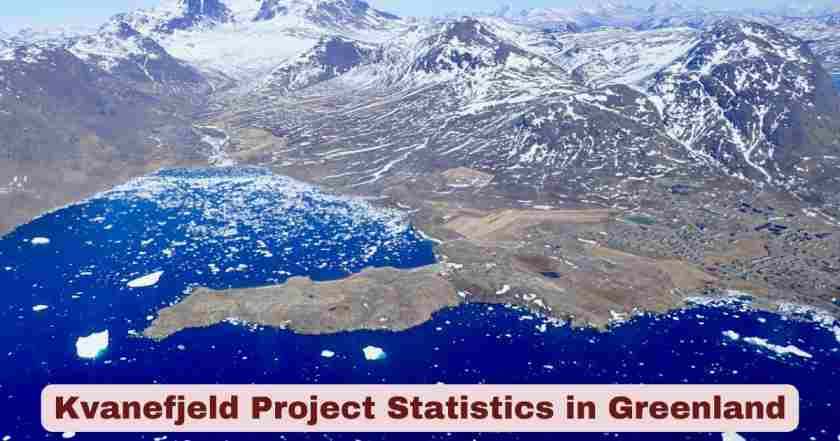
Kvanefjeld Project in Greenland 2026
The Kvanefjeld rare earth project stands as one of the most strategically significant yet controversial undeveloped mineral deposits in the world, representing Greenland’s potential transformation from a subsidy-dependent territory into a globally important supplier of critical materials essential for modern technologies, clean energy transitions, and national defense systems. Located approximately 8 kilometers from the town of Narsaq in southern Greenland’s Kujalleq municipality, this massive deposit sits within the unique Ilímaussaq intrusive complex and contains extraordinary concentrations of rare earth elements that have attracted international attention from governments, mining companies, and strategic investors seeking alternatives to Chinese-dominated supply chains.
Despite holding over 11 million metric tons of rare earth oxide equivalent reserves and representing the third-largest known land-based rare earth deposit globally, the Kvanefjeld project remains completely undeveloped in 2026, trapped in legal and political limbo following Greenland’s 2021 parliamentary decision to ban uranium mining. The project’s complex geology includes uranium as a naturally occurring by-product at concentrations of 250-350 ppm, triggering Act No. 20 which prohibits exploitation of mineral resources containing more than 100 ppm uranium. This legislative barrier has sparked international arbitration proceedings where project developer Energy Transition Minerals seeks $11.5 billion in compensation from the Governments of Greenland and Denmark, while geopolitical tensions have intensified with renewed US interest in Greenland’s strategic mineral resources throughout 2025 and into 2026.
Key Facts and Latest Statistics for Kvanefjeld Project in Greenland 2026
| Key Fact Category | 2026 Statistics | Data Source |
|---|---|---|
| Total Mineral Resource (JORC-Compliant) | 1.01 billion tonnes at 1.10% TREO+ | Energy Transition Minerals, Wikipedia 2025 |
| Proven and Probable Ore Reserves | 108 million tonnes at 1.43% TREO+ | JORC 2012 Compliance February 2015 |
| Total Rare Earth Oxide Equivalent | Over 11 million metric tons REO | CSIS Analysis January 2026 |
| Heavy Rare Earth Content | 370,000 metric tons of HREEs | Center for Strategic and International Studies 2026 |
| Global Ranking by Size | Third-largest known land-based REE deposit | CSIS Greenland Rare Earths Report 2026 |
| Uranium Content | 270,000 tonnes uranium (362 ppm U3O8) | The World Data, Wikipedia 2025 |
| Zinc Resource | Approximately 0.24 percent zinc content | JORC Resource Estimates 2015 |
| Projected Annual Production Capacity | 32,000 tonnes REO per year | Wikipedia, Energy Transition Minerals 2025 |
| Estimated Mine Life | 35-37 years at full production | Energy Transition Minerals Feasibility Studies |
| Current Project Status 2026 | Development blocked, legal arbitration ongoing | Multiple sources January 2026 |
| Distance from Narsaq Town | 8 kilometers (approximately 5 miles) | Mining Technology, Climate Rights International |
| Estimated Capital Expenditure | $1.5-1.8 billion for full development | Greenland’s Rare Earth Resources Analysis 2025 |
| Projected Tax Revenue to Greenland | $22.8 billion USD over 37-year mine life | Innovation News Network 2024 |
| Percentage of Global REO Consumption | 12-13 percent of current global consumption | Discovery Alert Arctic Resource Dynamics 2026 |
| Ownership Company | Energy Transition Minerals Ltd (ASX-listed) | Energy Transition Minerals Official 2025 |
| Chinese Shareholder Stake | Shenghe Resources holds major shareholding | WION News, Strategic Metals Invest 2025 |
| Uranium Mining Ban Passage | November 2021 (Act No. 20) | Climate Rights International, Wikipedia 2025 |
| Arbitration Claim Filed | March 2022 against Greenland and Denmark | Energy Transition Minerals, Mining Weekly 2025 |
| Compensation Amount Sought | $11.5 billion USD in damages | The World Data Greenland Statistics 2026 |
| Greenland’s Total Rare Earth Reserves | 1.5 million metric tons (8th globally) | USGS Data 2025, Newsweek Analysis 2026 |
Data sources: Energy Transition Minerals Ltd Official Website 2025, Center for Strategic and International Studies (CSIS) January 2026, United States Geological Survey (USGS) 2025, Wikipedia Kvanefjeld Entry Updated 2025, The World Data Greenland Analysis 2026, Climate Rights International October 2025, Mining Technology Database, Innovation News Network 2024
These statistics reveal the extraordinary scale and strategic importance of the Kvanefjeld project in Greenland 2026 while highlighting the complex challenges preventing its development. The massive 1.01 billion tonne total mineral resource containing 1.10 percent total rare earth oxides represents one of the largest concentrations of these critical materials anywhere on Earth, with 11 million metric tons of rare earth oxide equivalent positioning Kvanefjeld as the third-largest known land deposit globally after only China’s Bayan Obo and potentially Australia’s Mount Weld. The 108 million tonne proven and probable ore reserve at the higher grade of 1.43 percent TREO+ provides sufficient material to sustain 35-37 years of mining operations, with the 370,000 metric ton heavy rare earth content being particularly valuable as heavy rare earths command prices 5-10 times higher than light rare earths due to their critical applications in permanent magnets for electric vehicles, wind turbines, and defense technologies.
The project’s development remains completely stalled in 2026 due to the 270,000 tonne uranium content averaging 362 ppm U3O8 in the ore, which violates Greenland’s November 2021 uranium mining prohibition establishing a 100 ppm threshold through Act No. 20 passed by the Inatsisartut parliament. This legislative action effectively expropriated Energy Transition Minerals’ investment exceeding $200 million over 15 years of exploration and feasibility work, triggering March 2022 initiation of international arbitration proceedings where the company seeks $11.5 billion in compensation—nearly ten times Greenland’s entire annual budget. The 8 kilometer proximity to Narsaq, a fishing community of approximately 1,000 residents, amplifies local environmental concerns about potential radioactive contamination threatening marine ecosystems that generate approximately 90 percent of Greenland’s 4.5 billion DKK in annual export revenues. At full capacity, the projected 32,000 tonnes of annual rare earth oxide production would represent 12-13 percent of current global consumption, with $22.8 billion in projected tax revenues potentially transforming Greenland’s economic independence from Denmark’s substantial subsidies.
Mineral Resources and Reserves for Kvanefjeld Project in Greenland 2026
| Resource Category | Tonnage | Grade TREO+ | Additional Content |
|---|---|---|---|
| Total Mineral Resource (All Zones) | 1.01 billion tonnes | 1.10 percent | 266 ppm U3O8, 0.24% Zn |
| Kvanefjeld Main Deposit Measured | 143 million tonnes | High-grade section | Highest confidence geological modeling |
| Proven Ore Reserve | 43 million tonnes | 1.43 percent | 362 ppm U3O8 |
| Probable Ore Reserve | 64 million tonnes | 1.43 percent | 362 ppm U3O8 |
| Total Proven + Probable Reserve | 108 million tonnes | 1.43 percent | Supports 37-year mine life |
| Sørensen Deposit | Part of 1.01 billion resource | 1.10 percent average | Secondary orebody zone |
| Zone 3 Deposit | Part of 1.01 billion resource | 1.10 percent average | Satellite orebody zone |
| Total Rare Earth Oxide Content | Over 11 million tonnes REO | World-class scale | Third-largest land deposit globally |
| Heavy Rare Earth Elements | 370,000 metric tons HREEs | Higher value materials | Dysprosium, terbium, yttrium content |
| Neodymium + Praseodymium | Dominant rare earth components | Critical magnet metals | Electric vehicle motor applications |
| Uranium Resource | 270,000 tonnes total | 362 ppm average | 8th largest uranium deposit globally |
| Zinc Content | Approximately 2.4 million tonnes | 0.24 percent | By-product revenue potential |
| Fluorspar By-Product | Significant quantities | Separate concentrate product | Additional revenue stream |
Data sources: JORC 2012-Compliant Resource Estimates February 2015, Energy Transition Minerals Official Resource Table, Wikipedia Kvanefjeld Data 2025, Mining Technology Project Database, The World Data Greenland Minerals 2026, CSIS Greenland Rare Earths Analysis January 2026
The mineral resources and reserves for the Kvanefjeld project in Greenland 2026 demonstrate exceptional geological endowment across three interconnected orebodies within the Ilímaussaq intrusive complex. The 1.01 billion tonne total JORC-compliant mineral resource grading 1.10 percent total rare earth oxides represents a massive accumulation formed through unique Mesoproterozoic peralkaline magmatic processes approximately 1.3-1.1 billion years ago, where late-stage crystallization concentrated incompatible elements including rare earths into unusual rock types called lujavrite. Within this enormous inventory, the 108 million tonne proven and probable ore reserve at the higher 1.43 percent grade constitutes the economically optimized portion selected for initial mining based on metallurgical testwork, pit designs, and processing plant configurations developed through comprehensive feasibility studies completed in 2015 and subsequently optimized following Chinese strategic investor Shenghe Resources’ 2016 equity participation.
The ore reserve grade of 1.43 percent TREO+ positions Kvanefjeld competitively on the global stage, substantially exceeding marginal projects like Brazil’s Serra Verde at 0.15 percent and Texas’s Round Top at 0.033 percent, though falling short of exceptional deposits including Australia’s Mount Weld at 6.40 percent, MP Materials’ Mountain Pass in California at 5.96 percent, and China’s world-leading Bayan Obo at 2.55 percent. The 370,000 metric ton heavy rare earth content proves particularly strategic, as dysprosium, terbium, and yttrium remain scarce globally with China controlling over 90 percent of heavy rare earth production, making Kvanefjeld’s relatively high heavy rare earth percentage an attractive feature for Western defense establishments and clean energy manufacturers. The 270,000 tonne uranium content at 362 ppm concentration, while representing only about 5 percent of projected revenues in original feasibility economics, has become the project’s fatal flaw under current Greenlandic legislation prohibiting uranium mining above 100 ppm thresholds established through the 2021 parliamentary ban.
Geological Setting and Ore Characteristics in Greenland 2026
| Geological Feature | Description | Significance |
|---|---|---|
| Host Complex | Ilímaussaq Intrusive Complex | Layered peralkaline intrusion |
| Complex Dimensions | Approximately 8km x 15km | One of world’s largest alkaline complexes |
| Geological Age | Mesoproterozoic (1.3-1.1 billion years) | Gardar alkaline province |
| Primary Rock Type | Lujavrite (agpaitic nepheline syenite) | Unusual dark-colored rock |
| Main Rare Earth Minerals | Steenstrupine and Eudialyte | Complex phosphor-silicate, zirconium silicate |
| Uranium Mineral | Primarily in Steenstrupine | Co-mingled with rare earths |
| Zinc Mineral | Sphalerite (zinc sulfide) | By-product opportunity |
| Mineralization Style | Massive, outcropping | Low strip ratio, simple mining |
| Rare Earth Distribution | Neodymium, praseodymium dominant | Critical permanent magnet metals |
| Heavy REE Content | Higher proportion than typical deposits | Dysprosium, terbium, yttrium |
| Deposit Type | Alkaline intrusion-hosted | Similar to Mountain Pass, Bayan Obo |
| Fluorite Occurrence | Villiaumite (sodium fluoride) | Collector mineral specimens |
| Unique Minerals | Tugtupite, Chkalovite | Fluorescent, scientifically significant |
| Discovery Period | 1950s Cold War uranium exploration | Physicist Niels Bohr visited 1957 |
Data sources: Mining Technology Geological Description, Wikipedia Kvanefjeld Geology Section 2025, Porter GeoConsultancy Database, Energy Transition Minerals Technical Reports
The geological setting for the Kvanefjeld project in Greenland 2026 centers on the remarkable Ilímaussaq intrusive complex, one of Earth’s most geologically fascinating alkaline plutons measuring approximately 8 kilometers by 15 kilometers in areal extent. This Mesoproterozoic layered intrusion formed between 1.3 and 1.1 billion years ago as part of the broader Gardar alkaline province, a belt of unusual magmatic rocks in southern Greenland created during continental rifting processes that generated magmas extraordinarily enriched in sodium, potassium, and incompatible elements including rare earths, uranium, thorium, and numerous exotic minor elements. The complex’s internal stratigraphy shows systematic layering with the economically critical zones concentrated in upper lujavrite horizons, an agpaitic variety of nepheline syenite characterized by dark coloration and unique mineralogy rarely found elsewhere on Earth.
Rare earth elements and uranium reside primarily in steenstrupine, an unusual phosphor-silicate mineral named after Danish mineralogist K.J.V. Steenstrup, along with eudialyte, a complex sodium-rich zirconium silicate that gives certain lujavrite varieties distinctive pink coloration. The massive, predominantly outcropping nature of the mineralization provides substantial economic advantages, enabling open-pit mining with exceptionally low waste-to-ore strip ratios compared to deposits requiring extensive overburden removal. The rare earth distribution proves attractive for modern permanent magnet applications, with neodymium and praseodymium constituting the largest proportions—these so-called “magnet rare earths” combine with dysprosium and terbium to create the high-strength, thermally stable magnets essential for electric vehicle motors, large wind turbine generators, and numerous defense applications including guided missiles, jet engines, and advanced electronics. The deposit’s discovery during 1950s Cold War uranium exploration initially focused attention on nuclear fuel potential, with renowned physicist Niels Bohr visiting nearby Narsaq in 1957 to support early investigations, though Denmark’s subsequent abandonment of nuclear power in 1983 ended uranium-focused exploration until Australian company Greenland Minerals revived the project in 2007 with rare earth emphasis.
Production Capacity and Economic Projections in Greenland 2026
| Economic Parameter | Projected Value | Time Frame |
|---|---|---|
| Annual Rare Earth Oxide Production | 32,000 tonnes REO per year | At full operational capacity |
| Annual Uranium Production | Approximately 400 tonnes uranium | By-product revenue stream |
| Mine Life | 35-37 years minimum | Based on current reserves |
| Annual Ore Processing | 7.2 million tonnes per year | Open-pit mining rate |
| Total Ore Over Mine Life | Approximately 230 million tonnes | 33-37 year production |
| Concentrate Grade | 20-25 percent REO | Flotation concentrate product |
| Rare Earth Revenue Contribution | Over 80 percent of total revenue | Primary economic driver |
| Uranium Revenue Contribution | Approximately 5 percent of revenue | Secondary by-product |
| Zinc and Fluorspar Revenue | Balance of revenue (~15%) | Additional by-products |
| Total Capital Expenditure | $1.5-1.8 billion USD | Full mine, plant, infrastructure |
| Pre-Tax Net Present Value | $4.63 billion USD | Long-term price projections |
| Payback Period | 3-4 years | Return on investment timeline |
| Tax Revenue to Greenland | $22.8 billion USD over mine life | Transformational economic impact |
| Direct Employment | 200 workers minimum | Greenlandic employment uncertain |
| Percentage of Global REO Supply | 12-13 percent of world consumption | Major global supplier potential |
Data sources: Energy Transition Minerals Feasibility Studies, Ground Truth Alaska Project Analysis, Discovery Alert Arctic Resource Dynamics 2026, Innovation News Network Economic Projections 2024, Wikipedia Production Data 2025
The production capacity and economic projections for the Kvanefjeld project in Greenland 2026 demonstrate potential for transformational impact on global rare earth supply chains and Greenland’s economy. The optimized production scenario developed following Shenghe Resources’ 2016 strategic investment targets 32,000 tonnes of rare earth oxide annual output, representing 12-13 percent of current global consumption estimated at approximately 250,000-280,000 tonnes per year. This substantial market share would position Kvanefjeld as one of the world’s largest individual rare earth suppliers outside China, comparable to major producers like Lynas Corporation’s Mount Weld operations in Australia and MP Materials’ Mountain Pass facility in California, providing Western nations with meaningful supply diversification from Chinese dominance exceeding 60 percent of global rare earth mining and 90 percent of processing capacity.
The integrated operational design encompasses open-pit mining processing 7.2 million tonnes of ore annually using conventional drill-blast-truck-shovel methods, feeding a concentrator plant employing froth flotation technology to produce concentrate containing 20-25 percent rare earth oxides along with separate fluorspar and zinc concentrates as valuable by-products. A downstream refinery collocated at the same site would further process concentrates through hydrometallurgical circuits to produce high-purity separated rare earth products ready for export to global manufacturing customers, particularly targeting European markets where Kvanefjeld’s year-round shipping access via Tunulliarfik Fjord provides significant logistics advantages over landlocked competitors. The economic projections showing $22.8 billion in tax revenues over the 37-year mine life represents approximately $616 million annually, a staggering figure for Greenland considering the territory’s entire economy generates roughly $3 billion in GDP annually and relies on $600+ million in annual subsidies from Denmark, suggesting Kvanefjeld alone could theoretically replace Danish financial support and fund independent economic development.
Project Development History and Timeline in Greenland 2026
| Year/Period | Major Milestone | Significance |
|---|---|---|
| 1950s | Initial discovery during Cold War | Uranium exploration focus |
| 1957 | Niels Bohr visits Narsaq | Scientific validation of deposit |
| 1983 | Denmark abandons nuclear power | Project becomes dormant |
| 2007 | Greenland Minerals acquires exploration license | Modern rare earth development begins |
| 2010 | Initial feasibility study completed | Technical viability established |
| 2012-2015 | Comprehensive feasibility work | Detailed engineering, environmental studies |
| February 2015 | JORC 2012 resource estimate published | 1.01 billion tonne resource confirmed |
| 2015 | Permitting stage initiated | Environmental impact assessment process |
| 2016 | Shenghe Resources takes strategic stake | Chinese investment, optimization studies |
| 2018 | Shenghe signs processing MOU | Downstream partnership agreement |
| 2020 | Environmental Impact Assessment released | Public consultation initiated |
| April 2020 | Government confirms exploitation entitlement | Company satisfied licensing conditions |
| April 2021 | Greenland snap election | Anti-uranium Inuit Ataqatigiit party wins |
| November 2021 | Act No. 20 uranium ban passed | 37 votes approve, project effectively blocked |
| December 2021 | Uranium ban becomes law | 100 ppm threshold established |
| March 2022 | Arbitration proceedings initiated | Company sues Greenland and Denmark |
| September 2023 | Amended non-uranium plan rejected | Government maintains project blockade |
| June 2025 | Copenhagen arbitration hearing | Procedural decisions on jurisdiction |
| October 2025 | Tribunal procedural ruling | Denmark removed, Greenland courts jurisdiction |
| January 2026 | Project remains in legal limbo | Development completely stalled |
Data sources: Innovation News Network Project History 2024, Wikipedia Kvanefjeld Timeline 2025, Climate Rights International October 2025, Mining Weekly Arbitration Updates 2025, Energy Transition Minerals Official Statements, The Queenslander January 2026
The development history and timeline for the Kvanefjeld project in Greenland 2026 spans seven decades from initial Cold War-era discovery to current legal paralysis. Following recognition of the deposit’s uranium potential during 1950s exploration when atomic energy drove resource development globally, the project gained scientific credibility through 1957 when renowned physicist Niels Bohr visited Narsaq to examine the unusual geology. Denmark’s 1983 decision to abandon nuclear power ended uranium-focused development, leaving the deposit dormant for nearly 25 years until Australian explorer Greenland Minerals recognized its rare earth potential and secured exploration licenses in 2007. The company invested over $100 million through systematic drilling campaigns delineating the massive 1.01 billion tonne resource published in February 2015 under internationally recognized JORC standards, followed by comprehensive metallurgical testwork proving flotation concentration viability and hydrometallurgical refining pathways.
The critical turning point arrived through 2016 when China’s Shenghe Resources, one of the world’s largest rare earth companies, acquired major shareholding and signed strategic partnership agreements to lead processing and marketing, contributing optimization expertise that increased projected output to 32,000 tonnes REO annually. By April 2020, the Greenland Government formally confirmed Energy Transition Minerals had satisfied all conditions under the Mineral Resources Act to receive an exploitation license, with only final environmental and social impact assessment approvals and community consultation remaining before license issuance. However, April 2021 snap elections brought the left-wing Inuit Ataqatigiit party to power on an explicit anti-uranium platform reflecting fishing industry concerns about radioactive contamination risks, culminating in November 2021 parliamentary passage of Act No. 20 establishing the 100 ppm uranium threshold that the Kvanefjeld deposit’s 362 ppm content violates by over three-fold. The company’s March 2022 initiation of international arbitration seeking $11.5 billion compensation and continuing through 2025 hearings demonstrates the high financial and political stakes, while October 2025 tribunal rulings referring exploitation license questions to Greenlandic courts while permitting damages claims to proceed through arbitration ensures the dispute will continue for years, leaving the project completely frozen in 2026 despite its shovel-ready technical status.
Legal and Regulatory Status in Greenland 2026
| Legal Aspect | Current Status 2026 | Details |
|---|---|---|
| Uranium Mining Legislation | Act No. 20 (December 2021) in effect | Bans uranium above 100 ppm |
| Kvanefjeld Uranium Content | 362 ppm average in ore | Exceeds legal threshold by 3.6x |
| Exploitation License Status | Blocked, cannot be issued | Despite meeting technical requirements |
| Arbitration Case | Ongoing in Copenhagen | Initiated March 2022 |
| Arbitration Tribunal Parties | Energy Transition Minerals vs Greenland | Denmark removed October 2025 |
| Compensation Claimed | $11.5 billion USD | Unlawful expropriation argument |
| Greenland Annual Budget | Approximately $1.2 billion | Claim is 10x budget |
| Investment at Risk | Over $200 million | 15 years exploration and development |
| Legal Basis of Claim | Section 1401 standard terms | Right to exploitation after viable discovery |
| Tribunal October 2025 Decision | Mixed jurisdiction ruling | Exploitation rights to courts, damages to arbitration |
| Court Proceedings | Referred to Greenland courts | Exploitation license determination |
| Arbitration Status | Stayed pending court decision | Breach and damages claims preserved |
| Alternative Non-Uranium Plan | Rejected September 2023 | Government maintained blockade |
| Parliamentary Vote | 37 supporting votes for ban | Democratic mandate for prohibition |
| Environmental Assessment | Completed 2020, approved technically | Now legally irrelevant under ban |
Data sources: Climate Rights International October 2025 Report, Innovation News Network Legal Analysis 2024, Mining Weekly Arbitration Coverage 2025, Wikipedia Legal Status Section 2025, The World Data Compensation Details 2026, Energy Transition Minerals Legal Statements
The legal and regulatory status for the Kvanefjeld project in Greenland 2026 centers on the fundamental conflict between investor rights under exploration licenses granted before the uranium ban and Greenland’s sovereign authority to implement environmental legislation protecting public health and traditional livelihoods. The December 2021 enactment of Act No. 20 establishing a 100 ppm uranium threshold for mining operations directly targets the Kvanefjeld project, whose 362 ppm average uranium content in economically viable ore exceeds the limit by 262 ppm or over three-fold, making compliance impossible without abandoning the rare earth mineralization since uranium and rare earths are inextricably co-mingled in the same minerals. Energy Transition Minerals argues this constitutes unlawful expropriation of their investment exceeding $200 million over 15 years, violating Section 1401 of Greenland’s standard exploration license terms that explicitly promise exploitation rights once viable deposits are delineated and technical conditions satisfied.
The complex arbitration proceedings initiated March 2022 initially named both the Government of Greenland and the Government of Denmark as respondents, though the October 2025 Copenhagen tribunal procedural ruling removed Denmark from the case while referring questions about the exploitation license itself to Greenlandic courts for determination, preserving Energy Transition Minerals’ breach of contract and damages claims for subsequent arbitration after court proceedings conclude. This bifurcated approach acknowledges Greenland’s extensive home rule authority over natural resources while recognizing that international investment protection standards may require compensation even for legitimate environmental regulation that effectively destroys previously granted rights. The $11.5 billion damages claim—approximately ten times Greenland’s $1.2 billion annual budget—reflects not only sunk exploration costs but projected future profits foregone, though such massive awards remain rare in investor-state arbitration and would create severe financial pressure on the small Arctic territory. The September 2023 rejection of Energy Transition Minerals’ amended development plan that proposed excluding uranium recovery demonstrates government determination to maintain the prohibition regardless of technical adjustments, while the strong 37-vote parliamentary majority supporting the original ban reflects genuine democratic mandate and fishing industry concerns about export market access if radioactive contamination fears emerge.
Environmental and Social Considerations in Greenland 2026
| Environmental Factor | Details | Stakeholder Concern |
|---|---|---|
| Distance from Narsaq | 8 kilometers (5 miles) | Close proximity to community |
| Narsaq Population | Approximately 1,000 residents | Small fishing and farming town |
| Primary Local Livelihood | Fishing, sheep farming, harvesting | Dependent on pristine environment |
| Fishing Industry Value | 90 percent of Greenland exports | 4.5 billion DKK annually |
| Main Environmental Concern | Radioactive contamination risk | Uranium by-product fears |
| Uranium Content | 270,000 tonnes total in deposit | World’s 8th largest uranium resource |
| Water Discharge Concerns | Open pit, processing waste | Groundwater and surface water impacts |
| Residue Storage Facility | Large tailings impoundment | Long-term containment requirements |
| Acid Mine Drainage Risk | Sulfide minerals present | Zinc (sphalerite) oxidation potential |
| Dust and Atmospheric Emissions | Mining, crushing, grinding | Air quality impacts on Narsaq |
| Radiation Monitoring | Continuous required | Public health protection |
| Biodiversity Impact | Arctic ecosystems sensitive | Rare and threatened species |
| Climate Conditions | Temperatures to -40°F | Harsh operating environment |
| Local Opposition | Strong community resistance | Drove 2021 election results |
| Environmental Impact Assessment | Completed 2020 | 10-year process from 2010 |
Data sources: Climate Rights International Community Interviews October 2025, Ground Truth Alaska Environmental Analysis, Innovation News Network EIA Summary 2024, Wikipedia Environmental Section 2025, Newsweek Infrastructure Challenges 2026
The environmental and social considerations for the Kvanefjeld project in Greenland 2026 reflect deep tensions between economic development aspirations and protection of traditional livelihoods in fragile Arctic ecosystems. The project’s 8-kilometer proximity to Narsaq, a close-knit community of approximately 1,000 people whose lives revolve around fishing, sheep farming, and harvesting from land and sea, places the mine in direct conflict with subsistence and commercial activities that have sustained families for generations. The fishing industry’s existential concerns about radioactive contamination stem from the 270,000 tonne uranium resource that, while low-grade at 362 ppm, represents the world’s 8th largest uranium deposit and would generate tens of thousands of tonnes of uranium-bearing waste requiring permanent containment to prevent environmental release.
Community members interviewed by Climate Rights International expressed profound frustration that their democratic rejection of the project through the 2021 election delivering anti-uranium politicians to power is being challenged through international arbitration mechanisms they perceive as prioritizing foreign investor profits over local rights to environmental protection and self-determination. Greenland’s fishing exports valued at 4.5 billion DKK annually comprise approximately 90 percent of total export revenues, making the industry absolutely critical to economic survival, with any contamination incidents—real or perceived—potentially devastating access to quality-conscious European and North American seafood markets. The comprehensive Environmental Impact Assessment completed in 2020 after a decade of baseline studies, technical analysis, and regulatory feedback identified multiple potential threats including waste discharges to water from the open pit, processing plant, and residue storage facilities, acid mine drainage from sulfide mineral oxidation, groundwater impacts from large-scale pumping, atmospheric emissions of dust and radiation, noise disturbances, greenhouse gas contributions, and biodiversity impacts on rare and threatened Arctic species. While the EIA proposed extensive mitigation measures and monitoring programs, local skepticism persists about whether paper commitments will translate to actual environmental protection given mining’s global track record of unforeseen impacts, accidents, and long-term legacy contamination requiring perpetual management and remediation costs that often exceed predictions.
Geopolitical Significance and Strategic Competition in Greenland 2026
| Geopolitical Factor | 2026 Status | Strategic Implications |
|---|---|---|
| Chinese Investment | Shenghe Resources major shareholder | State-linked strategic positioning |
| US Strategic Interest | High and increasing throughout 2025-2026 | Critical mineral supply chain security |
| Greenland’s Global Reserves Rank | 8th worldwide (1.5 million tonnes) | Small but strategically located |
| Heavy REE Strategic Value | 370,000 tonnes HREEs | Chinese dominance (90%+ production) |
| Global REE Supply Concentration | China controls 60%+ mining | Western supply chain vulnerability |
| Trump Administration Interest | Renewed throughout 2025 | Past Greenland purchase discussions |
| NATO Strategic Value | Thule Air Base proximity | Arctic military importance |
| Rare Earth Defense Applications | Essential for weapons systems | Guided missiles, jet engines, lasers |
| Electric Vehicle Impact | 12-13% potential global supply | Clean energy transition enabler |
| Denmark Relationship | Strained by arbitration | Self-rule versus sovereignty tensions |
| Greenlandic Independence Movement | Economic development crucial | Resource revenues enable autonomy |
| Arctic Competition | Russia, China expanding presence | Geographic strategic position |
| Alternative Western REE Projects | Mountain Pass (US), Nolans (Australia) | Kvanefjeld complementary capacity |
| Energy Transition Dependence | Wind turbines, EVs require REEs | Climate goals rely on supply |
| Economic Coercion Vulnerability | China 2010 export restrictions precedent | National security supply concerns |
| Greenland Self-Rule Budget | $600 million annual Danish subsidy | Economic dependence limits sovereignty |
Data sources: Center for Strategic and International Studies (CSIS) January 2026, WION News Chinese Investment Analysis 2025, Newsweek US Strategic Interest 2026, Strategic Metals Invest Analysis, Discovery Alert Arctic Resource Dynamics 2026
The geopolitical significance and strategic competition surrounding the Kvanefjeld project in Greenland 2026 extends far beyond a simple mining development dispute, representing a flashpoint in global competition for critical materials essential to both military supremacy and clean energy transitions. China’s Shenghe Resources holding major shareholding in Energy Transition Minerals demonstrates strategic positioning to potentially control or influence a massive rare earth supply outside Chinese territory, continuing Beijing’s decades-long strategy of dominating global rare earth value chains through upstream mining investments, downstream processing monopolization, and technology export restrictions. The United States government’s intensifying interest in Greenland throughout 2025 and into 2026, building on President Trump’s controversial 2019 proposals to purchase the territory for strategic purposes, reflects Washington’s acute awareness that Western defense capabilities depend on secure access to rare earth elements currently sourced predominantly from geopolitical competitor China controlling over 60 percent of global mining and 90 percent of processing capacity.
The 370,000 tonne heavy rare earth content in Kvanefjeld holds particular military significance, as dysprosium and terbium enable high-performance permanent magnets operating at extreme temperatures in jet engines, precision-guided munitions, electronic warfare systems, and advanced radar installations where Chinese supply disruptions could cripple Western defense readiness. The 2010 Chinese embargo on rare earth exports to Japan following territorial disputes provided stark demonstration of supply weaponization risks, galvanizing US and allied efforts to develop alternative sources including Kvanefjeld, though progress remains frustratingly slow with most non-Chinese projects trapped in permitting delays, financing challenges, or outright political blockades like the uranium ban. Greenland’s independence movement views resource development as the critical pathway to economic self-sufficiency enabling full sovereignty from Denmark, yet the $600 million annual subsidy dependence creates pressure to approve controversial projects while local populations resist environmental risks threatening traditional livelihoods that have sustained communities for centuries.
The Arctic dimension intensifies strategic competition, with Russia expanding military infrastructure and China declaring itself a “near-Arctic nation” seeking resource access and shipping routes through warming northern waters, while NATO members recognize Greenland’s geographic position controlling Atlantic access to North American approaches makes the territory invaluable for Western security architecture. The emergence of multiple competing Western rare earth projects including Mountain Pass in California, Nolans Bore in Australia, and potential Canadian developments suggests Kvanefjeld alone cannot solve supply security concerns, requiring diversified sources across allied jurisdictions to ensure resilience against potential Chinese economic coercion. The fundamental irony persists that global climate change mitigation through electric vehicles and renewable energy deployment depends absolutely on secure rare earth supplies for motors, generators, and battery technologies, yet environmental concerns about uranium contamination have blocked Greenland’s largest potential contribution to those very supply chains, illustrating the complex trade-offs between local environmental protection and global decarbonization imperatives.
Infrastructure Requirements and Logistics in Greenland 2026
| Infrastructure Component | Specifications | Development Status |
|---|---|---|
| Open Pit Mine | 500 meters deep, 2km x 1km | Designed, not constructed |
| Processing Plant Capacity | 7.2 million tonnes ore annually | Detailed engineering completed |
| Concentrator Technology | Froth flotation circuits | Testwork validated |
| Hydrometallurgical Refinery | On-site rare earth separation | Processing flowsheets developed |
| Tailings Storage Facility | 200+ million tonnes capacity over life | Major environmental concern |
| Power Generation | 200+ megawatt requirement | Hydroelectric or thermal options |
| Water Supply | Substantial requirements | Glacial melt, recycling systems |
| Port Facilities | Tunulliarfik Fjord access | Year-round ice-free shipping |
| Road Infrastructure | 8 km to Narsaq | New haul road required |
| Worker Accommodation | 200+ person camp | Remote workforce facilities |
| Shipping Distance to Europe | Shorter than Asian alternatives | Logistics advantage |
| Construction Timeline | 3-4 years from approval | Currently impossible under ban |
| Extreme Climate Operations | Temperatures to -40°F | Arctic engineering challenges |
| Harsh Environment Costs | Premium estimated 20-30% | Greenland operating multiplier |
| Year-Round Operations | 365 days annually | No winter shutdowns planned |
Data sources: Energy Transition Minerals Feasibility Studies, Wikipedia Infrastructure Description 2025, Newsweek Logistics Challenges 2026, Innovation News Network Construction Timeline 2024
The infrastructure requirements and logistics for the Kvanefjeld project in Greenland 2026 demand substantial capital investment estimated at $1.5-1.8 billion to establish complete mining, processing, and support facilities capable of operating in one of Earth’s harshest environments. The open-pit mine design encompasses a massive excavation ultimately reaching approximately 500 meters depth with surface dimensions extending roughly 2 kilometers by 1 kilometer, requiring removal of millions of tonnes of overburden and waste rock during initial development and ongoing operations to access the lujavrite ore zones. Conventional drill-and-blast mining methods feed ore to crushers and a concentrator plant processing 7.2 million tonnes annually through multi-stage flotation circuits separating rare earth-bearing minerals from gangue, producing concentrate grading 20-25 percent rare earth oxides along with separate zinc and fluorspar by-product concentrates.
The integrated downstream refinery represents a critical competitive advantage distinguishing Kvanefjeld from competitors like Australia’s Lynas that must ship concentrates thousands of kilometers to offshore processing facilities in Malaysia, with hydrometallurgical circuits on-site at Kvanefjeld performing leaching, solvent extraction, and precipitation steps to produce individual separated rare earth oxides ready for immediate export to European and North American customers. The tailings storage facility designed to contain over 200 million tonnes of processing waste over the 37-year mine life constitutes the single largest environmental concern, requiring perpetual containment of uranium-bearing residues through engineered clay liners, comprehensive drainage collection systems, and long-term monitoring extending decades or centuries beyond mine closure. Power requirements exceeding 200 megawatts to operate crushing, grinding, flotation, leaching, and separation equipment could potentially source from hydroelectric developments on nearby rivers or require on-site fossil fuel generation adding greenhouse gas emissions, while substantial water demands strain limited freshwater resources in a region where much precipitation falls as snow and ice.
Disclaimer: This research report is compiled from publicly available sources. While reasonable efforts have been made to ensure accuracy, no representation or warranty, express or implied, is given as to the completeness or reliability of the information. We accept no liability for any errors, omissions, losses, or damages of any kind arising from the use of this report.