
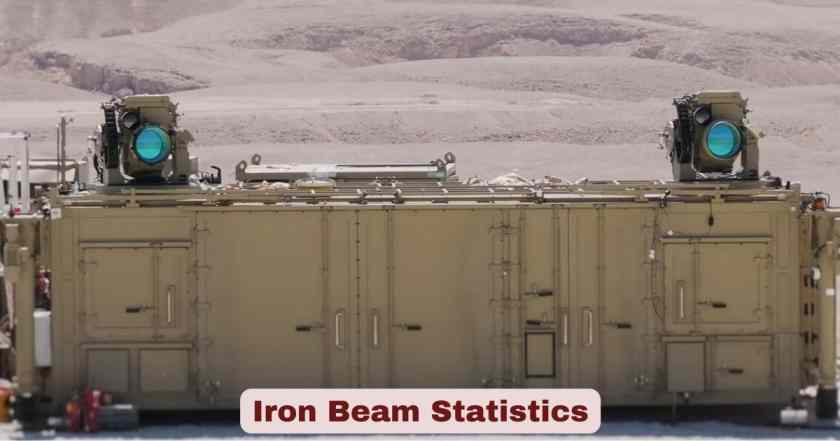
What Is Iron Beam?
Iron Beam — officially designated “Or Eitan” (Hebrew: אור איתן, meaning “Strong Light”) and known in English as Laser Dome — is Israel’s groundbreaking directed-energy air defense system developed by Rafael Advanced Defense Systems in close collaboration with Israel’s Ministry of Defense Directorate of Defense Research and Development (DDR&D/MAFAT). First unveiled at the Singapore Airshow on February 11, 2014, the system spent over a decade in intensive research, field trials, and development before finally being handed over to the Israel Defense Forces (IDF) on December 28, 2025 — marking the beginning of what defense officials have called the “era of high-energy laser defense.” Designed specifically to intercept short-range rockets, artillery shells, mortar bombs, and unmanned aerial vehicles (UAVs) at distances of up to 10 kilometers, Iron Beam now serves as the fifth pillar of Israel’s multi-layered air defense architecture, standing alongside the Iron Dome, David’s Sling, Arrow 2, and Arrow 3 systems. As of January 2026, it has been officially integrated into the Israeli Air Force (IAF) and is actively operating in real combat conditions.
What truly sets Iron Beam 2026 apart from any conventional missile interceptor is the jaw-dropping economics behind it. A single Tamir interceptor missile fired by the Iron Dome costs approximately $50,000, while a single Iron Beam laser interception costs as little as $3 — essentially the price of the electricity consumed. This staggering cost differential is not merely theoretical. On March 2, 2026, the system was used in live combat for the first time to intercept Hezbollah rockets fired from Lebanon into northern Israel, making Israel the first country in the world to operationally deploy a high-energy laser weapon system in active combat. The Iron Beam family now comprises three distinct variants — the 100 kW Iron Beam 450 (the main system), the 50 kW mobile Iron Beam-M, and the 10 kW lightweight Lite Beam — each designed for specific operational scenarios. With the system now in full-rate production at Rafael’s facilities, and with export approvals under exploration, Iron Beam is not just a milestone for Israel — it is poised to reshape the economics and doctrine of air defense worldwide in 2026 and beyond.
Iron Beam 2026 — Interesting Facts
| # | Iron Beam Fact | Details |
|---|---|---|
| 1 | World’s First Operational Laser Air Defense | As of January 2026, Iron Beam is the world’s first high-energy laser system officially integrated into a national armed force’s active air defense network |
| 2 | First Combat Use (March 2, 2026) | On March 2, 2026, Iron Beam intercepted Hezbollah rockets fired from Lebanon — the first confirmed real-combat laser interception in history |
| 3 | Official Hebrew Name | Renamed “Or Eitan” in September 2025 in memory of Captain Eitan Oster, a combat soldier killed in Lebanon during the Gaza War |
| 4 | Cost Per Interception | Each laser interception costs approximately $3 in electricity — compared to $50,000 per Iron Dome Tamir missile |
| 5 | Operational Uptime in Year One | Despite atmospheric challenges, the initial Iron Beam version achieves approximately 90% operational availability thanks to adaptive optics breakthroughs |
| 6 | Announced at Singapore Airshow | The concept was first publicly revealed on February 11, 2014 — meaning the system took over 11 years from announcement to IDF deployment |
| 7 | 40+ Drones Intercepted in October 2024 | A scaled-down predecessor (Lite Beam or Iron Beam-M) intercepted ~40 Hezbollah UAVs in October 2024 during the Gaza War |
| 8 | Named After Aperture Size | The flagship Iron Beam 450 is named for its 450-millimeter optical aperture — which enables precision targeting of coin-sized objects at 10 km |
| 9 | Speed of Engagement | Iron Beam travels and strikes at the speed of light — faster than any interceptor missile in Israel’s entire arsenal |
| 10 | No Interceptor Debris | Unlike missile defense systems, Iron Beam generates zero debris when it destroys a target — protecting civilians below from falling shrapnel |
| 11 | Rafael-Lockheed Martin Partnership | In December 2022, Rafael and Lockheed Martin announced a joint development effort targeting a 300 kW combined-beam system for the US market |
| 12 | Naval Variant Unveiled (2023) | In May 2023, a Naval Iron Beam variant was unveiled, designed for ship installation to counter drone swarms and anti-ship missiles |
| 13 | Coin-Sized Precision at 10 km | The system can focus 100 kW of laser power on the diameter of a coin at a distance of 10 kilometers |
| 14 | Over $500 Million in Government Funding | The Iron Beam project received over $500 million in Israeli Ministry of Defense government funding through its development lifecycle |
| 15 | Lockheed Martin Future Goal: 300 kW | The Rafael-Lockheed collaboration aims to combine dual solid-state lasers to achieve up to 300 kW — tripling the current system’s power |
Source: Rafael Advanced Defense Systems (rafael.co.il); Israel Ministry of Defense; Wikipedia – Iron Beam; Jerusalem Post; Times of Israel; FlightGlobal; Army Recognition (December 2025–March 2026)
The sheer scale of what Iron Beam 2026 represents becomes clear when these facts are laid out together. For over a decade, the world watched Israel work toward this moment — and the system has now crossed the threshold from research project to war-fighting tool. The cost-per-shot advantage of $3 versus $50,000 is perhaps the single most transformative statistic in modern air defense history, fundamentally inverting the economic calculus that has always favored the attacker using cheap rockets against expensive interceptors. The March 2, 2026 combat debut is equally historic — this is the first time in recorded history that a high-energy laser weapon has been used to shoot down a live threat in an active conflict, cementing Israel’s position as the world leader in directed-energy defense technology.
What is equally remarkable about these Iron Beam facts is the precision engineering behind them. The ability to concentrate 100 kW of energy onto a coin-sized spot at 10 km is a scientific achievement that relies on adaptive optics breakthroughs that Rafael spent years developing. The 90% operational availability rate — in a region known for desert dust and variable weather — directly challenges the longstanding criticism that lasers are too vulnerable to atmospheric interference to be reliable combat tools. Meanwhile, the renaming of the system to “Or Eitan” in honor of a fallen soldier adds a deeply human dimension to a technology that can otherwise feel abstract: this is a system built by people, for people, and ultimately named after one of the soldiers it will protect future generations from losing.
Iron Beam 2026 System Specifications & Technical Statistics
| Specification | Iron Beam 450 (Main System) | Iron Beam-M (Mobile) | Lite Beam (Tactical) |
|---|---|---|---|
| Laser Power Output | 100 kW | 50 kW | 10 kW |
| Optical Aperture | 450 mm | 250 mm | Compact (light vehicle-mounted) |
| Effective Range | Up to 10 km (6.2 mi) | Several kilometers | Up to 2,000 m |
| Mobility | Fixed / Relocatable (ISO container) | Vehicle-mounted (mobile) | Light vehicle-mounted (mobile) |
| Primary Targets | Rockets, mortars, UAVs, artillery | Drones, rockets, mortars | Drones, rockets, mortars, IEDs |
| Cost Per Interception | ~$3 (electricity) | ~$3 (electricity) | ~$3 (electricity) |
| Deployment Status (2026) | Operational — IDF (Jan 2026) | Operational | Operational (since June 2025) |
| First Combat Use | March 2, 2026 | October 2024 (prototype) | October 2024 |
| Beam Technology | Coherent Beam Combining, Adaptive Optics | Solid-state fiber laser | Solid-state fiber laser |
| Combined Weapon System | Integrated with Iron Dome C2 | Paired with Samson 30 mm RWS | Paired with Samson 30 mm RWS |
| Future Power Target (Lockheed collab) | 300 kW (dual-laser combined) | — | — |
Source: Rafael Advanced Defense Systems; Israel Ministry of Defense DDR&D; Army Technology (army-technology.com); Defense Update (defense-update.com); Jerusalem Post
The technical specifications of Iron Beam in 2026 reveal a carefully tiered system built for different threat environments. The flagship Iron Beam 450, with its 100 kW output and 450 mm aperture, is the crown jewel — a fixed/relocatable platform integrated directly into the Iron Dome command and control network, making the transition from missile to laser seamless for operators in real time. The 450 mm aperture is what enables the legendary coin-sized precision at 10 km, achieved through Coherent Beam Combining (CBC) and breakthroughs in adaptive optics that compensate for atmospheric distortion. The system’s housing in a standard ISO container module means it can be repositioned without dismantling, giving commanders strategic flexibility without sacrificing the power capacity of a fixed installation.
What is particularly telling about the Iron Beam 2026 specifications is how the three-variant family fills every tactical gap in Israel’s battlefield. The Lite Beam’s 2,000-meter range at 10 kW is perfectly suited for front-line troops needing protection from the cheap Iranian-made Shahed-type drones and mortar fire that define modern low-cost warfare. The Iron Beam-M at 50 kW bridges the gap — mobile enough to accompany armored formations, yet powerful enough to handle heavier threats at several kilometers. Together, these three tiers mean that no terrain and no unit type is left unprotected, and that the $3-per-shot cost applies equally across all configurations, making the entire Iron Beam family a strategic answer to the mass-production drone economy that adversaries have invested heavily in building.
Iron Beam 2026 Cost Comparison Statistics
| Defense System | Cost Per Interception | Interceptor Type | Threats Targeted | Total Intercepts (Reference) |
|---|---|---|---|---|
| Iron Beam (Laser) | ~$3 | High-energy laser (electricity) | Short-range rockets, UAVs, mortars | Active since Dec 2025 |
| Iron Dome (Tamir Missile) | ~$50,000 | Tamir interceptor missile | Short-to-medium rockets (up to ~120 km) | 10,000+ rockets since April 2011 |
| David’s Sling | ~$1,000,000 | Stunner interceptor missile | Tactical ballistic missiles, cruise missiles | Limited — recent use in 12-Day War |
| Arrow 2 | Classified (est. high millions) | Interceptor missile | Medium-to-long range ballistic missiles | Limited operational use |
| Arrow 3 | Classified (est. high millions) | Hit-to-kill interceptor | Long-range / exo-atmospheric ballistic missiles | Used against Iranian ballistic missiles, Oct 2024 |
| Enemy Rockets (Qassam, Katyusha) | $5,000–$10,000 (production cost) | Unguided rocket | N/A (offensive) | Thousands fired since 2001 |
Source: Israel Ministry of Defense; Rafael Advanced Defense Systems; Calcalist Tech (calcalistech.com); Jewish Insider (jewishinsider.com); Times of Israel; Ynet News (ynetnews.com)
The Iron Beam cost comparison statistics for 2026 expose one of the most important strategic reversals in modern military history. For decades, the economics of rocket defense have favored the attacker — an adversary could fire a $5,000–$10,000 Qassam or Katyusha rocket and force Israel to expend a $50,000 Tamir missile in response, draining resources at a 5-to-1 or 10-to-1 ratio in the attacker’s favor. Iron Beam flips this equation entirely. At $3 per interception, the laser now costs less to fire than it costs the enemy to manufacture and launch the threat. This is not just a savings — it is a strategic deterrent shift that fundamentally undermines the asymmetric economic warfare model that groups like Hamas and Hezbollah have relied upon to exhaust Israeli defense budgets. Over 10,000 Tamir missiles have been fired by Iron Dome since April 2011, representing over $500 million in interceptor costs alone at today’s per-unit price.
However, a full-picture reading of the Iron Beam cost data requires accounting for what is often omitted from headlines. While the per-shot cost is $3, each laser director unit — the hardware that focuses and fires the beam — is estimated by defense officials to cost tens of millions of dollars. With a current range limited to 10 km, providing comprehensive national coverage would require the deployment of dozens to potentially hundreds of these units, representing substantial capital expenditure over time. Rafael Chairman Dr. Yuval Steinitz has framed this honestly: the full deployment will be long and expensive, even as the per-interception economics are revolutionary. The Iron Beam cost model is therefore best understood as transformative at scale — where high upfront infrastructure costs are offset by near-zero marginal interception costs, ultimately delivering savings measured in billions of dollars over a multi-decade operational lifespan.
Iron Beam 2026 Development & Funding Timeline
| Year | Milestone | Key Actor | Budget / Funding Note |
|---|---|---|---|
| 2014 | Concept unveiled at Singapore Airshow (Feb 11) | Rafael Advanced Defense Systems | R&D phase begins |
| 2017 | Laser Weapons System demonstrator operational | Rafael / MAFAT | Israeli MoD funded |
| 2022 (April) | Successful test shots at White Sands Missile Range — drones, rockets, mortars, anti-tank missiles intercepted | Rafael / Israeli MoD | Undisclosed MoD allocation |
| 2022 (December) | Rafael–Lockheed Martin joint development announced — targeting 300 kW combined-laser system | Rafael + Lockheed Martin | Joint program for US market |
| 2023 (May) | Naval Iron Beam unveiled — designed for ship installation vs. drone swarms | Rafael | Naval program initiated |
| 2025 (June) | Iron Beam 450 unveiled at Paris Air Show with upgraded 450 mm aperture director | Rafael / MAFAT | Over $500 million total government funding confirmed |
| 2025 (September) | Final testing series completed at Shdema test range — rockets, mortars, UAVs, aircraft all intercepted | Israeli Air Force, Rafael, DDR&D | Development phase concluded |
| 2025 (December 28) | First operational Iron Beam system delivered to IDF at official ceremony, Rafael HQ, northern Israel | Rafael / IMOD / IDF | Full-rate production begins |
| 2026 (January) | Officially integrated into Israeli armed forces | IAF / IDF | Deployment ongoing |
| 2026 (March 2) | First live combat interception — Hezbollah rockets, northern Israel | IDF / IAF | Historic operational milestone |
Source: Israel Ministry of Defense (mod.gov.il); Rafael Advanced Defense Systems (rafael.co.il); Army Recognition (armyrecognition.com); Wikipedia – Iron Beam; Times of Israel (timesofisrael.com)
The Iron Beam development timeline tells the story of one of the most sustained and expensive defense R&D programs in Israel’s history. From first announcement in 2014 to confirmed combat use in March 2026, the journey spanned 12 years and required over $500 million in confirmed government funding — not counting classified additional allocations, nor the private R&D investments by Rafael itself. What the timeline also reveals is that the pace accelerated dramatically under wartime pressure: the October 7, 2023 Hamas attack and the subsequent multi-front war created urgent operational demand that pushed both Rafael engineers and the Ministry of Defense to compress the final development and testing phases. The deployment date of December 28, 2025 was moved up from an earlier estimate of October 2025, and the system was in active combat less than 65 days after IDF receipt.
The Rafael–Lockheed Martin partnership, announced in December 2022, signals that Iron Beam’s development story is far from over in 2026. The collaboration targeting a 300 kW dual-laser combined system — triple the current output — is aimed squarely at the US defense market, where interest in directed-energy weapons for countering drone swarms, hypersonic glide vehicles, and cheap mass-attack munitions has grown sharply. The Naval Iron Beam unveiled in 2023 adds yet another dimension: shipborne laser defense against anti-ship missiles and drone swarms in contested maritime environments. Taken together, the Iron Beam investment trajectory through 2026 makes clear that what Israel has fielded is not a final product but the first generation of a platform that will evolve — just as Iron Dome evolved from its own modest beginnings in 2011 into the globally respected system it is today.
Iron Beam 2026 Operational Statistics — Combat Record
| Event | Date | Threats Intercepted | System Used | Source |
|---|---|---|---|---|
| First-ever combat laser intercepts — Gaza War (Hezbollah front) | October 2024 | ~40 Hezbollah UAVs | Lite Beam / Iron Beam-M prototype | Israeli MoD (May 28, 2025 announcement) |
| Additional intercepts — multi-front war | Late 2024–mid 2025 | “Scores of enemy threats” (official statement) | Laser defense prototypes | Israeli Ministry of Defense (May 2025) |
| First operational Iron Beam combat use — Hezbollah rockets, Lebanon | March 2, 2026 | Hezbollah rockets (northern Israel) | Iron Beam (Or Eitan) — fully operational unit | IDF / Calcalist Tech / The Jewish Edition |
| Total Iron Dome intercepts (for comparison, since 2011) | April 2011–2026 | 10,000+ rockets | Iron Dome (Tamir missiles) | Rafael / Israeli MoD |
| Estimated operational availability rate | As of 2026 | ~90% uptime | All Iron Beam variants | Senior IDF defense official (Calcalist Tech, Dec 2025) |
Source: Israel Ministry of Defense (mod.gov.il); Rafael Advanced Defense Systems; Calcalist Tech (calcalistech.com, March 2026); The Jewish Edition (thejewishedition.com, March 2026); Jerusalem Post (jpost.com)
The Iron Beam 2026 combat record is short in duration but enormous in historical significance. The October 2024 interceptions of approximately 40 Hezbollah UAVs — confirmed publicly by the Israeli Ministry of Defense on May 28, 2025 — marked the world’s first-ever combat use of a high-power laser system to intercept real aerial threats in an active war. This was achieved not by the full Iron Beam 450 but by what Israeli media described as a “scaled-down version” — most likely the Lite Beam or Iron Beam-M prototype — yet the significance is undimmed. By the time March 2, 2026 arrived and the fully operational Or Eitan system intercepted Hezbollah rockets fired at northern Israel, the system had already proven in two separate engagements that directed-energy interception is operationally viable under real combat conditions in a contested, active warzone — not merely on a test range.
The 90% operational availability rate cited by a senior defense official is a metric that deserves particular attention. Critics of laser defense have long argued that atmospheric interference — dust, humidity, clouds, and haze — would render such systems unreliable in the harsh Middle Eastern environment. The Iron Beam’s first-generation 90% uptime figure directly challenges that assumption and validates years of Rafael investment in adaptive optics and beam compensation technology designed to overcome precisely these conditions. The remaining 10% downtime is acknowledged by the Israeli defense establishment, which states this is why Iron Beam will not fully replace Iron Dome or David’s Sling — it will complement them, with commanders making real-time decisions in command-and-control vehicles about whether to engage each threat with the $3 laser beam or the $50,000 missile, based on conditions and threat priority.
Iron Beam 2026 Global Context — Directed-Energy Defense Landscape
| Country / Program | System Name | Power Output | Status as of 2026 | Notes |
|---|---|---|---|---|
| Israel | Iron Beam (Or Eitan) | 100 kW | Operational — active combat (Jan 2026) | World’s first operational high-energy laser air defense |
| United States | HELIOS (Lockheed Martin) | 60 kW | Testing / limited deployment | US Navy ship-mounted; not yet in active combat |
| United States | IFPC High Energy Laser | 50–300 kW (goal) | Development / testing | US Army program; Rafael Systems selected for Phase 1 |
| United Kingdom | DragonFire | 50 kW | Testing — sea trials 2025 | MBDA / QinetiQ / Leonardo joint program |
| Germany | Rheinmetall HEL | 20–100 kW | Testing / NATO exercises | Rheinmetall-MBDA JV announced January 2026 |
| China | ZKZM-500 / Various | Classified | Claimed operational | Limited verified public data; no confirmed combat record |
| Russia | Peresvet / Zadira | Classified | Claimed operational | Primarily for satellite-blinding; no confirmed drone intercepts |
| South Korea | Block-I Laser | ~10 kW | Development | Targeting 30 kW+ by 2028 |
Source: Israel Ministry of Defense; FlightGlobal (flightglobal.com); Army Recognition; Wikipedia; Rheinmetall-MBDA press release (January 2026); Rafael Advanced Defense Systems
Israel’s Iron Beam stands alone on the global directed-energy defense map in 2026 because it is the only system in the world that has moved from test range to actual combat. Every other major program — the US Navy’s HELIOS at 60 kW, the UK’s DragonFire at 50 kW, Germany’s Rheinmetall HEL, or South Korea’s Block-I — remains in testing phases or limited ship-mounted trials without a confirmed combat interception record. This gap is not merely technological; it reflects the unique operational pressure Israel has faced over the past two years of multi-front warfare, which created the urgent demand signal — and the risk tolerance — needed to accelerate a next-generation system into active deployment at a pace no peacetime program could match. When Brig. Gen. Yehuda Elmakayes of DDR&D stated that the Knesset approved an extensive budget for multiple Laser Dome batteries, that political commitment underpinned the production velocity now visible in Rafael’s full-rate delivery to the IDF.
The Rafael–Lockheed Martin partnership targeting a 300 kW combined-beam system for the US market is perhaps the clearest signal that the global directed-energy race has entered a new phase in 2026. Where previous collaborative programs were research exercises, this one is grounded in a proven, combat-tested foundation — the Iron Beam 450 that has already intercepted real rockets in a real war. The Rheinmetall-MBDA joint venture announced in January 2026 for European laser systems, and the US Army’s selection of Rafael Systems for the IFPC Inc 2 program, both reflect the degree to which Israel’s Iron Beam success is reshaping procurement decisions globally. For defense ministries across NATO and beyond, 2026 is the year that directed-energy stopped being a future concept and became a proven capability to plan around.
Iron Beam 2026 — Israel’s Multi-Layered Air Defense Architecture
| Layer | System | Range | Target Type | Cost Per Intercept | Status (2026) |
|---|---|---|---|---|---|
| Layer 1 (Shortest Range) | Iron Beam / Or Eitan | Up to 10 km | Rockets, UAVs, mortars, artillery shells | ~$3 | Operational — active combat |
| Layer 2 | Iron Dome | Up to ~120 km | Short-to-medium range rockets, mortar shells | ~$50,000 | Operational since 2011 — 10,000+ intercepts |
| Layer 3 | David’s Sling | Up to ~300 km | Tactical ballistic missiles, cruise missiles, aircraft | ~$1,000,000 | Operational — upgraded 2025/2026 |
| Layer 4 | Arrow 2 | Medium-to-long range | Medium-range ballistic missiles | Classified (est. multi-million) | Operational |
| Layer 5 | Arrow 3 | Exo-atmospheric (space intercept) | Long-range / ICBM-class ballistic missiles | Classified (est. multi-million) | Operational — used vs. Iran Oct 2024 |
Source: Israel Ministry of Defense (mod.gov.il); Rafael Advanced Defense Systems (rafael.co.il); Calcalist Tech; Wikipedia — Iron Beam, Iron Dome, David’s Sling, Arrow 3
The addition of Iron Beam as Layer 1 of Israel’s five-layer air defense architecture in 2026 completes what defense planners have described as the world’s most comprehensive national missile defense network. Previously, Iron Dome handled the shortest-range threats — but doing so consumed expensive Tamir missiles on even simple, cheap rockets. Iron Beam now absorbs the highest-volume, lowest-complexity threats at near-zero marginal cost, allowing Iron Dome’s stockpile to be preserved for scenarios where laser engagement is suboptimal — heavy weather, saturation barrages, or when targets require the reliability of kinetic intercept. Rafael Chairman Dr. Yuval Steinitz has said publicly that the combined use of Iron Beam and Iron Dome brings Israel close to 100% interception rates against short-range threats — a claim that, if sustained in operational conditions, would represent an unprecedented achievement in national air defense.
What makes the 2026 five-layer architecture particularly significant is the cost structure it creates across the spectrum of threats. From a $3 laser interception at Layer 1 to a classified multi-million-dollar Arrow 3 exo-atmospheric intercept at Layer 5, every layer is now calibrated to match the cost of the response to the complexity of the threat. The IDF’s real-time command-and-control doctrine — in which operators in C2 vehicles decide whether to engage each incoming threat with laser or missile — is itself a new battlefield management skill set that the Israeli Air Force is now developing operational doctrine around. Iron Beam’s integration into the existing Iron Dome command-and-control system means this decision loop is seamless: the same radar picture, the same C2 interface, with an added low-cost engagement option that changes the calculus of every incoming threat the operator sees on their screen.
Disclaimer: This research report is compiled from publicly available sources. While reasonable efforts have been made to ensure accuracy, no representation or warranty, express or implied, is given as to the completeness or reliability of the information. We accept no liability for any errors, omissions, losses, or damages of any kind arising from the use of this report.