
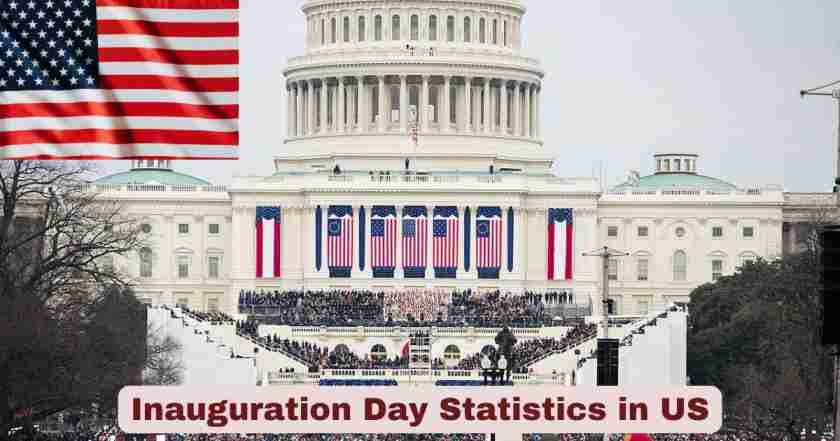
Inauguration Day in US 2026
Inauguration Day in the US 2026 represents a significant milestone in American democratic tradition, though unlike previous quadrennial ceremonies, Tuesday, January 20, 2026 will not feature a presidential inauguration. The 60th United States presidential inauguration already occurred on Monday, January 20, 2025, when Donald J. Trump was sworn in as the 47th president and JD Vance assumed office as the 50th vice president at precisely noon EST in the Capitol Rotunda. This historic ceremony marked only the second time in American history that a former president returned to office after losing reelection, following Grover Cleveland’s precedent in 1893. The event was particularly notable as it coincided with Martin Luther King Jr. Day, representing the third occasion this convergence has occurred after Bill Clinton’s 1997 and Barack Obama’s 2013 second inaugurations.
The 2025 inauguration established unprecedented records across multiple dimensions of presidential transition ceremonies. The Trump-Vance Inaugural Committee raised a staggering $239 million in private donations, more than doubling the previous record of $107 million that Trump himself set during his 2017 first inauguration, and surpassing the combined total of $157 million raised by Barack Obama and Joe Biden across their three combined inaugurations. Approximately 60% of this record-breaking fundraising came from over 130 seven-figure donations, underscoring the outsized role of corporate interests and ultra-wealthy individuals in modern inaugural festivities. On his first day in office, President Trump signed 26 executive orders, establishing a new record for presidential actions on Inauguration Day and immediately implementing sweeping policy changes across immigration, energy, federal workforce management, and regulatory frameworks. These statistics reflect the evolving nature of presidential inaugurations in 21st-century America, where ceremonial tradition intersects with massive financial investment, media spectacle, and immediate executive power deployment.
Interesting Facts and Latest Statistics for Inauguration Day in the US 2026
| Category | Key Facts & Statistics | Year/Source |
|---|---|---|
| Last Inauguration Date | Monday, January 20, 2025 | 2025 |
| Next Inauguration Date | Tuesday, January 20, 2026 (No ceremony scheduled) | 2026 |
| Following Inauguration | Saturday, January 20, 2029 | 2029 |
| 60th Inauguration Number | 60th presidential inauguration in US history | 2025 |
| President Inaugurated | Donald J. Trump as 47th president | 2025 |
| Vice President Inaugurated | JD Vance as 50th vice president | 2025 |
| Ceremony Location | Capitol Rotunda (moved indoors due to weather) | 2025 |
| Record Fundraising | $239 million raised by inaugural committee | 2025 |
| Previous Record | $107 million (Trump 2017 inauguration) | 2017 |
| Biden 2021 Fundraising | $61.8 million during COVID-19 pandemic | 2021 |
| Seven-Figure Donors | 130+ donors contributed $1 million or more | 2025 |
| Largest Single Donation | $5 million from Pilgrim’s Pride Corp. | 2025 |
| Crypto Industry Donations | $4.9 million from Ripple Labs (2nd largest) | 2025 |
| Refunded Donations | $6.2 million refunded to donors | 2025 |
| Television Viewership | 24.6 million viewers across 15 networks | 2025 |
| Peak Viewership | 34.4 million viewers at 12:15 PM quarter-hour | 2025 |
| Trump YouTube Peak | 700,000 concurrent viewers (channel record) | 2025 |
| Executive Orders Day One | 26 executive orders signed (record for first day) | 2025 |
| Inaugural Speech Length | 2,885 words spoken over 30 minutes | 2025 |
| Biden Executive Orders Revoked | 78 executive orders and memoranda rescinded | 2025 |
| MLK Day Coincidence | 3rd time inauguration fell on MLK Day | 2025 |
Data Source: Federal Election Commission, Nielsen, Office of Personnel Management, Joint Congressional Committee on Inaugural Ceremonies, Wikipedia
The statistics surrounding Inauguration Day in the US 2025 reveal the extraordinary scale and complexity of modern presidential transitions. The $239 million fundraising total represents an increase of 123% over Trump’s 2017 inaugural fund and nearly quadruple the $61.8 million raised by Joe Biden in 2021, though Biden’s scaled-down ceremony occurred during the COVID-19 pandemic with significant restrictions on in-person attendance and traditional festivities. The Federal Election Commission filing disclosed that approximately 140 individuals and companies contributed $1 million or more, with major technology companies including Meta, Amazon, Google, Apple, Nvidia, and Microsoft each donating substantial sums ranging from $1 million to their maximum contributions. Pilgrim’s Pride Corporation, a major poultry producer, topped the donor list with a $5 million contribution, while cryptocurrency companies collectively contributed over $10 million, reflecting the industry’s strategic investment in cultivating favorable relationships with the incoming administration.
Television viewership data from Nielsen indicates that 24.6 million Americans watched the 2025 inauguration across 15 broadcast and cable networks, with peak viewership reaching 34.4 million during the 12:15 PM quarter-hour when President Trump delivered his inaugural address. This represents a significant decline from the 38 million viewers who watched Barack Obama’s first inauguration in 2009, though it exceeded the 20.6 million who tuned in for Obama’s second inauguration in 2013. The 2025 ceremony also achieved record digital engagement, with Trump’s YouTube channel reaching 700,000 concurrent viewers—a new record for the account—while online streaming platforms collectively drew millions of additional viewers who consumed the event through non-traditional media channels. President Trump’s immediate action in signing 26 executive orders on January 20, 2025 shattered the previous first-day record, with Joe Biden having signed 9 executive orders on his 2021 inauguration, followed by Barack Obama with 2 and Bill Clinton with 1 executive order on their respective first days in office.
Federal Holiday Status for Inauguration Day in the US 2026
| Holiday Aspect | Details | Authority/Source |
|---|---|---|
| Federal Holiday Status | Limited federal holiday (DC area only) | Public Law 85-1 (1957) |
| 2026 Observance | Tuesday, January 20, 2026 (No ceremony) | Federal Calendar |
| Geographic Scope | District of Columbia and surrounding counties | Federal Law |
| Maryland Coverage | Montgomery and Prince George’s Counties | OPM Policy |
| Virginia Coverage | Arlington, Fairfax Counties, Alexandria, Falls Church | OPM Policy |
| Nationwide Status | Not a nationwide federal holiday | Congressional Record |
| Federal Employees Affected | Only those in designated DC metro area | Office of Personnel Management |
| School Closures | DC district schools and some local schools | Local Policy |
| Private Sector | No required observance outside government | Employment Law |
| Frequency | Every 4 years on January 20 | 20th Amendment |
| Constitutional Mandate | Noon on January 20 every 4th year | 20th Amendment (1933) |
| Sunday Exception | Moves to January 21 if falls on Sunday | Historical Practice |
| Saturday Occurrence | No alternate day off (as in 2001, 2029) | Federal Policy |
| Last Nationwide Proposal | 95th-96th Congress (1977-1980), no action | Congressional Record |
| Establishment Year | 1957 as localized federal holiday | Public Law 85-1 |
Data Source: U.S. Office of Personnel Management, Congressional Research Service, Public Law 85-1, 20th Amendment to U.S. Constitution
Inauguration Day in the US 2026 holds a unique position among American holidays as a limited federal holiday observed exclusively in the District of Columbia metropolitan area, a designation established by Public Law 85-1 in 1957. Representative Edward H. Rees argued for the legislation by noting that the intensive activities surrounding presidential inaugurations made it nearly impossible for federal employees in the capital region to commute to work or perform their duties effectively. The holiday applies only to federal employees regularly scheduled to work in Washington, D.C., Montgomery and Prince George’s Counties in Maryland, and Arlington and Fairfax Counties in Virginia, as well as the cities of Alexandria and Falls Church in Virginia—a combined geographic area encompassing the core federal government operational zone.
Unlike the 11 nationwide federal holidays that provide paid time off for all federal employees regardless of location, Inauguration Day remains geographically restricted, affecting approximately 350,000 federal workers in the designated region while leaving federal employees in other states without holiday benefits. The 20th Amendment to the U.S. Constitution, ratified in 1933, established that presidential and vice-presidential terms begin at noon on January 20 in years following presidential elections, moving the date from the historic March 4 observance that had been standard since 1792. When January 20 falls on a Sunday, the public ceremonial inauguration occurs on Monday, January 21, though the constitutional oath-taking typically happens privately on Sunday at noon, as occurred in 1985 with Ronald Reagan and 2013 with Barack Obama. However, when the date falls on Saturday, as it will on January 20, 2029, federal workers do not receive an alternate day off, nor do they receive additional compensation when Inauguration Day coincides with another federal holiday like Martin Luther King Jr. Day, which happened in 1997, 2013, and most recently 2025. Several bills introduced in the 95th and 96th Congresses between 1977 and 1980 proposed making Inauguration Day a nationwide public holiday, but none advanced beyond committee consideration, leaving the observance as a localized accommodation for the practical challenges of conducting government business during inaugural festivities.
Fundraising Records for Presidential Inaugurations in the US 2026
| Inauguration | Total Raised | Inflation-Adjusted |
|---|---|---|
| Reagan 1981 | $19 million | Approximately $64 million (2025 dollars) |
| Reagan 1985 | $16 million | Approximately $45 million (2025 dollars) |
| G.H.W. Bush 1989 | $30 million | Approximately $75 million (2025 dollars) |
| Clinton 1993 | Data unavailable | N/A |
| Clinton 1997 | $33 million | Approximately $62 million (2025 dollars) |
| G.W. Bush 2001 | $40 million | Approximately $70 million (2025 dollars) |
| G.W. Bush 2005 | $42.3 million | Approximately $67 million (2025 dollars) |
| Obama 2009 | $53 million | Approximately $76 million (2025 dollars) |
| Obama 2013 | Data for second term | Approximately $44 million |
| Trump 2017 | $107 million | Approximately $134 million (2025 dollars) |
| Biden 2021 | $61.8 million | Approximately $74 million (2025 dollars) |
| Trump 2025 | $239 million | $239 million |
| Combined Obama/Biden | $157 million total | Three inaugurations combined |
| Trump Combined Total | $346 million | More than all others since 1973 combined |
Data Source: Federal Election Commission, Center for Presidential Transition, Congressional Research Service Reports
The fundraising trajectory for presidential inaugurations in the US demonstrates dramatic escalation over the past four decades, with the 2025 Trump-Vance Inaugural Committee’s $239 million haul representing a quantum leap in the financial resources devoted to inaugural festivities. When Ronald Reagan inaugurated the modern era of celebrity-infused, Hollywood-style inaugurations in 1981, his committee raised $19 million—considered extravagant at the time and the most expensive inauguration in history to that point. Reagan’s approach, influenced by his entertainment industry background and organized with assistance from Frank Sinatra, featured nine inaugural balls and set a template for increasingly elaborate celebrations. Adjusting for inflation, Reagan’s 1981 fundraising would equal approximately $64 million in 2025 dollars, still far below Trump’s record-breaking total.
The George W. Bush 2005 inauguration raised $42.3 million, while Barack Obama’s first inauguration in 2009 collected $53 million despite occurring during the depths of the Great Recession. Trump’s 2017 inaugural committee shattered previous records by raising $107 million, more than double any predecessor, yet his 2025 fundraising of $239 million more than doubled even that extraordinary figure. Notably, the $346 million Trump has raised across his two inaugurations exceeds the combined total of every other inaugural committee since comprehensive records began in 1973. Presidential inaugural committees operate as nonprofit organizations with broad discretion over expenditures, required only to report donations of $200 or more to the Federal Election Commission within 90 days of the inauguration, but not mandated to detail spending or account for remaining funds until filing tax returns with the Internal Revenue Service. The 2025 committee refunded approximately $6.2 million in donations when certain exclusive events reached capacity, leaving even million-dollar donors unable to secure admission, and has indicated that excess funds will be directed toward Trump’s presidential library and other sponsored projects. This fundraising model, with no contribution limits for domestic donors though foreign nationals and corporations are prohibited, creates opportunities for corporations and wealthy individuals to curry favor with incoming administrations through seven-figure donations that dwarf the regulated and limited contributions permitted to presidential campaigns.
Television and Digital Viewership for Inauguration Day in the US 2026
| Inauguration | Television Viewers | Notes |
|---|---|---|
| Reagan 1981 | 41.8 million | Highest TV viewership on record |
| Reagan 1985 | Moved indoors, limited data | Due to extreme cold weather |
| Clinton 1993 | 30.0 million | Moderate viewership |
| Clinton 1997 | 29.2 million | Slight decline from first term |
| G.W. Bush 2001 | 28.0 million | Lower than Clinton inaugurations |
| G.W. Bush 2005 | 15.5 million | Significant viewership drop |
| Obama 2009 | 37.8 million | Second-highest TV viewership ever |
| Obama 2013 | 20.6 million | Nearly 50% drop from 2009 |
| Trump 2017 | 30.6 million | Mid-range historical viewership |
| Biden 2021 | 39.9 million | COVID-era record, limited in-person |
| Trump 2025 TV | 24.6 million viewers | Across 15 networks |
| Trump 2025 Peak | 34.4 million viewers | 12:15 PM quarter-hour |
| Trump 2025 YouTube | 700,000 concurrent viewers | Channel record |
| Digital Streaming Growth | Millions additional viewers | Not included in TV count |
| CNN 2025 Livestream Peak | 2.3 million devices | Desktop, mobile, connected TVs |
Data Source: Nielsen, Streams Charts, CNN, YouTube Analytics, American Presidency Project
Television and digital viewership patterns for presidential inaugurations in the US reveal shifting media consumption habits and the declining dominance of traditional broadcast networks. Ronald Reagan’s 1981 inauguration achieved the highest television viewership ever recorded at 41.8 million viewers, a figure that has never been surpassed despite population growth and the expansion of available networks. Barack Obama’s historic first inauguration as the first African American president in 2009 attracted 37.8 million television viewers, the second-highest total on record, reflecting extraordinary public interest in the groundbreaking ceremony. However, Obama’s 2013 second inauguration drew only 20.6 million viewers, a decline of nearly 50% that illustrates the typical pattern of reduced interest in second-term inaugurations.
The Trump 2025 inauguration television audience of 24.6 million viewers across 15 networks represents a significant decrease from Biden’s 2021 total of 39.9 million, though the 2021 figures were inflated by the extraordinary circumstances of the COVID-19 pandemic, restricted in-person attendance, and the heightened security following the January 6, 2021 Capitol attack. The 2025 viewing peaked at 34.4 million during the 12:15 PM quarter-hour when President Trump delivered his inaugural address, demonstrating that while overall sustained viewership declined, crucial moments still commanded substantial audiences. Digital platforms dramatically expanded inaugural reach beyond traditional television metrics: Trump’s YouTube channel achieved 700,000 concurrent viewers at its peak, setting a new record for the account, while CNN’s livestream reached 2.3 million devices simultaneously across desktop, mobile, and connected TV platforms. Streaming data is notoriously difficult to aggregate accurately due to varying measurement methodologies, multiple platforms, and the challenge of eliminating duplicate counting when viewers switch between devices, but conservative estimates suggest that digital streaming added several million additional viewers beyond the 24.6 million counted by Nielsen for traditional television. International viewership through platforms like Al Jazeera Arabic, Revista Oeste in Brazil, and CNN International brought the global audience into the tens of millions, though comprehensive worldwide figures remain unavailable. The fragmentation of media consumption means that total viewership across all platforms—television, streaming, social media clips, and international broadcasts—likely exceeded 50 million people for the 2025 Trump inauguration, even as traditional television metrics showed declining numbers compared to historical peaks.
Executive Actions on Inauguration Day in the US 2026
| President | Executive Orders First Day | Year |
|---|---|---|
| Bill Clinton | 1 executive order | 1993 |
| George W. Bush | 0 executive orders | 2001 |
| George W. Bush (2nd) | 0 executive orders | 2005 |
| Barack Obama | 2 executive orders | 2009 |
| Barack Obama (2nd) | 0 executive orders | 2013 |
| Donald Trump | 0 executive orders | 2017 |
| Joe Biden | 9 executive orders | 2021 |
| Donald Trump (2nd) | 26 executive orders | 2025 |
| Trump Total by Dec 15, 2025 | 221 executive orders | 2025 |
| Trump First Term Total | 220 executive orders | 2017-2021 |
| Biden Actions Revoked | 78 orders and memoranda | January 20, 2025 |
| Franklin D. Roosevelt 1933 | 99 executive orders (full year record) | 1933 |
| Harry Truman 1945 | 105 executive orders (partial year) | 1945 |
| Trump 2025 Projection | 225+ executive orders (full year) | 2025 |
| Historical Context | Most since FDR in any single year | Pre-2025 |
Data Source: Federal Register, American Presidency Project, Pew Research Center, Ballotpedia
President Donald Trump’s signing of 26 executive orders on January 20, 2025 established an unprecedented record for first-day presidential actions, nearly tripling the previous record of 9 executive orders signed by Joe Biden on his 2021 Inauguration Day. This aggressive use of executive power represented a “shock and awe” campaign designed to immediately implement campaign promises and assert presidential authority across multiple policy domains. The 26 orders addressed sweeping policy changes including immigration enforcement, energy policy, federal workforce restructuring, regulatory rollback, and the reversal of Biden administration initiatives. One of the first orders, titled “Initial Rescissions of Harmful Executive Orders and Actions,” unilaterally revoked 78 executive orders and memoranda issued by President Biden, covering areas such as racial equality initiatives, climate change programs, migration policies, voting access protections, and federal workforce diversity efforts.
By December 15, 2025, less than 11 months into his second term, President Trump had signed 221 executive orders, already surpassing the 220 executive orders he issued during his entire four-year first term from 2017 to 2021. This pace of executive action exceeded that of any president since Franklin D. Roosevelt, who signed 99 executive orders in 1933 during the depths of the Great Depression and his ambitious First 100 Days launching the New Deal. Harry Truman signed 105 executive orders in 1945, though his count began in April following Roosevelt’s death, meaning Truman’s rate over a full year was lower than Trump’s 2025 pace. Projections suggested Trump would sign approximately 225 executive orders during 2025, making it the highest single-year total for any president in over 80 years. The Pew Research Center analysis found that Trump’s use of executive orders was more than three times the 58 orders he issued during his first year in office in 2017, reflecting a more aggressive and prepared approach to exercising unilateral presidential power. Critics argued that many of Trump’s orders exceeded constitutional authority or violated federal statutes, with numerous legal challenges filed in federal courts resulting in temporary injunctions blocking implementation of contested provisions. Analysis by Time and Bloomberg Government found that nearly two-thirds of Trump’s early executive actions “mirror or partially mirror” proposals from Project 2025, the controversial Heritage Foundation initiative that Trump had distanced himself from during the campaign but appeared to embrace once in office.
Historical Attendance and Crowd Size Statistics in the US 2026
| Inauguration | Estimated Attendance | Source/Notes |
|---|---|---|
| Obama 2009 | 1.8 million (estimated) | Largest recorded crowd |
| Trump 2017 | 300,000-600,000 (estimated) | Disputed, no official count |
| Obama 2013 | 1.0 million (estimated) | Second inauguration |
| Biden 2021 | 25,000-200,000 (estimated) | COVID restrictions, limited attendance |
| Trump 2025 | Data unavailable | Moved indoors to Capitol Rotunda |
| Capital One Arena 2025 | 20,000 capacity filled | Overflow viewing location |
| G.W. Bush 2005 | 400,000 (estimated) | Congressional estimates |
| G.W. Bush 2001 | 300,000 (estimated) | Lower turnout |
| Clinton 1997 | 250,000 (estimated) | Moderate attendance |
| Reagan 1981 | 400,000-500,000 (estimated) | High attendance |
| Historical High | 1.8 million (Obama 2009) | Unofficial maximum |
| Measurement Challenges | No official counts provided | Estimates vary widely |
| National Mall Capacity | 1.0-1.8 million theoretical maximum | Geographic constraints |
Data Source: National Park Service estimates, Congressional Research Service, Media Reports, FactCheck.org
Estimating crowd sizes for presidential inaugurations in the US remains a contentious and imprecise science, with no official government agency providing definitive attendance figures, leaving media organizations, academic researchers, and political partisans to offer widely varying estimates based on photographic evidence, transportation data, and mathematical modeling of occupied space. Barack Obama’s first inauguration on January 20, 2009 attracted the largest crowd ever recorded for a presidential inauguration, with estimates ranging from 1.0 million to 1.8 million people filling the National Mall, stretching from the Capitol to the Lincoln Memorial. The National Park Service historically provided crowd estimates but ceased the practice after controversies surrounding the accuracy of their methodologies, leaving subsequent inaugurations without official attendance figures.
The Trump 2017 inauguration sparked intense controversy when President Trump and White House Press Secretary Sean Spicer claimed it was the “largest audience ever to witness an inauguration” both in person and globally, despite photographic evidence and expert analysis clearly showing substantially smaller crowds than Obama’s 2009 ceremony. FactCheck.org and other organizations analyzed aerial photography and concluded that Trump’s 2017 crowd numbered between 300,000 and 600,000 attendees—significant but nowhere near record-breaking. Nielsen reported that 30.6 million television viewers watched the 2017 ceremony, approximately 19% below the 37.8 million who watched Obama in 2009, undermining claims of record total viewership. The Biden 2021 inauguration occurred under extraordinary security measures following the January 6, 2021 Capitol attack and during the COVID-19 pandemic, with the National Mall closed to general public attendance. Estimates suggested between 25,000 and 200,000 people attended, primarily consisting of invited guests, members of Congress, and essential personnel, making meaningful crowd size comparisons impossible.
The Trump 2025 inauguration faced unique logistical circumstances when extreme cold weather with temperatures around 22°F (-6°C) and dangerous wind chills prompted organizers to move the ceremony indoors to the Capitol Rotunda, marking only the second time in history that an inauguration was held entirely indoors (following Ronald Reagan’s 1985 second inauguration, which was also moved due to extreme cold). This indoor venue accommodates only approximately 1,000 ticketed guests, dramatically reducing in-person attendance at the actual swearing-in ceremony. To accommodate supporters who traveled to Washington expecting an outdoor event, organizers opened Capital One Arena in downtown D.C., which seats approximately 20,000 people, where attendees watched the ceremony on large screens before President Trump appeared for remarks following the Capitol proceedings. Lines of individuals hoping to enter the arena were turned away once it reached capacity, indicating that demand exceeded available space. The combination of indoor ceremony restrictions and weather-related crowd deterrence makes the 2025 Trump inauguration incomparable to previous outdoor ceremonies in terms of attendance metrics, though the shift to indoor viewing parties and digital streaming suggests that physical crowd size has become less relevant as a measure of public engagement in the era of ubiquitous connectivity and multiple viewing platforms.
Security Costs and Taxpayer Funding for Inauguration Day in the US 2026
| Cost Category | Amount | Source |
|---|---|---|
| Trump 2025 Private Fundraising | $239 million | FEC Filing |
| Congressional Appropriation 2025 | $3.675 million | Further Consolidated Appropriations Act 2024 |
| Trump 2017 Security Costs | $27 million (DC) + $100 million (federal) | Washington Post, NYT |
| Biden 2021 Security Request | $45 million requested from Congress | DC Government |
| Obama 2009 Total Costs | Estimated $160 million combined | Including security |
| G.W. Bush 2005 Total Costs | $157 million inflation-adjusted | CRS Report |
| Typical Security Expenditures | $75-$125 million per inauguration | Historical Range |
| DC Government Costs 2017 | $27 million spent | Law enforcement, crowd control |
| State/Local Reimbursements | Congress appropriates reimbursement funds | Federal Policy |
| Taxpayer vs. Private Split | Security publicly funded, festivities privately funded | Standard Practice |
| National Special Security Event | DHS designation requires federal resources | Homeland Security |
| Private Donations Unlimited | No cap on inaugural committee donations | Federal Law |
| Foreign Donations Prohibited | Foreign nationals and companies banned | FEC Regulation |
Data Source: Washington Post, Federal Election Commission, Congressional Research Service, Department of Homeland Security
The financial costs of presidential inaugurations in the US are divided between publicly funded security expenses borne by taxpayers and privately funded celebratory events financed through inaugural committee donations, creating a hybrid model where government resources ensure safety while private contributions underwrite the pageantry. Security expenses constitute the largest public cost, with presidential inaugurations designated as National Special Security Events (NSSE) by the Department of Homeland Security, triggering substantial federal resource deployment. The Trump 2017 inauguration cost the District of Columbia government approximately $27 million, primarily for Metropolitan Police Department officers, emergency medical services, sanitation, and infrastructure, while federal agencies contributed an estimated $100 million or more for Secret Service protection, Capitol Police operations, military personnel deployment, and intelligence coordination.
The Biden 2021 inauguration required extraordinary security measures following the January 6, 2021 insurrection, with D.C. government initially requesting $35 million from Congress but later increasing the request to $45 million to cover enhanced protection measures. Approximately 25,000 National Guard troops were deployed to Washington, creating a militarized security perimeter around the Capitol that dwarfed typical inaugural security deployments. The Obama 2009 inauguration, which attracted the largest crowd in history, was estimated to have cost approximately $160 million in total when combining $53 million in private fundraising with substantial federal and local government security expenditures, though precise figures were difficult to determine because many costs came from existing agency budgets not specifically labeled for inaugural purposes.
Congress appropriates funds through the Joint Congressional Committee on Inaugural Ceremonies, which received $3.675 million through the Further Consolidated Appropriations Act of 2024 for the 2025 inauguration, covering basic ceremonial infrastructure, platform construction, bleachers, and official proceedings. Additional congressional appropriations typically provide reimbursement to state and local governments that contribute personnel and resources to inaugural security and support operations. The Trump-Vance Inaugural Committee’s $239 million in private fundraising far exceeded any conceivable expenditure on inaugural balls, receptions, concerts, and celebratory events, leading to questions about how remaining funds would be used. Inaugural committees have broad discretion over excess contributions, which can be donated to presidential libraries, charitable causes, or other projects aligned with the president’s interests, with full accounting required only in confidential IRS tax filings not immediately available to the public. This fundraising model, permitting unlimited donations from U.S. citizens and corporations while prohibiting foreign contributions, creates opportunities for influence-seeking that critics argue compromises inaugural integrity, though defenders note that transparency requirements and public FEC filings at least expose who is contributing and in what amounts, allowing voters and watchdog organizations to scrutinize potential conflicts of interest.
Inaugural Speech Length and Content Analysis in the US 2026
| President | Speech Length (Words) | Delivery Time |
|---|---|---|
| William Henry Harrison 1841 | 8,445 words | Nearly 2 hours (longest ever) |
| George Washington 1793 | 135 words | Few minutes (shortest ever) |
| Trump 2025 | 2,885 words | Approximately 30 minutes |
| Trump 2017 | 1,433 words | Approximately 15 minutes |
| Biden 2021 | 2,506 words | Approximately 21 minutes |
| Obama 2009 | 2,395 words | Approximately 18 minutes |
| Obama 2013 | 2,096 words | Approximately 18 minutes |
| G.W. Bush 2001 | 1,590 words | Approximately 14 minutes |
| Clinton 1993 | 1,598 words | Approximately 14 minutes |
| Reagan 1981 | 2,452 words | Approximately 20 minutes |
| Kennedy 1961 | 1,364 words | Approximately 14 minutes |
| Lincoln 1865 (2nd) | 701 words | Approximately 7 minutes |
| Historical Average | Approximately 2,000-2,500 words | 15-20 minutes |
| Modern Trend | Speeches getting longer | Recent decades |
Data Source: American Presidency Project, UC Santa Barbara, Inaugural Address Archive, Congressional Research Service
Presidential inaugural addresses serve as defining statements of vision, priorities, and national identity, with speech length and rhetorical content evolving substantially across American history. William Henry Harrison delivered the longest inaugural address ever recorded at 8,445 words, speaking for nearly two hours outdoors on a cold, wet March 4, 1841—a marathon oration that many historians believe contributed to the pneumonia that killed him just 31 days into his presidency, making him the shortest-serving president in American history. At the opposite extreme, George Washington’s 1793 second inaugural address consisted of just 135 words, delivered in approximately two minutes, representing the tersest presidential inauguration speech ever given and reflecting Washington’s reluctance to embrace ceremonial excess.
President Trump’s 2025 inaugural address of 2,885 words delivered over approximately 30 minutes represented a substantial increase from his 2017 first inaugural speech of 1,433 words that lasted about 15 minutes. The 2017 “American Carnage” speech, as it became known for its dark depiction of American decline, was notably brief and starkly pessimistic compared to traditional inaugural optimism. The 2025 address, while still shorter than many historical inaugurals, more than doubled the length of his first-term speech and adopted a more triumphant tone emphasizing themes of national greatness, American strength, and immediate policy priorities including immigration restriction and energy development. Joe Biden’s 2021 address ran 2,506 words over approximately 21 minutes, focusing heavily on themes of national unity, healing political division, and overcoming the COVID-19 pandemic that was killing thousands of Americans daily at the time.
Barack Obama’s first inaugural in 2009 contained 2,395 words delivered in about 18 minutes, while his 2013 second inaugural was slightly shorter at 2,096 words. Modern presidential inaugural addresses typically range between 2,000 and 2,500 words, lasting 15 to 20 minutes, though notable exceptions include John F. Kennedy’s 1961 address of 1,364 words that nonetheless became one of the most memorable in history for iconic phrases like “Ask not what your country can do for you—ask what you can do for your country.” Abraham Lincoln’s second inaugural address in 1865, delivered just weeks before his assassination and considered perhaps the greatest inaugural speech in American history, consisted of only 701 words spoken in approximately seven minutes, concluding with the immortal words “with malice toward none, with charity for all.” The trend toward longer speeches in recent decades reflects both the expanded role of the presidency in American life and the modern media environment where inaugural addresses serve as comprehensive policy roadmaps and mission statements rather than brief ceremonial remarks.
Weather Impact on Presidential Inaugurations in the US 2026
| Inauguration | Temperature | Weather Conditions |
|---|---|---|
| Reagan 1985 | -2°F (-19°C) wind chill | Moved indoors to Capitol Rotunda |
| Trump 2025 | 22°F (-6°C), dangerous wind chills | Moved indoors to Capitol Rotunda |
| Obama 2009 | 28°F (-2°C) | Outdoor ceremony in cold |
| Trump 2017 | 48°F (9°C) at noon | Cloudy, some rain |
| Kennedy 1961 | 22°F (-6°C), 8 inches snow | Outdoor ceremony continued |
| Obama 2013 | 40°F (4°C) | Moderate cold |
| Biden 2021 | 42°F (6°C) | Mild for January |
| Clinton 1997 | 50°F (10°C) | Unseasonably warm |
| G.W. Bush 2001 | 35°F (2°C) | Cold and rainy |
| Taft 1909 | 10 inches of snow | Blizzard conditions |
| Harrison 1841 | Cold and wet | Possible contributing factor to death |
| Reagan 1981 | 55°F (13°C) at noon | Warmest inauguration |
| Average January 20 DC | 38°F (3°C) average high | Normal winter conditions |
| Only Indoor Moves | 2 times in history | 1985 Reagan, 2025 Trump |
Data Source: National Weather Service, Historical Weather Records, Presidential Libraries, Capitol Rotunda Records
Weather conditions have played a dramatic role in shaping presidential inaugurations in the US, with January 20 falling during the coldest period of winter in Washington, D.C., creating persistent challenges for outdoor ceremonies. The 2025 Trump inauguration became only the second time in American history that an inauguration was moved entirely indoors due to extreme weather, with temperatures around 22°F (-6°C) and dangerously low wind chills prompting the decision to conduct the ceremony in the Capitol Rotunda rather than on the traditional outdoor West Front platform. This matched the precedent set by Ronald Reagan’s 1985 second inauguration, which faced the coldest Inauguration Day ever recorded with wind chills reaching -2°F (-19°C), forcing organizers to cancel the outdoor ceremony and move the proceedings inside while also canceling the traditional inaugural parade.
John F. Kennedy’s 1961 inauguration proceeded outdoors despite 22°F (-6°C) temperatures and eight inches of snow that had fallen the previous night, requiring a massive overnight effort to clear Pennsylvania Avenue for the parade. Kennedy famously appeared without an overcoat despite the freezing conditions, projecting an image of youthful vigor that became iconic in photographs and newsreel footage. William Howard Taft’s 1909 inauguration faced a severe blizzard that dumped 10 inches of snow on Washington, forcing the ceremony to move to the Senate Chamber inside the Capitol, marking the last time before 1985 that weather forced an indoor ceremony. William Henry Harrison delivered his marathon 8,445-word inaugural address outdoors in cold, wet conditions on March 4, 1841 without a coat or hat, standing for nearly two hours in the elements—conditions many historians believe weakened his health and contributed to the pneumonia that killed him 31 days later.
The Reagan 1981 first inauguration enjoyed the warmest Inauguration Day on record at 55°F (13°C), while Bill Clinton’s 1997 second inauguration saw unseasonably mild temperatures around 50°F (10°C). Barack Obama’s 2009 ceremony proceeded despite 28°F (-2°C) temperatures, while his 2013 second inauguration was more comfortable at 40°F (4°C). Joe Biden’s 2021 inauguration benefited from relatively mild 42°F (6°C) conditions, though the ceremony’s subdued nature owed more to COVID-19 restrictions and post-January 6 security concerns than weather. The decision to move ceremonies indoors remains controversial among historians and traditions, with some arguing that extreme weather tests presidential mettle and creates memorable moments of endurance, while practical considerations of crowd safety, hypothermia risks, and technological requirements for broadcasting increasingly favor indoor alternatives when conditions warrant. The 2025 decision demonstrated that modern inaugural planners prioritize attendee safety and operational feasibility over maintaining outdoor tradition at all costs, particularly given the advanced age of many attendees, including elderly members of Congress, Supreme Court justices, and former presidents in their 70s and 80s.
Historic Firsts and Milestones for Inauguration Day in the US 2026
| Historic Milestone | Year | Significance |
|---|---|---|
| First Inauguration | 1789 | George Washington in New York City |
| First in Washington DC | 1801 | Thomas Jefferson |
| First Vice President Succession | 1841 | John Tyler after Harrison death |
| First Indoor (Weather) | 1909 | William Howard Taft |
| First Woman Candidate | 1872 | Victoria Woodhull (not viable) |
| First Catholic President | 1961 | John F. Kennedy |
| First to Use “So Help Me God” | Uncertain | Possibly George Washington |
| First Televised | 1949 | Harry Truman |
| First on January 20 | 1937 | Franklin D. Roosevelt (20th Amendment) |
| First African American President | 2009 | Barack Obama |
| First to Invite Former Presidents | Historical tradition | Modern practice |
| First Woman VP | 2021 | Kamala Harris |
| First Non-Consecutive Return | 1893 | Grover Cleveland |
| Second Non-Consecutive Return | 2025 | Donald Trump |
| Oldest Inaugurated | 2021 | Joe Biden at age 78 |
| Youngest Inaugurated | 1901 | Theodore Roosevelt at age 42 |
| First with Three Living Formers | Various | Including 2025 |
| Youngest Elected | 1961 | John F. Kennedy at age 43 |
Data Source: Joint Congressional Committee on Inaugural Ceremonies, National Archives, Library of Congress, Presidential Libraries
The history of presidential inaugurations in the US encompasses numerous landmark moments that reflect the evolution of American democracy and constitutional governance. George Washington’s first inauguration on April 30, 1789 in New York City, then the nation’s temporary capital, established the fundamental template for presidential oath-taking and peaceful transfer of power that has endured for over 235 years. Thomas Jefferson’s 1801 inauguration marked the first held in Washington, D.C., the new permanent capital, and represented the first peaceful transfer of power between opposing political parties—from Federalists to Democratic-Republicans—a transition Jefferson described in his inaugural address as proof that Americans were “all republicans, all federalists” despite partisan divisions.
The 20th Amendment, ratified in 1933, moved Inauguration Day from March 4 to January 20 beginning in 1937, shortening the “lame duck” period between presidential elections in November and the new administration taking office. This constitutional change reduced the interregnum from four months to less than 11 weeks, addressing the problematic situation where outgoing presidents with no electoral mandate continued exercising power for months after defeat. Franklin D. Roosevelt became the first president inaugurated on January 20 in 1937 for his second term. Harry Truman’s 1949 inauguration became the first televised presidential swearing-in, with approximately 10 million Americans watching on the nascent medium—a tiny fraction of the population but a revolutionary development that began the transformation of inaugurations into mass media spectacles.
John F. Kennedy in 1961 became the first Catholic president inaugurated, breaking a religious barrier that had been considered insurmountable and paving the way for greater religious pluralism in American political leadership. Barack Obama’s 2009 inauguration as the first African American president represented a watershed moment in American racial history, with the estimated 1.8 million attendees making it the most-attended event in Washington, D.C. history. Kamala Harris’s 2021 inauguration as vice president shattered multiple barriers simultaneously as the first woman, first Black woman, and first South Asian American to hold the office. Donald Trump’s 2025 inauguration marked only the second time in American history that a president returned to office after losing reelection, following Grover Cleveland who served as the 22nd president (1885-1889) and 24th president (1893-1897). The 2025 ceremony also featured the unusual situation of three living former presidents—Jimmy Carter (though too ill to attend and passing away in December 2024), Bill Clinton, George W. Bush, and Barack Obama—creating a gathering of presidential experience spanning five decades of American governance.
Constitutional and Legal Framework for Inauguration Day in the US 2026
| Legal Aspect | Details | Source |
|---|---|---|
| Constitutional Mandate | Noon on January 20 every 4th year | 20th Amendment |
| Amendment Ratification | January 23, 1933 | 20th Amendment |
| Previous Date | March 4 (1792-1937) | Original Constitutional Practice |
| Reason for Change | Shorten lame duck period | 20th Amendment Purpose |
| Presidential Oath | Article II, Section 1, Clause 8 | U.S. Constitution |
| Oath Text | “I do solemnly swear (or affirm)…” | Constitutional Text (35 words) |
| Chief Justice Administers | Traditional but not required | Historical Custom |
| “So Help Me God” | Not constitutionally required | Custom of uncertain origin |
| Vice President Oath | Different oath, takes office 11:59 AM | Traditional Practice |
| Congressional Authority | Joint Committee on Inaugural Ceremonies | Congressional Rule |
| Simultaneous Transition | 535 members of Congress also sworn in | Every 2 years |
| Presidential Succession | VP becomes president if elected president dies | 20th Amendment Section 3 |
| Death Before Inauguration | VP-elect becomes president | 20th Amendment |
| Sunday Exception | Public ceremony Monday if January 20 Sunday | Traditional Practice |
| Bible Use | Not constitutionally required | Nearly universal custom |
| Location Not Specified | Constitution doesn’t mandate location | Custom establishes Capitol |
Data Source: U.S. Constitution 20th Amendment, Congressional Research Service, Joint Congressional Committee on Inaugural Ceremonies, Legal Scholars
The constitutional and legal framework governing Inauguration Day in the US 2026 centers on the 20th Amendment, ratified on January 23, 1933, which fundamentally restructured the presidential transition process. Section 1 of the amendment states: “The terms of the President and Vice President shall end at noon on the 20th day of January… and the terms of their successors shall then begin.” This seemingly simple provision accomplished the critical goal of shortening the “lame duck” period during which defeated or term-limited presidents continued exercising power despite lacking electoral legitimacy. Under the original constitutional framework, presidents inaugurated on March 4 faced a four-month interregnum after November elections—a problematic gap that became painfully apparent during the 1932-1933 transition when Herbert Hoover remained president through the depths of the Great Depression while Franklin D. Roosevelt, elected in a landslide, waited helplessly unable to implement his New Deal programs.
The presidential oath of office itself appears in Article II, Section 1, Clause 8 of the Constitution: “I do solemnly swear (or affirm) that I will faithfully execute the Office of President of the United States, and will to the best of my Ability, preserve, protect and defend the Constitution of the United States.” This 35-word oath is the only oath specifically prescribed by the Constitution, unlike congressional oaths which are established by statute. The phrase “So help me God” traditionally added to the end is not constitutionally required, with its origin uncertain though often attributed apocryphally to George Washington. The Chief Justice of the United States has administered the presidential oath for most inaugurations since John Adams in 1797, but this too is custom rather than constitutional requirement—any official authorized to administer oaths could theoretically perform the function.
The Vice President takes the oath of office approximately 11:59 AM, one minute before the President, ensuring continuity of executive authority. The Vice Presidential oath is different from the presidential oath, following the standard oath required of all federal officials under 5 U.S.C. § 3331. The Joint Congressional Committee on Inaugural Ceremonies, a bicameral committee created by congressional resolution, holds statutory responsibility for planning and executing the official inauguration ceremony at the Capitol, though the incoming administration’s inaugural committee handles all celebrations, balls, and related festivities. Section 3 of the 20th Amendment addresses contingencies: if the president-elect dies before inauguration, the vice president-elect becomes president; if no president has qualified by January 20, the vice president-elect acts as president until a president qualifies; and Congress may by law provide for situations where neither president-elect nor vice president-elect qualifies. When January 20 falls on Sunday, the president typically takes the oath privately at noon on Sunday to satisfy constitutional requirements, with the public ceremonial inauguration held Monday, January 21, as occurred with Ronald Reagan in 1985, Dwight Eisenhower in 1957, and Barack Obama in 2013. The Constitution does not specify where the inauguration must occur, with the Capitol West Front becoming standard only in 1981—previous inaugurations occurred on the East Front, and Andrew Johnson was sworn in at a boardinghouse, while Lyndon B. Johnson took the oath aboard Air Force One following President Kennedy’s assassination in 1963.
Economic Impact of Presidential Inaugurations in the US 2026
| Economic Category | Estimated Impact | Notes |
|---|---|---|
| Hotel Occupancy | Near 100% capacity | DC metro area during inauguration |
| Hotel Room Rates | 2-3x normal rates | Price surge for inauguration weekend |
| Restaurant Revenue | Significant increase | High demand across DC region |
| Transportation Demand | Metro ridership spikes | Public transit overwhelmed |
| Tourism Economic Impact | $100+ million estimated | Local businesses benefit |
| Lost Productivity | 350,000 federal workers off | DC area federal holiday |
| Security Vendor Contracts | Tens of millions | Fencing, barriers, equipment rental |
| Temporary Employment | Thousands of temporary jobs | Security, services, hospitality |
| Media Economic Activity | Millions in coverage costs | Network broadcasting investments |
| Inaugural Committee Spending | $239 million (2025) | Private fundraising expenditures |
| Venue Rental Costs | Millions for balls and events | Multiple venues across DC |
| Catering and Food Services | Millions in contracts | Inaugural balls and receptions |
| Construction and Setup | Platform, bleachers, infrastructure | Congressional appropriation |
| Post-Inauguration Tourism | Extended visitor interest | Weeks following event |
Data Source: Destination DC, Hotel Association, Washington Metropolitan Area Transit Authority, Economic Development Reports
Presidential inaugurations generate substantial economic impact for the Washington, D.C. metropolitan area, transforming the capital city into a destination for hundreds of thousands of visitors who inject tens or hundreds of millions of dollars into the local economy through accommodations, dining, transportation, entertainment, and tourism expenditures. Hotel occupancy rates in downtown Washington and surrounding areas approach 100% during inauguration weekend, with properties able to charge rates 2 to 3 times their normal prices due to overwhelming demand. For the 2025 Trump inauguration, luxury hotels commanded premium rates exceeding $1,000 per night, while even budget accommodations in suburban locations were completely booked weeks in advance, forcing some visitors to secure lodging in Baltimore, Northern Virginia, or more distant locations accessible via commuter rail.
Restaurant revenue experiences dramatic increases as visitors seeking dining options overwhelm establishments across the city, with many restaurants extending hours or offering special inauguration menus to capitalize on the surge in demand. The Washington Metropolitan Area Transit Authority (WMATA) reports ridership spikes on inauguration day often exceeding 1 million trips—several times normal weekday ridership—creating operational challenges as the system struggles to accommodate crush loads of passengers traveling to and from the Capitol, National Mall, and various inaugural events distributed across the city. Economic analysis estimates that a typical presidential inauguration generates over $100 million in direct economic impact for the region, though precise figures remain difficult to calculate due to displaced regular business activity and the challenge of distinguishing inauguration-specific spending from normal tourism.
The Trump-Vance Inaugural Committee’s private fundraising of $239 million represents an enormous pool of resources flowing primarily to District of Columbia and regional vendors providing services for inaugural balls, receptions, concerts, and celebrations. Venue rental fees for the Washington Convention Center, National Building Museum, and other spaces hosting inaugural balls run into the millions of dollars, while catering contracts for feeding thousands of attendees at multiple events generate substantial revenue for hospitality companies. Security-related expenditures create another economic stream, with companies providing temporary fencing, barricades, surveillance equipment, and security personnel earning contracts worth tens of millions of dollars. Thousands of temporary workers find employment opportunities through inauguration-related needs spanning from coat check attendants to service staff at balls to additional hotel housekeeping personnel. However, the economic benefits are not uniformly positive: the federal holiday status for 350,000 federal employees in the region represents lost productivity, while business closures, street restrictions, and transportation disruptions impose costs on regular commercial activity that partially offset tourism gains. The post-inauguration period often sees extended visitor interest as tourists who couldn’t secure accommodations during the actual event arrive in subsequent weeks to visit the city while the presidential transition remains newsworthy, extending the economic benefits beyond the single January 20 date.
Disclaimer: This research report is compiled from publicly available sources. While reasonable efforts have been made to ensure accuracy, no representation or warranty, express or implied, is given as to the completeness or reliability of the information. We accept no liability for any errors, omissions, losses, or damages of any kind arising from the use of this report.