
Hospital Ships in the US 2026
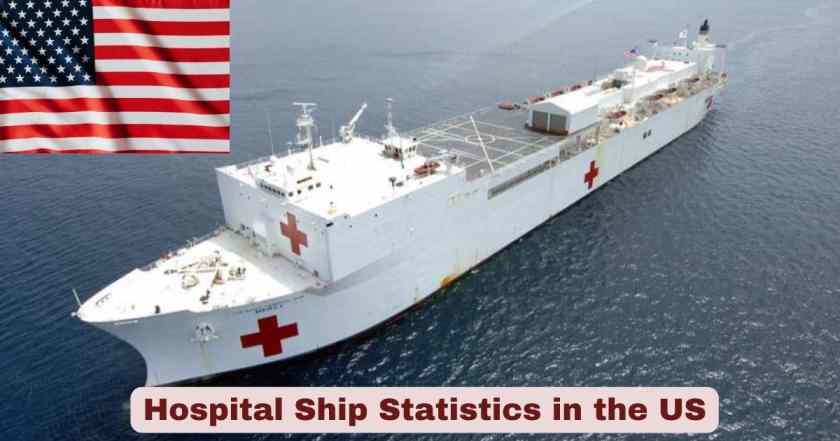
The United States Navy operates two dedicated hospital ships — the USNS Mercy (T-AH-19), homeported in San Diego, California, and the USNS Comfort (T-AH-20), homeported at Naval Station Norfolk, Virginia. Each vessel stretches 894 feet in length, displaces 69,552 tons, holds 1,000 patient beds, and runs 12 fully equipped operating rooms — making them the most capable afloat medical platforms in the world, and among the largest ships in the entire US Navy fleet. As of February 22, 2026, both ships are undergoing scheduled maintenance at Alabama Shipyard in Mobile, Alabama, moored alongside each other for the first time in 30 years, according to the shipyard’s own announcement on January 23. On this same date, President Donald Trump announced plans to send a hospital ship to Greenland — a move that instantly placed these vessels at the center of US foreign policy and military planning in 2026. Since 2001, the Mercy and Comfort have together impacted the lives of more than 580,000 individuals through combat support, disaster relief, and humanitarian missions across every major ocean on Earth.
Beyond the two legacy ships, 2026 also marks a turning point for the entire US afloat medical program. The Navy is currently building three Bethesda-class Expeditionary Medical Ships (EMS) under an $867.6 million contract with Austal USA, with the lead vessel — USNS Bethesda (T-EMS-1) — scheduled for delivery by December 2026. The new class is designed to travel at speeds exceeding 30 knots, nearly double the 17.5-knot top speed of the Mercy and Comfort, and its 4.5-meter shallow draft allows direct port access in locations the legacy ships cannot reach. With 4 operating rooms and 124 medical beds, the Bethesda class is built for rapid surgical stabilization rather than full hospital-level sustained care — a deliberate complement to the larger ships rather than a replacement. Together, the Mercy-class and the incoming Bethesda-class represent the most significant expansion of US Navy medical capability in 35 years, and both programs are actively advancing right now in 2026.
Interesting Key Facts — Hospital Ships in the US 2026
The facts below are drawn exclusively from verified US government sources, US Navy official releases, DVIDS (Defense Visual Information Distribution Service), the Military Sealift Command, gCaptain maritime news (published February 22, 2026), the Navy Medicine Fast Facts Special Edition (2025), and the US Navy Bureau of Medicine and Surgery.
| Key Fact | Verified Statistics |
|---|---|
| Total US Navy dedicated hospital ships currently in service | 2 — USNS Mercy (T-AH-19) and USNS Comfort (T-AH-20) |
| Current status of both ships (February 22, 2026) | Both moored at Alabama Shipyard, Mobile, AL — first time alongside each other in 30 years |
| Length of each Mercy-class hospital ship | 894 feet (~3 football fields) |
| Beam (width) of each Mercy-class hospital ship | 106 feet |
| Displacement of each Mercy-class hospital ship | 69,552 tons |
| Maximum speed | 17.5 knots |
| Patient bed capacity per ship | 1,000 beds |
| Intensive Care Unit (ICU) beds per ship | 80 ICU beds |
| Operating rooms per ship | 12 fully equipped ORs |
| Isolation ward beds per ship | 11 isolation ward beds |
| Blood bank capacity per ship | Up to 5,000 units of plasma/blood |
| Potable water production capacity (USNS Mercy) | 200,000 gallons per day |
| Aviation fuel capacity (USNS Mercy) | 90,000 gallons |
| Ship fuel capacity (USNS Mercy) | 42,000 barrels |
| Maximum personnel on board (full activation) | Up to 1,200 military medical + 71 civilian mariners |
| Skeleton/reduced-operating crew (USNS Mercy, homeport) | ~8 officers, 53 enlisted, 15 civilian mariners |
| Activation time from reduced operating status to fully operational | 5 days |
| Year USNS Mercy entered service | November 8, 1986 (commissioned; 40th anniversary of launch in 2025) |
| Year USNS Comfort entered service | December 1, 1987 |
| Original identity of USNS Mercy | SS Worth — San Clemente-class oil tanker, built 1976 |
| Original identity of USNS Comfort | SS Rose City — San Clemente-class oil tanker, built 1976 |
| Conversion cost per vessel (1980s) | $208 million per ship |
| Conversion duration | 35 months per ship |
| Builder of both ships | National Steel and Shipbuilding Company, San Diego, CA |
| People impacted by Mercy & Comfort humanitarian missions since 2001 | 580,000+ individuals |
| Total US hospital ships in Navy history | 27 ships (including current two) |
| Only hospital ship built from the ground up | USS Relief, commissioned 1920 |
| USNS Mercy maintenance contract (2025–2026) at Alabama Shipyard | $18.7 million firm-fixed-price, 153-calendar-day mid-term availability |
| USNS Comfort — Continuing Promise 2025 mission duration | 79 days (departed May 30, returned Aug. 17, 2025) |
| Patients treated during Continuing Promise 2025 | 12,616 patients across 6 countries |
| Surgeries performed during Continuing Promise 2025 | 242 surgeries |
| Prescriptions filled during CP25 | 17,166 prescriptions |
| Eyeglasses/sunglasses distributed during CP25 | 7,429 pairs |
| Medical equipment restored during CP25 (dollar value) | $2,235,000 worth |
| New hospital ship class under construction | Bethesda-class Expeditionary Medical Ship (EMS) |
| Contract value for 3 new EMS ships | $867.6 million (awarded December 2023, Austal USA) |
| Lead ship name | USNS Bethesda (T-EMS-1) |
| Planned delivery of USNS Bethesda | December 2026 |
| EMS maximum speed | 30+ knots (vs. Mercy/Comfort’s 17.5 knots — nearly double) |
| EMS cruise speed and range | 24 knots at 5,500 nautical miles range |
| EMS operating rooms | 4 operating rooms (vs. 12 on legacy ships) |
| EMS medical beds | 124 beds (acute care, acute isolation, ICU, ICU isolation) |
| EMS builder | Austal USA, Mobile, Alabama |
| Today’s breaking development | President Trump announced February 22, 2026 — US sending hospital ship to Greenland |
Data Sources: US Navy Bureau of Medicine and Surgery, Navy Medicine Fast Facts — Mercy-Class Ships, Special Edition 2025; DVIDS “USNS Comfort Returns Home After Continuing Promise 2025,” August 18, 2025; gCaptain “Trump Announces Greenland Hospital Ship Mission,” February 22, 2026; Military Sealift Command official vessel data; Indo-Pacific Defense Forum, February 21, 2025; US Naval Institute News (USNI); Stars and Stripes; SECNAV naming press release, January 8, 2024; Austal USA / Shephard Media, December 2023; Wikipedia USNS Mercy and USNS Comfort (updated through February 2026).
The numbers above tell a story about two ships that have quietly been doing extraordinary work for nearly four decades. The $208 million conversion cost per vessel in the 1980s — equivalent to over $650 million in 2026 dollars — created platforms that have proved resilient far beyond what their designers anticipated. 580,000+ individuals have been impacted by Mercy and Comfort humanitarian missions since 2001 alone, a figure that does not include the hundreds of thousands of patients treated in the Cold War era, during Operations Desert Shield and Desert Storm in 1990–1991, and across more than two decades of Pacific Partnership and Latin American humanitarian cruises. The 12 fully equipped operating rooms on each ship, the 80 ICU beds, the 5,000-unit blood bank, and the capacity to produce 200,000 gallons of potable water daily make each vessel the functional equivalent of a major regional hospital — floating, deployable anywhere in the world within five days of activation. As of today, both ships sit in a Mobile, Alabama shipyard for the first time in 30 years, yet they remain on a hair-trigger readiness posture, capable of departing for a combat theater, disaster zone, or — as announced today — Greenland on extremely short notice.
The new Bethesda-class EMS ships, funded at $867.6 million for three vessels, represent a fundamentally different philosophy of afloat medical care. Where the legacy Mercy-class ships are massive, slow (17.5 knots), deep-draft vessels that must often anchor a mile offshore because they cannot access shallow ports, the USNS Bethesda will cruise at 24 knots and achieve bursts above 30 knots — nearly double the top speed of the current hospital ships. With a shallow draft enabling direct access to austere ports, the EMS class can pull dockside at smaller facilities where the Mercy and Comfort must anchor at sea and ferry patients by helicopter or boat. The 4 operating rooms and 124-bed capacity are smaller than the legacy ships but surgically optimized for the distributed, fast-moving nature of modern naval warfare and the Indo-Pacific operational environment the Navy is preparing for. The $867.6 million contract covers three ships with a completion target of May 2030, with the lead ship USNS Bethesda planned for delivery by December 2026 — a milestone that would mark the first new US medical ship in 35 years.
USNS Mercy (T-AH-19) Statistics in the US 2026
The USNS Mercy is the lead ship of her class and the oldest continuously serving US hospital ship in commission. In 2026, she marks the 40th anniversary of her commissioning and the 50th year since her hull was first laid down as an oil tanker.
| USNS Mercy Specification / Fact | Verified Data (2026) |
|---|---|
| Hull designation | T-AH-19 |
| Class | Mercy-class (lead ship) |
| Homeport | Naval Base San Diego, California |
| Current location (February 22, 2026) | Alabama Shipyard, Mobile, Alabama (maintenance) |
| Fleet assignment | US Pacific Fleet |
| Length | 894 feet (272.5 meters) |
| Beam | 106 feet (32.3 meters) |
| Displacement | 69,552 tons |
| Maximum speed | 17.5 knots |
| Date commissioned / placed in service | November 8, 1986 |
| 40th anniversary year | 2026 |
| Built as | Oil tanker SS Worth (1976), National Steel and Shipbuilding Co., San Diego |
| Conversion to hospital ship | July 1984 – November 1986 (35 months) |
| Conversion cost | $208 million |
| Maintenance contract (2025–2026) | $18.7 million, Alabama Shipyard — 153-calendar-day mid-term availability |
| Last major mission | Pacific Partnership 2024 — humanitarian mission, Indo-Pacific |
| Surgeries conducted during PP24 (aboard ship and ashore) | 74 surgeries (Marshall Islands, Micronesia, Palau, Solomon Islands) |
| Reduced operating status crew | ~8 officers, 53 enlisted, 15 civilian mariners |
| Full operating status personnel | Up to 1,300 personnel |
| Beds | 1,000 patient beds (including 80 ICU, 11 isolation) |
| Operating rooms | 12 fully equipped ORs |
| Blood bank | Up to 5,000 units of plasma/blood |
| Radiology | Full digital radiology suite |
| Potable water production | 200,000 gallons per day |
| Aviation fuel storage | 90,000 gallons |
| Ship fuel storage | 42,000 barrels |
| Oxygen production | 2 oxygen-producing plants |
| Helicopter capability | V-22 Osprey and MH-60 Seahawk (flight deck added 2020) |
| NATO medical role classification | Role III Medical Treatment Facility |
| Largest single mission patient tally (PP2010) | 109,754 patients treated, 1,580 surgeries |
Data Sources: US Navy Bureau of Medicine and Surgery, Navy Medicine Fast Facts — Mercy-Class Ships (Special Edition 2025); DVIDS / US Navy official vessel data; Indo-Pacific Defense Forum, February 21, 2025; gCaptain, February 22, 2026; USNS Mercy Wikipedia (updated December 2025); US Military Sealift Command.
The USNS Mercy’s record across 40 years of service is remarkable for a ship that was never originally designed to be a hospital at all. What began as the oil tanker SS Worth in 1976 was reborn through a 35-month, $208 million conversion into the most capable floating hospital in US Navy history. In 2026, her most recent deployment — Pacific Partnership 2024 (PP24), the largest humanitarian assistance and disaster relief mission in the Indo-Pacific — saw US Navy and partner nation surgeons conduct 74 surgeries aboard the ship and at shore-based hospitals in the Marshall Islands, Micronesia, Palau, and the Solomon Islands. The Pacific Partnership mission series, which Mercy has participated in since its inaugural deployment in 2006, exemplifies the dual role these ships play: training military medical teams while simultaneously delivering free, high-quality care to nations with limited healthcare infrastructure. As of February 22, 2026, Mercy remains in drydock at Alabama Shipyard under her $18.7 million maintenance contract — which, when complete, will return her to operational readiness for whatever comes next, whether that is another Pacific Partnership rotation, a response to a natural disaster, or the Greenland deployment announced today by President Trump.
The USNS Mercy’s single greatest humanitarian mission by patient volume came during Pacific Partnership 2010, when her teams treated an extraordinary 109,754 patients and performed 1,580 surgeries across Vietnam, Cambodia, Indonesia, and East Timor. During Pacific Partnership 2008, despite the mission being disrupted when one of the ship’s helicopters was shot at in Mindanao, the deployment still resulted in 91,000 patients treated and 1,369 surgeries performed. The 2020 COVID-19 deployment to Los Angeles — while operationally limited due to the unprecedented nature of the pandemic — saw Mercy arrive at the Port of Los Angeles on March 27, 2020 to serve as a referral hospital for non-COVID patients, freeing up land-based facilities for the viral surge. The flight deck added during Mercy’s 2020 maintenance period — which now accommodates both the V-22 Osprey and MH-60 Seahawk — significantly expanded her helicopter operational capabilities, allowing her to receive patients from a wider area at sea and ashore. This upgrade, combined with the ship’s 2025–2026 maintenance period at Alabama Shipyard, ensures that Mercy enters the next phase of her service life with meaningfully enhanced tactical reach.
USNS Comfort (T-AH-20) Statistics in the US 2026
The USNS Comfort is the second and most recently delivered Mercy-class hospital ship, commissioned in December 1987, and has built one of the most storied humanitarian deployment records of any naval vessel in US history.
| USNS Comfort Specification / Fact | Verified Data (2026) |
|---|---|
| Hull designation | T-AH-20 |
| Class | Mercy-class |
| Homeport | Naval Station Norfolk, Virginia |
| Current location (February 22, 2026) | Alabama Shipyard, Mobile, Alabama (maintenance) |
| Fleet assignment | US Fleet Forces Command |
| Length | 894 feet (272.5 meters) |
| Beam | 106 feet (32.3 meters) |
| Displacement | 69,552 tons |
| Maximum speed | 17.5 knots |
| Date commissioned / placed in service | December 1, 1987 |
| Built as | Oil tanker SS Rose City (1976), National Steel and Shipbuilding Co., San Diego |
| Conversion cost | $208 million |
| Former homeport (until 2013) | Baltimore, Maryland |
| Move to Norfolk (2013) — estimated savings | $2 million per year |
| Most recent deployment | Continuing Promise 2025 (CP25) — May 30 to August 17, 2025 |
| CP25 duration | 79 days |
| CP25 countries visited | Grenada, Panama, Ecuador, Dominican Republic, Costa Rica, Trinidad & Tobago (6 countries) |
| CP25 patients treated | 12,616 patients |
| CP25 surgeries performed | 242 surgeries |
| CP25 dental patients | 1,919 dental patients |
| CP25 prescriptions filled | 17,166 prescriptions |
| CP25 glasses/sunglasses distributed | 7,429 pairs |
| CP25 medical equipment restored (value) | $2,235,000 |
| Partnership for the Americas 2007 — patients treated | 98,000+ patients, 386,000 patient encounters, 1,100 surgeries |
| COVID-19 2020 (New York) — patients treated | 179 patients (March 30 – April 30, 2020) |
| Beds | 1,000 patient beds (including 80 ICU, 11 isolation) |
| Operating rooms | 12 fully equipped ORs |
| Blood bank | Up to 5,000 units of plasma/blood |
| NATO medical role classification | Role III Medical Treatment Facility |
| First combat deployment | Operation Desert Shield / Desert Storm (1990–1991) |
| Crew authorized Combat Action Ribbon | Yes — February 26, 1991 (Iraqi Silkworm missile threat, Persian Gulf) |
Data Sources: DVIDS “USNS Comfort Returns Home After Continuing Promise 2025,” August 18, 2025; US Navy official press release; US Navy Bureau of Medicine and Surgery, Navy Medicine Fast Facts (Special Edition 2025); gCaptain, February 22, 2026; USNS Comfort Wikipedia (updated February 2026); Military Sealift Command; GlobalSecurity.org, August 2025.
The USNS Comfort’s 2025 mission record is among the most operationally productive of her recent deployments. Continuing Promise 2025 (CP25) — a 79-day humanitarian mission from May 30 to August 17, 2025 — saw Comfort’s medical teams treat 12,616 patients across six countries: Grenada, Panama, Ecuador, Dominican Republic, Costa Rica, and Trinidad and Tobago. The surgical team aboard ship performed 242 surgeries, including cataract removals, hernia repairs, and cleft lip corrections — procedures that carry life-changing significance for patients in communities with limited surgical access. 1,919 dental patients were seen, 17,166 prescriptions filled, and 7,429 pairs of glasses and sunglasses distributed. Perhaps most striking from a logistical standpoint, the biomedical crew restored $2,235,000 worth of medical equipment — sterilizers, defibrillators, microscopes, X-ray units, and anesthesia machines — in host-nation hospitals, extending the impact of the mission well beyond the patients treated directly onboard. CP25 also marked a significant structural achievement: no Continuing Promise deployments occurred in 2021, 2023, or 2024, making 2025 the first year in several years that the ship executed a full-length humanitarian Latin American mission.
The USNS Comfort’s combat and disaster history stretches back to 1990, when the ship was activated for Operation Desert Shield and Desert Storm in the Persian Gulf. The vessel’s crew is one of the few in the US Navy to hold the Combat Action Ribbon — awarded for the February 26, 1991 period when Iraqi Silkworm missiles were fired in the vicinity of Comfort’s position in the Persian Gulf, making it one of the most unusual decorations in the history of a vessel explicitly defined as a non-combatant under the Geneva Conventions. Comfort’s humanitarian landmark was the Partnership for the Americas 2007 deployment, during which her embarked team of 900+ personnel visited 12 Central American, South American, and Caribbean nations, treating 98,000+ patients, recording 386,000 patient encounters, and performing 1,100 surgeries in what became one of the largest single-deployment medical humanitarian efforts in US naval history. From Hurricane Katrina (2005) to the Haiti earthquake (2010) to Hurricane Maria (2017) to COVID-19 (2020) to CP25 (2025), Comfort has answered every call — a record of sustained responsiveness that, now in its 38th year of service, remains unmatched in American naval medicine.
New Bethesda-Class Expeditionary Medical Ship Statistics in the US 2026
The Bethesda-class Expeditionary Medical Ship represents the most significant new addition to US afloat medical capability in 35 years, designed to be faster, more agile, and capable of reaching locations that the USNS Mercy and Comfort cannot.
| Bethesda-Class EMS Specification / Fact | Verified Data (2026) |
|---|---|
| Class name | Bethesda-class Expeditionary Medical Ship (EMS) |
| Lead ship | USNS Bethesda (T-EMS-1) |
| Second ship | USNS Balboa (named October 2023) |
| Total ships contracted | 3 ships |
| Contract value | $867.6 million (Austal USA, December 2023) |
| Builder | Austal USA, Mobile, Alabama |
| Contract completion deadline | May 2030 |
| Planned delivery of USNS Bethesda | December 2026 |
| Named after | Naval Support Activity Bethesda, MD (home of Walter Reed NMMC, serving military since 1942) |
| Naming announced | May 15, 2023, by Secretary of the Navy Carlos Del Toro |
| Naming ceremony | January 2024 |
| Base design | Spearhead-class Expeditionary Fast Transport (EPF) — larger hull, redesigned for seakeeping |
| Hull designation | T-EMS-1 (also EPF-17 in planning documents) |
| Hull form | Catamaran |
| Original design length | ~118 meters (387 feet) |
| Beam | ~30 meters |
| Draft | 4.5 meters (shallow draft — key advantage over legacy ships) |
| Maximum speed | 30+ knots |
| Cruise speed and range | 24 knots / 5,500 nautical miles |
| Operating rooms | 4 operating rooms |
| Medical beds | 124 beds (acute care, acute isolation, ICU, ICU isolation) |
| Patient transfer boats | Two 11-meter rigid-hulled inflatable boats (RHIBs) |
| Flight deck capacity | Single V-22 Osprey OR H-53K OR H-60 helicopter |
| Medical capabilities | Triage/critical care, OR, lab, radiology, blood bank, dental, mental health, OB/GYN, primary care, CSAR |
| Key innovation vs. legacy ships | Shallow draft enables direct port access; nearly 2x faster than USNS Mercy/Comfort |
| Purpose | Supplement (not replace) USNS Mercy and USNS Comfort |
| Designation vs. legacy ships | “Ambulance ship” vs. full hospital ship — rapid stabilization + evacuation focus |
| EPF Flight II ships (medical variants) | USNS Cody (EPF-14), EPF-15, EPF-16 — Role 2 Enhanced Medical Transport capability |
| EPF Flight II OR capacity | 2 operating rooms per ship |
| EPF Flight II ICU beds | 10 ICU beds per ship |
| EPF Flight II acute ward beds | 23 acute ward beds per ship |
Data Sources: USNI News “SECNAV Del Toro Names Next-Generation Hospital Ship Bethesda,” January 8, 2024; US Navy official press release, May 15, 2023; Stars and Stripes, January 10, 2024; Austal USA / Shephard Media, December 2023; Naval News, May 2023; The War Zone, April 2022; Nice News, April 2025; Military Wiki — USNS Bethesda (December 2025).
The Bethesda-class EMS program is the Navy’s answer to a question that has been debated for decades: what happens when you need afloat surgical capability somewhere the Mercy or Comfort cannot go? At 69,552 tons displacement and 894 feet in length, the legacy hospital ships are magnificent but strategically inflexible — they draw so much water that they must often anchor offshore, ferrying patients by small boat or helicopter rather than pulling directly alongside a pier. The USNS Bethesda’s 4.5-meter draft resolves this problem entirely, allowing the ship to enter shallow, austere ports and moor directly alongside in places that the Mercy and Comfort approach only from a distance. The speed advantage is equally significant: while Mercy and Comfort top out at 17.5 knots, the Bethesda-class can cruise at 24 knots and sprint above 30 knots — in practical terms, the EMS can reach a crisis zone in roughly half the time of the legacy ships, a difference that is measured in saved lives when surgical stabilization is the mission. The $867.6 million contract covering all three ships represents a unit cost of approximately $289 million per vessel, making the EMS class significantly more affordable than comparable capability additions and reflecting the program’s basis in the already-proven EPF hull form.
The relationship between the new Bethesda-class ships and the legacy USNS Mercy and Comfort is explicitly additive rather than substitutional — the Navy has confirmed that Mercy and Comfort will continue to be sustained even as the EMS class enters service. The legacy ships classify as NATO Role III Medical Treatment Facilities — the highest level of afloat medical care, capable of complex multidisciplinary surgery, ICU-level intensive care, and full diagnostic services. The Bethesda-class is designed more as what Navy Surgeon General Rear Admiral Darin Via described as an “ambulance ship” — optimized for rapid stabilization and forward evacuation rather than sustained hospital-level care. The EPF Flight II variants (USNS Cody and two follow-on ships) add an intermediate tier with 2 operating rooms, 10 ICU beds, and 23 acute ward beds each, building a layered medical response pyramid: EPF Flight II for forward triage, Bethesda-class EMS for stabilization and surgical intervention, and Mercy/Comfort as the definitive afloat treatment facility. Together, these three tiers represent the most comprehensive expansion of US afloat medical capability in the history of the Military Sealift Command.
US Hospital Ship Mission History Statistics in the US 2026
Since 1986, USNS Mercy and USNS Comfort have deployed on more than 50 combined missions spanning combat support, disaster relief, and humanitarian assistance across virtually every ocean on Earth.
| Mission / Operation | Ship | Year | Key Statistics |
|---|---|---|---|
| Operation Desert Shield / Desert Storm | Both | 1990–1991 | First combat deployment for both ships; Persian Gulf |
| Operations Sea Signal / Uphold Democracy | Comfort | 1994 | Cuban and Haitian migrant medical support; 250-bed configuration |
| Operation Unified Assistance (2004 Indian Ocean Tsunami) | Mercy | 2004–2005 | 107,000+ patient services in tsunami-devastated SE Asia |
| Pacific Partnership 2006 (inaugural) | Mercy | 2006 | First deployment of Pacific Partnership series — Philippines, Indonesia |
| Partnership for the Americas 2007 | Comfort | 2007 | 98,000+ patients, 386,000 encounters, 1,100 surgeries, 12 nations |
| Pacific Partnership 2008 | Mercy | 2008 | 91,000 patients, 1,369 surgeries despite security incident in Mindanao |
| Pacific Partnership 2010 | Mercy | 2010 | 109,754 patients, 1,580 surgeries — largest single-mission patient tally |
| Operation Unified Response (Haiti Earthquake) | Comfort | 2010 | Major disaster response; Haiti earthquake relief |
| Operation Iraqi Freedom | Comfort | 2003 | Combat support mission |
| Hurricane Katrina / Rita response | Comfort | 2005 | Domestic disaster response |
| Hurricane Maria (Puerto Rico) | Comfort | 2017 | Post-hurricane humanitarian support |
| COVID-19 DSCA — Los Angeles | Mercy | 2020 | Referral hospital for non-COVID patients; arrived March 27, 2020 |
| COVID-19 DSCA — New York | Comfort | 2020 | 179 patients treated; departed April 30, 2020 |
| Continuing Promise 2022 | Comfort | 2022 | Latin America / Caribbean humanitarian mission |
| Pacific Partnership 2022 | Mercy | 2022 | Vietnam, Palau, Philippines, Solomon Islands |
| Pacific Partnership 2024 | Mercy | 2024 | 74 surgeries — Marshall Islands, Micronesia, Palau, Solomon Islands |
| Continuing Promise 2025 | Comfort | 2025 | 12,616 patients, 242 surgeries, $2.235M equipment restored — 6 countries; 79 days |
| Combined people impacted since 2001 | Both | 2001–2026 | 580,000+ individuals |
Data Sources: US Navy Bureau of Medicine and Surgery, Navy Medicine Fast Facts — Mercy-Class Ships (Special Edition 2025); DVIDS “USNS Comfort Returns Home After Continuing Promise 2025,” August 18, 2025; Indo-Pacific Defense Forum, February 21, 2025; USNS Mercy and USNS Comfort Wikipedia entries (updated through February 2026); GlobalSecurity.org; US SOUTHCOM official CP25 mission page.
The combined mission record of USNS Mercy and USNS Comfort across 40 years of service is one of the most consequential in the history of US naval medicine. From their first combat deployment together in Operation Desert Shield (1990) through the Pacific Partnership missions of the 2000s and 2010s, through Hurricane Katrina, the Haiti earthquake, Hurricane Maria, COVID-19, and the Continuing Promise 2025 deployment completed just six months ago, these two ships have been at the sharp end of every major American military and humanitarian medical response of the modern era. The 109,754 patients treated and 1,580 surgeries performed during Pacific Partnership 2010 alone represent a volume that would be impressive for a major urban medical center over a full year, accomplished aboard a moving vessel in waters off Vietnam, Cambodia, Indonesia, and East Timor over a period of months. The 107,000+ patient services delivered during Operation Unified Assistance following the 2004 Indian Ocean tsunami — one of the deadliest natural disasters in recorded history — demonstrated these ships’ ability to mobilize in true crisis conditions and deliver care at a scale no other platform could match. Since 2001, across all missions combined, 580,000+ individuals have had their lives touched by Mercy and Comfort — a figure that understates the true generational impact of these ships, as patients treated for cleft lips, cataracts, hernias, or dental disease carry the effects of their treatment for a lifetime.
The operational rhythm of the two ships is also revealing. Mercy and Comfort each deploy roughly every one to two years for three to four months, with substantial preparation time involving crew training, medical supply loading, and systems readiness verification. The quarterly exercises — MERCEX for Mercy and COMFEX for Comfort — involve over 300 personnel drilling in crawl-walk-run progressions to ensure the ships can execute their five-day activation timeline reliably across years of reduced-operating-status homeport standby. The $2 million per year in savings generated by Comfort’s 2013 move from Baltimore to Norfolk is a small but telling data point: these ships are expensive to maintain and operate, and every efficiency gain matters across a program that the Navy has committed to sustaining indefinitely, even as the Bethesda-class EMS program comes online. As of February 22, 2026, with both ships in Mobile for the first time in 30 years and President Trump already announcing a potential hospital ship deployment to Greenland, the strategic relevance of US hospital ships has rarely felt more immediate — or more globally significant.
US Hospital Ship Readiness and Fleet Comparison in the US 2026
Understanding how US hospital ships compare in size, capability, and context to the broader naval medical ecosystem is critical to appreciating their strategic role in 2026.
| Metric | USNS Mercy / Comfort (Mercy-class) | USNS Bethesda (Bethesda-class EMS) | USS Gerald R. Ford (Aircraft Carrier medical facility) |
|---|---|---|---|
| Medical role classification | NATO Role III | Role 2 Enhanced / Stabilization | Role II (ship’s medical department) |
| Patient beds | 1,000 beds per ship | 124 beds | 41-bed hospital ward |
| ICU beds | 80 ICU beds | ICU isolation included in 124 | 3-bed ICU |
| Operating rooms | 12 ORs | 4 ORs | 1 OR |
| Ship length | 894 feet | ~387 feet | 1,106 feet (carrier) |
| Displacement | 69,552 tons | ~4,000 tons (estimated) | 100,000 tons |
| Max speed | 17.5 knots | 30+ knots | 30+ knots (carrier) |
| Draft | Deep (limits port access) | 4.5 meters (shallow) | Deep |
| Blood bank | 5,000 units | Blood bank included | Limited |
| Primary mission | Dedicated hospital ship | Surgical stabilization + evacuation | Combat operations support |
| Helicopter ops | V-22 Osprey, MH-60 Seahawk | V-22, H-53K, H-60 | Full carrier air wing |
| Crew (full activation) | 1,200 military medical + 71 civilian mariners | Smaller mixed crew | ~4,500–5,000 crew |
| Activation time | 5 days from ROS | Faster (designed for rapid response) | Continuously operational |
| Offensive weapons | None (Geneva Convention) | None | Full combat systems |
| Red Cross marking | Yes — large red crosses on hull | Yes | No |
Data Sources: US Navy Bureau of Medicine and Surgery, Navy Medicine Fast Facts (Special Edition 2025); American College of Cardiology “Navy Shipboard Medicine” feature (November 2023); USNI News; US Navy official specifications; Austal USA / Bethesda-class program documentation.
The readiness comparison between US hospital ship classes in 2026 highlights why the Navy is pursuing a three-tiered approach rather than simply building more Mercy-class vessels. The USNS Mercy and Comfort, at 69,552 tons and 894 feet, are the third-largest vessel class in the entire US Navy — surpassed only by the Nimitz-class and Gerald R. Ford-class aircraft carriers. Their 12 operating rooms dwarf every other ship’s medical capability: the Gerald R. Ford, with its $13 billion price tag and 100,000-ton displacement, carries only 1 operating room, a 3-bed ICU, and a 41-bed ward. Even the Nimitz-class carriers, which have slightly more expansive medical facilities than the Ford-class and can serve as the medical ship for an entire carrier strike group, carry nothing approaching the 1,000-bed, 80-ICU, 12-OR capability of a Mercy-class hospital ship. The difference is intentional: carriers are weapons of war first, while the Mercy and Comfort are hospitals that happen to float, carrying no offensive weapons whatsoever and protected by the Geneva Conventions and Hague Convention of 1907 as non-combatant vessels marked with large red crosses on the hull. The irony is that their size and distinctive markings — the very features that make them recognizable humanitarian assets — also make them large, slow radar targets that cannot easily maneuver, a vulnerability the Navy’s planners have acknowledged since at least 2004.
The Bethesda-class EMS addresses the maneuverability and access problem with a design philosophy built around speed and reach rather than scale. At approximately 4,000 tons displacement and 387 feet in length — roughly 1/17th the displacement and less than half the length of the legacy ships — USNS Bethesda can operate in environments that the Mercy and Comfort approach only with caution. The 30+ knot speed capability is particularly significant in the Indo-Pacific context: in a conflict scenario involving island-chain warfare or distributed maritime operations — the doctrine the US Marine Corps and Navy are now explicitly building toward — the ability to move a surgical capability quickly between positions could determine whether wounded troops receive damage-control surgery in time to survive. The EPF Flight II variants (USNS Cody and two sister ships), with their 2 ORs, 10 ICU beds, and 23 acute ward beds each, add a third layer that can push even further forward in a combat or disaster scenario, creating a stepped medical evacuation chain from small forward ships all the way back to the massive Mercy-class floating hospitals. This three-tier architecture — EPF Flight II, Bethesda-class EMS, and Mercy-class T-AH — represents the most structured and deliberately designed US afloat medical system since the Navy built the original Mercy and Comfort more than 35 years ago.
Disclaimer: This research report is compiled from publicly available sources. While reasonable efforts have been made to ensure accuracy, no representation or warranty, express or implied, is given as to the completeness or reliability of the information. We accept no liability for any errors, omissions, losses, or damages of any kind arising from the use of this report.