
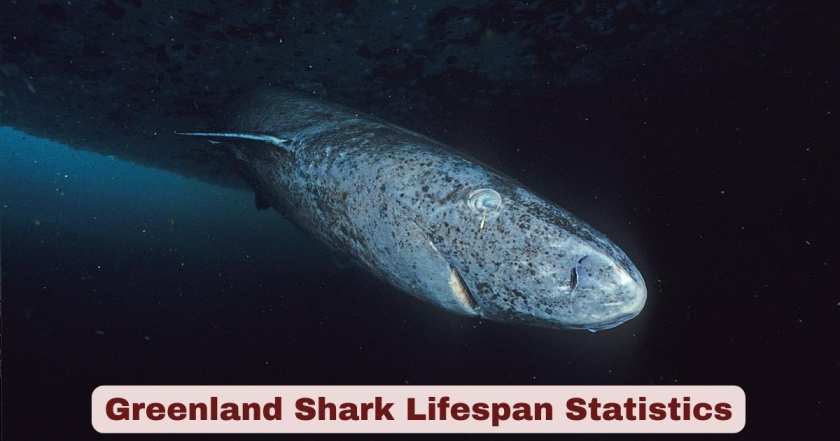
Greenland Shark Lifespan
The Greenland shark (Somniosus microcephalus) holds the extraordinary distinction of being the longest-lived vertebrate on Earth, with scientific research published in the journal Science in 2016 documenting individuals living at least 272 years and the oldest specimen estimated at 392 ± 120 years – meaning this remarkable creature could potentially reach 512 years old at the upper end of the confidence interval. This groundbreaking discovery by marine biologists Julius Nielsen, John Fleng Steffensen, and colleagues from the University of Copenhagen employed revolutionary radiocarbon dating of eye lens proteins that form before birth and remain metabolically inactive throughout the shark’s entire life, functioning like fossilized tissue preserved in amber that records the carbon-14 signature from the animal’s birth year. The research analyzed 28 female Greenland sharks ranging from 81 to 502 centimeters in length that were accidentally caught as bycatch in fishing nets across the North Atlantic, with the two largest specimens at 493 and 502 centimeters estimated to be approximately 335 and 392 years old respectively, suggesting that some Greenland sharks alive today were born during the reign of King James I of England in the 1610s-1620s, swimming through the oceans before Shakespeare died, before the American Revolution, before both World Wars, and continuing to patrol the frigid Arctic waters in 2026.
The biological implications of this extreme longevity extend far beyond mere curiosity, as Greenland sharks do not reach sexual maturity until approximately 150-156 years of age, creating the longest childhood of any known animal and raising profound conservation concerns given that individuals reproducing today may have been juveniles during the American Civil War in the 1860s. The species’ exceptional lifespan stems from multiple physiological adaptations including an extremely slow metabolism suited to the deep, cold waters they inhabit (temperatures near freezing at -1°C to 10°C), remarkably slow growth rates of just 0.5 to 1 centimeter per year making them among the slowest-growing vertebrates, and recently discovered genetic advantages including multiple copies of DNA repair genes and enhanced tumor suppression mechanisms that protect against cancer over centuries of cellular aging. Recent genome sequencing published in 2024-2025 revealed that Greenland sharks possess approximately 22,634 genes and 6.45 billion base pairs – roughly twice the size of the human genome – with significantly increased copies of genes involved in the NF-κB signaling pathway that regulates immune responses and inflammation, as well as an altered version of the critical TP53 “guardian of the genome” gene that suppresses tumors and repairs DNA damage, providing molecular explanations for how these ancient predators avoid the cancer and cellular degradation that limits lifespan in other vertebrates.
Interesting Facts About Greenland Shark Lifespan Statistics
| Key Lifespan Fact Category | Statistical Data | Source / Period |
|---|---|---|
| Minimum Confirmed Lifespan | At least 272 years | Science Journal, 2016 |
| Oldest Individual Estimated Age | 392 ± 120 years (midpoint) | Nielsen et al., 2016 |
| Age Range (Confidence Interval) | 272–512 years | 95.4% probability range |
| Longest-Lived Vertebrate | Confirmed record holder | Guinness / scientific consensus |
| Previous Record Holder | Bowhead whale: 211 years | Exceeded by 81–181+ years |
| Sexual Maturity Age | 150–156 ± 22 years | Science 2016 study |
| Largest Shark Length | 502 cm (16.5 ft) | 2016 study specimen |
| Largest Shark Estimated Age | ~392 years (born ~1624) | Nielsen et al., 2016 |
| Second-Largest Shark | 493 cm, ~335 years old | 2016 study |
| Growth Rate | 0.5–1 cm/year | Extremely slow growth |
| Growth Rate (Alternative) | 1 cm/year confirmed | 1936–1960s tagging |
| Birth Size | 42 cm | Newborn length |
| Sexual Maturity Size (Female) | 4.19 ± 0.04 m (419 cm) | ~150 years |
| Sexual Maturity Size (Male) | 2.84 ± 0.06 m (284 cm) | ~150 years |
| Study Sample Size | 28 female sharks | Nielsen et al., 2016 |
| Shark Size Range Studied | 81–502 cm | Full size spectrum |
| Radiocarbon Dating Method | Eye-lens protein analysis | Carbon-14 bomb pulse |
| Metabolic Rate | Extremely slow | Cold-water adaptation |
| Water Temperature Habitat | −1°C to 10°C (30–50°F) | Arctic waters |
| Maximum Depth Recorded | 2,200 m (7,200 ft) | Deep-sea observation |
| Genome Size | 6.45 billion base pairs | Genome sequencing 2024 |
| Total Genes | 22,634 genes | 2024 genomic analysis |
| DNA Repair Genes | 81 genes (multiple copies) | Enhanced repair |
| Maximum Size | Up to 7 m (23 ft) | Largest confirmed |
| Maximum Weight | >1,000 kg (2,200 lb) | Largest individuals |
| Historical Tagging Year | 1936 | Greenland fisheries study |
| Tagging Recapture | 1952 (16 years later) | Growth confirmation |
| Number Tagged (1930s) | 400+ sharks | Early research |
| Estimated Population Status | Vulnerable | IUCN Red List 2020 |
| Historical Catch Numbers | ~30,000/year | Early 1900s |
| Commercial Fishing Period | 19th century–1960 | Liver oil industry |
Data Sources: Nielsen et al. Science 2016 (DOI: 10.1126/science.aaf1703), NOAA Ocean Service, Wikipedia Greenland Shark, National Geographic 2024, Smithsonian Magazine 2025, Britannica Encyclopedia 2026, Discovery Wildlife, ScienceDaily 2016, The Biologist Journal, Multiple Scientific Sources
Analysis of Greenland Shark Exceptional Longevity and Age Determination
The revolutionary 2016 Science publication by Julius Nielsen and colleagues fundamentally transformed scientific understanding of vertebrate lifespan potential, with the 392 ± 120 year estimate for the oldest specimen representing not merely an incremental extension of known longevity records but rather a paradigm-shifting discovery that vertebrates can live more than twice as long as the previous record holder, the bowhead whale, which reaches approximately 211 years. The ± 120 year uncertainty range reflects inherent limitations in radiocarbon dating methodology rather than imprecision in the technique, with the 95.4% confidence interval spanning 272 to 512 years meaning scientists can state with high statistical certainty that this individual lived at least 272 years (already exceeding all other vertebrates by decades) while acknowledging the possibility it could have reached 512 years if it fell at the upper range of the distribution, though lead researcher John Fleng Steffensen emphasizes in subsequent interviews that “we have never said they were 400 years old – we just said at least 272 years” to correct media headlines that often cite the midpoint estimate as definitive fact.
The radiocarbon dating methodology employed represents one of the most ingenious applications of nuclear age science to marine biology, exploiting the “bomb pulse” of carbon-14 released into the atmosphere during 1950s nuclear weapons testing that subsequently infiltrated ocean ecosystems by the early 1960s, creating a time-stamped marker visible in any biological tissue that formed during or after this period. The researchers specifically analyzed crystalline proteins in the eye lens nucleus because these proteins form before birth and remain metabolically inactive throughout life, never degrading or being replaced, making them function like growth rings in trees except that instead of adding new rings annually, the eye lens preserves its original composition from the shark’s birth. The study identified two sharks less than 2.2 meters long that were born after the 1960s based on elevated carbon-14 signatures matching the bomb pulse, plus one shark born right around 1963, providing calibration points to construct a growth curve correlating shark length with age that could then estimate ages for larger, older sharks born before nuclear testing when carbon-14 levels were lower and stable.
Greenland Shark Age Estimates by Size and Growth Analysis
| Shark Length (cm) | Estimated Age (Years) | Age Range (95.4% CI) | Birth Year | Historical Context |
|---|---|---|---|---|
| 81 cm | Young juvenile | Post-1960s | ~1970s-2010s | Recent decades |
| 220 cm or less | <63 years | Showed bomb pulse | Post-1963 | Born after nuclear testing |
| 284 cm (male maturity) | ~150 years | Sexual maturity | ~1876 | During US Reconstruction |
| 419 cm (female maturity) | 150-156 years | ± 22 years range | ~1870-1876 | Post-Civil War era |
| 493 cm | ~335 years | Second-largest | ~1691 | During William & Mary reign UK |
| 502 cm | 392 years | 272-512 range | ~1624-1634 | James I of England era |
| 600+ cm theoretical | 400-500+ years | Extrapolated | 1526-1626 | Tudor/Stuart England |
Data Sources: Nielsen et al. Science 2016, Growth Curve Analysis, Historical Dating Calculations, Confidence Interval Extrapolations
The correlation between body length and age revealed through the 2016 study demonstrates the extraordinary patience required for these sharks to reach their massive adult sizes, with the growth rate of approximately 1 centimeter per year meaning a 5-meter (500 cm) shark has been growing continuously for approximately 500 years since its birth size of 42 centimeters, though this linear relationship may not hold perfectly across the entire lifespan as growth likely slows even further in the largest, oldest individuals. The sexual maturity threshold of 150-156 years when females reach 419 cm and males reach 284 cm represents the longest pre-reproductive period of any animal, with these juveniles spending more than a century and a half growing and maturing before they can participate in reproduction – meaning every pregnant female Greenland shark alive today was born before the American Civil War ended in 1865, swimming through the oceans as Abraham Lincoln served as president, as the Industrial Revolution transformed human societies, and through both World Wars before finally reaching reproductive age in the 21st century.
The largest specimen at 502 cm and 392 years old (midpoint estimate) would have been born around 1624 if the shark died during the 2010s sampling period, placing its birth during the reign of King James I of England who commissioned the King James Bible, just four years after the Mayflower landed at Plymouth Rock establishing the Plymouth Colony, and nine years after Shakespeare wrote his final plays. This individual would have been a juvenile when Isaac Newton published his laws of motion, approaching middle age during the American Revolution, reaching sexual maturity during the Victorian era, and finally entering old age as the 20th century began, having outlived entire human civilizations, empires, and historical eras that modern humans study as ancient history. If this shark survived to the upper end of its confidence interval at 512 years, it would have been born in 1514 during the reign of King Henry VIII, before the Protestant Reformation, before European colonization of the Americas, when Leonardo da Vinci was still alive creating his masterworks.
Greenland Shark Compared to Other Long-Lived Vertebrates
| Species | Maximum Lifespan | Longevity Method | Greenland Shark Advantage |
|---|---|---|---|
| Greenland Shark | 392 ± 120 years (272-512) | Radiocarbon dating eye lens | Longest-lived vertebrate |
| Bowhead Whale | 211 years | Amino acid racemization, harpoons | Shark lives 81-301 years longer |
| Rougheye Rockfish | 205 years | Otolith ring counting | Shark lives 67-307 years longer |
| Red Sea Urchin | 200+ years | Growth band analysis | Shark lives 72-312 years longer |
| Galapagos Tortoise | 190 years (Harriet specimen) | Historical records | Shark lives 82-322 years longer |
| Tuatara | ~100 years | Mark-recapture studies | Shark lives 172-412 years longer |
| Koi Fish | 226 years (Hanako specimen) | Scale ring counting | Shark lives 46-286 years longer |
| Ocean Quahog Clam | 507 years (Ming clam) | Shell ring counting | Longest-lived animal (non-vertebrate) |
| Glass Sponge | 15,000+ years | Growth rates | Longest-lived organism (colonial) |
| Elephant | ~70 years | Well-documented | Shark lives 202-442 years longer |
| Human (verified) | 122 years (Jeanne Calment) | Birth certificates | Shark lives 150-390 years longer |
| Human (biblical claim) | 969 years (Methuselah) | Religious text | Unverified, likely mythological |
Data Sources: Comparative Longevity Studies, Marine Biology Records, Vertebrate Aging Research, Guinness World Records, Scientific Literature Reviews
The Greenland shark’s 392-year lifespan (midpoint) exceeds the bowhead whale’s 211 years by a staggering 81 years at minimum (272 vs 211) and potentially 301 years (512 vs 211) at the upper confidence limit, representing an 38-142% longer lifespan than Earth’s second-longest-lived vertebrate. This margin of dominance is unprecedented in comparative biology, as typically record-holders in any category (speed, size, lifespan) exceed second-place by modest percentages rather than factors of nearly 2-2.5 times, suggesting that Greenland sharks have evolved truly exceptional longevity mechanisms that other vertebrates have not achieved. The bowhead whale, another Arctic species that inhabits cold waters and possesses slow metabolism, demonstrates that extreme longevity evolved independently in at least two vertebrate lineages adapted to polar marine environments, with both species showing enhanced DNA repair mechanisms and tumor suppression capabilities, though the Greenland shark’s additional century-plus of lifespan suggests even more sophisticated cellular maintenance systems.
Among other long-lived vertebrates, the rougheye rockfish at 205 years and various tortoise species reaching 150-190 years represent the next tier of exceptional longevity, yet all fall short of even the minimum 272-year estimate for Greenland sharks by substantial margins of 67-122 years, highlighting how the shark stands alone among vertebrates. Interestingly, when expanding comparison to all animals, the ocean quahog clam named “Ming” (killed during sampling in 2006) lived approximately 507 years based on shell ring counting, potentially exceeding even the Greenland shark’s upper age estimate and establishing molluscs as capable of extreme longevity through different mechanisms, though invertebrates face less stringent demands on maintaining complex organ systems compared to vertebrates with brains, hearts, circulatory systems, and sophisticated sensory apparatus that must function flawlessly across centuries. The human maximum verified lifespan of 122 years (Jeanne Calment of France, 1875-1997) represents less than one-third of the Greenland shark’s midpoint estimate, with humans living 270-390 years less than the oldest sharks, emphasizing how far modern medicine and lifestyle optimization remain from matching the natural longevity achieved by this remarkable species through evolutionary adaptation.
Genetic and Molecular Basis of Greenland Shark Longevity
| Genetic/Molecular Factor | Specific Finding | Functional Significance | Research Source |
|---|---|---|---|
| Genome Size | 6.45 billion base pairs | Double human genome (3.2B) | Genome sequencing 2024 |
| Total Genes | 22,634 genes | vs. human ~20,000-25,000 | University of Tokyo study |
| DNA Repair Genes | 81 genes with multiple copies | Enhanced damage correction | September 2024 preprint |
| TP53 Gene | Altered “guardian of genome” version | Superior tumor suppression | Leibniz Institute 2024 |
| NF-κB Pathway Genes | Significantly increased copies | Immune regulation, anti-inflammation | February 2025 bioRxiv |
| Transposon (“Jumping Genes”) | High abundance | May aid DNA repair vs. disruption | National Geographic 2024 |
| Telomere Maintenance | Under investigation | Potential chromosome protection | Future research target |
| DNA Methylation Patterns | Under investigation | Epigenetic age markers | Future research target |
| P53 Protein | Enhanced tumor suppression | Prevents cancer over centuries | TP53 gene product |
| Cold-Adapted Proteins | Specialized enzyme forms | Function at near-freezing temps | Physiological adaptation |
| Urea-Based Osmoregulation | Extremely high tissue urea | Antifreeze effect, protein stability | Biochemical adaptation |
| Slow Metabolic Rate | Minimal oxygen/energy use | Reduces oxidative stress | Physiological measurement |
| Low Reactive Oxygen Species | Reduced cellular damage | Less DNA/protein damage accumulation | Oxidative stress theory |
Data Sources: University of Tokyo Kinoshita et al. 2025, Leibniz Institute Aging Research 2024, National Geographic Greenland Shark Genome Coverage, Smithsonian Magazine 2025, Multiple Molecular Biology Studies
The 2024-2025 genome sequencing breakthroughs by international research teams provide the first molecular explanations for how Greenland sharks achieve their exceptional longevity, revealing that these ancient predators possess approximately 6.45 billion DNA base pairs organized into 22,634 genes – roughly twice the genetic material of humans whose genome contains 3.2 billion base pairs and 20,000-25,000 genes. This expanded genome includes critically important multiple copies of 81 genes involved in DNA repair mechanisms, suggesting that Greenland sharks have evolved redundant systems to correct the inevitable cellular damage that accumulates over centuries of living, with any individual gene copy remaining functional even if others become damaged through radiation, oxidative stress, or random mutations. The presence of abundant “jumping genes” or transposons that can duplicate themselves and insert into new genomic locations, typically considered disruptive in most organisms, appears to play a beneficial role in Greenland sharks by creating additional copies specifically of DNA repair genes, thus converting a usually harmful process into an advantage.
The altered TP53 gene discovered in Greenland sharks represents perhaps the most significant single finding, as this “guardian of the genome” produces the p53 protein that functions as the body’s primary defense against cancer by identifying damaged cells and either repairing their DNA or triggering programmed cell death (apoptosis) to prevent mutated cells from dividing and forming tumors. Humans and most vertebrates possess one version of TP53, with mutations in this gene underlying approximately 50% of all human cancers when the protein loses functionality and allows damaged cells to proliferate unchecked. The Greenland shark’s modified TP53 version appears to provide enhanced tumor suppression and more efficient DNA repair compared to other species, explaining how these sharks avoid developing cancer despite living 4-5 times longer than the longest-lived humans, with each additional century of life providing additional opportunities for cells to accumulate cancer-causing mutations that the enhanced TP53 system successfully prevents. Similarly, the dramatically increased copies of genes in the NF-κB signaling pathway that regulates immune responses, inflammation, and cell survival suggests Greenland sharks have evolved superior inflammatory control, as chronic inflammation accelerates aging across species by damaging tissues and promoting cancer, cardiovascular disease, and organ dysfunction.
Greenland Shark Sexual Maturity and Reproduction Statistics
| Reproductive Characteristic | Statistical Value | Comparison / Context |
|---|---|---|
| Age at Sexual Maturity | 150–156 ± 22 years | Longest childhood of any known animal |
| Female Sexual Maturity Length | 4.19 ± 0.04 m (419 cm) | Females must reach this size |
| Male Sexual Maturity Length | 2.84 ± 0.06 m (284 cm) | Smaller size than females |
| Gestation Period (Estimated) | 8–18 years | Among the longest gestation periods known |
| Gestation Period (Alternative Estimate) | At least 9 years, possibly longer | Suggested by recent research |
| Reproductive Mode | Ovoviviparous | Eggs hatch internally; live birth |
| Average Litter Size | ~10 pups per pregnancy | Estimated, not directly observed |
| Pup Size at Birth | ~42 cm | Starting length of newborns |
| Parental Care | None | Pups independent at birth |
| Reproductive Lifespan | ~200–350 years | From sexual maturity to death |
| Total Lifetime Offspring (Theoretical) | Very low (≈50–100 total) | Result of slow reproduction |
| Years Between Pregnancies | Unknown, likely decades | Long gestation limits frequency |
| Population Growth Rate | Extremely slow | Major conservation concern |
| Generation Time | ~200 years | Longest generation time of any vertebrate |
Data Sources: Nielsen et al. Science 2016, Britannica Encyclopedia, Wikipedia Greenland Shark, Reproductive Biology Studies, Conservation Assessments
The 150-156 year pre-reproductive period represents the most extreme delayed maturity documented in any animal species, with Greenland sharks spending more than a century and a half as juveniles growing from their 42-centimeter birth size to the 4+ meter lengths necessary for females to reproduce, effectively meaning that these sharks endure childhoods longer than the entire lifespan of bowhead whales (211 years), humans (122 years maximum), or any other vertebrate save fellow Greenland sharks. This extraordinarily long juvenile period reflects the physiological reality of their 0.5-1 cm per year growth rate, which makes reaching the 419 cm threshold for female sexual maturity require 377-419 years of growth from birth (though actual time is ~150 years due to slightly faster early growth), with males reaching their 284 cm maturity size somewhat faster but still requiring 242-284 centimeters of growth spanning approximately 150 years.
The gestation period estimated at 8-18 years would establish Greenland sharks as having the longest pregnancy of any vertebrate if confirmed, though this figure remains uncertain due to the extreme difficulty of studying reproduction in a species that inhabits depths to 2,200 meters, lives in near-freezing water (-1°C to 10°C) far from research stations, and breeds so infrequently that observing pregnancy in wild individuals proves nearly impossible given current technology. Recent research by Professor Steffensen’s team suggests gestation may be “at least nine years, and possibly even longer,” potentially extending to 12-15 years or more, which would make the entire reproductive process from conception to giving birth occupy more than a decade – longer than most mammals’ entire lifespans. If accurate, a female Greenland shark achieving reproductive age at 150 years and experiencing 9-18 year gestations could theoretically produce only 5-10 litters across her remaining 250+ years of life, yielding perhaps 50-100 total offspring if each litter contains the estimated 10 pups, though actual reproductive output likely falls lower given that females probably don’t breed continuously and may experience reproductive senescence as they approach extreme old age.
Greenland Shark Growth Rate and Size Statistics Throughout Life
| Life Stage | Approximate Age Range | Length Range | Growth Pattern |
|---|---|---|---|
| Newborn/Pup | 0 years | 42 cm | Birth size |
| Early Juvenile | 0-50 years | 42-92 cm | ~1 cm/year growth |
| Late Juvenile | 50-150 years | 92-284/419 cm | Approaching maturity |
| Adult Male (Min Maturity) | ~150 years | 284 cm | Sexually mature |
| Adult Female (Min Maturity) | 150-156 years | 419 cm | Sexually mature |
| Large Adult | 200-300 years | 450-550 cm | Fully grown |
| Maximum Size | 300-500+ years | 600-700+ cm | Exceptional individuals |
| Largest Confirmed | Unknown age | 640 cm (21 feet) | Historical record |
| Average Growth Rate | All ages | 0.5-1 cm/year | Among slowest known |
| Historical Measurement | 8 years between captures | 1 cm/year | 1936-1944 tagged shark |
| Historical Measurement 2 | 16 years between captures | 0.5 cm/year | 1936-1952 tagged shark |
Data Sources: Nielsen et al. 2016, Historical Tagging Studies 1936-1960s, Size Records, Growth Analysis, Wikipedia Greenland Shark
The historical tagging studies conducted starting in 1936 by a Greenland fisheries biologist who marked over 400 sharks and recovered just three with reliable re-measurements decades later provided the first concrete evidence of Greenland sharks’ extraordinarily slow growth, with one individual growing 1 centimeter per year for 8 years and another managing only 0.5 centimeters per year over 16 years – growth rates so glacial that they suggested these sharks must live for centuries to reach the 5+ meter lengths commonly observed in adult specimens. These early findings, published in the 1960s, established the foundational hypothesis that would eventually be confirmed by the 2016 radiocarbon dating study: that Greenland sharks were living for multiple human lifetimes, though the full extent of their longevity awaited the development of sophisticated dating techniques that could estimate ages for animals lacking the hard calcified tissues (like otolith ear bones or vertebral rings) that biologists use to age most fish species.
The 640 centimeter (21 feet) maximum confirmed length represents the largest reliably measured Greenland shark, with this individual weighing approximately 1,023 kilograms (2,255 pounds) and ranking as one of the largest extant shark species alongside the great white shark and potentially the Pacific sleeper shark (possibly reaching 7 meters) which is the Greenland shark’s closest relative in the family Somniosidae. If this 6.4-meter specimen grew at the typical 0.5-1 cm per year rate, it would require 598-640 years of growth from its 42 cm birth size, suggesting this shark – if still alive – could be approaching or exceeding 600 years old, though without tissue samples for radiocarbon dating this remains speculative. The practical implication of this slow growth is that Greenland shark populations recover extremely slowly from overfishing or other population pressures, as replacing a single harvested adult female requires 150+ years for a newborn to reach sexual maturity plus potentially decades more to complete enough gestations to produce replacement population, making the species highly vulnerable to exploitation despite their impressive longevity protecting individuals from natural mortality across centuries.
Greenland Shark Habitat, Distribution, and Depth Range Statistics
| Habitat Characteristic | Statistical Value | Details |
|---|---|---|
| Primary Geographic Range | North Atlantic and Arctic Oceans | Circumpolar distribution |
| Southern Range Extension | Gulf of Mexico documented | Unexpected discovery in 2013 |
| Gulf of Mexico Depth | 1,749 meters (5,738 feet) | Florida State University catch |
| Gulf of Mexico Temperature | 4.1°C (39.4°F) | Cold deep-water pocket explains presence |
| Maximum Depth Recorded | 2,200 meters (7,200 feet) | Observed at SS Central America wreck |
| Wreck Location | 160 nautical miles east of Cape Hatteras, NC | Deep submersible observation |
| Winter Depth | Shallow waters up to 80°N latitude | Seasonal congregation behavior |
| Summer Depth | Deeper waters or farther south | Seasonal migration pattern |
| Typical Water Temperature | −1°C to 10°C (30–50°F) | Near-freezing environment |
| Preferred Temperature | 2–7°C optimal | Cold-water specialist |
| Latitude Range | 80°N to ~25°N (Gulf of Mexico) | ~55-degree latitudinal span |
| Historical Deep-Sea Habitat | Greater than 1,000 meters | Ancestral environment |
| Ice Sheet Influence | Quaternary glacial cycles | Caused population isolation |
| Genetic Divergence | 1–2.34 million years ago | Split from Pacific sleeper sharks |
| Ancestral Origin | Canadian Arctic | Pleistocene epoch origin |
Data Sources: NOAA Ocean Service, National Geographic, Scientific Papers on Distribution, FSU 2013 Gulf Discovery, Genetic Studies, Habitat Research
The discovery of Greenland sharks in the Gulf of Mexico during August 2013 by Florida State University researchers fundamentally challenged previous assumptions about the species’ geographic range, with the capture at 1,749 meters depth where water temperature measured just 4.1°C demonstrating that Greenland sharks follow isotherms (lines of constant temperature) rather than geographic boundaries, dispersing into any ocean region where sufficiently cold water exists at appropriate depths even if far removed from Arctic latitudes. This finding suggests Greenland sharks may inhabit cold deep waters throughout Atlantic depths, Mediterranean trenches, and potentially even Pacific basins wherever thermal conditions match their physiological requirements, though confirming such expanded range requires systematic deep-sea surveys using submersibles or remote cameras that can document these elusive predators in lightless abyssal zones where traditional fishing methods fail to catch them.
The 2,200-meter maximum depth observation occurred during submersible exploration of the SS Central America shipwreck site approximately 160 nautical miles east of Cape Hatteras, with remotely operated vehicle cameras capturing footage of a Greenland shark patrolling near the wreck lying on the seafloor at depths approaching the abyssal zone, demonstrating these sharks can tolerate pressures exceeding 3,200 pounds per square inch or more than 200 atmospheres – crushing forces that would instantly kill unprotected humans yet pose no difficulty for sharks that lack gas-filled swim bladders and possess reinforced cartilaginous skeletons providing structural integrity under extreme pressure. The seasonal migration pattern sees sharks congregating in shallow Arctic waters up to 80°N latitude during winter months when these areas provide relatively “warm” conditions compared to even deeper waters, then dispersing separately during summer to deeper zones or traveling south toward temperate latitudes, though the migration triggers appear to be depth and temperature-based rather than distance-oriented, with individual sharks possibly remaining within relatively confined geographic areas but adjusting depth seasonally to track preferred thermal conditions.
Disclaimer: This research report is compiled from publicly available sources. While reasonable efforts have been made to ensure accuracy, no representation or warranty, express or implied, is given as to the completeness or reliability of the information. We accept no liability for any errors, omissions, losses, or damages of any kind arising from the use of this report.