
Greenland Currency in 2026
Greenland currency statistics in 2026 center on the Danish krone (DKK), which serves as the sole official legal tender for the autonomous territory despite Greenland’s status as a self-governing country within the Kingdom of Denmark. The Danish krone, introduced on January 1, 1875, maintains its position as one of the world’s most stable currencies through a fixed exchange rate pegged to the euro at 7.46 kroner per euro with a permitted fluctuation band of just ±2.25% under the European Union’s Exchange Rate Mechanism II (ERM II)—an arrangement ensuring that 1 Danish krone consistently equals approximately 0.134 euros regardless of economic conditions affecting Denmark, Greenland, or global markets. As of January 2026, the exchange rate hovers around 6.42 Danish kroner per U.S. dollar, representing a 6.6% decline from 6.87 DKK per dollar in January 2016, though the rate remains relatively stable compared to more volatile emerging market currencies. The krone’s symbol “kr.” appears after numerical values (e.g., 100 kr.), while the ISO 4217 code “DKK” precedes amounts in international transactions, with Danmarks Nationalbank (Denmark’s central bank) maintaining sole authority over monetary policy for the entire realm including Greenland and the Faroe Islands.
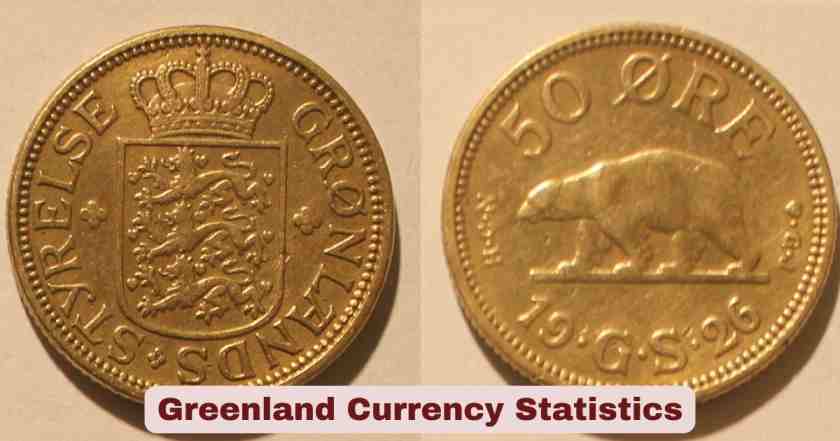
The currency landscape in Greenland in 2026 reflects the territory’s unique economic position, with approximately 56,000 residents conducting transactions almost exclusively in Danish kroner despite periodic discussions about introducing distinct Greenlandic banknotes similar to the Faroese króna variants used in the Faroe Islands. Historically, Greenland issued its own coins between 1926-1964 and banknotes until 1968 during the colonial period, but modern Greenland uses standard Danish currency identical to that circulating in Denmark—though a 2006 legislative framework authorized potential introduction of Greenlandic-design banknotes, this initiative was abandoned by the 2010 government and remains dormant as of 2026. The practical currency ecosystem features limited ATM availability concentrated in 15 major towns (including Nuuk, Sisimiut, Ilulissat, Qaqortoq, Tasiilaq, and Kangerlussuaq), with many remote settlements of 100-500 residents having no banking infrastructure whatsoever, forcing inhabitants to rely on cash transported during infrequent supply visits or travel to larger towns for financial services. Credit card acceptance varies dramatically by location and business type: major hotels, restaurants, tour operators, and shops in towns like Nuuk (population ~20,000) routinely accept Visa, Mastercard, and American Express, while smaller settlements, local markets, and individual service providers often operate on a cash-only basis, creating challenges for visitors and residents alike in an increasingly digital global economy where Greenland’s geographic isolation and limited financial infrastructure create a paradoxical dependence on physical currency despite the territory’s formal integration into Denmark’s advanced banking system.
Interesting Facts and Latest Statistics for Greenland Currency in 2026
| Category | Key Facts & Statistics | Year/Source |
|---|---|---|
| Official Currency | Danish krone (DKK) | Since 1875 |
| Currency Symbol | kr. (follows amount) | Standard notation |
| ISO Currency Code | DKK | International standard |
| Fixed Euro Peg | 7.46 DKK = 1 EUR | ERM II mechanism |
| Permitted Fluctuation | ±2.25% from peg | Exchange rate band |
| Euro Conversion Rate | 1 DKK = 0.134 EUR | Fixed relationship |
| USD Exchange Rate Jan 2026 | 6.42 DKK per dollar | Current rate |
| USD Rate Change 2016-2026 | 6.6% decline (from 6.87) | 10-year trend |
| Central Bank Authority | Danmarks Nationalbank | Monetary policy |
| Shared Currency Territories | Denmark, Greenland, Faroe Islands | Kingdom usage |
| Greenland Population | ~56,000 people | Small user base |
| ATM Locations | 15 major towns | Limited availability |
| Towns with ATMs | Nuuk, Sisimiut, Ilulissat, Qaqortoq, Tasiilaq, others | Geographic distribution |
| Primary Bank | Grønlandsbanken | Main Greenland institution |
| Number of Banks | 2 major institutions | Limited banking sector |
| Banking Hours | 9:30 AM – 3:30 PM weekdays | Limited access |
| Credit Card Acceptance | Variable (high in towns, low in villages) | Location-dependent |
| Accepted Card Types | Visa, Mastercard, American Express, Diners | Major networks |
| Cash Prevalence | High in remote areas | Payment preference |
| 1000-Kroner Note Phase-Out | Discontinued May 31, 2025 | Anti-money laundering |
| Pre-2009 Notes Invalid | After May 31, 2025 | Banknote update |
| Greenlandic Banknote Project | Abandoned 2010 | Unrealized plan |
Data Source: Danmarks Nationalbank, Visit Greenland, Grønlandsbanken, OFX Exchange Rates, Wise Currency Data, Wikipedia Danish Krone, Banking Information Book
The comprehensive currency statistics for Greenland in 2026 reveal a monetary system simultaneously modern and constrained, with the Danish krone’s fixed exchange rate to the euro at 7.46 DKK per EUR (with ±2.25% permitted fluctuation) providing exceptional stability that shields Greenland’s small economy from currency volatility affecting many Arctic and resource-dependent regions. This peg, maintained through Denmark’s participation in ERM II, means that the krone’s value against the euro remains essentially constant—a 1% fluctuation constitutes a significant movement—while exchange rates against non-euro currencies like the U.S. dollar fluctuate based on EUR/USD movements rather than DKK-specific factors. The January 2026 exchange rate of 6.42 DKK per dollar represents modest 6.6% krone appreciation against the dollar over the decade since January 2016 when the rate was 6.87 DKK/USD, though this movement primarily reflects euro strength rather than Danish economic conditions.
The May 31, 2025 discontinuation of 1000-kroner banknotes and invalidation of all banknotes issued before 2009 represented a significant currency update affecting Greenland alongside Denmark, implemented by Danmarks Nationalbank to combat money laundering and modernize the currency while reducing high-denomination notes facilitating illicit finance. This change required Greenlandic businesses and residents to exchange old notes for new currency, creating temporary logistical challenges in remote settlements where banking access is limited and residents may keep cash savings for extended periods without regular banking contact. Danmarks Nationalbank extended the exchange deadline to May 31, 2026 for phased-out notes, providing a one-year grace period acknowledging accessibility challenges in territories like Greenland.
The abandoned Greenlandic banknote project represents an intriguing might-have-been in currency statistics: Greenland’s parliament passed legislation in 2006 authorizing distinct Greenlandic-design banknotes similar to Faroese króna notes used in the Faroe Islands (which feature Faroese imagery but are identical in value and interchangeable with standard Danish kroner). The Act on Banknotes in Greenland entered force June 1, 2007, initiating design work on notes that would have featured Greenlandic landscapes, wildlife, cultural motifs, and potentially text in the Greenlandic language (Kalaallisut) while remaining denominationally identical to and freely exchangeable with Danish kroner. However, the 2010 Greenlandic election brought a new government viewing separate notes as unnecessary expense without practical benefit, leading Danmarks Nationalbank to cease the project—leaving Greenland using standard Danish currency as of 2026.
The 15 towns with ATM access (including Nanortalik, Narsaq, Qaqortoq, Paamiut, Nuuk, Maniitsoq, Sisimiut, Kangerlussuaq, Aasiaat, Qasigiannguit, Ilulissat, Qeqertarsuaq, Uummannaq, Upernavik, and Tasiilaq) serve as financial hubs for surrounding regions, with residents of smaller settlements (64 villages have populations under 500) traveling to these towns for cash withdrawals and banking services. The 2 major banks operating in Greenland—Grønlandsbanken (the primary domestic institution) and Nordik Bank (serving primarily business clients)—maintain limited branch networks concentrated in larger towns, with Nuuk hosting the most comprehensive banking facilities including Grønlandsbanken’s headquarters and multiple branches offering foreign exchange, business services, and specialized financial products unavailable in smaller locations.
Danish Krone Denominations and Physical Currency in Greenland in 2026
| Denomination | Type | Status 2026 |
|---|---|---|
| 50 Øre | Coin | Legal tender (smallest denomination) |
| 1 Krone | Coin | Legal tender |
| 2 Kroner | Coin | Legal tender |
| 5 Kroner | Coin | Legal tender |
| 10 Kroner | Coin | Legal tender |
| 20 Kroner | Coin | Legal tender (largest coin) |
| 50 Kroner | Banknote | Legal tender |
| 100 Kroner | Banknote | Legal tender |
| 200 Kroner | Banknote | Legal tender |
| 500 Kroner | Banknote | Legal tender (largest current note) |
| 1000 Kroner | Banknote | Discontinued May 31, 2025 |
| Pre-2009 Banknotes | All denominations | Invalid after May 31, 2025 |
| Øre Subdivision | 100 øre = 1 krone | Standard division |
| Total Coin Denominations | 6 types | 50 øre through 20 kr |
| Total Banknote Denominations | 4 types | 50 kr through 500 kr |
| Next Series Launch | 2028 | New designs scheduled |
| King Frederik X Coins | Second half 2025 | Updated monogram |
| Commemorative Coins | Periodic special editions | Collector items |
Data Source: Danmarks Nationalbank, Wikipedia Danish Krone, Currency documentation
Physical currency denominations used in Greenland in 2026 mirror those circulating in Denmark, with 6 coin denominations ranging from the 50 øre (one-half krone, the smallest unit) through 20 kroner (the largest coin), and 4 banknote denominations spanning 50 kroner to 500 kroner following the May 31, 2025 discontinuation of 1000-kroner notes. The øre subdivision (100 øre = 1 krone) follows the same structure as cents to dollars or pence to pounds, though smaller øre denominations (1, 2, 5, 10, and 25 øre coins) were discontinued decades ago due to inflation reducing their purchasing power below practical utility—the 50 øre coin remains the smallest denomination solely for electronic pricing precision and specific transaction needs.
The coin series includes several distinctive features: 20-kroner commemorative coins issued periodically showcase Danish, Faroese, and Greenlandic themes, with past series depicting towers across the realm (2002-2007, featuring 10 different architectural motifs including Greenlandic structures) and maritime heritage (2007-2011, showcasing iconic ships from all three territories). The 2005-2009 series of 10-kroner commemorative coins celebrated Hans Christian Andersen fairy tales, while the 2007-2009 International Polar Year coins featured specifically Arctic themes including a polar bear, the Sirius Dog Sled Patrol, and the Aurora Borealis—designs emphasizing Greenland’s cultural significance within the monetary realm. King Frederik X’s accession in January 2024 triggered production of new coins bearing his royal monogram, with Danmarks Nationalbank releasing these updated coins in the second half of 2025, gradually replacing coins featuring his mother Queen Margrethe II’s cypher through natural circulation.
Banknotes currently circulating feature the 2009 series designs incorporating advanced security features including watermarks, security threads, color-shifting inks, tactile elements assisting visually impaired users, and ultraviolet-responsive features enabling authentication under UV light. The September 2024 announcement that the next banknote series will launch in 2028 indicated that obverse designs will feature “important achievements and the people behind them” while reverse sides showcase the sea as a motif—appropriate symbolism for maritime Denmark and ocean-surrounded Greenland. The new series will notably exclude 1000-kroner notes, permanently removing the highest denomination from circulation as an anti-money laundering measure addressing concerns that large-value notes facilitate illicit financial activities.
The phase-out of pre-2009 banknotes required that all notes issued before the current series be exchanged by May 31, 2025, with a one-year grace period until May 31, 2026 for submission to Danmarks Nationalbank after which they become worthless. This transition posed particular challenges in Greenland where residents in remote settlements may accumulate cash savings over years, discover old notes in inheritance or storage, or lack immediate access to banking facilities for exchange—prompting public awareness campaigns in Greenlandic and Danish languages urging prompt currency exchange before deadlines.
Banking Infrastructure and Services in Greenland in 2026
| Banking Aspect | Details | Availability |
|---|---|---|
| Primary Bank | Grønlandsbanken | Domestic institution |
| Secondary Bank | Nordik Bank | Business focus |
| Total Major Banks | 2 institutions | Limited sector |
| Grønlandsbanken Branches | Multiple in major towns | Urban concentration |
| Banking Hours Weekdays | 9:30 AM – 3:30 PM | Monday-Thursday |
| Banking Hours Friday | 9:30 AM – 3:00 PM | Shortened hours |
| Branch Locations | 15 major towns | Same as ATM towns |
| Remote Settlement Coverage | Minimal or none | Access challenge |
| ATM Network | 15 towns with machines | Limited compared to population distribution |
| International Transfers | IBAN codes (GL for Greenland) | Separate from Denmark (DK) |
| Transfer Fee Structure | International fees apply | Not EU internal transfer |
| Online Banking | Available in major towns | Digital infrastructure |
| Mobile Banking Apps | Limited availability | Technology constraints |
| Currency Exchange Services | Limited availability | Primarily in Nuuk |
| Foreign Currency Acceptance | Rare except some tourist shops | DKK strongly preferred |
| Cheque Cashing | Available at banks | Declining usage |
| Safe Deposit Boxes | Available at major branches | Limited locations |
Data Source: Grønlandsbanken, Nordik Bank, Banking Information Book, Travel guides, Financial services documentation
Banking infrastructure in Greenland in 2026 remains concentrated in the 15 major towns where Grønlandsbanken and Nordik Bank maintain branches, leaving many of the 64 smaller settlements without any physical banking presence requiring residents to travel considerable distances—sometimes requiring boat or helicopter transport—to access financial services. Grønlandsbanken, established as Greenland’s primary domestic financial institution, operates branches in towns including Nuuk (hosting the headquarters and multiple offices), Sisimiut, Ilulissat, Qaqortoq, Tasiilaq, and other regional centers, providing personal banking, business services, mortgages, savings accounts, and currency exchange primarily serving individual customers and small businesses.
Nordik Bank, focusing primarily on commercial and business banking, serves larger enterprises, government entities, and high-net-worth individuals, with more limited retail presence than Grønlandsbanken but specialized capabilities in areas like trade finance, international transactions, and corporate treasury management. The two-bank system creates limited competition compared to developed markets where numerous institutions compete for customers, potentially affecting interest rates, fees, and service quality—though Greenland’s small population (~56,000) and dispersed geography create economies of scale challenges that would make additional banks economically unviable.
Banking hours of 9:30 AM to 3:30 PM on weekdays (closing at 3:00 PM Fridays) constrain access for working individuals who may struggle to visit branches during business hours, particularly those employed in fishing, tourism, government, or other sectors with work schedules conflicting with bank availability. This limited schedule reflects staffing constraints in Greenland’s small labor market and the challenge of maintaining full-service branches in locations with limited transaction volumes, yet creates hardship for customers needing urgent banking services outside these narrow windows.
International transfer protocols designate Greenland with the IBAN country code “GL” (distinct from Denmark’s “DK” code and the Faroe Islands’ “FO” code), meaning that transfers between Greenland and Denmark technically count as international transactions subject to international fees and processing times rather than faster, cheaper domestic transfers—an anomaly reflecting Greenland’s autonomous status within the Kingdom of Denmark while sharing currency and central bank. These international transfer fees can add 3-5% or more to transaction costs, significantly impacting Greenlanders sending money to Denmark for education, purchases, or family support, or Danish businesses paying Greenlandic suppliers.
Online and mobile banking availability has improved in major towns with reliable internet connectivity, with Grønlandsbanken offering web-based account management, bill payment, and transfer services accessible to customers with internet access. However, many remote settlements lack reliable broadband infrastructure, forcing residents to rely on slower satellite connections with limited bandwidth making online banking frustrating or impossible. Mobile banking apps face similar constraints, with cellular network coverage limited to areas surrounding major towns while vast interior and remote coastal regions have no mobile service whatsoever—creating a digital divide where urban Greenlandic residents enjoy modern banking convenience while rural inhabitants operate in essentially pre-digital financial environment.
Payment Methods and Transaction Patterns in Greenland in 2026
| Payment Method | Acceptance Level | Usage Context |
|---|---|---|
| Cash (DKK) | Universal acceptance | All locations |
| Visa | High in towns, low in villages | Card network |
| Mastercard | High in towns, low in villages | Card network |
| American Express | Moderate in tourist areas | Premium card |
| Dankort | Limited (Danish domestic card) | Primarily Denmark |
| Diners Club | Low acceptance | Specialty card |
| Maestro/Cirrus | Moderate (ATM withdrawals) | Debit networks |
| Mobile Payments (Apple Pay, Google Pay) | Very limited | Emerging technology |
| Contactless Payments | Available in major establishments | NFC technology |
| Online Banking Transfers | Growing in urban areas | Digital infrastructure |
| Cheques | Declining usage | Legacy method |
| Foreign Currency | Rarely accepted (some tourist shops) | Tourist accommodation only |
| Cryptocurrency | Not accepted | No infrastructure |
| Barter/Informal Economy | Exists in small communities | Traditional practices |
| Cash Transaction Prevalence | Very high in remote areas | Geographic necessity |
| Card Transaction Growth | Increasing in accessible towns | Infrastructure expansion |
Data Source: Visit Greenland, Travel guides, Payment processing reports, Novalnet payment analysis, Local business practices
Payment methods in Greenland in 2026 reflect a stark divide between urban centers with modern payment infrastructure and remote settlements operating almost entirely on cash economies, creating a dual-speed financial system where the same country experiences simultaneously 21st-century digital finance and traditional currency-based commerce. In Nuuk, Ilulissat, Sisimiut, and other larger towns, most hotels, restaurants, tour operators, shops, and service providers accept major credit and debit cards including Visa and Mastercard, with some tourist-oriented establishments accepting American Express despite higher merchant fees. Contactless payment terminals supporting NFC (Near Field Communication) technology have proliferated in recent years, enabling tap-to-pay transactions under a certain threshold (typically 200 DKK) without PIN entry, though coverage remains far behind Denmark where contactless payments dominate.
Mobile payment platforms like Apple Pay, Google Pay, and Samsung Pay are beginning to appear in Greenland’s most technologically advanced businesses, but adoption remains limited by several factors: many point-of-sale terminals lack NFC capability; internet connectivity requirements make real-time payment authorization unreliable in areas with poor network coverage; and both merchant and consumer awareness of these technologies remains low compared to Denmark where mobile payments have become commonplace. The payment processing infrastructure in Greenland lags significantly behind Denmark, with many businesses still using older terminals, manual card imprinters for backup when electronic systems fail, or cash-only operations avoiding merchant service fees and connectivity requirements.
Cash transactions remain overwhelmingly dominant in smaller settlements and rural areas where ATMs don’t exist, card readers are unavailable, and internet connectivity is insufficient for electronic payment processing. In communities of 100-500 residents scattered across Greenland’s coastline, essentially all commerce operates on cash basis: local stores, individual fishermen selling catches, hunters offering seal or whale meat, artisans selling handicrafts, and service providers like boat operators, guides, or mechanics deal exclusively in physical Danish kroner banknotes and coins. This creates logistical challenges when residents must withdraw large sums during infrequent town visits to sustain them for weeks or months between banking opportunities, raising concerns about theft, loss, and the inability to access funds in emergencies.
Foreign currency acceptance remains extremely rare except at select tourist shops in Nuuk or Ilulissat that may accept U.S. dollars, euros, or other major currencies—though typically at unfavorable exchange rates that disadvantage customers compared to proper currency exchange at banks or using ATMs to withdraw Danish kroner. The strong preference for DKK reflects Greenland’s full integration into the Danish monetary system, merchant unfamiliarity with foreign exchange rates, and the logistical difficulty of depositing foreign currency when local banks may lack foreign exchange services or charge significant fees for handling non-krone deposits.
Informal economy and barter practices persist in some smaller communities where traditional Inuit social structures emphasize sharing and reciprocal exchange over monetary transactions. Hunters may trade seal meat for repair services; fishermen might exchange fresh catch for fuel or supplies; and families engage in gift economies where goods flow based on kinship obligations rather than cash payment—practices operating alongside the formal monetary economy and providing resilience when cash is scarce or unavailable. However, these informal systems have declined as Greenland has modernized and commodified, with younger generations more integrated into wage employment and cash-based commerce than elders who remember predominantly subsistence economies.
Exchange Rates and Currency Conversion for Greenland in 2026
| Currency Pair | Exchange Rate (January 2026) | Trend |
|---|---|---|
| DKK to EUR | 7.46 (fixed peg) | Stable |
| EUR to DKK | 0.134 | Stable |
| DKK to USD | 6.42 DKK per dollar | 6.6% appreciation since 2016 |
| USD to DKK | 0.156 dollars per krone | Inverse rate |
| DKK 10-Year Change vs USD | -6.6% (krone strengthened) | 2016-2026 |
| DKK High vs USD (2016-2026) | 6.87 DKK per dollar (Jan 2016) | Historical range |
| DKK Low vs USD (2016-2026) | 6.38 DKK per dollar (recent) | Historical range |
| Weekly Fluctuation Range | 6.38-6.42 DKK per USD | Short-term volatility |
| Permitted Euro Deviation | ±2.25% from 7.46 peg | ERM II rules |
| Effective Euro Stability | <1% typical variation | Managed exchange rate |
| Reserve Currency Status | Not a reserve currency | Limited global role |
| Safe Haven Status | Not considered safe haven | Risk classification |
| M3 Money Supply (Denmark) | 1.830 trillion DKK (end 2024) | Monetary aggregate |
| Currency Reserves | 747.40 billion DKK | Reserve holdings |
| Reserve Ratio | 1:2.4 (reserves to M3) | Coverage metric |
Data Source: OFX Exchange Rates, FX-Rate.net, Worlddata.info currency data, Danmarks Nationalbank, IMF statistics
Exchange rate dynamics for the Danish krone in 2026 are dominated by the currency’s fixed peg to the euro at 7.46 DKK per EUR, maintained through Denmark’s participation in ERM II (the European Union’s exchange rate mechanism) which requires the krone to stay within ±2.25% of the central rate—in practice, Danmarks Nationalbank maintains the peg far more tightly, typically allowing less than 1% deviation through foreign exchange market interventions buying or selling euros to counteract pressure on the krone. This peg arrangement provides the Danish krone—and by extension Greenland’s monetary system—with exceptional stability against the euro, effectively anchoring Greenland’s currency to the world’s second-largest reserve currency and insulating the island from exchange rate volatility that plagues many resource-dependent Arctic economies.
The 6.42 DKK per U.S. dollar exchange rate in January 2026 reflects primarily EUR/USD movements rather than Denmark-specific economic factors, with the krone appreciating 6.6% against the dollar over the decade from January 2016 (when the rate was 6.87 DKK/USD) as the euro strengthened during periods of relative dollar weakness. The 10-year range from a high of 6.87 to recent lows near 6.38 demonstrates modest volatility by emerging market standards, though these fluctuations significantly affect Greenland’s import costs since the territory imports most consumer goods, food, fuel, and manufactured products paid in currencies other than kroner—primarily U.S. dollars for petroleum products and international shipping, and euros or Danish kroner for European goods.
Short-term exchange rate fluctuations of 4 øre (6.38-6.42 DKK/USD) over a recent week represent typical volatility, with daily movements generally measured in fractions of an øre unless major economic news or geopolitical events trigger larger swings. For Greenlandic businesses importing goods or individuals sending money internationally, these small daily movements matter less than medium-term trends, though companies without currency hedging strategies can see profit margins significantly affected by multi-month exchange rate shifts when contracts are denominated in foreign currencies but revenues are in kroner.
Currency reserves held by Danmarks Nationalbank totaling 747.40 billion DKK (approximately €100 billion) at the end of 2024 provide the firepower to defend the euro peg through foreign exchange interventions, with the 1:2.4 ratio of reserves to M3 money supply (1.830 trillion DKK) indicating substantial capacity to buy kroner and sell euros if market forces push the exchange rate beyond permitted bounds. These reserves, accumulated through Denmark’s persistent current account surpluses driven by exports of industrial goods, agricultural products, and services, ensure credibility of the peg commitment and reduce speculative attacks that historically plagued fixed exchange rate regimes with insufficient reserves.
The Danish krone’s non-reserve currency status means that central banks and governments worldwide don’t hold significant krone reserves in their foreign exchange portfolios, limiting global demand for the currency outside direct trade and investment relationships. Similarly, the krone isn’t considered a safe haven currency like the Swiss franc, Japanese yen, or U.S. dollar that attract capital flows during global financial crises, meaning Greenland and Denmark don’t benefit from crisis-driven currency appreciation that sometimes offsets economic stress for safe haven countries.
Historical Currency Development and Greenlandic Monetary History in 2026
| Historical Period | Currency Used | Details |
|---|---|---|
| Pre-1874 | Greenland rigsdaler | Colonial-era currency |
| 1874-1926 | Danish krone (standard) | Introduction of krone |
| 1803-1968 | Distinct Greenlandic banknotes | Colonial administration issues |
| 1926-1964 | Greenlandic coins | Distinct coin series |
| 1926 Coins | 25 øre, 50 øre, 1 krone | Initial coin series |
| 1944 Special Issue | 5 kroner brass coin | U.S. military in Greenland |
| 1944 Coin Mintage | 100,000 pieces | Philadelphia Mint production |
| 1944 Exchange Value | 1 USD = 5 DKK | Wartime rate |
| 1953 Commemorative | 2 kroner tuberculosis campaign | Denmark issue featuring Greenland |
| 1968 End | Last distinct banknotes | Integration into Danish currency |
| 2006 Act | Authorization for new Greenlandic notes | Legislative framework |
| 2007 Entry Into Force | June 1, 2007 | Law became effective |
| 2010 Abandonment | Project ceased | Government decision |
| 2026 Status | Standard Danish krone only | Current situation |
Data Source: Wikipedia Greenlandic Krone, Danmarks Nationalbank historical records, Numismatic sources
Historical currency development in Greenland traces a fascinating evolution from distinct colonial monetary instruments through full integration into the Danish monetary system. Prior to 1874, Greenland used the rigsdaler currency system common across Danish territories, with the krone (plural: kroner) replacing the rigsdaler at a rate of 2 kroner = 1 rigsdaler following the 1873 Scandinavian Monetary Union that aligned Danish, Swedish, and Norwegian currencies. Despite adopting the krone denomination, Greenland’s colonial administration continued issuing distinct banknotes between 1803 and 1968, featuring designs appropriate to the Arctic territory and denominated in kroner but usable only within Greenland—creating a parallel currency situation where Greenlandic notes circulated locally while standard Danish notes dominated in Denmark proper.
The 1926-1964 coin series represented peak distinctiveness, with Greenland issuing its own coins in denominations of 25 øre, 50 øre, and 1 krone, identical in size and composition to corresponding Danish coins but bearing unique Greenlandic designs including the iconic polar bear motif that appeared on the obverse of coins throughout this period. These coins, while technically distinct, were equivalent in value to Danish coins and circulated interchangeably when Greenlanders traveled to Denmark or Danes visited Greenland—the distinctiveness served primarily symbolic and practical purposes (facilitating tracking of where coins circulated) rather than representing separate monetary systems.
The 1944 special 5-kroner coin issue represents perhaps the most unusual chapter in Greenlandic monetary history: with Denmark occupied by Nazi Germany during World War II and Greenland effectively under United States protection, the colonial administration commissioned the Philadelphia Mint in the United States to produce 100,000 brass 5-kroner coins for use by American military personnel stationed in Greenland. These coins featured a polar bear design similar to earlier Greenlandic issues, with their exchange value set at 1 U.S. dollar = 5 DKK—a rate reflecting wartime economic conditions. These coins have become valuable numismatic collectibles, with well-preserved specimens commanding premium prices from collectors fascinated by this unique intersection of Danish, Greenlandic, and American monetary history.
Disclaimer: This research report is compiled from publicly available sources. While reasonable efforts have been made to ensure accuracy, no representation or warranty, express or implied, is given as to the completeness or reliability of the information. We accept no liability for any errors, omissions, losses, or damages of any kind arising from the use of this report.