
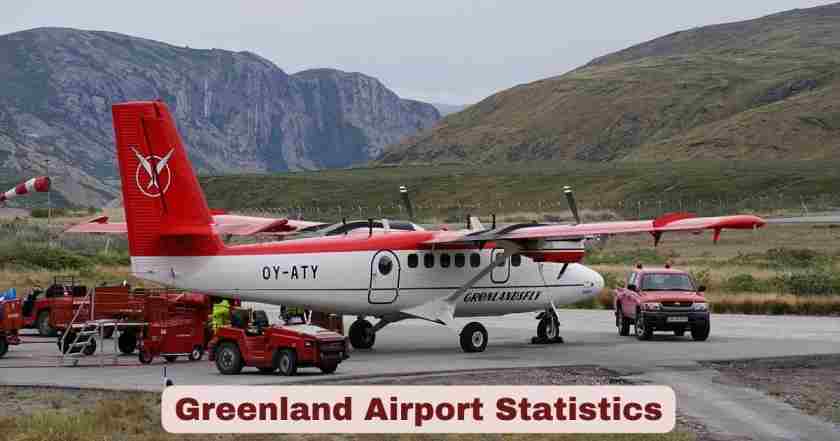
Greenland Airports 2026
Greenland’s aviation infrastructure is undergoing historic transformation during 2024-2026, fundamentally reshaping accessibility to the world’s largest island. The opening of Nuuk International Airport on November 28, 2024 with its 2,200-meter runway marked the first of three major airport projects designed to connect Greenland directly to North America and Europe via larger jet aircraft. For decades, international travelers to Greenland required connections through the remote Kangerlussuaq Airport, a former US military base located hundreds of kilometers from population centers, creating logistical challenges and limiting tourism growth despite the territory’s extraordinary natural attractions.
The year 2026 represents completion of Greenland’s ambitious DKK 4.8 billion ($694 million) airport expansion program, with Qaqortoq Airport scheduled to open April 16, 2026 and Ilulissat Airport following in October 2026. These infrastructure investments—equivalent to approximately 20% of Greenland’s total GDP—aim to double annual tourist arrivals, support economic diversification beyond fishing, and strengthen connections for the territory’s 56,000 residents spread across remote communities accessible only by boat or aircraft. The Nuuk terminal capacity of 800 passengers per hour and introduction of direct transatlantic flights including United Airlines’ Newark service and expanded Air Greenland, SAS, and Icelandair operations demonstrate the transformational scale of these developments for Arctic aviation.
Interesting Facts and Latest Statistics for Greenland Airports in 2026
| Key Facts About Greenland Airports in 2026 | Statistics |
|---|---|
| Nuuk Airport Official Opening Date | November 28, 2024 |
| Nuuk Airport Runway Length | 2,200 meters (7,217 feet) |
| Nuuk Airport Runway Width | 45 meters (147 feet) |
| Nuuk Terminal Passenger Capacity Per Hour | 800 passengers |
| Qaqortoq Airport Scheduled Opening | April 16, 2026 |
| Ilulissat Airport Scheduled Opening | October 2026 |
| Total Investment in Three Airport Projects | DKK 4.8 billion ($694 million) |
| Investment as Percentage of Greenland GDP | Approximately 20% |
| Rock Blasted for Nuuk Airport Construction | 6 million cubic meters |
| Rock Blasted for Ilulissat Airport Construction | 6 million cubic meters |
| Rock Blasted for Qaqortoq Airport Construction | 2 million cubic meters |
| United Airlines First Flight Date (Newark-Nuuk) | June 14, 2025 |
| United Airlines 2025 Season Passengers (Newark-Nuuk) | 4,869 passengers |
| United Airlines 2025 Average Load Factor (Newark-Nuuk) | 51% |
| Expected Tourism Doubling Timeline | Within first year of full operations |
Data Source: Greenland Airports, Kalaallit Airports, United Airlines Statistics, Danish Civil Aviation Authority, US Department of Transportation, Statistics Greenland, 2024-2026
These statistics reveal both the ambitious scale and significant challenges of Arctic airport development. The 6 million cubic meters of rock blasted at Nuuk represents a volume equivalent to “a soccer field 1.5 kilometers in the air” according to project managers, while the combined 14 million cubic meters across all three projects demonstrates unprecedented engineering in Greenland’s mountainous terrain. The DKK 4.8 billion total investment equaling approximately 20% of GDP illustrates how transformational yet financially demanding these projects are for Greenland’s economy.
United Airlines’ inaugural 2025 season carrying 4,869 passengers with a 51% load factor indicates modest initial demand, with September plummeting to just 41% occupancy, raising questions about long-term viability despite the carrier’s decision to return in 2026. The 800-passenger-per-hour Nuuk terminal capacity far exceeds current demand, designed to accommodate projected growth as Greenland becomes more accessible. The November 28, 2024 Nuuk opening shifted Air Greenland’s hub operations from Kangerlussuaq, while Qaqortoq’s April 16, 2026 opening will provide South Greenland’s first jet-capable airport and Ilulissat’s October 2026 completion will unlock the spectacular Disko Bay region to direct international flights, fulfilling decades-long ambitions to improve Arctic connectivity.
Nuuk International Airport Opening and Infrastructure in 2024-2026
| Nuuk Airport Specification | Details |
|---|---|
| Official Opening Date | November 28, 2024 |
| Terminal Partial Opening | May 2024 |
| Runway Length | 2,200 meters (7,217 feet) |
| Runway Width | 45 meters (147 feet) |
| Previous Runway Length | 950 meters (3,117 feet) |
| Terminal Passenger Capacity | 800 passengers per hour |
| Construction Start Date | November 2019 |
| Construction Cost | Funded as part of DKK 4.8 billion total program |
| Distance from Nuuk City Center | 2 nautical miles (3.7 km / 2.3 miles) |
| Rock Excavation Volume | 6 million cubic meters |
| New Control Tower Commissioned | September 2024 |
| Aircraft Accommodated | Airbus A330, Boeing 737, similar jets |
| Security Screening Introduction | First time ever at Nuuk (summer 2024) |
Data Source: Greenland Airports, Kalaallit Airports International, Danish Civil Aviation Authority, ASCE Infrastructure Reports, 2024-2026
Nuuk International Airport officially opened November 28, 2024, culminating a five-year construction project that began in November 2019 and represents Greenland’s most significant infrastructure development in modern history. The 2,200-meter runway—more than double the previous 950-meter length—enables operation of wide-body aircraft including Air Greenland’s Airbus A330-800neo and various Boeing 737 variants, fundamentally transforming Greenland’s global connectivity.
Construction required blasting 6 million cubic meters of granite and gneiss rock, with material ground and reused as runway foundation and fill—a volume project managers compared to “a soccer field 1.5 kilometers in the air.” The terminal opened partially in May 2024 for domestic operations and limited international service to Iceland and Canada, while the full 2,200-meter runway became operational November 28, 2024, shifting Air Greenland’s transatlantic hub from Kangerlussuaq. The terminal’s 800-passenger-per-hour capacity vastly exceeds current demand, designed for projected tourism growth. Security screening introduced summer 2024 represented the first time Nuuk Airport ever implemented security checks, bringing operations to international standards. The new control tower commissioned September 2024 replaced the old tower demolished because it stood too close to the extended runway. Despite the triumph, operational challenges emerged: the Danish Civil Aviation Authority temporarily revoked security certification in August 2024, preventing international flights for two months until rectification in October, and August 2025 saw international departures suspended for security personnel training issues, stranding passengers and forcing United Airlines to turn around a mid-flight aircraft before resuming operations days later.
Air Greenland Hub Transition and Route Network in 2024-2026
| Air Greenland Route/Metric | Details |
|---|---|
| Copenhagen to Nuuk Direct Service Launch | November 28, 2024 |
| Primary Aircraft (Copenhagen Route) | Airbus A330-800neo |
| Weekly Copenhagen-Nuuk Flights (Winter) | 5 flights weekly (6 during holidays) |
| Weekly Copenhagen-Nuuk Flights (Summer) | 8 flights weekly |
| Previous Hub Location | Kangerlussuaq Airport |
| Kangerlussuaq Service After Hub Transition | Reduced to 2x weekly (summer tourist focus) |
| New Boeing 737 Routes (2025) | Billund, Aalborg (via leased aircraft) |
| Domestic Morning Departures from Nuuk | 5 destinations (Narsarsuaq, Paamiut, Maniitsoq, Sisimiut, Ilulissat, Kulusuk) |
| Iqaluit, Canada Route Resumption | June-October 2025 |
| Average Ticket Price Copenhagen-Nuuk | Approximately 4,000 DKK ($580 USD) |
| Kangerlussuaq-Copenhagen Continued Service | 2x weekly, February 10-November 17, 2026 |
| Codeshare Partners | Icelandair, SAS, Canadian North |
Data Source: Air Greenland, Visit Greenland, Greenland Airports, Aviation Media Reports, 2024-2026
Air Greenland transitioned its hub from Kangerlussuaq to Nuuk on November 28, 2024, marking the most significant operational shift in the carrier’s history. The flag carrier immediately began direct Copenhagen-Nuuk service using its flagship Airbus A330-800neo, offering 5 weekly flights during winter months (increasing to 6 during holiday periods) and ramping to 8 weekly flights during peak summer season. This represents a fundamental improvement for travelers, who previously required connections through the remote Kangerlussuaq location 315 kilometers north of Nuuk.
Kangerlussuaq service continued but dramatically reduced to 2 flights weekly focused on summer tourist season (February through November), as the former hub’s primary purpose shifted to serving the small local community and tourists visiting the ice sheet. Air Greenland expanded its European network in 2025 using leased Boeing 737 aircraft to launch new routes to Billund and Aalborg in Denmark, with the Billund service including a stop at Keflavík, Iceland, enhancing connectivity options. The carrier resumed Canada service in June 2025 with turboprop flights from Nuuk to Iqaluit operating June-October, connecting Greenland to the Canadian Arctic with onward codeshare connections to Ottawa via Canadian North. Domestic connectivity improved significantly with 5 morning departures from Nuuk to destinations including Narsarsuaq, Paamiut, Maniitsoq, Sisimiut, Ilulissat, and Kulusuk, with afternoon return flights enabling same-day excursions. Average ticket prices from Copenhagen to Nuuk run approximately 4,000 DKK ($580 USD), making Greenland more accessible than the previous indirect routing requiring higher fares and longer travel times through Kangerlussuaq.
United Airlines Newark-Nuuk Route Performance in 2025-2026
| United Airlines Nuuk Service Metric | Statistics |
|---|---|
| Inaugural Flight Date | June 14, 2025 |
| Service End Date (2025 Season) | September 24, 2025 |
| Total Passengers Carried (June-September 2025) | 4,869 passengers |
| Overall Load Factor (Summer 2025) | 51% |
| June 2025 Load Factor | 52% |
| July 2025 Load Factor | 51% |
| August 2025 Load Factor | 61% |
| September 2025 Load Factor | 41% |
| Weekly Frequency | 2 flights weekly (Saturday/Sunday) |
| Aircraft Type | Boeing 737 MAX 8 |
| Approximate Seat Capacity Per Flight | 165 seats |
| Flight Duration Newark to Nuuk | 4 hours 15 minutes |
| Flight Duration Nuuk to Newark | 4 hours 30 minutes |
| Average One-Way Fare | $1,200-1,300 USD |
| Average Roundtrip Fare | $1,100 USD (starting price) |
| 2026 Season Return Confirmed | Yes (resumes June 13, 2026) |
Data Source: US Department of Transportation, United Airlines, Simple Flying Analysis, The Points Guy, Aviation Geeks, 2025-2026
United Airlines launched historic nonstop service between Newark and Nuuk on June 14, 2025, becoming the first US airline to serve Greenland and marking the first direct US-Greenland flights since Air Greenland’s short-lived 2007 Baltimore-Kangerlussuaq route. Operating twice weekly on Saturdays and Sundays using Boeing 737 MAX 8 aircraft with approximately 165 seats, the seasonal service ran through September 24, 2025.
Performance metrics revealed challenging economics: US Department of Transportation data shows United carried 4,869 passengers with an overall 51% load factor, dramatically below the carrier’s 84% average international load factor during the same June-September period. Monthly load factors showed deterioration, starting at 52% in June, holding steady at 51% in July, improving to 61% in August, then plummeting to just 41% in September—indicating waning demand as summer ended. The August peak of 61% coincided with optimal weather and the brief Arctic summer window, while September’s collapse to 41% suggests the season extended too long beyond tourist appeal. Despite modest performance, United confirmed the route returns June 13, 2026, with tickets already on sale at approximately $1,100 roundtrip starting fares—suggesting the carrier sees strategic value or receives incentives offsetting load factor challenges. Flight times of just over 4 hours make Greenland remarkably accessible from the New York metropolitan area, closer than many US West Coast destinations, though the cool summer temperatures averaging 40°F and remote location appeal to niche adventure travelers rather than mass tourism markets. Many observers note inaugural flights attracted a disproportionate number of United frequent flyers using employee “buddy passes” and elite status holders seeking unique destinations, raising questions about sustainable demand from fare-paying passengers in subsequent seasons.
International Airline Service Expansion to Greenland in 2025-2026
| Airline/Route | Details |
|---|---|
| Icelandair Reykjavík-Nuuk | Year-round service, increased to Boeing 737 MAX 8 (summer 2025) |
| Icelandair Previous Aircraft | De Havilland Dash 8-400 turboprop |
| Icelandair Reykjavík-Ilulissat | Continuing service (only international route to Ilulissat pre-expansion) |
| SAS Copenhagen-Nuuk | Seasonal service launched June 27, 2025 |
| SAS Frequency | 3 flights weekly (Monday, Wednesday, Friday) |
| SAS Aircraft | Airbus A320neo |
| Peak Season Total Seat Capacity (April-August 2025) | 105,000 seats |
| Peak Season Seat Capacity (2023) | 55,000 seats |
| Seat Capacity Increase 2023 to 2025 | 91% increase (nearly doubled) |
| Icelandair Capacity Increase | 120% increase via partnership renewal |
| Pre-Airport Total Annual Visitors (2019) | 105,000 visitors |
| Expected Post-Airport Annual Visitors | Projected to double |
Data Source: Icelandair, SAS, Visit Greenland, Bloomberg, Statistics Greenland, Aviation Industry Reports, 2025-2026
International airline service to Greenland expanded dramatically in 2025 following Nuuk Airport’s opening, with multiple carriers adding capacity or launching new routes. Icelandair, which pioneered year-round international service to Nuuk using De Havilland Dash 8-400 turboprops, upgraded to Boeing 737 MAX 8 jets during summer 2025, significantly increasing capacity on the Reykjavík-Keflavík to Nuuk route. The Icelandic carrier continues serving Ilulissat with Dash 8 aircraft, representing the only international route to that destination until the new airport opens in October 2026.
Scandinavian Airlines (SAS) launched seasonal service on June 27, 2025, operating 3 flights weekly (Monday, Wednesday, Friday) between Copenhagen and Nuuk using Airbus A320neo aircraft. This provides travelers with options between Air Greenland’s A330 widebody service and SAS’s narrowbody alternative. Combined with Air Greenland’s expansion and United’s new transatlantic service, total peak season capacity (April-August) reached 105,000 seats in 2025, nearly doubling the 55,000 seats available in 2023—a 91% increase in just two years. Icelandair’s partnership renewal delivered a 120% capacity increase, reflecting confidence in Greenland’s tourism potential. Greenland welcomed approximately 105,000 total annual visitors in 2019 (including cruise passengers), and authorities expect arrivals to potentially double as improved air access overcomes the previous logistical barriers. However, Greenland officials emphasize “value-creating tourism” focused on longer stays and meaningful engagement rather than maximizing visitor numbers, learning from overtourism challenges in Iceland and other destinations that pursued rapid growth without adequate infrastructure or community preparation.
Qaqortoq Airport Construction and Opening Timeline in 2026
| Qaqortoq Airport Specification | Details |
|---|---|
| Scheduled Opening Date | April 16, 2026 |
| Runway Length | 1,500 meters (4,921 feet) |
| Potential Future Extension | Up to 1,799 meters (5,905 feet) |
| Terminal Area | Approximately 2,000 square meters |
| Terminal Capacity | 200 passengers at a time |
| Distance from Qaqortoq Town | 6.5 kilometers by vehicle |
| Rock Excavation Volume | 2 million cubic meters |
| Construction Start Date | February 2022 |
| Primary Contractor | Pennecon Heavy Civil |
| Funding Source | Greenland government (solely funded) |
| Construction Cost | £101 million ($128 million USD equivalent) |
| Aircraft Types Accommodated | Regional jets, small to medium jets |
| Narsarsuaq Airport Replacement | Qaqortoq replaces Narsarsuaq (closing 2026) |
Data Source: Greenland Airports, Kalaallit Airports Domestic, Pennecon Heavy Civil, ASCE, Travel and Tour World, 2024-2026
Qaqortoq Airport is scheduled to open April 16, 2026, providing South Greenland’s first modern jet-capable airport and replacing the challenging Narsarsuaq Airport that has served the region since its World War II origins as a US military base. The 1,500-meter runway accommodates regional jets and small to medium jets, with design allowing future extension to 1,799 meters if demand warrants larger aircraft operations.
Construction began in February 2022 with Pennecon Heavy Civil as primary contractor, requiring excavation of 2 million cubic meters of rock—a smaller but still substantial volume compared to Nuuk and Ilulissat projects. The terminal covering approximately 2,000 square meters can handle 200 passengers at a time, sized appropriately for the smaller Qaqortoq town population of approximately 3,100 residents and projected tourist traffic. Located 6.5 kilometers from town center, the airport improves accessibility compared to Narsarsuaq’s remote fjord location requiring lengthy boat transfers to reach communities. Qaqortoq represents the only airport solely funded by Greenland’s government, costing £101 million ($128 million), while Nuuk and Ilulissat projects involved Danish government partnership covering one-third of costs. The airport will provide domestic connectivity throughout Greenland and regional international flights to nearby Iceland and Iqaluit, Canada, eliminating South Greenland’s historical isolation. Narsarsuaq Airport, known for extremely challenging approaches through narrow fjords with non-precision navigation systems and a short 1,800-meter runway, will likely close following Qaqortoq’s opening, ending decades of operation at one of Greenland’s most notorious airports that generated substantial after-hours landing fees (approximately $3,000 USD) for diversions requiring emergency services standby.
Ilulissat Airport Expansion and October 2026 Opening
| Ilulissat Airport Specification | Details |
|---|---|
| Scheduled Opening Date | October 2026 |
| Runway Length | 2,200 meters (7,217 feet) |
| Runway Width | 60 meters (197 feet) |
| Previous Runway Length | 1,799 meters (5,905 feet) STOL runway |
| Location Relative to Town | 2.8 kilometers northeast of city center |
| Rock Excavation Volume | 6 million cubic meters |
| Construction Cost | £373 million ($473 million USD equivalent) |
| Funding Partnership | Greenland government and Denmark (2/3 Greenland, 1/3 Denmark) |
| Original Scheduled Opening | 2024 |
| Delay Reasons | Weather, frozen waters preventing supply deliveries (13-week delay) |
| Danish Subsidy (Initial) | DKK 1.6 billion (Nuuk and Ilulissat combined) |
| Additional Danish Subsidy (2025) | DKK 400 million |
| Loan Extension (2025) | DKK 1,140 million |
| Ilulissat Town Population | Approximately 4,700 residents |
| Current International Service | Icelandair to Reykjavík (Dash 8 turboprop only) |
Data Source: Greenland Airports, Kalaallit Airports International, Wikipedia, ASCE, COWI Design Documents, Travel and Tour World, 2024-2026
Ilulissat Airport expansion scheduled for October 2026 opening will transform access to Greenland’s spectacular Disko Bay region and UNESCO World Heritage Ilulissat Icefjord, one of the planet’s most active glaciers. The new 2,200-meter runway matching Nuuk’s dimensions replaces the existing 1,799-meter STOL (short takeoff and landing) runway built in 1984, enabling direct international flights from Europe and North America to the world’s northernmost major tourist destination.
Construction required blasting 6 million cubic meters of granite and gneiss, with unique challenges including sections of runway extending into the sea requiring specialized marine construction techniques. The project faced significant delays, originally scheduled for 2024 completion but pushed to October 2026 primarily due to 13 consecutive weeks when frozen waters prevented supply ships from reaching the construction site—illustrating Arctic development challenges where weather dictates schedules regardless of planning. The £373 million ($473 million) cost makes Ilulissat the most expensive of the three airport projects, with 2025 budget overruns requiring an additional DKK 400 million Danish subsidy and DKK 1,140 million loan extension beyond the original DKK 1.6 billion Danish contribution (covering one-third of Nuuk and Ilulissat combined costs). Located just 2.8 kilometers from Ilulissat’s city center with approximately 4,700 residents, the airport serves a community heavily dependent on tourism to the nearby Ilulissat Icefjord, where glaciers calve massive icebergs into Disko Bay at rates exceeding most other locations on Earth. Currently, Icelandair provides the only international service using Dash 8 turboprops to Reykjavík, limiting tourist access; the new airport will accommodate jets enabling direct flights from Copenhagen, potentially North American routes, and greatly expanded capacity serving the region’s third-busiest airport which is expected to become even more significant once jets can operate year-round with modern Instrument Landing Systems allowing operations in reduced visibility that currently grounds flights.
Infrastructure Challenges and Construction Complexities in 2019-2026
| Construction Challenge | Details |
|---|---|
| Total Rock Excavation (All Three Projects) | 14 million cubic meters combined |
| Permafrost Construction Obstacles | Year-round frozen ground complicates excavation |
| Weather Window Limitations | Short construction seasons (Arctic conditions) |
| Supply Chain Delays | 13-week frozen water blockage at Ilulissat (2024-25) |
| Geotechnical Complexity | Primarily granite and gneiss requiring blasting |
| Material Reuse Strategy | All excavated rock ground and reused for fill/foundation |
| Phased Runway Construction (Nuuk) | South end built first, operations continued during north construction |
| Old Infrastructure Demolition | Original terminals, towers demolished after replacement |
| Instrument Landing System Installation | ILS not operational at Nuuk opening (safety restrictions) |
| Security Certification Issues | Multiple delays/revocations requiring rectification |
| Total Construction Timeline | 2019-2026 (7 years across all projects) |
| Budget Overruns | DKK 400 million additional subsidy + DKK 1,140 million loan extension (2025) |
| Chinese Contractor Controversy | Geopolitical concerns blocked Chinese state firm bid |
Data Source: Greenland Airports, ASCE, The B1M Construction Analysis, Danish Civil Aviation Authority, Industry Reports, 2019-2026
Arctic airport construction presented extraordinary challenges exceeding typical infrastructure projects. The 14 million cubic meters of rock excavated across three projects required unprecedented blasting operations in Greenland, with project managers stating “we have literally blown a mountain away to make enough space for a 2.2-kilometer runway.” Permafrost extending beneath construction sites complicated excavation, as permanently frozen ground must be carefully managed to prevent foundation instability when structures generate heat or seasonal thawing occurs.
Weather imposed strict limitations on construction timelines, with Arctic winters halting most outdoor work and compressed summer seasons creating pressure to accomplish maximum progress during brief favorable periods. The 13-week supply blockage at Ilulissat when frozen waters prevented cargo ships from delivering materials exemplified how “you can prepare everything but you can’t set the date on when the weather is ready,” according to project officials. Geotechnical complexity required specialized equipment and expertise, as Greenland’s predominantly granite and gneiss bedrock resists conventional excavation and requires extensive blasting followed by material processing. Remarkably, all excavated rock was ground down and reused for runway foundations, building pads, and fill, minimizing environmental impact and eliminating need for imported materials. At Nuuk, phased construction built the southern runway section first, allowing operations to continue on the old runway while the northern section was completed where the runways overlapped. Security and operational certification challenges emerged repeatedly: Nuuk’s security certification was revoked August 2024 (rectified October 2024), Instrument Landing Systems weren’t operational at November opening (requiring visual approaches only), and August 2025 saw international departures suspended for security personnel training deficiencies. The Chinese contractor controversy in early planning phases saw a state-owned Chinese firm bid rejected due to US security concerns about Chinese construction near the Thule Air Base US military installation and radar systems, highlighting geopolitical complexities even in civilian infrastructure. Budget overruns in 2025 requiring DKK 400 million additional Danish subsidy plus DKK 1,140 million loan extension demonstrated how Arctic construction consistently exceeds initial cost projections despite careful planning.
Economic Impact and Tourism Projections for Greenland in 2024-2026
| Economic Impact Metric | Value/Details |
|---|---|
| Total Airport Investment | DKK 4.8 billion ($694 million USD) |
| Investment as Percentage of GDP | Approximately 20% of Greenland GDP |
| Economic Impact Per Flight (Estimate) | $200,000 USD per flight |
| Pre-Expansion Annual Tourists (2019) | 105,000 visitors |
| Expected Tourism Growth | Potentially double within first years |
| Current Tourism Revenue (2024) | DKK 2 billion ($288 million USD annually) |
| Tourism Share of GDP (2024) | 4.9% (1.245 billion DKK in direct value) |
| Tourism Employment (2024) | 1,800 direct jobs (6.2% of total employment) |
| Expected Hotel/Accommodation Challenges | Limited capacity may constrain growth |
| Greenland Total Population | 56,000 people |
| Nuuk Population | Approximately 19,000 (one-third of total) |
| Peak Season Seat Capacity (2025) | 105,000 seats (April-August) |
| Peak Season Seat Capacity (2023) | 55,000 seats (April-August) |
Data Source: Visit Greenland Tourism Satellite Account, Greenland Airports, Bloomberg, CNN, Statistics Greenland, Industry Projections, 2024-2026
The DKK 4.8 billion ($694 million) airport investment represents approximately 20% of Greenland’s entire GDP, illustrating both the transformational ambition and financial strain these projects place on the territory’s economy. Greenland Airports CEO Jens Lauridsen estimates each flight adds $200,000 to the economy through passenger spending, crew expenses, airport fees, and multiplier effects—suggesting substantial returns if tourist projections materialize.
Tourism currently generates DKK 2 billion annually (approximately $288 million), with the 2024 tourism satellite account showing 4.9% direct GDP contribution (1.245 billion DKK) supporting 1,800 jobs (6.2% of employment). Authorities expect tourism to potentially double as improved air access overcomes previous barriers, though this requires accommodation infrastructure expansion. Pre-pandemic 2019 saw 105,000 annual visitors (including cruise passengers); with peak season seat capacity nearly doubling from 55,000 seats in 2023 to 105,000 in 2025, growth potential exists if demand matches supply. However, Greenland faces severe accommodation constraints with limited hotels, particularly outside Nuuk where the capital’s approximately 19,000 residents represent one-third of the nation’s 56,000 total population. Officials consistently emphasize “value-creating tourism” prioritizing longer stays, higher spending, and cultural engagement over maximizing visitor numbers, explicitly citing Iceland’s overtourism challenges as a cautionary tale. The labor market limitations in a nation of 56,000 people raise questions about staffing expanded tourism services, potentially requiring imported workers with associated housing and social integration challenges. Infrastructure beyond airports—roads, accommodations, restaurants, tour operators—requires parallel investment to realize the airports’ economic potential, with total requirements potentially exceeding the already substantial airport costs.
Kangerlussuaq Airport Role After Nuuk Hub Transition in 2024-2026
| Kangerlussuaq Airport Metric | Details |
|---|---|
| Previous Role | Primary international gateway and Air Greenland hub |
| Current Role (Post-November 2024) | Reduced domestic airport, limited tourist hub |
| Population Served | Approximately 500-600 residents |
| Runway Length | 2,800 meters (9,186 feet) – Longest in Greenland |
| Copenhagen Service Frequency (2026) | 2 flights weekly |
| Copenhagen Service Season (2026) | February 10 – November 17 |
| Primary Remaining Function | Tourist access to ice sheet, Arctic Circle monuments |
| Historical Significance | Former US Bluie West-8 Air Base (World War II) |
| Distance from Nuuk | 315 kilometers (195 miles) north |
Kangerlussuaq Airport’s role has shifted significantly following the transition of Greenland’s primary international hub to Nuuk in November 2024. Previously, Kangerlussuaq functioned as the main international gateway and the central hub for Air Greenland, largely due to its exceptionally long 2,800-meter runway—the longest in the country—originally built during World War II as the U.S. Bluie West-8 Air Base. This infrastructure allowed it to handle large long-haul aircraft, particularly direct Copenhagen services, and made it indispensable despite serving a very small local population of roughly 500–600 residents and being located about 315 kilometers north of Nuuk.
Between 2024 and 2026, the airport’s role has been reduced to a secondary domestic facility with a limited but strategic niche. Scheduled international service has been cut back to just two weekly flights to Copenhagen during the seasonal window from February 10 to November 17, primarily to support tourism. Its remaining core function is acting as a gateway for visitors accessing the Greenland ice sheet and Arctic Circle landmarks, rather than serving as a national transit hub. While its operational importance has declined, Kangerlussuaq retains logistical and symbolic significance due to its long runway, Arctic location, and historical role in Greenland’s aviation and military history.
Disclaimer: This research report is compiled from publicly available sources. While reasonable efforts have been made to ensure accuracy, no representation or warranty, express or implied, is given as to the completeness or reliability of the information. We accept no liability for any errors, omissions, losses, or damages of any kind arising from the use of this report.