
Gordie Howe International Bridge 2026
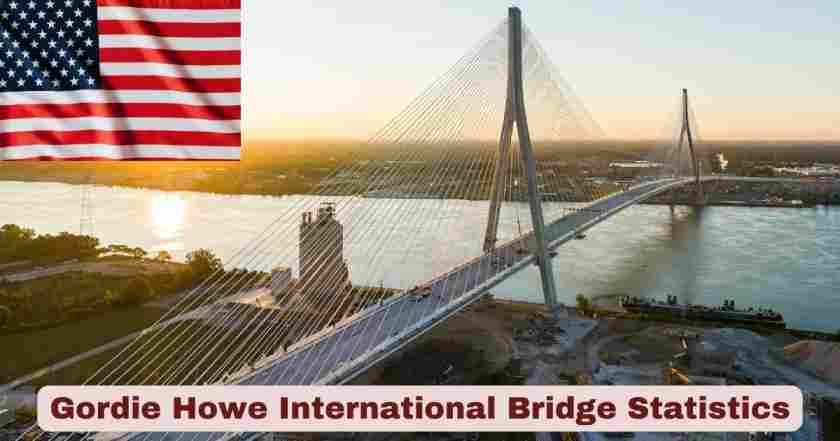
The Gordie Howe International Bridge stands as North America’s most ambitious cross-border infrastructure project, representing a $6.4 billion CAD investment in connecting Detroit, Michigan with Windsor, Ontario. This engineering marvel officially achieved its US Department of Homeland Security port of entry designation on February 2, 2026, with the designation taking effect March 2, 2026, paving the way for its highly anticipated early 2026 opening. Named after legendary hockey player Gordie Howe, who played 25 years with the Detroit Red Wings while maintaining his Canadian roots, the bridge features distinctive A-shaped towers designed to resemble hockey sticks in motion, rising 722 feet above their foundations.
The bridge’s 853-meter main span establishes it as the longest cable-stayed bridge in North America and the 10th-longest in the world, supported by 216 cable stays that hold a deck reaching 151 feet above the Detroit River at its highest point. Construction began in July 2018 after decades of planning and legal battles, employing more than 3,900 workers throughout the seven-year build period. As of October 2025, the project stood at 98% completion, with final commissioning and testing of critical systems including fire suppression, traffic analysis technology, toll collection equipment, and border security systems underway. The bridge will end the Ambassador Bridge’s 95-year monopoly on commercial truck traffic in the Detroit-Windsor corridor, offering modern infrastructure, direct freeway connections, and projected time savings of up to 20 minutes per crossing for truckers.
Interesting Facts and Latest Statistics About Gordie Howe International Bridge 2026
| Bridge Facts and Statistics | 2026 Data |
|---|---|
| Official Name | Gordie Howe International Bridge |
| Named After | Gordie Howe (legendary hockey player) |
| Naming Date | May 14, 2015 |
| Total Project Cost | CAD $6.4 billion (USD $4.7 billion) |
| Cost Overrun | $700 million over original estimate |
| Funding Source | 100% Canadian federal government |
| Construction Start Date | July 2018 |
| Construction Duration | 7+ years |
| Expected Opening | Early 2026 |
| Port of Entry Designation | February 2, 2026 (effective March 2, 2026) |
| Project Completion Status | 98% complete (as of October 2025) |
| Physical Connection Date | June 2024 (deck segments joined) |
| Bridge Total Length | 2.5 km (1.5 miles) |
| Main Span Length | 853 meters (2,800 feet) |
| North American Ranking | Longest cable-stayed bridge in North America |
| World Ranking | 10th-longest cable-stayed bridge globally |
| Tower Height | 220 meters (722 feet) |
| Tower Design | A-shaped resembling hockey sticks |
| Number of Cable Stays | 216 cable stays |
| Deck Height Above Water | 46 meters (151 feet) at highest point |
| Traffic Lanes | 6 lanes total (3 Canadian-bound, 3 US-bound) |
| Pedestrian/Cycling Path | Yes – dedicated multi-use path |
| Pedestrian Crossing Significance | First legal Detroit River pedestrian crossing |
| Canadian Port of Entry Size | 53 hectares (130 acres) |
| US Port of Entry Size | 68 hectares (170 acres) |
| LED Lights | 5,000 individually programmable LED lights |
| LED Light Testing | September 2025 |
| Design Lifespan | 125+ years |
| Ownership Structure | Joint Canada-Michigan (public) |
| Total Workers Employed | 3,900+ workers |
| Local Workers Percentage | 46% from Detroit-Windsor region |
Data sources: Windsor-Detroit Bridge Authority, Transport Canada, Michigan Department of Transportation, U.S. Department of Homeland Security Federal Register, 2024-2026
The Gordie Howe International Bridge represents the culmination of decades of planning, negotiation, and construction to create a modern, publicly-owned alternative to the aging Ambassador Bridge. The project’s CAD $6.4 billion price tag makes it one of the largest public infrastructure investments in North American history, fully funded by the Canadian federal government despite serving both nations. The bridge reached its most significant construction milestone in June 2024 when the two deck segments—one extending from Canada and one from the United States—met in the middle of the Detroit River, officially creating the physical connection between the two countries. This moment represented the culmination of years of precise engineering, as the two massive sections aligned perfectly to form the continuous 2.5-kilometer span.
The bridge’s engineering specifications showcase world-class design and construction. Its 853-meter main span not only claims the title of longest cable-stayed bridge in North America but also ranks as the 10th-longest cable-stayed bridge globally. The structure is supported by 216 individual cable stays that attach to twin A-shaped towers rising 722 feet above their foundations—nearly matching the height of Detroit’s iconic GM Renaissance Center. These towers were specifically designed to evoke hockey sticks captured mid-slapshot, a fitting tribute to the bridge’s namesake. The deck rises 151 feet above the Detroit River at its peak, providing ample clearance for commercial shipping while creating a striking visual landmark. An innovative feature includes 5,000 individually programmable LED lights integrated into the bridge structure, tested in September 2025, which will allow for spectacular light displays to commemorate holidays, special events, and national celebrations on both sides of the border.
Gordie Howe International Bridge Project Development Timeline 2026
| Milestone | Date | Details |
|---|---|---|
| Planning Initiation | Early 2000s | Studies began for Detroit-Windsor crossing alternatives |
| Official Naming | May 14, 2015 | Named after Gordie Howe by Prime Minister Harper |
| Construction Contract Award | 2018 | Bridging North America consortium selected |
| Construction Start | July 2018 | Groundbreaking and foundation work begins |
| Canadian Tower Completion | 2021 | First tower completed on Ontario side |
| US Tower Completion | 2022 | Second tower completed on Michigan side |
| Deck Connection | June 2024 | Bridge segments joined mid-river |
| LED Light Testing | September 2025 | 5,000 programmable lights tested |
| 98% Completion | October 2025 | Final systems testing and commissioning |
| Port Designation Announcement | February 2, 2026 | US DHS officially designates as port of entry |
| Port Designation Effective | March 2, 2026 | Legal authority to process border crossings |
| Anticipated Opening | Early 2026 | Expected to begin operations |
Data sources: Windsor-Detroit Bridge Authority, Transport Canada, Michigan Department of Transportation, news archives, 2015-2026
The development timeline of the Gordie Howe International Bridge spans more than two decades from initial concept to reality, reflecting the complexity of building major cross-border infrastructure. Planning studies began in the early 2000s as traffic congestion at the Ambassador Bridge worsened and concerns grew about the vulnerability of having a single privately-owned crossing handling 25% of all US-Canada merchandise trade. After years of environmental assessments, engineering studies, and political negotiations—complicated by fierce opposition from the Ambassador Bridge ownership—the project received official approval and naming on May 14, 2015, when Canadian Prime Minister Stephen Harper announced it would honor Gordie Howe, the hockey legend who embodied the US-Canada connection.
The Bridging North America consortium won the construction contract in 2018, launching the massive build that would employ 3,900+ workers over seven years. Construction progressed through distinct phases: foundation work and tower construction from 2018-2022, deck installation from 2022-2024, and systems integration and testing from 2024-2026. The Canadian tower was completed first in 2021, followed by the US tower in 2022, each requiring precise engineering to support the enormous loads of the cable-stayed design. The historic June 2024 deck connection represented the project’s most visible milestone, as crowds gathered on both sides of the Detroit River to witness the two halves of the bridge meet in the middle. Throughout 2025, workers focused on installing and testing critical operational systems, culminating in the September 2025 successful testing of the 5,000 LED lights and the February 2, 2026 announcement of the port of entry designation, which legally authorized the crossing to process international travelers and commerce starting March 2, 2026.
Gordie Howe International Bridge Engineering and Design Statistics 2026
| Engineering Specification | Details | Significance |
|---|---|---|
| Bridge Type | Cable-stayed suspension | Modern efficient design |
| Main Span Length | 853 meters (2,800 feet) | Longest in North America |
| Total Bridge Length | 2.5 km (1.5 miles) | Detroit River crossing |
| Tower Height | 220 meters (722 feet) | A-shaped hockey stick design |
| Tower Shape | A-frame configuration | Resembles slapshot motion |
| Number of Cables | 216 cable stays | Support entire deck |
| Cable Arrangement | Fan pattern | Distributed load support |
| Deck Clearance | 46 meters (151 feet) | Commercial shipping clearance |
| Deck Width | 6 traffic lanes plus path | 3 lanes each direction |
| Traffic Lane Width | Standard highway width | Safe truck passage |
| Multi-Use Path Width | Dedicated pedestrian/cycle | First legal river crossing |
| Foundation Depth | Deep caisson foundations | Stable Detroit River bedrock |
| Structural Material | Steel and concrete | 125+ year lifespan |
| Seismic Design | Earthquake resistant | Modern safety standards |
| Wind Resistance | High-wind engineering | Great Lakes climate |
| LED Lighting System | 5,000 programmable lights | Aesthetic and safety |
| Architectural Signature | Hockey stick towers | Cultural significance |
| Design Lifespan | 125+ years | Long-term infrastructure |
Data sources: Windsor-Detroit Bridge Authority, engineering reports, design documents, 2024-2026
The engineering design of the Gordie Howe International Bridge represents cutting-edge cable-stayed bridge technology adapted specifically for the challenges of the Detroit River crossing. The cable-stayed design was chosen over traditional suspension or truss bridge configurations because it offers superior strength-to-weight ratios, reduced maintenance requirements, and the ability to span long distances with fewer support piers—critical for maintaining shipping lanes on the busy Detroit River. The 853-meter main span required precise engineering calculations to distribute the enormous weight of six traffic lanes plus a pedestrian path across 216 individual cable stays arranged in a fan pattern from the two towers. Each cable was carefully tensioned to exact specifications to ensure proper load distribution and structural integrity.
The twin A-shaped towers serve as both functional structural elements and iconic architectural statements. Rising 722 feet from their foundations, these towers were engineered to support not only the static weight of the bridge deck and traffic but also dynamic loads from wind, temperature variations, and seismic activity. The A-frame configuration provides exceptional lateral stability while creating the distinctive hockey stick silhouette that honors the bridge’s namesake. The towers are anchored in deep caisson foundations that extend down to bedrock beneath the Detroit River, ensuring stability for the structure’s projected 125+ year lifespan. The deck itself maintains 151 feet of clearance above the water at its highest point, accommodating the passage of large commercial vessels while creating a graceful arc across the river. Wind resistance was a critical design consideration given the Great Lakes region’s severe weather, with the bridge engineered to withstand extreme wind events and ice loading during harsh Michigan-Ontario winters. The integration of 5,000 individually programmable LED lights adds both practical illumination for nighttime safety and the ability to create spectacular light displays, transforming the bridge into a dynamic piece of public art visible for miles.
Gordie Howe International Bridge Traffic and Capacity Statistics 2026
| Traffic Metric | Projected Volume | Comparison/Context |
|---|---|---|
| Expected Daily Traffic 2025 | 26,500 vehicles | Up from 18,500 projected in 2016 |
| Daily Passenger Vehicles | ~18,000 vehicles | Tourism and commuter traffic |
| Daily Commercial Trucks | ~8,500 trucks | Freight and trade |
| Annual Vehicle Capacity | ~9.7 million vehicles | Based on daily projections |
| Traffic Lane Configuration | 3 lanes per direction | Total 6 lanes |
| Canadian-Bound Lanes | 3 dedicated lanes | Separated traffic flow |
| US-Bound Lanes | 3 dedicated lanes | Separated traffic flow |
| Pedestrian/Cyclist Path | Dedicated multi-use path | First legal river crossing |
| Time Savings vs Ambassador | Up to 20 minutes per crossing | University of Windsor study |
| 30-Year Trucker Savings | USD $2.3 billion | From reduced crossing times |
| Processing Time Goal | Faster than Ambassador | Modern port facilities |
| Ambassador Current Daily | 8,000 trucks, 68,000 total | Competition for traffic |
| Market Share Target | Significant portion of Detroit-Windsor traffic | End monopoly |
Data sources: Windsor-Detroit Bridge Authority, University of Windsor Cross-Border Institute, traffic projections, 2024-2026
Traffic projections for the Gordie Howe International Bridge indicate it will handle approximately 26,500 vehicles daily once operations stabilize in 2025-2026, representing a substantial increase from the 18,500 vehicles per day originally projected during the 2016 planning phase. This upward revision reflects both growing cross-border trade volumes and anticipated traffic diversion from the Ambassador Bridge, which currently processes around 68,000 travelers and 8,000 trucks daily but faces increasing congestion, aging infrastructure, and high toll costs. The Gordie Howe Bridge’s modern six-lane configuration provides significantly more capacity than the Ambassador’s four lanes, with three dedicated lanes in each direction allowing for smoother traffic flow and reduced bottlenecks.
The bridge’s competitive advantage lies primarily in time savings and routing efficiency. A University of Windsor Cross-Border Institute study projected that truckers will save up to 20 minutes per crossing compared to the Ambassador Bridge route, primarily due to direct freeway connections on both the Canadian and American sides. The Ambassador Bridge requires trucks to navigate through Windsor city streets on the Canadian side, adding significant time and frustration, whereas the Gordie Howe Bridge features modern interchange infrastructure connecting directly to Highway 401 in Ontario and I-75 in Michigan. Over a 30-year period, these time savings translate to an estimated USD $2.3 billion in cost savings for the trucking industry through reduced fuel consumption, driver wages, and improved supply chain efficiency. The bridge’s dedicated multi-use pedestrian and cycling path represents a unique feature, creating the first legal non-ferry pedestrian crossing of the Detroit River and connecting to trail networks including the Trans Canada Trail on the Ontario side and regional bike paths on the Michigan side, opening new opportunities for recreational cross-border travel and active transportation.
Gordie Howe International Bridge Port of Entry and Border Facilities Statistics 2026
| Port Facility | Specifications | Features |
|---|---|---|
| Canadian Port of Entry Size | 53 hectares (130 acres) | Full customs and inspection |
| US Port of Entry Size | 68 hectares (170 acres) | CBP operations center |
| Total Port Infrastructure | 121 hectares (300+ acres) | Both sides combined |
| Processing Lanes (Canadian) | Multiple inspection lanes | Primary and secondary |
| Processing Lanes (US) | Multiple inspection lanes | Primary and secondary |
| NEXUS Lanes | Dedicated expedited lanes | Trusted traveler program |
| Commercial Truck Processing | Separate truck facilities | Inspection bays |
| Toll Collection System | Electronic toll collection | All-weather signage |
| Customs Buildings | Modern facilities both sides | Climate controlled |
| Technology Systems | RFID readers, cameras, sensors | Automated processing |
| Fire Suppression Systems | Complete bridge coverage | Safety infrastructure |
| Traffic Analysis Technology | Real-time monitoring | Flow optimization |
| Border Security Systems | Advanced screening | Multiple checkpoints |
| Employee Facilities | Staff buildings, parking | Both ports |
| Maintenance Facilities | Bridge maintenance centers | Long-term operations |
Data sources: Windsor-Detroit Bridge Authority, U.S. Customs and Border Protection, Canada Border Services Agency, 2024-2026
The port of entry facilities for the Gordie Howe International Bridge represent state-of-the-art border processing infrastructure designed to handle millions of annual crossings efficiently and securely. The Canadian port of entry spans 53 hectares (130 acres) in Windsor, while the US port of entry occupies an even larger 68 hectares (170 acres) in Detroit, together totaling more than 300 acres of dedicated border processing infrastructure. These massive facilities include primary and secondary inspection lanes, commercial truck processing areas, NEXUS trusted traveler lanes, customs buildings, administrative offices, employee parking, and maintenance centers, all designed with modern architectural standards and climate-controlled environments to ensure year-round operations in harsh Michigan-Ontario weather conditions.
Advanced technology systems integrated throughout both ports represent a quantum leap beyond the aging infrastructure at the Ambassador Bridge. RFID readers automatically scan transponders in vehicles and documents, while sophisticated camera systems capture license plates, vehicle characteristics, and facial recognition data for security screening. Electronic toll collection infrastructure with overhead signage designed for all-weather readability allows seamless payment processing without requiring vehicles to stop, improving traffic flow. The bridge itself features comprehensive fire suppression systems, traffic analysis technology that monitors flow in real-time to optimize lane usage, and extensive border security systems including radiation detection portals, non-intrusive inspection (X-ray) equipment for cargo, and biometric processing capabilities. The US Department of Homeland Security officially designated the crossing as a port of entry on February 2, 2026, with the designation taking legal effect March 2, 2026, authorizing U.S. Customs and Border Protection (CBP) and Canada Border Services Agency (CBSA) officers to staff the facilities and process international travelers and commerce. Final testing of all integrated systems occurred throughout late 2025, with the facilities standing ready to begin operations in early 2026.
Gordie Howe International Bridge Economic Impact Statistics 2026
| Economic Metric | Value/Impact | Context |
|---|---|---|
| Total Construction Cost | CAD $6.4 billion (USD $4.7 billion) | Canadian government funded |
| Cost Overrun | $700 million over estimate | Complex megaproject |
| Total Workers Employed | 3,900+ workers | Throughout construction |
| Local Workers | 46% from Detroit-Windsor region | ~1,800 local jobs |
| Construction Duration | 7+ years | July 2018 – Early 2026 |
| 30-Year Trucker Savings | USD $2.3 billion | Time and cost efficiency |
| Time Savings Per Crossing | Up to 20 minutes | Vs. Ambassador Bridge |
| Detroit-Windsor Jobs Supported | 150,000 jobs | Dependent on crossing |
| Annual Production Dependent | USD $13 billion | Regional economic activity |
| Trade Value via Detroit-Windsor | 25% of US-Canada trade | Critical corridor |
| Daily Trade Value | CAD $3.6 billion per day | Across all Detroit-Windsor crossings |
| Toll Revenue Projection | To be announced | Will fund operational costs |
| Competitive Impact on Ambassador | Traffic diversion expected | End 95-year monopoly |
| Tourism Impact | Pedestrian/bike access | New cross-border recreation |
| Regional Development | Infrastructure improvements | Roads, utilities both sides |
Data sources: Windsor-Detroit Bridge Authority, economic impact studies, University of Windsor, trade statistics, 2024-2026
The economic impact of the Gordie Howe International Bridge extends far beyond its CAD $6.4 billion construction price tag, generating substantial short-term employment and promising long-term efficiency gains for North American supply chains. During the seven-year construction period from 2018 to 2026, the project employed more than 3,900 workers, with 46% drawn from the local Detroit-Windsor region, injecting hundreds of millions of dollars in wages into the local economy. These ~1,800 local jobs represented opportunities for ironworkers, electricians, engineers, heavy equipment operators, concrete workers, and dozens of other skilled trades, many of whom gained valuable experience on one of North America’s largest infrastructure projects. The construction activity also benefited local suppliers, contractors, hotels, restaurants, and other businesses serving the workforce.
The bridge’s long-term economic value lies in supply chain efficiency improvements and enhanced trade capacity. The University of Windsor Cross-Border Institute calculated that time savings of up to 20 minutes per crossing compared to the Ambassador Bridge route will save truckers an estimated USD $2.3 billion over 30 years through reduced fuel costs, lower driver wages, and improved delivery schedules. For manufacturers relying on just-in-time delivery systems—particularly automotive companies with parts crossing the border seven to eight times before final assembly—these time savings translate directly to cost reductions and competitive advantages. The Detroit-Windsor corridor supports 150,000 jobs and USD $13 billion in annual production, with the new bridge promising to strengthen this economic engine by eliminating bottlenecks and providing redundancy if the Ambassador Bridge experiences closures or disruptions. The Canadian government plans to use toll revenue to recoup the construction investment over the bridge’s operational lifespan, though specific toll rates have not been announced as of early 2026. The bridge will also stimulate regional economic development, with improved road connections, new industrial parks, and enhanced cross-border cooperation creating opportunities for decades to come.
Gordie Howe International Bridge vs Ambassador Bridge Comparison 2026
| Feature | Gordie Howe Bridge | Ambassador Bridge |
|---|---|---|
| Opening Year | 2026 | 1929 (97 years old) |
| Age | Brand new | 97 years old |
| Ownership | Public (Canada-Michigan) | Private (Moroun family) |
| Bridge Type | Cable-stayed | Suspension |
| Main Span | 853 meters | 564 meters |
| Total Length | 2.5 km (1.5 miles) | 2.3 km (1.4 miles) |
| Traffic Lanes | 6 lanes (3 each direction) | 4 lanes (2 each direction) |
| Tower Height | 722 feet | 386 feet |
| Deck Clearance | 151 feet | 152 feet |
| Pedestrian Access | Yes – dedicated path | No pedestrian access |
| Daily Traffic Current | Not yet open | 8,000 trucks, 68,000 total |
| Daily Traffic Projected | 26,500 vehicles | Declining |
| Toll Rate | To be announced | $14/axle (trucks with transponder) |
| Canadian Approach | Direct Highway 401 connection | City streets through Windsor |
| US Approach | Direct I-75 connection | Direct I-75 connection |
| Time to Cross | Faster (up to 20 min savings) | Slower (city street routing) |
| NEXUS Lanes | Yes – dedicated | Limited |
| Technology | State-of-the-art | Aging infrastructure |
| Construction Cost | CAD $6.4 billion | $23.5 million (1929 dollars) |
| Design Life | 125+ years | Past typical lifespan |
| Market Share | Expected to capture significant traffic | Facing competition |
Data sources: Bridge authorities, engineering specifications, operational data, 2024-2026
The comparison between the Gordie Howe International Bridge and the Ambassador Bridge illustrates the dramatic contrast between modern 21st-century infrastructure and a nearly century-old crossing. The Ambassador Bridge, opened in 1929, has served admirably for 97 years, carrying 25% of all US-Canada merchandise trade through its four lanes, but shows its age in numerous ways. Trucks must navigate Windsor city streets on the Canadian approach, adding 15-20 minutes to each crossing compared to the direct freeway routing the Gordie Howe Bridge will provide. The Ambassador’s private ownership by the Moroun family has led to controversial toll pricing, with rates reaching $14 per axle for commercial trucks in 2025, compared to just $4.25 per axle at the Blue Water Bridge. The privately-owned structure has also faced criticism for lack of reinvestment in modernization and resistance to public alternative crossings.
The Gordie Howe Bridge addresses all these shortcomings with modern design. Its six lanes provide 50% more capacity than the Ambassador’s four lanes, while the cable-stayed design with 216 cables represents current engineering best practices for strength, durability, and maintainability. The direct freeway connections on both sides eliminate the frustrating Windsor city street navigation that plagues Ambassador Bridge users. Pedestrian and cyclist access via a dedicated path creates recreational and commuting opportunities impossible on the Ambassador Bridge. State-of-the-art technology systems including RFID readers, automated tolling, and advanced security screening will process traffic more efficiently than the Ambassador’s aging infrastructure. Most importantly, public ownership through the joint Canada-Michigan partnership ensures the bridge serves public interests rather than private profit maximization. While the CAD $6.4 billion construction cost seems enormous, it buys a structure engineered to last 125+ years and end a 95-year monopoly that has allowed a single private entity to control a critical international trade corridor. Traffic analysts expect the Gordie Howe Bridge to capture substantial market share quickly once opened, particularly from cost-conscious trucking companies seeking time savings and potentially lower tolls.
Gordie Howe International Bridge Toll and Operating Cost Projections 2026
| Financial Metric | Projection/Status | Details |
|---|---|---|
| Construction Cost | CAD $6.4 billion | 100% Canadian government funded |
| Toll Rate | Not yet announced | To be revealed before opening |
| Toll Collection System | Electronic/automated | No toll booths, overhead readers |
| Toll Revenue Purpose | Recoup construction costs | Over operational lifespan |
| Payback Period | Multi-decade projection | Not publicly specified |
| Operating Costs | Annual maintenance and staffing | Not publicly disclosed |
| Competing Toll (Ambassador) | $14/axle | Premium pricing |
| Competing Toll (Blue Water) | $4.25/axle | Budget option |
| Pricing Strategy | Competitive but unannounced | Balance recovery and traffic |
| NEXUS Discounts | Likely but not confirmed | Standard for border crossings |
| Commercial Fleet Programs | Expected transponder programs | Similar to other bridges |
| Ownership Revenue | Shared Canada-Michigan | Public ownership structure |
| 30-Year Trucker Savings | USD $2.3 billion | From time efficiency vs Ambassador |
| Economic ROI | Regional development benefits | Beyond direct toll revenue |
Data sources: Windsor-Detroit Bridge Authority, Canadian government statements, industry analysis, 2024-2026
Toll rates and operating cost structures for the Gordie Howe International Bridge remain among the most closely watched unknown factors as the early 2026 opening approaches. The Canadian government, which provided 100% of the CAD $6.4 billion construction funding, plans to recoup this investment through toll revenue over the bridge’s operational lifespan, but has not yet announced specific toll rates or the projected payback timeline. This creates significant uncertainty for trucking companies and logistics planners trying to decide whether to route traffic through the new bridge or continue using the Ambassador Bridge at $14 per axle or the Blue Water Bridge at $4.25 per axle. Industry analysts expect the Gordie Howe Bridge toll to fall somewhere between these extremes—high enough to generate substantial revenue but low enough to attract traffic away from the Ambassador monopoly.
The bridge features modern electronic toll collection infrastructure with overhead readers and no traditional toll booths, allowing vehicles to pass through at highway speeds while transponders or license plate recognition systems automatically charge accounts. This system reduces operating costs compared to staffed toll plazas while improving traffic flow. Operating expenses will include bridge maintenance, snow and ice removal, structural inspections, technology system upkeep, security, and staffing for the port of entry facilities, though specific budget projections have not been publicly disclosed. The public ownership structure through the joint Canada-Michigan partnership means toll revenue will fund operations and debt repayment rather than generating private profit as with the Ambassador Bridge. Beyond direct financial returns, the bridge promises substantial indirect economic benefits including the USD $2.3 billion in 30-year trucker savings from time efficiency, enhanced regional competitiveness, job creation, and improved supply chain reliability. Economic development benefits from improved infrastructure connectivity and the psychological boost of having modern, publicly-controlled border crossing alternatives may ultimately exceed the direct toll revenue value.
Gordie Howe International Bridge Cultural and Symbolic Significance 2026
| Cultural Element | Significance | Details |
|---|---|---|
| Named After | Gordie Howe | Legendary hockey player |
| Howe’s Career | 25 years Detroit Red Wings | Also proud Canadian |
| Naming Date | May 14, 2015 | PM Harper announcement |
| Tower Design | Hockey stick shape | A-frame resembles slapshot |
| Binational Symbol | US-Canada friendship | First major joint bridge project |
| LED Lighting | 5,000 programmable lights | Holiday and event displays |
| Pedestrian Path | First legal river crossing | Connects communities |
| Trail Connections | Trans Canada Trail | Regional bike networks |
| Architectural Icon | Tallest structures in region | 722-foot towers |
| Engineering Achievement | Longest cable-stayed in North America | International recognition |
| Public vs Private | Ends private monopoly | Public service priority |
| Regional Pride | Detroit-Windsor collaboration | Cross-border cooperation |
| Future Symbol | Modern North American partnership | 21st-century infrastructure |
Data sources: Windsor-Detroit Bridge Authority, historical records, cultural analysis, 2024-2026
The cultural and symbolic significance of the Gordie Howe International Bridge extends far beyond its engineering specifications and economic function. The decision to name the crossing after Gordie Howe, announced by Canadian Prime Minister Stephen Harper on May 14, 2015, created a powerful binational symbol honoring a man who embodied the US-Canada connection. Gordie Howe played 25 years with the Detroit Red Wings from 1946 to 1971, becoming one of hockey’s greatest players while maintaining his Canadian identity and pride in his Saskatchewan roots. His career bridged both nations just as the structure bearing his name literally bridges the Detroit River, making him the perfect namesake for a crossing meant to strengthen ties between two countries that share the world’s longest peaceful border.
The architectural design choices reinforce this cultural messaging. The distinctive A-shaped towers designed to resemble hockey sticks captured mid-slapshot create an instantly recognizable silhouette that honors both the bridge’s namesake and the sport that unites Canadian and American fans. The 5,000 individually programmable LED lights tested in September 2025 will allow the bridge to display red and white for Canada Day, red-white-and-blue for Independence Day, and rainbow colors for Pride celebrations, transforming the structure into a dynamic piece of public art that reflects community values and commemorates shared moments. The dedicated pedestrian and cycling path represents the first legal non-ferry pedestrian crossing of the Detroit River, opening new possibilities for residents of both cities to experience their neighboring country through active transportation and connecting to the Trans Canada Trail system and regional bike networks. The bridge’s public ownership through the joint Canada-Michigan partnership carries symbolic weight as a rejection of private control over critical infrastructure, demonstrating that cross-border connections should serve public good rather than private profit. For the Detroit-Windsor region, the bridge represents a source of civic pride and international cooperation, showcasing what two nations can accomplish through partnership and shared vision while creating an architectural icon that will define the regional skyline for 125+ years.
Gordie Howe International Bridge Future Outlook and Developments 2026
| Future Development | Timeline | Expected Impact |
|---|---|---|
| Bridge Opening | Early 2026 | Begin operations |
| Full Operations | Spring/Summer 2026 | Ramp up to capacity |
| Traffic Ramp-Up | 2026-2027 | Build to 26,500 daily vehicles |
| Ambassador Traffic Diversion | 2026 onwards | Significant market share shift |
| Toll Rate Announcement | Before opening 2026 | Critical for routing decisions |
| First-Year Performance Review | Late 2026/Early 2027 | Operations assessment |
| Regional Development | 2026-2030s | Industrial parks, infrastructure |
| Pedestrian/Bike Usage | Growing annually | Recreation and commuting |
| Trade Volume Growth | Long-term | Enhanced capacity for bilateral trade |
| Technology Upgrades | Ongoing | Border processing improvements |
| USMCA Review Impact | July 2026 | Trade policy affects traffic |
| Competition with Ambassador | Indefinite | Market dynamics evolving |
| 125-Year Lifespan | Through 2150s | Generational infrastructure |
Data sources: Windsor-Detroit Bridge Authority, policy projections, economic forecasts, 2026
The future outlook for the Gordie Howe International Bridge centers on its imminent early 2026 opening following the March 2, 2026 port of entry designation taking effect. Initial operations will begin with testing and gradual traffic acceptance before ramping up to full 26,500 daily vehicle capacity projected for steady-state operations in 2026-2027. The bridge faces immediate questions about toll rate announcements, which will fundamentally influence routing decisions for commercial truckers choosing between the new crossing, the Ambassador Bridge at $14 per axle, and the Blue Water Bridge at $4.25 per axle. Transportation analysts predict the Gordie Howe Bridge will quickly capture substantial market share from the Ambassador due to its time savings of up to 20 minutes per crossing, modern infrastructure, and direct freeway connections, potentially ending the Ambassador’s 95-year monopoly on Detroit-Windsor commercial truck traffic within months.
Long-term prospects position the bridge as transformative infrastructure for the Detroit-Windsor region and broader US-Canada economic integration. The crossing is engineered for a 125+ year lifespan, meaning it will serve generations through the mid-2100s, providing stable, publicly-owned border infrastructure independent of private commercial interests. Regional development opportunities include new industrial parks, logistics centers, and manufacturing facilities attracted by improved transportation connectivity on both sides of the border. The dedicated pedestrian and cycling path promises to grow in usage as residents discover the unique opportunity to walk or bike between countries, connecting to expanding trail networks and creating new recreational and commuting patterns. The bridge’s performance will influence the upcoming USMCA review in July 2026, demonstrating the importance both nations place on maintaining robust cross-border infrastructure. Technology systems will evolve continuously, with border processing becoming faster and more secure through biometric advances, artificial intelligence, and improved data sharing between customs agencies. As the Ambassador Bridge ages past its 100th birthday by 2029 with uncertain maintenance and future plans, the Gordie Howe International Bridge stands ready to become the primary crossing for the world’s largest bilateral trading relationship, fulfilling the vision of planners, engineers, and political leaders who worked for decades to create this modern gateway between Canada and the United States.
Disclaimer: This research report is compiled from publicly available sources. While reasonable efforts have been made to ensure accuracy, no representation or warranty, express or implied, is given as to the completeness or reliability of the information. We accept no liability for any errors, omissions, losses, or damages of any kind arising from the use of this report.