
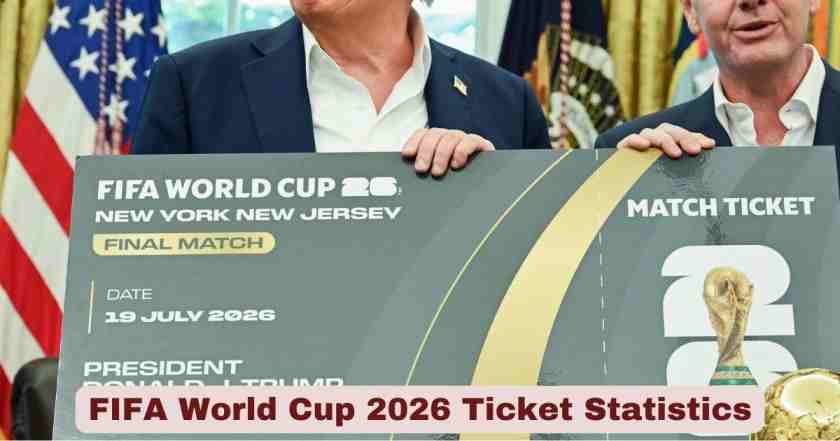
FIFA World Cup 2026 Tickets
The FIFA World Cup 2026 has shattered all previous tournament records with unprecedented global demand for tickets. According to official FIFA announcements, more than 150 million ticket requests have been submitted during the ongoing Random Selection Draw phase that opened on December 11, 2025. This historic demand represents 30 times oversubscription based on the 7 million tickets available across all 104 matches in the expanded 48-team tournament. FIFA President Gianni Infantino confirmed these statistics represent 3.4 times more requests than the total number of spectators who attended all 964 matches across the 22 World Cup editions since the inaugural tournament in 1930.
The ticket sales process for FIFA World Cup 2026 has evolved dramatically from previous tournaments, introducing dynamic pricing similar to major entertainment events in the United States. With host cities spanning three nations—the United States hosting 78 of 104 matches, Canada hosting 13 matches, and Mexico hosting 13 matches—the ticket distribution strategy aims to accommodate fans across 16 host cities while managing record-breaking demand. Nearly 2 million tickets were sold during the first two sales phases that concluded before December 2025, with residents of the United States, Canada, and Mexico leading purchases, followed by strong demand from England, Germany, Brazil, Colombia, Spain, Argentina, and France according to FIFA’s official sales data.
FIFA World Cup 2026 Ticket Demand – Interesting Facts in 2026
| Fact Category | Verified Statistics | Official Source |
|---|---|---|
| Total Ticket Requests | 150 million requests in first 15 days | FIFA Official Press Release December 2025 |
| Total Available Tickets | 7 million tickets for all 104 matches | FIFA President Statement, Multiple News Sources |
| Oversubscription Rate | 30 times oversubscribed | FIFA Official Announcement |
| Tickets Sold (First Two Phases) | Nearly 2 million tickets sold | FIFA Inside December 2025 |
| Countries Requesting Tickets | Fans from over 200 countries | FIFA Press Release |
| Comparison to All World Cups | Demand is 3.4x total attendance of all 22 World Cups since 1930 | FIFA President Infantino Statement |
| Number of Matches | 104 matches (60% increase from 64-match format) | FIFA Tournament Format |
| Number of Host Cities | 16 cities across 3 nations | FIFA Official Host Cities |
| US-Hosted Matches | 78 matches (75% of tournament) | FIFA Schedule Data |
| Current Sales Phase | Random Selection Draw (Dec 11 – Jan 13, 2026) | FIFA Ticketing Timeline |
| Maximum Tickets Per Household | 4 tickets per match, 40 total maximum | FIFA Official Terms |
| Lowest Price Ticket | $60 USD (Supporter Entry Tier) | FIFA Announcement December 16, 2025 |
Data Source: FIFA Official Press Releases (Inside.FIFA.com), FIFA President Gianni Infantino Statements December 2025, FIFA.com/tickets Official Documentation
The table above demonstrates the unprecedented global interest in FIFA World Cup 2026 with 150 million ticket requests submitted within just 15 days of the Random Selection Draw opening. This staggering figure translates to approximately 21.4 requests per available ticket, highlighting the intense competition fans face to secure seats. FIFA President Infantino’s statement that this demand equals 3.4 times the cumulative attendance of every World Cup match in history underscores the tournament’s monumental scale.
The 7 million available tickets across 104 matches represents the largest World Cup ticketing inventory ever offered, reflecting the expanded 48-team format that increased the match count by 62.5% compared to the previous 32-team, 64-match tournaments. Despite this expansion, demand has vastly outpaced supply, with the 30x oversubscription rate setting a new FIFA record. Nearly 2 million tickets sold during the first two phases (Early Ticket Access and presales) demonstrate sustained purchasing momentum even before specific match-ups were known. With fans from over 200 countries participating, the truly global nature of football’s appeal is evident. The United States’ role hosting 78 of 104 matches positions American venues at the center of this historic sporting event, while purchase limits of 4 tickets per match and 40 total tickets per household ensure broader fan access across the extended tournament duration from June 11 through July 19, 2026.
FIFA World Cup 2026 Ticket Pricing Structure in 2026
| Ticket Category | Price Range | Match Types | Details |
|---|---|---|---|
| Supporter Entry Tier (NEW) | $60 USD (fixed price) | All 104 matches including Final | Introduced December 16, 2025; allocated to Participating Member Association supporters |
| Category 4 | $60-$140 USD | Group Stage matches | Most affordable general category; upper tier seating |
| Category 3 | $140-$450 USD | Group Stage to knockout rounds | Upper tier locations outside Categories 1-2 |
| Category 2 | $250-$1,100 USD | Group Stage to knockout rounds | Mixed lower/upper tier outside Category 1 |
| Category 1 | $500-$6,730 USD | All matches (highest for Final) | Premium lower tier seating; highest price tier |
| Round of 32 | $170-$1,400 USD | Category 3 to Category 1 | Knockout stage premium |
| Round of 16 | $225-$1,800 USD | Category 3 to Category 1 | Price increase for advancing rounds |
| Quarterfinals | $330-$2,400 USD | Category 3 to Category 1 | Higher demand matches |
| Semifinals | $565-$3,200 USD | Category 3 to Category 1 | Penultimate matches |
| Third Place Match | $235-$1,200 USD | Category 3 to Category 1 | Bronze medal game |
| Final | $890-$6,730 USD | Category 3 to Category 1 | Highest prices of tournament; 4x Qatar 2022 Category 1 |
| Hospitality Packages | $2,500-$15,000+ USD | All matches available | Includes tickets, premium seating, meals, VIP experiences |
Data Source: FIFA Official Pricing December 2025, Associated Press Price Breakdown, ESPN Ticketing Reports, FIFA.com/hospitality
The FIFA World Cup 2026 ticket pricing structure marks the most expensive World Cup in tournament history, with Category 1 Final tickets reaching $6,730 USD—approximately four times higher than the $1,605 maximum charged for equivalent seats at Qatar 2022. FIFA’s introduction of the Supporter Entry Tier at a fixed $60 price for all matches, including the Final, came on December 16, 2025, following global backlash over affordability concerns, particularly from European fan organizations and government officials including UK Prime Minister Keir Starmer.
The new $60 Supporter Entry Tier tickets are allocated specifically to Participating Member Association (PMA) supporters, meaning fans must meet their national team’s eligibility criteria to access this pricing. Each of the 48 qualified nations establishes its own supporter recognition process. FIFA stated that 50% of each PMA allocation falls within affordable tiers: 40% in Supporter Value Tier and 10% in Supporter Entry Tier, with the remaining allocation split between Supporter Standard and Supporter Premier tiers.
The four primary ticket categories (1-4) are differentiated by seat location, with FIFA implementing a new classification system based on vertical positioning (lower vs. upper bowl) rather than the traditional horizontal field location system. Category 1 tickets occupy premium lower tier sections with optimal sightlines, commanding prices from $500 for group stage matches to $6,730 for the Final. Category 2 tickets positioned in both lower and upper tiers outside Category 1 range from $250 to $1,100 depending on match significance. Category 3 tickets in upper tier locations cost $140 to $450, while Category 4, the most affordable general category, ranges from $60 to $140 for group stage contests.
Knockout round pricing escalates significantly, with quarterfinal Category 1 tickets reaching $2,400, semifinal Category 1 seats commanding $3,200, and Final Category 1 tickets topping out at $6,730. This represents unprecedented pricing even compared to recent tournaments, reflecting both North American market economics and the expanded 48-team format’s increased prestige. Hospitality packages ranging from $2,500 to $15,000+ through official provider On Location offer all-inclusive experiences with guaranteed tickets, premium seating, meals, and VIP access for fans seeking elevated match-day experiences.
FIFA World Cup 2026 Ticket Sales Phases and Timeline in 2026
| Sales Phase | Dates | Ticket Type | Process | Status |
|---|---|---|---|---|
| Phase 1: Visa Presale | October 1-7, 2025 | Single match tickets (venues only, no teams) | First-come, first-served for Visa cardholders | COMPLETED |
| Phase 2: Early Ticket Draw | November 2025 | Single match tickets (venues only) | Random lottery system | COMPLETED |
| Tickets Sold (Phases 1-2) | Through December 5, 2025 | Various categories | First two phases total | ~2 million sold |
| Phase 3: Random Selection Draw | December 11, 2025 – January 13, 2026 | Specific match-ups after Final Draw | Random lottery; timing doesn’t affect chances | ONGOING (as of Jan 15, 2026) |
| PMA Supporter Tickets | December 11, 2025 – January 13, 2026 | $60 Supporter Entry Tier + other tiers | Through national team associations | ONGOING (as of Jan 15, 2026) |
| Results Notification | February 2026 (estimated) | Phase 3 successful applicants | Automatic credit card charges | PENDING |
| Phase 4: Additional Sales | Spring 2026 (date TBD) | Remaining inventory | First-come, first-served (subject to availability) | UPCOMING |
| Last-Minute Sales | Closer to matches (Summer 2026) | Remaining tickets if available | First-come, first-served | FUTURE |
Data Source: FIFA Official Sales Timeline (FIFA.com/tickets), FIFA Inside Press Releases, Associated Press Reports
The FIFA World Cup 2026 ticketing process follows a multi-phase approach designed to distribute 7 million tickets fairly across global demand. Phase 1 (October 1-7, 2025) offered the Visa Presale, granting Visa cardholders early access to purchase tickets for specific venues without knowing exact match-ups or teams. This first-come, first-served phase accommodated fans willing to commit before the December 5, 2025 Final Draw revealed group stage opponents.
Phase 2, the Early Ticket Draw in November 2025, utilized a random lottery system where fans submitted applications for venue-specific tickets, with FIFA randomly allocating seats. Combined, Phases 1 and 2 sold nearly 2 million tickets before exact match schedules were known, demonstrating strong early demand primarily from residents of the three host nations (United States, Canada, Mexico) followed by England, Germany, Brazil, Colombia, Spain, Argentina, and France.
Phase 3, the Random Selection Draw that opened December 11, 2025, marks the first opportunity for fans to request tickets for specific match-ups following the Final Draw at Washington D.C.’s Kennedy Center. This phase closes January 13, 2026 at 11:00 ET (17:00 CET), with timing of applications within this window not affecting success chances—all entries have equal probability. This lottery generated the record-breaking 150 million ticket requests within the first 15 days, creating the 30x oversubscription. Successful applicants will receive email notifications in February 2026 and be automatically charged via the credit card information provided during application.
Simultaneously with Phase 3, PMA Supporter Tickets became available December 11, allowing fans of qualified national teams to apply through their respective football associations for allocations including the new $60 Supporter Entry Tier. Each of the 48 participating nations sets its own eligibility criteria and distribution process for these tickets.
Phase 4, scheduled for Spring 2026, will offer remaining tickets on a first-come, first-served basis, with FIFA potentially conducting additional last-minute sales closer to the June-July tournament dates if inventory remains. FIFA encourages all fans to purchase exclusively through FIFA.com/tickets, the official and sole legitimate source, warning that hospitality packages and tickets from unofficial resale channels may be invalid.
FIFA World Cup 2026 Matches and Host Cities Distribution in 2026
| Country | Host Cities | Matches Hosted | Percentage of Total | Key Matches |
|---|---|---|---|---|
| United States | 11 cities: New York/New Jersey, Los Angeles, Dallas, Atlanta, Houston, Philadelphia, Boston, Kansas City, Miami, Seattle, San Francisco | 78 matches | 75% of tournament | Final (MetLife Stadium), 2 Semifinals, 4 Quarterfinals, majority of knockout rounds |
| Canada | 2 cities: Toronto, Vancouver | 13 matches | 12.5% of tournament | Group stage and knockout rounds including opening match (Mexico City) |
| Mexico | 3 cities: Mexico City, Guadalajara, Monterrey | 13 matches | 12.5% of tournament | Tournament opening match June 11 (Estadio Azteca) |
| TOTAL | 16 cities across 3 nations | 104 total matches | 100% coverage | First 48-team tournament; June 11 – July 19, 2026 |
Data Source: FIFA Official Match Distribution, FIFA Tournament Schedule December 2025
The FIFA World Cup 2026 distributes 104 matches across 16 host cities spanning three nations in an unprecedented tri-national hosting arrangement. The United States hosts 75% of the tournament with 78 matches across 11 cities, reflecting the country’s superior stadium infrastructure and capacity to accommodate the expanded 48-team format. Canada and Mexico each host 13 matches (12.5% each), with Canada utilizing 2 cities (Toronto’s BMO Field and Vancouver’s BC Place) while Mexico leverages 3 iconic venues (Mexico City’s Estadio Azteca, Guadalajara’s Estadio Akron, and Monterrey’s Estadio BBVA).
The United States’ 11 host cities—New York/New Jersey (MetLife Stadium hosting the July 19 Final), Los Angeles (SoFi Stadium), Dallas (AT&T Stadium with tournament-high 9 matches), Atlanta (Mercedes-Benz Stadium hosting a semifinal), Houston (NRG Stadium), Philadelphia (Lincoln Financial Field), Boston (Gillette Stadium), Kansas City (Arrowhead Stadium), Miami (Hard Rock Stadium hosting third-place match), Seattle (Lumen Field), and San Francisco (Levi’s Stadium)—ensure coast-to-coast American participation. These venues will accommodate the Final match, both semifinals, all 4 quarterfinals, and the majority of knockout rounds, cementing the United States’ central role in the tournament.
Mexico’s historic role includes hosting the tournament’s opening match on June 11, 2026 at Estadio Azteca in Mexico City, the only stadium to host three World Cups (1970, 1986, 2026). This iconic venue, site of Diego Maradona’s “Hand of God” goal and Pelé’s brilliance, sits at 7,200 feet elevation, creating unique playing conditions. Canada’s Toronto and Vancouver bring passionate multicultural fan bases and proven soccer infrastructure from MLS operations.
The expanded 48-team format necessitates 104 matches—a 62.5% increase from the traditional 64-match, 32-team tournaments—requiring the tri-national approach to provide adequate venues and minimize team travel during the 39-day competition from June 11 through July 19, 2026.
Ticket Purchase Limits and Regulations for 2026
| Regulation Category | Limit/Requirement | Details | Source |
|---|---|---|---|
| Maximum Per Match | 4 tickets | Per household per individual match | FIFA Official Terms |
| Tournament Total Maximum | 40 tickets | Maximum across all 104 matches per household | FIFA Official Terms |
| Household Definition | Same postal address | All purchases linked to identical address count toward limits | FIFA Terms & Conditions |
| Matches Per Day Limit | 1 match | Fans may only apply for/purchase tickets to one match per day | FIFA Restrictions |
| Minimum Age | 18 years old | Must be 18+ to apply for or purchase tickets | FIFA Eligibility Rules |
| FIFA ID Requirement | Mandatory | All purchasers must create FIFA ID account at FIFA.com/tickets | FIFA Registration System |
| Payment Method | Credit card auto-charge | Successful applicants automatically charged; no manual payment | FIFA Payment Process |
| Refund Policy (Group Stage) | Administrative fee waived | PMA supporters whose teams don’t advance receive fee-waived refunds | FIFA Announcement Dec 16, 2025 |
| Official Source Only | FIFA.com/tickets | Only legitimate ticket source; unofficial channels may be invalid | FIFA Warning |
| Hospitality Exception | 4+ tickets available | Packages through FIFA.com/hospitality allow more than 4 for same match | FIFA Hospitality Rules |
| Visa Requirements | Host country specific | Tickets don’t guarantee entry; separate visa/entry requirements apply | FIFA Travel Advisory |
| FIFA PASS (US only) | Priority visa appointments | US ticket holders eligible for Priority Appointment Scheduling System | FIFA-US Government Program |
Data Source: FIFA Official Terms & Conditions 2026, FIFA.com/tickets FAQ Section, FIFA Customer Support Documentation
FIFA’s ticket purchase regulations for the 2026 World Cup implement strict limits designed to prevent ticket hoarding and ensure broader fan access. The 4-ticket-per-match household limit means that regardless of how many individuals live at the same postal address, only 4 tickets maximum can be purchased for any single game. The 40-ticket tournament total limit prevents fans from monopolizing seats across multiple matches, though this cap still allows attendance at numerous games throughout the 39-day competition.
The household definition based on postal address rather than individual purchasers represents a significant anti-scalping measure. FIFA systems track all purchases linked to identical addresses in FIFA ticketing accounts, counting these toward the collective household limit. This prevents workarounds where multiple family members at the same residence attempt to exceed limits. The one-match-per-day restriction further prevents schedule hoarding, though fans can purchase tickets for matches on different dates.
Age restrictions require all applicants to be 18 years or older, with mandatory FIFA ID account creation at FIFA.com/tickets as the sole legitimate source. The random lottery system means timing doesn’t affect selection—applications submitted on December 11 have the same probability as those submitted January 13 (the deadline). Successful applicants receive email notification and face automatic credit card charges; no manual payment processing occurs.
Refund policies were amended December 16, 2025, when FIFA announced it would waive administrative fees for PMA supporter ticket holders whose national teams are eliminated during group stages. This policy adjustment addresses concerns that fans purchasing through national associations face financial penalties when teams don’t advance to knockout rounds.
Travel and entry requirements remain separate from ticketing—possession of match tickets does not guarantee entry to the United States, Canada, or Mexico. Fans must comply with each host country’s visa and immigration requirements. The FIFA Priority Appointment Scheduling System (FIFA PASS) offers United States ticket holders expedited visa appointment scheduling, acknowledging the processing time challenges for the estimated 10 million international visitors expected.
Hospitality package purchasers through FIFA.com/hospitality (operated by official provider On Location) can exceed the 4-ticket-per-match limit, with packages ranging from $2,500 to $15,000+ including tickets, premium seating, meals, and VIP experiences. FIFA emphasizes that tickets from unofficial resale platforms or unauthorized sources may be confiscated at venue entrances, leaving purchasers without recourse.
Ticket Demand by Country and Region in 2026
| Country/Region | Ticket Purchase Ranking | Estimated Demand Share | Key Factors |
|---|---|---|---|
| United States | #1 Overall | Highest purchasing volume (first two phases) | Host nation, 78 of 104 matches, 11 host cities |
| Canada | #2 Overall | Second-highest purchasing volume | Host nation, close proximity to US venues |
| Mexico | #3 Overall | Third-highest purchasing volume | Host nation, passionate football culture |
| England | #4 Overall | Highest non-host nation | Strong traveling support, qualified team, large fan base |
| Germany | #5 Overall | Second-highest European demand | Football powerhouse, qualified team, extensive support |
| Brazil | #6 Overall | Highest South American demand | Five-time champions, massive global fanbase |
| Colombia | #7 Overall | Strong South American demand | Growing football presence, qualified team |
| Spain | #8 Overall | Third-highest European demand | Recent success, qualified team, large diaspora |
| Argentina | #9 Overall | Defending champions | Messi factor, 2022 champions, passionate supporters |
| France | #10 Overall | Fourth-highest European demand | 2018 champions, strong national team, qualified |
| Over 200 Countries | Submitted requests | 150 million total requests | Truly global tournament interest |
Data Source: FIFA Official Sales Data (Inside.FIFA.com December 2025), FIFA President Statements on Purchasing Patterns
FIFA’s official sales data from the first two phases (October-November 2025) reveals that residents of the three host countries dominated early purchasing, with the United States leading all nations in ticket acquisition. This pattern reflects both geographic advantage—Americans don’t require international travel to attend matches—and the concentration of 78 matches across 11 US cities, providing numerous attendance opportunities. Canada’s #2 ranking benefits from similar host nation advantages and proximity to US venues, while Mexico’s #3 position demonstrates the country’s legendary football passion despite hosting only 13 matches.
England emerged as the highest non-host nation in ticket purchases, consistent with English fans’ reputation as prolific travelers for football tournaments. The English Football Association shared detailed pricing information with the England Supporters Travel Club (ESTC), calculating that purchasing tickets for every England match through the Final would cost approximately $7,000 USD. Germany’s #5 ranking reflects the nation’s consistent World Cup presence and large, dedicated traveling support.
Brazil’s position as the highest South American purchasing country outside Mexico demonstrates the five-time champions’ global fanbase, though geographic distance creates higher attendance costs for South American supporters. Colombia’s #7 ranking represents the nation’s growing football prominence, while Argentina’s #9 position surprised some analysts given the defending champions’ status and Lionel Messi’s likely final World Cup appearance—though some attribute the lower ranking to the timing of early ticket sales before passion peaks closer to the tournament.
Spain and France, both recent World Cup champions (France 2018, Spain 2010), round out the top 10, leveraging strong national team pedigrees and substantial fan bases. The fact that fans from over 200 countries submitted requests among the 150 million total demonstrates unprecedented global interest, with FIFA President Infantino noting this represents 3.4x the cumulative attendance of all 22 World Cups since 1930.
Economic Impact of FIFA World Cup 2026 Tickets in 2026
| Economic Factor | Projected Value | Details | Source |
|---|---|---|---|
| Total Tournament Revenue (FIFA) | $10 billion+ USD | Overall FIFA revenue from expanded 48-team format | ESPN Financial Reports |
| Ticket Sales Revenue | $1.5-2 billion USD (estimated) | Based on 7 million tickets at average $200-$285 | Industry Analyst Estimates |
| Hospitality Package Revenue | $500 million+ USD | Premium packages $2,500-$15,000+; high-margin sales | FIFA Hospitality Data |
| FIFA Reinvestment Commitment | 90%+ of revenues | Returns to 211 Member Associations for football development | FIFA Official Statement |
| Broadcast Rights Value | $1.5 billion USD | Television and streaming rights for tournament coverage | FIFA Financial Reports |
| Average Ticket Price | $200-$285 USD | Estimated across all categories and match types | Multiple Source Average |
| Secondary Market Surge | 150-300% markups | Unofficial resale prices significantly exceed face value | Ticket Resale Market Data |
| Fan Spending Per Attendee | $2,500-$3,500 USD | Total per-person spending including tickets, travel, lodging, meals | US Travel Association |
| Total US Economic Impact | $5 billion+ USD | Economic activity from 10 million international visitors | US Department of Commerce |
| Employment Created | 40,000+ jobs | Temporary positions in hospitality, tourism, events | US Travel Association |
Data Source: ESPN Financial Analysis, FIFA Revenue Statements, US Department of Commerce, US Travel Association Projections
The FIFA World Cup 2026 represents the most lucrative tournament in football history, with total FIFA revenues projected to exceed $10 billion USD—an unprecedented figure reflecting the expanded 48-team format, 104 matches, and North American market economics. Ticket sales alone are estimated to generate $1.5 to $2 billion USD, calculated by dividing 7 million available tickets by average prices ranging from $200 to $285 depending on category mix and match significance.
Hospitality packages constitute a high-margin revenue stream, with premium offerings ranging from $2,500 to $15,000+ per package through official provider On Location. These all-inclusive experiences attract corporate clients, affluent fans, and VIP groups willing to pay substantial premiums for enhanced match-day services including guaranteed seating, meals, premium bars, and exclusive access. FIFA projects hospitality revenues exceeding $500 million, significantly higher than standard ticket sales on a per-seat basis.
FIFA’s reinvestment commitment pledges to return 90%+ of tournament revenues to the 211 Member Associations worldwide, funding grassroots football development, women’s football initiatives, youth programs, and infrastructure improvements in nations lacking resources. FIFA President Infantino defended controversial pricing by emphasizing this global redistribution, stating “without FIFA, there would be no football in 150 countries in the world.” Critics counter that ticket pricing has made the tournament increasingly inaccessible to average fans, particularly in markets outside North America.
Broadcast rights valued at $1.5 billion provide another major revenue source, with television networks and streaming platforms worldwide paying substantial fees to air matches. The tournament’s 39-day duration across multiple time zones ensures optimal broadcast windows for global audiences, maximizing advertising revenue and viewership.
Secondary ticket markets have seen dramatic markups, with unofficial resale platforms listing tickets at 150-300% above face value despite FIFA’s official policy restricting resales to its own FIFA Collect platform (which charges 15% fees to both buyers and sellers). This scalping dynamic, common in North American sports but controversial for football fans globally, has drawn criticism from fan organizations in Europe and elsewhere.
Total US economic impact from the estimated 10 million international visitors could exceed $5 billion, with average per-attendee spending of $2,500 to $3,500 on accommodations, dining, transportation, entertainment, and merchandise. This figure creates approximately 40,000 temporary jobs in hospitality, tourism, event services, and related industries, providing significant economic stimulus to the 11 US host cities during summer 2026.
Ticket Distribution Methods and Technology in 2026
| Distribution Method | Description | Percentage of Allocation | Access Details |
|---|---|---|---|
| Random Selection Draw (General Public) | FIFA lottery system; equal probability regardless of timing | ~65-70% of total tickets | Open to all fans via FIFA.com/tickets |
| PMA Supporter Allocations | Tickets for qualified national team supporters | ~15-20% of total tickets | Through each nation’s football association; must meet eligibility criteria |
| Hospitality Packages | Premium all-inclusive experiences | ~8-10% of total tickets | Available via FIFA.com/hospitality through On Location |
| FIFA Partners & Sponsors | Corporate allocations to official partners | ~3-5% of total tickets | Visa, Coca-Cola, Adidas, other FIFA sponsors |
| Host Country Organizing Committees | Allocations for local organizations, officials | ~2-3% of total tickets | US, Canadian, Mexican organizing committees |
| FIFA Congress & Administration | Governing body allocation | ~1-2% of total tickets | FIFA officials, delegates, staff |
| Media & Broadcast Rights Holders | Press and broadcaster working seats | Non-ticketed allocation | Separate accreditation system |
Data Source: FIFA Allocation Patterns (historical + 2026 adjusted), FIFA Ticketing FAQ, Industry Analysis
FIFA’s ticket distribution strategy for 7 million seats across 104 matches balances public access with partner obligations and premium revenue opportunities. The Random Selection Draw constitutes the largest allocation at approximately 65-70% of total tickets, ensuring that millions of general fans worldwide have opportunities to attend matches through the fair lottery system. All applicants during the December 11, 2025 – January 13, 2026 window receive equal consideration regardless of submission timing—entries on the first day carry no advantage over those submitted on the deadline.
Participating Member Association (PMA) Supporter allocations represent 15-20% of tickets, distributed by each of the 48 qualified nations to fans meeting their specific eligibility criteria. These allocations include the newly introduced $60 Supporter Entry Tier tickets, with FIFA mandating that 50% of each PMA allocation falls within affordable tiers (40% Supporter Value Tier, 10% Supporter Entry Tier). This structure aims to ensure loyal national team supporters gain preferential access at lower prices, though critics note the $60 tier represents only ~10% of PMA allocations, translating to roughly 1,000 seats per match depending on stadium capacity.
Hospitality packages comprising 8-10% of tickets generate disproportionate revenue given prices ranging from $2,500 to $15,000+. These premium experiences, sold exclusively through On Location as FIFA’s official hospitality provider, include match tickets, premium seating locations, pre-match meals, VIP lounges, complimentary beverages, and often post-match events. Corporate clients, affluent individuals, and luxury travel agencies purchase these packages, accepting substantial markups for guaranteed access and elevated experiences.
FIFA partner and sponsor allocations (3-5% of tickets) fulfill contractual obligations to companies like Visa, Coca-Cola, Adidas, and other official tournament sponsors who pay substantial fees for marketing rights. These tickets support corporate hospitality, employee rewards, and promotional campaigns. Host country organizing committees (2-3%) receive allocations for local officials, dignitaries, community programs, and operational needs. FIFA Congress and administration (1-2%) covers governing body officials, delegates, and administrative staff.
Technology infrastructure supporting this massive distribution includes FIFA’s secure online platform requiring FIFA ID registration, integrated payment processing for automatic credit card charges, anti-fraud systems tracking household addresses to enforce purchase limits, and mobile ticketing via FIFA’s official app for digital ticket delivery and venue entry using QR codes. The platform must handle extraordinary traffic spikes—the 150 million requests in 15 days demonstrated unprecedented demand requiring robust server capacity.
Special Ticket Programs and Accessibility in 2026
| Program Name | Target Group | Benefits | Details |
|---|---|---|---|
| Supporter Entry Tier | Participating Member Association supporters | $60 fixed price for all 104 matches | Introduced Dec 16, 2025; must meet national team eligibility; 10% of PMA allocation |
| Supporter Value Tier | PMA supporters seeking affordable options | Mid-range pricing for supporters | 40% of PMA allocation; prices between Entry and Standard |
| Accessible Seating Program | Fans with disabilities | Wheelchair spaces, companion seating, accessible facilities | Available in all categories at all 16 venues; book via FIFA.com/tickets |
| Group Sales Program | Fan groups, clubs, organizations | Bulk ticket purchasing for 10+ fans | Coordinated seating blocks; special application process |
| Youth Ticket Discount | Fans under 18 (with adult) | Reduced pricing in Category 3-4 | Must be accompanied by adult ticket holder |
| Senior Citizen Discount | Fans 60+ years old | Reduced pricing in select categories | Age verification required during application |
| Local Resident Programs | Residents of host cities | Priority access, discounted rates | Varies by host city organizing committee |
| Corporate Hospitality Tiers | Business clients, VIP groups | Multiple package levels $2,500-$15,000+ | Includes premium seating, meals, VIP experiences |
| FIFA Legacy Program | Underserved communities, youth | Free or heavily discounted tickets | Distributed through FIFA Foundation partnerships |
| Military/First Responder Program | Active military, veterans, first responders | Special allocations, discounted pricing | US, Canada, Mexico specific programs |
Data Source: FIFA Official Ticketing Programs 2026, FIFA.com/tickets Accessibility Section, FIFA Foundation Announcements
FIFA’s special ticket programs aim to balance commercial objectives with accessibility and social responsibility for FIFA World Cup 2026. The Supporter Entry Tier introduced December 16, 2025, directly responded to affordability criticism, offering $60 fixed-price tickets for all 104 matches including the Final. However, this tier represents only 10% of Participating Member Association allocations, meaning availability remains extremely limited relative to demand. For a stadium holding 70,000 spectators, roughly 1,000-1,500 Supporter Entry Tier seats would be available per match, distributed among all qualified nations’ supporter groups.
The Supporter Value Tier comprising 40% of PMA allocations provides mid-range pricing between the $60 Entry Tier and higher Standard/Premier tiers, offering broader affordable access to fans meeting national team eligibility criteria. Each of the 48 participating nations establishes its own supporter recognition process, with some federations requiring membership in official supporter clubs, attendance at previous matches, or registration in national databases.
Accessible seating programs ensure compliance with Americans with Disabilities Act (ADA) standards in US venues and equivalent regulations in Canadian and Mexican stadiums. All 16 host venues provide wheelchair-accessible seating locations, companion seats, accessible restrooms, elevators, and designated parking. Fans requiring accessible accommodations book through standard FIFA ticketing channels, selecting accessible seating options during application. FIFA guarantees accessible seating availability across all ticket categories, ensuring fans with disabilities can attend matches at comparable price points to general seating.
Group sales programs accommodate organized fan clubs, corporate groups, school organizations, and community associations seeking to attend together. Groups of 10 or more fans apply through special FIFA processes requesting coordinated seating blocks, with larger groups potentially qualifying for discounted rates. This program proved popular during previous tournaments for traveling supporter groups, university study abroad programs, and corporate team-building events.
Youth and senior citizen discounts provide age-based pricing reductions in Categories 3 and 4, making matches more accessible for families and older fans. Youth tickets require accompaniment by an adult ticket holder, while senior discounts necessitate age verification (60+ years) during the application process. These programs recognize that younger and older fans may have limited financial resources while promoting multi-generational attendance.
Local resident programs vary by host city, with some organizing committees offering priority access or discounted rates to residents of their metropolitan areas. For example, residents of Kansas City, Miami, or Boston might receive special application windows or reduced pricing for matches in their home stadiums, rewarding local communities for hosting infrastructure and disruptions during the tournament.
FIFA Legacy Programs through the FIFA Foundation distribute free or heavily subsidized tickets to underserved communities, youth football programs, refugees, and charitable organizations. These initiatives, expanded significantly for the 2026 tournament, aim to ensure World Cup access extends beyond affluent fans, creating lasting positive social impact. The program partners with NGOs, community organizations, and football development initiatives across all three host nations.
Military and first responder programs honor active-duty service members, veterans, police, firefighters, and emergency medical personnel through special ticket allocations and discounted pricing. Given the tournament’s timing during America’s 250th anniversary celebrations, these programs carry particular significance in the United States, though Canada and Mexico implement similar initiatives for their respective public servants.
Ticket Resale Policies and Anti-Scalping Measures in 2026
| Policy Category | Regulation | Enforcement | Consequences |
|---|---|---|---|
| Official Resale Platform | FIFA Collect only | Exclusive authorized resale marketplace | 15% fee charged to both buyer and seller |
| Unauthorized Resale Prohibition | Tickets from unofficial sources invalid | Venue security screening, ticket authentication | Confiscation at entry, no refund, potential legal action |
| Ticket Transfer Rules | Name changes allowed once | Through FIFA account management | Must transfer minimum 30 days before match |
| Price Controls (Official Platform) | Cannot exceed face value + fees | FIFA Collect platform enforces maximum | Prevents price gouging on official channel |
| Secondary Market Monitoring | FIFA tracks unofficial listings | Partnership with anti-scalping organizations | Cease and desist notices, legal challenges |
| Ticket Authentication Technology | Mobile tickets with dynamic QR codes | Codes refresh every 30 seconds | Prevents screenshot/counterfeit tickets |
| ID Verification at Venues | Photo ID required matching ticket purchaser | Stadium security checks at entry points | Denial of entry if names don’t match (unless officially transferred) |
| Purchase Limit Enforcement | 4 per match, 40 total per household | Address-based tracking across all accounts | Account suspension, ticket cancellation |
| Non-Transferable Hospitality | Hospitality packages tied to original purchaser | Name verification at premium entrances | Hospitality benefits revoked if transferred |
| Consumer Protection | Refund policies for team elimination | Administrative fee waiver for PMA supporters | Announced December 16, 2025 |
| Law Enforcement Coordination | Partnership with US, Canada, Mexico authorities | Anti-counterfeiting task forces | Criminal prosecution for large-scale operations |
Data Source: FIFA Official Terms & Conditions 2026, FIFA Collect Platform Rules, FIFA Anti-Scalping Statements
FIFA’s anti-scalping measures for the 2026 World Cup represent the organization’s most aggressive stance against unauthorized ticket resales in tournament history. The FIFA Collect platform serves as the exclusive official resale marketplace, charging both buyers and sellers 15% fees while enforcing strict price controls preventing markups above face value plus fees. This model contrasts sharply with unregulated secondary markets where tickets list at 150-300% premiums, but critics argue the 15% fee structure still enables FIFA to profit from resales while claiming consumer protection.
Unauthorized resale prohibition constitutes FIFA’s primary enforcement mechanism, declaring that tickets purchased through unofficial channels—including StubHub, Vivid Seats, SeatGeek, or private sales—are invalid and subject to confiscation at venue entrances. Stadium security personnel utilize ticket authentication technology to verify purchases originated from FIFA’s official platform, with dynamic QR codes refreshing every 30 seconds on mobile tickets to prevent screenshot sharing or counterfeit reproduction. Fans caught with invalid tickets face entry denial without refund or recourse, creating significant financial risk for those purchasing from unauthorized sources.
Ticket transfer rules allow name changes once per ticket through FIFA account management systems, accommodating legitimate situations where original purchasers cannot attend. However, transfers must occur minimum 30 days before match dates, preventing last-minute resales and day-of-match scalping. Combined with photo ID verification at venues matching ticket purchaser names, this system substantially reduces unauthorized transfer opportunities while maintaining some flexibility for genuine circumstances.
Secondary market monitoring involves FIFA partnerships with anti-scalping organizations tracking listings on major resale platforms. FIFA issues cease-and-desist notices to platforms and individual sellers, threatening legal action for terms of service violations. However, enforcement proves challenging given the global nature of secondary markets and varying legal frameworks across jurisdictions. Some countries classify ticket resale as legitimate commerce while others criminalize markup sales.
Purchase limit enforcement through address-based tracking prevents circumventing the 4-ticket-per-match, 40-ticket tournament maximum via multiple accounts. FIFA’s systems flag purchases from identical postal addresses across different FIFA IDs, counting all transactions toward household limits. Violations result in account suspensions and ticket cancellations, though determined scalpers potentially use different addresses, making perfect enforcement difficult.
Hospitality package non-transferability prevents purchasers from reselling premium experiences, with name verification at hospitality entrances revoking benefits if original purchasers don’t attend. This policy protects the exclusivity of high-end packages while preventing arbitrage where purchasers resell access at markups.
Consumer protection policies evolved following fan advocacy, with FIFA announcing December 16, 2025 that PMA supporter ticket holders whose teams are eliminated during group stages receive refunds with administrative fees waived. This addresses concerns that loyal supporters purchasing through national associations faced financial penalties when teams didn’t advance, demonstrating some FIFA responsiveness to criticism.
Law enforcement coordination involves partnerships with US, Canadian, and Mexican authorities establishing anti-counterfeiting task forces targeting large-scale illegal ticket operations. Criminal prosecution awaits sophisticated counterfeit operations or organized scalping rings, though individual fans purchasing from unauthorized sources face civil consequences (entry denial, financial loss) rather than criminal charges.
International Visitor Requirements for FIFA World Cup 2026
| Requirement Type | Details | Processing Time | Important Notes |
|---|---|---|---|
| US Visa Requirements | Required for most international visitors | 3-6 months (recommended application timeline) | Possession of tickets does NOT guarantee entry |
| FIFA PASS (US Priority Scheduling) | Expedited visa appointment scheduling | Varies by country/embassy | Available to US ticket holders for faster processing |
| Canadian Visa/eTA | Electronic Travel Authorization or visa | eTA: minutes to days; Visa: several weeks | Canada matches require separate entry authorization |
| Mexican Visa Requirements | Many nationalities visa-exempt; others require visa | 2-4 weeks for visa processing | Check Mexican consulate requirements by nationality |
| Passport Validity | 6 months beyond travel dates | N/A – renewal takes 6-12 weeks | Most countries require 6-month validity rule |
| Health Requirements | COVID-19 policies (if applicable in 2026) | Varies | Monitor CDC, Health Canada, Mexican health ministry |
| Travel Insurance | Recommended but not mandatory | Purchase before departure | Covers medical emergencies, trip cancellations |
| Customs Declarations | Required for all international arrivals | At port of entry | Must declare merchandise, currency over limits |
| Multiple Entry Requirements | Needed if attending matches in multiple countries | Varies by visa type | Attending US + Canada matches requires valid authorization for both |
| Processing Fees | $160-$185 USD (US visa); varies for Canada/Mexico | N/A | Non-refundable even if denied |
Data Source: US Department of State, US Customs and Border Protection, Government of Canada, Mexican Consular Services
International visitor requirements present significant logistical challenges for the estimated 10 million foreign visitors expected to attend FIFA World Cup 2026. The United States visa application process typically requires 3-6 months from initial application through interview scheduling, interview completion, and visa issuance—creating tight timelines for fans purchasing tickets in early 2026 for June-July matches. The US Department of State reports that certain embassies and consulates face 12+ month wait times for routine visa interview appointments, potentially preventing ticket holders from attending matches.
The FIFA Priority Appointment Scheduling System (FIFA PASS) addresses this bottleneck by offering US ticket holders expedited appointment scheduling at American embassies and consulates worldwide. While not guaranteeing visa approval—approval/denial decisions remain at consular officer discretion based on standard criteria—FIFA PASS ensures ticket holders can obtain interview appointments within reasonable timeframes. However, fans must still demonstrate sufficient ties to home countries, financial stability, and intent to return after the tournament to satisfy visa requirements.
Canadian entry requirements vary by nationality, with citizens of many countries eligible for Electronic Travel Authorization (eTA) processed online within minutes to days, costing $7 CAD. Other nationalities require traditional visitor visas taking several weeks to process. Fans attending matches in both US and Canadian cities must ensure they hold valid authorizations for both countries, as matches in Toronto and Vancouver necessitate Canadian entry even if primarily attending US matches.
Mexican visa policies offer exemptions for numerous nationalities, particularly citizens of US, Canada, European Union, and many Latin American countries who can enter visa-free for tourism. Other nationalities require visas processed through Mexican consulates, typically taking 2-4 weeks. The tournament’s opening match on June 11, 2026 at Estadio Azteca in Mexico City means fans attending this historic game must comply with Mexican entry requirements.
Passport validity rules require most countries’ immigration authorities to see 6 months remaining validity beyond intended travel dates. Fans whose passports expire before December 2026 should begin renewal processes immediately, as passport renewals can take 6-12 weeks in many countries, with processing times extending during high-demand periods. Expired or insufficient-validity passports result in denied boarding by airlines.
Multiple entry considerations complicate trips involving matches in multiple host countries. A fan attending the opening match in Mexico City (June 11), group stage matches in various US cities (June 12-26), and a knockout match in Toronto (early July) requires valid entry authorizations for all three countries plus potentially multiple-entry visas if exiting and re-entering nations during the tournament. This adds complexity and cost to cross-border itineraries.
Processing fees for US visas average $160-$185 USD depending on visa type, with fees non-refundable even if applications are denied. Combined with Canadian and Mexican visa fees where applicable, plus passport renewal costs, health insurance, and ticket expenses, international fans face substantial upfront investments before considering travel and accommodation costs. These cumulative expenses contribute to concerns about World Cup accessibility for average fans from developing nations.
Technology and Mobile Ticketing for FIFA World Cup 2026
| Technology Feature | Functionality | User Requirements | Benefits |
|---|---|---|---|
| Mobile-Only Tickets | All tickets delivered via FIFA app | Smartphone with iOS/Android; FIFA app download | Eliminates physical tickets, enables real-time authentication |
| Dynamic QR Codes | Codes refresh every 30 seconds | Active internet connection at venue | Prevents screenshots, counterfeit reproduction |
| FIFA Ticketing App | Official ticket storage and management | FIFA ID account login | Centralized ticket access, transfer management |
| Digital Wallet Integration | Apple Wallet, Google Pay compatibility | Compatible smartphone | Convenient access without opening app |
| Offline Access Mode | Limited offline functionality | Pre-download tickets before connectivity loss | Works if signal weak at stadium |
| Ticket Transfer Portal | Name change functionality (one transfer allowed) | Both parties need FIFA accounts | Legitimate transfers between fans |
| Entry Gate Scanning | Automated QR code readers at all gates | Working smartphone display | Fast entry processing, reduced lines |
| Real-Time Verification | Instant authentication against FIFA database | Stadium WiFi/cellular connectivity | Immediate fraud detection |
| Multi-Ticket Management | Hold up to 4 tickets per match on one device | Sufficient device storage | Groups can enter together with one phone |
| Customer Support Chat | In-app assistance for technical issues | Internet connection | Immediate help for access problems |
| Accessibility Features | Screen reader compatibility, font size adjustment | Accessibility settings enabled | Ensures disabled fans can use system |
| Language Options | 10+ languages supported | Language preference in FIFA account | Global accessibility for international fans |
Data Source: FIFA Mobile Ticketing Documentation, FIFA Official App Information, FIFA Technology Partners Statements
Mobile-only ticketing for FIFA World Cup 2026 represents the tournament’s complete transition to digital ticket delivery, eliminating physical paper tickets entirely. All 7 million tickets across 104 matches will be delivered exclusively through the FIFA official ticketing app, requiring fans to possess smartphones with iOS or Android operating systems. This digital-first approach aligns with North American entertainment industry standards where mobile ticketing dominates concerts, sporting events, and theatrical performances.
Dynamic QR code technology constitutes the primary anti-counterfeiting measure, with ticket codes automatically refreshing every 30 seconds on the mobile app display. This rapid rotation prevents screenshots from functioning as valid tickets—a screenshotted QR code becomes obsolete within moments as the legitimate code updates. Stadium entry scanners verify codes against FIFA’s real-time database, instantly identifying invalid or duplicate tickets. This technology requires fans to maintain active internet connectivity (cellular data or stadium WiFi) when approaching venue entrances.
Digital wallet integration with Apple Wallet and Google Pay provides convenient access without opening the full FIFA app, though the dynamic QR code features still require periodic refreshing. Fans can store tickets in their phone’s native wallet applications for quick retrieval at stadium gates, streamlining entry processes. However, the dynamic nature of codes means static wallet images won’t suffice—tickets must actively communicate with FIFA servers.
Offline access mode offers limited functionality for situations where cellular signals weaken near crowded stadiums. Fans can pre-download tickets while connected to WiFi, with the app storing temporary codes valid for short periods. However, extended offline periods risk ticket invalidation, making connectivity maintenance important. Stadium operators are deploying enhanced WiFi infrastructure specifically to support the mobile ticketing system’s connectivity requirements for tens of thousands of simultaneous users.
Ticket transfer functionality allows original purchasers to change ticket holder names once per ticket through the app’s transfer portal, accommodating legitimate scenarios where fans cannot attend. Both original purchasers and recipients must possess FIFA ID accounts, with transfers completed minimum 30 days before matches. The app guides users through transfer processes, updating ticket holder information in FIFA’s database and re-issuing dynamic QR codes to new holders.
Multi-ticket management enables fans purchasing 4 tickets (the per-match maximum) to hold all tickets on a single smartphone, facilitating group entry. One group member can display all four QR codes sequentially at entry gates, though this requires coordination to ensure all group members enter together. Alternatively, original purchasers can transfer tickets to individual group members’ FIFA accounts for independent entry.
Entry gate scanning at all 16 venues utilizes automated QR code readers interfacing with FIFA’s central verification database. Stadium staff scan tickets via handheld devices or fixed readers at turnstiles, receiving instant authentication confirmations or fraud alerts. This automated process significantly accelerates entry compared to manual ticket checking, reducing queue times for 60,000-105,000 capacity stadiums hosting matches.
Accessibility features ensure fans with visual impairments, motor difficulties, or other disabilities can successfully use the mobile ticketing system. Screen reader compatibility enables blind fans to navigate the app audibly, while font size adjustments accommodate low-vision users. FIFA’s accessibility team has consulted disability advocacy organizations to ensure the system meets international accessibility standards.
Language support spanning 10+ languages (English, Spanish, French, Portuguese, German, Arabic, Mandarin, Japanese, Korean, and others) ensures global fans can navigate the app in their preferred languages, reducing confusion and technical support needs. Fans select language preferences during FIFA ID registration, with the app automatically displaying in chosen languages.
FIFA World Cup 2026 Ticket Statistics Comparison to Previous Tournaments
| Tournament | Year | Teams | Matches | Estimated Tickets | Average Attendance | Highest Ticket Price | Notes |
|---|---|---|---|---|---|---|---|
| Qatar | 2022 | 32 | 64 | 3 million | ~53,000 | ~$1,605 (Cat 1 Final) | Smallest host nation; compact venues |
| Russia | 2018 | 32 | 64 | 3 million | ~47,371 | ~$1,100 (Cat 1 Final) | 11 host cities across vast geography |
| Brazil | 2014 | 32 | 64 | 3.4 million | ~53,592 | ~$990 (Cat 1 Final) | Protests over costs; social issues |
| South Africa | 2010 | 32 | 64 | 3.2 million | ~49,670 | ~$900 (Cat 1 Final) | First African World Cup |
| Germany | 2006 | 32 | 64 | 3.2 million | ~52,491 | ~$600 (Cat 1 Final) | High attendance; efficient organization |
| USA | 1994 | 24 | 52 | 3.6 million | ~68,991 | ~$495 (Cat 1 Final) | Record average attendance; Rose Bowl Final |
| USA/Canada/Mexico | 2026 | 48 | 104 | 7 million | Projected ~67,000 | $6,730 (Cat 1 Final) | Highest prices ever; expanded format; tri-national |
Data Source: FIFA Historical Tournament Data, FIFA 2026 Statistics, ESPN Sports Reference Archives
FIFA World Cup 2026 dramatically exceeds all previous tournaments in scale, with 7 million total tickets representing more than double the typical 3-3.4 million tickets available at recent 32-team World Cups. This massive increase stems from the expanded 48-team, 104-match format—a 62.5% increase in matches compared to traditional 64-match tournaments. The North American venues’ larger stadium capacities (averaging 60,000-105,000 seats versus typical 40,000-60,000 at international tournaments) further boost total inventory.
Ticket pricing for 2026 sets unprecedented records, with Category 1 Final tickets reaching $6,730 USD—more than four times the $1,605 charged at Qatar 2022 and 13.5 times the $495 charged at the 1994 USA World Cup (not adjusting for inflation). Even accounting for inflation, the 2026 prices represent substantial real-term increases reflecting North American entertainment market economics, expanded format prestige, and FIFA’s revenue maximization strategies.
Average projected attendance of ~67,000 fans per match for 2026 approaches the record 68,991 average set at USA 1994, which benefited from massive venues like the Rose Bowl (94,194 capacity). The 1994 tournament holds the all-time attendance record despite fewer teams and matches, demonstrating American fans’ enthusiasm for football/soccer when given world-class competition. The 2026 figures should comfortably exceed 6.9 million total attendance (104 matches × 67,000 average), surpassing 1994’s 3.6 million total despite the 1994 tournament’s higher per-match average.
Qatar 2022’s compact geography concentrated 8 stadiums within a 35-mile radius of Doha, allowing fans to attend multiple matches daily via metro. The 2026 tri-national format spreads 16 stadiums across thousands of miles, requiring significant travel between cities. This geographic dispersal impacts attendance patterns, with fewer fans likely to attend multiple matches compared to Qatar’s accessibility.
Russia 2018’s 11 cities spanning Europe and Asia presented similar geographic challenges but maintained 64 matches, while 2026’s 104 matches across 16 cities represents even greater complexity. Brazil 2014 faced social protests over tournament costs amid poverty concerns, while 2026 pricing has generated similar affordability criticism in markets outside affluent North America.
Germany 2006 is often cited as an organizational benchmark, achieving high attendance (52,491 average) with efficient operations and passionate European fan culture. The 2026 tournament aims to match Germany’s operational excellence while vastly exceeding scale, leveraging North America’s existing stadium infrastructure that Germany largely built new for 2006.
Refund and Cancellation Policies for FIFA World Cup 2026 Tickets
| Scenario | Refund Eligibility | Process | Timing |
|---|---|---|---|
| Voluntary Cancellation (General) | No refund unless resold on FIFA Collect | List on FIFA Collect platform (15% fee to buyer and seller) | Anytime before 30 days prior to match |
| PMA Supporter Team Elimination | Full refund, admin fee waived | Automatic processing for knockout round tickets | Announced December 16, 2025 |
| Match Cancellation | Full refund | Automatic credit card reversal | Within 30 days of cancellation announcement |
| Match Postponement (New Date Conflicts) | Full refund option OR keep tickets for new date | Request through FIFA customer service | Within 14 days of postponement announcement |
| Venue Change | Full refund option OR keep tickets for new venue | Request through FIFA customer service | Within 14 days of venue change announcement |
| Unable to Obtain Visa | No refund (tickets not connected to visa approval) | Can attempt resale on FIFA Collect | N/A – visitor responsibility |
| Personal Emergency | No refund unless resold | List on FIFA Collect platform | Before 30-day cutoff |
| COVID-19/Health Emergency | Subject to 2026 policies if implemented | Policies depend on government restrictions | TBD based on 2026 conditions |
| Ticket Transfer (Name Change) | Not a refund; transfer to new holder | Through FIFA app transfer portal | Minimum 30 days before match |
| Fraudulent Purchase | Full refund if purchase unauthorized | Report to FIFA security + credit card company | Immediately upon discovery |
| Force Majeure (War, Natural Disaster) | Subject to FIFA determination | Evaluated case-by-case | Depends on circumstances |
Data Source: FIFA Official Terms & Conditions 2026, FIFA Refund Policy Updates December 2025, FIFA Customer Service Documentation
Refund policies for FIFA World Cup 2026 generally favor FIFA over purchasers, with voluntary cancellations ineligible for direct refunds. Fans who can no longer attend must list tickets on the FIFA Collect official resale platform, paying 15% fees as both buyers and sellers, with no guarantee of sale. This policy contrasts with traditional consumer protection expectations but aligns with entertainment industry practices for non-refundable event tickets.
The significant policy evolution came December 16, 2025, when FIFA announced administrative fee waivers for PMA supporter ticket holders whose national teams are eliminated during group stages. These fans purchasing knockout round tickets for teams that don’t advance receive full refunds automatically processed, addressing concerns that loyal supporters faced financial penalties for supporting eliminated teams. This consumer-friendly adjustment followed pressure from European fan organizations and government officials including UK Prime Minister Keir Starmer.
Match cancellations trigger automatic full refunds credited to original payment methods within 30 days, protecting fans from losses due to circumstances beyond their control. Similarly, match postponements or venue changes offer refund options to fans unable to attend rescheduled dates or alternate locations, with 14-day windows to request refunds after announcement. Fans choosing to keep tickets for new dates/venues face no additional charges.
Visa denial scenarios represent a significant vulnerability for international fans, as FIFA explicitly states tickets do not guarantee visa approval and visa-related refunds are unavailable. With the US visa process potentially taking 3-6 months and consular officers retaining denial discretion, fans risk losing substantial ticket investments if visas are denied. The FIFA PASS priority scheduling helps but doesn’t guarantee approval. Denied fans must attempt resale on FIFA Collect, competing in a potentially saturated market.
Personal emergencies (family illness, job loss, travel restrictions) don’t qualify for direct refunds, forcing affected fans to pursue FIFA Collect resales. The 30-day cutoff for listings means fans experiencing emergencies closer to match dates may be unable to recoup investments. COVID-19 policies, if reimplemented based on 2026 health conditions, would be announced closer to the tournament with government restriction-dependent refund terms.
Ticket transfers through FIFA’s name-change portal (allowed once per ticket, minimum 30 days before matches) provide alternatives to refunds, enabling fans to transfer tickets to friends, family, or acquaintances willing to attend. This functionality helps fans recoup costs through private arrangements while maintaining FIFA’s anti-scalping framework.
Force majeure circumstances (wars, natural disasters, terrorism) are evaluated case-by-case, with FIFA determining refund eligibility based on specific situations. Historical precedent suggests FIFA provides refunds for matches genuinely impossible to stage but may resist refunds for matches proceeding despite adverse conditions fans prefer to avoid.
Tips for Successful FIFA World Cup 2026 Ticket Purchase
| Tip Category | Recommendation | Rationale |
|---|---|---|
| Apply Early in Phase Windows | Submit applications soon after phases open | Reduces risk of missing deadlines; submission timing doesn’t affect lottery odds |
| Use Only FIFA.com/tickets | Never purchase from unauthorized resellers | Unauthorized tickets may be confiscated at venues; only FIFA platform guarantees validity |
| Create FIFA ID Immediately | Register at FIFA.com/tickets before sales phases | Required for all purchases; early registration prevents last-minute technical issues |
| Apply for Multiple Matches | Request tickets for various matches (within 40-ticket limit) | Increases odds in lottery system; can resell extras on FIFA Collect |
| Consider Less Popular Matches | Apply for group stage, non-premium knockout matches | Lower demand increases selection probability |
| Join PMA Supporter Programs | Register with your national team’s association | Access to $60 Supporter Entry Tier and allocated tickets |
| Plan Visa Applications Early | Begin US/Canada/Mexico visa processes 3-6 months before travel | Prevents visa delays from preventing attendance |
| Book Refundable Accommodations | Reserve hotels with free cancellation until ticket confirmation | Secures lodging without commitment before lottery results |
| Budget for Full Trip Costs | Calculate tickets + flights + hotels + visas + meals | Average fan spends $2,500-$3,500 total per trip |
| Download FIFA App Before Travel | Install official ticketing app and test functionality | Ensures mobile tickets work properly before match day |
| Maintain Internet Connectivity | Ensure active cellular data or WiFi at venues | Dynamic QR codes require connectivity for entry |
| Arrive Early at Stadiums | Reach venues 2-3 hours before kickoff | Accounts for security screening, traffic, entry line delays |
| Bring Valid Photo ID | Carry passport or government ID matching ticket name | Required for entry verification at all venues |
| Monitor FIFA Communications | Check email and FIFA account for important updates | Lottery results, match changes, important notices sent via FIFA channels |
Data Source: FIFA Official Ticketing Guidance, US Travel Association Recommendations, FIFA Customer Service Best Practices
Successfully navigating FIFA World Cup 2026 ticketing requires strategic planning given the 30x oversubscription and 150 million ticket requests competing for 7 million seats. Early application submission within phase windows ensures fans don’t miss deadlines due to procrastination or technical issues, though lottery systems mean December 11 applications hold equal odds as January 13 submissions for the current Random Selection Draw.
Exclusive use of FIFA.com/tickets cannot be overstated—unauthorized resellers offering early access or guaranteed tickets typically operate scams or risk confiscation at venues. The $6,730 maximum official price for Category 1 Final tickets already represents premium pricing; paying inflated secondary market prices (150-300% markups) adds unnecessary financial risk for potentially invalid tickets.
FIFA ID registration before sales phases prevents last-minute account creation headaches during high-traffic periods when systems may slow. Completing profiles with accurate information (name matching passport/ID, current address, valid payment method) streamlines applications when time-sensitive phases open.
Applying for multiple matches within the 40-ticket tournament limit dramatically improves selection odds. Fans requesting only the Final face the lowest probability, while those applying for 10-20 matches across various dates and venues increase chances of receiving some tickets. Unwanted allocations can be resold on FIFA Collect (minus 15% fees), recouping most costs.
Less popular matches—group stage contests between smaller nations, Round of 32 matches not involving host countries or football powerhouses—face lower demand, increasing selection probability. Fans flexible about specific match-ups can strategically target these contests, potentially attending multiple games versus hoping for one premium match.
PMA supporter program registration provides access to the $60 Supporter Entry Tier and dedicated allocations for qualified national team fans. Each country’s football association manages eligibility (often requiring supporter club membership, previous match attendance, or database registration), making early enrollment advisable.
Visa application timing is critical for international visitors—beginning processes 3-6 months before travel accommodates lengthy processing times, particularly for US visas where some embassies face 12+ month appointment backlogs. The FIFA PASS priority scheduling assists ticket holders but doesn’t guarantee approval.
Disclaimer: This research report is compiled from publicly available sources. While reasonable efforts have been made to ensure accuracy, no representation or warranty, express or implied, is given as to the completeness or reliability of the information. We accept no liability for any errors, omissions, losses, or damages of any kind arising from the use of this report.