
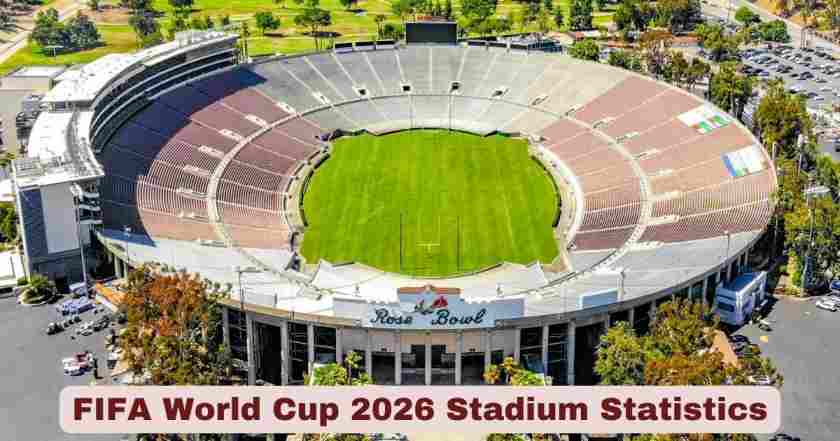
FIFA World Cup 2026 Stadium Overview
The FIFA World Cup 2026 represents an unprecedented milestone in football history, marking the first time the world’s most prestigious sporting event will be hosted across three nations simultaneously—the United States, Mexico, and Canada. This groundbreaking tournament will unfold across 16 world-class stadiums spanning North America, featuring 11 venues in the United States, 3 venues in Mexico, and 2 venues in Canada, creating a continental celebration of football unlike anything the sport has ever witnessed. The tournament, scheduled from June 11 to July 19, 2026, will showcase the newly expanded 48-team format, a dramatic increase from the traditional 32 teams, resulting in 104 total matches played over 39 days across these spectacular venues.
The FIFA World Cup 2026 stadiums represent a stunning blend of architectural innovation, technological advancement, and sporting legacy. From the historic Estadio Azteca in Mexico City—which will become the first stadium ever to host three World Cup tournaments (1970, 1986, 2026)—to the ultra-modern SoFi Stadium in Los Angeles, completed in 2020 at a staggering cost of $5.5 billion, these venues embody the evolution of modern sports architecture. The tournament will culminate in the World Cup 2026 final at MetLife Stadium in East Rutherford, New Jersey, on July 19, 2026, where the new world champions will be crowned before an audience of over 82,500 spectators and billions watching worldwide. With total seating capacities ranging from 45,500 to over 94,000, retractable roofs in 5 stadiums, and climate-controlled environments in multiple venues, the 2026 FIFA World Cup stadiums are engineered to deliver an exceptional experience for players and fans alike while showcasing North America’s unparalleled capacity to host the world’s greatest sporting spectacle.
Key FIFA World Cup 2026 Stadium Facts and Statistics
| Fact Category | Verified Statistics | Source |
|---|---|---|
| Total Number of Stadiums | 16 stadiums across 3 countries | FIFA Official (June 2022) |
| United States Stadiums | 11 venues hosting 78 matches | FIFA World Cup 2026 Schedule |
| Mexico Stadiums | 3 venues hosting 13 matches | FIFA Official Announcement |
| Canada Stadiums | 2 venues hosting 13 matches | FIFA World Cup 2026 |
| Largest Stadium Capacity | AT&T Stadium: 94,000 seats (expandable to 105,000) | AT&T Stadium Official/Wikipedia |
| Final Match Venue | MetLife Stadium (East Rutherford, NJ) – 82,500 capacity | FIFA (February 4, 2024) |
| Total Tournament Matches | 104 matches over 39 days | FIFA Official Format |
| Most Matches Single Venue | AT&T Stadium: 9 matches (including 1 semifinal) | ESPN/FIFA Schedule |
Data source: FIFA Official Announcements (2022-2024), Wikipedia 2026 FIFA World Cup, ESPN Stadium Guide, Olympics.com
The 16 FIFA World Cup 2026 stadiums create an unprecedented geographic footprint spanning approximately 4,300 miles from Vancouver, Canada in the northwest to Miami, Florida in the southeast. The United States dominates the hosting responsibilities with 11 stadiums accommodating 78 of the 104 total matches (75% of all games), including all matches from the quarterfinals onward, reflecting FIFA’s confidence in American infrastructure and organizational capability. Mexico’s 3 stadiums and Canada’s 2 venues will each host 13 matches, ensuring meaningful participation from all three host nations. The selection of AT&T Stadium in Arlington, Texas as the venue with 94,000-seat capacity (expandable to 105,000) makes it the largest stadium in the tournament, surpassing even the legendary Estadio Azteca’s 83,264 capacity. The decision to award the July 19, 2026 final to MetLife Stadium came after intense competition with SoFi Stadium in Los Angeles and AT&T Stadium, with MetLife’s proximity to New York City, superior public transportation infrastructure, and abundance of accommodation options proving decisive factors in FIFA’s February 4, 2024 announcement.
Complete List of FIFA World Cup 2026 Stadiums by Country
| Stadium Name | City | Country | Capacity | Matches Hosted | Notable Features |
|---|---|---|---|---|---|
| MetLife Stadium | East Rutherford, NJ | USA | 82,500 | 8 matches (including FINAL) | Home to NY Giants/Jets; $1.6B construction cost |
| AT&T Stadium | Arlington, TX | USA | 94,000 | 9 matches (most in tournament; 1 semifinal) | Retractable roof; largest HD screen in sports |
| Mercedes-Benz Stadium | Atlanta, GA | USA | 75,000 | 8 matches (1 semifinal) | Retractable octagonal roof; opened 2017 |
| Hard Rock Stadium | Miami Gardens, FL | USA | 65,000 | 7 matches (1 quarterfinal, 3rd place match) | Hosted Copa América 2024; renovated 2015-2016 |
| SoFi Stadium | Inglewood, CA | USA | 70,240 | 8 matches (1 quarterfinal) | $5.5B cost; translucent roof; opened 2020 |
| Levi’s Stadium | Santa Clara, CA | USA | 70,909 | 6 matches | Home to San Francisco 49ers; opened 2014 |
| Lumen Field | Seattle, WA | USA | 69,000 | 6 matches | Home to Seahawks/Sounders; opened 2002 |
| Lincoln Financial Field | Philadelphia, PA | USA | 69,796 | 6 matches | Home to Philadelphia Eagles; opened 2003 |
| NRG Stadium | Houston, TX | USA | 72,220 | 7 matches | Retractable roof; part of NRG Park complex |
| GEHA Field at Arrowhead Stadium | Kansas City, MO | USA | 76,640 | 6 matches | Guinness record for loudest stadium |
| Gillette Stadium | Foxborough, MA | USA | 70,000 | 7 matches (1 quarterfinal) | Home to Patriots/Revolution; renovated for WC |
| Estadio Azteca | Mexico City | Mexico | 83,264 | 5 matches | First stadium to host 3 World Cups (1970, 1986, 2026) |
| Estadio BBVA | Monterrey | Mexico | 53,500 | 4 matches | “El Gigante de Acero”; newest Mexican venue |
| Estadio Akron | Guadalajara | Mexico | 48,071 | 4 matches | Home to Chivas; only venue with NO knockout matches |
| BMO Field | Toronto | Canada | 45,500 | 6 matches (including Canada opener) | Home to Toronto FC/Argonauts |
| BC Place | Vancouver | Canada | 54,000 | 7 matches | Hosted 2015 Women’s WC Final; retractable roof |
Data source: FIFA Official Stadium List (June 2022), Wikipedia, ESPN, Olympics.com, Football Ground Guide (2025)
The comprehensive FIFA World Cup 2026 stadium list reveals fascinating contrasts in venue characteristics and histories. MetLife Stadium’s selection as the final venue validates its $1.6 billion construction investment and strategic location just 10 miles west of Manhattan, providing unparalleled access to New York City’s hospitality infrastructure. AT&T Stadium hosting a tournament-record 9 matches reflects its 94,000-seat capacity and state-of-the-art facilities including the world’s largest 160-foot by 72-foot HD video board. The Mercedes-Benz Stadium in Atlanta stands out for its revolutionary retractable octagonal roof inspired by the Roman Pantheon, representing cutting-edge stadium design when it opened in 2017. Mexico’s Estadio Azteca carries unmatched historical significance, having hosted legendary moments including Brazil’s 1970 victory and Diego Maradona’s “Hand of God” goal in 1986, and will become the only stadium to host three World Cup tournaments. Canada’s BC Place brings recent World Cup pedigree, having hosted the 2015 Women’s World Cup Final where the USWNT defeated Japan 5-2, including Carli Lloyd’s famous goal from midfield. Notably, Estadio Akron in Guadalajara is the only venue that will not host any knockout stage matches, hosting exclusively group stage games.
Regional Distribution and Tournament Structure in 2026
| Geographic Region | Host Cities | Total Stadiums | Total Matches | Key Features |
|---|---|---|---|---|
| Western Region | Vancouver, Seattle, San Francisco, Los Angeles, Guadalajara | 5 stadiums | Approximately 32 matches | Pacific time zone clustering; reduced team travel |
| Central Region | Mexico City, Monterrey, Houston, Dallas, Kansas City | 5 stadiums | Approximately 37 matches | Central time coverage; includes AT&T Stadium (9 matches) |
| Eastern Region | Toronto, Boston, Philadelphia, New York/New Jersey, Atlanta, Miami | 6 stadiums | Approximately 35 matches | Includes FINAL (MetLife) and 3rd place (Miami) |
| United States Total | 11 US cities coast-to-coast | 11 stadiums | 78 matches (75%) | All knockout rounds from quarterfinals onward |
| Mexico Total | Mexico City, Monterrey, Guadalajara | 3 stadiums | 13 matches | Includes opening match (Mexico vs TBD) |
| Canada Total | Toronto, Vancouver | 2 stadiums | 13 matches | Equal to Mexico; includes both Canadian openers |
Data source: FIFA Regional Grouping, Wikipedia 2026 World Cup, Football Ground Guide
FIFA’s strategic regional clustering of the 16 World Cup 2026 stadiums into three geographic zones represents a revolutionary approach to managing the logistical challenges of a tri-national tournament spanning such vast distances. The Western Region encompasses five venues stretching from Vancouver in British Columbia to Guadalajara in central Mexico, allowing teams assigned to this zone to minimize transcontinental travel during group stages. The Central Region’s five stadiums form a corridor through the heart of North America, with AT&T Stadium in Dallas serving as the region’s centerpiece by hosting 9 matches—more than any other venue—including a semifinal. The Eastern Region contains six stadiums including the tournament’s most prestigious venues: MetLife Stadium hosting the July 19, 2026 final and Hard Rock Stadium in Miami hosting the third-place match on July 18. The overwhelming allocation of 78 matches to the United States (75% of all games) reflects not only the country’s superior stadium infrastructure but also FIFA’s requirement that all matches from the quarterfinals onward be played on US soil. Mexico and Canada’s equal share of 13 matches each ensures meaningful participation from both co-hosts.
Stadium Capacity Rankings and Infrastructure in the US 2026
| Stadium (by Capacity) | Seating Capacity | Roof Type | Surface | Construction Cost | Year Opened |
|---|---|---|---|---|---|
| AT&T Stadium (Arlington) | 94,000 (expandable to 105,000) | Retractable roof | Natural grass (temp) | $1.15 billion | 2009 |
| Estadio Azteca (Mexico City) | 83,264 | Open-air | Natural grass | Original: 1962-66 | 1966 |
| MetLife Stadium (New York/NJ) | 82,500 | Open-air | Natural grass (temp) | $1.6 billion | 2010 |
| GEHA Field Arrowhead (Kansas City) | 76,640 | Open-air | Natural grass | $43 million (original) | 1972 |
| Mercedes-Benz Stadium (Atlanta) | 75,000 | Retractable roof | Natural grass (temp) | $1.6 billion | 2017 |
| NRG Stadium (Houston) | 72,220 | Retractable roof | Natural grass (temp) | $352 million | 2002 |
| Levi’s Stadium (Santa Clara) | 70,909 | Open-air | Natural grass | $1.3 billion | 2014 |
| SoFi Stadium (Los Angeles) | 70,240 | Fixed translucent roof | Natural grass (temp) | $5.5 billion | 2020 |
| Gillette Stadium (Boston) | 70,000 | Open-air | Natural grass (temp) | $325 million | 2002 |
| Lincoln Financial Field (Philadelphia) | 69,796 | Open-air | Natural grass | $512 million | 2003 |
| Lumen Field (Seattle) | 69,000 | Partial roof | Natural grass (temp) | $430 million | 2002 |
| Hard Rock Stadium (Miami) | 65,000 | Partial canopy | Natural grass | $350M renovation | Opened 1987; renovated 2015-16 |
| BC Place (Vancouver) | 54,000 | Retractable roof | Natural grass (temp) | $563 million (renovation) | Opened 1983; renovated 2011 |
| Estadio BBVA (Monterrey) | 53,500 | Open-air | Natural grass | $200 million | 2015 |
| Estadio Akron (Guadalajara) | 48,071 | Open-air | Natural grass | $240 million | 2010 |
| BMO Field (Toronto) | 45,500 | Open-air | Natural grass | $62.9 million (original) | 2007 |
Data source: Wikipedia, Stadium databases, FIFA World Cup venue specifications, individual stadium sources
The FIFA World Cup 2026 stadium capacity rankings reveal extraordinary diversity in venue size and sophistication. AT&T Stadium reigns as the largest at 94,000 fixed seats with potential expansion to 105,000, dwarfing many venues and reflecting Texas’s “everything is bigger” philosophy—the stadium features the world’s largest high-definition video display at 11,520 square feet. SoFi Stadium in Los Angeles commands attention not for size alone (70,240 capacity) but for its astronomical $5.5 billion construction cost, making it the most expensive stadium ever built, featuring a translucent roof covering 3.1 million square feet. The infrastructure diversity includes five stadiums with retractable roofs (AT&T, Mercedes-Benz, NRG, BC Place, and the fixed-roof SoFi), providing climate control crucial for summer matches in cities like Dallas, Houston, and Atlanta where temperatures can exceed 95°F (35°C). FIFA regulations mandate natural grass surfaces for all World Cup matches, requiring eight venues that normally use artificial turf to install temporary natural grass systems. The age range spans from the historic Arrowhead Stadium (opened 1972) to the ultra-modern SoFi Stadium (completed 2020).
Match Allocation and Tournament Schedule by Stadium in 2026
| Stadium | Total Matches | Group Stage | Round of 32 | Round of 16 | Quarterfinal | Semifinal | Final/3rd Place |
|---|---|---|---|---|---|---|---|
| MetLife Stadium (NY/NJ) | 8 | 5 | 1 | 1 | – | – | FINAL (July 19) |
| AT&T Stadium (Dallas) | 9 | 5 | 2 | 1 | – | 1 Semifinal | – |
| Mercedes-Benz Stadium (Atlanta) | 8 | 5 | 1 | 1 | – | 1 Semifinal | – |
| Hard Rock Stadium (Miami) | 7 | 4 | 1 | – | 1 | – | 3rd Place (July 18) |
| SoFi Stadium (LA) | 8 | 5 | 1 | 1 | 1 | – | – |
| Gillette Stadium (Boston) | 7 | 5 | 1 | – | 1 | – | – |
| NRG Stadium (Houston) | 7 | 5 | 1 | 1 | – | – | – |
| Levi’s Stadium (San Francisco) | 6 | 4 | 1 | 1 | – | – | – |
| Lumen Field (Seattle) | 6 | 4 | 1 | 1 | – | – | – |
| Lincoln Financial Field (Philadelphia) | 6 | 4 | 1 | 1 | – | – | – |
| GEHA Field Arrowhead (Kansas City) | 6 | 4 | 1 | 1 | – | – | – |
| Estadio Azteca (Mexico City) | 5 | 3 (inc. opening) | 1 | 1 | – | – | – |
| BC Place (Vancouver) | 7 | 5 | 1 | 1 | – | – | – |
| BMO Field (Toronto) | 6 | 5 (inc. Canada opener) | 1 | – | – | – | – |
| Estadio BBVA (Monterrey) | 4 | 2 | 1 | 1 | – | – | – |
| Estadio Akron (Guadalajara) | 4 | 4 | – | – | – | – | – |
Data source: FIFA Match Schedule (December 2025), ESPN, Football Ground Guide, Wikipedia
The FIFA World Cup 2026 match allocation strategically distributes 104 total matches across the 16 stadiums according to capacity, infrastructure quality, and geographic balance. AT&T Stadium’s tournament-leading 9 matches includes 5 group stage games, 2 round of 32 matches, 1 round of 16, and critically a semifinal on July 14, 2026, reflecting FIFA’s confidence in the venue’s 94,000-seat capacity and state-of-the-art facilities. The decision to award both semifinal matches to AT&T Stadium (Dallas) and Mercedes-Benz Stadium (Atlanta) recognizes these venues as possessing the optimal combination of capacity, climate control (both have retractable roofs), and modern infrastructure. MetLife Stadium’s 8 matches includes a relatively modest group stage allocation but culminates in the July 19, 2026 final—the tournament’s most prestigious match. Estadio Akron in Guadalajara stands as the only stadium hosting exclusively group stage matches with no knockout rounds, reflecting its smaller 48,071 capacity.
Economic Impact and Tourism Projections for Host Cities in 2026
| Economic Category | Numerical Data | Explanation of Impact |
|---|---|---|
| Total Tournament Economic Impact | $5–7 billion | Money generated across all host cities from spending, tourism, and media activity |
| Main Revenue Drivers | Ticket sales, hospitality, tourism, media rights | Primary sources of economic gains |
| Expected Total Attendance | 5.5–6 million spectators | Total number of fans attending across all matches |
| Total Matches | 104 matches | Number of games played in the tournament |
| Average Attendance per Match | 52,000–58,000 fans | Typical crowd size at each game |
| International Visitors | 2–3 million tourists | Foreign fans traveling to the U.S. for the event |
| Main Source Regions of Visitors | Europe, South America, Asia | Where most international tourists are expected from |
| New York/New Jersey Impact | $500+ million | Economic boost due to hosting the final and 7 other matches |
| Matches in NY/NJ | 8 matches including final | Major driver of hotel and tourism demand |
| Dallas/Arlington Impact | $400–500 million | Expected regional economic benefit |
| Matches at AT&T Stadium | 9 matches (most of any venue) | Increases local spending and tourism |
| Los Angeles Impact | $450+ million | Benefit from hosting 8 matches |
| Matches at SoFi Stadium | 8 matches including quarterfinal | Drives visitor spending in LA region |
| Hotel Room Demand per Match Day | 150,000–200,000 room nights | Number of hotel rooms booked daily during matches |
| Peak Hotel Demand Period | July 14–19, 2026 | Highest accommodation pressure during final stages |
| Average Group Stage Ticket Price | $200–$500 | Standard pricing for early tournament matches |
| Final Match Ticket Price | $800–$2,000+ | Much higher due to demand |
| Secondary Market Prices | Likely higher than face value | Resale prices expected to increase significantly |
Data source: FIFA economic projections, 1994 World Cup comparisons adjusted for inflation, tourism bureau estimates, host city economic impact studies
The economic impact of FIFA World Cup 2026 promises to generate between $5-7 billion in total economic activity across the 16 host cities, surpassing the inflation-adjusted impact of the 1994 World Cup in the United States. The tournament expects to attract 5.5-6 million total spectators attending 104 matches, averaging 52,000-58,000 fans per match. The influx of 2-3 million international visitors will inject hundreds of millions into local economies through accommodation, dining, transportation, shopping, and entertainment spending. The New York/New Jersey metropolitan area hosting 8 matches including the July 19 final projects over $500 million in economic impact. Dallas’s 9 matches at AT&T Stadium including a semifinal positions the region for $400-500 million in economic benefits. The hotel room demand of 150,000-200,000 room nights per match day will strain accommodation capacity in some cities.
Future Legacy and Post-Tournament Impact of 2026 Stadiums
The FIFA World Cup 2026 will leave an enduring legacy across 16 host cities, transforming not only physical infrastructure but also establishing North America as the undisputed leader in hosting major international sporting events. Unlike tournaments requiring extensive new construction that often results in underutilized “white elephant” stadiums, the 2026 tournament’s use of 100% existing venues ensures every stadium will continue serving its primary purpose—hosting NFL, MLS, CFL, and other sporting events—long after the final whistle on July 19, 2026.
The infrastructure investments totaling hundreds of millions of dollars across transportation networks, telecommunications systems, and venue upgrades will benefit local communities for decades. Cities like Dallas, Atlanta, Los Angeles, and Miami are leveraging World Cup preparations to accelerate planned improvements to public transportation, roadway systems, and airport expansions. The $50+ million MetLife Stadium renovation, the venue upgrades at other stadiums, and similar projects are modernizing facilities to 21st-century standards, extending their competitive lifespans and ensuring they remain attractive for future major events including Super Bowls, NBA All-Star Games, NCAA Championships, and potentially the 2028 Summer Olympics in Los Angeles.
The tourism infrastructure developed for the tournament—expanded hotel capacity, improved convention centers, enhanced entertainment districts—will support each city’s broader economic development goals, attracting business conventions, concerts, and other events that benefit from world-class facilities. The international exposure as billions of viewers worldwide watch broadcasts showcasing New York, Toronto, Mexico City, Vancouver, and other host cities will generate invaluable destination marketing, potentially driving tourism for years following the tournament.
Perhaps most significantly, the 2026 World Cup will accelerate football’s growth in North America, particularly the United States, building on momentum from Major League Soccer’s expansion to 30 teams. The tournament will inspire a generation of young athletes witnessing the world’s greatest players competing in their home stadiums, driving participation in youth soccer programs and creating the foundation for United States, Mexico, and Canada to become consistent global football powers capable of challenging traditional powerhouses from Europe and South America in future World Cups.
The 16 FIFA World Cup 2026 stadiums—from the historic Estadio Azteca hosting its third tournament to the ultra-modern SoFi Stadium representing the pinnacle of contemporary sports architecture—embody the evolution of football infrastructure and North America’s capacity to deliver world-class sporting spectacles. As the countdown to June 11, 2026 continues, these venues stand ready to welcome the world for the greatest football celebration in history.
Disclaimer: This research report is compiled from publicly available sources. While reasonable efforts have been made to ensure accuracy, no representation or warranty, express or implied, is given as to the completeness or reliability of the information. We accept no liability for any errors, omissions, losses, or damages of any kind arising from the use of this report.