
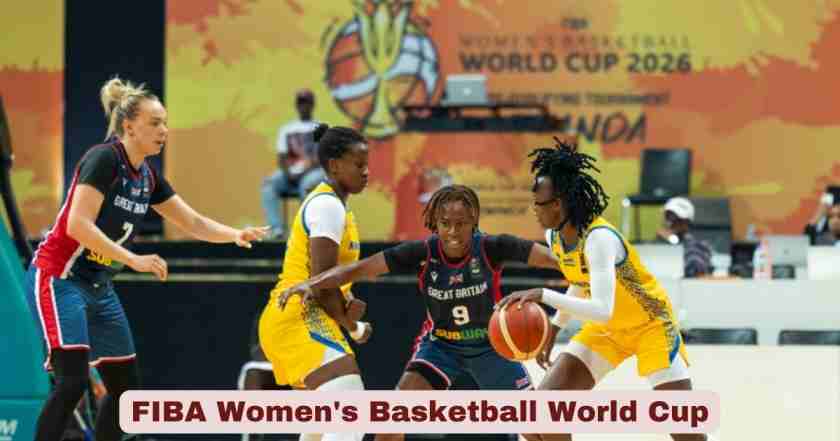
FIBA Women’s Basketball World Cup 2026
The 2026 FIBA Women’s Basketball World Cup is the 20th edition of the quadrennial world championship for women’s national basketball teams, sanctioned by FIBA — the international governing body for basketball whose membership spans 212 national basketball federations worldwide. The tournament will be hosted in Berlin, Germany, from 4 to 13 September 2026, marking Germany’s second time organising the women’s flagship event after the 1998 edition — and only the second time in the competition’s 73-year history that a European nation has hosted for a second time. FIBA awarded Germany the hosting rights during its Central Board meeting in Manila, Philippines, on 28 April 2023, following a competitive bidding process in which multiple countries expressed interest. The decision carries genuine significance beyond logistics: Germany is one of European basketball’s powerhouse markets, Berlin brings an iconic urban identity, and the city’s senate government backed the event with a €6 million financial commitment, underscoring the institutional seriousness with which Germany is approaching what it hopes will be a landmark tournament for women’s basketball on the European continent. The tournament will feature 16 participating teams — four more than the 12-team 2022 edition in Sydney and a return to the same field size as the World Cups held between 1990 and 2018 — reflecting FIBA’s expanded ambitions for the women’s competition following its March 2022 decision to grow the tournament back to 16 nations.
The United States enters Berlin as four-time defending champions and historically the most dominant force in the competition’s history, having won the title at the 2014, 2018, 2022, and 2026 editions — extending what has become a remarkable dynasty in women’s basketball at the global level. The 2026 tournament generates the kind of compelling pre-tournament narrative that tournament organisers could not have scripted better: Caitlin Clark, crowned TISSOT MVP at the qualifying tournament in San Juan, Puerto Rico in March 2026, makes her senior national team debut at the World Cup in Berlin, joining forces with Paige Bueckers — 2025 WNBA Rookie of the Year — in what FIBA has described as “the new generation set to pick up the USA baton in the backcourt.” The draw for the 16-team tournament is scheduled for 21 April 2026 at Kraftwerk Berlin, alongside the FIBA Hall of Fame Class of 2026 enshrinement ceremony — a deliberate pairing that links the sport’s past and future on a single occasion. Two venues in Berlin will stage the games: the Berlin Arena serves as the main venue, hosting two groups and the entire knockout stage, while the Max-Schmeling-Halle hosts two groups in the first round. Together they represent a compact, single-city tournament model that concentrates the atmosphere and the fan energy of a 10-day championship into one of Europe’s great capital cities.
Interesting Facts About FIBA Women’s Basketball World Cup 2026
Here are the most striking and verified facts about the FIBA Women’s Basketball World Cup 2026 — drawn from FIBA official sources, Wikipedia, Olympics.com, the FIBA About page, DVIDS, and multiple verified news sources as of April 12, 2026.
| # | Fact | Detail |
|---|---|---|
| 1 | Edition number | 20th edition of the FIBA Women’s Basketball World Cup — first held in 1953 |
| 2 | Host nation and city | Germany — Berlin — second time hosting after 1998 |
| 3 | Tournament dates | 4 to 13 September 2026 — 10 days of competition |
| 4 | Number of teams | 16 teams — expanded from 12 in 2022; back to field size of 1990–2018 |
| 5 | Berlin government investment | €6 million allocated by the Berlin senate (city-state government) — Wikipedia |
| 6 | Defending champions | United States of America — four-time defending champions (2014, 2018, 2022 + consecutive) |
| 7 | Tournament mascot | “Bearlina” — a bear (Berlin’s coat of arms symbol); design features punk, hip hop and graffiti elements; revealed 15 November 2025 at the HipHop Ball at Red Town Hall |
| 8 | Tournament logo unveiled | 12 August 2024 — logo depicts “Berlin’s status as a united metropolis that loves to party and celebrate” — FIBA |
| 9 | Global ambassador | Pau Gasol — Spanish basketball legend; confirmed 13 March 2026, second successive edition as ambassador |
| 10 | Draw date and venue | 21 April 2026 at Kraftwerk Berlin — alongside FIBA Hall of Fame Class of 2026 enshrinement ceremony |
| 11 | Main venue | Berlin Arena — hosts two groups and the entire knockout stage; previously hosted 2024 European Men’s Handball Championship and EuroBasket 2022 |
| 12 | Secondary venue | Max-Schmeling-Halle — hosts two first-round groups; previously hosted 2007 World Men’s Handball Championship |
| 13 | Caitlin Clark qualifying MVP | Caitlin Clark (USA) crowned TISSOT MVP at the San Juan Qualifying Tournament — Olympics.com / FIBA (March 2026) |
| 14 | Inaugural women’s World Cup champion | United States — first champion in 1953 after beating host Chile in the final |
| 15 | Most teams from Europe at one World Cup | 8 European teams in 2026 — breaks the previous record of 7 European teams set in 1957 |
| 16 | Italy’s absence broken | Italy returns to the Women’s World Cup for the first time in 32 years |
| 17 | Hungary’s return | Hungary ends a 28-year absence to qualify for Berlin |
| 18 | South Korea and USA longest streaks | Both South Korea and USA continue the longest active qualification streaks with 17 consecutive World Cup appearances — Wikipedia |
| 19 | Qualifying Tournaments played | March 11–17, 2026 — 24 teams across 4 venues; 60 games played in 5 gamedays |
| 20 | Pre-Qualifying Tournaments | Held August 2024 in Mexico and Rwanda — qualified Czechia and Hungary for the main qualifying tournament pathway |
Source: Wikipedia — 2026 FIBA Women’s Basketball World Cup (updated April 2026); FIBA official website — FIBA Women’s Basketball World Cup 2026; FIBA — Field Confirmed for FIBA Women’s Basketball World Cup 2026 (March 2026); Olympics.com — FIBA Women’s World Cup 2026 Teams Confirmed (March 2026); FIBA — Everything You Need to Know about the Qualifying Tournaments; FIBA — By the Numbers: Women’s World Cup 2026 Qualifying Tournaments; About FIBA — FIBA Women’s Basketball World Cup
The decision to expand the tournament back to 16 teams after reducing it to 12 for the 2022 Sydney edition is one of the most consequential structural changes in the Women’s World Cup’s recent history, and the 2026 field composition illustrates exactly why that expansion matters. The return to 16 teams means the continent of Europe sends 8 representatives — breaking the record set in 1957 — including nations like Hungary and Italy returning after absences of 28 and 32 years respectively. It means Mali qualifies for a second consecutive edition for the first time. It means Puerto Rico has its first World Cup appearance since 2018 as a qualifier rather than a host nation. The 12-team format of 2022 produced competitive basketball but at the cost of continental breadth — nations with meaningful basketball traditions were excluded, domestic interest in countries that didn’t qualify was suppressed, and the global reach of the tournament narrowed. The 16-team field of 2026 rebalances those trade-offs, trading some match quality insurance for dramatically greater geographic spread and the kind of participation stories — Italy’s 32-year return, Hungary’s 28-year comeback — that generate exactly the media coverage and fan engagement that women’s basketball needs at the international level.
“Bearlina” as the tournament mascot is a design choice that tells you something significant about how the organisers want Berlin 2026 to be perceived. A bear wearing basketball gear that incorporates punk fashion, hip hop culture, and graffiti art is not the mascot of a conventional sports tournament — it is the mascot of a city asserting its identity. Berlin’s cultural associations are with alternative music scenes, the legacy of the Wall and reunification, techno clubs, and street art rather than the polished corporate identity of typical major sporting events. FIBA and the local organisers are making a deliberate bet that positioning this as a Berlin event — with all that implies about the city’s energy and personality — will attract an audience beyond traditional basketball fans and generate the kind of urban cultural buzz that distinguishes memorable tournaments from forgettable ones.
FIBA Women’s Basketball World Cup 2026 Teams and Qualification Statistics
| Team | Qualification Route | Notable Status |
|---|---|---|
| Germany | Automatic — host nation | Second World Cup as host (previously 1998) |
| United States | Automatic — 2025 FIBA Women’s AmeriCup champions | Four-time defending World Cup champions; 17th consecutive World Cup |
| Australia | Automatic — 2025 FIBA Women’s Asia Cup champions | Three consecutive World Cup podium finishes (2014, 2018, 2022); world #2 |
| Belgium | Automatic — 2025 FIBA Women’s EuroBasket champions | Continuous qualification since debut in 2018 |
| Nigeria | Automatic — 2025 FIBA Women’s AfroBasket champions | Africa’s representatives; women’s basketball power on the continent |
| France | March 2026 Qualifying Tournament (Lyon-Villeurbanne) | Paris 2024 Olympic silver medallists; world #3 |
| Japan | March 2026 Qualifying Tournament (Istanbul) | Tokyo 2020 Olympic silver medallists |
| Hungary | March 2026 Qualifying Tournament (Istanbul) | Returns after 28-year absence from the World Cup |
| Türkiye | March 2026 Qualifying Tournament (Istanbul) | Qualified from home qualifying tournament |
| South Korea | March 2026 Qualifying Tournament (Istanbul) | 17th consecutive World Cup — equal longest active streak with USA |
| China | March 2026 Qualifying Tournament (Wuhan) | Runner-up to USA at 2022 World Cup in Sydney |
| Mali | March 2026 Qualifying Tournament (Wuhan) | Second successive edition — first time Mali qualifies consecutively |
| Czechia | March 2026 Qualifying Tournament (Wuhan) | Qualified via Pre-Qualifying Tournaments in August 2024 (Rwanda) |
| Italy | March 2026 Qualifying Tournament (San Juan) | Returns after 32-year absence — longest absence broken in 2026 |
| Spain | March 2026 Qualifying Tournament (San Juan) | Three-time World Cup medallists |
| Puerto Rico | March 2026 Qualifying Tournament (San Juan) | Continuous qualification streak since 2018 debut; played on home soil |
| Regional breakdown (2026 field) | Teams |
|---|---|
| Europe | 8 teams — record for most European teams at a single Women’s World Cup |
| Asia and Oceania | 4 teams |
| Africa | 2 teams |
| Americas | 2 teams — lowest Americas representation since 1967 |
Source: Wikipedia — 2026 FIBA Women’s Basketball World Cup (April 2026); Olympics.com — FIBA Women’s World Cup 2026 Teams Confirmed (March 2026); Wikipedia — 2026 FIBA Women’s Basketball World Cup Qualifying Tournaments; FIBA — Field Confirmed for FIBA Women’s Basketball World Cup 2026; FIBA — Everything You Need to Know about the Qualifying Tournaments
The regional composition of the 2026 field is historically remarkable in both directions simultaneously. Europe sending 8 teams — breaking a record that stood since 1957 — reflects the remarkable depth of women’s basketball in Europe in the mid-2020s, driven by the proliferation of professional leagues, the growth of EuroLeague Women, and national federation investments across the continent. Countries like Hungary, Italy, Czechia, and Türkiye that have not consistently appeared at World Cups are now strong enough to qualify through genuinely competitive continental processes. At the same time, the Americas sending just 2 representatives — the United States and Puerto Rico — marks the lowest regional representation from the Americas since 1967. This is not because the hemisphere has weakened but because FIBA’s qualification structure allocates spots primarily through continental championship performance, and with just the US and Puerto Rico qualifying from the Americas, it creates a fascinating paradox: the strongest women’s basketball nation in history (USA) shares its continental allocation with a small island nation, while eight European nations fill out the other half of the draw.
Italy’s 32-year absence from the Women’s World Cup is the bracket-busting qualification story of 2026. Italian women’s basketball has one of the deepest club traditions in Europe — Schio, Venezia, and Virtus Bologna are among the most storied franchises in the EuroLeague — but the national team had not appeared at a World Cup since 1994. The qualification through the San Juan tournament, where Italy’s Cecilia Zandalasini was named to the All-Star Five alongside Caitlin Clark, signals that the national programme has rebuilt at a level that matches its club infrastructure. Hungary’s return after 28 years tells a similar story — the qualifying tournament in Istanbul saw Hungary go 3-2 in a group containing Australia, Turkey, Japan, Canada, and Argentina, winning the tiebreaker to claim the third qualifying spot. These are not flukes; they are evidence that women’s basketball has genuinely deepened and broadened its competitive base in Europe.
FIBA Women’s Basketball World Cup 2026 Venues and Format Statistics
| Tournament Format Parameter | Data |
|---|---|
| Total teams | 16 teams in the final tournament |
| Tournament format | Group stage followed by knockout rounds |
| Number of groups | 4 groups of 4 teams each |
| First match date | 4 September 2026 |
| Final / last match date | 13 September 2026 |
| Total tournament duration | 10 days |
| Host city | Berlin, Germany — single-city tournament |
| Main venue | Berlin Arena — hosts 2 groups + entire knockout stage |
| Berlin Arena previous events | 2024 European Men’s Handball Championship; EuroBasket 2022 latter stages; first venue to host 3 EuroLeague Final Fours |
| Secondary venue | Max-Schmeling-Halle — hosts 2 first-round groups |
| Max-Schmeling-Halle previous events | 2007 World Men’s Handball Championship; 2013 Women’s European Volleyball Championship final; 2023 IHF Men’s U21 Handball World Championship; two CEV Champions League finals (2015 and 2019) |
| Tiebreaker rules (group stage) | 1) Points; 2) Head-to-head results; 3) Points difference; 4) Points scored |
| Teams advancing from each group | Top teams qualify for knockout stage |
| Qualifying Tournaments format | 4 groups of 6 teams; round-robin (5 games each); held March 11–17, 2026 |
| Qualifying Tournament locations | Wuhan (China); Lyon-Villeurbanne (France); San Juan (Puerto Rico); Istanbul (Turkey) |
| Total qualifying games played | 60 games across the 4 qualifying tournaments |
| Germany’s hosting rights decision | FIBA Central Board meeting, 28 April 2023, Manila, Philippines |
| Germany’s previous hosting | 1998 Women’s World Cup — Germany’s first hosting |
| Tournament second time in Germany | Yes — only second time a European country has hosted the Women’s World Cup twice |
| Official streaming platform | Courtside 1891 — FIBA’s official streaming platform |
Source: Wikipedia — 2026 FIBA Women’s Basketball World Cup; FIBA — FIBA Women’s Basketball World Cup 2026 Official Website; Wikipedia — 2026 FIBA Women’s Basketball World Cup Qualifying Tournaments; FIBA — Everything You Need to Know about the Qualifying Tournaments
The single-city, dual-venue format of Berlin 2026 is a deliberate contrast to the sprawling multi-city models used by some predecessor Women’s World Cups, and it reflects a philosophy of concentrating rather than dispersing energy. When a major tournament is spread across multiple cities, the fan experience becomes fragmented — fans in City A are watching a different set of games to fans in City B, media coverage splits, and the tournament never quite builds the cumulative atmosphere that emerges when thousands of passionate supporters converge on a single arena night after night. Berlin’s compact format means that from the first whistle on September 4 to the final on September 13, every game worth watching is in the same city, often in the same arena. The Berlin Arena — which as the main venue holds the entire knockout stage — will host the semifinals and final, meaning that the most dramatic games of the tournament all happen in the same building where group-stage rivalries were established. That continuity of venue is an underappreciated driver of tournament atmosphere.
The Max-Schmeling-Halle’s rich multi-sport history makes it an ideal secondary venue for a tournament that wants to signal institutional credibility. A venue that has hosted World Handball championships, European Volleyball finals, and CEV Champions League finals is not a makeshift venue pressed into service because the main arena ran out of capacity — it is a world-class facility with its own event legacy. The combination of the Berlin Arena and Max-Schmeling-Halle gives the 2026 Women’s World Cup a physical infrastructure that genuinely matches its aspirations.
FIBA Women’s Basketball World Cup Historical Statistics 2026
| Historical Parameter | Data |
|---|---|
| First edition | 1953 — hosted in Santiago, Chile |
| First champion | United States — defeated host Chile in the 1953 final |
| Total editions (to 2026) | 20 editions including 2026 |
| Nations that have won the title | Only 4 nations have ever won the Women’s World Cup |
| USA titles (all-time) | 11 titles — the most of any nation in Women’s World Cup history |
| Soviet Union titles | 6 titles — dominant from 1959 to 1975 (5 consecutive) |
| Brazil titles | 2 titles |
| Australia titles | 2 titles — including 2006 and 2010 |
| Soviet Union consecutive titles record | 5 consecutive titles (1959–1975) — winning all 40 matches by 10+ point margins |
| USA winning streak | As of 2022: USA extended winning streak to 30 consecutive matches at World Cups — Wikipedia |
| USA four consecutive recent titles | 2014, 2018, 2022, and counting — four-time defending champions entering 2026 |
| Inaugural year | 1953 — participated by 10 national teams |
| Previous 12-team edition | 2022 — Sydney, Australia — record-breaking attendance and engagement — About FIBA |
| 2022 World Cup champion | United States — beat China in the final; Australia won bronze (third consecutive podium) |
| 2022 Sydney: historical significance | Made history with record-breaking engagement and attendance — About FIBA |
| Germany’s previous hosting | 1998 — second time hosting in 2026 |
| Frequency | Every 4 years — held in same years as FIFA World Cup (even-numbered years) |
| Name change | Renamed from “FIBA World Championship for Women” to “FIBA Women’s Basketball World Cup” after the 2014 edition |
| Men’s vs Women’s scheduling | From 1986–2014 both championships held in same year; men’s moved to odd years after 2014 |
| 2018 champions | United States |
| 2014 champions | United States — won in Ankara, Turkey |
Source: Wikipedia — FIBA Women’s Basketball World Cup; About FIBA — FIBA Women’s Basketball World Cup; Britannica — FIBA article
The statistical dominance of the United States in Women’s World Cup history is genuinely extraordinary, but the more interesting story hidden within those numbers is the competitive geography of the tournament’s first 40 years. Before US dominance asserted itself definitively in the 1990s and 2000s, the Women’s World Cup was a genuinely contested global competition. The Soviet Union won five consecutive titles from 1959 to 1975 — not just winning, but winning every single match by at least 10 points over that entire period, a margin of dominance so large that it suggested a categorical rather than merely competitive advantage. When that era ended, Brazil, Australia, and to a lesser extent South Korea, China, and Cuba all had meaningful runs in medal contention. The US dynasty that has produced 11 total titles — and the current 4-title consecutive run — represents a structural dominance tied to the convergence of WNBA professional depth, the NCAA college development system, and USA Basketball’s institutional infrastructure. No other women’s basketball nation can replicate that combination.
The 2022 Sydney edition’s status as a record-breaking tournament for engagement and attendance provides crucial context for the ambitions Berlin 2026 is trying to exceed. Sydney delivered on both the competitive and commercial dimensions — a final between the United States and China attracted global attention, Australia’s bronze medal in front of a home crowd generated extraordinary local enthusiasm, and the overall attendance and digital engagement numbers set standards against which 2026 will be measured. Germany has stronger basketball infrastructure than Australia in the women’s game, with the Bundesliga Women providing deep domestic engagement, but the challenge is replicating the organic national excitement that comes from a host nation with genuine medal aspirations — and Germany, as the host’s automatic qualifier, will need to perform on the court to generate the local emotional investment that turns a good tournament into a great one.
FIBA Women’s Basketball World Cup 2026 Key Players and Teams Statistics
| Key Player / Team Parameter | Data |
|---|---|
| TISSOT MVP — San Juan Qualifying | Caitlin Clark (USA) — senior national team debut at qualifiers; named MVP — FIBA / Olympics.com |
| TISSOT MVP — Lyon-Villeurbanne Qualifying | Janelle Salaun (France) — FIBA (March 2026) |
| TISSOT MVP — Wuhan Qualifying | Julie Allemand (Belgium) — FIBA (March 2026) |
| TISSOT MVP — Istanbul Qualifying | Dorka Juhász (Hungary) — leading scorer and rebounder; FIBA qualifier stats |
| USA — qualification route | Already qualified as 2025 Americas champions; sent second-string squad to qualifiers |
| USA — senior debut players (2026) | Caitlin Clark and Paige Bueckers — senior national team debuts at the World Cup in Berlin |
| Paige Bueckers | 2025 WNBA Rookie of the Year; stars alongside Clark in “new generation” USA backcourt |
| Caitlin Clark | Two-time WNBA All-Star; massive global following (6.6 million+ social media followers); qualified tournament MVP |
| A’ja Wilson | Four-time WNBA MVP; did NOT play in qualifying tournament (rested); expected for Berlin |
| USA Paris 2024 gold medal scoreline | USA beat France 67-66 in Paris 2024 Olympic final; A’ja Wilson scored 21 points — Olympics.com |
| France | Paris 2024 Olympic silver medallists; qualified through Lyon-Villeurbanne; Marine Johannès key player |
| Marine Johannès (France) | Nicknamed “The Wizard” for flair; key playmaker for Les Bleus |
| Australia | World #2; Paris 2024 Olympic bronze; Ezi Magbegor anchors defence — WNBA All-Star |
| Belgium | Auto-qualified; Emma Meesseman — EuroBasket 2025 MVP — leads Belgium’s campaign |
| China | 2022 World Cup runners-up to USA; qualified from Wuhan |
| Spain | Three-time World Cup medallists; Megan Gustafson named to San Juan All-Star Five |
| Cecilia Zandalasini (Italy) | Named to San Juan All-Star Five; part of Italy’s historic return after 32 years |
| Dorka Juhász (Hungary) | Istanbul leading scorer (18.0 ppg) and rebounder (9.0 rpg per game) — FIBA qualifier stats |
| South Korea | 17-tournament consecutive qualification streak — equal longest active with USA |
| Germany (host) | Automatic qualifier; Frieda Bühner named to Lyon-Villeurbanne All-Star Five |
| Pau Gasol (global ambassador) | Spanish basketball legend; serving as global ambassador for second consecutive edition — confirmed March 13, 2026 |
Source: FIBA — Field Confirmed for FIBA Women’s Basketball World Cup 2026 (March 2026); FIBA qualifier stats — Istanbul Qualifying Tournament official website; Olympics.com — FIBA Women’s World Cup 2026 Qualifying Teams and Schedule (March 2026); FIBA — By the Numbers: Women’s World Cup 2026 Qualifying Tournaments; The IX Basketball — 2026 FIBA Women’s World Cup Qualifying Team Announced (February 2026); Wikipedia — 2026 FIBA Women’s Basketball World Cup
Caitlin Clark’s impact on the 2026 Women’s World Cup extends far beyond whatever she does on the court in Berlin. The qualifying tournament in San Juan — where she was named MVP in her senior national team debut — demonstrated that the commercial and media interest that surrounds Clark translates directly into global women’s basketball attention. FIBA’s own reporting highlighted her 6.6 million social media followers as an “astonishing number reflective of the hype, anticipation and love” surrounding the new generation of American women’s basketball. That is not merely a nice marketing statistic — it is an indicator of the tournament’s potential reach into audiences that have not traditionally followed women’s international basketball. When Clark and Bueckers share the floor for the USA in Berlin in September, every game they play will be among the most-watched women’s basketball games in the history of the sport. The tournament’s ability to convert that attention into lasting global fan engagement for women’s basketball is the single most important commercial and cultural outcome FIBA is targeting with the 2026 edition.
The defending-champion USA’s decision to rest A’ja Wilson and other senior stars during the March qualifying tournaments — sending a squad that still won convincingly and produced the tournament’s MVP in Clark — is both a statement of the programme’s depth and a calibration of priorities. Four-time WNBA MVP Wilson is expected to be the centrepiece of the USA’s Berlin campaign. The qualifying tournament was used to integrate the next generation (Clark, Bueckers, Angel Reese, Olivia Citron, Te-Hina Paopao) with experienced players like Kahleah Copper, Chelsea Gray, and Kelsey Plum — all 2024 Olympic gold medallists. The blend of championship-hardened veterans and the world’s most hyped young players creates a squad that is simultaneously formidable and fascinating to watch, which is exactly the combination that generates the kind of sustained media narrative that carries a tournament from opening tip-off to the final.
FIBA Women’s Basketball World Cup 2026 Qualification Pathway Statistics
| Qualification Pathway Parameter | Data |
|---|---|
| Total teams in final tournament | 16 |
| Auto-qualified teams (5 total) | Germany (host), USA (Americas Cup), Australia (Asia Cup), Belgium (EuroBasket), Nigeria (AfroBasket) |
| Teams from qualifying tournaments | 11 teams — determined through March 2026 qualifying rounds |
| Pre-Qualifying Tournament hosts (August 2024) | Mexico and Rwanda |
| Pre-Qualifying winners | Czechia (Rwanda) and Hungary (Mexico) — both progressed to March qualifiers |
| Qualifying Tournament draw date | 7 October 2025 — at FIBA HQ, Mies, Switzerland; conducted by Marie Gülich (Germany) and Endéné Miyem (France) |
| Seeding basis | FIBA Women’s World Ranking as of 8 August 2025 |
| Istanbul qualifying venue | Basketball Development Center — built 2024, owned by Turkish Basketball Federation; hosted 2024 FIBA U17 Women’s World Cup |
| San Juan qualifying venue | José Miguel Agrelot Coliseum — biggest arena in the Caribbean; hosted 2024 FIBA Men’s Olympic Qualifying Tournament |
| Wuhan qualifying venue | Wuhan Sports Center Gymnasium — hosted 2014 FIBA Asia Cup, 2015 FIBA Asia Championship for Women |
| Lyon-Villeurbanne qualifying venue | Astroballe — 5,500 seats; home of ASVEL Basket; hosted 2023 FIBA Europe SuperCup Women |
| Istanbul tournament winner (all 5 games) | Australia — went 5-0 in the group; Ezi Magbegor anchored defence |
| Istanbul: Hungary’s achievement | Qualified 3rd (3-2 record), beating out Türkiye on tiebreaker |
| Caitlin Clark’s qualifying MVP significance | First senior national team competition; senior debut used to integrate new generation with Paris 2024 gold medallists |
| San Juan All-Star Five | Caitlin Clark (USA), Kelsey Plum (USA), Cecilia Zandalasini (Italy), Megan Gustafson (Spain), Imani McGee-Stafford (Puerto Rico) — FIBA |
| Wuhan All-Star Five | Julie Allemand (Belgium), Emma Meesseman (Belgium), Shuyu Yang (China), Maimouna Haidara (Mali), Emma Cechova (Czechia) — FIBA |
| Lyon-Villeurbanne All-Star Five | Janelle Salaun (France), Marine Johannès (France), Frieda Bühner (Germany), Leeseul Kang (Korea), Victoria Macaulay (Nigeria) — FIBA |
| Americas’ representation | Only 2 teams (USA + Puerto Rico) — lowest since 1967 — Wikipedia |
| Belgium and Puerto Rico streaks | Both continue qualification streaks since their debuts in 2018 — Wikipedia |
| Mali consecutive qualification | Qualifies for a second successive edition — first time in Mali’s history — Wikipedia |
| Total qualifying games across 4 tournaments | 60 games played during 5 gamedays (March 11, 12, 14, 15, 17) |
Source: Wikipedia — 2026 FIBA Women’s Basketball World Cup Qualifying Tournaments (updated April 2026); FIBA — Field Confirmed for FIBA Women’s Basketball World Cup 2026; FIBA Istanbul Qualifying Tournament official website; FIBA — By the Numbers: Women’s World Cup 2026 Qualifying Tournaments; Olympics.com — FIBA Women’s World Cup 2026 Teams Confirmed; About FIBA — FIBA Women’s Basketball World Cup history
The draw conducted on 7 October 2025 at FIBA headquarters in Mies, Switzerland, with German player Marie Gülich and French former player Endéné Miyem at the helm, reflected FIBA’s intentional effort to connect the qualifying structure to the nations invested in the outcome. The choice to involve an active German national team player — whose country was automatically qualified as host but still competing in the qualifiers — and a retired French star who has been one of the faces of European women’s basketball for over a decade was a deliberate act of storytelling: this is a competition that respects its history while being made by the current generation.
The José Miguel Agrelot Coliseum in San Juan — the biggest arena in the Caribbean — hosting the qualifying tournament that produced Caitlin Clark’s MVP performance is a detail that deserves more attention than it typically receives. Puerto Rico is not a basketball superpower by global standards, but the Caribbean has basketball cultures that run deep, and hosting the qualifying tournament on home soil gave Puerto Rico a chance to qualify for Berlin in front of their own fans in their biggest indoor arena. The fact that Puerto Rico did qualify — punching their ticket alongside France, Italy, and Spain from that group — means that Agrelot Coliseum, a venue best known for music concerts, produced one of the most consequential women’s basketball weekends of the qualifying cycle, complete with a tournament MVP that the whole world noticed.
Disclaimer: This research report is compiled from publicly available sources. While reasonable efforts have been made to ensure accuracy, no representation or warranty, express or implied, is given as to the completeness or reliability of the information. We accept no liability for any errors, omissions, losses, or damages of any kind arising from the use of this report.