
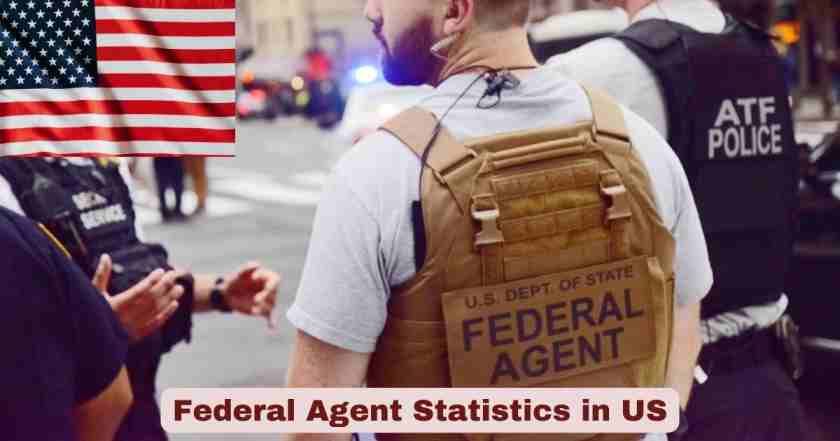
Federal Agents in US 2026
The landscape of federal law enforcement in the United States continues to undergo substantial transformation throughout 2026, marking a pivotal year for agencies tasked with protecting national security, enforcing federal laws, and safeguarding American borders. Federal agents represent the backbone of the nation’s law enforcement infrastructure, comprising specialized professionals who operate across multiple agencies under the Department of Justice, Department of Homeland Security, and Treasury Department. These dedicated men and women serve on the frontlines of combating terrorism, drug trafficking, cybercrime, immigration violations, and financial crimes that threaten the security and prosperity of American citizens. The role of federal law enforcement officers has expanded significantly since the events of September 11, 2001, with agencies receiving increased funding, personnel, and technological resources to address evolving domestic and international threats.
As we examine the federal agent statistics for 2026, it becomes evident that the United States maintains one of the world’s most comprehensive federal law enforcement systems, employing approximately 137,000 to 140,000 full-time federal law enforcement officers authorized to make arrests and carry firearms. This workforce is distributed across approximately 90 federal agencies, with the Department of Homeland Security employing nearly half of all federal agents. The year 2026 has witnessed unprecedented recruitment drives, particularly within Immigration and Customs Enforcement and Customs and Border Protection, reflecting the current administration’s emphasis on border security and immigration enforcement. Understanding these statistics provides crucial insights into how the federal government allocates resources to address the multifaceted challenges facing the nation, from transnational criminal organizations to domestic terrorism and sophisticated cybercrime networks that operate across state and international boundaries.
Interesting Facts About Federal Agents in the US 2026
| Federal Agent Fact Category | Statistical Data |
|---|---|
| Total Federal Law Enforcement Officers | Approximately 137,000-140,000 full-time officers |
| Largest Federal Law Enforcement Agency | Department of Homeland Security with approximately 80,000 officers |
| Number of Federal Law Enforcement Agencies | Approximately 90 agencies employing 50+ officers |
| Federal Agents as Percentage of Total US Law Enforcement | Approximately 13.7% of total 1+ million law enforcement personnel |
| Female Federal Law Enforcement Officers | Approximately 15% of total federal agents |
| Primary Function of Federal Agents | 68% engaged in criminal investigation activities |
| FBI Workforce | Approximately 38,000 total employees including 13,000+ special agents |
| DEA Personnel | Approximately 10,000 employees worldwide |
| ICE Workforce Growth 2025 | 120% increase – from 10,000 to 22,000+ officers in under one year |
| Border Patrol Agents | Approximately 19,000-21,000 agents |
| Customs and Border Protection Total | Over 60,000 employees including 33,300 officers |
| ATF Special Agents | Approximately 2,373-2,572 special agents |
| US Marshals Service Deputies | 3,892 authorized deputy marshals and criminal investigators |
| Secret Service Personnel | Approximately 8,000-8,300 total employees |
| Federal Law Enforcement Pay Increase 2026 | 3.8% raise for federal law enforcement (vs. 1% for other civilian employees) |
| Average Federal Agent Training Duration | 13-21 weeks depending on agency |
| Top Secret Security Clearance Requirement | Required for majority of federal agent positions |
| Federal Agent Retirement Eligibility | 25 years of service at any age or 20 years at age 50 |
| Signing Bonuses (ICE) | Up to $50,000 recruitment incentives |
| DHS Portion of Federal Law Enforcement | 49% of all federal law enforcement officers |
Data Source: Bureau of Justice Statistics, Department of Homeland Security, FBI, DEA, ATF, US Marshals Service, OPM, Congressional Research Service (2024-2026)
The comprehensive federal agent statistics presented in this table reveal remarkable insights into the scale and composition of federal law enforcement in the United States during 2026. The total workforce of approximately 137,000 to 140,000 federal law enforcement officers represents a formidable force dedicated to protecting national interests, though this figure has experienced significant fluctuations due to aggressive recruitment campaigns by specific agencies. The Department of Homeland Security’s dominance in federal law enforcement is particularly striking, employing nearly half of all federal agents across its component agencies including Customs and Border Protection, Immigration and Customs Enforcement, the Secret Service, and the Federal Protective Service. This concentration reflects the post-9/11 reorganization of federal law enforcement priorities, with border security and counterterrorism taking precedence in budgetary and personnel allocations.
Perhaps most noteworthy in the 2026 statistics is the extraordinary growth experienced by Immigration and Customs Enforcement, which achieved a staggering 120% workforce increase in less than twelve months, expanding from approximately 10,000 to over 22,000 officers and agents. This unprecedented hiring surge, funded by the One Big Beautiful Bill Act, represents the fastest federal law enforcement recruitment campaign in American history and demonstrates how political priorities can rapidly reshape agency capabilities. The gender composition of federal law enforcement continues to show significant room for improvement, with women comprising only 15% of federal agents in 2026, though individual agencies like the FBI report higher percentages with approximately 24.4% female special agents. The 3.8% pay increase authorized for federal law enforcement personnel in 2026, while other civilian federal employees received only 1%, underscores the administration’s prioritization of recruitment and retention in law enforcement positions amid national security concerns and border enforcement initiatives.
FBI Agents Statistics in the US 2026
| FBI Statistical Category | 2026 Data |
|---|---|
| Total FBI Employees | Approximately 38,000 |
| FBI Special Agents | Approximately 13,000+ special agents |
| Professional Staff Members | Approximately 20,000+ support personnel |
| Female Special Agents Percentage | 24.4% of special agents |
| Female FBI Workforce Total | 45.9% of entire FBI workforce |
| FBI Field Offices | 56 field offices plus headquarters |
| FBI Budget FY 2023 | Approximately $9+ billion |
| FBI Personnel Count 2023 | 36,945 positions |
| Age Requirement for New Agents | 23-37 years old (with veteran exceptions) |
| FBI Training Duration | 18 weeks at Basic Field Training Course (850 hours) |
| Top Secret Clearance | Required for all FBI employees |
| FBI Retirement Benefits | 25 years service at any age or 20 years at age 50 |
Data Source: FBI.gov, Congressional Research Service, Bureau of Justice Statistics, Statista (2024-2025)
The Federal Bureau of Investigation remains one of the most prestigious and well-resourced federal law enforcement agencies in the United States, employing approximately 38,000 personnel as of 2026. Of this workforce, roughly 13,000 are special agents who conduct criminal investigations, counterterrorism operations, and intelligence gathering activities, while the remaining 20,000+ employees serve in critical support roles as intelligence analysts, language specialists, scientists, information technology specialists, and administrative professionals. The FBI’s total headcount has remained relatively stable over the past several years, though there have been some fluctuations due to budget constraints and shifting priorities. The agency operates from its headquarters in Washington, D.C., and maintains 56 field offices throughout the United States, along with numerous resident agencies and international offices that extend its investigative reach across the globe. The FBI’s annual budget of approximately $9 billion reflects its status as the premier federal investigative agency with responsibilities spanning counterterrorism, counterintelligence, cybercrime, public corruption, civil rights violations, organized crime, white-collar crime, and violent crime.
Demographic trends within the FBI show gradual progress toward greater diversity, with 24.4% of special agents being female as of 2024-2025 data, representing a slow but steady increase from previous decades when the agency was overwhelmingly male-dominated. Interestingly, women comprise 45.9% of the entire FBI workforce when including intelligence analysts, professional staff, and other non-agent positions, suggesting that gender diversity is stronger in support roles than in special agent positions. The FBI maintains rigorous selection standards for prospective special agents, requiring candidates to be between 23 and 37 years old at the time of appointment (with exceptions for military veterans), possess a four-year bachelor’s degree, have at least three years of professional work experience, and pass extensive background investigations, polygraph examinations, physical fitness tests, and medical evaluations. The 18-week Basic Field Training Course at Quantico, Virginia, provides 850 hours of intensive instruction in defensive tactics, investigative techniques, firearms proficiency, legal principles, and FBI operational procedures. Special agents can retire with 25 years of service at any age or with 20 years of service at age 50, making federal law enforcement careers attractive to individuals seeking long-term stability and generous retirement benefits that far exceed those available in most private sector positions.
DEA Agents Statistics in the US 2026
| DEA Statistical Category | 2026 Data |
|---|---|
| Total DEA Personnel Worldwide | Approximately 10,000 employees |
| DEA Domestic Offices | 241 domestic offices in 23 divisions |
| DEA Foreign Offices | 93 foreign offices worldwide |
| DEA Special Agents (FY 2024) | Approximately 4,400-4,600 special agents |
| DEA Budget (Historical Reference) | $50.6 billion cumulative from 1972-2014 |
| DEA Employees 2014 | 11,055 employees |
| Average Cost Per DEA Arrest (2014) | $97,325 |
| DEA Informants (2005 Estimate) | Over 4,000 informants |
| HSI Agents Cross-Designated for DEA | Average of 4,000+ annually |
| DEA Organizational Structure | Component of Department of Justice |
Data Source: DEA.gov, Wikipedia, Government Accountability Office Reports (2014-2025)
The Drug Enforcement Administration serves as the United States’ primary agency for combating drug trafficking and enforcing controlled substances laws, employing approximately 10,000 personnel stationed across 241 domestic offices in 23 divisions throughout the United States and 93 foreign offices around the world. This global presence reflects the transnational nature of drug trafficking organizations that the DEA targets, with operations spanning from source countries in South America and Asia to transit zones in Mexico and Central America, ultimately reaching American communities where illicit drugs cause devastating health and social consequences. The DEA’s workforce includes special agents who conduct undercover operations, diversion investigators who monitor pharmaceutical supply chains, intelligence analysts who track drug trafficking patterns, forensic chemists who analyze seized substances, and professional staff who support field operations. As of fiscal year 2024, the DEA employed approximately 4,400 to 4,600 special agents, though this number fluctuates based on budgetary constraints, hiring freezes, and reassignments to other priority missions.
The DEA’s effectiveness relies heavily on interagency cooperation, particularly with Homeland Security Investigations, which has cross-designated an average of over 4,000 HSI agents annually with Title 21 authority to participate in counter-narcotics investigations. This collaboration effectively doubles the DEA’s investigative capacity, enabling joint task forces to tackle major drug trafficking organizations that would otherwise overwhelm the resources of a single agency. The DEA’s budget has grown substantially over its five-decade history, with cumulative funding from 1972 to 2014 totaling $50.6 billion, though annual appropriations vary based on congressional priorities and administration policies. In 2014, when the agency employed 11,055 people, the average cost per arrest was calculated at $97,325, a figure that underscores both the complexity of federal drug investigations and the substantial resources required to build prosecutable cases against sophisticated criminal networks. The DEA also maintains a vast network of confidential informants, estimated at over 4,000 as of 2005, who provide critical intelligence about drug operations, though the use of informants raises ongoing concerns about oversight, accountability, and the potential for abuse when informants are permitted to engage in illegal activities to maintain their cover and credibility within criminal organizations.
Customs and Border Protection Statistics in the US 2026
| CBP Statistical Category | 2026 Data |
|---|---|
| Total CBP Workforce | Over 60,000 employees |
| CBP Officers | Approximately 33,300 officers at ports of entry |
| Border Patrol Agents | Approximately 19,000-21,000 agents |
| CBP Agriculture Specialists | Approximately 2,200 specialists |
| Air and Marine Interdiction Agents | Approximately 1,000-1,200 agents |
| CBP Revenue Personnel | Approximately 2,500 employees collecting $30+ billion annually |
| Ports of Entry Protected | 328 official ports of entry |
| Border Miles Patrolled (Mexico) | 1,900 miles |
| Border Miles Patrolled (Canada) | 5,000 miles |
| CBP FY 2025 Budget | $19.8 billion |
| CBP FY 2025 Authorized Positions | 68,069 positions |
| CBP FY 2025 Full-Time Equivalents | 65,622 FTE |
| National Border Patrol Council Membership | Approximately 18,000 agents and support personnel |
| CBP Hiring Goal Through 2029 | 5,000 officers and 3,000 border patrol agents |
Data Source: CBP.gov, DHS Budget Documents, National Border Patrol Council, Wikipedia (2024-2026)
Customs and Border Protection stands as one of the world’s largest law enforcement organizations and the frontline defense for America’s borders, ports, and territorial integrity, employing over 60,000 personnel across multiple operational components. This massive workforce includes approximately 33,300 CBP officers who staff 328 ports of entry, screening international travelers and cargo; approximately 19,000 to 21,000 Border Patrol agents who patrol the 1,900 miles of border with Mexico and 5,000 miles of border with Canada; roughly 1,000 to 1,200 Air and Marine Operations agents who provide aerial and maritime interdiction capabilities; and approximately 2,200 agriculture specialists who work to prevent the introduction of harmful pests, plant diseases, and animal diseases that could devastate American agriculture. Additionally, CBP employs approximately 2,500 revenue personnel responsible for collecting over $30 billion annually in customs duties, taxes, and fees, making CBP a significant revenue generator for the federal government while simultaneously protecting American industries from unfair trade practices and intellectual property theft.
The fiscal year 2025 budget for CBP totaled $19.8 billion, supporting 68,069 authorized positions and 65,622 full-time equivalents, though actual staffing levels often fall short of authorized positions due to recruitment challenges, training pipelines, and attrition rates that have historically exceeded hiring rates for Border Patrol agents. The Border Patrol, in particular, has faced persistent difficulties in attracting and retaining qualified candidates, with only 1.8% of Border Patrol applicants successfully completing the hiring process and entering law enforcement roles during recent reporting periods. Factors contributing to these challenges include rigorous polygraph examinations that result in high failure rates, extensive background investigations that can take 300 to 600 days, demanding physical fitness requirements, and the isolated nature of many border duty stations that makes recruitment difficult among candidates with families or urban preferences. To address these staffing challenges, CBP has implemented aggressive recruitment initiatives, offering signing bonuses, retention incentives, streamlined hiring processes, and modified polygraph procedures that separate questions about drug use from questions about serious crimes. The agency aims to hire an additional 5,000 CBP officers and 3,000 Border Patrol agents through 2029, though skepticism remains about whether these targets can be achieved given historical recruitment difficulties and the competitive federal law enforcement labor market where agencies like ICE, the FBI, and Secret Service compete for similar candidate pools with generous financial incentives and career advancement opportunities.
Immigration and Customs Enforcement Statistics in the US 2026
| ICE Statistical Category | 2026 Data |
|---|---|
| Total ICE Officers and Agents | Over 22,000 (as of January 2026) |
| ICE Workforce Before 2025 Surge | Approximately 10,000 |
| ICE Workforce Growth Percentage | 120% increase in under one year |
| New Hires During 2025 | Over 12,000 officers and agents |
| ICE Applications Received | Over 220,000 applications |
| Original Hiring Target | 10,000 new officers within one year |
| ERO Officers (Enforcement and Removal) | Fewer than 6,000 (pre-surge estimate) |
| ICE Signing Bonuses | Up to $50,000 |
| Training Duration (Accelerated) | Approximately 6 weeks (reduced from 6 months) |
| ICE Funding (One Big Beautiful Bill) | $8 billion for hiring surge |
| Age Requirement Removal | No longer 40-year cap (minimum age 21) |
| Physical Fitness Requirements | 22 push-ups in 1 minute, 1.5 mile run in 14:25 minutes |
| Degree Requirement | Not required |
Data Source: DHS, Government Executive, ICE.gov, Police1.com, NBC News, Axios (2025-2026)
Immigration and Customs Enforcement experienced the most dramatic expansion of any federal law enforcement agency in American history during 2025, achieving a staggering 120% workforce increase that brought total personnel from approximately 10,000 to over 22,000 officers and agents in less than twelve months. This unprecedented recruitment campaign, funded by $8 billion from the One Big Beautiful Bill Act, shattered the agency’s original goal of hiring 10,000 new officers within one year, ultimately bringing over 12,000 new hires into ICE ranks through an aggressive outreach strategy that generated more than 220,000 applications from Americans seeking federal law enforcement careers. To facilitate this rapid expansion, ICE implemented several controversial measures including dramatically shortened training programs that compressed basic instruction from six months to approximately six weeks, removal of the previous 40-year age cap for new applicants, elimination of undergraduate degree requirements, and offering signing bonuses of up to $50,000 that far exceeded incentives available at other federal law enforcement agencies.
The accelerated hiring tempo allowed ICE to deploy newly trained officers into the field at unprecedented speed, though critics raised serious concerns about training adequacy, background check thoroughness, and quality control in a process that prioritized quantity over traditional vetting standards. Reports emerged of recruits being dismissed for misconduct, trainers being overwhelmed by large class sizes, and physical fitness standards being relaxed to accommodate candidates who struggled with basic requirements like 22 push-ups in one minute or 1.5-mile runs in under 14 minutes and 25 seconds. Internal communications described some recruits as “athletically allergic,” while others failed tests on immigration law and Fourth Amendment protections that are foundational to lawful enforcement operations. The expansion focused primarily on Enforcement and Removal Operations, the division responsible for arresting and deporting individuals unlawfully present in the United States, though the exact breakdown between sworn ERO officers and other ICE personnel categories remained unclear in official statistics. Additionally, ICE benefited from approximately 33,000 federal employees detailed from other agencies to support operations, meaning that reported enforcement capacity often depended on temporary interagency personnel rather than permanent ICE positions, raising questions about sustainability once these detailed employees return to their home agencies and whether the 22,000-person workforce represents a stable long-term staffing level or an artificially inflated temporary surge.
ATF Agents Statistics in the US 2026
| ATF Statistical Category | 2026 Data |
|---|---|
| Total ATF Employees (FY 2024) | 5,322 full-time employees |
| ATF Special Agents (FY 2024) | 2,572 special agents |
| ATF Special Agents (FY 2025) | 2,373 special agents |
| Industry Operations Investigators | 857-862 investigators |
| Administrative/Professional/Technical Staff | 1,893 personnel |
| ATF Budget (FY 2023) | Approximately $1.6 billion |
| Total ATF Employees (FY 2023) | 5,281 employees |
| ATF Special Agents (FY 2023) | 2,597 special agents |
| Proposed ATF to FBI Transfer | Up to 1,000 agents (planned) |
| Initial Border Assignment | Approximately 150 agents (temporary) |
| Active Federal Firearms Licensees | 128,690 FFLs |
| Firearms Licenses Issued (FY 2024) | 43,956 licenses (including renewals) |
Data Source: ATF.gov, CNN, Bureau of Justice Statistics (2023-2025)
The Bureau of Alcohol, Tobacco, Firearms and Explosives operates as a relatively small but highly specialized federal law enforcement agency employing 5,322 full-time personnel as of fiscal year 2024, including 2,572 special agents who investigate firearms trafficking, arson, explosives violations, and alcohol and tobacco diversion. This workforce has remained largely stable over the past several years, with only modest fluctuations due to natural attrition and limited hiring, though the agency’s size may change dramatically if proposed reorganization plans proceed. In early 2025, FBI Director Kash Patel, who also serves as acting ATF director, outlined controversial plans to transfer as many as 1,000 ATF agents to the FBI, which would reduce ATF’s special agent workforce by more than one-third and effectively gut the agency’s investigative capacity. The stated rationale involves consolidating federal law enforcement resources and redirecting ATF personnel toward border-related criminal enforcement duties, beginning with approximately 150 agents being temporarily reassigned to other ATF field offices to support border surge initiatives while nominally remaining ATF agents rather than being formally transferred to FBI payroll.
The ATF’s $1.6 billion budget for fiscal year 2023 supports not only its 2,597 special agents but also 862 industry operations investigators who inspect and regulate federal firearms licensees, explosives manufacturers, and alcohol and tobacco businesses to ensure compliance with federal regulations, plus 1,893 administrative, professional, and technical staff who provide critical support for investigations, forensic analysis, intelligence gathering, and program management. The agency oversees 128,690 active federal firearms licensees and issued 43,956 firearms licenses (including renewals) in fiscal year 2024, demonstrating the substantial regulatory responsibilities that complement its criminal investigative mission. ATF special agents undergo intensive training in firearms tracing, arson investigation, explosives incident response, and undercover operations, often working closely with state and local law enforcement through task forces and joint investigations that leverage federal resources and expertise to combat violent crime in communities nationwide. The agency’s handgun qualification course is considered one of the most challenging in federal law enforcement, with failure to qualify being a common reason for dismissal from the academy and for revocation of firearm-carrying authority for agents in the field, reflecting the critical importance of marksmanship and firearms proficiency in an agency whose investigations frequently involve armed suspects and dangerous tactical situations where split-second decisions can mean the difference between life and death for agents and the public they protect.
US Marshals Service Statistics in the US 2026
| US Marshals Statistical Category | 2026 Data |
|---|---|
| Total Authorized USMS Employees | 5,488 authorized employees |
| US Marshals (Presidential Appointees) | 94 US Marshals (one per district, plus 71 Presidential appointees) |
| Deputy US Marshals and Criminal Investigators | 3,892 authorized deputies |
| Administrative and Detention Enforcement | 1,596 authorized employees |
| USMS Districts | 94 districts |
| USMS Sub-Offices | 194 sub-offices |
| USMS Foreign Field Offices | 4 foreign field offices |
| USMS FY 2024 Budget (Salaries & Expenses) | $1.692 billion |
| USMS FY 2024 Budget (Federal Prisoner Detention) | $2.1 billion |
| Federal Judges Protected | Approximately 2,700 judges |
| Federal Prosecutors Protected | Approximately 30,300 prosecutors and court officials |
| Judicial Facilities Protected | Over 800 facilities |
| Deputies Active (FY 2020 Reference) | Approximately 5,212 deputies |
| Training Duration | 18-21.5 weeks at FLETC |
Data Source: US Marshals Service, Department of Justice, BJS (2024-2025)
The United States Marshals Service, established in 1789, represents America’s oldest federal law enforcement agency and serves as the enforcement arm of the federal judiciary with 5,488 authorized employees including 94 US Marshals (one appointed for each federal judicial district) and 3,892 authorized deputy US marshals and criminal investigators who perform the agency’s diverse operational missions. The Marshals Service operates from 94 district offices, 194 sub-offices, and 4 foreign field offices located in Mexico, Jamaica, the Dominican Republic, and Colombia, reflecting the international dimensions of fugitive apprehension and witness protection responsibilities. The agency’s fiscal year 2024 budget totaled $1.692 billion for salaries and expenses, plus an additional $2.1 billion for federal prisoner detention operations, making the Marshals Service one of the most well-funded federal law enforcement agencies relative to its personnel size, though much of this budget supports prisoner transport, detention facility payments, and asset management rather than direct law enforcement operations.
Deputy US Marshals perform an extraordinarily diverse range of law enforcement functions including fugitive apprehension (the Marshals arrest more federal fugitives than all other agencies combined), judicial security (protecting approximately 2,700 federal judges, 30,300 prosecutors and court officials, and over 800 judicial facilities), witness protection (managing approximately 19,000+ participants in the Witness Security Program), prisoner operations (transporting and managing custody of federal prisoners through the Justice Prisoner and Alien Transportation System), asset forfeiture (seizing and managing assets derived from criminal activity), and sex offender investigations (locating and apprehending non-compliant and fugitive sex offenders under the Adam Walsh Child Protection Act). The 18 to 21.5-week training program at the Federal Law Enforcement Training Center in Glynco, Georgia, is notably rigorous and follows a stress academy model more analogous to state police training than typical federal criminal investigator programs, with early morning formation runs, intensive physical conditioning, seven written exams, multiple pass/fail practical exercises, and strict fitness standards that must be maintained throughout the training period. Upon graduation, new deputies typically spend their first several years assigned to prisoner transport, court security, and warrant service rather than the highly coveted fugitive task force positions that represent the most visible and prestigious assignments within the Marshals Service, requiring deputies to demonstrate competence and reliability in foundational responsibilities before being entrusted with the complex, high-risk manhunt operations for which the agency is most famous in popular culture and historical accounts.
Secret Service Statistics in the US 2026
| Secret Service Statistical Category | 2026 Data |
|---|---|
| Total Secret Service Personnel | Approximately 8,000-8,300 employees |
| Secret Service Special Agents | Approximately 3,200-3,600 special agents |
| Uniformed Division Officers | Approximately 1,300-1,600 officers |
| Technical, Professional, Administrative Staff | Approximately 2,000+ personnel |
| Secret Service Budget (FY 2025) | $3.2 billion |
| Authorized Positions (FY 2025) | 8,300 positions |
| Full-Time Equivalents (FY 2025) | 8,296 FTE |
| Secret Service Field Offices | Over 150 offices (domestic and international) |
| Hiring Goal Through 2028 | 4,000 new employees |
| Target Special Agents | Expand from 3,500 to 5,000 special agents |
| Target Uniformed Division | Increase to approximately 2,000 officers |
| Target Total Employees | 10,000+ employees by 2028 |
| Special Agent Applications (FY 2025) | 45,000 applications |
| Professional Staff Applications (FY 2025) | 30,000 applications |
| Training Duration – Phase 1 (CITP) | 13 weeks at FLETC |
| Training Duration – Phase 2 (SATC) | 18 weeks at Secret Service Academy |
| Total Training Duration | Approximately 31 weeks |
| Age Requirement | 21-37 years old at appointment |
| Visual Acuity Requirement | 20/100 uncorrected or correctable to 20/20 each eye |
| Selection Rate | Less than 1% of special agent applicants accepted (historical) |
Data Source: Secret Service, DHS Budget Documents, Government Executive, Just The News (2024-2026)
The United States Secret Service employs approximately 8,000 to 8,300 personnel as of 2026, including roughly 3,200 to 3,600 special agents who conduct protective operations and criminal investigations, approximately 1,300 to 1,600 Uniformed Division officers who provide security at the White House, Vice President’s residence, and designated locations, and over 2,000 technical, professional, and administrative support personnel who perform critical functions in intelligence analysis, forensic computer examination, communications, and program management. The agency’s fiscal year 2025 budget of $3.2 billion supports 8,300 authorized positions and 8,296 full-time equivalents, operating from headquarters in Washington, D.C., and over 150 field offices throughout the United States and abroad. This workforce has struggled to meet staffing targets set in previous strategic plans, with a 2021 goal to reach 9,005 employees by 2025 falling short amid budget caps, COVID-19 pandemic disruptions, and persistent recruitment and retention challenges that have plagued the agency for over a decade despite offering some of the most generous financial incentives and retirement benefits in federal law enforcement.
The Secret Service announced ambitious plans to hire 4,000 new employees by 2028, which would expand special agent ranks from approximately 3,500 to 5,000, increase Uniformed Division strength to around 2,000 officers, and bring total employment to 10,000+ personnel for the first time in agency history. To achieve these goals, the Service implemented accelerated hiring events where candidates complete multiple assessment phases including physical fitness tests, security interviews, and polygraph examinations over several days rather than the traditional months-long process, reducing the timeline for job offers from 18+ months to under one year and eventually targeting approximately 8 months. In fiscal year 2025, the Secret Service received 45,000 special agent applications and 30,000 professional staff applications, demonstrating strong public interest in Secret Service careers, though the agency’s historically selective process accepts less than 1% of special agent applicants, reflecting rigorous standards for physical fitness, mental acuity, integrity, and investigative competence. The 31-week training program consists of 13 weeks at the Criminal Investigator Training Program at the Federal Law Enforcement Training Center in Glynco, Georgia, followed by 18 weeks at the Special Agent Training Course at the James J. Rowley Training Center in Laurel, Maryland, where recruits receive specialized instruction in protective methodologies, defensive tactics, firearms proficiency, and the unique operational requirements of presidential and dignitary protection that distinguish Secret Service responsibilities from other federal law enforcement agencies focused primarily on criminal investigation and arrest operations.
Federal Law Enforcement Salary and Benefits in the US 2026
| Salary & Benefits Category | 2026 Data and Details |
|---|---|
| Federal LEO Pay Increase (2026) | 3.8% for law enforcement officers |
| Other Federal Employee Pay Increase | 1.0% for non-law enforcement civilians |
| Additional LEO Increase | 2.8% beyond base increase (special rate) |
| Starting Salary Range (GS-5 to GS-9) | $31,680 to $53,433 (before locality adjustments) |
| Average Entry-Level Federal Agent Salary | Approximately $40,000-$50,000 annually |
| Federal Agent Top Salary Range | $100,000-$160,000+ (GS-13 to GS-15 with locality) |
| Law Enforcement Availability Pay | 25% additional compensation for agents (FBI, DEA, ATF, etc.) |
| Locality Pay Washington DC | Approximately 32.49% above base GS salary |
| Retirement System | FERS (Federal Employees Retirement System) |
| Law Enforcement Retirement Formula | 1.7% of high-3 average salary × years of service (up to 20 years) |
| Law Enforcement Retirement Formula (After 20) | 1% of high-3 average salary × years beyond 20 |
| Mandatory Retirement Age | 57 years old (with exceptions) |
| Minimum Retirement Age | 50 years old with 20 years of service |
| Early Retirement Option | Any age with 25 years of service |
| Federal Law Enforcement Pension (25 years) | Approximately 42.5% of high-3 average salary |
| Federal Law Enforcement Pension (30 years) | Approximately 47.5% of high-3 average salary |
| Health Insurance (FEHB) | Federal government pays approximately 70-75% of premiums |
| Thrift Savings Plan Match | 5% of salary (government contribution) |
| Annual Leave Accrual (Years 1-3) | 13 days (4 hours per pay period) |
| Annual Leave Accrual (Years 3-15) | 20 days (6 hours per pay period) |
| Annual Leave Accrual (Years 15+) | 26 days (8 hours per pay period) |
| Sick Leave Accrual | 13 days annually (4 hours per pay period) |
Data Source: OPM.gov, FederalPay.org, FEDWEEK, Congressional Research Service (2024-2026)
Federal law enforcement officers receive compensation packages that rank among the most generous in American law enforcement, combining competitive salaries with exceptional retirement benefits, comprehensive health insurance, and job security that far exceeds private sector employment. The 3.8% pay increase authorized for federal law enforcement personnel in 2026 reflects the administration’s commitment to recruitment and retention during a period of aggressive hiring across multiple agencies, with this increase consisting of a 1.0% base adjustment applicable to all federal civilian employees plus an additional 2.8% special rate adjustment exclusive to law enforcement positions. Starting salaries for federal agents typically range from approximately $40,000 to $50,000 annually depending on the agency, duty location, and entry grade level (typically GS-5 through GS-9), though these base figures understate actual compensation because they exclude locality pay adjustments that can add 20% to 35% depending on geographic assignment, with Washington, D.C., currently offering approximately 32.49% above base General Schedule salaries.
Many federal agents also receive Law Enforcement Availability Pay, which provides an additional 25% premium on top of base salary to compensate for irregular work schedules, after-hours call-outs, and the requirement to be available for duty beyond standard work hours. When combining base pay, locality adjustments, and LEAP, entry-level federal special agents in high-cost areas like New York, Los Angeles, San Francisco, or Washington, D.C., can earn total compensation exceeding $65,000 to $75,000 in their first year, with rapid progression to $100,000+ within five to seven years as they advance through GS grade levels and gain additional longevity step increases. Senior federal agents at the GS-13, GS-14, or GS-15 levels in major metropolitan areas can earn $120,000 to $160,000+ annually before factoring in overtime, which is commonly available during major investigations, protective operations, or tactical deployments. These salary levels compare extremely favorably to state and local law enforcement, where even experienced officers in many jurisdictions earn $50,000 to $80,000, making federal positions highly attractive to mid-career law enforcement professionals seeking better compensation and career advancement opportunities.
The retirement benefits available to federal law enforcement officers represent perhaps the most significant financial advantage of federal service, with special provisions that allow retirement at younger ages than other federal employees and with more generous pension formulas. Federal agents can retire with 25 years of service at any age or with 20 years of service at age 50, compared to civilian federal employees who generally must work until age 60-62 with similar service requirements. The pension calculation for law enforcement uses a 1.7% multiplier for the first 20 years of service and 1.0% for years beyond 20, applied to the average of the highest three consecutive years of salary. An agent who retires after 25 years receives approximately 42.5% of their high-3 average salary as an annual pension for life, while 30-year retirees receive approximately 47.5%. For an agent whose high-3 average salary was $120,000, this translates to $51,000 annually at 25 years or $57,000 at 30 years, with cost-of-living adjustments ensuring the pension maintains purchasing power throughout retirement. Federal agents also participate in the Thrift Savings Plan, where the government contributes 5% of salary as matching funds, effectively providing free retirement savings that can grow tax-deferred and substantially supplement pension income, with many agents accumulating $500,000 to $1,000,000+ in TSP accounts over 25-30 year careers.
Federal Law Enforcement Demographics in the US 2026
| Demographic Category | 2026 Statistical Data |
|---|---|
| Female Federal Law Enforcement Officers | Approximately 15% of total federal agents |
| FBI Female Special Agents | 24.4% (as of 2024) |
| FBI Female Total Workforce | 45.9% (including support staff) |
| African American Federal LEOs | Approximately 12-13% |
| Hispanic/Latino Federal LEOs | Approximately 18-20% |
| Asian American Federal LEOs | Approximately 2-4% |
| Military Veterans in Federal LEO | Approximately 30-35% |
| Average Age of Federal Agents | 38-42 years old (estimated) |
| Minimum Age Requirement | 21 years old (most agencies) |
| Maximum Age at Appointment | 37 years old (FBI, Secret Service, DEA with veteran exceptions) |
| No Age Cap Agencies | ATF, ICE (as of 2025) |
| College Degree Holders | Over 90% (most agencies require bachelor’s degree) |
| Advanced Degrees (Master’s/JD) | Approximately 30-40% |
| Federal LEO Line-of-Duty Deaths (2024) | 44 deaths (includes all causes) |
| Federal LEO Felonious Deaths (Historical Average) | 2-5 per year |
Data Source: FBI, OPM, Bureau of Justice Statistics, Officer Down Memorial Page (2024-2026)
The demographic composition of federal law enforcement continues to evolve gradually toward greater diversity, though the workforce remains predominantly male with approximately 85% men and only 15% women across all federal law enforcement agencies. This gender disparity varies significantly by agency, with the FBI reporting notably higher female representation at 24.4% of special agents and 45.9% of the total workforce when including intelligence analysts, forensic specialists, and administrative professionals, while agencies like the Border Patrol and ICE remain overwhelmingly male due to the physically demanding nature of field assignments and the culture of these organizations. Racial and ethnic diversity has improved substantially since the 1970s and 1980s when federal law enforcement was almost exclusively white, with current estimates suggesting that approximately 12-13% of federal agents are African American, 18-20% are Hispanic or Latino, and 2-4% are Asian American, though these percentages still lag behind the representation of minority groups in the general U.S. population.
Military veterans comprise approximately 30-35% of the federal law enforcement workforce, reflecting targeted recruitment efforts, veterans’ preference hiring policies that provide additional points on civil service examinations, and the natural affinity between military service and law enforcement careers that emphasize discipline, physical fitness, teamwork, and service to country. The average age of federal agents is estimated at 38 to 42 years old, significantly higher than state and local law enforcement where officers often enter service in their early twenties, because federal agencies typically require professional work experience, advanced education, and life experience that younger candidates lack. Most federal agencies set a maximum age of 37 at the time of appointment to ensure officers can complete a full 20-year career before reaching the mandatory retirement age of 57, though the ATF and ICE have eliminated their age caps, and military veterans receive additional years beyond the 37-year limit equal to their time in military service, allowing some agents to begin federal careers in their early 40s if they served extensively in the armed forces.
Educational credentials among federal agents are exceptionally high, with over 90% holding bachelor’s degrees (required by most agencies) and approximately 30-40% possessing advanced degrees such as master’s degrees, law degrees, or doctoral degrees in fields like criminal justice, law, accounting, computer science, foreign languages, or intelligence studies. This educational attainment far exceeds state and local law enforcement, where many departments require only a high school diploma or some college credits, contributing to federal agents’ higher average salaries and the prestige associated with federal law enforcement careers. Federal law enforcement remains a dangerous profession despite advanced training and equipment, with 44 federal officers dying in the line of duty in 2024 from all causes including COVID-19, vehicle accidents, and job-related illnesses, though felonious deaths (killed by intentional criminal acts) average only 2 to 5 annually, significantly lower than state and local law enforcement where approximately 50-70 officers are murdered each year while responding to domestic disturbances, traffic stops, and other routine patrol activities that federal agents typically do not perform as their investigations focus on complex financial crimes, drug trafficking conspiracies, and counterterrorism operations conducted through undercover operations and informant networks rather than street patrol and immediate response to emergency calls.
Federal Law Enforcement Training Requirements in the US 2026
| Training Category | Specific Requirements and Duration |
|---|---|
| FLETC Criminal Investigator Training | 13 weeks (basic training for most federal agents) |
| FBI Special Agent Training | 18 weeks at Quantico, Virginia (850 hours) |
| DEA Basic Agent Training | 18 weeks at Quantico, Virginia |
| Secret Service Training (Total) | 31 weeks (13 weeks CITP + 18 weeks SATC) |
| ATF Special Agent Training | 15-16 weeks (CITP + ATF-specific training) |
| US Marshals Training | 18-21.5 weeks at FLETC |
| Border Patrol Academy | 55 days (accelerated) to 117 days (standard) |
| ICE Training (Traditional) | 6 months |
| ICE Training (Accelerated 2025) | 6 weeks |
| Physical Fitness Test Components | Push-ups, sit-ups, 1.5-mile run, body composition |
| Firearms Qualification Frequency | Quarterly (every 3 months minimum) |
| Defensive Tactics Training Hours | 40-80 hours depending on academy |
| Legal Training Hours | 80-120 hours (constitutional law, criminal procedure) |
| In-Service Training Requirement | 40-80 hours annually |
| Continuing Education Requirements | Varies by agency and specialization |
| Language Training Availability | Spanish, Arabic, Chinese, Russian (multi-month programs) |
| Specialized Schools | Counterterrorism, cyber crime, financial crime, undercover operations |
Data Source: FLETC, FBI, DEA, Secret Service, ATF, US Marshals, CBP, ICE (2024-2026)
Federal law enforcement training represents some of the most rigorous and comprehensive instruction available in American law enforcement, with most federal agents attending the Federal Law Enforcement Training Center in Glynco, Georgia, for the 13-week Criminal Investigator Training Program that provides foundational instruction in constitutional law, criminal procedure, investigative techniques, interviewing and interrogation, physical fitness, defensive tactics, firearms proficiency, emergency vehicle operations, and professional ethics. Following FLETC graduation, agents proceed to agency-specific training at their home agency’s academy where they receive specialized instruction tailored to their particular law enforcement mission, whether that involves undercover drug operations for DEA agents, financial crime investigations for Secret Service agents, or fugitive apprehension tactics for U.S. Marshals deputies. The FBI operates its own academy at Quantico, Virginia, bypassing FLETC entirely and providing 18 weeks of intensive training covering 850 hours of instruction that transforms civilian professionals into federal special agents capable of conducting sophisticated investigations into terrorism, espionage, cybercrime, public corruption, civil rights violations, organized crime, and violent crime.
Training duration varies significantly across agencies, from the traditional six-month programs historically offered by ICE and other agencies to the 31-week combined training required for Secret Service special agents who must master both criminal investigation and protective operations, to the drastically shortened six-week accelerated program implemented by ICE during its 2025 hiring surge that raised serious concerns about training adequacy and officer preparedness for complex law enforcement duties.
Disclaimer: This research report is compiled from publicly available sources. While reasonable efforts have been made to ensure accuracy, no representation or warranty, express or implied, is given as to the completeness or reliability of the information. We accept no liability for any errors, omissions, losses, or damages of any kind arising from the use of this report.