
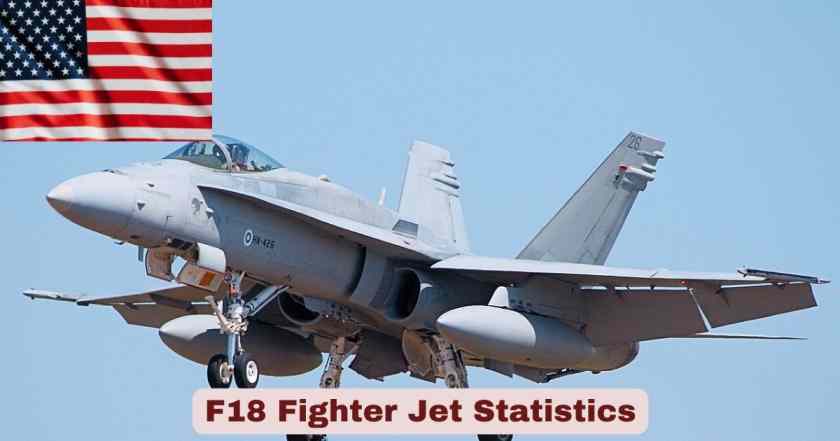
F18 Fighter Jet in America 2026
The F/A-18 Super Hornet is the beating heart of United States Navy carrier aviation, and in 2026, it continues to prove why the Navy has trusted this platform with its most demanding combat missions for over two decades. As of early 2026, the U.S. Navy operates approximately 325 single-seat F/A-18E Super Hornets, 250 two-seat F/A-18F Super Hornets, and 160 EA-18G Growler electronic warfare variants — a combined carrier-based force of around 735 aircraft that makes the Super Hornet family the single largest combat-ready strike fighter fleet operated from aircraft carriers anywhere on Earth. Built by Boeing (originally McDonnell Douglas), the F/A-18E/F Super Hornet entered fleet service in 1999, replacing the legendary F-14 Tomcat, and has since compiled an unbroken combat record spanning Iraq, Afghanistan, Libya, Syria, Yemen, and most recently the Iran strikes of 2025 and 2026. From the flight decks of nuclear-powered supercarriers sailing the Red Sea, Persian Gulf, and Pacific Ocean, the Super Hornet remains the aircraft that launches first, strikes hard, and comes back ready to go again — and the fleet crossed the extraordinary milestone of 12 million combined flight hours in August 2025, a number that no other carrier-based tactical aircraft family in history has approached. With a unit cost of $67.4 million per NAVAIR official pricing, a cost per flight hour of ~$18,000–$22,000, and a 10,000-hour Block III airframe life, the F/A-18 Super Hornet combines affordability, maintainability, and raw combat power in a package that has no equal in naval aviation today.
What makes 2026 a particularly pivotal year for the F/A-18 Super Hornet is the fact that the platform is simultaneously at the absolute peak of its combat relevance and the beginning of its twilight. In January 2026, Northrop Grumman confirmed delivery of the final aft fuselage sections for new-build Super Hornets, marking a concrete step toward the production line closure expected in 2027 with the last of a 17-aircraft final order secured in March 2024 for $1.1 billion. The F/A-18 Super Hornet will ultimately be replaced by the 6th-generation F/A-XX — now expected in the 2030s — but until that successor arrives in sufficient numbers, the Super Hornet carries the entire weight of U.S. carrier-based strike operations. It did exactly that in Operation Midnight Hammer (June 2025), where Super Hornets from USS Abraham Lincoln and USS Gerald R. Ford operated as part of the 125+ aircraft package that struck Iran’s nuclear sites, and again in Operation Epic Fury (February 28, 2026) when Super Hornets flew combat sorties as part of the broader joint U.S.-Israeli strikes on over 1,000 Iranian targets — confirming that the F/A-18 Super Hornet’s story in 2026 is one of maximum operational intensity right up to its final production chapter.
Interesting Facts About F18 Fighter Jet in the US 2026
| Fact | Data |
|---|---|
| Original First Flight (F/A-18A Hornet) | November 18, 1978 |
| Super Hornet (F/A-18E/F) First Flight | November 29, 1995 |
| Super Hornet Entered Fleet Service | 1999 — replaced the F-14 Tomcat |
| Official Nickname | “Rhino” (U.S. Navy); officially named “Super Hornet” |
| Aircraft Age in 2026 | 27 years in U.S. Navy fleet service (Super Hornet) |
| Total F/A-18E in U.S. Navy Inventory (April 2025) | 325 single-seat F/A-18Es |
| Total F/A-18F in U.S. Navy Inventory (April 2025) | 250 two-seat F/A-18Fs |
| EA-18G Growler Variants in Inventory (April 2025) | 160 EA-18G Growlers |
| Legacy F/A-18A/C/D with U.S. Marine Corps | ~180 aircraft (as of late 2024/2025) |
| Combined F/A-18 + EA-18G Flight Hours (Aug 2025) | 12 million flight hours — equivalent to ~1,370 years of non-stop flight |
| Unit Cost (NAVAIR Official) | $67.4 million per F/A-18E/F |
| Block III Unit Cost | Up to $73 million per aircraft |
| Only Aircraft to Replace F-14 Tomcat | Yes — the F/A-18E/F succeeded the Tomcat in 2006 |
| Airframe Service Life (Block III) | 10,000 flight hours (Block II was 6,000 hours) |
| Maintenance Advantage vs. F-14 | Requires half the maintenance time of the F-14; cost per flight hour is 40% of the F-14’s rate |
| Engine Removal Time | F404 engine can be removed and replaced by a 4-person team in just 20 minutes |
| Combat Debut | November 6, 2002 — Iraq no-fly zone strike from USS Abraham Lincoln |
| Blue Angels Transition | Blue Angels transitioned from F/A-18 Hornet to F/A-18 Super Hornet in 2021 |
| Final Production Fuselage Completed | January 2026 — Northrop Grumman delivered last aft fuselage sections |
| Production Line Closure Target | 2027 — final deliveries of 17-aircraft last order |
| Successor Aircraft | F/A-XX (6th-generation) expected in the 2030s |
| Combat Operations in 2025–2026 | Red Sea / Yemen (Houthi), Operation Midnight Hammer (Iran, June 2025), Operation Epic Fury (Iran, February 28, 2026) |
| 30th Anniversary Milestone | 2025 marked 30 years since the Super Hornet’s first flight on Nov. 29, 1995 |
Sources: U.S. Naval Air Systems Command (NAVAIR) Official Product Page (navair.navy.mil), U.S. Naval Academy F/A-18 Hornet Fact Sheet (usna.edu), The Aviationist — 12 Million Flight Hours Report (theaviationist.com, August 2025), The War Zone — Final F/A-18 Fuselages (twz.com, January 28, 2026), Boeing F/A-18E/F Super Hornet — Wikipedia (updated March 2026), NAVSAIR F/A-18 Program Office (PMA-265) Press Release (August 2025), Zona Militar — End of Super Hornet Production (February 2026)
The data packed into this table above tells the story of an aircraft that arrived as a stopgap and became a legend. When the U.S. Navy first pushed for the Super Hornet in the early 1990s, it was widely criticized as an interim solution — a temporary bridge until a true next-generation carrier fighter arrived. That successor, the A-12 Avenger II stealth attack aircraft, was famously canceled in 1991 due to cost overruns, and the F-14 Quick Strike upgrade was rejected. The Super Hornet stepped into both gaps and never left. By the time it hit 12 million combined flight hours in August 2025 — marking a milestone described by the Navy as equivalent to nearly 1,370 years of non-stop flight — it had long since transformed from a stopgap into the backbone of U.S. carrier aviation. The 30th anniversary of its first flight in November 2025 was celebrated while the aircraft was actively conducting combat sorties over Yemen, a fitting summary of the platform’s journey. The Blue Angels’ transition to the Super Hornet in 2021 — the most watched flight demonstration team in the world — added one more layer of cultural permanence to an aircraft that was never supposed to be permanent.
What the facts in this table also reveal is that the F/A-18 Super Hornet achieves its remarkable combat record with a maintainability story that is almost as impressive as its flying performance. The ability to remove a General Electric F404 engine with a 4-person team in just 20 minutes is not a parlor trick — it is the engineering philosophy that allows an aircraft carrier’s 70-aircraft air wing to sustain daily combat sortie rates over extended deployments without shore-based depot support. The Super Hornet needs half the maintenance time of the F-14 Tomcat it replaced, and its 10,000-hour Block III airframe life means aircraft delivered in 2024 will still be flying combat missions deep into the 2040s, well after the production line shuts down in 2027. For a fighter jet, that combination of combat power, low maintenance burden, and extraordinary longevity is the quiet reason the F/A-18 outlasted every rival and every attempt to replace it.
F18 Fighter Jet Technical Specifications in the US 2026
| Specification | F/A-18E (Single-Seat) | F/A-18F (Two-Seat) |
|---|---|---|
| Primary Function | Multi-role strike fighter | Multi-role strike/trainer |
| Prime Contractor | Boeing (formerly McDonnell Douglas) | Boeing |
| Power Plant | 2× General Electric F414-GE-400 turbofan | Same |
| Engine Thrust (Each, with afterburner) | 22,000 lbs (9,977 kg) static thrust | Same |
| Total Thrust (with afterburner) | 44,000 lbs | Same |
| Wingspan | 44.9 feet (13.68 meters) | Same |
| Length | 60.3 feet (18.38 meters) | 60.3 feet |
| Height | 16 feet (4.88 meters) | Same |
| Wing Area | 500 sq ft (46.5 m²) — 25% larger than legacy Hornet | Same |
| Empty Weight | 30,564 lbs (13,864 kg) | ~33,000 lbs |
| Maximum Takeoff Weight | 66,000 lbs (29,937 kg) | Same |
| Top Speed | Mach 1.8 (~1,190 mph / 1,915 km/h) at altitude | Same |
| Combat Radius | ~450 nautical miles (515 miles / 830 km) hi-lo-hi | Same |
| Ferry Range | ~1,800 nautical miles (2,070 miles) with tanks | Same |
| Combat Ceiling | 50,000+ feet (15,240 meters) | Same |
| Rate of Climb | >62,000 feet per minute | Same |
| Crew | 1 (pilot) | 2 (pilot + WSO) |
| Hardpoints | 11 (9 on wing/fuselage + 2 wingtip AIM-9 stations) | Same |
| Internal Gun | M61A2 Vulcan 20mm rotary cannon, 578 rounds | Same |
| Radar | AN/APG-79 AESA (Active Electronically Scanned Array) | Same |
| Block III Cockpit | Large area touchscreen displays, advanced HMI | Same |
| Block III Networking | Distributed Targeting Processor Network (DTPN), TTNT | Same |
| Airframe Life | 10,000 hours (Block III) | Same |
| Fuel Capacity (internal) | ~14,400 lbs — 33% more than legacy F/A-18C/D | Same |
| Fuel Consumption | ~1,100 gallons per flight hour | Same |
Sources: U.S. Naval Academy F/A-18 Fact Sheet (usna.edu), NAVAIR F/A-18E/F Product Page (navair.navy.mil), Military.com — F/A-18E/F Super Hornet Data, Boeing F/A-18E/F Super Hornet Wikipedia (March 2026), Defense Feeds — F/A-18 Technical Analysis (March 2025)
The F/A-18E/F Super Hornet’s technical profile is the story of a platform that took everything good about its predecessor and scaled it to meet a completely different century of threats. The 25% larger wing area, the 33% greater internal fuel capacity, and the 22,000-lb thrust per engine represent an aircraft that is in many ways more of a new design than an enlargement — the forward fuselage being virtually the only structural element carried over directly from the legacy F/A-18C/D. Flying at Mach 1.8 with a combat radius of ~450 nautical miles — roughly 50% greater than the legacy Hornet — the Super Hornet can strike targets from carrier positions that keep the vessel itself at safer distances from shore-based threats. The 11 hardpoints carrying up to 17,750 lbs of ordnance, the AN/APG-79 AESA radar with simultaneous air-to-air and air-to-ground modes, and the M61A2 Vulcan cannon with 578 rounds make it capable across the full tactical spectrum — from beyond-visual-range missile engagements to close-in gun strafing on a single sortie.
The Block III upgrade, now being retrofitted across the fleet, is the most consequential modernization the Super Hornet has received since entering service. The Distributed Targeting Processor Network (DTPN) and Tactical Targeting Network Technology (TTNT) together create a networked combat node capability — the Super Hornet in Block III configuration can share targeting data, sensor feeds, and threat pictures across an entire carrier strike group in near-real-time, turning each jet into both a shooter and a sensor platform for every other aircraft in the formation. The large-area touchscreen cockpit displays — replacing the older multi-function displays — reduce pilot cognitive workload, and the reduced radar cross-section modifications (classified specifics) give the aircraft marginally better survivability against advanced surface-to-air missile systems. Extended to a 10,000-hour airframe life, Block III aircraft ordered from 2020 through 2027 will remain in front-line service through 2050, ensuring the Super Hornet’s impact on U.S. carrier aviation extends into the next generation of Navy officers who haven’t yet entered service.
F18 Fighter Jet Cost and Financial Statistics in the US 2026
| Cost Metric | Data |
|---|---|
| Unit Cost (NAVAIR Official — F/A-18E/F) | $67.4 million per aircraft |
| Unit Cost Range (Block II) | $66 million – $70 million |
| Unit Cost Range (Block III) | Up to $73 million |
| EA-18G Growler Unit Cost | ~$80 million per aircraft |
| Original F/A-18A Hornet Unit Cost (1977) | $13 million (GAO pricing, 1977) |
| Inflation-Adjusted Original Hornet Cost (2025) | ~$72 million equivalent |
| Last Production Order (March 2024) | 17 aircraft for $1.1 billion (~$64.7M average per aircraft) |
| Last Order Breakdown | 12 F/A-18Fs + 5 F/A-18Es plus technical data packages |
| Cost Per Flight Hour (DoD Published Rate — F/A-18F) | ~$10,507 (DoD rate, excludes capital amortization) |
| True Operating Cost Per Flight Hour (incl. capital) | ~$22,000 (full-cost accounting per industry analysis) |
| Cost Per Flight Hour vs. F-35A | Super Hornet: ~$18,000 vs. F-35A: $30,000+ (F-35 ~67% more expensive) |
| Cost Per Flight Hour vs. F-14 Tomcat | Super Hornet is 40% of F-14 Tomcat’s cost per flight hour |
| Annual Fuel Cost Per Aircraft | At ~1,100 gal/hr × 300 hrs/yr × ~$3/gal = ~$990,000 in fuel alone |
| F/A-18E Red Sea Combat Loss (April 28, 2025) | $60–$67.4 million — slid off USS Harry S. Truman during Houthi evasion |
| F/A-18F Friendly Fire Loss (Dec 22, 2024) | ~$73 million — shot down by USS Gettysburg (friendly fire), both crew ejected safely |
| Total Aircraft Value of U.S. F/A-18E/F Fleet | ~$38.5 billion at $67.4M × 575 aircraft (E+F variants combined) |
| Block III Retrofit Cost Per Aircraft | Classified, but program spans all 550 Block II aircraft over next decade |
| Maintenance Labor Advantage vs. F-14/A-6 | Requires half the maintenance hours per flight hour |
| Comparison to B-2 Spirit Per Flight Hour | Super Hornet is ~$132,000 cheaper per flight hour than the B-2 ($150,000) |
Sources: NAVAIR Official Pricing (navair.navy.mil), SlashGear — How Much Does an F/A-18 Super Hornet Cost (October 2024), Yahoo Finance / USA Today — Super Hornet Costs (May 2025), Skies Magazine — Block III Cost Per Flight Hour (skiesmag.com), SOFREP / Harvard Business School Analysis — True F/A-18 Operating Cost, GAO Historical Data, The War Zone — Final F/A-18 Production (January 2026), AeroTime — Top 10 Most Expensive Fighter Jets 2025
The financial picture around the F/A-18 Super Hornet in 2026 is defined by a striking contrast: an aircraft that costs $67.4 million per unit — essentially the same price in nominal terms as aircraft bought 15 years ago, reflecting Boeing’s remarkable cost discipline on the production line — while delivering operating economics that make it dramatically more affordable to sustain than any alternative in its class. The $18,000–$22,000 cost per flight hour compares favorably to the F-35A’s $30,000+ per hour, and at roughly 40% of the F-14 Tomcat’s hourly rate, the Super Hornet has saved the Navy billions of dollars in sustainment over the years it has been in service. For context, the March 2024 final production order of 17 aircraft for $1.1 billion worked out to roughly $64.7 million per aircraft — actually slightly below the official NAVAIR unit price, reflecting the final low-rate production pricing dynamics as the line wound down. The EA-18G Growler, at ~$80 million per aircraft, carries a premium for its specialized electronic warfare systems but shares the same airframe, reducing logistics costs.
The two combat losses during Red Sea operations in late 2024 and 2025 are a stark reminder of the real-world financial stakes behind every sortie. The F/A-18F shot down by friendly fire from USS Gettysburg on December 22, 2024 — when the guided-missile cruiser misidentified the Super Hornet as an incoming Houthi threat during a complex attack — cost an estimated $73 million. The F/A-18E that slid off USS Harry S. Truman on April 28, 2025, when the carrier made a hard evasive turn during an incoming Houthi attack, cost approximately $60–$67.4 million. A second F/A-18F was lost from Truman just days later in May 2025 due to a failed arrestment landing. Three Super Hornets lost in less than six months of Red Sea combat operations, totaling ~$200 million in airframe value — but with zero fatalities among ejected aircrew — is the raw arithmetic of sustained carrier combat at high operational tempo. These losses also underscore why the Super Hornet’s combat attrition rate is a real factor in fleet planning, and why the final 17-aircraft order was fought for so hard in Congressional budget discussions.
F18 Fighter Jet Fleet Status and Variants in the US 2026
| Fleet / Variant Metric | Data |
|---|---|
| F/A-18E (single-seat) — U.S. Navy inventory | 325 aircraft (as of April 2025, official budget documents) |
| F/A-18F (two-seat) — U.S. Navy inventory | 250 aircraft (as of April 2025) |
| EA-18G Growler — U.S. Navy inventory | 160 aircraft (as of April 2025) |
| Legacy F/A-18A/C/D — U.S. Marine Corps | ~180 aircraft (being replaced by F-35B/C) |
| Total F/A-18 Family in U.S. Service (2026) | ~915 aircraft (all variants) |
| Only Navy Operator of EA-18G | U.S. Navy + Australia (24 aircraft) |
| Primary Operating Squadrons | VFA (Strike Fighter Squadrons) and VAQ (Electronic Attack Squadrons) |
| Typical Carrier Air Wing Complement | ~44 Super Hornets per carrier air wing (4 squadrons × ~10–12 aircraft) |
| Number of Active Carrier Air Wings | 9 carrier air wings (CVW-1, 2, 3, 5, 7, 8, 9, 11, 17) |
| Blue Angels Fleet Aircraft | F/A-18 Super Hornet (since 2021 transition) |
| Block III Upgrades (Status 2026) | Actively ongoing — all Block II aircraft to receive Block III over the next decade |
| IRST (Infrared Search & Track) Pods | Initial capability achieved November 2024 (low-rate initial production pods) |
| Final Production Order | 17 aircraft (12 F/A-18F + 5 F/A-18E) — March 2024, $1.1 billion |
| Production Line Closure | Final deliveries expected 2027 |
| Last New Fuselage Sections Delivered | January 2026 — Northrop Grumman delivered final aft fuselage sections |
| EA-18G New Production | Ended — no new Growlers being built (last orders fulfilled for U.S. Navy and Australia) |
| Service Life Projected Until | 2040s for Block III aircraft (10,000-hour airframes) |
| Successor Aircraft | F/A-XX (6th-generation, expected award 2020s, service entry ~2030s) |
| International Operators | Australia, Canada, Finland, Kuwait, Malaysia, Spain, Switzerland |
Sources: The War Zone — Last F/A-18 Fuselages Built (twz.com, January 28, 2026), NAVAIR F/A-18E/F Product Page (navair.navy.mil), Zona Militar — End of Super Hornet Production (February 17, 2026), 19FortyFive — F/A-18 Super Hornet Dominates (February 2026), Boeing F/A-18E/F Super Hornet Wikipedia (March 2026), National Security Journal — Super Hornet (October 2025)
The F/A-18 Super Hornet’s fleet composition in 2026 reflects an aircraft at the peak of its operational spread but the end of its production run. With 325 F/A-18Es, 250 F/A-18Fs, and 160 EA-18G Growlers confirmed in official U.S. Navy budget documents as of April 2025, the combined Super Hornet family fields a force that no single adversary nation can match in terms of carrier-based combat mass. Spread across 9 carrier air wings, each containing approximately 44 Super Hornets, the fleet ensures that every Nimitz-class and Gerald R. Ford-class aircraft carrier deploying in 2026 is equipped primarily with Super Hornets as its strike and air defense backbone — supplemented by F-35Cs in growing numbers but not yet replaced by them. The Blue Angels’ 2021 transition to the Super Hornet symbolizes the aircraft’s continued centrality to American military culture and public identity, while the Block III retrofit program ensures that jets built in 2002 are being upgraded to 2024 avionics standards rather than retired prematurely.
The production closure confirmed in January 2026 by Northrop Grumman’s delivery of the final aft fuselage sections ends a nearly 30-year manufacturing chapter for both Boeing and its principal subcontractor. The final 17-aircraft order, fulfilled through 2027, marks the last time anyone will build a brand-new F/A-18 Super Hornet. But “end of production” does not mean end of relevance — Boeing has explicitly committed to upgrading, modifying, and sustaining the existing fleet through partner programs, Block III conversions, and advanced systems integration for the foreseeable future. The IRST (Infrared Search & Track) pod program achieving initial capability in November 2024 is one such integration — providing Super Hornet pilots with passive targeting that doesn’t require radar emissions, improving survivability against radar-warning systems. The 10,000-hour Block III airframes delivered between 2020 and 2027 will still be flying in 2050, long after the F/A-XX has entered service — making the Super Hornet a multigenerational presence in U.S. carrier aviation that no successor can erase.
F18 Fighter Jet Combat History and Recent Operations in the US 2026
| Operation / Event | Year | Key F/A-18 Statistics |
|---|---|---|
| Combat Debut — Operation Southern Watch (Iraq) | November 6, 2002 | First combat sortie; 2 F/A-18Es (VFA-115) struck SAM launchers and C2 bunker near Al Kut, Iraq |
| Operation Iraqi Freedom | 2003 | F/A-18s flew hundreds of strike, escort, and CAP sorties; demonstrated 100% accuracy in first combat deployment |
| Operation Enduring Freedom (Afghanistan) | 2001–2014 | Super Hornets flew close air support and ISR missions from multiple carrier deployments |
| Operation Unified Protector (Libya) | 2011 | F/A-18s participated in enforcing NATO no-fly zone and striking Gaddafi ground forces |
| Operation Inherent Resolve (Syria/Iraq — ISIS) | 2014–2019 | F/A-18s conducted hundreds of precision strikes; first F/A-18E/F deployments in sustained COIN operations |
| Red Sea / Houthi Operations (Operation Prosperity Guardian) | Jan 2024 | F/A-18s joined UK RAF in striking 60 Houthi targets at 16 locations, using 100+ precision-guided munitions |
| Operation Rough Rider — USS Harry S. Truman | March 15–May 2025 | F/A-18s struck 800+ Houthi targets from March 15 launch date; both USS Truman and USS Carl Vinson deployed |
| F/A-18F Friendly Fire Loss — USS Gettysburg | December 22, 2024 | F/A-18F shot down by cruiser USS Gettysburg — misidentified as Houthi threat during complex attack; both crew ejected safely |
| F/A-18E Lost Overboard — USS Harry S. Truman | April 28, 2025 | F/A-18E (VFA-136) slid off hangar bay as Truman made hard evasive turn during Houthi attack; 1 minor injury, no fatalities |
| Second F/A-18F Lost — USS Harry S. Truman | May 6, 2025 | F/A-18F crashed into Red Sea after failed arrestment; both crew ejected, recovered safely |
| Combined Houthi Targets Struck by U.S. (as of May 2025) | 2025 | 800+ Houthi targets struck since March 15, 2025 launch of Operation Rough Rider |
| Operation Midnight Hammer (Iran) | June 22, 2025 | Super Hornets from USS Abraham Lincoln and USS Gerald R. Ford flew as part of 125+ aircraft strike package supporting 7 B-2s |
| First F-35C Combat Mission | 2024 (Red Sea) | Recorded during Red Sea operations — historic milestone alongside Super Hornet operations |
| First EA-18G Growler Air-to-Air Kill | 2024–2025 (Red Sea) | EA-18G Growler scored its first ever air-to-air kill during Houthi drone/missile defense in Red Sea operations |
| Operation Epic Fury (Iran) | February 28–March 1, 2026 | Super Hornets participated in joint U.S.-Israeli strike; over 1,000 Iranian targets struck in 24 hours; F/A-18s flew combat sorties alongside B-2 Spirit bombers |
| U.S. Navy Description of Red Sea Intensity | 2024–2025 | Described by active-duty officers and outside observers as “U.S. Navy’s heaviest period of sustained combat since World War II” |
| 12 Million Flight Hours Milestone | August 2025 | Combined F/A-18 and EA-18G family hits 12 million flight hours — equivalent to ~1,370 years of non-stop flight |
Sources: U.S. Naval Academy F/A-18 Fact Sheet (usna.edu), U.S. Central Command (CENTCOM) Official Statements, The War Zone — F/A-18 Red Sea Operations (twz.com, April/May 2025), Task & Purpose — Super Hornet Loss (taskandpurpose.com, April 28, 2025), FlightGlobal — Super Hornet Red Sea (April 30, 2025), The Aviationist — 12 Million Flight Hours (theaviationist.com, August 2025), 19FortyFive — F/A-18 Combat Record (February 2026), Times of Israel — Houthi Campaign Intensity (March 2025), Breaking Defense — Operation Epic Fury (March 2026), gCaptain — Second Super Hornet Lost (May 2025)
The F/A-18 Super Hornet’s combat record across 2024–2026 is the most intense sustained operational period the aircraft has faced since its introduction — and the numbers are extraordinary. The description of Red Sea operations as the “U.S. Navy’s heaviest period of sustained combat since World War II” by active-duty officers is not rhetorical exaggeration: carrier-based fighter squadrons flying daily combat sorties against Houthi ballistic missiles, anti-ship drones, and ground targets, while simultaneously defending against complex coordinated attacks involving dozens of one-way UAVs and anti-ship cruise missiles fired simultaneously, represents a tempo of continuous high-intensity naval air combat that has no modern precedent. The EA-18G Growler’s first-ever air-to-air kill during Red Sea operations, and the first combat mission by an F-35C, both happened in this environment — alongside hundreds of Super Hornet strike sorties that struck over 800 Houthi targets from March 15 through May 2025 alone. The operational tempo was so high that three F/A-18 Super Hornets were lost from USS Harry S. Truman in less than six months of deployment — not to enemy action directly, but to the high-stress mechanical and operational realities of sustained carrier combat at this intensity.
The Super Hornet’s role in the Iran strikes adds another dimension to its 2025–2026 record. In Operation Midnight Hammer on June 22, 2025, F/A-18 Super Hornets from the USS Abraham Lincoln and USS Gerald R. Ford carrier strike groups flew as combat air patrol, jamming support, and strike escort elements within the 125+ aircraft package that accompanied 7 B-2 Spirit bombers to Iran’s nuclear facilities — contributing directly to the largest coordinated U.S. strike in decades. Then in Operation Epic Fury on February 28, 2026, Super Hornets flew combat sorties as part of the joint U.S.-Israeli operation that struck over 1,000 Iranian targets in 24 hours, including hardened ballistic missile facilities, as confirmed by CENTCOM on March 1, 2026. The F/A-18 Super Hornet is not a supporting character in 2026 — it is simultaneously the world’s most combat-experienced carrier fighter, actively flying at maximum operational intensity on its final production chapter, all while the Navy scrambles to accelerate its 6th-generation F/A-XX replacement. That context makes the 12 million flight hours milestone hit in August 2025 not just a number — it is the biography of an aircraft that gave everything the United States Navy asked of it.
F18 Fighter Jet Weapons Capabilities in the US 2026
| Weapon / Configuration | Quantity / Capacity | Notes |
|---|---|---|
| M61A2 Vulcan 20mm Rotary Cannon | 578 rounds | Internal; 6,000 rounds/min; for close-in air and ground engagements |
| AIM-9X Sidewinder (IR missile) | 2 (wingtip stations) | Short-range air-to-air; all-aspect seeker with off-boresight capability |
| AIM-120 AMRAAM (MRAAM) | Up to 8 (various stations) | Medium-range beyond-visual-range air-to-air missile |
| AIM-7 Sparrow | Carried as alternate medium-range AAM | Legacy radar-guided air-to-air missile |
| AGM-65 Maverick | Multiple | Air-to-ground precision strike |
| AGM-84 Harpoon / SLAM-ER | Multiple | Anti-ship / land-attack standoff missile |
| AGM-88 HARM | Multiple | Anti-radiation missile — destroys enemy radar emitters |
| AGM-154 JSOW | Multiple | Joint Standoff Weapon — glide munition for standoff attack |
| AGM-158 JASSM | Multiple | Long-range stealthy cruise missile |
| GBU-31/32/38 JDAM | Multiple | GPS-guided bomb family (2,000-lb / 1,000-lb / 500-lb) |
| GBU-12 Paveway II Laser-Guided Bomb | Multiple | Precision laser-guided bomb |
| GBU-10/16/24 Paveway Series | Multiple | Laser-guided bombs (2,000-lb / 1,000-lb) |
| GBU-54 Laser JDAM | Multiple | Dual-mode GPS + laser guided bomb |
| Mk 82/83/84 General-Purpose Bombs | Multiple | Unguided bombs (500-lb / 1,000-lb / 2,000-lb) |
| Mk 77 Incendiary | Multiple | Incendiary bomb |
| CBU-99 / CBU-100 Cluster Munitions | Multiple | Anti-armor cluster munitions |
| Mk 62/65 Sea Mines | Multiple | Maritime interdiction |
| AN/ASQ-228 ATFLIR Pod | 1 (targeting station) | Advanced Targeting Forward-Looking Infrared for night/precision targeting |
| AN/ASQ-228 LITENING | 1 | Alternate targeting pod |
| IRST21 Pod (Block III) | 1 | Infrared Search & Track — passive targeting, no radar emission; IOC achieved November 2024 |
| Maximum External Weapons Load | ~17,750 lbs (8,051 kg) | Across 11 hardpoints |
| Total Payload (internal fuel + weapons) | Up to ~35,000 lbs | Combined ordnance and fuel |
| Air-to-Air Kills | Combat air-to-air kills recorded in Gulf War (legacy Hornet) and subsequent ops | Legacy Hornet downed Iraqi MiGs in Desert Storm; Super Hornet record in Red Sea includes EA-18G air-to-air kill |
Sources: NAVAIR F/A-18E/F Super Hornet Official Product Page (navair.navy.mil), Military.com F/A-18E/F Data (military.com), U.S. Naval Academy F/A-18 Hornet Fact Sheet (usna.edu), 19FortyFive — F/A-18 Weapons Analysis (February 2025), National Security Journal — Super Hornet Capabilities (October 2025), The War Zone — IRST Pod Capability (2025)
The F/A-18 Super Hornet’s weapons suite in 2026 spans virtually every tactical mission the U.S. Navy could require from a carrier-based fighter — from AIM-120 AMRAAM beyond-visual-range missile kills to GBU-31 JDAM precision strikes on hardened bunkers to AGM-84 Harpoon anti-ship attacks to AGM-88 HARM suppression of enemy air defenses. The 11 hardpoints carrying up to 17,750 lbs of external ordnance give each aircraft a payload flexibility that allows mission commanders to reconfigure the same jet from an air superiority fighter to a precision strike platform to an anti-ship weapons delivery system based purely on what the operation demands. This flexibility is not theoretical — during Houthi operations in the Red Sea, individual Super Hornet sorties combined AIM-9X Sidewinders for drone-intercept duty with JDAM precision bombs for simultaneous ground strike tasking, all within a single flight. The AN/ASQ-228 ATFLIR targeting pod provides the high-resolution infrared and laser designation capability for all-weather precision attacks, while the IRST21 pod, which achieved initial operating capability in November 2024, gives Block III pilots a passive infrared search-and-track capability that finds targets without emitting radar — a critical survivability advantage against advanced electronic warfare environments.
The M61A2 Vulcan 20mm internal cannon with 578 rounds remains one of the most reliable close-range combat systems in the world, but the Super Hornet’s real combat effectiveness in 2026 comes from its networked standoff weapons. The integration of the AGM-158 JASSM — the same long-range stealthy cruise missile carried by B-52s and B-1Bs — onto the Super Hornet transformed the aircraft from a platform that must enter an enemy’s defended airspace to one that can release precision guided weapons from well outside engagement envelopes. Combined with the Block III Distributed Targeting Processor Network, which allows Super Hornets to receive and relay targeting data from other platform types — including E-2D Advanced Hawkeyes, P-8 Poseidons, and even F-35Cs — the F/A-18 Super Hornet in its current form is not the single-platform fighter of the 1990s but a networked, multi-dimensional combat node that punches far above its individual airframe weight through integration, data sharing, and collaborative kill chains that would have been impossible when the aircraft first entered service.
Disclaimer: This research report is compiled from publicly available sources. While reasonable efforts have been made to ensure accuracy, no representation or warranty, express or implied, is given as to the completeness or reliability of the information. We accept no liability for any errors, omissions, losses, or damages of any kind arising from the use of this report.