
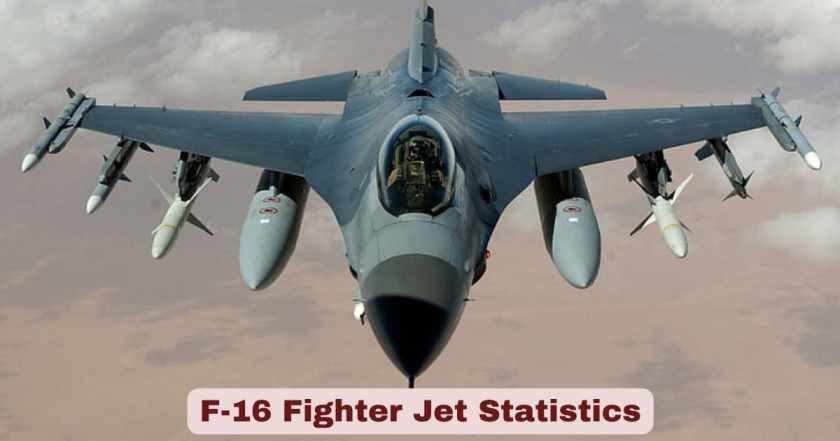
F-16 Fighter Jet in America 2026
The F-16 Fighting Falcon — nicknamed the “Viper” by its pilots — is arguably the most iconic and battle-proven multirole fighter aircraft ever built. Designed by General Dynamics in the early 1970s and now manufactured by Lockheed Martin, the F-16 entered United States Air Force (USAF) service in January 1979 and has never looked back. Officially named the “Fighting Falcon,” the aircraft earned its street name “Viper” from the pilots who fly it daily, drawn by its sleek, serpentine fuselage profile and the uncanny resemblance to the fictional Colonial Viper from Battlestar Galactica, which aired around the time the jet entered service. With a top speed exceeding Mach 2 (1,500 mph), a combat ceiling above 50,000 feet, and the ability to withstand a bone-crushing 9 G-force load — more than the human body can comfortably endure — the F-16 set entirely new standards for what a lightweight, cost-effective fighter could accomplish. It was designed from day one as a nimble, affordable alternative to the heavier F-15 Eagle, and it succeeded beyond anyone’s expectations.
As of 2026, the F-16 remains the single most numerous fighter aircraft in the United States Air Force’s active inventory, with 488 airframes projected in the USAF’s official 10-year fighter force structure report submitted to Congress in October 2025. More than 4,600 F-16s have been produced globally, and the Fighting Falcon accounts for roughly 19% of the world’s entire fighter jet fleet according to FlightGlobal’s 2026 World Air Forces Directory. Despite being a fourth-generation platform introduced nearly five decades ago, the F-16 continues to serve in active-duty USAF squadrons, Air National Guard wings, and Air Force Reserve Command units across the continental United States and overseas bases. The jet’s remarkably low operating costs, multi-mission adaptability, ongoing structural upgrades, and proven combat record across conflicts from Desert Storm to Operation Inherent Resolve ensure it will remain a foundational pillar of American airpower well into the next decade — even as the F-35A Lightning II and the forthcoming F-47 sixth-generation fighter gradually reshape the force.
Interesting Facts About the F-16 Fighting Falcon in the US 2026
| Fact | Detail |
|---|---|
| Official Name | F-16 Fighting Falcon |
| Nickname (Pilots) | Viper |
| Manufacturer | Lockheed Martin Corporation (originally General Dynamics) |
| Primary Role | Multirole Fighter (Air-to-Air & Air-to-Surface) |
| First Flight | December 8, 1976 |
| Entered USAF Service | January 1979 |
| Total Produced Globally | Over 4,600 units |
| Top Speed | Mach 2 (1,500 mph) at altitude |
| Service Ceiling | Above 50,000 feet (15,240 meters) |
| Maximum G-Force Tolerance | 9 G’s with internal fuel load |
| Range (Ferry) | More than 2,002 miles (1,740 nautical miles) |
| Engine Thrust (F-16C/D) | 27,000 pounds (Pratt & Whitney F100 or GE F110) |
| Wingspan | 32 feet, 8 inches (9.8 meters) |
| Length | 49 feet, 5 inches (14.8 meters) |
| Height | 16 feet (4.8 meters) |
| Empty Weight | 19,700 pounds (8,936 kg) |
| Maximum Takeoff Weight | 37,500 pounds (16,875 kg) |
| Internal Fuel Capacity | 7,000 pounds (3,175 kg) |
| Primary Cannon | M-61A1 20mm Vulcan multibarrel cannon (500 rounds) |
| Hardpoints | 11 external stations for missiles, bombs, and pods |
| Fly-By-Wire | First US fighter to use a fully fly-by-wire flight control system |
| Seat Recline Angle | 30 degrees from vertical (vs. standard 13 degrees) for G-force tolerance |
| Share of World’s Fighter Fleet | ~19% — the most common fighter jet globally (FlightGlobal 2026) |
| Countries Operating F-16 | 25+ nations worldwide |
| USAF Total Force Inventory | ~1,017 F-16C/D (total force including Guard & Reserve) |
| Notable Combat Operations | Desert Storm (1991), Allied Force (1999), OEF, OIF, OIR |
Source: U.S. Air Force Official Fact Sheet — af.mil; FlightGlobal World Air Forces Directory 2026; Air Force Fighter Force Structure Report to Congress, October 2025
The F-16 Fighting Falcon is a machine packed with firsts. It was the first production aircraft in the world to employ a fully fly-by-wire flight control system, where electrical signals — not cables or hydraulic linkages — transmit the pilot’s inputs directly to the aircraft’s control surfaces. This gave the Viper an almost supernatural agility that competitors at the time simply could not match. Its bubble canopy offers the pilot unobstructed 360-degree visibility — a combat advantage that saved countless lives in close-in dogfights. The reclined 30-degree ejection seat was another pioneering innovation, deliberately angled to redistribute the crushing forces of high-G maneuvering away from the pilot’s spine and into the seat. The aircraft can also endure up to 9 G’s of sustained force at full internal fuel — a physical ceiling that surpasses what most human pilots can tolerate without blacking out. These design choices weren’t just engineering feats; they were deliberate combat multipliers, and they explain why the F-16 became the gold standard against which every multirole fighter in the world has been measured for nearly five decades.
What makes the F-16 statistics in the US 2026 truly extraordinary is the sheer breadth of the aircraft’s legacy. More than 4,600 Fighting Falcons have rolled off assembly lines across the United States, Belgium, the Netherlands, South Korea, and Turkey. The jet was built under an unprecedented NATO consortium agreement that had five countries — the US, Belgium, Denmark, the Netherlands, and Norway — jointly producing the initial production run of 348 aircraft. Portugal later joined this consortium, further cementing the F-16’s role as a multinational defense asset. In the US alone, the total force inventory of F-16C/D models (including active duty, Air National Guard, and Air Force Reserve) stands at approximately 1,017 aircraft per the USAF official fact sheet, with Lockheed Martin’s production facility in Greenville, South Carolina continuing to deliver advanced F-16V (Block 70/72) variants for foreign military sales customers at a planned rate of up to 48 units per year.
F-16 Fighting Falcon 2026 Fleet Size Statistics in the US
| Metric | Data (FY 2026) |
|---|---|
| USAF Combat-Coded F-16 Fleet (CCTAI) | 488 aircraft |
| Active-Duty F-16C Models | ~400 aircraft |
| Active-Duty F-16D (Two-Seat) Models | ~100 aircraft |
| Total Force F-16C/D (incl. ANG & AFRC) | ~1,017 aircraft |
| F-16 Share of Total USAF Fighter Fleet (1,271 FY26) | ~38% |
| Air National Guard Fighter Squadrons | 25 wings across the US |
| F-16 Position in US Fighter Fleet | Most numerous fighter type |
| USAF Total Combat-Coded Jets (FY26) | 1,271 aircraft |
| USAF Fighter Fleet Target (2035) | 1,558 combat-coded jets |
| F-16 Fleet Stability | Held at 488 through the 2030 planning period |
| Air Force Reserve F-16 Fleet Change (FY14–FY30) | Reserve fighter force shrinking by ~48% |
| F-16 Aggressor Squadron at Nellis AFB | Closing in 2026 |
| F-16 Unit at Homestead ARB (AFRC) | Funded through FY 2027 |
Source: USAF Annual Report on Tactical Fighter Aircraft Force Structure, October 2025 (submitted to Congress per 2025 NDAA mandate); Air Force Official Fact Sheet — af.mil; Breaking Defense, October 29, 2025; Air & Space Forces Magazine, November 2025
The F-16 fleet in the United States in 2026 tells a story of remarkable endurance. According to the USAF’s 10-year fighter force structure report — mandated by the 2025 National Defense Authorization Act (NDAA) and signed by Air Force Secretary Troy Meink — the F-16 combat-coded total aircraft inventory (CCTAI) is projected at 488 airframes in FY2026, a number that remains stable throughout the planning period into the 2030s. The full total force count, which includes Air National Guard and Air Force Reserve Command units, pushes the figure closer to 1,017 F-16C/D aircraft. With the USAF’s total combat-coded fleet sitting at 1,271 fighters in FY2026, the F-16 represents roughly 38% of all US fighter airpower — a dominant share that underscores why no single aircraft type is more operationally important to America’s day-to-day air defense and expeditionary missions than the Fighting Falcon.
That said, 2026 is a year of transition for the F-16 across the reserve components. The F-16 aggressor squadron at Nellis Air Force Base, Nevada is set to close in 2026, while the F-16 unit at Homestead Air Reserve Base, Florida is funded only through FY2027 — with the Air Force Reserve requesting an extension through 2030. From FY2014 to FY2030, the Air Force Reserve’s fighter force is on track to shrink by approximately 48%, with the F-16 bearing a large share of those cuts. Air Force Reserve Commander Lt. Gen. John Healy has publicly warned that this reduction risks taking the Reserve out of the fighter fight entirely and will exacerbate the total force’s already critical pilot shortage — since Reserve units currently fly 67% of all instructional flights that prepare active-duty fighter pilots.
F-16 Fighting Falcon Technical Specifications & Performance 2026
| Specification | F-16C/D Data |
|---|---|
| Contractor | Lockheed Martin Corporation |
| Power Plant | Pratt & Whitney F100-PW-200/220/229 or GE F110-GE-100/129 |
| Engine Thrust | 27,000 pounds |
| Top Speed | Mach 2 (~1,500 mph) at altitude |
| Ferry Range | More than 2,002 miles (1,740 nautical miles) |
| Combat Radius | Over 500 miles (860 km) |
| Service Ceiling | Above 50,000 feet (15 km) |
| Maximum G-Force | 9 G’s (with full internal fuel load) |
| Wingspan | 32 feet, 8 inches (9.8 meters) |
| Length | 49 feet, 5 inches (14.8 meters) |
| Height | 16 feet (4.8 meters) |
| Empty Weight | 19,700 lbs (8,936 kg) |
| Maximum Takeoff Weight | 37,500 lbs (16,875 kg) |
| Internal Fuel Capacity | 7,000 lbs (3,175 kg) |
| External Fuel (2 tanks) | Up to 12,000 lbs (5,443 kg) total |
| Primary Armament (Gun) | M-61A1 20mm Vulcan cannon — 500 rounds |
| External Stations (Hardpoints) | 11 total |
| Sample Payload | Two 2,000-lb bombs, two AIM-9, two AIM-120, two 2,400-lb external fuel tanks |
| Crew | F-16C: 1 pilot; F-16D: 1 or 2 |
| Avionics (F-16V) | AN/APG-83 AESA radar, enhanced GPS/INS, digital cockpit, advanced EW |
Source: U.S. Air Force Official Fact Sheet — af.mil (Air Combat Command, Public Affairs Office); Lockheed Martin F-16 Product Documentation
The F-16 Fighting Falcon’s technical specifications in 2026 remain genuinely impressive for a platform whose fundamental design is more than 50 years old — a fact that speaks not just to the aircraft’s engineering pedigree but to the sustained investment the United States has made in keeping it lethal. The F-16C/D is powered by a single turbofan engine producing 27,000 pounds of thrust, enabling a top speed of Mach 2 at altitude and a combat ceiling north of 50,000 feet. The aircraft’s combat radius of more than 500 miles means it can project airpower well beyond the front lines without external fuel tanks, and its ferry range of over 2,002 miles gives it the legs for trans-continental self-deployment. The jet carries a fearsome armament load across 11 hardpoints, with its backbone being the M-61A1 20mm Vulcan cannon — backed by a flexible mix of AIM-9 Sidewinder, AIM-120 AMRAAM missiles, and a wide array of precision-guided bombs and electronic countermeasure pods.
For pilots strapping into the F-16 in 2026, the most advanced combat variant they are likely to encounter is the F-16V (Block 70/72) — also known as the “Viper” — equipped with the AN/APG-83 AESA (Active Electronically Scanned Array) radar. This sensor is a generation ahead of the mechanically scanned radars on earlier blocks, offering the pilot simultaneous air-to-air and air-to-ground tracking, superior electronic counter-countermeasures resistance, and significantly improved resolution at long range. Combined with a modernized glass cockpit, upgraded electronic warfare suite, and structural enhancements that extend the airframe’s service life, the F-16V represents a credible 4.5-generation capability that bridges the gap between legacy fourth-generation platforms and the stealth-centric fifth-generation fighters entering service. It is the version Lockheed Martin’s Greenville, South Carolina plant is producing today for international customers, while the USAF focuses on service life extension for its existing domestic fleet.
F-16 Fighting Falcon Cost & Budget Statistics in the US 2026
| Cost Category | Estimated Figure |
|---|---|
| F-16A/B Unit Cost (FY1998 constant dollars) | $14.6 million |
| F-16C/D Unit Cost (FY1998 constant dollars) | $18.8 million |
| F-16V (Block 70/72) Unit Cost (current) | ~$63–70 million per aircraft |
| Average Cost Per Flight Hour (F-16C Viper) | ~$22,514 per hour |
| Typical Operational Cost Range | $8,000 – $27,000 per flight hour |
| Average Annual Maintenance Cost (per aircraft) | ~$10 million per year |
| Average Fuel Cost Per Mission | ~$5,700 per sortie |
| F-16 Engine (P&W F100-PW-220) — Bulk Contract | ~$3.6 million per engine |
| Philippines F-16 FMS Sale (April 2025) | $5.58 billion |
| Peru F-16V Block 70 FMS Sale (September 2025) | $3.42 billion (12 aircraft) |
| Lockheed $14B FMS Contract (2021–2026) | $14 billion — 5 countries |
| Total F-16 Program Development Cost (1970s) | ~$1.4 billion original (grew to ~$18.7 billion by 1981 with quantity growth) |
| USAF FY2026 Budget — F-35A Procurement (comparison) | ~$4 billion for 24 F-35As |
Source: U.S. Air Force Official Fact Sheet — af.mil; Defense Security Cooperation Agency (DSCA) official announcements — dsca.mil; NSIN.us US Fighter Fleet Report, June 2025; Executive Flyers Aviation Cost Analysis; Congressional Budget Office (CBO) Defense Reports
The cost of operating F-16 fighter jets in the United States in 2026 spans an enormous range depending on the variant, mission profile, and whether you are talking about procurement, operations, or maintenance. The foundational unit costs — $14.6 million for the F-16A/B and $18.8 million for the F-16C/D — are expressed in FY1998 constant dollars as officially published by the U.S. Air Force on af.mil, and were widely regarded as a remarkable bargain compared to contemporary alternatives. In today’s procurement market, new-build F-16V (Block 70/72) variants command a price of approximately $63 to $70 million per unit, reflecting six decades of continuous technological advancement and the inflationary reality of modern defense acquisition. For context, the F-35A costs the USAF roughly $165 million per aircraft, making the F-16V approximately 57% less expensive to procure while still delivering genuinely competitive capability in most mission sets. This cost differential continues to make the F-16 the preferred export fighter for allied nations, as demonstrated by the Philippines’ $5.58 billion purchase in April 2025 and Peru’s $3.42 billion deal for 12 F-16V Block 70s in September 2025.
On the operations and maintenance side, the F-16C Viper’s operating cost of approximately $22,514 per flight hour is a number that receives regular scrutiny from Congressional budget analysts. Factoring in fuel (averaging around $5,700 per sortie), scheduled and unscheduled maintenance, spare parts, depot-level overhauls, and aircrew training costs, operating a single F-16 costs the US taxpayer roughly $10 million per year. Across the total force inventory of approximately 1,017 F-16s, that translates to a ballpark annual sustainment bill approaching $10 billion — a figure that partly explains the USAF’s drive to consolidate onto fewer, more capable platforms over time. Yet even at these cost levels, the F-16 remains significantly cheaper to operate than the F-35A (which carries operating costs exceeding $36,000 per flight hour), reinforcing the economic logic of maintaining the Fighting Falcon as the backbone of the nation’s fourth-generation fighter force through at least the mid-2030s.
F-16 Fighting Falcon Export & Global Sales Statistics 2025–2026
| Country / Program | Deal Details | Value / Quantity |
|---|---|---|
| Philippines | F-16V Block 70/72 purchase (April 2025) | $5.58 billion |
| Peru | 12 F-16V Block 70 jets approved (September 2025) | $3.42 billion |
| Ukraine | F-16A/B deliveries — 20+ received by end of 2024, ongoing 2025 | Allied transfer program |
| Argentina | First ex-Danish F-16 arrived December 2024; unveiled February 2025 | Transfer arrangement |
| Lockheed Martin FMS Contract (2021–2026) | New F-16s for 5 countries | $14 billion |
| Planned Production Rate (Greenville SC) | Up to 48 units per year | Ongoing |
| Global F-16 Operators | 25+ nations | Worldwide |
| F-16 Share of World Fighter Fleet | ~19% — most common fighter jet globally | FlightGlobal 2026 |
| Total Global F-16s Built | Over 4,600 | Since 1974 |
| Estimated Operational F-16s Worldwide | ~3,000+ | As of 2026 |
Source: Defense Security Cooperation Agency (DSCA) official FMS notifications — dsca.mil; FlightGlobal World Air Forces Directory 2026; NSIN.us US Fighter Fleet Report, 2025
The F-16’s export record in 2025 and 2026 stands as one of the most compelling testaments to the aircraft’s enduring global relevance. With over 25 nations currently operating the Fighting Falcon and Lockheed Martin’s Greenville, South Carolina production line humming at a rate of up to 48 units annually, demand for the jet shows no signs of cooling despite the aircraft’s decades of service. The Philippines’ $5.58 billion purchase in April 2025 was a landmark deal that delivered a significant capability boost to a key Indo-Pacific ally while sending a clear strategic signal about American engagement in the region. Shortly after, in September 2025, the US government approved the sale of 12 F-16V Block 70s to Peru for $3.42 billion — a move that further cements American fighter aircraft as the dominant platform in South American air forces. Meanwhile, Lockheed Martin’s sweeping $14 billion foreign military sales contract for five countries — running through 2026 — underscores just how far the US government has gone to sustain F-16 production for international partners.
The Ukrainian F-16 delivery program has been among the most geopolitically significant F-16 transfer operations since the Cold War. With more than 20 F-16A/B jets having arrived in Ukraine by the end of 2024 and deliveries continuing throughout 2025, the Fighting Falcon found itself in a live war — providing Ukrainian pilots with a credible fourth-generation capability against a peer adversary for the first time. Globally, the F-16 accounts for roughly 19% of the world’s entire fighter jet fleet according to FlightGlobal’s 2026 World Air Forces Directory — the highest share of any single aircraft type on Earth. With approximately 3,000+ F-16s estimated to be operational across all operators, and new variants still rolling off the line in Greenville, the Fighting Falcon’s global footprint in 2026 is as broad and strategically consequential as at any point in its 47-year history.
F-16 Fighting Falcon Combat History & Operational Statistics in the US 2026
| Operation / Conflict | F-16 Role | Key Statistic / Fact |
|---|---|---|
| Operation Desert Storm (1991) | Airfield attack, SEAD, CAS, interdiction | Most sorties flown of any aircraft in the campaign |
| Operation Allied Force (1999) | SEAD, OCA, DCA, CAS, FAC missions | Destroyed radar sites, vehicles, tanks, MiGs, buildings |
| Operation Noble Eagle (2001–present) | Homeland air defense | Continuous CONUS air defense patrols post-9/11 |
| Operation Enduring Freedom (OEF) | CAS, strike, ISR support | Thousands of sorties over Afghanistan |
| Operation Iraqi Freedom (OIF) | Strike, SEAD, CAS, patrol | Major strike contribution in opening nights |
| Operation Inherent Resolve (OIR) | Strike against ISIS targets | Deployed to USCENTCOM AOR |
| F-16 Air Kills (Pakistan — Soviet-Afghan War) | PAF F-16As vs. Soviet/Afghan aircraft | 20–30 aerial kills (officially recognized: 9 confirmed inside Pakistani airspace) |
| Ukraine F-16 Operations (2024–2025) | Air defense, strike (Ukrainian AF) | First peer-adversary combat for F-16 in modern conflict |
| Operation Roaring Lion (February 28, 2026) | Israeli F-16s in joint US-Israeli strike on Iran | ~200 Israeli jets struck ~500 targets in 14 Iranian cities |
| Total Countries in Combat with F-16 | Multiple allied nations | 25+ operators, numerous combat deployments |
Source: U.S. Air Force Official Fact Sheet — af.mil; Air Force Historical Research Agency (AFHRA); Wikipedia General Dynamics F-16 Fighting Falcon (citing verified defense records)
The F-16’s combat record in the United States and globally is simply unmatched among fourth-generation fighters. It is not an aircraft that earned its reputation on paper — the Fighting Falcon has been tested in virtually every major conflict the United States and its allies have fought since 1991. In Operation Desert Storm, F-16s flew more sorties than any other aircraft in the entire Coalition arsenal, hitting airfields, Scud missile sites, military production facilities, and a comprehensive array of high-value targets across Iraq and Kuwait. In Operation Allied Force over Serbia in 1999, USAF F-16s demonstrated exceptional versatility — simultaneously performing Suppression of Enemy Air Defense (SEAD), offensive counter-air, close air support, and forward air controller missions in a highly contested threat environment. Post-9/11, the F-16 became the backbone of Operation Noble Eagle, the continuous homeland air defense mission that still places F-16s on alert at bases across the continental United States today.
In 2025 and 2026, the F-16’s combat legacy has taken on fresh urgency in two new theaters. Ukraine’s F-16 fleet — transferred by allied nations and flown by Ukrainian pilots — marked the first time an F-16 has engaged a peer-level adversary in live combat. On February 28, 2026, Israeli F-16s played a frontline role in Operation Roaring Lion, a massive joint US-Israeli air campaign against Iran in which approximately 200 Israeli aircraft struck around 500 targets across at least 14 Iranian cities including Tehran, Isfahan, and Qom — targeting air defense systems, ballistic missile launchers, command-and-control facilities, and military airfields. This operation underscored that the F-16 Fighting Falcon — far from being a relic — remains at the sharp edge of great-power competition in 2026, flying in the most consequential airstrikes of the 21st century.
F-16 vs Other US Fighter Jets — Comparative Statistics 2026
| Aircraft | Fleet Size (USAF FY26) | Top Speed | Unit Cost (Current) | Cost Per Flight Hour | Generation |
|---|---|---|---|---|---|
| F-16C/D Fighting Falcon | ~488 (CCTAI) | Mach 2 | ~$63–70M (Block 70) | ~$22,514 | 4th Gen |
| F-35A Lightning II | ~344 (FY26 baseline) | Mach 1.6 | ~$165M | ~$36,000+ | 5th Gen (Stealth) |
| F-15E Strike Eagle | ~133 (combat-coded) | Mach 2.5 | ~$87M | ~$29,000 | 4th Gen |
| F-15EX Eagle II | ~27 (FY26) | Mach 2.5 | ~$90–97M | N/A (new) | 4.5th Gen |
| F-22A Raptor | ~180 total / ~134 planned | Mach 2.25 | ~$250M+ | ~$85,000 | 5th Gen (Stealth) |
| A-10 Thunderbolt II | ~140 (active) | 439 mph | Legacy platform | ~$20,000 | 4th Gen (CAS) |
Source: USAF Annual Report on Tactical Fighter Aircraft Force Structure, October 2025; Air & Space Forces Magazine, November 2025; The Aviationist, October 2025; Breaking Defense, October 2025; USAF af.mil official fact sheets
Placing the F-16 Fighting Falcon in context against the rest of the USAF’s 2026 fighter fleet reveals both its extraordinary value and its evolving role within a modernizing force. At a current unit cost of approximately $63–70 million for the latest F-16V Block 70/72, the Fighting Falcon costs roughly 60% less than an F-35A and nearly 75% less than an F-22 Raptor to procure — a cost differential that translates into massive cumulative savings when multiplied across a fleet of hundreds of aircraft. On a cost-per-flight-hour basis, the F-16’s approximately $22,514 per hour is meaningfully lower than the F-35A’s $36,000+ and dramatically lower than the F-22’s approximately $85,000 per hour — figures that matter enormously when the USAF is trying to maintain 1,271 combat-coded fighters while simultaneously funding next-generation platforms like the F-47 and Collaborative Combat Aircraft (CCA) drone wingmen.
What the comparative data also shows is that the F-16’s 2026 fleet size of approximately 488 combat-coded aircraft dwarfs every other individual USAF fighter type in pure numerical terms. The F-35A fleet stands at just 344 aircraft in FY2026 — smaller than the F-16’s active force despite years of prioritized procurement. The F-22 fleet is being trimmed to a planned 134 aircraft after the divestiture of 32 older airframes, and the F-15EX program has only delivered 27 jets as of FY2026 against a revised program of record calling for 129 aircraft. Against this backdrop, the F-16’s numerical dominance is not accidental — it reflects decades of deliberate force planning that has kept the Viper as the most versatile, most available, and most deployable fighter in the American arsenal.
F-16 Fighting Falcon Modernization & Future Plans 2026
| Program / Initiative | Status as of 2026 | Details |
|---|---|---|
| Service Life Extension Program (SLEP) | Active / Ongoing | Structural upgrades extending F-16 airframe life |
| F-16V (Block 70/72) — Viper Upgrade | In production at Greenville SC | AN/APG-83 AESA radar, digital cockpit, enhanced EW |
| Production Rate (Greenville SC) | Up to 48 units/year | Primarily foreign military sales |
| Air National Guard Recapitalization | Planned — Guard to retain 24 fighter squadrons | Modernized F-16s or replacement with F-35 / F-15EX |
| USAF 10-Year Fighter Roadmap (FY26–FY35) | Submitted to Congress October 2025 | F-16 fleet held at 488 through planning horizon |
| F-16 at Nellis Aggressor Squadron | Closing 2026 | Transition away from F-16 aggressor role |
| F-16 Homestead ARB (AFRC) | Funded through FY2027 | Extension to 2030 requested |
| F-16 → F-35 Transition (Reserve units) | Underway — 301st FW received first 4 F-35s (November 2025) | Gradual replacement of F-16 Reserve units |
| USAF Fighter Goal (2035) | 1,558 combat-coded jets | +287 jets from FY2026 baseline of 1,271 |
| F-47 NGAD (Next Generation) | Production lines opening “soon” | Boeing awarded contract; long-term successor context |
Source: USAF Annual Report on Tactical Fighter Aircraft Force Structure, October 2025 (mandated by 2025 NDAA); Breaking Defense, October 29, 2025; Air & Space Forces Magazine, November 10, 2025; Defense One, May 2025
The modernization and future roadmap for the F-16 in the United States in 2026 is a nuanced picture of simultaneous entrenchment and gradual retirement. On one hand, the USAF’s 10-year fighter force structure plan — the first congressionally mandated annual report of its kind, signed by Air Force Secretary Troy Meink and submitted to Congress in October 2025 — projects the F-16 combat-coded fleet remaining stable at 488 aircraft all the way through the planning horizon into the early 2030s. The Air National Guard is specifically guaranteed to retain 24 fighter squadrons well beyond 2045, with those units being recapitalized with either modernized F-16s, new F-15EXs, or F-35s. This is a significant institutional commitment to the F-16 platform and reflects the political and operational reality that the Guard’s F-16 expertise represents a strategic asset that cannot simply be discarded. Meanwhile, Lockheed Martin’s Greenville facility continues to build F-16V (Block 70/72) Vipers at a rate of up to 48 per year, with the latest variant’s AN/APG-83 AESA radar delivering a genuine capability edge over older block aircraft.
On the other hand, the transition away from the F-16 is already visibly underway in the reserve components. In November 2025, the 301st Fighter Wing at Fort Worth, Texas received its first four F-35A Lightning IIs — the first Reserve unit to do so — and is scheduled to complete its full complement of 26 jets by 2027. The F-16 aggressor squadron at Nellis AFB is closing entirely in 2026, removing one of the most experienced dissimilar air combat training forces in the world from the active inventory. Further ahead, the USAF’s stated ambition to reach 1,558 combat-coded fighters by 2035 — nearly 300 more jets than the current 1,271 — will depend heavily on accelerating F-35A and F-15EX procurement while the eventual arrival of the F-47 sixth-generation fighter begins to reshape the highest end of the tactical air combat spectrum. The F-16’s role in that future force will be as a numerically dominant, cost-effective, proven platform holding the center while the most advanced stealth aircraft operate at the high end — a division of labor the Air Force has deliberately planned for and one that will define American airpower well into the 2030s.
Disclaimer: This research report is compiled from publicly available sources. While reasonable efforts have been made to ensure accuracy, no representation or warranty, express or implied, is given as to the completeness or reliability of the information. We accept no liability for any errors, omissions, losses, or damages of any kind arising from the use of this report.