
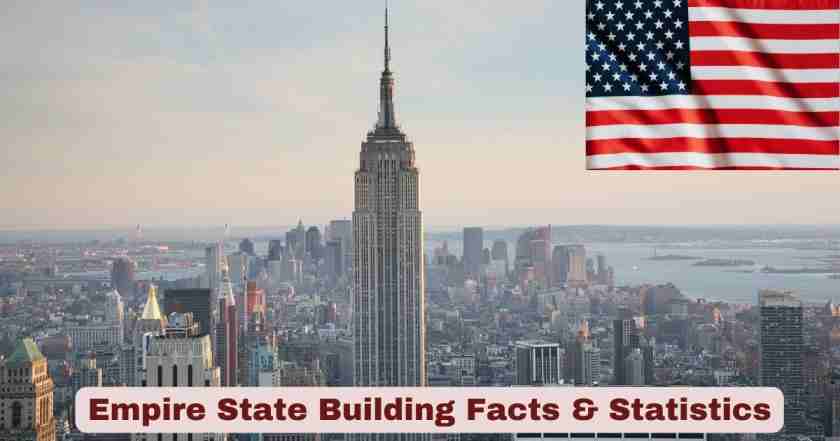
History of Empire State Building in the US 2026
The Empire State Building stands as an enduring testament to American ambition, ingenuity, and architectural excellence, representing one of the most recognizable landmarks in the world. This Art Deco masterpiece was conceived during the height of the “Race to the Sky” era of the late 1920s, when developers competed fiercely to construct the world’s tallest building. The vision originated with John J. Raskob, a self-made business mogul and former chairman of the General Motors Corporation finance committee, who partnered with Alfred E. Smith, the former Democratic governor of New York, to create an architectural marvel that would surpass all competitors. On August 29, 1929, Smith announced plans for a building that would exceed 100 stories, deliberately designed to tower over its closest rival, the Chrysler Building. The ambitious project aimed to reach unprecedented heights and establish New York City as the undisputed center of global commerce and innovation.
Construction began with the demolition of the old Waldorf-Astoria Hotel on October 1, 1929—just weeks before the catastrophic Wall Street Crash that triggered the Great Depression. Despite the economic devastation that followed, Raskob and Smith refused to abandon their vision, proceeding with construction that officially commenced on March 17, 1930. The architectural firm of Shreve, Lamb & Harmon Associates designed the building, while contractors Starrett Brothers and Eken managed construction operations with unprecedented efficiency and coordination. An extraordinary 3,400 workers labored simultaneously at the peak of construction, working with remarkable speed and precision to erect the steel framework at an astonishing rate of 4.5 stories per week. The entire construction process, from groundbreaking to completion, required just 410 days—approximately 13 months and 15 days—finishing an entire month ahead of schedule and under budget. President Herbert Hoover ceremonially turned on the building’s lights from Washington, D.C., during the grand opening ceremony on May 1, 1931, officially declaring the Empire State Building open for business as the world’s tallest structure, a title it would maintain for an astounding 40 years until surpassed by the World Trade Center in 1971.
Key Empire State Building Facts in the US 2026
| Fact Category | Verified Details |
|---|---|
| Official Address | 350 Fifth Avenue, New York, NY 10118 |
| Completion Date | May 1, 1931 |
| Construction Time | 410 days (13 months, 15 days) |
| Total Height with Antenna | 1,454 feet (443.2 meters) |
| Roof Height | 1,250 feet (381 meters) |
| 86th Floor Observatory Height | 1,050 feet (320 meters) |
| 102nd Floor Observatory Height | 1,250 feet (381 meters) |
| Total Floors | 102 floors (plus exclusive 103rd floor) |
| Total Weight | 365,000 tons (730 million pounds) |
| Steel Framework | 57,480 tons (largest single steel order in history) |
| Building Footprint | 79,288 square feet (approximately 2 acres) |
| Total Floor Space | 2,768,591 square feet (257,211 square meters) |
| Number of Windows | 6,514 windows |
| Number of Elevators | 73 Otis elevators |
| Steps to 102nd Floor | 1,860 steps from street level |
| Construction Cost | $40.9 million (1931 dollars) |
| Current Ranking NYC | 4th tallest building in New York City |
| Current Ranking US | 6th tallest building in United States |
| Current World Ranking | 43rd tallest tower in the world |
| ZIP Code | 10118 (building has its own ZIP code) |
Data Source: Empire State Building Official Records and ASCE Documentation, 2026
The Empire State Building dominates the Manhattan skyline at a total height of 1,454 feet (443.2 meters) when including its iconic antenna and spire, though the roof itself reaches 1,250 feet (381 meters) above street level. The building comprises 102 floors accessible to tenants and visitors, plus an exclusive 103rd floor reserved for VIPs, celebrities, and dignitaries. This massive structure weighs an incredible 365,000 tons (730 million pounds), supported by a riveted steel framework that utilized 57,480 tons of steel—the largest single steel order in construction history at that time, exceeding the combined steel requirements of both the Chrysler Building and 40 Wall Street. The building sits on a foundation covering 79,288 square feet (approximately 2 acres) and contains 2,768,591 square feet of rentable office space, making it one of the world’s largest office buildings by floor area.
The architectural and engineering specifications showcase the building’s extraordinary scale and complexity. The structure features 6,514 windows that require professional cleaning crews working continuously to maintain their appearance, with a complete window-washing cycle taking several weeks to accomplish. The building houses 73 Otis elevators that transport tenants and visitors efficiently throughout the structure, though adventurous climbers can ascend 1,860 steps from street level to reach the 102nd floor observation deck—a journey typically completed only during the annual Empire State Building Run-Up charity race. Construction required just 410 days (13 months and 15 days) from groundbreaking to completion, finishing ahead of schedule at a total cost of $40.9 million in 1931 dollars (equivalent to approximately $680 million in today’s currency). The building’s significance earned it its own ZIP code (10118), one of only 43 buildings in New York City with this distinction, reflecting the enormous volume of mail received daily by its thousands of tenants and businesses. Currently, the Empire State Building ranks as the 4th tallest building in New York City, the 6th tallest in the United States, and the 43rd tallest tower in the world, though its cultural significance and global recognition far exceed these numerical rankings.
Annual Visitor Statistics in the US 2026
| Year | Observatory Visitors | Notable Events/Context |
|---|---|---|
| 2025 | ~2.8 million (estimated) | Post-pandemic stabilization |
| 2024 | ~2.7 million (estimated) | Continued recovery |
| 2023 | ~2.6 million (estimated) | International travel returns |
| 2022 | ~2.3 million (estimated) | Domestic tourism rebound |
| 2021 | ~1.5 million (estimated) | Reopening with restrictions |
| 2020 | ~580,000 (estimated) | COVID-19 pandemic impact |
| 2019 | ~4.0 million | Pre-pandemic peak |
| 2018 | ~4.0 million | Strong international tourism |
| 2017 | ~4.0 million | Consistent visitation |
| 2016 | ~4.0 million | Renovation completion boost |
| 2004 | ~3.5 million | Post-9/11 recovery period |
| 2003 | ~2.8 million | Security concerns aftermath |
Data Source: Empire State Realty Trust Reports and Tourism Industry Analysis, 2024-2026
The Empire State Building observatories attract millions of visitors annually, with recent estimates suggesting approximately 2.7 to 2.8 million visitors throughout 2024 and 2025, demonstrating steady recovery following the COVID-19 pandemic. Before the pandemic disrupted global travel, the building consistently welcomed approximately 4 million annual visitors, establishing it as one of New York City’s premier tourist attractions. The year 2020 saw visitation plummet to an estimated 580,000 visitors—an 85% decrease—due to extended closures, international travel restrictions, and domestic tourism decline during the height of the pandemic. Recovery began gradually in 2021 with approximately 1.5 million visitors as the observatory reopened with capacity restrictions and enhanced safety protocols, followed by continued improvement in 2022 with an estimated 2.3 million visitors as domestic tourism rebounded strongly.
Historical context reveals significant fluctuations in visitation patterns corresponding to major events affecting New York City and global tourism. Following the September 11, 2001 terrorist attacks, the building experienced temporarily reduced visitation, dropping to approximately 2.8 million visitors in 2003 compared to pre-attack levels. However, the observatory demonstrated remarkable resilience, recovering to 3.5 million visitors by 2004 and reaching sustained levels of 4 million annual visitors throughout the mid-2010s. The Empire State Realty Trust, which owns and operates the building, has reported that international visitors historically comprised approximately two-thirds of observatory attendance pre-pandemic, though this proportion has shifted to approximately 50% in recent years as international tourism recovery lags behind domestic travel. Current industry projections for 2026 suggest that visitation will continue climbing toward 3 million visitors, though full recovery to pre-pandemic levels of 4 million annually may require additional time as international travel patterns continue normalizing. The observatory operates 365 days per year from 8:00 AM to 2:00 AM daily, with the last elevator ascending at 1:15 AM, providing exceptional flexibility for visitors seeking to experience New York City’s skyline during various times of day and night.
Ticket Pricing and Access Options in the US 2026
| Ticket Type | Standard Pricing | Express Pricing | Inclusions |
|---|---|---|---|
| 86th Floor Main Deck | $48-50 | ~$85 | 86th floor open-air + museum |
| 86th + 102nd Floor | $78-80 | ~$115 | Both observation decks + museum |
| Sunrise Experience | $120+ | N/A | Pre-opening exclusive access |
| VIP Experience | $150+ | N/A | Skip all lines + exclusive access |
| Children (Ages 6-12) | $42-44 | Varies | Age-appropriate pricing |
| Children (Under 6) | Free | Free | Free with adult admission |
| Senior Discount | Available | Available | Varies by promotion |
| Group Rates (15+) | Discounted | Available | Advance booking required |
| CityPASS Option | $170 (5 attractions) | N/A | Saves up to 42% |
| Booking Fee | $5 per transaction | $5 per transaction | Added to all purchases |
Data Source: Empire State Building Official Website and Authorized Ticket Vendors, February 2026
Visiting the Empire State Building observatories requires purchasing timed admission tickets, with standard pricing for the 86th floor Main Deck ranging from $48 to $50 for adults, depending on the time of day and season. The building implements dynamic pricing, charging premium rates during high-demand periods such as sunset hours (typically one hour before and after sunset) and weekends, while offering lower prices during off-peak morning hours and weekdays. Visitors seeking access to both the 86th and 102nd floor observation decks can purchase combination tickets priced at $78 to $80, though the 102nd floor ticket can also be purchased separately on-site for an additional $30. Children ages 6 to 12 receive discounted admission at $42 to $44, while children under age 6 enter free when accompanied by paying adults. A mandatory $5 booking fee applies to each transaction regardless of ticket type or quantity.
Visitors prioritizing convenience and time efficiency can opt for Express tickets priced at approximately $85 for the 86th floor or $115 for both observation decks, providing skip-the-line privileges that bypass standard queues and proceed directly to security screening and elevator access. The Empire State Building also offers premium experiences including the exclusive Sunrise Experience (priced at $120 or more), which provides pre-opening access to the observatories for witnessing sunrise over Manhattan, and comprehensive VIP tours ($150 and up) featuring expert guides, exclusive access to restricted areas, and in-depth architectural and historical information. Budget-conscious travelers can save significantly through CityPASS, priced at $170, which includes the Empire State Building plus four additional major New York attractions, providing up to 42% savings compared to purchasing individual tickets. Group rates accommodate parties of 15 or more visitors with discounted pricing available through advance booking. The building encourages advance online ticket purchases, which guarantee entry at specific time slots and help visitors avoid disappointment during sold-out periods, particularly during peak summer season (May through August) and major holidays when daily capacity limits are frequently reached.
Observation Deck Details in the US 2026
| Observatory Level | Height | Features | Capacity |
|---|---|---|---|
| 86th Floor Main Deck | 1,050 feet (320 meters) | 360-degree open-air viewing | Higher capacity |
| 86th Floor Enclosed Area | 1,050 feet (320 meters) | Heated glass-enclosed space | Climate-controlled |
| 102nd Floor Top Deck | 1,250 feet (381 meters) | Floor-to-ceiling windows | Limited capacity |
| 102nd Floor Elevator | Glass elevator | Sound & light experience | Small groups |
| Visibility Range (Clear Day) | Up to 80 miles | Six states visible | NY, NJ, PA, CT, MA, DE |
| Viewing Equipment | High-power binoculars | Available on both decks | Free to use |
| Audio Guide | 9 languages | Complimentary with admission | Smartphone app |
| Operating Hours | 8:00 AM – 2:00 AM | Open 365 days per year | Last elevator 1:15 AM |
| Average Visit Duration | 1-2 hours | Includes museum exhibits | Varies by crowd |
| Peak Crowd Times | 11 AM – 1 PM | Plus sunset hour | Weekends busiest |
Data Source: Empire State Building Visitor Information and Operations, 2026
The 86th Floor Main Deck, located 1,050 feet (320 meters) above street level, serves as the primary observation platform and remains the most popular destination for visitors seeking authentic New York City skyline views. This level features a stunning 360-degree open-air observatory that wraps completely around the building’s exterior, allowing unobstructed views in all directions of Manhattan, the surrounding boroughs, and beyond. The outdoor terrace includes heated sections that make winter visits comfortable, while a glass-enclosed indoor area provides climate-controlled relief during extreme weather conditions. High-power binoculars positioned around the deck allow visitors to zoom in on distant landmarks including the Statue of Liberty, Brooklyn Bridge, Central Park, One World Trade Center, and countless other recognizable features of the New York landscape. On exceptionally clear days, visibility extends up to 80 miles, making it possible to see portions of six states: New York, New Jersey, Pennsylvania, Connecticut, Massachusetts, and Delaware.
The 102nd Floor Top Deck, positioned 1,250 feet (381 meters) above ground—a full 16 stories higher than the main deck—offers an even more exclusive vantage point accessed via a special glass elevator that features an immersive sound and light experience during the ascent. This intimate observatory features floor-to-ceiling windows providing spectacular panoramic views through crystal-clear glass, though unlike the 86th floor, the 102nd floor is entirely enclosed. The dramatic height difference between the two decks provides noticeably altered perspectives of the city’s layout and architecture, with the additional elevation particularly enhancing views of nearby skyscrapers that appear more diminutive from this supreme vantage point. All visitors receive complimentary audio guides available in 9 languages (English, Spanish, French, German, Italian, Japanese, Korean, Mandarin, and Portuguese) through a smartphone app that provides detailed information about visible landmarks and historical context. The observatories operate 365 days per year from 8:00 AM to 2:00 AM, with the final elevator ascending at 1:15 AM, offering extraordinary flexibility for visitors to experience the city during daylight, sunset, or nighttime hours. Most visitors spend 1 to 2 hours exploring the observatories and museum exhibits, though duration varies significantly based on crowd levels and individual interest. To avoid the heaviest crowds, visitors should consider arriving before 11:00 AM or after 8:00 PM, as peak congestion typically occurs between 11:00 AM and 1:00 PM and during the hour surrounding sunset, particularly on weekends and during summer months.
Construction Materials and Specifications in the US 2026
| Material Category | Quantity Used | Purpose/Application |
|---|---|---|
| Total Construction Materials | 700 million pounds (350,000 tons) | Complete building assembly |
| Steel Framework | 57,480 tons | Primary structural support |
| Indiana Limestone | 200,000 cubic feet | Exterior facade cladding |
| Granite | Substantial quantity | Exterior facade accents |
| Bricks | 10 million bricks | Interior and exterior walls |
| Aluminum | 730 tons | Decorative elements, spandrels |
| Stainless Steel | 730 tons combined | Modern facade elements |
| Elevator Cable | 1,172 miles (1,886 km) | 73 elevator systems |
| Electrical Wiring | 2 million feet (610,000 meters) | Complete electrical system |
| Concrete Foundation | Substantial volume | Building foundation |
| Marble | Extensive use | Lobby walls and decoration |
| Bronze | Significant quantity | Art Deco ornamental elements |
| Windows | 6,514 windows | Natural light and ventilation |
Data Source: ASCE Engineering Records and Empire State Building Historical Documentation, 2026
The construction of the Empire State Building required an unprecedented 700 million pounds (350,000 tons) of materials delivered to the Fifth Avenue construction site throughout the 410-day building period. The structural backbone consists of 57,480 tons of riveted steel framework, representing the largest single steel order in construction history at that time—more steel than used in the Chrysler Building and 40 Wall Street combined. This massive steel skeleton was pre-fabricated off-site with each piece coded to indicate its precise location and which derrick would handle installation, enabling construction crews to erect the framework at the extraordinary pace of 4.5 stories per week. The steel framework was originally designed to handle bearing loads of 18,000 pounds per square inch, though this specification required special approval that wasn’t granted until shortly before construction commenced, potentially affecting material quantities and construction scheduling.
The building’s distinctive Art Deco facade utilized 200,000 cubic feet of Indiana limestone as the primary exterior cladding material, complemented by granite accents and an innovative curtain wall design that made the 6,514 windows integral components of the wall structure itself. This revolutionary approach used 75% less stone compared to traditional skyscraper construction methods of that era, simultaneously reducing weight, construction time, and material costs. The facade also incorporated 10 million bricks for interior and exterior walls, plus 730 tons of aluminum and stainless steel for spandrels, decorative elements, and modern architectural features. The building’s internal systems demanded 1,172 miles (1,886 km) of elevator cable to operate the 73 Otis elevators, along with 2 million feet (610,000 meters) of electrical wiring providing power and lighting throughout the structure. The magnificent Art Deco lobby features extensive marble walls and bronze ornamental elements that exemplify the luxurious design aesthetic popular during the early 1930s. Remarkably, construction materials arrived at the site daily via an intricate logistics system involving miniature railroad tracks installed on each floor to transport materials horizontally, while external hoists and derricks lifted heavy components vertically. At peak construction, trucks delivered 16,000 partition tiles, 5,000 bags of cement, 450 cubic yards of sand, and 300 bags of lime daily, demonstrating the extraordinary coordination required to maintain the aggressive construction schedule.
Visitor Demographics and Experience in the US 2026
| Demographic Category | Percentage/Details |
|---|---|
| International Visitors (Historical) | ~65-70% pre-pandemic |
| International Visitors (Current) | ~50% post-pandemic |
| Domestic Visitors | ~50% current estimates |
| Most Photographed Building | #1 worldwide (Cornell University study) |
| Uber’s Top Destination | #1 among 75+ million riders (2018) |
| Tripadvisor Ranking | #1 Attraction in the World (2021-2023) |
| Average Daily Visitors (Peak) | ~10,000-12,000 during summer |
| Average Daily Visitors (Off-Peak) | ~4,000-6,000 during winter |
| First-Time Visitors | ~85% of all guests |
| Repeat Visitors | ~15% returning guests |
| Family Visitors | ~40% traveling with children |
| Couples/Romance | ~30% romantic visits |
Data Source: Empire State Realty Trust and Tourism Industry Research, 2024-2026
The Empire State Building attracts extraordinarily diverse visitors representing virtually every country on Earth, with historical patterns showing approximately 65-70% international visitors prior to the COVID-19 pandemic, though this ratio has shifted to approximately 50% international and 50% domestic in the post-pandemic period as international travel recovery continues gradually. The building’s universal recognition and cultural significance make it an essential destination on most New York City itineraries, with visitors arriving from Europe, Asia, South America, Australia, Africa, and every other inhabited continent. Top international markets include the United Kingdom, France, Germany, Canada, Brazil, China, Japan, South Korea, India, and Australia, though visitors from hundreds of other nations also make the pilgrimage to experience this iconic landmark firsthand.
The Empire State Building’s cultural impact extends far beyond tourism statistics, earning recognition as the most photographed building in the world according to a comprehensive 2011 Cornell University study that analyzed millions of online photos. The building’s popularity persists in the digital age, consistently ranking among the most tagged and shared landmarks on social media platforms including Instagram, Facebook, TikTok, and other visual media networks. In 2018, ride-sharing company Uber analyzed data from its 75+ million riders and determined that the Empire State Building was the #1 most popular destination among all Uber trips, surpassing every other attraction, restaurant, hotel, and venue in New York City. Most impressively, Tripadvisor awarded the observatory the coveted #1 Attraction in the World title for multiple consecutive years (2021-2023) through its Travelers’ Choice Best of the Best awards program, recognizing it as the single most beloved tourist destination globally based on visitor reviews and ratings. Approximately 85% of visitors are experiencing the observation decks for the first time, while 15% are repeat guests returning to share the experience with family members, friends, or simply to revisit this magnificent landmark. The building appeals to all demographics, with approximately 40% of visitors traveling with children and families, 30% consisting of couples seeking romantic experiences, and the remainder comprising solo travelers, business visitors, and group tours. Average daily visitation fluctuates dramatically by season, ranging from 10,000 to 12,000 daily visitors during peak summer months to 4,000 to 6,000 daily visitors during winter periods.
Museum and Educational Exhibits in the US 2026
| Exhibit Area | Location | Features |
|---|---|---|
| 2nd Floor Museum | 2nd floor | 10,000 square feet of exhibits |
| “Site in the 1920s” Exhibit | 2nd floor | Pre-construction history |
| Construction Exhibit | 2nd floor | Building process documentation |
| Opening Day Exhibit | 2nd floor | May 1, 1931 celebration |
| Otis Elevators Exhibit | 2nd floor | Elevator technology showcase |
| “World’s Most Famous Building” | 2nd floor | Pop culture references |
| King Kong Exhibit | 2nd floor | Life-size replica and movie history |
| Celebrity Exhibit | 2nd floor | Famous visitors and events |
| 80th Floor Gallery | 80th floor | “NYC: Above & Beyond” exhibit |
| Dare to Dream Exhibit | 80th floor | History and engineering display |
| Art Deco Lobby | Ground floor | Historic landmark designation |
| Sustainability Exhibit | Throughout | LEED Gold certification story |
Data Source: Empire State Building Museum and Visitor Experience Information, 2026
The Empire State Building has transformed itself into a comprehensive cultural and educational experience extending far beyond simple observatory access. In 2019, the building unveiled a complete renovation of its 2nd floor, creating an expansive 10,000 square foot museum featuring 12 immersive, interactive exhibits that guide visitors through the building’s remarkable history from conception through its current status as a global icon. All visitors, regardless of ticket type, receive complimentary access to these galleries, which have been meticulously designed to educate and entertain audiences of all ages. The exhibits begin with “Site in the 1920s,” exploring the original Waldorf-Astoria Hotel that occupied the location and the era’s architectural ambitions, before transitioning to the Construction Exhibit showcasing the extraordinary 410-day building process through period photographs, architectural drawings, construction notes, and interactive displays.
Additional galleries examine Opening Day celebrations from May 1, 1931, when President Herbert Hoover ceremonially illuminated the building from Washington, and the revolutionary Otis Elevators that made skyscraper construction practical by providing rapid vertical transportation—elevators capable of traveling 1,200 feet per minute, allowing passengers to reach the 80th floor in less than 60 seconds. The “World’s Most Famous Building” exhibit chronicles the structure’s appearances in countless films, television shows, music videos, books, and other media, while the King Kong Exhibit features a dramatic life-size replica of the giant ape clinging to the building’s facade, recreating one of cinema’s most iconic moments from the 1933 and 2005 films. The Celebrity Exhibit documents famous visitors, historic lighting ceremonies, and memorable events hosted at the building throughout its 95-year history. Ascending to the 80th floor, visitors encounter “Dare to Dream,” a gallery celebrating the building’s engineering achievements and the 3,400 workers who risked their lives constructing this marvel during the Great Depression. The restored Art Deco lobby on the ground floor has been designated a historic landmark by the New York City Landmarks Preservation Commission, featuring stunning ceiling murals, marble walls, and bronze decorative elements preserved in their original glory. Throughout the building, exhibits highlight the comprehensive sustainability renovation completed between 2009 and 2011, which earned the Empire State Building the distinction of becoming a LEED Gold certified structure despite its 1931 construction date, demonstrating that even historic buildings can achieve modern environmental performance standards.
Annual Events and Lighting Ceremonies in the US 2026
| Event/Ceremony Type | Frequency | Significance |
|---|---|---|
| Tower Lighting System | Nightly | Millions of colors via LED |
| Holiday Lighting | Major holidays | Special color schemes |
| Valentine’s Day Weddings | February 14 only | Exclusive marriage ceremonies |
| Empire State Building Run-Up | Annual | Charity stair-climbing race |
| Lightning Strikes | ~25 times per year | Natural phenomenon photo opportunity |
| Sunrise Experience | Special dates | Pre-opening exclusive access |
| Cultural Celebrations | Throughout year | Ethnic heritage recognition |
| Awareness Campaigns | Varies | Charitable cause support |
| Movie Screenings | Special occasions | “Sleepless in Seattle” and others |
| Paint & Pour Events | Valentine season | Guided painting classes |
| Private Dinner Experience | By reservation | $14,000+ 102nd floor dining |
| Celebrity Lighting Ceremonies | Frequent | Famous guests activate lights |
Data Source: Empire State Building Events and Marketing Information, 2026
The Empire State Building has evolved into far more than a static landmark, serving as an active cultural venue hosting numerous annual events and daily lighting ceremonies that engage millions of observers. The building’s tower lighting system, first installed in 1976 and completely upgraded to state-of-the-art LED technology in 2012, illuminates the top 30 floors every evening in colors commemorating holidays, cultural celebrations, charitable causes, and special events. The sophisticated LED system can display millions of color combinations and dynamic lighting sequences, creating spectacular displays visible throughout Manhattan and beyond. Major holidays trigger special lighting schemes: red, white, and blue for Independence Day and Memorial Day, orange and black for Halloween, red and green for Christmas, rainbow colors for Pride Month, and countless other combinations recognizing cultural heritage months, charitable awareness campaigns, and significant anniversaries.
Valentine’s Day holds particular significance at the Empire State Building, known as “the World’s Most Romantic Building” due to its appearances in classic romantic films including “Sleepless in Seattle” (1993) and “An Affair to Remember” (1957). Each February 14, the building hosts exclusive wedding ceremonies on the observation deck, making it the only day of the year when couples can legally marry at this iconic location. The building offers elaborate Valentine’s season programming including Paint & Pour events (guided painting classes with curated beverages for guests 21 and older), special movie screenings of romantic classics, and ultra-luxurious private dinner experiences on the 102nd floor priced at $14,000 or more for two guests. The annual Empire State Building Run-Up, typically held in February, challenges athletes to race up 1,576 steps from the lobby to the 86th floor observation deck, raising funds for charitable organizations while participants experience the building from a unique perspective. The building’s height and metal construction make it a natural lightning rod, struck by lightning an average of 25 times per year, creating dramatic photographic opportunities during thunderstorms. Celebrity lighting ceremonies occur frequently throughout the year, with famous guests from entertainment, sports, politics, and philanthropy invited to ceremonially activate the evening’s lighting display by pressing a ceremonial switch in the building’s lobby. Recent special experiences include exclusive Sunrise Events offering pre-opening access to witness dawn breaking over Manhattan, and immersive QR code exhibits allowing visitors to unlock behind-the-scenes content about construction, sustainability initiatives, and the building’s role in popular culture by scanning placards with their smartphones.
Economic Impact and Office Space in the US 2026
| Economic Indicator | Value/Details |
|---|---|
| Total Rentable Office Space | 2.8 million square feet |
| Current Office Occupancy | ~92.9% (Q3 2024) |
| Manhattan Average Occupancy | ~86.5% (comparison) |
| Observatory Revenue (Annual) | $115-125 million estimated |
| Total Tenant Capacity | 20,000 workers |
| Daily Visitor Capacity | 15,000 visitors |
| Major Tenants | LinkedIn (largest), Shutterstock, JCDecaux |
| Building ZIP Code | 10118 (dedicated postal code) |
| Daily Mail Volume | 35,000+ pieces historically |
| Economic Value | Multi-billion dollar asset |
| Energy Efficiency | 38% reduction post-renovation |
| LEED Certification | Gold certified |
Data Source: Empire State Realty Trust Financial Reports and Real Estate Data, 2024-2026
The Empire State Building functions as a highly successful mixed-use property generating substantial economic value through both its commercial office operations and world-famous observatories. The building contains approximately 2.8 million square feet of rentable office space, with an impressive occupancy rate of approximately 92.9% as of Q3 2024—significantly outperforming the Manhattan average of roughly 86.5% during the same period. This exceptional occupancy reflects the building’s enduring prestige, prime Midtown Manhattan location, modern infrastructure, and the cachet associated with maintaining offices in one of the world’s most recognizable addresses. The structure can accommodate up to 20,000 tenant employees working across its 102 floors, plus handle an additional 15,000 daily visitors to the observatories without compromising building operations or tenant services.
Major corporate tenants include LinkedIn, the professional networking platform, which occupies the building’s largest office footprint, along with Shutterstock, the digital media company, JCDecaux North America, the advertising firm, and numerous other businesses spanning finance, technology, media, consulting, and professional services sectors. The building’s status warranted assignment of its own dedicated ZIP code (10118), making it one of only 43 buildings in New York City with this distinction—a necessity given that tenants collectively received over 35,000 pieces of mail daily during peak operations in the 1980s. The observatory operations generate estimated annual revenues of $115 to $125 million, representing a crucial component of the building’s overall financial performance managed by Empire State Realty Trust, the publicly-traded real estate investment trust (REIT) that owns and operates the property. The comprehensive $550 million renovation completed between 2009 and 2011 achieved remarkable energy efficiency improvements of 38%, reducing operating costs while earning LEED Gold certification—an extraordinary achievement for a building constructed in 1931. These sustainability initiatives included window retrofitting, chiller plant upgrades, insulation improvements, and advanced building management systems that collectively reduced the building’s carbon footprint by 105,000 metric tons of greenhouse gases over 15 years. The Empire State Building’s combined economic impact encompasses direct employment of building staff, indirect support of tourism-related businesses, tax revenue generation for New York City and State, and incalculable cultural value as one of the world’s most recognizable architectural icons.
Engineering and Architectural Features in the US 2026
| Engineering Feature | Specification |
|---|---|
| Primary Structure | Riveted steel frame |
| Structural Stiffness | 42 pounds per square foot |
| Foundation Type | Deep bedrock foundation |
| Elevator Speed | 1,200 feet per minute (1,400 fpm some cars) |
| Antenna/Spire Height | 204 feet above roof |
| Wind Sway | Approximately 1-2 inches top floor |
| Facade System | Curtain wall (pioneering design) |
| Window Count | 6,514 windows |
| Architectural Style | Art Deco |
| Exterior Materials | Indiana limestone, granite, aluminum |
| Construction Method | Assembly line principles |
| Safety Features (Construction) | 6 worker fatalities (remarkably low) |
| Weekly Construction Pace | 4.5 stories per week |
Data Source: ASCE Engineering Documentation and Architectural Records, 2026
The Empire State Building represented revolutionary engineering achievements that influenced skyscraper design for generations. The primary structural system consists of a riveted steel frame specifically designed to handle all gravitational and wind loads without relying on exterior walls for support. This approach resulted in exceptional structural stiffness of 42 pounds per square foot (2.0 kPa), significantly exceeding contemporary skyscrapers like the Willis Tower (33 lbs/sq ft) and John Hancock Center (26 lbs/sq ft), creating an remarkably rigid structure that minimizes perceptible swaying even during high winds. The building anchors to solid Manhattan schist bedrock through deep foundations extending 55 feet below ground level, providing the stable platform necessary to support 365,000 tons of building weight. Despite this enormous mass, the building’s top floors experience only approximately 1 to 2 inches of horizontal movement during extreme wind conditions—imperceptible to occupants but carefully calculated by structural engineers.
The building pioneered the curtain wall facade system, making the 6,514 windows integral structural components of the exterior wall rather than simply openings punched through load-bearing masonry. This innovative approach reduced stone requirements by 75% compared to traditional construction methods, simultaneously decreasing weight, material costs, and construction time. The 73 Otis elevators installed in 1931 represented cutting-edge vertical transportation technology, capable of traveling 1,200 feet per minute with some express cars reaching 1,400 feet per minute—enabling passengers to reach the 80th floor in less than 60 seconds. The building’s distinctive Art Deco architectural style features geometric patterns, setbacks that create the iconic stepped profile, decorative aluminum spandrels, and the soaring 204-foot antenna/spire that contributes to the structure’s total height of 1,454 feet. Construction employed revolutionary assembly line principles adapted from manufacturing, with materials pre-fabricated off-site, coded by location, delivered just-in-time, and transported efficiently via miniature railroad systems installed on each floor. Remarkably, despite the extraordinary height, aggressive schedule, and approximately 3,400 workers employed simultaneously at peak construction, only six worker fatalities occurred throughout the entire 410-day building period—an impressively low number for that era given the inherent dangers of high-elevation steel construction work without modern safety equipment or regulations.
Disclaimer: This research report is compiled from publicly available sources. While reasonable efforts have been made to ensure accuracy, no representation or warranty, express or implied, is given as to the completeness or reliability of the information. We accept no liability for any errors, omissions, losses, or damages of any kind arising from the use of this report.