
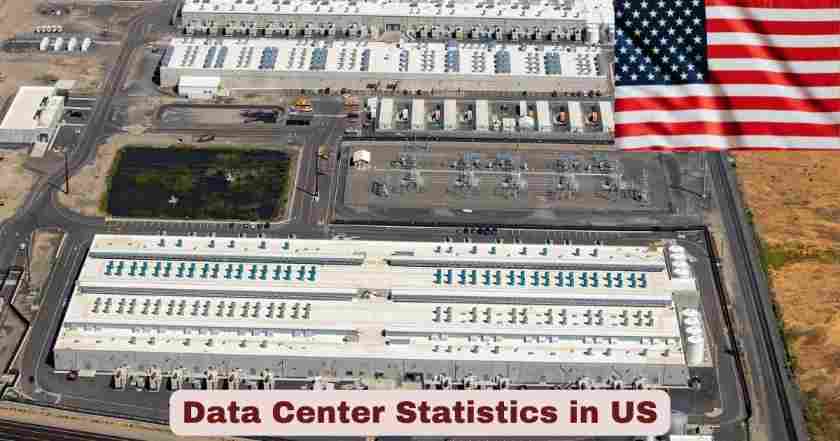
What Is the US Data Center Industry 2026
The United States data center industry is the largest, most capital-intensive, and most strategically critical digital infrastructure sector on Earth — and it is growing at a pace that is reshaping the national electricity grid, transforming land use patterns across entire states, and attracting investment flows that dwarf most sovereign infrastructure programs. A data center, at its most basic, is a physical facility housing the servers, networking equipment, storage systems, and power and cooling infrastructure that make the internet, cloud computing, artificial intelligence, and virtually every modern digital service possible. The US leads the world comprehensively: as of March 2026, there are 4,011 data centers in the United States — more than any other country by a wide margin, ahead of the UK (511), Germany (507), China (368), and France (344). These facilities operated with a combined capacity exceeding 50 GW at the end of 2025 — a figure confirmed by the Federal Energy Regulatory Commission in its March 2026 State of the Markets report — representing 24% compound annual growth since 2020. The US accounts for approximately 54% of all hyperscale data center capacity worldwide, a concentration that reflects both the country’s technological leadership and the strategic imperative every major cloud provider feels to build at maximum speed in the American market. In 2025, US primary data center markets absorbed a record 2,497.6 MW of capacity — up 38% from the already-record 1,809.5 MW absorbed in 2024 — reflecting a demand engine that has not slowed in years.
The force driving this expansion is artificial intelligence. The shift from traditional cloud computing workloads to AI training and inference infrastructure has transformed data center economics, scale requirements, and energy consumption in ways that were essentially unforeseeable even three years ago. The Top 4 US cloud service providers — Amazon, Google, Meta, and Microsoft — increased their combined data center capital expenditures by 76% in 2025 (Dell’Oro Group, March 2026), spending approximately $420 billion collectively. For 2026, combined spending by the “Big Five” hyperscalers (adding Oracle) is projected to exceed $600 billion — a 36% year-on-year increase — with approximately 75% ($450 billion) targeted directly at AI infrastructure (CreditSights). Dell’Oro Group, the authoritative source for data center market research, forecasts that full-year 2026 global data center capex will surpass $1 trillion for the first time in history. The implications for US infrastructure are profound: data centers consumed 183 terawatt-hours of electricity in 2024 — over 4% of total US national electricity consumption — and the IEA projects that figure will grow by 133% to 426 TWh by 2030. In Virginia alone, data centers consumed 25% of the state’s entire electricity mix in 2025 and could reach 46% by 2030. The US data center industry is no longer merely a technology sector; it is a national infrastructure challenge of the first order.
Interesting Facts: US Data Center Industry | Key Stats at a Glance
| Fact | Detail |
|---|---|
| Total US data centers (March 2026) | 4,011 data centers — most in the world (UK: 511, Germany: 507, China: 368) |
| US share of global data centers | Nearly 40% of all global data centers are located in the US |
| US data center capacity (end of 2025) | Over 50 GW of capacity operating — confirmed by FERC (March 2026) |
| US data center capacity CAGR (2020–2025) | 24% compound annual growth rate — FERC State of the Markets report |
| US share of global hyperscale capacity | 54% of all hyperscale data center capacity worldwide |
| Number of hyperscale data centers globally (late 2025) | 1,297 operational hyperscale data centers worldwide (Synergy Research Group) |
| US hyperscale count (end 2024) | 1,136 large hyperscale data centers globally; US accounted for 54% |
| Americas capacity under construction (H2 2025) | 25.3 GW under construction — Cushman & Wakefield (February 2026) |
| Virginia capacity under construction | 6.3 GW — ~25% of entire Americas pipeline |
| US colocation vacancy rate (end 2025) | 3.5% — near historic lows (Cushman & Wakefield) |
| Americas pre-commitment rate | 89% of under-construction capacity pre-committed |
| US colocation prelease rate | 81.5% — indicating virtually no speculative supply |
| US primary market record absorption (2025) | 2,497.6 MW — up 38% from 2024 record of 1,809.5 MW (CBRE) |
| Northern Virginia: net absorption (2025) | 1,102.0 MW — led all US primary markets (CBRE) |
| Average data center size today | ~80 MW for facilities coming online in 2025 — up from 25 MW in 2020 |
| Top 7 US wholesale data center markets | Northern Virginia, Dallas/Fort Worth, Silicon Valley, Chicago, Phoenix, New York Tri-State, Atlanta |
| US data center electricity consumption (2024) | 183 TWh — over 4% of total US national electricity consumption |
| IEA projection for US data center power (2030) | 426 TWh — a 133% increase from 2024 |
| US data center water use (daily) | ~1.7 billion liters per day |
| Big Five hyperscaler capex (2026 projection) | $600+ billion — 36% increase from 2025; 75% allocated to AI infrastructure |
| Dell’Oro 2026 global data center capex forecast | Will surpass $1 trillion — first time in history (Dell’Oro Group, March 2026) |
| Project Stargate | $500 billion federal AI infrastructure initiative — OpenAI, SoftBank, Oracle |
| US data center market size (2025) | $134.77–171.90 billion depending on scope and methodology |
| US data center market projection (2026) | $79.25–184 billion (varies by firm and scope) |
| Grid-connection wait time (primary markets) | Average exceeding 4 years — JLL 2026 Global Data Center Outlook |
Source: Programs.com data center statistics (March 2026), FERC State of the Markets report (March 19, 2026) / Utility Dive, Cushman & Wakefield H2 2025 Data Center Update (February 26, 2026), CBRE North America Data Center Trends H2 2025 (February 25, 2026), Dell’Oro Group (March 17, 2026), Grand View Research, Precedence Research, Brightlio data center stats (March 2026), Synergy Research Group, Futurum (February 2026), IEA, JLL 2026 Global Data Center Outlook
The 50 GW of US data center capacity confirmed by FERC in March 2026 needs context to be meaningful. One gigawatt of power can supply roughly 750,000 average American homes. Fifty gigawatts would power approximately 37.5 million households — more than a quarter of all US housing units. These facilities are running continuously, 24 hours a day, 365 days a year, with the reliability requirements of financial markets and national security infrastructure, because for the hyperscalers that operate them, downtime is directly measured in lost revenue at rates of millions of dollars per minute. The 24% compound annual growth rate since 2020 means the US data center sector has roughly doubled in capacity every three years — a pace that is placing extraordinary pressure on the national electricity grid, cooling water supplies, construction labor markets, and local zoning processes in the markets where development is most concentrated.
The 81.5% prelease rate for US colocation data centers — meaning that more than four out of every five megawatts under construction is already committed to a tenant before the building is finished — is perhaps the most direct indicator of supply-demand imbalance in the data center market. This is not a speculative real estate cycle; it is demand-driven construction where operators would build more if they could secure power and permits. The fact that meaningful easing in availability is unlikely before 2030 (Cushman & Wakefield) means the pricing and availability constraints affecting data center tenants today are structural features of the market for the rest of this decade, not temporary cyclical phenomena.
US Data Center Market Size & Investment | 2025–2026 Financial Data
| Financial Metric | Data |
|---|---|
| Global data center market (2025) | $383.82–386.71 billion |
| Global data center market (2026) | $430.18 billion |
| Global data center market CAGR (2026–2035) | 11.06–11.30% |
| Global data center market projection (2033/2035) | $902–1,103 billion |
| US data center market (2025) | $134.77–171.90 billion |
| US data center market (2026 projection) | $79.25 billion (Fortune BI) / $184 billion (larger scope) |
| US data center market CAGR (2026–2035) | 10.4–11.30% |
| US data center market projection (2035) | $393.14 billion |
| North America market share (2025) | 38.3–41% of global market |
| Top 4 hyperscaler data center capex (2025) | ~$420 billion combined (Amazon, Google, Meta, Microsoft) |
| Amazon capex (2025) | $125 billion (data center focused) |
| Amazon capex (2026 projection) | ~$200 billion (most for data centers) |
| Microsoft capex (2025) | ~$80 billion (fiscal year 2025) |
| Microsoft capex (2026 projection) | $120 billion or more |
| Google/Alphabet capex (2026 projection) | $175–185 billion |
| Meta capex (2026 projection) | $115–135 billion |
| Oracle capex growth (2025) | Oracle more than tripled data center capex in 2025 (Stargate build-out) |
| Oracle capex (2026 projection) | ~$50 billion — 136% increase over 2025 |
| Big Five capex (2026) | $600+ billion — 36% increase from 2025 |
| % of Big Five capex for AI infrastructure (2026) | ~75% (~$450 billion) directly for AI |
| Full-year 2026 global data center capex | Surpasses $1 trillion — first time in history |
| Hyperscaler data raised in bond markets (2025) | $108 billion in debt raised in 2025 alone |
| Project Stargate total investment | $500 billion over 4 years in AI infrastructure |
| Project Stargate initial deployment (2025) | $100 billion deployed in 2025 |
| Nvidia data center revenue FY2026 | $193.7 billion full-year revenue — up 68% from prior year |
| Nvidia Q4 FY2026 data center revenue | $62.3 billion — 75% year-over-year growth |
| Data center revenue from generative AI (2023–2028 CAGR) | 58% compound annual growth rate |
| Virginia: data center tax benefit (FY2025) | $33.2 billion in exempt equipment investment; $1.9 billion in aggregate tax benefit |
Source: Grand View Research, Precedence Research (December 2025), Fortune Business Insights, Statista, Dell’Oro Group (March 17, 2026), Futurum AI Capex 2026 (February 12, 2026), CreditSights, Brightlio (March 2026), Lightwave Online, Introl Blog (January 2026), Nvidia Newsroom, Virginia Economic Development Partnership, IEEE ComSoc Tech Blog
The $1 trillion global data center capex figure for 2026 is a number that requires a moment of genuine reflection. For comparison, the US Interstate Highway System — the largest public infrastructure project in American history — cost approximately $530 billion in today’s dollars and took decades to build. The data center industry will spend twice that amount in a single calendar year, overwhelmingly driven by private capital from a handful of technology companies pursuing competitive advantage in artificial intelligence. The 76% year-on-year increase in capex by the Top 4 US cloud providers in 2025 — on top of already extraordinary 2024 spending — reflects not a temporary AI investment bubble but a structural arms race in which each hyperscaler perceives catastrophic competitive risk from falling behind in AI infrastructure scale.
Nvidia’s $193.7 billion in fiscal year 2026 data center revenue provides the clearest single-company lens on how much the industry has changed. Five years ago, Nvidia was primarily known as a gaming graphics company. In fiscal year 2026, its data center segment generated more revenue than all but a handful of American corporations generate in total, growing at 68% annually, with the final quarter alone generating $62.3 billion — a quarterly revenue figure that exceeds the full-year revenue of most Fortune 500 companies. The GPU supplier’s explosive growth is the financial reflection of the AI data center buildout, translated into a single product category.
US Data Center Geography | Top Markets & Regional Data 2026
| Geographic Metric | Data |
|---|---|
| Northern Virginia total capacity (2025) | 16.05 GW |
| Northern Virginia total capacity (2026 estimate) | 20.32 GW — growing from 16.05 GW |
| Northern Virginia: share of global internet traffic | ~70% of all global internet traffic passes through facilities in Loudoun, Prince William, and Fairfax counties |
| Northern Virginia: share of global capacity | 13% of all reported global data center operational capacity |
| Northern Virginia: share of Americas capacity | 25% of capacity in the Americas |
| Northern Virginia: net absorption (2025) | 1,102.0 MW — led all US primary markets |
| Virginia data center capacity under construction | 6.3 GW — ~25% of entire Americas pipeline |
| Virginia electricity share: data centers (2025) | Data centers consumed 25% of Virginia’s electricity in 2025 |
| Virginia electricity share: data centers (2030 projection) | Could reach 46% of state electricity by 2030 |
| Virginia PJM capacity auction price increase | AI data center demand contributed to 833% increase in PJM capacity auction prices for 2025–2026 vs prior year |
| Virginia energy demand projection by 2040 | Virginia energy demand projected to rise 183% by 2040 |
| Virginia: annual jobs created by data center market | ~74,000 jobs annually worth $5.5 billion in labor income |
| Loudoun County: data center property tax share (2026) | Nearly half of local property tax revenue in Loudoun County comes from data centers |
| West Texas capacity under construction | 2.9 GW — 2nd largest market in Americas pipeline |
| West Texas crypto-mining capacity | 9.1 GW of announced crypto-mining capacity being repurposed for AI/HPC |
| Dallas/Fort Worth absorption (2025) | 470.8 MW absorbed — up 424 MW year-over-year |
| Dallas/Fort Worth construction forecast | Market expected to double in size by 2026 with 89% of under-construction space preleased |
| Northern Virginia vacancy rate (end 2024) | 0.76% — essentially zero |
| US primary market vacancy (year-end 2025) | Record-low 1.4% |
| Six markets exceeding 1 GW under construction | Multiple markets now exceed 1 GW each under construction — a new threshold |
| Average monthly asking rate (250–500 kW requirement, 2025) | $195.94 per kW/month — up 6.5% year-over-year (4th consecutive annual increase) |
| Average electricity price increase (2025) | US trading hub electricity prices jumped 25% in 2025 |
| States with data center tax incentives | At least 36 US states now offer targeted incentives for data center development |
| Iowa data center investment | Nearly $15 billion invested since mid-2000s; 25+ data centers |
| Meta Prometheus (Ohio) | Meta’s first gigawatt data center — under construction in New Albany, Ohio |
| Meta Hyperion (Louisiana) | 5 GW data center — Louisiana; site nearly as large as footprint of Manhattan; 1,200 acres, 10 buildings |
| DOE AI data center sites (April 2025) | US DOE proposed 16 potential locations for AI data center campus development |
Source: Mordor Intelligence Northern Virginia Data Center Market (January 2026), JLARC Virginia Data Centers report (December 2024), CBRE North America Data Center Trends H2 2025 (February 25, 2026), Cushman & Wakefield H2 2025 (February 26, 2026), American Action Forum (January 2026), Brightlio data center stats (March 2026), Programs.com (March 6, 2026), Virginia Business (April 2026)
Northern Virginia’s extraordinary position in global data center geography cannot be overstated. The claim that approximately 70% of all global internet traffic passes through facilities in Loudoun, Prince William, and Fairfax counties is not hyperbole — it reflects decades of virtuous cycle investment that began with MCI/WorldCom building major network infrastructure in the region in the 1990s, continued with AOL, and has compounded through every subsequent technology generation. Northern Virginia’s status as the world’s largest data center market, accounting for 13% of all global operational capacity and 25% of Americas capacity, is self-reinforcing: companies locate there because of interconnection advantages that can only be obtained by being in the same market as thousands of other operators, and every new entrant strengthens those advantages for everyone else.
The 833% increase in PJM capacity auction prices for 2025–2026 — directly attributable to data center demand — and the Virginia SCC’s November 2025 approval of a new GS-5 electricity rate class for large-scale data center customers consuming over 25 MW, represent the first serious regulatory pushback against unconstrained data center growth in the state. The new rate class, effective January 2027, requires large customers to pay for at least 85% of contracted distribution and transmission demand — effectively making data center operators internalize more of the grid upgrade costs their demand growth is driving. This is policy precedent that other states are watching closely, as at least 36 US states compete for data center investment with tax incentives while simultaneously grappling with the grid reliability and rate impacts.
US Data Center Energy, AI, & Technology | 2025–2026 Data
| Energy / Technology Metric | Data |
|---|---|
| US data center electricity (2024) | 183 TWh — over 4% of total US electricity consumption |
| IEA US data center power (2030 projection) | 426 TWh — 133% increase from 2024 |
| US data center grid-power demand (2025) | ~61.8 GW — 451 Research |
| US data center grid-power demand (2030 projection) | 134.4 GW |
| US data center CAGR (2020–2025) | 24% compound annual growth — fastest-growing grid load |
| MISO data center growth (fastest region) | 43% CAGR — fastest-growing data center region in US |
| ERCOT / SPP / Southeast growth rates | 28–30% CAGR — second-fastest US regions |
| Typical data center energy (average household equivalent) | A typical data center = 100,000 households worth of electricity |
| Hyperscale data center energy equivalent | A hyperscale data center = 3.65 million average households / 5 standard nuclear reactors |
| Average data center size (2020 vs 2025) | Grew from 25 MW in 2020 to ~80 MW in 2025 for facilities coming online |
| AI workloads vs non-AI workloads (2026 forecast) | Non-AI workloads: 38 GW; AI workloads: 44 GW — AI surpasses non-AI |
| Lawrence Berkeley projection for US data center demand (2028) | 325–580 TWh (6.7–12.0% of total US electricity) |
| Capacity expected to be added (2025–2030) | ~97 GW added globally — nearly doubling global size within 5 years |
| Global data center capacity by 2030 | ~219 GW — up from ~122 GW in 2025 |
| US electricity price increase at trading hubs (2025) | 25% increase — highest in New York and New England |
| Grid connection wait time (primary markets) | Average exceeding 4 years |
| Projects blocked or delayed (June 2025) | 36+ projects representing $162 billion in investment blocked or significantly delayed |
| PUE target (dominant segment, 2025) | 1.2–1.5 PUE segment dominates market; sub-1.2 growing fastest |
| Liquid cooling growth (2025–2030) | Liquid cooling segment expected to grow 167.29% — CAGR of 24.20% |
| US electrical infrastructure investment (2023–2024) | Electrical infrastructure investments increased 96.37% between 2023 and 2024 |
| Colocation CAGR through 2030 | 19% CAGR — leading sector growth |
| McKinsey global data center capacity growth estimate | 19–22% annual growth from 2023–2030 |
| Oracle Stargate I campus (Abilene, Texas) | 1.2 GW capacity; launched first 2 buildings September 2025; 6 more buildings by mid-2026; 450,000+ NVIDIA GB200 GPUs planned |
| Microsoft Azure unmet demand (disclosed) | $80 billion backlog of Azure orders cannot be fulfilled due to power constraints |
| Hyperscale count growth (2018–2025) | Operational hyperscale data centers nearly tripled from ~450 (2018) to 1,297 (late 2025) |
Source: FERC State of the Markets report (March 19, 2026), Brightlio data center stats (March 2026), IEA, 451 Research, Lawrence Berkeley National Laboratory, Virginia Business (April 2026), Programs.com (March 6, 2026), JLL 2026 Global Data Center Outlook, Arizton US data center market analysis, McKinsey, Data Center Knowledge (March 2026), Futurum (February 2026), Synergy Research Group, Grand View Research
The power constraint is the defining challenge of the US data center industry in 2026, and its severity can be measured in a single statistic: Microsoft has disclosed an $80 billion backlog of Azure orders it cannot fulfill due to power constraints. This is not a demand problem — customers are paying and waiting. It is a supply problem caused by the collision between the decades-long planning cycles of the electricity grid and the months-long urgency of AI infrastructure deployment. The average grid-connection wait time in primary data center markets now exceeds four years (JLL), meaning a project that breaks ground today in a constrained market will be waiting for a utility interconnection that won’t be available until 2029 or 2030. This mismatch is forcing hyperscalers to pursue solutions that were considered unusual just two years ago: directly contracting with power generators, building on-site generation (including natural gas peakers, diesel backup fleets, and increasingly, small modular nuclear reactors), and acquiring rights to existing generation assets.
The AI workload surpassing non-AI workloads in 2026 — with AI infrastructure forecast at 44 GW versus 38 GW for traditional computing — represents a genuine inflection point in what data centers are and what they are for. Traditional data center workloads (enterprise software, web serving, storage, standard cloud computing) have predictable, moderate, and relatively stable power density requirements: a standard server rack might draw 5–10 kW. An AI training cluster with dense GPU configurations can draw 50–100 kW per rack or more, and the Oracle Stargate I campus in Abilene, Texas — which will house over 450,000 NVIDIA GB200 GPUs — is not a data center in any traditional sense; it is a purpose-built computing instrument of a kind that has no historical precedent in commercial infrastructure. The 167% growth in liquid cooling projected between 2025 and 2030 is the engineering response to this density shift: air cooling that works for 10 kW racks cannot manage 100 kW racks, and the data center industry is in the middle of an unprecedented technology transition to liquid, immersion, and direct-to-chip cooling systems.
US Data Center Industry: Workforce, Economic Impact & Key Players | 2026
| Workforce / Economic Metric | Data |
|---|---|
| Virginia data center jobs annually | ~74,000 jobs — worth $5.5 billion in labor income |
| Virginia data center tax revenue (Loudoun County) | Nearly 50% of Loudoun County property tax revenue from data centers |
| US states with data center economic output premium | US states with multiple data centers generate $30+ billion in additional economic output annually |
| Iowa cumulative data center investment | Nearly $15 billion since mid-2000s |
| US data center construction labor shortage | Mechanics, electricians, plumbers, laborers in high demand — shortage increasing development costs |
| Skilled labor: remote development challenge | Remote development remains challenging due to skilled trade labor shortages |
| Meta Prometheus (New Albany, Ohio) | Meta’s first gigawatt data center — expected online 2026; on-site 200 MW natural gas plant by November 2026 |
| Meta Hyperion (Basile, Louisiana) | 5 GW planned capacity; 1,200 acres; nearly as large as Manhattan; 3 natural gas plants ($3B); 10 data centers |
| Meta Hyperion jobs created | Expected to create 5,000 jobs across construction and operations |
| Oracle Stargate I (Abilene, Texas) | 1.2 GW capacity across multiple buildings; 450,000+ NVIDIA GB200 GPUs planned |
| Oracle active data centers (December 2025) | 147 active data centers with 64 more under development |
| Vantage Data Centers (Virginia) | Site projected to reach 4 million sq ft and 1.2 GW upon completion |
| US primary market supply increase (2025) | 36% year-over-year increase to 9,432 MW of new primary market supply |
| Data center colocation CAGR to 2030 | 19% — fastest-growing segment |
| Large data centers share of services market (2024) | ~45% of the data center services market |
| Large data center annual growth (2025–2034) | >15.3% annually |
| Tier 3 data centers | Dominant segment — supports hybrid IT environments and cloud |
| BFSI end-user segment | Largest end-user segment for US data centers in 2025 |
| Southeastern US (projection to 2030) | Expected to become largest US regional market by power capacity — ~35% of national capacity |
| US liquid cooling adoption (2025–2030) | Projected 167.29% growth in liquid cooling segment |
| US data center electrical infrastructure (2025–2030) | Electrical infrastructure investments projected to grow 88.54% from 2025 to 2030 |
| DOE proposed AI data center sites | 16 potential locations proposed by US DOE for AI data center campus development (April 2025) |
| 36+ US states with data center incentives | At least 36 states offer tax exemptions and abatements to attract data center development |
| Key US colocation operators | Equinix, Digital Realty, CyrusOne, NTT, QTS, Iron Mountain, Vantage, CoreSite |
| Key hyperscale operators in US | AWS (Amazon), Microsoft Azure, Google Cloud, Meta, Oracle control largest share of US capacity |
Source: CBRE North America Data Center Trends H2 2025 (February 25, 2026), Programs.com data center statistics (March 6, 2026), Cushman & Wakefield (February 26, 2026), JLL 2026 Global Data Center Outlook, Arizton US data center market, Grand View Research, Precedence Research, Data Center Knowledge (March 2026)
The economic geography of US data center development is shifting in 2026 in ways that matter both for the industry and for US regional economic development. The Southeastern United States — led by Georgia, North Carolina, South Carolina, and Texas — is projected to become the largest US regional market by power capacity by 2030, accounting for approximately 35% of national data center capacity. This shift is driven by three converging factors: power availability (the Southeast has more generation headroom than constrained Northern Virginia), land availability and lower development costs than coastal markets, and state governments actively competing for data center investment with aggressive incentive packages. The 36 US states that now offer targeted incentives reflect a remarkable policy consensus that data center investment is worth competing for — it creates construction jobs, property tax revenue, and permanent technical employment, even as it strains electricity grids and water supplies.
The skilled labor shortage is the data center industry’s second most acute constraint after power availability. The scale of construction underway — 25.3 GW in the Americas pipeline, measured in tens of billions of square feet of purpose-built infrastructure — requires electricians, pipefitters, mechanical engineers, and construction workers in quantities that exceed the available workforce in many markets. This is not a problem that capital investment alone can solve; it requires workforce training and development programs that are measured in years, not months. The industry’s growth has been so rapid that it has outrun the supply of the specialized tradespeople needed to build it, creating a self-limiting dynamic in which projects that are fully funded, fully permitted, and have secured power commitments are still delayed because there aren’t enough qualified workers to build them on schedule.
Disclaimer: This research report is compiled from publicly available sources. While reasonable efforts have been made to ensure accuracy, no representation or warranty, express or implied, is given as to the completeness or reliability of the information. We accept no liability for any errors, omissions, losses, or damages of any kind arising from the use of this report.