
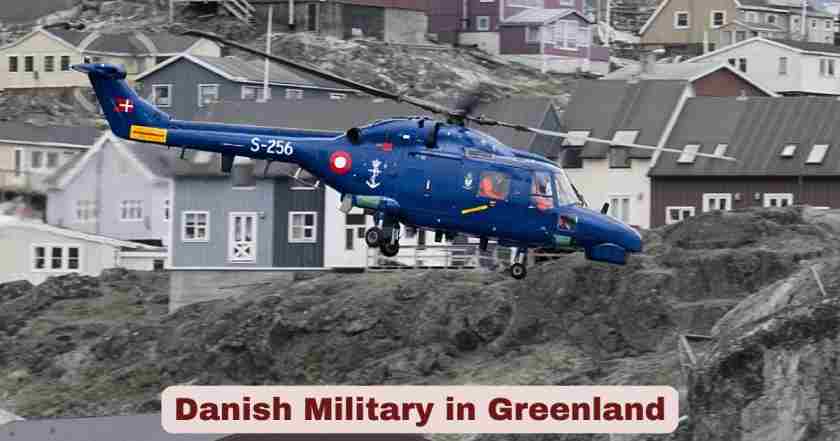
Danish Military Presence in Greenland in 2026
Danish military in Greenland in 2026 represents the most significant defense transformation in Denmark’s modern Arctic history, driven by unprecedented geopolitical tensions following President Donald Trump’s explicit statements about acquiring Greenland and the broader militarization of the Arctic region by Russia and China. Denmark announced an extraordinary $1.5 billion USD emergency defense package in December 2024 specifically for Greenland, followed by a comprehensive long-term commitment of 88 billion Danish kroner ($13.7 billion USD) through 2033 to strengthen Arctic and North Atlantic capabilities. This investment includes 27.4 billion kroner ($4.3 billion) allocated specifically to Greenland defense initiatives featuring three new Arctic patrol vessels, two long-range surveillance drones, enhanced satellite capacity, coastal radar systems, maritime patrol aircraft upgrades, and most significantly, a new military headquarters in Nuuk—Greenland’s capital with approximately 20,000 residents—marking the first permanent major military command center beyond the existing Joint Arctic Command facilities. The Danish Defence Intelligence Service designated the situation in December 2025 as unprecedented, stating that an ally—the United States—now constitutes a “potential security risk” to Danish sovereignty over Greenland, a remarkable assessment for NATO partners with over 75 years of military cooperation.
The foundation of Denmark’s military presence in Greenland has historically centered on the legendary Sirius Dog Sled Patrol (Slædepatruljen Sirius), an elite 12-person unit operating in the world’s largest national park (972,000 square kilometers of northeastern Greenland) conducting year-round sovereignty patrols by dogsled across frozen terrain in conditions reaching -50°C (-58°F). This iconic unit, established in 1950 and consisting of carefully selected Danish military personnel serving 26-month tours, represents continuity with Denmark’s traditional minimal-footprint approach to Greenland defense. However, the 2024-2026 defense initiatives signal a fundamental shift from symbolic sovereignty assertion to credible military deterrence capabilities, with Denmark deploying significantly increased personnel, establishing permanent installations, acquiring icebreaker-capable patrol vessels, implementing advanced surveillance systems, and coordinating with United States forces at Thule Air Base (Pituffik Space Base)—the massive American installation in northwestern Greenland housing Space Force early warning radars and supporting approximately 200 U.S. military personnel plus 650 contractors year-round. The contrast between Denmark’s modest 12-person Sirius Patrol and the substantial U.S. military infrastructure at Thule has long symbolized the asymmetric security relationship in Greenland, yet Denmark’s 2024-2026 mobilization aims to fundamentally rebalance this equation and demonstrate tangible sovereignty through enhanced military presence capable of monitoring vast Arctic territories where climate change opens previously ice-locked waters to commercial shipping, resource extraction, and potential military operations by global powers seeking Arctic influence.
Interesting Facts and Latest Statistics for Danish Military in Greenland in 2026
| Category | Key Facts & Statistics | Year/Source |
|---|---|---|
| Emergency Defense Package Dec 2024 | $1.5 billion USD | Immediate response |
| Total Arctic Investment 2024-2033 | 88 billion Danish kroner ($13.7 billion) | Long-term commitment |
| Greenland-Specific Allocation | 27.4 billion kroner ($4.3 billion) | Through 2033 |
| New Arctic Patrol Vessels | 3 ships with icebreaker capability | Major acquisition |
| Long-Range Surveillance Drones | 2 advanced UAV systems | Enhanced monitoring |
| New Military Headquarters | Nuuk (capital city) | First permanent command center |
| Sirius Dog Sled Patrol Personnel | 12 active members | Elite sovereignty unit |
| Sirius Patrol Area Coverage | 972,000 km² (Northeast Greenland) | World’s largest national park |
| Sirius Patrol Establishment | 1950 | 76 years of operation |
| Sirius Tour Length | 26 months per rotation | Extended deployment |
| Sirius Annual Patrols | ~30,000 km by dogsled | Year-round operations |
| Joint Arctic Command Location | Nuuk | Existing headquarters |
| JAC Establishment | 2012 | Unified Arctic command |
| U.S. Thule Air Base Personnel | ~200 military + 650 contractors | American presence |
| Thule Air Base Location | Northwestern Greenland (Pituffik) | Strategic installation |
| Danish Naval Deployments 2024 | Increased patrol frequency | Enhanced presence |
| Inspection Ship Knud Rasmussen | Primary Greenland patrol vessel | Current capability |
| Arctic Response Force Personnel | Expanding numbers | Specialized unit |
| Satellite Surveillance Enhancement | New orbital capacity | Space-based monitoring |
| Coastal Radar Systems | Multiple installations planned | Territory coverage |
| NATO Exercises in Greenland | Increasing frequency | Allied coordination |
Data Source: Danish Ministry of Defence, Danish Defence Intelligence Service, Reuters, Associated Press, BBC, Danish Parliament Documents, Joint Arctic Command, NATO Reports
The comprehensive statistics on Danish military in Greenland in 2026 reveal a defense posture undergoing revolutionary transformation from minimal presence to robust capability projection. The $1.5 billion emergency package announced in December 2024 represented Denmark’s immediate response to escalating tensions, providing funding for accelerated procurement of surveillance equipment, personnel increases, and infrastructure improvements that previously would have required years of budgetary negotiations. This emergency authorization bypassed normal defense planning cycles, signaling the extraordinary threat perception driving Danish decision-making as President Trump openly discussed purchasing Greenland during his 2024 presidential campaign and transition period, with statements including that he would not rule out using “military or economic coercion” to acquire the territory.
The broader 88 billion kroner ($13.7 billion) commitment through 2033 represents approximately 20% of Denmark’s entire annual defense budget allocated specifically to Arctic and North Atlantic capabilities, with 27.4 billion kroner ($4.3 billion) earmarked exclusively for Greenland-related projects. This investment dwarfs Denmark’s historical Arctic spending and reflects recognition that symbolic sovereignty assertions through the Sirius Patrol no longer suffice in an era where great power competition extends into the Arctic, China designates itself a “near-Arctic state” despite being located thousands of kilometers south, and Russia expands military infrastructure across its Arctic coast while demonstrating willingness to use force to achieve territorial objectives as evidenced by the Ukraine invasion.
The planned acquisition of three new Arctic patrol vessels with icebreaker capability represents Denmark’s most significant naval investment in Greenland since the Thetis-class vessels entered service in the 1990s. These new ships will supplement the existing inspection ship Knud Rasmussen and other patrol vessels that have struggled to maintain consistent presence across Greenland’s 44,087 kilometers of coastline during the limited ice-free navigation season traditionally running June through October but now extending longer due to climate change. The icebreaking capability ensures year-round operation, allowing Denmark to maintain sovereignty patrols even during winter when reduced sea ice opens waters to potential incursions by foreign vessels conducting unauthorized resource surveys, fishing, or intelligence gathering operations.
The Sirius Dog Sled Patrol’s 12 active members conduct approximately 30,000 kilometers of dogsled patrols annually across the 972,000 square kilometer Northeast Greenland National Park—an area larger than France and Germany combined—in teams of two operating from remote cabins scattered across the frozen wilderness. Each 26-month tour tests physical endurance, psychological resilience, and survival skills as patrol members face temperatures dropping to -50°C (-58°F), 24-hour winter darkness, and complete isolation for weeks at a time while maintaining sovereignty through physical presence in one of Earth’s most inhospitable environments. The unit’s iconic status as the world’s northernmost military patrol and its use of traditional dogsled transportation has made Sirius synonymous with Danish sovereignty in Greenland, yet the 2026 defense buildup acknowledges that dogsleds alone cannot deter modern security threats requiring surveillance satellites, patrol vessels, and credible military force projection.
Historical Danish Military Presence in Greenland Through 2026
| Period/Event | Details | Significance |
|---|---|---|
| 1721-1953 | Danish colonial rule | Greenland as colony |
| 1941-1945 WWII | U.S. bases established | American military arrival |
| 1950 | Sirius Patrol established | Sovereignty assertion |
| 1951 | Thule Air Base agreement | U.S. permanent presence |
| 1953 | Greenland becomes Danish county | Constitutional change |
| 1968 Thule Accident | B-52 crash with nuclear weapons | Major incident |
| 1979 | Home Rule granted | Self-government begins |
| 2009 | Self-government expansion | Greater autonomy |
| 2012 | Joint Arctic Command created | Unified command structure |
| 2019 | Trump “purchase” proposal | First acquisition talk |
| 2020-2023 | Minimal investment period | Status quo |
| December 2024 | $1.5 billion emergency package | Defense revolution begins |
| 2025 | Defence Intelligence warning | U.S. designated security risk |
| 2026 | Major buildup implementation | Current expansion |
| 2027 | New HQ completion target | Infrastructure milestone |
| 2033 | Investment program completion | Long-term goal |
Data Source: Historical records, Danish Parliament, Joint Arctic Command archives, NATO documents, News archives
Historical Danish military presence in Greenland evolved from colonial administration through minimal post-independence sovereignty operations to the current unprecedented buildup responding to 21st-century geopolitical realities. Denmark established colonial rule over Greenland beginning in 1721 when missionary Hans Egede founded settlements, though Greenland’s strategic military significance remained minimal until World War II when Nazi Germany’s occupation of Denmark in 1940 severed communications with Greenland. The United States moved to prevent German use of Greenland’s strategic position, establishing multiple bases including weather stations and airfields that would later evolve into permanent installations.
The 1951 Thule Air Base agreement formalized American military presence in northwestern Greenland, establishing what would become one of the U.S. Air Force’s northernmost installations, later transitioning to Space Force control as the Pituffik Space Base hosting early warning radars monitoring for ballistic missile launches from Russia and providing space domain awareness capabilities. This agreement granted the United States exclusive military use of designated areas while Denmark retained sovereignty, creating the asymmetric security relationship where American forces provided the actual military capability defending Greenland while Danish forces maintained symbolic sovereignty presence through limited patrol operations.
The 1950 establishment of the Sirius Dog Sled Patrol represented Denmark’s response to sovereignty concerns, particularly regarding Northeast Greenland where Norwegian trappers had historically operated and where territorial disputes persisted until resolved through international arbitration favoring Denmark. The unit’s creation provided continuous Danish military presence across the vast uninhabited national park, conducting patrols that served legal purposes by demonstrating effective occupation and control—criteria important in international law for maintaining sovereignty claims. Throughout the Cold War and post-Cold War periods, Sirius Patrol remained Denmark’s primary military presence beyond limited naval visits by inspection vessels and occasional exercises.
The 2012 creation of Joint Arctic Command (JAC) consolidated Denmark’s military responsibilities for Greenland and the Faroe Islands under unified command headquartered in Nuuk, improving coordination between naval, air, and ground elements. However, JAC operated with minimal resources, small staff, and limited capability beyond coordinating search and rescue, fisheries enforcement, and pollution response—constabulary functions rather than combat operations. The 2019 revelation that President Trump seriously inquired about purchasing Greenland shocked Danish officials who dismissed the idea as absurd, with Prime Minister Mette Frederiksen calling it “ridiculous,” yet Trump’s renewed interest during his 2024 campaign and explicit refusal to rule out military or economic coercion forced fundamental reassessment of Danish defense priorities.
The December 2024 emergency defense package marked the inflection point from symbolic to substantive military presence, followed by the December 2025 Defence Intelligence Service assessment explicitly warning that Denmark must prepare for scenarios where the United States—historically Denmark’s most important ally—might threaten Danish sovereignty over Greenland. This assessment, unprecedented in Danish-American relations, catalyzed parliamentary consensus across political parties that massive defense investment in Greenland represents existential necessity for maintaining sovereignty over a territory whose strategic value, resource wealth, and geographic position make it increasingly contested in an era of great power competition for Arctic dominance.
Sirius Dog Sled Patrol Operations and Statistics in 2026
| Operational Aspect | Details | Specifications |
|---|---|---|
| Active Personnel | 12 patrol members | All male volunteers |
| Selection Process | Rigorous screening | Less than 10% acceptance rate |
| Tour Duration | 26 months | Extended Arctic deployment |
| Annual Distance Covered | ~30,000 km by dogsled | Year-round patrols |
| Operating Area | 972,000 km² | Northeast Greenland |
| Base Stations | ~10 remote cabins | Scattered across territory |
| Dogs per Team | 8-12 sled dogs | Essential transport |
| Total Dog Population | ~80-100 dogs | Breeding program |
| Patrol Team Size | 2 personnel | Buddy system |
| Patrol Duration | 2-6 months per expedition | Extended isolation |
| Temperature Range | -50°C to +5°C | Extreme conditions |
| Polar Night Operation | 4 months darkness | Navigation challenges |
| Midnight Sun Period | 4 months daylight | Summer patrols |
| Communication | Satellite phone, radio | Limited connectivity |
| Primary Mission | Sovereignty patrol | Legal occupation |
| Secondary Missions | Research support, SAR | Additional roles |
| Establishment Year | 1950 | 76 years operation |
| Headquarters | Station Nord | Main base |
| Historical Incidents | Few serious casualties | Dangerous duty |
Data Source: Joint Arctic Command, Sirius Patrol official information, Danish Defence publications, Military journals
The Sirius Dog Sled Patrol represents one of the world’s most unique and demanding military assignments, with 12 active personnel selected through rigorous screening accepting fewer than 10% of applicants, required to demonstrate exceptional physical fitness, psychological stability, technical skills, and adaptability to extreme isolation in conditions that test human endurance limits. Patrol members serve 26-month tours in Northeast Greenland, conducting approximately 30,000 kilometers of dogsled patrols annually across the 972,000 square kilometer national park—an area encompassing glaciers, frozen seas, mountains, and polar desert where no permanent human habitation exists beyond the patrol’s scattered remote cabin network and the small Station Nord research facility serving as the unit’s headquarters.
Patrols operate in teams of two, with each pair spending 2-6 months traveling by dogsled between remote cabins, conducting sovereignty assertions by physically visiting and documenting conditions across Danish territory where no other presence exists. Teams rely on 8-12 sled dogs per dogsled, with the patrol maintaining a total population of approximately 80-100 Greenland dogs—a hardy breed evolved over thousands of years for Arctic conditions, capable of pulling heavy loads across ice and snow in temperatures that would incapacitate most other dog breeds. The dogs receive intensive training and care, with breeding programs ensuring genetic health and behavioral traits suited for the extreme demands of multi-month expeditions where dog performance literally determines human survival.
Operating conditions challenge human limits: winter temperatures regularly drop to -40 to -50°C (-40 to -58°F), while polar night blankets the region in 24-hour darkness for approximately four months (late October through late February at the highest latitudes), requiring navigation by stars, compass, and GPS when visible through frequent cloud cover and blowing snow. Summer brings the opposite extreme with midnight sun’s continuous daylight for four months, along with moderating temperatures reaching +5°C (41°F) that create surface melt, unstable ice, and increased crevasse hazards on glaciers. Spring and autumn shoulder seasons feature rapidly changing conditions where temperatures fluctuate around freezing, creating hazardous ice conditions on sea ice routes and unpredictable weather that can trap patrols between destinations.
The primary mission remains sovereignty patrol—physically occupying and documenting Danish presence across territory where effective occupation constitutes important criteria for maintaining sovereignty under international law. Patrol members photograph landmarks, record GPS coordinates, maintain cabin facilities, raise Danish flags, and document any foreign activity such as overflight by aircraft, vessel sightings, or evidence of unauthorized land access. Secondary missions include supporting scientific research by transporting equipment, collecting samples, and making meteorological observations; providing search and rescue capability for the rare researchers, hunters, or adventurers attempting to cross Northeast Greenland; and conducting environmental monitoring of wildlife populations, glacier movements, and pollution.
Historical incidents demonstrate the patrol’s inherent dangers: several patrol members have died from accidents including falls into crevasses, drowning when breaking through sea ice, dog attacks, equipment failures, and weather-related incidents. The unit’s safety record has generally been good given the extreme operating environment, reflecting rigorous training, conservative risk assessment, and the buddy system ensuring patrol members can assist each other during emergencies. Modern satellite communications improve safety by enabling emergency contact with Station Nord or Joint Arctic Command in Nuuk, though weather often prevents helicopter evacuation for days or weeks, requiring patrol members to handle medical emergencies, equipment failures, and life-threatening situations independently using training, experience, and improvisation in an environment where mistakes prove quickly fatal.
Joint Arctic Command Structure and Capabilities in 2026
| Command Aspect | Details | Function |
|---|---|---|
| Establishment | 2012 | Unified Arctic command |
| Headquarters | Nuuk, Greenland | Capital city location |
| Geographic Responsibility | Greenland, Faroe Islands | Two territories |
| Area Covered | 2.6 million km² | Land and maritime |
| Commander Rank | Rear Admiral (Navy) | Flag officer |
| Personnel (Nuuk HQ) | ~50-75 staff | Limited manning |
| Subordinate Units | Sirius Patrol, Naval assets | Operational forces |
| Primary Missions | Sovereignty, SAR, fisheries | Constabulary focus |
| Naval Assets | 1-2 patrol vessels (rotating) | Limited capability |
| Air Assets | Helicopters (deployed as needed) | No permanent aircraft |
| Inspection Ship Knud Rasmussen | Primary Greenland vessel | Ice-strengthened patrol |
| Annual Patrol Days | Variable by year | Weather-dependent |
| Search and Rescue | Primary emergency response | 24/7 capability |
| Fisheries Enforcement | Monitoring illegal fishing | Economic protection |
| Pollution Response | Environmental incidents | Coordination role |
| International Cooperation | U.S., NATO partners | Allied coordination |
| Intelligence Capability | Limited organic assets | Dependent on national level |
| 2026-2027 Expansion | New HQ, increased personnel | Major upgrade |
| Budget 2024-2033 | 27.4 billion kr for Greenland | Unprecedented investment |
Data Source: Joint Arctic Command official information, Danish Defence Ministry, Parliamentary documents, Military analyses
Joint Arctic Command (JAC) serves as Denmark’s unified military command for the Arctic, headquartered in Nuuk since 2012 and responsible for military operations, search and rescue coordination, fisheries enforcement, and sovereignty protection across Greenland and the Faroe Islands—a combined area exceeding 2.6 million square kilometers of land and maritime territory spanning from the North Atlantic to the High Arctic. The command is led by a Rear Admiral from the Royal Danish Navy, reflecting the maritime nature of Arctic operations where naval vessels provide the primary military presence beyond the Sirius Patrol’s dogsled operations in Northeast Greenland.
Headquarters personnel in Nuuk number approximately 50-75 staff, a remarkably small command element considering the vast geographic responsibility, with additional personnel deployed temporarily for operations, exercises, or special projects. This limited manning reflects Denmark’s historical approach prioritizing minimal military footprint in Greenland while relying on United States forces at Thule Air Base to provide actual territorial defense against external military threats. The 2026-2027 expansion plans will significantly increase headquarters staff, add specialized capabilities including intelligence analysis and joint operations coordination, and establish permanent liaison with U.S. forces, NATO headquarters, and Danish national command structures.
Primary missions include sovereignty protection through naval patrols and coordination of Sirius operations, search and rescue (SAR) serving as the primary emergency response organization for Greenland’s vast territory where commercial aviation, shipping, hunting, and research create regular SAR demand, fisheries enforcement monitoring Greenland’s 200 nautical mile Exclusive Economic Zone for illegal fishing by foreign vessels seeking valuable fish stocks, and pollution response coordinating environmental incident management including oil spills from vessels or potential offshore drilling operations. These missions emphasize constabulary functions rather than combat operations, with JAC operating more as coast guard than warfighting command.
Naval assets available to JAC include the ice-strengthened inspection ship Knud Rasmussen specifically designed for Greenland operations, along with rotating deployments of Thetis-class or Absalon-class vessels from the Royal Danish Navy conducting periodic patrols during ice-free seasons. These vessels carry helicopters providing aerial surveillance and SAR capability, conduct boarding operations for fisheries enforcement, maintain navigation aids, and assert sovereignty through presence in Greenlandic waters. However, the limited number of vessels means large portions of Greenland’s 44,087-kilometer coastline receive no patrol coverage for extended periods, creating vulnerabilities that the planned three new Arctic patrol vessels aim to address by enabling year-round presence through icebreaking capability.
Air assets consist primarily of helicopters deployed on naval vessels or temporarily based in Greenland for specific operations, with no permanent aircraft stationed in Greenland under JAC control. Search and rescue helicopters respond to emergency calls from fishing vessels, hunters, mountaineers, or researchers across Greenland’s vast and roadless interior where ground rescue is impossible and commercial aviation limited to major settlements. The planned acquisition of two long-range surveillance drones will provide JAC with persistent aerial monitoring capability previously unavailable, enabling detection of unauthorized vessel activity, ice condition monitoring, and early warning of approaching aircraft or surface contacts in areas too remote for regular patrol.
International cooperation remains essential given Denmark’s limited Arctic capabilities, with JAC coordinating regularly with U.S. forces at Thule, Canadian forces across Baffin Bay, Norwegian forces to the east, and NATO partners through exercises and information sharing. The relationship with U.S. forces has grown more complex following President Trump’s Greenland acquisition statements, creating tension between operational cooperation at tactical level and strategic uncertainty about American intentions, with the December 2025 Defence Intelligence assessment explicitly warning Danish forces must prepare for scenarios where American support cannot be assumed—a fundamental break from 75 years of unquestioned alliance solidarity requiring JAC to develop independent capability rather than depending on American reinforcement during crises.
New Military Infrastructure and Capabilities for Greenland in 2026-2033
| Infrastructure Project | Specifications | Timeline |
|---|---|---|
| New Military Headquarters Nuuk | Modern command facility | Completion 2027-2028 |
| Arctic Patrol Vessels (3 ships) | Icebreaker-capable | Delivery 2028-2033 |
| Long-Range Surveillance Drones (2) | Advanced UAV systems | Deployment 2026-2027 |
| Coastal Radar Network | Multiple installations | 2026-2030 |
| Satellite Surveillance Enhancement | Dedicated orbital capacity | 2026-2029 |
| Maritime Patrol Aircraft Upgrade | Enhanced sensors/range | 2026-2028 |
| Personnel Increase | Significant expansion | Gradual 2026-2033 |
| Arctic Response Force | Specialized rapid reaction | Formation 2026-2027 |
| New Naval Base Facilities | Support infrastructure | 2027-2030 |
| Communications Infrastructure | Secure networks | 2026-2028 |
| Logistics Hubs | Supply/maintenance centers | 2027-2031 |
| Training Facilities | Arctic warfare training | 2028-2032 |
| Total Investment | 27.4 billion kr ($4.3B) | 2024-2033 |
| Emergency Package | $1.5 billion | 2024-2026 |
| Icebreaker Capability | Year-round operations | New patrol vessels |
| Surveillance Coverage | Comprehensive territory | Multiple systems |
| Rapid Response Time | Enhanced readiness | New capabilities |
Data Source: Danish Defence Ministry announcements, Parliamentary budget documents, Defence procurement plans, News reports 2024-2026
New military infrastructure planned for Greenland between 2026 and 2033 represents Denmark’s most ambitious Arctic defense program in history, transforming military presence from symbolic to substantive with capabilities enabling year-round surveillance, rapid response to incursions, and credible deterrence of unauthorized activity. The new military headquarters in Nuuk serves as the cornerstone project, expanding beyond the existing Joint Arctic Command facilities to create a modern command center with advanced communications, intelligence analysis capability, joint operations coordination, and facilities supporting significantly increased permanent personnel. The headquarters will house liaison officers from U.S. forces, NATO partners, and Danish national intelligence services, creating an integrated Arctic security operations center capable of monitoring threats across air, sea, space, and cyber domains.
The acquisition of three new Arctic patrol vessels with icebreaker capability represents Denmark’s single largest naval investment in Greenland operations, with ships expected to displace 3,000-5,000 tons, carry helicopters and unmanned aerial systems, maintain crew complements of 40-60 personnel, and operate year-round in ice conditions that currently limit most vessels to summer operations. These ships will conduct sovereignty patrols, fisheries enforcement, search and rescue operations, environmental monitoring, and serve as mobile command platforms during crises. The icebreaking capability ensures access to waters previously unreachable during winter, allowing Denmark to maintain presence and respond to incidents even when traditional navigation remains impossible for non-ice-strengthened vessels.
Long-range surveillance drones, with two advanced UAV systems planned for initial deployment, will provide persistent aerial monitoring impossible with current helicopter-dependent surveillance. These drones likely employ fixed-wing designs enabling flights lasting 12-24 hours or more, covering thousands of square kilometers per mission while equipped with electro-optical cameras, infrared sensors, synthetic aperture radar, and electronic intelligence collection equipment detecting vessel movements, aircraft activity, ice conditions, and potential unauthorized installations. Operating from bases in southern or western Greenland, these drones can survey the entire Greenlandic coastline, monitor approaches to Thule Air Base, and provide early warning of Russian or Chinese military activity in adjacent Arctic waters.
The coastal radar network will establish multiple fixed installations providing continuous surveillance of key maritime chokepoints, approaches to major settlements, and areas of particular sovereignty sensitivity including waters adjacent to Canadian and Icelandic zones where boundary disputes or overlapping claims create potential friction. Modern phased-array radars can detect small vessels, low-flying aircraft, and potentially ballistic missiles at ranges exceeding 200 kilometers, providing Joint Arctic Command with real-time situational awareness impossible with current sporadic patrol-based surveillance dependent on vessels and aircraft with limited coverage and persistence.
Satellite surveillance enhancement includes dedicated orbital capacity providing imagery intelligence, signals intelligence, and communications capabilities independent of allied support. Denmark currently depends heavily on NATO, United States, and commercial satellite providers for overhead surveillance, creating vulnerabilities if access becomes restricted during crises or if American cooperation falters following the unprecedented intelligence assessment designating the U.S. as a potential security risk. Indigenous satellite capability, possibly through joint European programs or dedicated Danish procurement, ensures autonomous reconnaissance of Greenland and adjacent Arctic waters regardless of alliance politics.
The Arctic Response Force represents a new specialized rapid reaction capability trained and equipped for extreme cold weather combat operations, potentially numbering hundreds of personnel organized in company or battalion-strength formations capable of deploying to Greenland within hours or days of crisis onset. This force would provide Denmark with credible military capability beyond constabulary operations, enabling response to scenarios including attempted foreign occupation of territory, protection of critical infrastructure like Thule Air Base, or defense of Greenland against coercion without depending entirely on NATO reinforcement that might arrive too late or might not come at all given American political unpredictability under leaders questioning alliance commitments.
President Trump’s explicit interest in acquiring or controlling Greenland during 2019 and renewed statements during his 2024 campaign and early 2025 presidency have fundamentally altered the context of American presence at Thule. What was previously viewed as essential allied cooperation within NATO framework now appears potentially as precedent for expanded American territorial control, with the massive base demonstrating American willingness and capability to operate indefinitely in Greenland’s extreme environment. The December 2025 Danish Defence Intelligence assessment designating the United States as a “potential security risk” reflects this transformed strategic environment, driving Denmark’s unprecedented military expansion ensuring independent capability to defend Greenland without assuming automatic American support—a revolutionary shift in Danish defense planning requiring massive investment creating credible deterrence against any actor, including allied powers, threatening Danish sovereignty over this strategically vital Arctic territory.
Danish Naval Assets and Maritime Operations in Greenland in 2026
| Naval Asset | Specifications | Greenland Role |
|---|---|---|
| Thetis-Class Patrol Vessels | 4 ships total (rotating deployment) | Ocean patrol, sovereignty |
| Knud Rasmussen (P570) | Inspection ship, ice-strengthened | Primary Greenland vessel |
| Ejnar Mikkelsen (P571) | Inspection ship | Hydrographic surveys |
| Hvidbjørnen (P571) | Inspection ship | Research support |
| Displacement | 3,500 tons (Thetis-class) | Ocean-capable |
| Length | 112 meters | Substantial patrol vessels |
| Speed | 20 knots | Long-range capability |
| Range | 7,500 nautical miles | Extended patrols |
| Crew Complement | 60 personnel | Professional crews |
| Armament | 76mm gun, machine guns | Light armament |
| Helicopter | 1 Westland Lynx | Aerial support |
| SAR Equipment | Rescue boats, medical facilities | Emergency response |
| Ice Capability | Limited (light ice only) | Seasonal restriction |
| Annual Patrol Days | 200+ days in Greenland waters | Year-round presence attempt |
| Fisheries Inspections | Primary enforcement mission | EEZ protection |
| MPV80-Class Replacement | 3 new Arctic patrol vessels post-2025 | Future capability |
| Frigate Niels Juel | Deployed for Arctic Light 2025 | Exercise participation |
| 1st Squadron Base | Naval Base Frederikshavn | Administrative home |
Data Source: Royal Danish Navy, Joint Arctic Command, Danish Defence Ministry, Jane’s Fighting Ships, Official vessel data
Danish naval assets operating in Greenland waters form the backbone of Denmark’s military presence, with the Royal Danish Navy’s 1st Squadron maintaining primary responsibility for sovereignty patrols, fisheries enforcement, search and rescue, and maritime security across Greenland’s 200 nautical mile Exclusive Economic Zone encompassing approximately 2.2 million square kilometers of ocean. The Thetis-class ocean patrol vessels, particularly the inspection ship Knud Rasmussen (P570), serve as Denmark’s primary maritime asset specifically designed and equipped for Greenland operations, featuring ice-strengthened hulls enabling navigation in light ice conditions, extended range of 7,500 nautical miles allowing multi-week patrols without refueling, and comprehensive mission equipment including fisheries inspection capabilities, pollution response gear, and StanFlex modular weapon systems enabling mission-specific configuration.
The Knud Rasmussen, commissioned in 2008 and named after the famous Greenlandic polar explorer, operates as the dedicated Greenland patrol vessel, conducting approximately 200+ patrol days annually in Greenlandic waters during the ice-free season typically running June through October but extending longer in recent years due to climate change-induced ice reduction. The vessel carries a crew of approximately 60 personnel including Danish naval sailors, civilian specialists, and occasionally embark Greenlandic officials or scientists, with accommodations supporting extended patrols lasting weeks or months at a time. Armed with a 76mm OTO Melara naval gun, 12.7mm heavy machine guns, and capable of deploying the StanFlex mission modules for mine countermeasures or other specialized tasks, the vessel provides limited combat capability primarily oriented toward constabulary operations rather than high-intensity warfare.
The helicopter capability aboard Danish patrol vessels provides crucial force multiplication, with each Thetis-class vessel capable of operating one Westland Lynx helicopter used for aerial reconnaissance, fisheries inspection allowing boarding teams to reach vessels quickly, search and rescue operations covering vast ocean areas impossible to patrol by ship alone, and ice reconnaissance informing navigation decisions. The Lynx helicopters, though aging and scheduled for replacement, provide essential aerial mobility in an environment where distances between settlements and patrol areas often exceed hundreds of kilometers.
Fisheries enforcement constitutes a primary mission for Danish naval vessels in Greenland, with the Exclusive Economic Zone containing rich fishing grounds for Greenland halibut, cod, shrimp, and other commercially valuable species attracting illegal fishing by vessels from Russia, China, and other nations seeking to exploit resources without paying access fees or adhering to conservation regulations. Danish naval vessels conduct boarding inspections, verify catch logs, inspect fishing gear for prohibited types, and when necessary, arrest vessels engaged in illegal fishing, escorting them to port for prosecution. This mission directly protects Greenland’s economic interests, as fishing accounts for approximately 90% of export earnings, making poaching a serious economic threat justifying robust enforcement presence.
The planned acquisition of three new Arctic patrol vessels announced in the 2024-2025 defense package will revolutionize Danish maritime capability in Greenland by providing true icebreaker capability enabling year-round operations currently impossible with existing vessels limited to seasonal deployments. These new vessels, expected to enter service between 2028-2033, will likely displace 3,000-5,000 tons, feature reinforced bows and powerful engines enabling navigation through ice up to 1 meter thick, carry advanced sensor suites including long-range radar and electro-optical systems, operate helicopters or unmanned aerial vehicles, and maintain crew complements of 50-70 personnel supporting extended Arctic deployments. This investment recognizes that seasonal presence no longer suffices when potential adversaries can operate year-round as ice extent declines, requiring Denmark to maintain continuous maritime surveillance and response capability regardless of ice conditions.
Danish Air Force Operations and Capabilities for Greenland in 2026
| Aviation Asset | Specifications | Greenland Mission |
|---|---|---|
| Challenger CL-604 Maritime Patrol | 3 aircraft total | Long-range surveillance |
| Crew | 3-5 personnel | Pilot, sensors, observers |
| Range | 4,000+ nautical miles | Greenland coverage |
| Endurance | 6-8 hours | Extended patrols |
| Sensors | Radar, EO/IR, AIS | Maritime surveillance |
| Base | Aalborg Air Base, Denmark | Operating location |
| Deployment Frequency | Regular rotations | Periodic presence |
| Westland Lynx Helicopter | Naval vessel-based | Ship operations |
| EH-101 Merlin | SAR configuration | Search and rescue |
| SAR Helicopter Crew | 4-6 personnel | Rescue specialists |
| F-16 Fighter Deployments | Occasional exercises | Air sovereignty |
| Air-to-Air Refueling | Not available | Range limitation |
| Permanent Air Base | None in Greenland | No fixed presence |
| Future UAV Capability | 2 long-range drones planned | Enhanced surveillance |
| UAV Endurance | 20+ hours projected | Persistent monitoring |
| Transport Support | C-130J Hercules occasional | Logistics missions |
| Thule Air Base Access | Limited Danish use | U.S.-controlled facility |
Data Source: Royal Danish Air Force, Joint Arctic Command, Defence procurement documents, Aviation databases
Danish Air Force operations supporting Greenland defense remain limited compared to naval presence, with no permanent air bases or stationed aircraft in Greenland itself, requiring all aviation support to deploy from Denmark (approximately 2,500-4,000 kilometers distant depending on destination) or operate temporarily from Greenland’s civilian airports during exercises or special operations. The Royal Danish Air Force conducts regular maritime patrol missions using three Challenger CL-604 aircraft configured for ocean surveillance, equipped with maritime search radar, electro-optical/infrared cameras, and Automatic Identification System (AIS) receivers detecting vessel transponders, flying missions covering Greenlandic waters to monitor fishing activity, detect unauthorized vessels, support search and rescue, and provide situational awareness to Joint Arctic Command.
The Challenger CL-604 maritime patrol aircraft, with range exceeding 4,000 nautical miles and endurance of 6-8 hours, can reach Greenland from Aalborg Air Base in northern Denmark, conduct surveillance patrols, and return within a single mission, though the long transit times limit time-on-station over Greenland. Crews of 3-5 personnel including pilots and sensor operators conduct missions identifying vessels, photographing suspicious activity, coordinating with naval vessels for boarding operations, and providing reconnaissance for ice conditions, environmental monitoring, and sovereignty patrols. However, the small fleet of just three aircraft limits coverage, with large portions of Greenland receiving no aerial surveillance for weeks or months at a time due to competing missions supporting Faroe Islands, Danish waters, and international operations.
Helicopter operations primarily occur from Danish naval vessels, with Westland Lynx helicopters operating from Thetis-class patrol ships providing aerial reconnaissance, fisheries inspection support, search and rescue, and personnel/cargo transport between ships and shore. The aging Lynx fleet, in service since the 1980s, requires replacement, with Denmark procuring AgustaWestland AW101 Merlin helicopters in search and rescue configuration that will eventually deploy to Greenland supporting maritime operations. SAR helicopters maintain readiness for emergency response, with crews of 4-6 personnel including pilots, flight engineers, and rescue swimmers capable of conducting hoists from vessels, ice, or water in severe Arctic conditions.
Fighter aircraft deployments to Greenland remain rare, with F-16 Fighting Falcons (being replaced by F-35A Lightning II fighters through 2024-2028) occasionally deploying during exercises to assert air sovereignty, practice Arctic operations, and demonstrate capability. However, Denmark lacks aerial refueling assets, severely limiting fighter operations over Greenland’s vast territory where distances often exceed unrefueled combat radius, requiring fighters to operate from Greenland’s limited airports or depend on allied tanker support. The absence of air defense systems or forward deployed fighters in Greenland means Denmark currently cannot contest airspace without significant advance warning and deployment time, creating vulnerability to unauthorized reconnaissance flights or potential air attacks.
The planned procurement of two long-range surveillance drones represents Denmark’s most significant aviation investment for Greenland, with unmanned aerial vehicles (UAVs) capable of 20+ hour endurance, ranges exceeding 2,000 kilometers, and sensor payloads including synthetic aperture radar, electro-optical cameras, and signals intelligence collection equipment. These drones will conduct persistent surveillance impossible with manned aircraft, monitor vast ocean areas for vessel activity, track ice conditions, provide early warning of approaching aircraft or ships, and support fisheries enforcement by locating suspicious vessels for naval interception. Operating from bases in southern or western Greenland, these UAVs can patrol the entire coastline, monitor approaches to sensitive areas, and provide Joint Arctic Command with continuous situational awareness currently unavailable.
Danish Military Personnel and Training for Arctic Operations in 2026
| Personnel Category | Numbers/Details | Function |
|---|---|---|
| Sirius Patrol Members | 12 active personnel | Dog sled sovereignty patrol |
| Joint Arctic Command Staff | 50-75 headquarters personnel | Command and control |
| Naval Crews (Greenland vessels) | 60 per ship (rotating) | Maritime operations |
| Seasonal Deployments | Variable 100-300 personnel | Exercise/mission dependent |
| Arctic Training Course | Annual specialized training | Cold weather operations |
| Sirius Selection Rate | <10% acceptance | Rigorous screening |
| Tour Length Sirius | 26 months | Extended Arctic service |
| Naval Rotation | 3-6 month deployments | Ship-based tours |
| Reservist Mobilization | Limited Arctic-trained reserves | Potential expansion force |
| Joint Exercises | Increasing frequency | International cooperation |
| Cold Weather Qualification | Required for Arctic assignments | Specialized certification |
| Survival Training | Mandatory Arctic survival | Safety requirement |
| Language Training | Danish/Greenlandic/English | Communication capability |
| Medical Screening | Extensive for Arctic service | Fitness requirement |
| Planned Personnel Increase | Significant expansion 2026-2033 | Force buildup |
| Arctic Response Force | Formation underway | New specialized unit |
| Total Denmark Armed Forces | ~17,000 active duty | National context |
Data Source: Danish Defence personnel records, Joint Arctic Command, Sirius Patrol information, Military training documents, Parliamentary reports
Danish military personnel assigned to Greenland operations represent a small but highly specialized force adapted to Arctic conditions through rigorous selection, intensive training, and extended deployment cycles building experience operating in extreme environments. The Sirius Dog Sled Patrol’s 12 active members undergo the most demanding selection and training, with applicants required to pass physical fitness tests exceeding standard military requirements, psychological evaluations assessing resilience to isolation and stress, technical skills assessment including navigation, survival, first aid, and dog handling, and background investigations ensuring suitability for the independent operations where judgment and character prove critical to mission success and survival.
Sirius selection accepts fewer than 10% of applicants, with most volunteers coming from Danish Army or Royal Danish Navy special operations or reconnaissance units where they’ve already demonstrated exceptional capabilities. Selected personnel complete intensive Arctic training including cold weather survival, dogsled operations, glacier travel, sea ice assessment, emergency medical care, communications, and sovereignty patrol procedures before deploying to Northeast Greenland for their 26-month tour. This extended deployment builds deep Arctic expertise, with patrol members gaining intimate knowledge of the terrain, weather patterns, ice conditions, wildlife behavior, and operational techniques that cannot be acquired through short rotations.
Joint Arctic Command headquarters staff of approximately 50-75 personnel includes naval officers specializing in maritime operations, intelligence analysts monitoring foreign activity, operations planners coordinating exercises and missions, communications specialists maintaining secure networks, logistics officers managing supply chains, and administrative personnel supporting command functions. Staff officers typically serve 2-3 year assignments in Nuuk, with families often accompanying officers though the remote location and limited schooling options make unaccompanied tours common for junior personnel.
Naval crews aboard patrol vessels deploy on 3-6 month rotations, with ships conducting extended patrols in Greenlandic waters before returning to Denmark for maintenance, crew rest, and refit periods. Each Thetis-class vessel maintains a crew of approximately 60 personnel including officers, petty officers, sailors, engineers, weapons specialists, and helicopter detachment when embarked. The rotating deployment cycle means multiple crews train for Greenland operations, building broader institutional Arctic expertise across the Royal Danish Navy rather than concentrating knowledge in a small permanent cadre.
Seasonal deployments of 100-300 additional personnel occur during major exercises like Arctic Light or Operation Nanook, temporary special operations missions, infrastructure construction projects, or emergency response situations. These personnel come from various branches of the Danish Defence, requiring cold weather qualification training before deployment including instruction in Arctic survival, cold injury prevention, specialized equipment operation, and environmental protocols protecting Greenland’s fragile ecosystem. The planned Arctic Response Force will formalize this capability, creating a standing unit trained and equipped for Arctic combat operations, potentially numbering hundreds of personnel organized in company or battalion strength ready for rapid deployment.
Medical screening for Arctic assignments remains rigorous, with personnel required to pass cardiovascular fitness evaluations, dental examinations (critical since dental emergencies in remote locations can become life-threatening), psychological assessments, and physical examinations ensuring ability to withstand extreme cold, operate in darkness for extended periods, and maintain performance under isolation stress. The Danish Defence maintains Arctic medicine specialists who research cold weather injuries, develop prevention protocols, and train medical personnel in treating frostbite, hypothermia, snow blindness, and other Arctic-specific conditions.
Defense Budget and Economic Impact of Military Presence in Greenland in 2026
| Financial Aspect | Amount | Context |
|---|---|---|
| Emergency Package Dec 2024 | $1.5 billion USD | Immediate response funding |
| Total Arctic Investment 2024-2033 | 88 billion Danish kroner ($13.7B USD) | Long-term commitment |
| Greenland-Specific Allocation | 27.4 billion kroner ($4.3B USD) | Dedicated to Greenland |
| Annual Defense Budget Denmark | ~45-50 billion kroner total | National budget context |
| Greenland % of Defense Spending | ~20% over 2024-2033 period | Unprecedented priority |
| GDP of Greenland | ~$3.2-3.5 billion USD | Economic scale |
| Defense Spending vs. Greenland GDP | Investment exceeds entire GDP | Massive commitment |
| Personnel Costs | ~40% of defense spending | Salary and benefits |
| Equipment Procurement | ~35% of investment | Ships, drones, systems |
| Infrastructure | ~15% of funding | Bases, facilities |
| Operations and Maintenance | ~10% annually | Ongoing costs |
| Local Economic Impact | Construction jobs, contracts | Greenlandic benefit |
| Danish Defence Total Personnel | ~17,000 active duty | National force size |
| Greenland Personnel % (Current) | <1% permanent deployment | Small footprint |
| Greenland Personnel % (2033) | Projected 2-5% increase | Expansion target |
| Civilian Contractor Jobs | Hundreds projected | Infrastructure support |
| Long-term Sustainability | Requires continued funding | Fiscal challenge |
Data Source: Danish Ministry of Defence budget documents, Parliamentary appropriations, Economic analyses, Statistics Greenland, World Bank
The financial commitment to Danish military expansion in Greenland represents Denmark’s single largest defense investment of the 21st century, with the $1.5 billion emergency package of December 2024 providing immediate funding followed by the comprehensive 88 billion Danish kroner ($13.7 billion USD) allocation through 2033, of which 27.4 billion kroner ($4.3 billion) specifically targets Greenland defense capabilities. To contextualize this investment, Denmark’s total annual defense budget approximates 45-50 billion kroner, meaning the Greenland commitment represents roughly 20% of Denmark’s entire defense spending over the nine-year program—an unprecedented concentration of resources on a single geographic area.
The scale becomes even more striking when compared to Greenland’s GDP of approximately $3.2-3.5 billion USD, meaning Denmark’s Greenland defense investment through 2033 actually exceeds Greenland’s entire annual economic output—a ratio unmatched in modern military investment relative to the territory being defended. This commitment reflects Denmark’s assessment that Greenland’s strategic value, sovereignty concerns, and potential for conflict require defense spending disproportionate to the territory’s population (~56,000 people) or current economic productivity, justified by long-term geopolitical significance and resource wealth potentially worth trillions as Arctic ice melts exposing mineral deposits and opening shipping routes.
Cost breakdown allocates approximately 40% to personnel expenses including salaries, benefits, housing, training, and support for significantly increased manning levels including Sirius Patrol, Joint Arctic Command expansion, naval crews, Arctic Response Force, and supporting logistics and administrative personnel. Equipment procurement consumes roughly 35%, covering the three new Arctic patrol vessels (likely costing 10-15 billion kroner total), long-range surveillance drones (hundreds of millions kroner each), coastal radar systems, satellite capabilities, communications equipment, and weapons systems. Infrastructure construction accounts for approximately 15%, funding the new military headquarters in Nuuk, naval base improvements, logistics facilities, training centers, and support buildings. Operations and maintenance requires the remaining 10%, covering fuel, spare parts, facility upkeep, and ongoing mission costs.
The local economic impact in Greenland will be substantial, with construction projects employing hundreds of Greenlandic workers, procurement contracts benefiting local suppliers where possible, and increased military presence generating demand for services, housing, and goods in communities hosting Danish forces. The new headquarters in Nuuk represents particularly significant local investment, with construction lasting several years creating jobs during the building phase and then requiring permanent civilian support staff for maintenance, food services, and other functions generating ongoing employment. However, Denmark faces challenges ensuring local benefit maximizes given Greenland’s limited industrial capacity, small labor force, and logistical constraints requiring much equipment and many workers to come from Denmark.
Long-term sustainability concerns emerge given the massive upfront investment creates ongoing operational costs continuing beyond 2033 when the initial program completes. Operating three new Arctic patrol vessels requires permanent crews, fuel, maintenance, and port facilities; surveillance drones need operators, analysts, and technical support; and expanded headquarters demands staff salaries and operating budgets. Denmark commits to these costs recognizing that credible Arctic deterrence requires sustained presence rather than episodic deployments, yet future governments may face pressure to reduce spending if geopolitical tensions ease or if competing priorities emerge. The 2026 consensus across Danish political parties supporting Arctic investment provides current political foundation, though maintaining this commitment through potential economic downturns or changing threat assessments presents ongoing challenge requiring continuous political will and public support for defending sovereignty over a territory most Danes never visit.
International Cooperation and NATO Coordination for Danish Forces in Greenland in 2026
| Cooperation Aspect | Details | Scope |
|---|---|---|
| NATO Membership | Denmark founding member (1949) | Alliance framework |
| Arctic Allies | Norway, Iceland, Canada, U.S. | Regional partners |
| Joint Exercises | Annual Arctic operations | Multinational training |
| Arctic Light Exercise | Major Nordic exercise | Regional focus |
| Operation Nanook | Canadian-led Arctic exercise | International participation |
| Trident Juncture | NATO large-scale exercise | Occasional Arctic scenarios |
| Information Sharing | Intelligence cooperation | Classified networks |
| Interoperability Standards | NATO equipment/procedures | Common capabilities |
| Combined Air Operations | Coordination with allies | Airspace management |
| Maritime Coordination | Naval cooperation | Patrol coordination |
| Search and Rescue | International SAR cooperation | Life-saving missions |
| U.S. Relationship Complexity | Allied but potential risk | Unprecedented tension |
| Canadian Border Cooperation | Adjacent Arctic waters | Boundary management |
| Norwegian Partnership | Close Nordic cooperation | Historical ties |
| EU Relationship | Denmark EU member | European security dimension |
| Greenland Self-Government | Consultation requirements | Sovereignty considerations |
| Future NATO Article 5 | Collective defense applicability | Ultimate security guarantee |
Data Source: NATO documents, Joint Arctic Command, Defence Ministry reports, Exercise documentation, International agreements
International cooperation remains essential for Denmark’s Greenland defense despite the unprecedented investment in independent capabilities, with NATO membership providing the ultimate security guarantee through Article 5 collective defense obligations requiring allies to treat an attack on Greenland as an attack on all 32 alliance members. Denmark has been a founding NATO member since 1949, participating in collective defense arrangements that made substantial independent Arctic capabilities unnecessary during the Cold War and post-Cold War periods when United States protection seemed assured and Russian threats appeared manageable through alliance deterrence.
Joint exercises including the major Arctic Light series led by Denmark bring together forces from Norway, Sweden, Finland, Iceland, and occasionally United Kingdom, France, Germany, and United States for realistic Arctic training scenarios testing cold weather operations, logistics in austere environments, communications across vast distances, and coordination between diverse national forces operating under unified command structures. These exercises, conducted in northern Norway and occasionally Greenland itself, build interoperability enabling allied forces to seamlessly integrate during actual crises while demonstrating collective resolve to defend Arctic territories against potential adversaries.
Operation Nanook, the annual Canadian-led Arctic exercise in Nunavut and waters between Canada and Greenland, provides another venue for international cooperation, with Danish naval vessels and personnel frequently participating alongside Canadian Armed Forces, U.S. Coast Guard, and occasionally French or other allied forces. These exercises practice scenarios including search and rescue, sovereignty patrol, disaster response, and defense against hostile forces, while building personal relationships between officers and enlisted personnel from different nations who might later coordinate during real operations.
The relationship with the United States has grown profoundly complicated following President Trump’s explicit statements about acquiring Greenland and the December 2025 Danish Defence Intelligence assessment designating the U.S. as a “potential security risk.” This unprecedented characterization of an ally fundamentally challenges seven decades of unquestioned Danish-American security cooperation, forcing Denmark to develop independent capabilities rather than assuming automatic U.S. support during crises. At tactical and operational levels, Danish and American forces continue cooperating professionally, yet strategic uncertainty about American intentions requires Denmark to prepare for scenarios where U.S. forces might not reinforce Danish defense or might even threaten Danish sovereignty—contingencies unthinkable just years earlier.
Canadian cooperation holds particular importance given the adjacent Arctic waters between Greenland and Canada’s Arctic archipelago, with overlapping claims to continental shelf areas potentially containing petroleum deposits and fisheries requiring careful boundary management. The Danish-Canadian Hans Island dispute, resolved through negotiation creating shared sovereignty over the tiny island, demonstrates that Arctic territorial issues can be settled peacefully between allies respecting international law, providing model for managing potential future disputes. Canadian and Danish forces maintain regular contact, share information on Arctic conditions, coordinate search and rescue, and jointly patrol areas of overlapping interest.
Norwegian partnership represents Denmark’s closest defense relationship, with the two nations sharing Nordic heritage, similar threat perceptions regarding Russian Arctic military expansion, and commitment to Arctic sovereignty and security. Norwegian forces possess perhaps Europe’s most capable Arctic military, with specialized units trained for extreme cold warfare, substantial ice-capable naval vessels, advanced air assets, and bases positioned along Norway’s extensive Arctic coastline. Denmark learns from Norwegian Arctic expertise, participates in Norwegian-led exercises, and coordinates policies within NATO to ensure Arctic security receives appropriate alliance attention despite some members viewing the region as peripheral to European security concerns focused on Russian threats closer to Central Europe.
Disclaimer: This research report is compiled from publicly available sources. While reasonable efforts have been made to ensure accuracy, no representation or warranty, express or implied, is given as to the completeness or reliability of the information. We accept no liability for any errors, omissions, losses, or damages of any kind arising from the use of this report.