
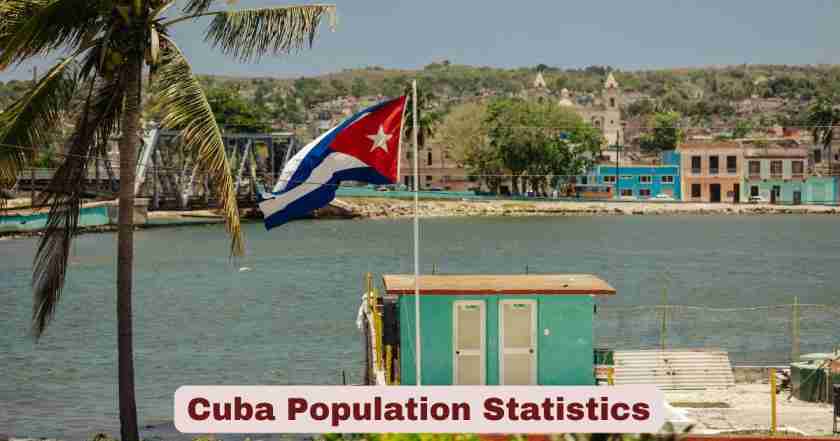
Cuba Population in 2026
The Cuba population in 2026 stands at the center of one of the most catastrophic demographic collapses in modern history outside of active warfare, with estimates ranging from 8.0 million to 11.4 million depending on whether official government figures or independent demographic analyses are used. The Cuban government’s National Office of Statistics and Information (ONEI) reported 9,748,007 inhabitants at the end of 2024, representing a decrease of 307,961 people from 2023, while more conservative demographic tracking by Worldometer places the current population at 10,917,835 as of January 2026. However, independent Cuban demographer Juan Carlos Albizu-Campos estimates the actual resident population is far lower at approximately 8.0 to 8.6 million people, arguing that official figures severely undercount emigration by only including those leaving for the United States while ignoring the hundreds of thousands who have fled to Spain, Brazil, Mexico, and other destinations since 2020.
This unprecedented population crisis stems from the convergence of three devastating demographic forces: massive emigration with over 1.0 million Cubans officially leaving between 2022-2023 alone (and potentially 1.79 million total from 2021-2024 according to extrapolations), a negative natural growth rate where deaths have exceeded births every year since 2020 with 128,098 deaths versus only 71,358 births in 2024 – the lowest birth count in 65 years, and extreme population aging making Cuba the oldest country in Latin America with 25.7% of the population over age 60 and a median age of 42.2 years. The severity of the crisis prompted even Cuban President Miguel Díaz-Canel to acknowledge in July 2024 that the island experienced a 10.1% population decline since December 2020, admitting Cuba had lost population equivalent to returning to 1985 levels. The emigration wave that began accelerating after the July 11, 2021 (11J) protests reached historic proportions in 2022-2023, with over 860,000 Cubans entering the United States through various channels including 569,272 apprehensions at the Mexico-US border, humanitarian parole programs, and legal immigration, making this exodus larger than the famous Mariel boatlift of 1980 (125,000) and Balseros crisis of 1994 (30,000-45,000) combined.
Interesting Facts About Cuba Population Statistics in 2026
| Key Population Fact Category | Statistical Data | Source / Period |
|---|---|---|
| Current Population (Worldometer) | 10,917,835 | Worldometer, January 2026 |
| Current Population (Countrymeters) | 11,428,681 | Countrymeters, January 10, 2026 |
| Current Population (Statistics Times) | 10,914,356 | Statistics Times, January 9, 2026 |
| Current Population (Georank) | 10,892,659 | Georank, 2026 |
| Official Population Count | 9,748,007 | ONEI (Cuba), December 31, 2024 |
| Independent Population Estimate | 8.0–8.6 million | Juan Carlos Albizu-Campos, 2025 |
| Population Peak | 11,326,616 (2012) | Historical record |
| Global Population Ranking | 88th–90th worldwide | UN / Worldometer, 2026 |
| Share of World Population | 0.13% | Worldometer, 2026 |
| Population Decline (2024) | −307,961 people | ONEI Annual Report, 2024 |
| Population Decline (2022–2023) | −1,011,269 emigrants | ONEI, July 2024 |
| Estimated Population Drop (2020–2024) | ~24% decline | Albizu-Campos Analysis |
| Total Emigrants (2021–2024) | ~1.79 million | Independent estimates |
| Cubans Arriving in the US (2021–mid-2024) | 860,000+ | US CBP / DHS |
| US Arrivals FY 2022 | 224,607 encounters | US CBP |
| US Arrivals FY 2023 | 220,000+ | US CBP |
| US Arrivals FY 2024 | 217,615 (all channels) | US CBP / DHS |
| Emigrants in 2024 (Official) | 251,221 | ONEI, 2024 |
| Emigrants in 2024 (Independent) | 545,011 | Albizu-Campos, 2025 |
| Births (2024) | 71,358 | ONEI, 2024 |
| Deaths (2024) | 128,098 | ONEI, 2024 |
| Natural Population Change (2024) | −56,740 | ONEI calculation |
| Total Fertility Rate | 1.45–1.6 children per woman | 2023–2024 |
| Median Age | 42.2 years | UN / Worldometer, 2026 |
| Population Aged 60+ | 25.7% (~2.5 million) | ONEI, 2024 |
| Life Expectancy (Total) | 79.64 years | World Bank / CIA, 2025 |
| Male Life Expectancy | ~76 years | Government data |
| Female Life Expectancy | ~80 years | Government data |
| Urban Population Share | 81.9% | Worldometer, 2025 |
| Population Density | 103 per km² (266 per sq mi) | Countrymeters, 2026 |
| Land Area | 110,860 km² (42,803 sq mi) | UN Statistics Division |
| Cubans Living Abroad | ~3 million in 140 countries | Cuban Government, 2024 |
Data Sources: Worldometer UN Data Elaboration 2026, Countrymeters January 2026, Cuban National Office of Statistics and Information (ONEI) 2024, US Customs and Border Protection, Juan Carlos Albizu-Campos Demographic Research 2024-2025, Cuba Headlines December 2025, CiberCuba Analysis, University of Navarra Global Affairs, Columbia Law School Cuba Capacity Building Project, Foreign Affairs January 2026
Analysis of Cuba Population Crisis and Demographic Collapse in 2026
The extreme variance in population estimates – ranging from independent demographer Albizu-Campos’ 8.0-8.6 million to Countrymeters’ 11.4 million – reflects not merely methodological differences but a fundamental data crisis where the Cuban government systematically underreports emigration by maintaining emigrants as “residents” for up to two years after departure, creating a statistical fiction that masks the true severity of population loss. The official ONEI figure of 9,748,007 at end-2024, while lower than international tracking organizations suggest, still represents government acknowledgment of a 10.1% decline since December 2020 when the population stood at 11.1 million, yet even this stark admission likely understates reality because it counts only emigrants who left for the United States while ignoring the substantial outflows to Spain (receiving tens of thousands), Brazil (emerging as major destination), Mexico (estimated 100,000+ Cubans), and other Latin American and European countries where accurate tracking doesn’t exist.
The catastrophic emigration figures tell the story of a nation hemorrhaging its population at rates typically associated only with active warfare or genocidal conflicts, with the 2022-2023 period seeing over 1.0 million departures officially acknowledged – equivalent to 10% of the entire national population evacuating in just two years. To contextualize this demographic disaster: Syria’s civil war displaced approximately 13 million people (55% of population) over a decade of brutal conflict, while Cuba has lost 18-24% of its population in just four years during peacetime according to independent analyses, a rate of exodus that demographers note “has only been observed in contexts of armed conflict.” The natural population decline compounds the emigration crisis, with Cuba experiencing negative natural growth since 2020 as deaths consistently exceed births, culminating in 2024’s devastating statistics showing 128,098 deaths versus just 71,358 births – a deaths-to-births ratio of 1.8:1 meaning nearly two Cubans die for every child born, creating a demographic death spiral where even absent emigration the population would shrink rapidly.
Cuba Population by Major Cities and Provinces in 2026
| City/Province | Estimated Population | % of National Population | Population Trend |
|---|---|---|---|
| Havana (La Habana) | 2.1-2.2 million | 19-24% (varies by estimate) | Declining due to emigration |
| Santiago de Cuba | 430,000-510,000 | 4-5% | Second-largest city |
| Camagüey | 300,000-324,000 | 3% | Third-largest city |
| Holguín | 280,000-320,000 | 2-3% | Eastern province center |
| Santa Clara | ~237,000 | 2% | Central Cuba |
| Guantánamo | ~218,000 | 2% | Eastern region |
| Bayamo | ~169,000 | 1-2% | Granma Province capital |
| Las Tunas | ~161,000 | 1-2% | Eastern province |
| Cienfuegos | ~151,000 | 1-2% | Southern coast |
| Pinar del Río | ~140,000 | 1-2% | Western province |
| Havana Province Total | 2.1-2.2 million | 19-24% | Capital concentration |
| Santiago de Cuba Province | 1.0-1.1 million | 9-12% | Eastern region |
| Holguín Province | 1.0-1.02 million | 9-11% | Northeastern region |
| Villa Clara Province | ~790,000 | 7-9% | Central region |
| Camagüey Province | ~769,000 | 7-8% | Central-eastern region |
Data Sources: World Population Review 2026, MacroTrends City Population Data, Wikipedia Demographics of Cuba, Provincial Statistics Estimates, Academic Urban Studies
Havana’s population of approximately 2.1-2.2 million represents an extraordinary concentration of 19-24% of Cuba’s total population in the capital city depending on whether broader metropolitan area or strict municipal boundaries are used, making Havana one of Latin America’s primate cities where the capital dominates national demographic, economic, political, and cultural life to an extent matched only by places like Buenos Aires (Argentina), Lima (Peru), and Guatemala City. However, Havana’s population has declined substantially from its 2012 census peak of approximately 2.14 million as economic crisis has driven emigration particularly from the capital where educated professionals, young adults, and middle-class families face limited opportunities despite theoretically superior access to resources compared to provincial cities, with entire neighborhoods experiencing visible depopulation as multiple apartments in every building stand vacant after residents fled abroad.
The provincial distribution shows moderate concentration in other regional centers including Santiago de Cuba with 430,000-510,000 serving as the island’s second city and capital of the eastern region, though its population represents less than one-quarter of Havana’s, while the next tier cities including Camagüey (300,000-324,000), Holguín (280,000-320,000), and Santa Clara (237,000) each contain under 3% of national population, illustrating the overwhelming primacy of Havana in Cuba’s urban hierarchy. The rural-to-urban migration that historically concentrated population in Havana and provincial capitals has reversed somewhat as emigration disproportionately affects urban areas where residents possess greater resources, education, and international connections facilitating departure, while remote rural areas lacking infrastructure and opportunities simply stagnate as primarily elderly populations age in place unable or unwilling to undertake international migration.
Cuba Vital Statistics: Births, Deaths, and Natural Decline in 2026
| Vital Statistics Indicator | 2024 Data | 2023 Data | Historical Comparison |
|---|---|---|---|
| Total Births | 71,358 | 84,000-85,000 (approx) | Lowest in 65 years |
| Total Deaths | 128,098 | 130,645 (alternative source) | Highest recent |
| Natural Growth | -56,740 | -45,000 to -46,645 | Negative since 2020 |
| Crude Birth Rate | ~7-7.3 per 1,000 | ~8 per 1,000 | Catastrophic decline |
| Crude Death Rate | ~12-13 per 1,000 | ~13 per 1,000 | Elevated mortality |
| Total Fertility Rate | 1.45-1.6 children per woman | 1.45-1.6 | Well below replacement |
| Replacement Fertility | 2.1 children per woman | Demographic threshold | Cuba far below |
| Deaths-to-Births Ratio | 1.8:1 (nearly 2 deaths per birth) | 1.5:1 | Worsening trend |
| Life Expectancy (Both Sexes) | 79.64 years | 78-79 years | Among highest in Americas |
| Life Expectancy Men | 76 years | 2024 estimate | 4-year gender gap |
| Life Expectancy Women | 80 years | 2024 estimate | Higher female longevity |
| Infant Mortality Rate | Low | Improved over decades | Healthcare system achievement |
| Historical Births 1960s-1970s | 200,000-250,000 annually | Pre-transition era | 70% decline since |
| Sub-Replacement Since | 1978 | 47 years continuous | Multi-generational impact |
Data Sources: Cuban ONEI 2024, Cuba Headlines December 2025, CiberCuba Statistics May 2025, Wikipedia Demographics 2024, Multiple Demographic Analyses
Cuba’s birth statistics for 2024 – recording only 71,358 live births, the lowest count in 65 years – represent a demographic catastrophe where the island’s reproductive population has collapsed to levels insufficient to sustain even a fraction of population replacement, with the crude birth rate of approximately 7 per 1,000 people ranking among the world’s lowest alongside rapidly aging East Asian nations like South Korea (5.7 per 1,000), Japan (7.4), and Singapore (8.5) that face similar demographic crises. This birth collapse stems from multiple reinforcing factors including massive emigration of reproductive-age adults with women of childbearing years (15-44) disproportionately represented among emigrants, economic crisis making childrearing financially impossible as shortages of food, medicine, diapers, and basic necessities deter couples from having children, housing shortages particularly in urban areas where multi-generational families crowd into deteriorating apartments with no prospect for young couples to establish independent households, and cultural shifts where Cuban women increasingly delay or forgo childbearing to pursue education and careers while facing limited access to quality childcare.
The deaths exceeding births by 1.8:1 ratio – meaning nearly two Cubans die for every child born – creates a population structure where natural decline occurs at 56,740 people annually even without considering emigration, with total population loss accelerating to 307,961 in 2024 when the 251,221 official emigrants are included (or 545,011 using independent estimates that count all destination countries). Cuba’s fertility rate of 1.45-1.6 children per woman, sustained at sub-replacement levels since 1978 for nearly half a century, has produced a demographic structure where successive generations shrink as each cohort contains fewer people than the previous, with the median age rising from 32 years in 2000 to 42.2 years in 2026 and continuing to climb as the population ages. The paradox of high life expectancy – with Cuba achieving 79.64 years comparable to developed nations through its universal healthcare system – means elderly Cubans live longer while fewer children are born and working-age adults emigrate, creating an increasingly top-heavy demographic pyramid where 25.7% of the population exceeds age 60, requiring extensive social services, pensions, and healthcare from a shrinking workforce.
Cuba Emigration Crisis Statistics 2020-2026
| Emigration Metric | Statistical Value | Time Period | Data Source |
|---|---|---|---|
| Total Emigrants 2022-2023 | 1,011,269 official | Official ONEI | Cuban Government July 2024 |
| Population Decline 2021-2023 | 10.1% (from 11,181,595 to 10,055,968) | December 2021 – December 2023 | ONEI Official |
| Estimated Total 2021-2024 | 1.79 million | Extrapolation | Albizu-Campos |
| Population Loss Since 2020 | ~2.7 million (from 11.3M to 8.6M estimate) | 2020-2024 | Independent Analysis |
| Percentage Lost 2022-2023 | 18% reduction | Two-year period | Albizu-Campos |
| US Arrivals 2021-mid-2024 | 860,000+ | Cumulative | Multiple US Sources |
| US FY 2022 Encounters | 224,607 | October 2021 – September 2022 | US CBP |
| US FY 2023 Encounters | 220,000+ | October 2022 – September 2023 | US CBP |
| US FY 2024 Total | 217,615 all channels | October 2023 – September 2024 | US CBP/DHS |
| Border Apprehensions 2021-2024 | 569,272 | Through Mexico border | US CBP |
| Humanitarian Parole | 111,000+ | CHNV Program | US DHS |
| Emigrants in 2024 (Official) | 251,221 | Calendar year | ONEI 2024 |
| Emigrants in 2024 (Independent) | 545,011 | Calendar year estimate | Albizu-Campos |
| External Migration Rate 2024 | -25.4 per 1,000 inhabitants | Annualized | ONEI 2024 |
| Population Decline Rate 2024 | -30.6 per 1,000 inhabitants | Total decrease | ONEI 2024 |
| Cubans in US (Stock) | ~2.5-3 million | Cumulative diaspora | Estimates |
| Cubans Worldwide | ~3 million across 140 countries | Total diaspora | Cuban Government 2024 |
| Emigrants to Spain | Tens of thousands | 2021-2024 | Various estimates |
| Emigrants to Brazil | Growing thousands | Recent destination | Emerging trend |
| Emigrants to Mexico | 100,000+ | Many stayed vs. transiting | Estimates |
| Comparison: Mariel 1980 | 125,000 in 6 months | April-October 1980 | Historical |
| Comparison: Balseros 1994 | 30,000-45,000 | August-September 1994 | Historical |
Data Sources: Cuban ONEI Reports 2024, US Customs and Border Protection FY Data, US Department of Homeland Security, Juan Carlos Albizu-Campos Analyses 2024-2025, University of Navarra Global Affairs, Columbia Law School Cuba Capacity Building Project, Cuba Headlines, Foreign Affairs January 2026, Academic Migration Studies
The official acknowledgment of 1,011,269 emigrants between 2022-2023 represents a watershed moment when the Cuban government could no longer conceal the emigration crisis, with deputy ONEI head Juan Carlos Alfonso Fraga admitting in July 2024 that Cuba’s population had declined 10.1% to levels not seen since 1985, effectively reversing 36 years of population growth. However, independent demographer Albizu-Campos argues these official figures represent systematic undercounting because Cuban methodology counts only emigrants to the United States – where data is publicly available through US Customs and Border Protection – while ignoring the substantial outflows to other destinations including Spain (utilizing Spanish citizenship pathways for descendants of Spanish emigrants), Brazil (emerging as preferred destination due to visa policies and economic opportunities), Mexico (where an estimated 100,000+ Cubans settled rather than continuing to the US), and other Latin American and European countries where Cuban communities are expanding rapidly.
The United States received 860,000+ Cubans between 2021 and mid-2024 through multiple channels including 569,272 apprehensions at the southern border (primarily after transiting through Nicaragua, which removed visa requirements in November 2021, then through Central America and Mexico), 111,000+ humanitarian parole recipients under the Biden administration’s CHNV program allowing Cubans with US sponsors to fly directly rather than undertaking dangerous overland journeys, and traditional immigrant visas and family reunification pathways. The FY 2022 surge to 224,607 encounters represented a 471% increase from FY 2021’s 39,303, reflecting how Nicaragua’s policy change combined with Cuba’s worsening economic crisis to trigger mass exodus, with the flow remaining elevated through FY 2023-2024 despite Biden administration attempts to slow arrivals through expanded legal pathways and diplomatic pressure on transit countries. The comparison to historic Cuban migration crises underscores the current exodus’s unprecedented scale: the famous Mariel boatlift of 1980 evacuated 125,000 Cubans over six months, the Balseros crisis of 1994 saw 30,000-45,000 flee in makeshift rafts, yet the 2021-2024 period has witnessed 1.79 million depart according to comprehensive estimates – more than 14 times larger than Mariel and representing a fundamental demographic catastrophe rather than a temporary migration spike.
Cuba Age Structure and Population Aging Crisis in 2026
| Age Group | Percentage of Population | Approximate Population | Trend |
|---|---|---|---|
| 0-14 years (Children) | ~16-18% | 1.6-1.9 million | Shrinking rapidly |
| 15-64 years (Working Age) | ~66-71% | 6.5-7.3 million | Declining due to emigration |
| 65+ years (Elderly) | ~14-16% | 1.4-1.7 million | Growing in absolute/relative terms |
| 60+ years (Broad Elderly) | 25.7% | 2.5+ million | Highest in Latin America |
| Median Age | 42.2 years | N/A | Highest in the Americas |
| Dependency Ratio (Total) | 40.7% | 40.7 dependents per 100 workers | Rising |
| Child Dependency Ratio | 24.3% | Children per 100 working-age | Declining |
| Aged Dependency Ratio | 16.4% | Elderly per 100 working-age | Rising rapidly |
| Children (Historical 2002) | 19.1% | Higher proportion | Declined |
| Working Age (Historical 2002) | 70.3% | Slight decline since | Emigration impact |
| Elderly (Historical 2002) | 10.6% | Much lower | Massive increase |
| Gender Ratio | 0.99 males per female | Slightly more females | Typical pattern |
Data Sources: Worldometer 2026, Countrymeters Age Structure, UN Population Division 2024 Revision, Wikipedia Demographics of Cuba, ONEI Statistics, Historical Census Data 2002
Cuba’s age structure represents the oldest population in Latin America and the entire Americas, with a median age of 42.2 years exceeding even Canada (41.1), the United States (38.5), and all other Western Hemisphere nations, while approaching levels seen only in rapidly aging East Asian and European societies including South Korea (43.2), Spain (43.9), Italy (46.5), and Japan (49.1) that face severe demographic challenges. The 25.7% of Cubans over age 60 – more than one in four residents – represents an unprecedented elderly population share for a developing nation, typically associated with wealthy countries that have completed demographic transitions over many decades, yet Cuba has achieved this dubious distinction through the combination of sub-replacement fertility since 1978 (nearly 50 years), increasing life expectancy to nearly 80 years through universal healthcare, and critically the mass emigration of young and working-age adults that artificially ages the remaining population by removing younger cohorts while elderly Cubans who lack resources, foreign connections, or physical capacity to emigrate remain concentrated on the island.
The shrinking working-age population between 15-64 years, while still representing 66-71% of total inhabitants (a seemingly healthy proportion), faces catastrophic pressure as emigration disproportionately affects productive adults with an estimated 75-80% of emigrants falling in this age range, removing precisely the workers, professionals, entrepreneurs, and taxpayers whose productivity must support both children and elderly dependents. The dependency ratio of 40.7% means every 100 working-age Cubans must economically support 40.7 dependents including 24.3 children and 16.4 elderly, a burden that would strain even prosperous economies but becomes unsustainable in Cuba’s context of economic crisis where salaries average $30-50 monthly, shortages of basic goods persist, and the state pension system faces insolvency as retirees outnumber active workers contributing payroll taxes. The rapidly rising aged dependency ratio – having increased from 10.6% elderly in 2002 to 16.4% in 2026 and projected to reach 25-30% by 2040 – creates an inverted demographic pyramid where fewer young workers must support growing numbers of elderly requiring pensions, healthcare, and social services, a mathematically impossible situation that suggests either massive policy changes, continued population collapse, or complete social system failure.
Cuba Demographic Collapse Comparison with Global Crises in 2026
| Country/Crisis | Population Loss | Timeframe | Cause | Cuba Comparison |
|---|---|---|---|---|
| Cuba (Official) | 10.1% (11.18M to 10.06M) | 2021-2023 | Emigration + negative growth | Baseline |
| Cuba (Independent Estimate) | 18-24% (11.3M to 8.6-9.2M) | 2020-2024 | Emigration crisis | Worse than official |
| Syria Civil War | ~55% (22M to 10M displaced) | 2011-2021 | War, genocide | More severe but over decade |
| Venezuela Crisis | ~23% (~8M of 35M fled) | 2014-2025 | Economic/political collapse | Similar rate to Cuba |
| Afghanistan Wars | ~20% (6M+ refugees) | 1979-2001 | Soviet invasion, civil war | Similar total percentage |
| Bosnia War | ~50% (2.2M of 4.4M displaced) | 1992-1995 | Ethnic cleansing, war | More severe, active genocide |
| Iraq Wars | ~15-20% (4-5M displaced) | 2003-2011 | US invasion, sectarian violence | Comparable to Cuba estimates |
| Somalia Civil War | ~20-25% (2M+ refugees) | 1991-present | State collapse, famine, war | Long-duration crisis |
| South Sudan | ~30% (2.3M of 7.5M refugees) | 2013-2018 | Civil war, ethnic conflict | More severe |
| Ukraine War | ~15% (6M+ refugees) | 2022-2024 | Russian invasion, active war | Similar rate, ongoing |
| East Germany 1950s-1990 | ~20% (3.5M of 17M emigrated) | 40 years | Communist regime, Berlin Wall | Slower but similar total |
Data Sources: UNHCR Refugee Statistics, World Bank Displacement Data, Academic Conflict Studies, Historical Migration Analysis, Cuba Demographic Studies, Comparative Crisis Literature
The comparison with war-torn nations establishes Cuba’s demographic collapse as historically exceptional for a country at peace, with independent estimates suggesting 18-24% population loss in just four years – a rate comparable to Syria’s initial conflict years, Venezuela’s ongoing crisis, or Afghanistan during active warfare, yet Cuba has experienced this exodus without bombs falling, armies invading, or genocide occurring, driven instead by economic devastation, political repression, and generational hopelessness that have rendered life on the island unsustainable for millions. Syria’s civil war produced the world’s largest refugee crisis with 13 million displaced (6.8M refugees internationally plus 6.9M internally) from an original population of 22 million, representing 59% displacement over a decade of brutal conflict, yet even this catastrophe unfolded more gradually than Cuba’s recent exodus which has seen nearly one million officially leave in just two years.
Venezuela’s parallel crisis, where approximately 7.9-8 million Venezuelans have fled economic and political collapse since 2014 from an original population of ~35 million (23% of population), provides perhaps the most apt comparison as another Latin American nation experiencing peacetime mass emigration driven by socialist authoritarian governance, hyperinflation, food shortages, healthcare collapse, and political persecution – precisely the factors driving Cuban exodus. The key difference lies in pace: Venezuela’s crisis unfolded over 11 years (2014-2025) with emigration accelerating gradually, while Cuba’s exodus compressed into 4 years (2021-2024) with the single period 2022-2023 seeing 1.0+ million depart, suggesting even more acute crisis conditions on the island. East Germany’s historic emigration of 3.5 million people (roughly 20% of population) between 1949-1990 until the Berlin Wall fell provides Cold War precedent for sustained peacetime exodus from a communist state, though even this occurred over four decades compared to Cuba’s four years, while the wall’s construction in 1961 physically prevented further emigration, whereas Cuba lacks ability to seal its extensive coastline despite Coast Guard patrols.
Disclaimer: This research report is compiled from publicly available sources. While reasonable efforts have been made to ensure accuracy, no representation or warranty, express or implied, is given as to the completeness or reliability of the information. We accept no liability for any errors, omissions, losses, or damages of any kind arising from the use of this report.