
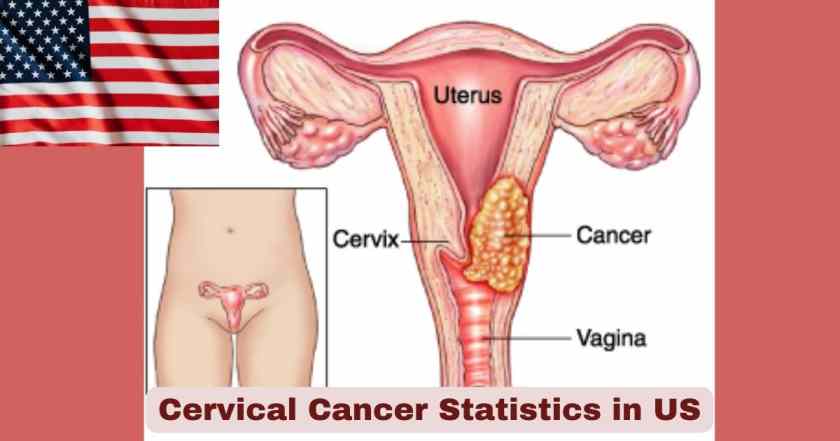
Cervical Cancer in the US 2026
Cervical cancer remains one of the most preventable yet persistently deadly cancers affecting women across the United States. Despite decades of medical advancement, widespread availability of the HPV vaccine, and the proven effectiveness of routine Pap tests and HPV screening, thousands of American women are still diagnosed with and die from this disease every single year. What makes these numbers especially striking is that the science to prevent most cervical cancer cases has been in our hands for nearly two decades — and yet significant gaps in access, awareness, and follow-through continue to let this cancer claim lives that could otherwise be saved.
As of today in 2026, the most recent confirmed federal government data — sourced directly from the National Cancer Institute (NCI) SEER program, the Centers for Disease Control and Prevention (CDC), and the U.S. Cancer Statistics (USCS) system — paints a detailed and sobering picture of where the United States stands on cervical cancer incidence, mortality, survival, and prevention. This article brings together the latest available verified statistics on cervical cancer in the US, broken down by incidence, death rates, stage at diagnosis, race and ethnicity, age groups, HPV vaccination coverage, and historical trends. Every data point presented here comes directly from official U.S. government health agencies and federally maintained cancer registries. Whether you are a patient, a caregiver, a healthcare provider, or a public health advocate, understanding these numbers is the first step toward reducing the burden of cervical cancer in America in 2026.
Interesting Facts About Cervical Cancer in the US 2026
| Fact | Detail |
|---|---|
| HPV causes virtually all cervical cancers | High-risk HPV strains are responsible for nearly 99% of all cervical cancer cases in the US |
| Most common age at diagnosis | Cervical cancer is most frequently diagnosed in women aged 35–44 years |
| Lifetime risk | Approximately 0.6% of women in the US will be diagnosed with cervical cancer at some point in their lifetime |
| Cervical precancer dropped dramatically | During 2008–2022, cervical precancer incidence decreased by 79% among screened women aged 20–24 — the group most likely vaccinated against HPV |
| HPV vaccine coverage in 2023 | 76.8% of US adolescents aged 13–17 received at least one dose of the HPV vaccine in 2023 |
| HPV vaccine series completion in 2024 | Only 63% of boys and girls aged 13–17 completed the HPV vaccination series in 2024, well below the Healthy People 2030 target of 80% |
| NBCCEDP screening in 2023 | The CDC’s National Breast and Cervical Cancer Early Detection Program provided cancer screening services to approximately 129,000 women in the US in 2023 |
| 49,908 HPV-associated cancers annually | Based on 2018–2022 CDC data, an estimated 49,908 new HPV-associated cancer cases occur in the US each year; cervical cancer is the most common HPV-linked cancer among females |
| 36,400 cancers preventable by 9-valent HPV vaccine | Of all annual HPV-associated cancers, an estimated 36,400 could be prevented by the 9-valent HPV vaccine |
| Cervical cancer death rate since 1999 | From 1999 to 2023, death rates from cervical cancer in the US have steadily declined, driven largely by expanded Pap test use |
| Cervical cancer varies two-fold by state | Incidence rates range from as low as 5 per 100,000 women in Massachusetts, New Hampshire, and Connecticut to ≥10 per 100,000 in Texas, Kentucky, West Virginia, Oklahoma, and Puerto Rico |
| Black women bear disproportionate mortality | Nationally, Black women are more than one and a half times as likely to die from cervical cancer as white women |
Source: National Cancer Institute (NCI) SEER Program — seer.cancer.gov; CDC Cervical Cancer Statistics — cdc.gov; CDC MMWR 2025; CDC HPV-Associated Cancers Brief, December 2025; CDC Cancer Trends Progress Report 2024; CDC NCCDPHP — August 2025
The collection of facts above highlights both remarkable progress and persistent, urgent gaps in cervical cancer prevention and control in the United States as of 2026. The 79% drop in cervical precancers among vaccinated young women is one of modern public health’s most striking success stories — a real-world demonstration that the HPV vaccine works. Just as compelling is the finding that an estimated 36,400 cancers per year could still be prevented by the 9-valent HPV vaccine, a number that underscores how much preventable suffering remains on the table as long as vaccination coverage stays incomplete.
The disparities are equally impossible to ignore. The two-fold difference in cervical cancer incidence rates between the lowest-risk states and the highest-risk states reflects deep structural inequalities in healthcare access, insurance coverage, and screening participation. The fact that Black women are more than one and a half times as likely to die from cervical cancer compared to white women — even when controlling for some socioeconomic factors — signals a system that is failing to deliver equitable care. These are not abstract numbers; they represent real women who are not getting the screenings, vaccinations, or follow-up treatments that could save their lives.
New Cases of Cervical Cancer in the US 2026
| Metric | Data |
|---|---|
| Estimated new cervical cancer cases in 2025 | 13,360 |
| Estimated new cervical cancer cases in 2024 | 13,820 (ACS estimate) |
| Confirmed new cases in 2022 (CDC/USCS) | 12,960 |
| Rate of new cases (2018–2022, age-adjusted) | 7.7 per 100,000 women per year |
| Cervical cancer as % of all new cancer cases | 0.7% |
| Most common age group at diagnosis | Women aged 35–44 years |
| Proportion diagnosed at localized stage | 41.6% of all cervical cancer cases |
Source: NCI SEER Cancer Stat Facts: Cervical Cancer — seer.cancer.gov (2025); CDC NCCDPHP — cdc.gov/nccdphp (August 2025); American Cancer Society Cancer Facts & Figures 2025
The data in this table makes clear that new cervical cancer diagnoses in the US remain stubbornly above 13,000 per year in 2025 projections, even as screening tools and prevention strategies continue to improve. The confirmed 12,960 cases in 2022, as reported through the CDC’s U.S. Cancer Statistics system, represents the most recent finalized count and reflects a slight year-over-year fluctuation consistent with gradual long-term decline. The age-adjusted incidence rate of 7.7 per 100,000 women, calculated from 2018–2022 data, has dropped substantially from the 13.89 per 100,000 recorded back in 1975, reflecting the cumulative impact of widespread Pap test screening over five decades.
One of the most clinically important findings in this data is that only 41.6% of cervical cancer cases are caught at the localized stage — meaning fewer than half of diagnoses happen early enough to benefit from the best survival outcomes. This suggests that despite the availability of effective screening, a large proportion of women are either not being screened regularly, are missing follow-up care after abnormal results, or lack the health insurance and access needed to get timely evaluation. The fact that women aged 35–44 represent the most commonly diagnosed age group is a reminder that cervical cancer most often strikes women in the middle of their working and family lives, making prevention and early detection not just a health priority but an economic and social one.
Cervical Cancer Death Rate in the US 2026
| Metric | Data |
|---|---|
| Estimated deaths from cervical cancer in 2025 | 4,320 |
| Confirmed cervical cancer deaths in 2023 (CDC) | 4,162 |
| Death rate (2019–2023, age-adjusted) | 2.2 per 100,000 women per year |
| Cervical cancer deaths as % of all cancer deaths | 0.7% |
| Age group with highest proportion of deaths | Women aged 55–64 years |
| Death rate trend from 1999 to 2023 | Consistent decline driven by expanded Pap test screening |
Source: NCI SEER Cancer Stat Facts: Cervical Cancer — seer.cancer.gov (2025); CDC NCCDPHP Health and Economic Benefits of Cervical Cancer Interventions — cdc.gov (August 2025)
Cervical cancer continues to kill more than 4,000 American women annually despite being one of the most preventable cancers known to medicine. The age-adjusted death rate of 2.2 per 100,000 women — based on 2019–2023 mortality data — marks a dramatic improvement from the 5.55 per 100,000 recorded in 1975, a decline of over 60% in five decades. This long-term trend is a direct result of the adoption of routine cervical cancer screening across the country. When caught early, cervical cancer is highly treatable. The fact that women aged 55–64 carry the highest proportion of cervical cancer deaths is medically significant and somewhat counterintuitive, given that screening recommendations extend through age 65 for most women.
What this mortality pattern suggests is a dangerous gap between the age at which cancer is typically diagnosed (35–44) and the age at which it most often claims lives (55–64). This gap may reflect inadequate follow-through in treatment, delayed diagnosis in some cases, or cancers that progress despite initial management. It also points to a need for continued screening vigilance even for women approaching the age at which guidelines have historically recommended stopping. The consistent decline in the cervical cancer death rate since 1999 is encouraging, but the continued loss of over 4,000 lives per year to a largely preventable disease underlines how much work remains to be done in ensuring all women have access to screening, follow-up care, and treatment.
Cervical Cancer Survival Rates in the US 2026
| Stage at Diagnosis | 5-Year Relative Survival Rate | % of Cases Diagnosed at This Stage |
|---|---|---|
| Localized (cancer confined to cervix/uterus) | 91.4% | 41.6% |
| Regional (spread to nearby lymph nodes) | 60.1% | 35.0% |
| Distant (spread to other organs) | 19.0% | 14.2% |
| All stages combined | 68.0% | 100% |
Source: NCI SEER Cancer Stat Facts: Cervical Cancer — seer.cancer.gov; Based on women diagnosed 2015–2021, SEER 21 registries (excluding Illinois)
The stage-by-stage survival data tells perhaps the most important story in all of cervical cancer statistics: early detection saves lives at a rate that is impossible to overstate. Women diagnosed with localized cervical cancer — cancer that has not yet spread beyond the cervix or uterus — have a 5-year survival rate of 91.4%, meaning the overwhelming majority of these women will still be alive five years after diagnosis. By contrast, women whose cancer has spread to distant parts of the body face a 5-year survival rate of just 19% — nearly five times lower. The difference between a 91% chance of surviving and a 19% chance is, in most cases, simply a matter of when the cancer was found.
This is why the fact that only 41.6% of cases are caught at the localized stage is so troubling. More than 58% of women are diagnosed after the cancer has already spread — at the regional or distant stage — where survival odds drop sharply and treatment becomes far more complex, costly, and physically demanding. The overall 5-year survival rate of 68.0% for all stages combined, while an improvement over historical figures, reflects a system where too many women are still arriving at diagnosis too late. Improving this number requires not just better treatments but dramatically better access to regular cervical cancer screenings and timely follow-up care for all women.
Cervical Cancer Incidence Rates by Race and Ethnicity in the US 2026
| Race / Ethnicity | Incidence Rate Notes (per 100,000 women, age-adjusted) |
|---|---|
| Non-Hispanic American Indian / Alaska Native (AI/AN) | Highest incidence rate among all racial/ethnic groups — NCI & CDC confirmed |
| Hispanic women | Among the highest rates for cervical cancer incidence in the US |
| Non-Hispanic Black women | Highest rate for squamous cell carcinoma (SCC) subtype; also among highest overall incidence |
| Non-Hispanic White women | Below national average incidence; highest rates for adenocarcinoma (ADC) subtype alongside Hispanic women |
| Asian / Pacific Islander women | Lowest incidence rates among major racial/ethnic groups tracked |
| Overall US rate (2018–2022) | 7.7 per 100,000 women per year (age-adjusted) |
Source: NCI SEER Cancer Stat Facts — seer.cancer.gov (2025); CDC NCCDPHP — cdc.gov (August 2025); NCI DCEG Research on Racial and Ethnic Disparities in Cervical Cancer, 2022
The racial and ethnic disparities in cervical cancer incidence in the US are striking and deeply tied to structural inequalities in healthcare access, screening participation, insurance coverage, and socioeconomic status. Non-Hispanic American Indian and Alaska Native women and Hispanic women bear the highest incidence burdens, according to the CDC and NCI’s most recent data. For Black women, the pattern is particularly complex: while overall squamous cell carcinoma incidence rates are among the highest nationally, Black women have the lowest incidence of adenocarcinoma (ADC) — yet also experience the highest ADC mortality rates, driven by profound survival disparities after diagnosis. This paradox suggests that once Black women are diagnosed with adenocarcinoma, they receive less effective or less timely treatment compared to other groups.
The variation in incidence rates across racial and ethnic groups is not explained by biology alone. Research consistently shows that county-level income and education levels are inversely associated with squamous cell carcinoma incidence rates in all racial and ethnic groups — meaning that poorer communities and less-educated communities have higher rates. This points directly to systemic factors: fewer women in underserved communities are getting screened regularly, fewer are receiving follow-up care after abnormal results, and fewer have access to the HPV vaccine and other preventive tools. Closing these disparities is one of the central challenges of cervical cancer control in the United States in 2026.
Cervical Cancer Death Rates by Race and Ethnicity in the US 2026
| Race / Ethnicity | Mortality Pattern (age-adjusted) |
|---|---|
| Non-Hispanic Black women | Highest overall cervical cancer death rates; more than 1.5× more likely to die from cervical cancer than white women nationally |
| Non-Hispanic American Indian / Alaska Native | Among the highest cervical cancer death rates nationally |
| Hispanic women | Above-average cervical cancer mortality compared to non-Hispanic white women |
| Non-Hispanic White women | Below-average cervical cancer death rate nationally |
| Asian / Pacific Islander women | Lowest cervical cancer death rates among all major groups |
| US overall death rate (2019–2023) | 2.2 per 100,000 women per year (age-adjusted) |
Source: NCI SEER Cancer Stat Facts — seer.cancer.gov (2025); CDC NCCDPHP — cdc.gov (August 2025); NCI DCEG Racial and Ethnic Disparities Research, published in Journal of Clinical Oncology, 2022–2023; Human Rights Watch Report on Cervical Cancer Disparities, 2022
The cervical cancer mortality data broken down by race and ethnicity reveals one of the most persistent and troubling health equity failures in the US healthcare system. Black women nationally are more than one and a half times more likely to die from cervical cancer than white women — a disparity that cannot be explained by cancer biology alone. Research from the NCI’s Division of Cancer Epidemiology and Genetics, published in the Journal of Clinical Oncology, found that Black women have the highest mortality rates for cervical adenocarcinoma despite having the lowest incidence of this subtype. The finding points directly to survival disparities after diagnosis — Black women with regional and distant-stage adenocarcinoma experience significantly lower 5-year survival rates than women from all other racial and ethnic groups, even at comparable stages.
The intersection of race and geography amplifies these disparities further. In rural areas, Black women face a cervical cancer incidence rate nearly 50% higher than white women in the same regions. Data from Georgia showed that from 2014 to 2018, Black women had cervical cancer mortality rates almost 1.5 times as high as white women. Among Black women over age 70, the disparity becomes even sharper — they are nearly three times as likely to die from cervical cancer as their white counterparts of the same age. These numbers reflect the compounding effects of structural racism, lower rates of insurance coverage, reduced access to healthcare facilities, and a healthcare system that has consistently underserved these communities.
Cervical Cancer by Stage at Diagnosis in the US 2026
| Stage at Diagnosis | % of Cervical Cancer Cases |
|---|---|
| Localized (confined to cervix/uterus) | 41.6% |
| Regional (spread to nearby lymph nodes or tissues) | 35.0% |
| Distant (spread to distant organs) | 14.2% |
| Unknown / unstaged | 9.2% |
Source: NCI SEER Cancer Stat Facts: Cervical Cancer — seer.cancer.gov; Based on 2015–2021 SEER 21 registry data
The stage distribution at the time of cervical cancer diagnosis in the United States remains one of the most critical indicators of how well the healthcare system is functioning for women’s health. With just 41.6% of cervical cancer cases detected at the localized stage — when survival rates are highest at 91.4% — the United States still has a significant proportion of women whose cancer goes undetected until it has already spread. Nearly 35% of cases are not found until the regional stage, and another 14.2% are not discovered until the cancer has spread to distant organs — a stage at which the 5-year survival rate drops to just 19%.
These numbers are a direct reflection of screening participation rates, access to healthcare, and how well follow-up care works for women with abnormal results. Cervical cancer develops slowly in most cases, passing through detectable precancerous stages before becoming invasive cancer — which is precisely why Pap tests and HPV co-testing are so effective at catching it early. When women cannot access regular screenings, cannot afford follow-up procedures, or fall through the cracks of an overburdened healthcare system, their cancer progresses to later stages unnecessarily. The 9.2% of cases with unknown or unstaged diagnoses also represents a critical gap in data and care — women who may not have received adequate evaluation or documentation at the time of diagnosis.
HPV Vaccination Coverage in the US 2026
| Metric | Data |
|---|---|
| Adolescents aged 13–17 who received ≥1 HPV vaccine dose (2023) | 76.8% |
| Adolescents aged 13–15 who received HPV vaccine as recommended (2023) | 57.3% |
| Adolescents aged 13–17 up-to-date on HPV vaccination series (2024) | 63% |
| Adolescents aged 13–15 completing HPV vaccination series (2024) | 59% |
| Healthy People 2030 target for HPV vaccine completion | 80% |
| Children aged 9–17 who received ≥1 HPV dose (2022) | 38.6% (parent-reported, NHIS) |
| Reduction in vaccine-type HPV infections in 14–19-year-old females (12 years post-introduction) | 88% |
| Cervical precancer decrease in screened women aged 20–24 (2008–2022) | 79% |
Source: CDC Cancer Trends Progress Report — progressreport.cancer.gov (2024); CDC MMWR 74(6):96–101, February 2025; CDC HPV Vaccine Safety and Effectiveness — cdc.gov; NCI Cancer Trends Progress Report HPV Immunization 2024; Leading Cancer Research Centers NIS-Teen Data, 2024–2025
HPV vaccination is the single most powerful preventive tool available against cervical cancer in the United States, and the data on coverage reflects both remarkable progress and a frustrating shortfall from where coverage needs to be. The 76.8% of adolescents aged 13–17 who received at least one HPV vaccine dose in 2023 represents a major achievement compared to the program’s early years, and the 88% reduction in vaccine-type HPV infections among 14–19-year-old females within 12 years of the vaccine’s introduction is one of the most dramatic public health wins recorded in modern US history. The 79% drop in cervical precancer incidence among screened women aged 20–24 from 2008 to 2022 is direct evidence that the vaccine works exactly as intended at the population level.
However, the gap between the current 63% series completion rate in 2024 and the Healthy People 2030 target of 80% is significant and consequential. The state-level variation is particularly stark — HPV vaccine initiation rates range from Massachusetts at 79.8% to Mississippi at 39.1%, a difference that will directly translate into future disparities in cervical cancer rates between states. Children without health insurance remain the least vaccinated group, with only 20.7% receiving even one HPV vaccine dose, compared to 41.5% among those with private insurance. This insurance-driven disparity in vaccination coverage is one of the most preventable drivers of future cervical cancer deaths in the United States, and addressing it must be a central goal of any national cervical cancer elimination strategy going forward.
Cervical Cancer Screening Statistics in the US 2026
| Metric | Data |
|---|---|
| NBCCEDP women screened in 2023 | Approximately 129,000 women |
| US Preventive Services Task Force (USPSTF) new recommendation (December 2024) | Now includes self-collected HPV tests beginning at age 30 as a valid screening method |
| Self-collected HPV test effectiveness | Found to be equally effective as clinician-collected samples (USPSTF, December 2024) |
| Women with lower incomes screened less often | Confirmed by CDC — women with lower incomes, less education, and no health insurance are screened at significantly lower rates |
| Rate for new cases highest in | Non-Hispanic AI/AN women and Hispanic women — consistent with lower screening participation rates |
Source: CDC NCCDPHP Cervical Cancer Interventions — cdc.gov (August 2025); US Preventive Services Task Force Recommendation, December 2024; CDC Cervical Cancer Statistics — cdc.gov (June 2025)
The landscape of cervical cancer screening in the US saw an important policy update in December 2024, when the U.S. Preventive Services Task Force (USPSTF) released updated guidance that now includes self-collected HPV tests as a recommended screening method for women starting at age 30. This recommendation — finding self-collection to be just as effective as clinician-collected samples — has the potential to significantly expand screening participation among women who face barriers to traditional clinical settings, including those in rural areas, those without insurance, or those who face logistical challenges in getting to a healthcare provider. The CDC’s National Breast and Cervical Cancer Early Detection Program (NBCCEDP) continues to play a critical role in serving the most underserved populations, reaching approximately 129,000 women with free or low-cost cervical cancer screening in 2023 alone.
Yet the persistent finding that women with lower incomes, less education, and no health insurance are screened at significantly lower rates remains one of the central challenges in cervical cancer prevention in the US. The NBCCEDP, while vital, serves only a fraction of the women who need access to free screening. The introduction of self-collected HPV testing as an accepted screening method holds genuine promise for bridging some of these access gaps — particularly for women who have historically been the hardest to reach through traditional healthcare channels. Combined with continued expansion of HPV vaccination coverage, targeted outreach, and health system reforms that improve insurance coverage, these tools offer a credible path toward significantly reducing cervical cancer incidence and mortality in the United States in the years ahead.
Historical Trend of Cervical Cancer Incidence and Mortality in the US 2026
| Year / Period | Incidence Rate (per 100,000 women, age-adjusted) | Death Rate (per 100,000 women, age-adjusted) | 5-Year Survival Rate |
|---|---|---|---|
| 1975 | 13.89 | 5.55 | ~70% |
| 1990 | 10.24 | 3.66 | ~74% |
| 2000 | 7.44 | 2.78 | ~74% |
| 2010 | ~6.73 | ~2.37 | ~68% |
| 2018–2022 average | 7.7 | — | — |
| 2019–2023 average | — | 2.2 | — |
| 2015–2021 (survival) | — | — | 68.0% |
| 2025 projected (ACS/NCI) | Consistent with ~7.7 range | Consistent with ~2.2 range | 68.0% |
Source: NCI SEER Cancer Stat Facts — seer.cancer.gov; SEER 8 and SEER 12 registry data, 1975–2022; American Cancer Society projections, 2025
The long-term historical data on cervical cancer in the United States tells a story of significant, sustained progress driven primarily by the widespread adoption of cervical cancer screening beginning in earnest in the 1960s and 1970s. From a peak incidence rate of 13.89 per 100,000 women in 1975, the rate declined steadily to 7.44 per 100,000 by 2000 and has continued to hover in the 7.7 range based on 2018–2022 data. The death rate dropped even more dramatically — from 5.55 per 100,000 in 1975 to 2.2 per 100,000 in the 2019–2023 period — reflecting both more early diagnoses and improvements in treatment options over the decades. This represents one of the most sustained cancer control successes in American public health history.
However, the data also reveals that progress has slowed in recent decades. The incidence rate dropped sharply from the 1970s through the early 2000s but has plateaued in the 7–8 per 100,000 range for the past several years, suggesting that the gains from Pap test screening may be approaching a ceiling without additional interventions. The next significant reduction in cervical cancer incidence is expected to come from HPV vaccination — which only began in 2006 — as vaccinated cohorts of girls and young women age into the years when cervical cancer most commonly appears. The dramatic 79% reduction in cervical precancers already observed among vaccinated 20–24-year-olds gives strong reason to expect meaningfully lower cervical cancer incidence rates in the United States over the next one to two decades, as the full impact of national vaccination programs becomes visible in population-level cancer statistics.
Disclaimer: This research report is compiled from publicly available sources. While reasonable efforts have been made to ensure accuracy, no representation or warranty, express or implied, is given as to the completeness or reliability of the information. We accept no liability for any errors, omissions, losses, or damages of any kind arising from the use of this report.