
Cannes Film Festival in 2026
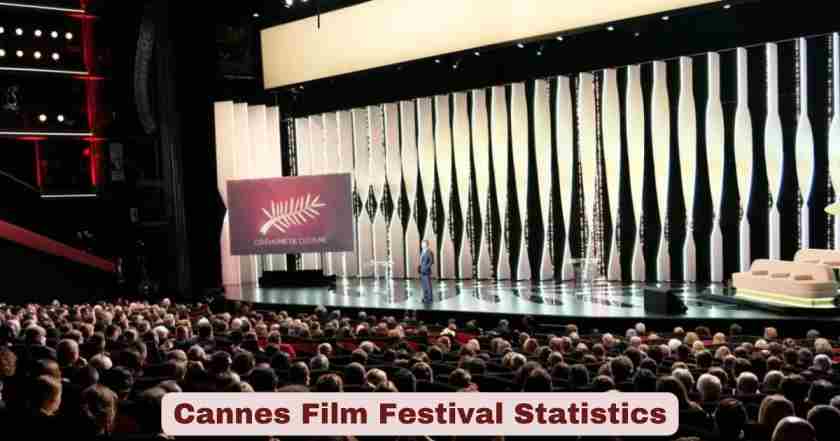
The Cannes Film Festival — formally known as the Festival de Cannes — is the most prestigious and closely watched film event on the planet, and in 2026, it returns for its 79th edition from May 12 to May 23 at the iconic Palais des Festivals et des Congrès on the sun-drenched seafront promenade of La Croisette in Cannes, France. Since its formal inauguration on September 20, 1946, when filmmakers from 21 nations arrived at a former casino on the Côte d’Azur to celebrate cinema after six years of war, the festival has grown from a small postwar cultural gathering into a global institution that simultaneously serves as the world’s most glamorous film showcase, its largest professional film market, and its most influential annual barometer of cinematic achievement. For 12 days every May, the otherwise quiet seaside resort of Cannes — a city of roughly 70,000 residents — swells to over 200,000 people, drawing filmmakers, studio executives, film critics, sales agents, distributors, buyers, and countless cinephiles from every corner of the world. The red carpet steps of the Palais have become one of the most photographed and recognized architectural features in all of film culture.
The festival operates on two distinct but intertwined levels. On the artistic side, the Official Selection — curated by festival president Iris Knobloch and general delegate Thierry Frémaux — typically includes around 22 films in the Main Competition competing for the Palme d’Or, cinema’s most coveted prize, alongside dozens more in parallel sections including Un Certain Regard, Cannes Première, Out of Competition screenings, the Short Film Competition, and multiple independent sidebars. On the commercial side, the Marché du Film (Film Market) — founded in 1959 and now the largest film market in the world — runs simultaneously in the bowels of the Palais and along the Croisette, hosting thousands of industry professionals who buy, sell, and co-produce films and projects across more than 140 countries. The 2026 edition is particularly significant: it marks the first time in the festival’s 79-year history that a South Korean filmmaker — Park Chan-wook — will serve as jury president, and two cinematic legends, Peter Jackson and Barbra Streisand, will receive Honorary Palmes d’Or at the opening ceremony. The Official Selection will be unveiled on April 9, 2026 in Paris.
Interesting Key Facts About the Cannes Film Festival 2026
| Key Fact | Detail |
|---|---|
| 2026 Edition Number | 79th annual Cannes Film Festival |
| 2026 Dates | May 12 to May 23, 2026 — 12 days |
| Marché du Film 2026 Dates | May 12 to May 20, 2026 |
| Venue | Palais des Festivals et des Congrès, La Croisette, Cannes, France |
| Jury President | Park Chan-wook (South Korea) — first Korean jury president in festival history |
| Second Asian jury president ever | Park Chan-wook follows Wong Kar-wai (2006) as only the second Asian to preside over the competition jury |
| Opening film | The Electric Kiss (La Vénus Électrique) by Pierre Salvadori — French period comedy set in 1928 Paris |
| Opening ceremony host | Eye Haïdara — Franco-Malian actress; succeeds Laurent Laffitte |
| Honorary Palme d’Or recipients | Peter Jackson (New Zealand) and Barbra Streisand (USA) |
| Honorary Palme d’Or — previous recipients | Agnès Varda, Marco Bellocchio, Jodie Foster, Meryl Streep, Robert De Niro (2025) |
| Official Selection announcement | April 9, 2026 — press conference in Paris by Iris Knobloch and Thierry Frémaux |
| Cannes festival founded | September 20, 1946 — at the former Casino of Cannes; 21 nations represented |
| Palme d’Or first awarded | 1955 — introduced by the festival’s organizing committee; replaces the Grand Prix du Festival |
| Palme d’Or material | Made from 18-carat gold (75% pure gold, 25% silver); incrusted with 167 diamonds since 2017; manufactured by Swiss jeweller Chopard |
| Marché du Film — Country of Honour 2026 | Japan — 5th Country of Honour after Brazil (2025), Switzerland (2024), Spain (2023), India (2022) |
| Japan’s annual film output | Produces nearly 1,300 films per year; attracts over 189 million cinema admissions |
| Festival population surge | Cannes grows from ~70,000 residents to over 200,000 people during the 12 festival days |
| Record women directors (2025) | The 2025 edition featured a record 45% of films directed by women |
| Longest standing ovation record | 22 minutes — Pan’s Labyrinth (2006) |
| Highest-grossing Palme d’Or winner | Parasite (2019) — worldwide box office: $262 million |
| Ken Loach — most Main Competition films | 15 films in Main Competition — the all-time record |
| Festival not held since 1946 | Only once — 2020 — when it was cancelled due to the COVID-19 pandemic; the first cancellation since 1968 |
Source: Festival de Cannes official website (festival-cannes.com); Marché du Film official website (marchedufilm.com); Variety (February 26, 2026 and March 2026); Screen Daily (March 2026); Deadline (February–March 2026); The Wrap (April 2, 2026); Wikipedia Cannes Film Festival and List of Cannes Film Festival Records (current as of the 78th edition, May 2025); Cineuropa (February 26, 2026)
The sheer density of firsts and records attached to the 2026 Cannes Film Festival makes this edition one of the most anticipated in recent memory — even before a single competition film has been announced. Park Chan-wook’s appointment as jury president is genuinely historic: in 79 years of Cannes, no South Korean filmmaker has ever held this position, and only once before has an Asian filmmaker done so, when Hong Kong director Wong Kar-wai presided in 2006. Park arrives at the role with one of the most decorated personal histories with the festival of any living director — winning the Grand Prix for Oldboy (2004), the Jury Prize for Thirst (2009), and Best Director for Decision to Leave (2022) — and his presence at the head of the jury sends a clear message about where world cinema is currently finding its most vital creative energy. The Honorary Palme d’Or for Peter Jackson, director of the Lord of the Rings trilogy, represents the festival’s recognition of commercial epic cinema’s power to shape global culture; the simultaneous honour for Barbra Streisand — actress, director, singer, and one of the most multifaceted careers in American entertainment — adds a dimension of personal artistic legacy rarely seen on the Cannes stage.
For the broader Cannes statistics picture, the numbers that frame the festival’s scale are staggering. A 70,000-person city swelling to 200,000 for 12 days. A Palme d’Or crafted from 18-carat gold with 167 diamonds by Switzerland’s Chopard. A film that won the top prize in 2019 — Parasite — going on to earn $262 million globally and win Best Picture at the Oscars, the first foreign-language film ever to do so. A record that has stood for 22 minutes — the standing ovation for Pan’s Labyrinth in 2006 — that still hasn’t been broken. And a festival that was cancelled only once in 80 years — in 2020 due to COVID-19 — the first cancellation since the political upheaval of 1968. These are the numbers that give the Cannes Film Festival 2026 its context.
Cannes Film Festival 2026 — Edition Details and Key Appointments
| Detail | Information | Source |
|---|---|---|
| Edition number | 79th annual festival | Festival de Cannes official |
| Festival dates | May 12–23, 2026 | Festival de Cannes; Screen Daily |
| Festival duration | 12 days | Festival de Cannes official |
| Marché du Film dates | May 12–20, 2026 | Marché du Film official |
| Jury President | Park Chan-wook — South Korean director, screenwriter, producer | Variety, February 26, 2026; Cannes official |
| Park Chan-wook Cannes history | Grand Prix (Oldboy, 2004); Jury Prize (Thirst, 2009); Best Director (Decision to Leave, 2022) | Hollywood Reporter, February 26, 2026 |
| First Korean jury president | Yes — first in the festival’s 79-year history | Variety; Deadline; IndieWire, February 26, 2026 |
| Park succeeds | Juliette Binoche (jury president 2025) | Variety; Deadline |
| Previous jury president (2025) | Juliette Binoche, awarded Palme d’Or to Jafar Panahi’s It Was Just an Accident | IMDb; Festival de Cannes |
| Festival President | Iris Knobloch | Festival de Cannes; Screen Daily |
| General Delegate | Thierry Frémaux | Festival de Cannes |
| Ceremony host | Eye Haïdara — Franco-Malian actress; follows Laurent Laffitte (2025) | Festival de Cannes official |
| Opening film | The Electric Kiss (La Vénus Électrique) — directed by Pierre Salvadori | The Wrap, April 2, 2026; Festival de Cannes |
| Opening film genre | French period comedy, set in Paris, 1928 | The Wrap, April 2, 2026 |
| Opening premiere venue | Grand Théâtre Lumière, Palais des Festivals | Festival de Cannes |
| Honorary Palme d’Or 1 | Peter Jackson (New Zealand) — Lord of the Rings, King Kong, The Hobbit | Festival de Cannes official |
| Honorary Palme d’Or 2 | Barbra Streisand (USA) — actress, singer, director, producer | Festival de Cannes official |
| Official Selection Announcement | April 9, 2026, 11:00am Paris time — press conference in Paris | Screen Daily; Variety, March 2026 |
| Marché du Film Country of Honour | Japan — co-hosts Opening Night, animation and genre cinema focus | Marché du Film official; Deadline October 28, 2025 |
Source: Festival de Cannes official website; Variety (February 26 and March 2026); Deadline (February–March 2026 and October 28, 2025); Screen Daily (March 2026); Hollywood Reporter (February 26, 2026); IndieWire (February 26, 2026); The Wrap (April 2, 2026); Marché du Film official website
The 2026 Cannes Film Festival has assembled a leadership lineup that rewards close reading. Eye Haïdara — a Franco-Malian actress best known to French audiences for films including À toute allure and Les Femmes du square — becomes only the latest in a line of French actresses and public figures who have carried the opening and closing ceremonies, following Laurent Laffitte, Doria Tillier, Virginie Efira, Chiara Mastroianni, and Camille Cottin. The choice of Pierre Salvadori’s The Electric Kiss as the opening film reflects the festival’s traditional preference for opening with a film that is formally accessible, tonally celebratory, and stylistically accomplished — a French period comedy is, in many ways, a perfect cinematic aperitif for 12 days of rigorous competition. Salvadori himself captured the feeling precisely: “Cannes celebrates everything I love about cinema — direction, boldness, freedom and filmmakers.” The Grand Théâtre Lumière, where the opening premiere will screen, holds over 2,300 seats, making it one of the largest and most electrically charged single-screening environments in world cinema.
The dual Honorary Palme d’Or ceremony for Peter Jackson and Barbra Streisand adds an unusual gravity to the opening night. Both figures represent something almost impossible to replicate in contemporary cinema: careers of total artistic and commercial command across decades. Jackson’s trilogy transformed blockbuster filmmaking and New Zealand’s position in global cinema. Streisand’s career — spanning six decades across acting, directing, producing, and recording — has produced more No. 1 albums than any other recording artist in history, alongside two Academy Award nominations as director. Their presence together on the Cannes stage in May 2026 will make for one of the most historically loaded opening nights in the festival’s nearly eight-decade history.
Cannes 2025 (78th Edition) — The Most Recent Winners and Key Statistics
| Award | Winner | Details |
|---|---|---|
| Palme d’Or | It Was Just an Accident — Jafar Panahi (Iran) | Panahi’s first major win after 22+ years absent from Cannes due to travel ban; political thriller about former detainees |
| Grand Prix | Sentimental Value — Joachim Trier (Norway) | Starring Renate Reinsve and Stellan Skarsgård |
| Jury Prize (tie) | Sirat — Oliver Laxe (Spain/Morocco) AND Sound of Falling — Mascha Schilinski (Germany) | Tied award |
| Best Director | The Secret Agent — Kleber Mendonça Filho (Brazil) | Double recognition for this film |
| Best Actor | Wagner Moura — The Secret Agent (Brazil) | |
| Best Actress | Nadia Melliti — The Little Sister (La Petite Dernière) | First-time actress |
| Best Screenplay | Jean-Pierre and Luc Dardenne — Young Mothers (The Young Mother’s Home) | Dardennes’ second Screenplay prize; first was Lorna’s Silence |
| Special Jury Prize | Resurrection — Bi Gan (China) | |
| Caméra d’Or (Best First Film) | The President’s Cake — Hasan Hadi (Iraq) | |
| Short Film Palme d’Or | I’m Glad You’re Dead Now — Tawfeek Barhom | |
| Un Certain Regard Top Prize | The Mysterious Gaze of the Flamingo — Diego Céspedes (Chile) | Céspedes’ 1st Film |
| Un Certain Regard Jury Prize | A Poet — Simón Mesa Soto (Colombia) | |
| Un Certain Regard Best Director | Once Upon a Time in Gaza — Arab & Tarzan Nasser | |
| FIPRESCI Prize (Competition) | The Secret Agent — Kleber Mendonça Filho | |
| Golden Eye Documentary | Imago — Deni Oumar Pitsaev | |
| Queer Palm | Little Sister — Hafsia Herzi | |
| Jury President (2025) | Juliette Binoche | Jury included: Halle Berry, Payal Kapadia, Jeremy Strong, Alba Rohrwacher, Hong Sangsoo, Dieudo Hamadi, Leïla Slimani, Carlos Reygadas |
| Films in Competition | 22 films | 2025 competition |
| Record women directors in selection | 45% of films directed by women — a festival record | Wikipedia; Cannes Film Festival |
| Neon’s Palme d’Or streak | 6 consecutive Palme d’Or wins for North American distributor Neon | THR India; Variety |
Source: Festival de Cannes official winners list (festival-cannes.com); Wikipedia 2025 Cannes Film Festival; Variety (May 25, 2025); THR India (June 2025); Sortiraparis; Numero.com
The 78th Cannes Film Festival in May 2025 delivered one of the most politically resonant Palme d’Or moments in the award’s 70-year history. Jafar Panahi’s It Was Just an Accident winning the top prize was extraordinary on every level: a filmmaker who had been barred from leaving Iran for 14 years, sentenced to six years in prison for “propaganda against the regime” in 2010, placed under house arrest, then arrested again in 2022 and released only after a hunger-and-thirst strike in 2023 — finally receiving cinema’s highest honour from jury president Juliette Binoche, a longtime public defender of his work, presented to him on stage by Cate Blanchett. Panahi’s acceptance speech — “Let us join forces… No one should dare tell us what kind of clothes we should wear, what we should say” — became one of the most quoted moments at Cannes in years. The film was simultaneously a darkly comic thriller and a deeply personal reckoning with state violence, and Neon’s acquisition of North American rights continued the indie distributor’s remarkable run of six consecutive Palme d’Or wins — a streak without precedent in festival history.
The 2025 edition’s record of 45% of films directed by women in the Official Selection is a landmark statistic for an institution that was long criticized for its gender imbalances — as recently as 2012, the last year with no female directors in Official Competition. The Dardenne brothers winning their second Best Screenplay award (following Lorna’s Silence) added to their extraordinary legacy at the festival, which also includes two Palmes d’Or (Rosetta and The Child) and a Grand Prix (The Kid with a Bike) — making them among the most decorated figures in Cannes history. A citywide power blackout on the final day — caused by regional outage — disrupted morning screenings but failed to stop the show, with the Palais running on backup generators, in a moment that somehow perfectly underscored cinema’s essential resilience.
Cannes Film Festival Historical Statistics and Records
| Record / Historical Statistic | Detail |
|---|---|
| Festival founded | 1946 — first edition September 20, with 21 nations |
| Total editions held (as of 2026) | 79 editions (2026 is the 79th) — festival not held in 1948, 1950, 2020 |
| Palme d’Or introduced | 1955 — replaced the Grand Prix du Festival International du Film |
| Palme d’Or manufacturer | Swiss jeweller Chopard — since 1998; uses Fairmined gold since 2014 |
| Palme d’Or design | 18-carat gold (75% gold, 25% silver); set with 167 diamonds since 70th anniversary (2017) |
| Only twice-Palme d’Or directors | 10 directors/co-directors have won twice; Dardenne brothers (Rosetta 1999, The Child 2005) among them |
| Most films in Main Competition | Ken Loach — 15 films |
| Most films in competition — actress | Isabelle Huppert — 22 films in Main Competition |
| Longest standing ovation | 22 minutes — Pan’s Labyrinth (2006) |
| Longest film screened at Cannes | The War (2007) — 870 minutes (four Special Screenings); documentary by Ken Burns holds all-time record at ~14 hours |
| Highest-grossing Palme d’Or | Parasite (2019) — $262 million worldwide |
| Palme d’Or and Best Picture Oscar | 4 films have won both (as of 2025) |
| Palme d’Or and Best Foreign Language Oscar | 6 films have won both (as of 2025) |
| Palme d’Or nominated for Best Picture Oscar | 20 Palme d’Or winners nominated for Best Picture (as of 2025) |
| Female directors to win Palme d’Or | 3 — Jane Campion (The Piano, 1993); Julia Ducournau (Titane, 2021); Justine Triet (Anatomy of a Fall, 2023) |
| Only person to win Best Actress twice in a row | Barbara Hershey — 1987 (Shy People) and 1988 (A World Apart, shared) |
| First time Palme d’Or shared with cast | 2013 — Blue Is the Warmest Colour: director Abdellatif Kechiche and actresses Léa Seydoux and Adèle Exarchopoulos |
| First Asian jury president | Wong Kar-wai (2006) — Park Chan-wook is only the second |
| First South Korean Palme d’Or winner | Bong Joon-ho — Parasite (2019) |
| Festival not held since 1946 | 2020 only — COVID-19 pandemic; last prior cancellation was 1968 |
| Main Competition films | Usually 22 films per edition |
Source: Festival de Cannes official website; Palme d’Or Wikipedia page; List of Cannes Film Festival Records, Wikipedia (updated through 78th edition, May 2025); France 24 Cannes in numbers; Cineuropa (February 26, 2026)
The historical statistics of the Cannes Film Festival reveal an institution that has spent 80 years simultaneously resisting and embracing change. The Palme d’Or itself is a piece of near-mythological craftsmanship — fabricated from 18-carat Fairmined gold in a Columbian mine, encrusted with 167 diamonds cut in Geneva, and assembled by Chopard in Switzerland before being flown to Cannes and held in a secret location until the closing ceremony. Each trophy is unique: the natural rock crystal base means no two Palmes look exactly alike. The manufacturing process involves wax casting, liquid plaster molds, kiln heating to 760°C, and multiple stages of grinding and polishing — a level of craft that mirrors what the festival asks of the films it selects. Since the 70th anniversary edition in 2017, the redesigned Palme with its 167 diamonds has acquired a particularly stellar symbolism that Thierry Frémaux described as “stardust on its leaves and stalk.”
The gender statistics of the Palme d’Or remain among the festival’s most scrutinised numbers. In its 70-year history, only three female directors have ever won the top prize: Jane Campion (1993), Julia Ducournau (2021), and Justine Triet (2023) — with both Ducournau and Triet winning in consecutive editions, suggesting a genuine shift in the jury’s willingness to recognise women’s work at the highest level. As recently as 2012 — barely a decade ago — the festival had no female directors in Official Competition at all. The 2025 record of 45% female directors in the official selection is the most dramatic statistical evidence yet that the landscape is changing, even if the Palme itself has only very recently begun to reflect it.
Cannes Marché du Film 2026 — Market Statistics and Scale
| Marché du Film Metric | Detail |
|---|---|
| 2026 Marché du Film dates | May 12–20, 2026 |
| Marché du Film founded | 1959 — by Émile Natan and Bertrand Bagge, with patronage of André Malraux and Robert Le Bret |
| Marché’s self-description | “The heart of the film industry” — world’s #1 film market |
| Countries represented | Professionals from 140+ countries |
| Films and projects on offer | Approximately 4,000 films and projects |
| Market screenings | ~1,500 film market screenings |
| Industry events | 250+ industry events including panels, workshops, pitching sessions |
| Exhibitors | 600 exhibitors across Cannes; 300 companies across 200 booths in the Palais |
| International Village pavilions | Over 60 pavilions representing 90+ countries along La Croisette |
| Industry programs | Over 20 tailored industry programs |
| Market accreditation record (2023) | Over 13,500 accredited participants — broke previous record of 12,500 (2019) |
| Market attendance projection (2024) | Expected close to 15,000 (6% rise from 14,000+ in 2023) |
| Country of Honour 2026 | Japan — 5th ever Country of Honour |
| Country of Honour sequence | India (2022) → Spain (2023) → Switzerland (2024) → Brazil (2025) → Japan (2026) |
| Japan’s annual film output | Nearly 1,300 films/year; 189 million+ cinema admissions |
| Japan’s box office | Receipts exceeding JPY 200 billion (~$1.31 billion) |
| Top countries by attendance | US (~18%), France (~16–17%), UK (~10%), then Germany, Italy, Spain |
| Market deal value range | Total turnover estimated between $600 million and $1 billion per edition |
| Market Opening Night | Industry gala drawing more than 1,200 global delegates |
Source: Marché du Film official website (marchedufilm.com), About/Facts & Figures page; Wikipedia Marché du Film; Hollywood Reporter (May 2023); Deadline (May 2024 and October 28, 2025); Variety (October 2025); Screen Daily (2022 and October 2025)
The Marché du Film at Cannes is a genuinely different beast from the festival that surrounds it, and its scale has been one of the most consistent and remarkable growth stories in the global entertainment industry. From its founding in 1959 as a somewhat hidden commercial exercise — held in cinemas on the rue d’Antibes while producers negotiated deals in hotels, tolerated rather than celebrated by a festival committee focused on art — the market has grown into the world’s undisputed #1 film industry marketplace. The 13,500 accredited participants in 2023 — a new record at the time — broke the previous high of 12,500 set in 2019 just before the pandemic shuttered everything, and the market has kept growing. With 4,000 films and projects on offer from 140 countries, 1,500 screenings, 250+ industry events, and an estimated deal value of $600 million to $1 billion per edition, the nine days of the Marché represent the most concentrated global commercial event in cinema’s annual calendar.
The 2026 spotlight on Japan as Country of Honour is a logical and long-overdue recognition. Japan produces nearly 1,300 films per year — one of the world’s highest outputs — and its domestic market, drawing over 189 million admissions annually with box office receipts exceeding JPY 200 billion ($1.31 billion), is among the most resilient theatrical economies in the world at a time when cinema attendance has struggled in many markets. The Japan Pavilion, coordinated by UniJapan, has been a defining fixture in the Village International for decades. Japanese animation — globally the most commercially successful and culturally influential animation tradition on earth — will be a centrepiece of the 2026 Country of Honour program, including a collaboration with the Annecy International Animation Film Festival and an Anime Day featuring work-in-progress screenings. The market’s executive director Guillaume Esmiol disclosed that the selection was partly inspired by Japan featuring a record 10 films in the 2025 Official Selection — a remarkable surge that made Japan among the most represented Asian territories at a single Cannes in recent memory.
Cannes Film Festival Structure and Sections in 2026
| Festival Section | Key Details |
|---|---|
| Main Competition | Usually 22 films competing for the Palme d’Or; screened at the Grand Théâtre Lumière (2,300+ seats); all considered world or international premieres |
| Un Certain Regard | Second most prestigious section; focuses on emerging directors and innovative filmmaking; screened at the Salle Debussy |
| Cannes Première | Prestigious out-of-competition screenings; includes notable films not in the main race |
| Out of Competition | Major blockbusters, opening film, special screenings; screened at the Grand Théâtre Lumière |
| Midnight Screenings | Usually horror or comedy films with commercial appeal |
| Short Film Competition | Competing for the Short Film Palme d’Or and jury prizes |
| La Cinéfondation (La Cinef) | Student films from film schools worldwide; prizes: €15,000 (1st), €11,250 (2nd), €7,500 (3rd) |
| Cannes Classics | Restored and remastered films; celebrates cinema heritage (launched 2004) |
| Directors’ Fortnight (Quinzaine des cinéastes) | Independent parallel section; showcases first and second features globally |
| International Critics’ Week (Semaine de la Critique) | Founded 1962; oldest parallel section; first and second works by directors |
| ACID Section | Six fiction features and 3 documentaries for independent cinema distribution |
| Caméra d’Or | Awarded to the best first film across all festival sections — including parallel sections |
| L’Œil d’or | Documentary prize awarded across festival sections |
| Palm Dog | Unofficial, beloved prize for the best canine performance in any film at the festival |
Source: Festival de Cannes official website; Wikipedia Cannes Film Festival; Wikipedia 2025 Cannes Film Festival
The structure of the Cannes Film Festival reflects 80 years of architectural refinement — a layering of official and parallel sections that together create one of the most elaborate and multidimensional film programs of any festival in the world. The Main Competition’s 22 films represent only the visible tip of a vast iceberg: the parallel sections collectively screen dozens more films, the Marché adds thousands more, and the short films, student films, and restored classics sections add yet more layers of programming to what is already the most film-dense 12-day period in the global cinematic calendar. The La Cinéfondation prizes — cash grants of €7,500 to €15,000 for student films — represent the festival’s investment in cinema’s future: many of today’s best-known directors made their first international connections through this program.
The Directors’ Fortnight and International Critics’ Week — both independent of the festival’s official committee — were established partly as counterweights to what was perceived in the 1960s and 1970s as an overly political and commercially compromised main selection. The Critics’ Week, founded in 1962, remains the oldest and most prestigious of all festival parallel sections globally. For filmmakers, the Caméra d’Or — best first film across all sections — is one of the most coveted prizes at Cannes, because it carries no competitive pressure from established names and has launched careers including those of Mati Diop and many others. The Palm Dog, meanwhile, is entirely unofficial, awarded by an independent British jury to the festival’s best canine performance, and has somehow become one of the most widely reported prizes of any given edition — a reminder that even the world’s most serious film festival has room for joy and irreverence.
Cannes Film Festival 2026 — Expected Films and Buzz
| Film / Director | Expected Section / Status | Details |
|---|---|---|
| The Electric Kiss (La Vénus Électrique) — Pierre Salvadori | Opening Film (Out of Competition) | French period comedy; Paris, 1928; confirmed as opening film April 2, 2026 |
| James Gray’s Paper Tiger | Expected Main Competition | Stars Adam Driver, Scarlett Johansson, Miles Teller |
| Joel Coen’s Jack of Spades | Expected Main Competition | Stars Josh O’Connor and Frances McDormand |
| Terrence Malick’s The Way of the Wind | Expected Main Competition or sidebar | Major Malick project |
| Michael Cera’s Love Is Not the Answer | Expected Competition or sidebar | Cera’s directorial debut |
| Cristian Mungiu’s Fjord | Expected Competition | Romanian auteur; strong Cannes history (4 Months, 3 Weeks and 2 Days Palme d’Or 2007) |
| Pedro Almodóvar’s Bitter Christmas | Expected Competition or sidebar | Return to Cannes for Spanish master |
| Arthur Harari’s The Unknown (L’Inconnue) | Expected Competition | Stars Léa Seydoux and Niels Schneider; North American rights acquired by Neon from Pathé |
| James Gray’s Paper Tiger | Expected Competition | Stars Adam Driver, Scarlett Johansson |
| John Travolta directorial debut Propeller One-Way Night Coach | Expected screening | Adaptation of Travolta’s 1997 book; confirmed Cannes world premiere |
| Paweł Pawlikowski’s 1949 | Expected Competition | Stars Sandra Hüller |
| Asghar Farhadi’s Histoires parallèles | Expected Competition | Stars Isabelle Huppert, Catherine Deneuve, Virginie Efira |
| Official Selection announcement | April 9, 2026 — 11:00am Paris time | All expected films above are pre-announcement rumours; official lineup TBC |
Source: Wikipedia 2026 Cannes Film Festival page; Screen Daily (March 13, 2026); Numero.com (updated April 1, 2026); The Wrap (April 2, 2026); Cannes Guide; Marché du Film official (confirming Travolta world premiere)
The pre-announcement buzz around the 2026 Cannes competition is already intense — and the names being discussed represent a genuinely extraordinary year for world cinema, at least on paper. James Gray’s Paper Tiger — featuring Adam Driver, Scarlett Johansson, and Miles Teller — would mark one of the strongest American presences in the competition in years, coming from a director whose The Immigrant and Ad Astra have both competed on the Croisette. Joel Coen’s Jack of Spades, his second solo feature after The Tragedy of Macbeth, re-unites him with Frances McDormand and adds the rising British actor Josh O’Connor (Golden Globe winner for Challengers) to what promises to be a highly charged production. If confirmed, Terrence Malick’s The Way of the Wind would mark a rare Cannes appearance for one of cinema’s most elusive figures, whose recent output has been modest and closely guarded.
The rumoured Asghar Farhadi film starring Isabelle Huppert, Catherine Deneuve, and Virginie Efira would also be one of the most anticipated French-language productions in the competition in years — an Iranian director whose relationship with Cannes runs deep (he won Best Screenplay for A Separation in 2011) working with three of French cinema’s most iconic actresses. All of these films remain pre-announcement expectations as of April 3, 2026 — the official lineup will be revealed on April 9, 2026 at 11:00am Paris time. What the competition ends up containing will be determined by what films are actually ready, what Frémaux chooses to chase, and the inevitable last-minute surprises that define every Cannes announcement. The only confirmed screening element before the official announcement is the opening night film, The Electric Kiss, and the two Honorary Palme d’Or ceremonies for Peter Jackson and Barbra Streisand.
Cannes Film Festival — General Scale and Attendance Data
| Attendance / Scale Metric | Figure |
|---|---|
| Total attendees during festival | 200,000+ people over 12 days (festival + market + general public) |
| City of Cannes permanent population | ~70,000 residents |
| Population increase during festival | City swells from 70,000 to 210,000+ |
| Official accreditations (2013 benchmark) | 29,626 people officially accredited (festival + market) |
| Journalists accredited (2013) | 4,589 — up from just 700 in 1966 |
| Marché du Film accreditations (2023 record) | Over 13,500 — broke the previous record of 12,500 in 2019 |
| Marché attendance projection (2024) | Close to 15,000 (6% increase projected) |
| Marché du Film total deal value | Estimated $600 million to $1 billion per edition |
| Marché exhibiting companies | 600 exhibitors across Cannes; 300 in Palais across 200 booths |
| Festival steps (red carpet) | 24 steps on the Palais des Festivals — among the most photographed stairways in the world |
| Grand Théâtre Lumière capacity | 2,300+ seats |
| Festival budget | Approximately €20 million (~$22 million) — half from French taxpayers, half from corporate sponsors |
| Surveillance cameras in Cannes during festival | Cameras covering the Palais and the Croisette seafront 24 hours a day |
| Security personnel at Palais | Hundreds at the Palais alone — plus police, soldiers, and paramilitary gendarmes |
| Marché du Film Opening Night | Industry gala drawing 1,200+ global delegates |
| Marché industry programs | 20+ tailored programs including Goes to Cannes, Producers Network, Cannes Next, Investors Circle, Cannes Docs |
Source: Cannes Guide (cannesguide.com); Festival de Cannes official; France 24 “Cannes Film Festival in Numbers” (2019); Stephen Follows research (2014); Hollywood Reporter (May 2023); Deadline (May 2024); Variety (October 2025); Wikipedia Marché du Film; Marché du Film official (marchedufilm.com)
The physical and logistical scale of the Cannes Film Festival is almost impossible to fully convey in numbers alone, but the numbers help. A city of 70,000 people that transforms into a metropolis of 210,000 in the space of a few days. The 24 steps of the Palais des Festivals — climbed in formal attire under the gaze of photographers, fans, and the world’s media — that have become one of the most loaded and photographed ceremonial staircases anywhere. A festival budget of approximately €20 million split between French taxpayers and corporate sponsors, funding 12 days that generate incalculable value in global attention, cultural diplomacy, and industry activity. The Marché du Film generating somewhere between $600 million and $1 billion in deals during nine days alongside the festival. 4,589 journalists accredited in 2013 — more than six times the 700 who covered the festival in 1966.
What these numbers represent in human terms is a concentration of creative and commercial energy that simply doesn’t exist anywhere else in the film world for the other 353 days of the year. Cannes is not just large; it is uniquely dense, in the way that only very few human gatherings are — a place where the director of a Palme d’Or contender might share a hotel elevator with a studio executive who just closed a nine-figure deal, and both of them might see the same restored Kurosawa print that afternoon. That peculiar alchemy of art, money, and film history happening simultaneously, compressed into 12 days and the length of a seafront promenade, is why 200,000 people keep coming back to a town of 70,000 every May — and why the 79th edition in 2026 will be watched just as closely as the first.
Disclaimer: This research report is compiled from publicly available sources. While reasonable efforts have been made to ensure accuracy, no representation or warranty, express or implied, is given as to the completeness or reliability of the information. We accept no liability for any errors, omissions, losses, or damages of any kind arising from the use of this report.