
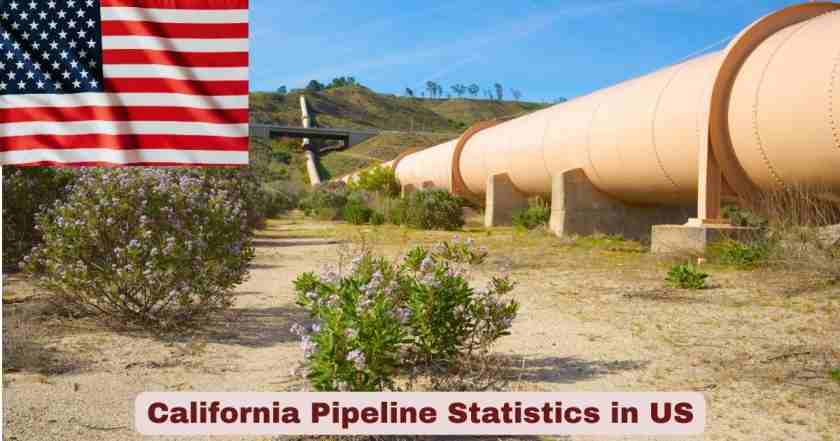
California’s Pipeline Infrastructure in America 2026
California’s pipeline infrastructure is one of the most extensive — and most consequential — energy networks in the entire United States. The state relies on an interconnected system of natural gas transmission and distribution pipelines, petroleum hazardous liquid pipelines, and underground storage facilities to fuel the daily energy needs of nearly 40 million residents, power the nation’s largest economy, and supply fuel for transportation across an area spanning more than 163,000 square miles. Regulated jointly by the California Public Utilities Commission (CPUC), the U.S. Department of Transportation’s Pipeline and Hazardous Materials Safety Administration (PHMSA), and the California Energy Commission (CEC), this pipeline network is the invisible backbone of everything from home heating and electricity generation to aviation fuel and agricultural operations. California’s two primary natural gas utilities — Pacific Gas and Electric Company (PG&E) and Southern California Gas Company (SoCalGas) — together operate the dominant share of the state’s intrastate pipeline system, with San Diego Gas & Electric (SDG&E) and several smaller utilities rounding out the regulated landscape.
What makes California’s pipeline system in 2026 particularly complex — and increasingly urgent — is the state’s rapidly shifting energy landscape. California imports over 75% of its crude oil from foreign countries and approximately 93% of its natural gas from out-of-state sources, making its pipeline infrastructure both vital and vulnerable. At the same time, two major petroleum refineries have announced or completed closures in 2025 and 2026, removing a combined 284,000 barrels per day of refining capacity and placing the state’s petroleum pipeline supply chain under unprecedented strain. Simultaneously, the state’s natural gas distribution network serves more than 11 million gas meters through over 100,000 miles of transmission and distribution pipelines. Understanding the full scope of California pipeline statistics in 2026 — mileage, capacity, safety, crude oil sources, and refinery data — is essential for energy professionals, policymakers, and the informed public.
Key California Pipeline Facts in the US 2026
The following table presents the most important and current California pipeline key facts in the US 2026, drawn exclusively from official government and utility sources including PHMSA, CEC, CPUC, EIA, and PG&E.
| Key Fact | Verified Data |
|---|---|
| Total natural gas transmission & distribution pipeline miles in California | Over 100,000 miles (utilities only; plus thousands more service line miles) |
| PG&E total natural gas pipeline system | ~50,000 miles (including ~6,700 transmission + ~42,000 distribution) |
| PG&E gas transmission pipeline miles | ~6,700 miles |
| PG&E gas distribution pipeline miles | ~42,000 miles |
| Total natural gas meters served in California | Over 11 million gas meters statewide |
| SoCalGas customers | ~5.9 million |
| PG&E gas customers | ~4.3 million |
| SDG&E gas customers | Over 800,000 |
| California crude oil refining capacity (as of January 2026) | 1,483,171 barrels per calendar day (12 operating refineries) |
| California daily oil consumption (2024) | ~1.4 million barrels per day |
| California crude oil imports — % from foreign sources (2024) | 64% foreign-sourced crude oil |
| California in-state crude oil production (2024) | ~104 million barrels (approx. 250,000–285,000 barrels/day) |
| Total refinery capacity lost by mid-2026 (2 closures) | ~284,000 barrels per day (~17% of state capacity) |
| Gasoline imports statewide by summer 2026 (CEC forecast) | Could reach 25–35% of demand; up to 50% in Northern California |
| California natural gas imported from out-of-state | ~93% of all natural gas consumed |
| Aliso Canyon underground storage capacity (post-2023 CPUC order) | 68.6 billion cubic feet (Bcf) — California’s largest storage facility |
| Interstate pipeline delivery capacity to California | ~7,187 MMcfd |
| Average pipeline incidents nationally per year (2014–2024) | ~26 serious incidents per year on average nationwide |
Source: PG&E Gas Systems page (pge.com); California Public Utilities Commission (CPUC) Natural Gas page (cpuc.ca.gov); California Energy Commission (CEC), California’s Oil Refineries data current as of January 26, 2026 (energy.ca.gov); CEC Response to Governor Newsom’s Letter, June 27, 2025 (energy.ca.gov); EIA Refinery Capacity Report, June 2025 (with data as of January 1, 2025); CRS Report R44201, DOT Federal Pipeline Safety Program, updated 2025, via Congress.gov; PHMSA Pipeline Safety Data (phmsa.dot.gov)
The sheer scale of California’s natural gas pipeline network is staggering. PG&E alone — serving Northern and Central California — operates approximately 50,000 miles of natural gas pipelines, a system that the company notes could stretch between California and Boston 15 times over. This network delivers roughly 970 billion cubic feet of natural gas per year, or approximately 2.6 billion cubic feet every single day, to 4.3 million customers across a 70,000-square mile service area. Add SoCalGas, SDG&E, and several smaller utilities, and the total reaches over 100,000 miles of transmission and distribution pipelines across the state — one of the largest intrastate natural gas delivery systems in the country. Yet beneath these impressive figures lies a critical vulnerability: California produces only a small fraction of the natural gas it consumes, and the state’s heavy dependence on foreign crude oil for its remaining petroleum refineries continues to grow with each passing year.
The California Energy Commission’s June 2025 letter to Governor Newsom laid out the stakes directly: with two major refinery closures underway, California’s gasoline import dependency could rise dramatically by summer 2026. The CEC projected that gasoline imports statewide could climb to 25–35% of total demand, with Northern California specifically at risk of reaching up to 50% import dependency. These are not hypothetical scenarios — they reflect a tangible narrowing of the state’s petroleum supply buffer that pipeline and energy infrastructure professionals are actively preparing to manage.
California Natural Gas Pipeline Infrastructure Statistics in the US 2026
Natural gas pipelines form the core of California’s energy delivery system. Regulated by the CPUC and overseen at the federal level by PHMSA, these pipelines span the state from interstate receipt points at the California border all the way to the household burner tip.
| Metric | Verified Data |
|---|---|
| Total natural gas transmission & distribution pipeline miles | Over 100,000 miles (CPUC-regulated utilities combined) |
| PG&E transmission pipeline miles | ~6,700 miles |
| PG&E distribution pipeline miles | ~42,000 miles |
| PG&E total gas system miles | ~50,000 miles |
| PG&E annual gas delivery volume | ~970 billion cubic feet/year (~2.6 Bcf/day) |
| PG&E service area size | 70,000 square miles |
| SoCalGas backbone transmission system | Major intrastate high-pressure grid serving Southern California |
| Combined PG&E + SoCalGas backbone receipt capacity | Up to 6,100 MMcfd at interstate pipeline interconnection points |
| Interstate pipeline delivery capacity into California | ~7,187 MMcfd (CPUC documented capacity) |
| % of California natural gas from out-of-state | ~93% — primarily from Rocky Mountain, Southwest, and Canadian basins |
| Number of gas meters served statewide | Over 11 million |
| Total California gas utility customers | SoCalGas ~5.9M; PG&E ~4.3M; SDG&E ~800,000+ |
| Aliso Canyon max storage capacity (post-Aug 2023 CPUC order) | 68.6 Bcf (increased from 41.2 Bcf limit imposed after 2015 leak) |
| Independent underground gas storage operators | 4: Lodi Gas Storage, Wild Goose Storage, Central Valley Storage, Gill Ranch Storage |
Source: PG&E Gas Systems page (pge.com); CPUC Natural Gas and California page (cpuc.ca.gov); CEC Natural Gas Consumption Dashboard, updated January 27, 2026 (energy.ca.gov); CPUC Summer 2024 Southern California Gas Reliability Assessment; CPUC-ordered storage capacity decision, August 2023; 2023 California Gas Report Supplement (SoCalGas and PG&E joint filing, CPUC-filed)
California’s over 100,000 miles of natural gas transmission and distribution pipelines — operated across PG&E, SoCalGas, SDG&E, and smaller utilities — make this one of the largest integrated intrastate gas systems in the nation. The backbone of the network consists of high-pressure intrastate transmission systems operated by PG&E in the north and SoCalGas in the south, which receive gas from interstate pipelines at California’s state borders. PG&E’s backbone system alone connects storage fields, large industrial users, electric generators, and local distribution networks across Northern and Central California. SoCalGas operates its own backbone transmission system (BTS) serving Southern California’s more than 5.9 million customers, the largest gas distribution utility in the United States by customer count. The Aliso Canyon underground storage facility, northwest of Los Angeles, is California’s largest gas storage asset with a working capacity of 68.6 Bcf following the CPUC’s August 2023 capacity restoration decision — a critical reliability resource that the state relies on heavily to buffer winter demand peaks and price spikes.
The 93% out-of-state dependency for natural gas is an often-overlooked aspect of California’s energy vulnerability. While electricity from solar and wind gets significant attention, natural gas continues to power a major share of the state’s electricity generation, heat residential and commercial buildings for millions of customers, and serve critical industrial and agricultural processes. That gas flows into California through a network of interstate pipelines from the Rocky Mountain region, the Southwest (including the El Paso, Kern River, and Transwestern systems), and indirectly from Canadian sources. The CPUC’s Natural Gas and California page explicitly documents that without the state’s underground storage fields, California would require significantly more interstate pipeline capacity just to meet peak winter demand — underscoring how tightly integrated the storage and pipeline systems actually are.
California Petroleum Refinery and Crude Oil Pipeline Statistics in the US 2026
California’s petroleum pipeline and refinery infrastructure is undergoing its most significant structural transformation in decades, with major capacity closures reshaping the state’s supply and infrastructure realities.
| Refinery Name | Barrels Per Day | % of CA Capacity | Status as of March 2026 |
|---|---|---|---|
| Marathon Petroleum Corp., Los Angeles Refinery | 365,000 | 24.61% | Operating |
| Chevron U.S.A. Inc., El Segundo Refinery | 269,000 | 18.14% | Operating |
| Chevron U.S.A. Inc., Richmond Refinery | 245,271 | 16.54% | Operating |
| PBF Energy, Torrance Refinery | 160,000 | 10.79% | Operating |
| PBF Energy, Martinez Refinery | 156,400 | 10.54% | Operating (post-Feb 2025 fire) |
| Valero Energy, Benicia Refinery | 145,000 | 9.78% | Closure by end of April 2026 |
| Valero Energy, Wilmington Refinery | 85,000 | 5.73% | Operating; strategic review ongoing |
| Kern Energy, Bakersfield Refinery | 26,000 | 1.75% | Operating |
| San Joaquin Refining Co., Bakersfield Refinery | 15,000 | 1.01% | Operating |
| Lunday Thagard, South Gate Refinery | 8,500 | 0.57% | Operating |
| Valero Wilmington Asphalt Refinery | 6,300 | 0.42% | Operating |
| Talley Asphalt Inc., Kern Refinery | 1,700 | 0.11% | Operating |
| TOTAL (as of January 26, 2026) | 1,483,171 bpcd | 100% | 12 operating refineries |
Source: California Energy Commission, California’s Oil Refineries — data current as of January 26, 2026 (energy.ca.gov); Phillips 66 closure announcement October 2024; Valero Benicia closure confirmation, April 2025 — via EIA and CEC
This is the most current, officially published California refinery capacity table available, with data current as of January 26, 2026 directly from the California Energy Commission. The total of 1,483,171 barrels per calendar day across 12 operating refineries reflects the post-Phillips 66 landscape, after the 139,000-barrel-per-day Wilmington refinery closed in late 2025. The Valero Benicia refinery — a 145,000-barrel-per-day facility that produces jet fuel, gasoline, and asphalt, and employs over 400 workers near San Francisco — is confirmed for closure by the end of April 2026. Together, these two closures have removed approximately 17% of California’s peak refining capacity from the market. The CEC notes that California’s daily petroleum consumption in 2024 averaged approximately 1.4 million barrels per day — meaning the remaining capacity, once Benicia closes, leaves an increasingly narrow margin for supply reliability.
The systemic consequences of these closures flow directly through California’s petroleum pipeline infrastructure. California operates as what the EIA describes as a “fuel island”: the state’s unique CARB-mandated fuel specifications mean that it cannot simply draw on refined products from other US refining regions during shortages. Pipelines connecting California to neighboring states for petroleum products are extremely limited, and the state relies heavily on marine tanker deliveries through ports including Los Angeles, Long Beach, Richmond, and Martinez to supplement refinery output. The CEC’s June 2025 letter to Governor Newsom explicitly warned that by summer 2026, California’s gasoline import dependency could reach 25–35% statewide and up to 50% in Northern California specifically — levels that would stress both pipeline distribution systems and terminal infrastructure across the region.
California Crude Oil Import Sources Statistics in the US 2026
California’s refineries are almost entirely dependent on imported crude oil, making the sourcing geography of that crude a critical dimension of the state’s pipeline and petroleum infrastructure picture.
| Source Country | Share of California Crude Oil Imports (2024) |
|---|---|
| Iraq | 21% |
| Brazil | 20% |
| Guyana | 16% |
| Ecuador | 14% |
| Saudi Arabia | Historically significant (16.4% per recent CEC data) |
| Colombia | ~7% (recent CEC data) |
| Canada | ~4% |
| Other Nations | ~Remaining % |
| California in-state crude oil production (2024) | ~104 million barrels (~25% of demand met domestically) |
| Total foreign-sourced crude oil share (2024) | 64% — up from 61% in 2023, 59% in 2022, and 56% in 2021 |
Source: California Energy Commission, Foreign Sources of Crude Oil Imports to California (CEC, energy.ca.gov); 2024 import share data cited by California Energy Transition, October 2025, sourced from CEC; CEC Annual Oil Supply Sources to California Refineries (energy.ca.gov); Stanford Law School, August 2025 analysis citing EIA production data
The geography of California’s crude oil imports in 2026 tells a story of steadily deepening foreign dependency. From a share of 56% foreign-sourced crude in 2021, California’s reliance has grown to 64% in 2024 — and the trend is accelerating, driven by declining in-state production and now by the closure of refineries that historically sourced some California-produced crude. In-state crude oil production has fallen steeply from a peak of 393 million barrels in 1985 to just ~104 million barrels in 2024 — a decline of roughly 73% over four decades, entirely independent of state regulatory policy, driven by geology and reservoir depletion. The state currently ranks third in the US by refining capacity (behind Texas and Louisiana), but that standing is eroding with each refinery closure.
What makes this import picture particularly relevant to California pipeline infrastructure is the delivery mechanism. Unlike the eastern and central United States — where a web of interstate petroleum pipelines connects refining centers to distribution markets — California has no significant petroleum product pipeline connection to other US refining regions. Every barrel of foreign crude arrives via marine tanker to California’s coastal marine terminals, then moves through a network of short-haul petroleum pipelines and truck transportation to refineries and distribution terminals. The CEC’s Annual Oil Supply Sources report documents that California’s petroleum supply chain is genuinely isolated — the “fuel island” description is not rhetorical. This structural isolation means that California’s petroleum pipeline network is entirely dependent on the performance and capacity of its own in-state refineries and marine import terminals, with virtually no backup supply from the continental US pipeline grid.
California Refinery Capacity Decline Statistics in the US 2026
The long-term contraction of California’s refining sector is one of the defining energy infrastructure trends in the state, with significant direct implications for pipeline throughput, import needs, and supply resilience.
| Year / Metric | Data |
|---|---|
| California refineries operating in 1983 | 40 refineries |
| Total CA refining capacity in mid-1980s | ~2.38 million barrels per day |
| California refineries operating in 2025 | 13 refineries (down 65% from 1983) |
| Total CA refining capacity at start of 2025 (pre-closures) | ~1.64 million barrels per day |
| CA refining capacity as of January 26, 2026 | 1,483,171 barrels per calendar day |
| Capacity removed by Phillips 66 Wilmington closure (Q4 2025) | 139,000 barrels per day |
| Capacity to be removed by Valero Benicia closure (April 2026) | 145,000 barrels per day |
| Combined capacity loss from both closures | ~284,000 barrels per day (~17% of 2024 state capacity) |
| Market concentration after Benicia closure | 3 companies will control more than 90% of CA gasoline refining capacity |
| Phillips 66 Rodeo refinery | Converted to renewable diesel — no longer processes crude oil |
| Marathon Martinez refinery | Converted to renewable fuel — no longer processes crude oil |
| Taxable gasoline sales decline, 2017–2023 | Fell from 15.6 billion gallons to 13.6 billion gallons |
| California oil production trend | Declining steadily since 1985; current output ~one-quarter of 1985 peak |
Source: California Energy Commission (CEC), California’s Oil Refineries, data current as of January 26, 2026 (energy.ca.gov); CEC California Oil Refinery History (energy.ca.gov); Union of Concerned Scientists, June 2025, citing CEC market power data; Stanford Law School analysis, August 2025, citing EIA production data; EIA Today in Energy — California law and refinery closure, October 2024 (eia.gov); EIA Refinery Capacity Report, June 2025 with data as of January 1, 2025 (eia.gov)
The contraction of California’s petroleum refining sector over the past four decades is sweeping in scale. From 40 refineries in 1983 down to 13 by 2025 — and soon fewer still — the industry has shed 65% of its facility count, though the remaining plants are significantly larger and more efficient, meaning capacity fell a more modest 37% over the same period (from 2.38 million to 1.64 million barrels per day by early 2025). Two additional conversions — Phillips 66’s Rodeo facility transitioning to renewable diesel, and Marathon’s Martinez refinery converting to renewable fuels — have already removed crude oil processing capacity without formal “closure” announcements, contributing to the overall tightening. Combined with the hard closures of Phillips 66 Wilmington (Q4 2025) and Valero Benicia (April 2026), the total pipeline-relevant refining capacity reduction from peak 2024 levels approaches 284,000 barrels per day.
The market concentration implications are stark. The Union of Concerned Scientists reported in June 2025, citing CEC data, that once the Benicia refinery closes, just three companies will control more than 90% of California’s gasoline refining capacity. In 2024, five companies already controlled 98% of the market, itself a red flag for regulators. The narrowing of the competitive base means that any individual refinery disruption — such as the February 2025 fire at PBF Energy’s Martinez refinery — can ripple directly and immediately through the state’s fuel supply chain and pipeline distribution system, with limited redundancy to absorb the shock. Governor Newsom signed AB x2-1 in October 2024 to empower the California Energy Commission to set minimum petroleum product inventory levels for refiners — a direct regulatory response to this growing supply vulnerability.
California Petroleum Production Statistics in the US 2026
California’s own crude oil production underpins a small but still meaningful portion of the state’s petroleum pipeline flows. Its long decline is a defining force shaping California’s energy infrastructure in 2026.
| Metric | Verified Data |
|---|---|
| California crude oil production — 1985 peak | ~393 million barrels (~1.08 million barrels/day) |
| California crude oil production in 2024 | ~104 million barrels (~285,000 barrels/day) |
| Decline from 1985 peak to 2024 | ~73.5% decline over four decades |
| California’s national ranking in oil production | No longer in top 5 producing states; long-term decline |
| California’s national ranking in refining capacity | 3rd in the US (behind Texas and Louisiana) |
| California oil production trend | Declining steadily regardless of drilling permits or oil prices |
| % of demand met by in-state production | ~25% (remainder is imported, primarily from foreign sources) |
| California oil-producing region | Kern County (Bakersfield area) is dominant production hub |
| 3,200-foot health setback | Active setback requirement around new oil wells since 2022 (SB 1137) |
Source: Stanford Law School analysis, August 2025, citing EIA crude oil production data (eia.gov); California Energy Transition, October 2025, citing CEC and EIA data; California Globe, citing CEC Foreign Sources of Crude Oil Imports data; EIA State Energy Data — California Crude Oil Production
California’s in-state crude oil production in 2024 of approximately 104 million barrels — or roughly 285,000 barrels per day — represents barely a quarter of the state’s refinery feedstock needs. The state’s oil production has been declining without interruption since its 1985 peak of 393 million barrels, and this decline has proceeded independent of the number of drilling permits approved or the price of crude oil on world markets, as Stanford Law School’s August 2025 analysis confirmed. The driving factors are geological: California’s primary oil fields, concentrated in Kern County around Bakersfield, are mature formations that require increasingly expensive extraction methods like steam injection and cyclic steam stimulation to maintain production. The economics of these extraction techniques have become increasingly marginal relative to globally-priced imported crude.
From a pipeline infrastructure perspective, the decline of California’s own oil production matters because it directly reduces the volumes flowing through the state’s intrastate crude oil gathering and short-haul pipeline systems in Kern County and the San Joaquin Valley. These pipelines — which once moved substantial volumes of California crude from production fields to Bay Area and Los Angeles refineries — are handling progressively smaller volumes. The September 2025 signing of SB 237 by Governor Newsom, which enabled streamlined drilling approvals in Kern County, may modestly slow the production decline but is widely assessed as insufficient to reverse it in any near-term timeframe. California’s “fuel island” status means there is no viable continental pipeline connection to supplement declining domestic production with out-of-state crude — the state must import by sea.
California Underground Natural Gas Storage Statistics in the US 2026
Underground natural gas storage is an indispensable part of California’s pipeline infrastructure, providing the buffer capacity that allows the system to meet peak demand and manage supply disruptions without curtailments.
| Storage Facility | Operator / Owner | Key Capacity Data |
|---|---|---|
| Aliso Canyon | SoCalGas | 68.6 Bcf working capacity (restored via CPUC August 2023 order) |
| Wild Goose Storage | Independent | Provides Northern California storage backup |
| Lodi Gas Storage | Independent | Northern California; CPUC-regulated |
| Central Valley Gas Storage (CVGS) | Independent | Northern California; CPUC-regulated |
| Gill Ranch Storage | Independent (PG&E 25% owner) | Northern California |
| PG&E Storage Fields | PG&E | Multiple fields within PG&E’s Northern California service territory |
| Total SoCalGas system storage capacity | SoCalGas | ~119 Bcf total system storage capacity |
| Aliso Canyon as % of SoCalGas total storage | ~63% of SoCalGas total (before 2023 CPUC order) | |
| Storage role | System reliability buffer | Moderates peak demand and seasonal price volatility |
Source: CPUC Natural Gas and California page (cpuc.ca.gov); EIA Natural Gas Weekly Update, September 2023 (eia.gov); CPUC decision on Aliso Canyon storage restoration, August 31, 2023; CPUC Winter 2024-2025 Southern California Gas Reliability Assessment; 2024 California Gas Report (SoCalGas/PG&E Joint Filing)
California’s underground natural gas storage system is not an optional feature of the state’s gas infrastructure — it is a fundamental operational necessity. Without storage, the state would require significantly greater interstate pipeline capacity just to meet the daily peaks of winter heating demand and summer power generation. The CPUC’s August 2023 decision to restore Aliso Canyon’s working capacity to 68.6 billion cubic feet — up from the 41.2 Bcf cap imposed after the catastrophic 2015 well blowout at the facility — was driven by lessons learned from the severe winter 2022-2023 gas price spikes, when California consumers faced some of the highest gas bills in the state’s history. With Aliso Canyon now at 68.6 Bcf and the four independent storage operators adding additional capacity in Northern California, the state entered the 2024-2025 winter with what the CPUC’s Winter Reliability Assessment described as “no expected curtailments” under most demand scenarios.
Aliso Canyon’s importance to Southern California’s gas pipeline reliability cannot be overstated. As SoCalGas’s Summer 2024 Reliability Assessment documented, peak day demand in Southern California can reach 4 to 5.5 billion cubic feet per day — requiring rapid storage withdrawals to supplement pipeline deliveries during cold snaps and high-demand events. The total SoCalGas system storage capacity of ~119 Bcf represents the primary buffer for approximately 5.9 million customers in Southern California and parts of the Southwest. The four independent storage operators — Lodi Gas Storage, Wild Goose Storage, Central Valley Gas Storage, and Gill Ranch Storage — provide additional Northern California storage backing for PG&E’s system, and are all regulated by the CPUC. This storage infrastructure, working in conjunction with California’s 100,000+ miles of distribution pipelines, is what allows the state to maintain supply reliability despite the fundamental fact that it produces virtually none of its own natural gas.
California Pipeline Safety Statistics in the US 2026
Pipeline safety in California is regulated by both the CPUC (for intrastate pipelines) and PHMSA (for interstate and federally-regulated systems), with federal law requiring operators to report all incidents and accidents to PHMSA.
| Metric | Data |
|---|---|
| Average serious pipeline incidents per year in the US (2014–2024) | ~26 serious incidents annually nationwide |
| Average deaths from US pipeline incidents per year (2014–2024) | ~11 deaths per year nationwide (all pipeline systems) |
| Average injuries from US pipeline incidents per year (2014–2024) | ~48 injuries per year nationwide |
| Total national pipeline incidents, Jan 2010 – Jan 2023 | 8,140 incidents over 13 years (~1.7 per day) |
| PHMSA enforcement actions (2020–2024 nationwide) | 1,081 enforcement actions against pipeline operators |
| Civil penalties proposed by PHMSA (2020–2024) | Approximately $44 million total |
| State pipeline safety inspectors in US (2024) | 444 state inspectors nationwide |
| States that perform >85% of PHMSA infrastructure inspections | States (acting as PHMSA agents for intrastate pipelines) |
| PHMSA staff in Office of Pipeline Safety (Feb 2025) | 326 FTE staff including 113 inspectors and 12 accident investigators |
| Nationwide liquids pipeline incidents reduction (2019–2023) | Down 23% over 5 years (2023 vs. 2019) |
| California-specific significant pipeline events | PBF Energy Martinez refinery fire, February 2025 |
| Key California regulatory event | Governor Newsom signed AB x2-1 (October 2024) — empowers CEC to set min. petroleum inventory |
Source: CRS Report R44201, DOT’s Federal Pipeline Safety Program: Background and Issues for Congress, updated 2025 (Congress.gov); PHMSA Data and Statistics — National Pipeline Performance Measures (phmsa.dot.gov); LEPA/API 2023 Performance Report, May 2024, citing PHMSA data; EIA Today in Energy, California law and refinery closure, October 2024 (eia.gov)
Pipeline safety data in the United States — and in California specifically — is a matter of public record, collected under federal law and published by PHMSA. The CRS report published via Congress.gov in 2025 summarized that across all US pipeline systems from 2014 through 2024, there were on average 26 serious pipeline incidents per year nationally, resulting in an average of 11 deaths and 48 injuries annually. These figures represent all pipeline types — natural gas distribution, gas transmission, hazardous liquids, and LNG — across the entire country. Nationally, liquids pipeline incidents fell 23% between 2019 and 2023, according to LEPA and API analysis of PHMSA data, reflecting the impact of Integrity Management (IM) programs that require regular pipeline assessments and repairs in High Consequence Areas (HCAs). PHMSA initiated 1,081 enforcement actions against pipeline operators between 2020 and 2024, with civil penalties totaling approximately $44 million.
In California, the most significant pipeline-adjacent safety event in the current cycle was the February 2025 fire at PBF Energy’s Martinez refinery — a dramatic illustration of how quickly a single facility incident can impact the state’s tight petroleum supply balance. The CEC explicitly cited this event in its June 2025 letter to the Governor as evidence of California’s supply vulnerability, noting that with limited refinery redundancy, “unexpected incidents can quickly impact the state’s tight supply-demand balance.” Governor Newsom’s signing of ABx2-1 in October 2024 was a direct policy response: the law empowers the California Energy Commission to impose minimum petroleum product inventory requirements on refiners, creating a mandatory supply buffer that can partially absorb the impact of unplanned outages. California’s pipeline safety oversight remains split between the CPUC (which regulates intrastate gas and liquid pipelines) and PHMSA (which regulates interstate and federally-covered systems), with the CPUC’s Gas Safety and Reliability Branch conducting regular inspections of PG&E, SoCalGas, SDG&E, and other utilities.
California Petroleum Demand and Gasoline Market Statistics in the US 2026
The demand side of California’s petroleum pipeline story is as important as the supply side — and it is undergoing structural change driven by electrification, efficiency, and demographic trends.
| Metric | Verified Data |
|---|---|
| California daily petroleum consumption (2024) | ~1.4 million barrels per day |
| California petroleum demand in 2023 | ~1.78 million barrels per day (includes all refined products) |
| California taxable gasoline sales in 2017 | 15.6 billion gallons |
| California taxable gasoline sales in 2023 | 13.6 billion gallons (decline of ~13%) |
| CA state excise gas tax (as of July 1, 2025) | $0.612 per gallon (increased from $0.596 via annual inflation adjustment) |
| CA combined state gas taxes (state excise + environmental fees) | ~$0.90 per gallon — highest combined total in the US |
| California — refining capacity vs. consumption buffer (pre-closures) | ~16% buffer (1.6M capacity vs. 1.4M consumption, early 2024) |
| Buffer after Phillips 66 Wilmington closure | ~6.3% — extremely thin |
| Buffer after Valero Benicia closure (by April 2026) | Near zero — demand may exceed in-state capacity |
| Potential gasoline price increase projection (UC Davis, refinery loss alone) | ~+$1.21 per gallon once full impact is realized around August 2026 |
| Gasoline imports as % of statewide demand by summer 2026 (CEC forecast) | Could reach 25–35% statewide; up to 50% in Northern California |
Source: California Energy Commission (CEC), California’s Oil Refineries, January 26, 2026 (energy.ca.gov); CEC Response to Governor Newsom’s Letter, June 27, 2025 (energy.ca.gov); EIA Today in Energy, California law and refinery closure (eia.gov); California Fuel Price Projections 2026 (Lodi 411, citing CEC, UC Davis, and USC Marshall School of Business research); California State Gas Tax 2025 via CEC/CARB
California’s gasoline demand has been falling steadily — from 15.6 billion gallons in taxable sales in 2017 to 13.6 billion gallons in 2023 — a 13% decline in six years, driven by fuel efficiency improvements, EV adoption, and demographic shifts. Yet this declining demand has not prevented a supply crisis, because refining capacity has been falling even faster. The critical buffer between California’s refining capacity and its petroleum consumption — already modest at ~16% in early 2024 — is now shrinking to near zero. After the Valero Benicia closure in April 2026, in-state refining capacity will be operating with no meaningful surplus margin, meaning any single refinery disruption could result in demand temporarily exceeding in-state production capacity. California’s pipeline and terminal infrastructure will be increasingly called upon to move imported gasoline and jet fuel rather than domestically refined products.
California also carries the highest combined state gas taxes in the United States — approximately $0.90 per gallon in combined state excise tax and environmental compliance fees as of early 2025. The state excise tax rose to $0.612 per gallon on July 1, 2025, via the annual inflation adjustment. The state’s Low Carbon Fuel Standard (LCFS) adds additional per-gallon costs that analysts estimate at up to $0.54 per gallon as of early 2025. The interplay of these costs with the supply tightening driven by refinery closures is at the center of California’s ongoing energy policy debate. For the petroleum pipeline infrastructure — the terminals, truck loading racks, marine berths, and short-haul pipelines that move refined products from refineries to gas stations and airports — the shift toward higher import dependency means more cargo coming through coastal marine terminals and less through traditional refinery-to-pipeline distribution networks.
Disclaimer: This research report is compiled from publicly available sources. While reasonable efforts have been made to ensure accuracy, no representation or warranty, express or implied, is given as to the completeness or reliability of the information. We accept no liability for any errors, omissions, losses, or damages of any kind arising from the use of this report.