
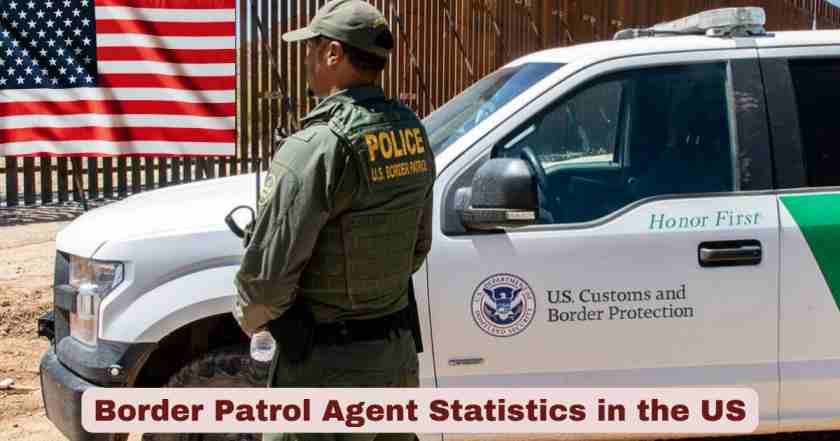
Border Patrol Agents in the US 2026
The United States Border Patrol stands as one of the nation’s most vital and visible law enforcement agencies, charged with the formidable mission of securing nearly 7,000 miles of land borders with Canada and Mexico, plus over 2,000 miles of coastal waters surrounding the United States. Established in 1924 with a modest force of mounted guards patrolling primarily along the Texas-Mexico border, the Border Patrol has evolved into a sophisticated federal law enforcement organization employing approximately 19,000 to 21,000 agents as of 2026, representing one of the largest uniformed law enforcement agencies in the United States. These dedicated professionals operate under the umbrella of U.S. Customs and Border Protection, itself a component of the Department of Homeland Security, and their responsibilities have expanded dramatically since the attacks of September 11, 2001, shifting from primarily immigration enforcement to include counterterrorism, drug interdiction, human trafficking prevention, and protecting American agricultural interests from invasive species and diseases that could devastate the nation’s food supply.
The year 2026 marks a transformative period for the Border Patrol, characterized by unprecedented recruitment surges, enhanced training programs, expanded tactical capabilities, and heightened political focus on border security as the Trump administration implements its comprehensive immigration enforcement agenda. The agency received a historic infusion of funding through the One Big Beautiful Bill Act, enabling aggressive hiring campaigns that generated over 100,000 applications in fiscal year 2025 alone, representing a dramatic increase from previous years when recruitment struggled to meet attrition rates and congressional hiring mandates. From its academy in Artesia, New Mexico, where record numbers of recruits undergo intensive 19-week training programs encompassing law enforcement tactics, Spanish language proficiency, physical fitness, firearms qualification, and vehicle operations, to the remote desert outposts, mountainous terrain, and urban sectors where agents patrol the nation’s borders daily, the Border Patrol embodies the federal government’s commitment to territorial sovereignty. Understanding the statistics, demographics, compensation, and operational realities of Border Patrol agents in 2026 provides essential insights into how the United States approaches immigration control, drug enforcement, and national security at its physical boundaries during an era of intense political debate over these fundamental issues.
Interesting Facts About Border Patrol Agents in the US 2026
| Border Patrol Agent Fact Category | Statistical Data |
|---|---|
| Total Border Patrol Agents | Approximately 19,000-21,000 agents |
| Border Patrol Workforce (FY 2019) | 19,648 agents nationwide |
| Agents Patrolling Southwest Border | Approximately 16,731 agents (85% of total force) |
| Authorized Positions (FY 2025) | 68,069 positions across all CBP |
| Hispanic/Latino Agents Percentage | Approximately 50-52% of all agents |
| Female Border Patrol Agents | Approximately 5-14% (lowest in federal law enforcement) |
| White Agents Percentage | Approximately 60.8% |
| Black/African American Agents | Approximately 9.1% |
| Average Border Patrol Agent Salary | $75,370-$90,980 annually |
| Entry-Level Salary (GL-5 with Level 1 Pay) | Approximately $62,173 annually |
| Senior Agent Salary (GS-12) | Approximately $110,776 annually |
| Border Patrol Pay Reform Act Multiplier | 1.25 times basic hourly rate (Level 1) |
| Applications Received (FY 2025) | 103,414 applications (67% increase over FY 2024) |
| Applications January-April 2025 | 34,650 applications (44% increase over 2024) |
| Highest Application Month Ever | January 2025 (record-breaking) |
| Border Patrol Budget (FY 2017) | $3.8 billion |
| CBP Total Budget (FY 2025) | $19.8 billion (includes all CBP components) |
| Training Academy Duration | 19 weeks (117 days) or 58-81 days depending on Spanish proficiency |
| Spanish Language Training Hours | 182 hours required |
| Training Academy Location | Artesia, New Mexico |
| Academy Classes Scheduled (FY 2026) | 71 classes with approximately 60 students each |
| Projected New Trainees (FY 2026) | Approximately 4,260 Border Patrol Agent trainees |
| Planned Hiring Through 2029 | 3,000 additional Border Patrol agents |
| Maximum Age at Appointment | 40 years old (with veteran exceptions) |
| Spanish Fluency Requirement | Required before graduation |
| Physical Fitness Test Components | 220-yard sprint, push-ups, sit-ups, 1.5-mile run |
| 1.5-Mile Run Requirement | Must complete in 13 minutes or less |
| Land Border Miles (Mexico) | 1,900 miles |
| Land Border Miles (Canada) | 5,000 miles |
| Coastal Border Miles | Over 2,000 miles |
| Total Border Miles Patrolled | Over 7,500 miles |
| Border Patrol Sectors | 20 sectors (continental US and Puerto Rico) |
| Mandatory Retirement Age | 57 years old |
| Signing Bonuses (2025) | Up to $60,000+ in recruitment incentives |
| Average Agent Age | 40+ years old (50% of workforce) |
| Bachelor’s Degree Holders | 63% of agents |
| Attrition Rate (2017) | 6% annually |
| Historical Attrition Rate Peak (2002) | 18% (post-9/11 transfer to Air Marshals) |
Data Source: U.S. Customs and Border Protection, DHS Budget Documents, Wikipedia, CNN, HonorFirst, Zippia, Bureau of Justice Statistics (2016-2026)
The Border Patrol agent statistics for 2026 reveal an agency experiencing unprecedented growth and transformation following decades of gradual expansion. With approximately 19,000 to 21,000 agents currently employed (based on the most recent verified count of 19,648 agents in fiscal year 2019), the Border Patrol represents one of the largest uniformed federal law enforcement agencies, though it remains significantly smaller than many metropolitan police departments like the NYPD with its 35,000+ officers. The concentration of agents along the southwest border is striking, with approximately 16,731 agents or 85% of the total workforce assigned to the 1,900-mile frontier separating the United States from Mexico, reflecting political and operational priorities that emphasize southern border enforcement over the 5,000-mile Canadian border which receives substantially fewer resources and personnel despite its far greater length.
The demographic composition of the Border Patrol stands out dramatically among federal law enforcement agencies, with Hispanics and Latinos comprising approximately 50-52% of all agents, making the Border Patrol the most ethnically Hispanic law enforcement organization in the United States and one where agents often patrol communities culturally and linguistically similar to their own backgrounds. This high percentage of Hispanic agents has generated considerable debate, with some questioning how Latino agents reconcile enforcing immigration laws against predominantly Hispanic migrants, while others emphasize that these agents represent diverse perspectives, with many viewing their role as protecting legal immigration pathways, combating criminal organizations, and serving their country through federal service that offers economic stability. The gender composition reveals a starkly different picture, with women constituting only 5% to 14% of Border Patrol agents depending on the data source, representing the lowest female participation rate of any major federal law enforcement agency and reflecting both the physical demands of border patrol work and persistent cultural challenges within an organization historically dominated by men.
The recruitment surge documented in fiscal year 2025 marks a watershed moment for the agency, with 103,414 applications received compared to 61,913 in fiscal year 2024, representing a spectacular 67% increase driven by aggressive advertising campaigns, substantial financial incentives including signing bonuses exceeding $60,000, and political messaging from the Trump administration emphasizing the importance of border security. The historic spike included 34,650 applications submitted just between January and April 2025, a 44% increase over the same period in 2024, with January 2025 recording the highest single-month application total in Border Patrol history. To process this unprecedented volume of candidates and meet ambitious hiring targets, CBP scheduled 71 academy classes for fiscal year 2026, each accommodating approximately 60 students, for a total of 4,260 projected trainees, though historical conversion rates suggest that actual graduations will be substantially lower due to academic failures, medical disqualifications, fitness standards violations, and voluntary withdrawals during the demanding 19-week training program that tests recruits physically, mentally, and linguistically.
Border Patrol Agent Workforce and Employment in the US 2026
| Workforce Statistical Category | 2026 Data |
|---|---|
| Current Total Border Patrol Agents | Approximately 19,000-21,000 agents |
| Border Patrol Agents (FY 2019) | 19,648 agents |
| Southwest Border Agents | 16,731 agents (85% of total) |
| Border Patrol Agents (FY 2016) | 19,437 agents |
| Border Patrol Agents (1992) | 4,139 agents |
| Border Patrol Agents (2006) | 6,400 Hispanic agents (pre-surge) |
| Border Patrol Agents (2008) | Approximately 9,300 Hispanic agents |
| Border Patrol Force Growth (2006-2010) | From 11,000 to 20,000 agents (doubled) |
| Intelligence Reform Act Authorization (2004) | 10,000 additional agents authorized |
| Total CBP Workforce | Over 60,000 employees |
| CBP Officers at Ports of Entry | Approximately 33,300 officers |
| Air and Marine Agents | Approximately 1,000-1,200 agents |
| Agriculture Specialists | Approximately 2,200 specialists |
| CBP Authorized Positions (FY 2025) | 68,069 positions |
| CBP Full-Time Equivalents (FY 2025) | 65,622 FTE |
| Planned Hiring (Through 2029) | 3,000 new Border Patrol agents |
| Planned CBP Officer Hiring | 5,000 new CBP officers |
| Applications Received (FY 2023) | 72,448 applications |
| Applications Received (FY 2024) | 61,913 applications |
| Applications Received (FY 2025) | 103,414 applications |
| Application Increase (FY 2024-2025) | 67% increase |
| January-April 2025 Applications | 34,650 applications |
| Application Increase (Jan-Apr 2024-2025) | 44% increase |
| Academy Capacity (FY 2026) | 71 classes × 60 students = 4,260 projected trainees |
Data Source: CBP.gov, Wikipedia, CNN, HonorFirst, DHS Budget Documents, Government Reports (1992-2026)
The Border Patrol workforce has experienced dramatic growth over the past three decades, expanding from just 4,139 agents in 1992 to a peak of approximately 20,000 agents by 2010 following congressional mandates in the Intelligence Reform and Terrorism Prevention Act of 2004 that authorized hiring 10,000 additional agents to nearly double the force. The most recent verified count of 19,648 agents in fiscal year 2019 suggests the workforce has stabilized somewhat after the massive hiring surge of the mid-to-late 2000s, though modest attrition and ongoing recruitment efforts mean the actual 2026 total likely ranges between 19,000 and 21,000 agents depending on recent hiring, retirements, and departures. The geographic distribution of agents reflects clear enforcement priorities, with approximately 16,731 agents or 85% of the entire Border Patrol concentrated along the southwest border with Mexico, while the vastly longer Canadian border receives proportionally far fewer resources despite spanning 5,000 miles compared to Mexico’s 1,900 miles.
This workforce operates within the larger structure of U.S. Customs and Border Protection, which employs over 60,000 total personnel including approximately 33,300 CBP officers who staff 328 ports of entry, 1,000 to 1,200 Air and Marine Operations agents who provide aerial and maritime interdiction capabilities, and 2,200 agriculture specialists who work to prevent the introduction of harmful pests and diseases. The fiscal year 2025 authorization for 68,069 positions across CBP, with 65,622 full-time equivalents actually budgeted, indicates that CBP as a whole employs significantly more personnel than Border Patrol agents alone, with the majority of the workforce divided between Border Patrol field operations and CBP officers at ports of entry. The agency has announced ambitious plans to hire 3,000 additional Border Patrol agents and 5,000 new CBP officers through 2029, though historical difficulties in meeting hiring targets, converting applicants into qualified agents, and retaining personnel suggest these goals may prove challenging despite current record application volumes.
The unprecedented application surge in fiscal year 2025, which saw 103,414 applications submitted compared to 61,913 the previous year, represents a remarkable 67% increase that Border Patrol leadership attributes to President Trump’s return to office, enhanced public awareness of border security issues, aggressive recruitment advertising including NASCAR sponsorships and social media campaigns, and generous financial incentives that make Border Patrol careers more attractive than ever before. The 34,650 applications received just between January and April 2025 exceeded the entire first quarter of 2024 by 44%, with January 2025 setting an all-time monthly record that Border Patrol Chief Michael Banks characterized as reflecting “the pride and purpose Americans see in joining the U.S. Border Patrol.” However, translating applications into sworn agents remains extraordinarily difficult, with only approximately 1.8% of applicants historically making it through the grueling selection process including polygraph examinations, extensive background investigations taking 300 to 600 days, medical evaluations, physical fitness assessments, and the demanding 19-week academy where failure rates can exceed 20% in some classes, meaning that even 100,000+ applications may yield only 1,500-2,000 actual agent hires.
Border Patrol Agent Salary and Compensation in the US 2026
| Salary & Compensation Category | 2026 Data |
|---|---|
| Average Border Patrol Agent Salary | $75,370-$90,980 annually |
| Entry-Level Salary (GL-5, Level 1) | Approximately $62,173 annually |
| GL-7 Salary (Level 1) | Approximately $70,778 annually |
| GL-9 Salary (Level 1) | Approximately $78,935 annually |
| GS-11 Salary (Level 1) | Approximately $92,423 annually |
| GS-12 Salary (Level 1) | Approximately $110,776 annually |
| Border Patrol Pay Reform Multiplier | 1.25 times basic hourly rate (Level 1) |
| Average Hourly Rate | $36-$43.74 per hour |
| Top 10% Earners | Over $122,198 annually |
| Bottom 10% Earners | Approximately $63,148 annually |
| Typical Salary Range (25th-75th Percentile) | $46,500-$111,500 annually |
| 90th Percentile Salary | $116,500-$129,538 annually |
| Entry-Level (Less than 1 Year) | Approximately $57,761 annually |
| Early Career (1-4 Years) | Approximately $58,251 annually |
| California Average Salary | $69,361-$87,003 annually |
| Georgia Average Salary | $74,438 annually |
| Highest Paying State | Alaska (approximately $109,824 annually) |
| Los Angeles Pay | $63,971 annually (highest city average) |
| Per Diem at Academy | Approximately $5 daily for incidental expenses |
| Signing Bonuses (2025-2026) | Up to $60,000+ total incentives |
| Academy Completion Bonus | $10,000 upon graduation |
| Remote Assignment Bonus | Additional $10,000 for remote locations |
| Thrift Savings Plan Match | Up to 5% of salary (government contribution) |
| Health Insurance Premium Coverage | Government pays 70-75% of premiums |
| Retirement Formula (First 20 Years) | 1.7% × years of service × high-3 average salary |
| Retirement Formula (Beyond 20 Years) | 1.0% × years beyond 20 × high-3 average salary |
| Minimum Retirement Age | 50 years old with 20 years of service |
| Early Retirement Option | Any age with 25 years of service |
| Mandatory Retirement Age | 57 years old |
Data Source: HonorFirst, Zippia, Glassdoor, ZipRecruiter, PayScale, Salary.com, OPM (2025-2026)
Border Patrol agent salaries in 2026 reflect a unique pay structure established under the Border Patrol Pay Reform Act, which provides agents with compensation 1.25 times the basic General Schedule hourly rate (known as Level 1 pay) to account for irregular work hours, overtime requirements, and the demanding nature of border enforcement duties. Entry-level agents hired at the GL-5 grade earn approximately $62,173 annually under this system, substantially higher than the base GS-5 salary of approximately $49,738 that would apply to other federal employees, with progression through GL-7 ($70,778), GL-9 ($78,935), GS-11 ($92,423), and GS-12 ($110,776) occurring as agents gain experience and complete performance evaluations. The overall average salary for Border Patrol agents ranges from $75,370 to $90,980 annually depending on the data source and methodology, with the variation reflecting differences in grade distribution, locality pay adjustments, overtime inclusion, and sample composition.
Geographic location significantly impacts Border Patrol compensation, with locality pay adjustments adding 10% to 35% on top of base salaries depending on duty station assignment. Agents working in high-cost areas like California earn average salaries of $69,361 to $87,003, while those in states like Georgia average approximately $74,438. The highest-paying locations include Alaska where Border Patrol agents can earn approximately $109,824 annually, followed by major metropolitan areas like Los Angeles with average pay of $63,971, though these figures must be weighed against substantially higher costs of living that may actually reduce real purchasing power compared to agents stationed in lower-cost rural border communities. The salary range is quite broad, with the bottom 10% of agents earning approximately $63,148 (likely newer agents at GL-5 or GL-7 grades), while the top 10% exceed $122,198 annually, and agents at the 90th percentile can reach $116,500 to $129,538 when combining senior grade levels, maximum locality adjustments, and overtime compensation.
The 2025-2026 recruitment incentives represent unprecedented financial inducements to attract quality candidates, with signing bonuses totaling over $60,000 available to new agents including $10,000 upon academy graduation and an additional $10,000 for accepting assignment to remote duty stations where recruitment has historically been most difficult. During academy training, recruits receive their full salary based on their entry grade level (GL-5, GL-7, or GL-9 depending on qualifications) plus a modest per diem of approximately $5 daily to cover incidental expenses, while food, lodging, and training materials are provided at no cost. Beyond base compensation, Border Patrol agents receive exceptional benefits including participation in the Thrift Savings Plan where the government contributes up to 5% of salary as matching funds, comprehensive health insurance with the federal government paying 70-75% of premiums, and the law enforcement retirement system that allows agents to retire at age 50 with 20 years of service or at any age with 25 years of service, receiving an annuity calculated at 1.7% of their high-3 average salary for each of the first 20 years plus 1.0% for each year beyond 20, meaning a 25-year retiree receives approximately 42.5% of their high-3 salary as a lifetime pension with cost-of-living adjustments.
Border Patrol Agent Demographics and Diversity in the US 2026
| Demographic Category | 2026 Statistical Data |
|---|---|
| Hispanic/Latino Border Patrol Agents | 50-52% of all agents |
| Hispanic Male Agents (2017 DHS Data) | 48.34% |
| Hispanic Female Agents (2017 DHS Data) | 2.86% |
| White Border Patrol Agents | 60.8% (Zippia data) |
| Black/African American Agents | 9.1% |
| Female Border Patrol Agents (Zippia) | 14.0% |
| Female Border Patrol Agents (Other Sources) | 5% (lowest in federal law enforcement) |
| CBP Officers (Female) | 32.5% (higher than Border Patrol) |
| Female Agent Hiring (Pre-2010 Surge) | Increased to nearly 1,000 female agents |
| Workforce Diversity (2008) | 54% minority (including 52% Hispanic) |
| Hispanic Sector Chiefs (2022) | 1 out of 22 sector chiefs (4.5%) |
| Female Sector Chiefs | 1 out of 22 (Chief Gloria Chavez, El Paso) |
| Average Age of Border Patrol Agents | 40+ years old (50% of workforce) |
| Bachelor’s Degree Holders | 63% of agents |
| Master’s Degree Holders | Earn average of $55,646 annually |
| Doctorate Degree Holders | Earn average of $54,195 annually |
| Military Veterans in Border Patrol | Significant percentage (exact data unavailable) |
| Spanish-Speaking Agents (2025 Academy) | Over 50% of recruits fluent in Spanish |
| Border Community Origins | Majority of current recruits from border communities |
| Female Agent Earnings vs. Male (2022) | Women earned 92% of what men earned |
Data Source: Wikipedia, DHS Workforce Reports, Zippia, Washington Examiner, CNN, Latino Rebels (2016-2026)
The demographic composition of the Border Patrol represents one of the most distinctive characteristics of the agency, with Hispanics and Latinos comprising 50-52% of all agents, making it the most ethnically Hispanic major law enforcement organization in the United States and one of the few federal agencies where minority employees constitute the majority. According to a 2017 Department of Homeland Security workforce report, 48.34% of Border Patrol agents were Hispanic males with an additional 2.86% identifying as Hispanic females, totaling over 51% Hispanic representation in an agency whose enforcement activities primarily target Hispanic migrants from Latin America. This high percentage has remained remarkably stable over time, with reports from 2008 showing 52% Hispanic composition and 2016 data confirming 51% Hispanic agents, suggesting that the Border Patrol has successfully maintained ethnic diversity even as the overall workforce doubled from 11,000 to 20,000 agents between 2006 and 2010.
The concentration of Hispanic agents has generated substantial public debate and scholarly analysis, particularly regarding how Latino Border Patrol agents reconcile their ethnic identity with enforcing immigration laws that disproportionately affect Hispanic communities. Research by University of Notre Dame professor David Cortez, who interviewed over 60 ICE and Border Patrol agents, found that most Latino agents did not join because they rejected their cultural identity or held anti-immigrant views, but rather because they sought economic security and stable employment in communities where such opportunities were limited. With the average Latino family income around $31,000 in 2019 compared to Border Patrol starting salaries of approximately $56,000, the financial incentive was substantial. However, Cortez’s research also revealed that many Hispanic agents experience internal conflict between their professional duties and personal backgrounds, particularly when dealing with migrants whose circumstances mirror their own families’ histories, though the economic pressures of maintaining federal employment with generous benefits often discourage agents from leaving even when facing moral dilemmas.
The gender composition of the Border Patrol stands in stark contrast to its ethnic diversity, with women representing only 5% to 14% of all agents depending on the data source, making it the federal law enforcement agency with the lowest female participation rate. The wide range in reported percentages (Zippia reports 14% while other sources cite 5%) likely reflects different measurement methodologies, with some including all Border Patrol employees versus sworn agents only, but all sources agree that female representation is dramatically lower than the 24.4% female special agents in the FBI or the 32.5% female CBP officers at ports of entry. The historical recruitment surge from 2006 to 2010 increased the number of female agents to nearly 1,000, representing progress from earlier decades when the Border Patrol was almost exclusively male, but women still constitute a small fraction of the workforce in an organization where the physically demanding nature of patrol duties, the paramilitary culture, the isolated duty stations, and persistent gender-based harassment have created substantial barriers to female recruitment and retention.
Leadership diversity presents even more troubling statistics, with a 2022 Washington Examiner investigation revealing that only 1 of 22 sector chiefs was Hispanic (Chief Gloria Chavez of El Paso, Texas) despite Hispanics comprising over half of the agent workforce, and Chavez was also the only female sector chief, highlighting how the Border Patrol’s ethnic diversity at entry levels has not translated into proportional representation in senior leadership positions where white male agents continue to dominate despite pledges from agency leadership to address the disparity. The average Border Patrol agent is over 40 years old (with 50% of agents in this age bracket), substantially older than typical state and local law enforcement where officers often enter service in their twenties, and 63% hold bachelor’s degrees, far exceeding the educational attainment of most police departments where high school diplomas or some college credits are standard requirements.
Border Patrol Training and Academy Requirements in the US 2026
| Training Category | Specific Requirements and Duration |
|---|---|
| Total Training Duration | 19 weeks (approximately 117 days) |
| Basic Academy Duration (Historical) | 81 days (663 curriculum hours) |
| Accelerated Academy (Spanish Proficient) | 55-58 days (with Spanish test-out) |
| Extended Training (Non-Spanish Speakers) | Up to 26 weeks (additional 8 weeks Spanish) |
| Spanish Language Training | 182 hours required |
| Law/Operations Training | Integrated throughout curriculum |
| Physical Training Hours | Intensive daily PT sessions |
| Firearms Training | Qualification required on multiple weapons |
| Driving Training | Including pursuit and tactical operations |
| Post-Academy Classroom Training | 1 day per week for 20 weeks (historical) |
| Total Curriculum Hours (Historical) | 663 hours across six subject areas |
| Academy Location | U.S. Border Patrol Academy, Artesia, New Mexico |
| Secondary Location (Processing Coordinators) | Charleston, South Carolina |
| Academy Classes per Year (FY 2025) | 35 BPA classes |
| Academy Classes (FY 2026) | 71 BPA classes |
| Students per Class | Approximately 50-60 students |
| Projected Graduates (FY 2025) | 1,750 new Border Patrol Agents (assuming 100% graduation) |
| Projected Trainees (FY 2026) | 4,260 Border Patrol Agent trainees |
| Physical Fitness Test Components | 220-yard sprint, max push-ups in 1 minute, max sit-ups in 1 minute, 1.5-mile run |
| 1.5-Mile Run Standard | 13 minutes or less |
| Push-Ups Standard | Maximum repetitions in 1 minute |
| Sit-Ups Standard | Maximum repetitions in 1 minute |
| Written Examinations | 8 written exams required |
| Practical Exercise Tests | 7 practical exercise tests required |
| Graded Practical Exercises | 23 graded practical exercises required |
| Spanish Proficiency Test | Can test out to reduce academy time by 30 days |
| Tactical Combat Casualty Care | TCCC instruction included |
| All-Terrain Vehicle Training | ATV familiarization training |
| Vehicle Pursuit Training | Reintroduced and expanded (2025) |
| Driving Simulators | Regular use for scenario training |
| Academy Campus Size | 3,700 acres across two campuses |
| Training During Academy | Recruits receive full salary based on entry grade |
Data Source: HonorFirst, BorderPatrolRecruiter, CNN, Federal Law Enforcement.org, Government Reports (2007-2026)
The Border Patrol Academy in Artesia, New Mexico, represents the sole training facility where nearly all new Border Patrol agents complete their 19-week (approximately 117-day) intensive residential training program, though historical records show variations in program length including an 81-day basic academy (663 curriculum hours) mentioned in older government documents and accelerated 55-58 day programs for recruits who test out of Spanish language requirements. The actual training duration each recruit experiences depends primarily on their Spanish language proficiency, with approximately 50% of incoming recruits already fluent in Spanish (as demonstrated in recent academy classes visited by CNN) eligible to skip or abbreviate the 182 hours of Spanish instruction, while non-Spanish speakers may require the full program or even additional weeks of language immersion to achieve the mandatory proficiency level required for graduation and field operations.
The curriculum encompasses six major subject areas including Spanish language, law and operations, physical training, driving, firearms, and general training covering topics like report writing, communications, fingerprinting, computer systems, and constitutional law. Physical fitness represents one of the most challenging aspects of academy life, with recruits participating in PT sessions multiple times per week that include running (building endurance for the required 1.5-mile run in 13 minutes or less), push-ups and sit-ups (maximum repetitions in one minute), core strengthening exercises, defensive tactics, and obstacle course navigation. The academy maintains a demanding evaluation system requiring recruits to pass 8 written examinations, 7 practical exercise tests, and 23 graded practical exercises covering everything from firearms qualification on multiple weapons platforms to tactical scenarios, Spanish conversational proficiency, defensive tactics demonstrations, and vehicle operations including the recently reintroduced pursuit driving techniques on the academy’s extensive 3,700-acre campus spanning two locations.
The 2025-2026 training enhancements reflect the Trump administration’s emphasis on more aggressive border enforcement tactics, with vehicle pursuit training receiving expanded emphasis after being curtailed during the Biden administration following fatal crashes that raised public safety concerns. Recruits now receive regular instruction on driving simulators and practice offensive driving techniques designed to stop suspect vehicles, with academy leadership explaining that the previous policy effectively incentivized smugglers who knew Border Patrol agents would not pursue them. The academy also introduced improved weapons technology and increased Tactical Combat Casualty Care instruction teaching agents to provide emergency medical treatments.
Disclaimer: This research report is compiled from publicly available sources. While reasonable efforts have been made to ensure accuracy, no representation or warranty, express or implied, is given as to the completeness or reliability of the information. We accept no liability for any errors, omissions, losses, or damages of any kind arising from the use of this report.