
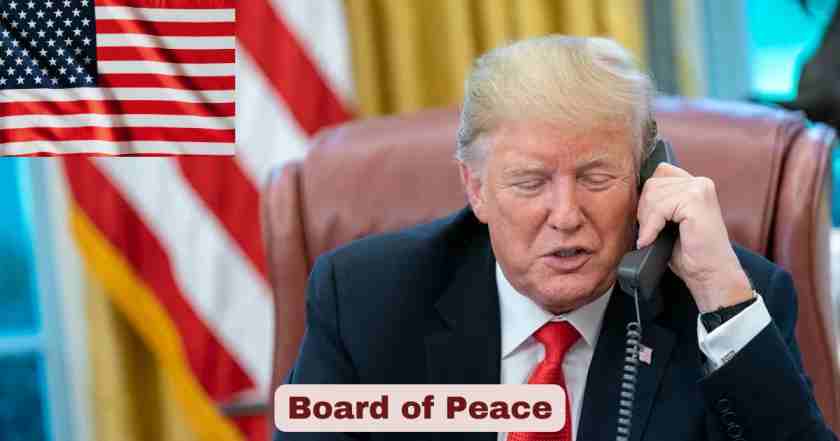
What is Board of Peace 2026
The Board of Peace 2026 represents a groundbreaking initiative in international diplomacy and conflict resolution. Officially announced on January 15, 2026, this United States-led organization was established by President Donald Trump with the stated purpose to promote stability, restore dependable governance, and secure enduring peace in areas affected or threatened by conflict. The board emerged from the Gaza ceasefire plan and has since evolved into a potentially far-reaching international body that could reshape global peacekeeping efforts.
Originally conceived as a focused entity to oversee the reconstruction and stabilization of the Gaza Strip following the devastating conflict between Israel and Hamas, the Board of Peace has expanded its ambitions considerably. The organization now positions itself as a comprehensive international peace-building body that could address conflicts worldwide. With President Trump serving as chairman, the board operates under a unique membership structure where countries can contribute $1 billion to secure permanent membership status, or alternatively serve standard three-year terms. This innovative funding mechanism aims to generate substantial resources for reconstruction efforts while ensuring long-term commitment from participating nations. The board’s establishment has generated significant international attention, with approximately 60 countries receiving invitations to join as founding members, though responses have varied considerably across different regions and political alignments.
Interesting Facts About Board of Peace 2026
| Fact Category | Key Details |
|---|---|
| Official Announcement Date | January 15, 2026 |
| Chairman | Donald Trump (United States President) |
| Permanent Membership Cost | $1 billion in cash contribution during first year |
| Standard Membership Duration | 3-year term with no mandatory contribution |
| Total Invitations Sent | Approximately 60 countries worldwide |
| Confirmed Member Countries (as of January 21, 2026) | Israel, Egypt, Azerbaijan, Kosovo, United Arab Emirates, Belarus, Morocco, Hungary, Canada, Armenia, Vietnam, Kazakhstan, Argentina, Bahrain |
| Number of Confirmed Members | 14 countries (with more pending) |
| Countries That Declined/Rejected | France, Norway, Sweden, United Kingdom (various stages of rejection) |
| High Representative for Gaza | Nickolay Mladenov (former UN Special Coordinator) |
| Gaza Executive Board Members | 11 members including Steve Witkoff, Jared Kushner, Tony Blair |
| Primary Focus Area | Gaza Strip reconstruction and stabilization |
| Expanded Scope | Global conflict resolution (potential UN alternative) |
| Gaza Reconstruction Cost Estimate | $70 billion (World Bank, UN, EU joint estimate) |
| First Official Meeting Location | World Economic Forum, Davos, Switzerland (January 23, 2026) |
| UN Security Council Resolution | Resolution 2803 (November 17, 2025) |
| Organizational Structure | Three-tier: Main Board, Executive Board, Gaza Executive Board |
Data sources: CBS News, Associated Press, Bloomberg, The Times of Israel, Wikipedia, NPR (January 2026)
Latest Statistics and Data on Board of Peace 2026
The Board of Peace 2026 has accumulated significant data points that demonstrate both its ambitious scope and the complexities of international coalition-building. As of January 21, 2026, the organization has confirmed participation from 14 member countries, representing diverse geographical regions and political alignments. This figure represents less than one-quarter of the approximately 60 invitations extended by President Trump’s administration, indicating selective participation among world nations. The confirmed members span four continents, with particularly strong representation from Middle Eastern nations including Israel, Egypt, the United Arab Emirates, Morocco, and Bahrain, reflecting the board’s initial focus on Gaza reconstruction.
The financial architecture of the board presents unprecedented figures in international peacekeeping funding. The $1 billion permanent membership fee represents one of the highest entry costs ever established for an international organization. However, sources indicate flexibility in actual contributions, with some countries expected to contribute approximately $20 million for standard membership. The primary reconstruction target, the Gaza Strip, faces staggering rebuilding costs estimated at $70 billion according to joint assessments by the World Bank, United Nations, and European Union. This figure has increased from earlier 2025 estimates of $53 billion, reflecting ongoing damage assessments and comprehensive need evaluations. The reconstruction challenge encompasses repairing 84 percent of Gaza’s infrastructure, with some areas like Gaza City experiencing 92 percent destruction rates. Housing alone requires $15.2 billion, representing 30 percent of total recovery costs, while the health sector needs exceed $7 billion for complete restoration.
Board of Peace 2026 Membership Statistics
| Membership Category | Number | Details |
|---|---|---|
| Total Invitations Sent | ~60 | Countries across all continents |
| Confirmed Members | 14 | As of January 21, 2026 |
| Middle Eastern Members | 5 | Israel, Egypt, UAE, Morocco, Bahrain |
| European Members | 3 | Belarus, Hungary, Armenia |
| Asian Members | 3 | Azerbaijan, Vietnam, Kazakhstan |
| North American Members | 1 | Canada |
| South American Members | 1 | Argentina |
| Central Asian Members | 1 | Kosovo |
| Countries That Declined | 4+ | France, Norway, Sweden, UK (explicit rejections) |
| Countries Considering | 40+ | Many nations still evaluating participation |
| Permanent Membership Fee | $1 billion | For lifetime board membership |
| Alternative Contribution | $20 million+ | For standard 3-year membership terms |
Data sources: CBS News, Associated Press, NPR, Bloomberg (January 21, 2026)
The membership statistics reveal a complex pattern of international participation in the Board of Peace 2026. With 14 confirmed members from the approximately 60 invited nations, the acceptance rate currently stands at roughly 23 percent, indicating cautious international reception. The geographical distribution shows concentrated support from Middle Eastern nations, with 5 countries from that region confirming participation, reflecting the board’s direct relevance to Gaza reconstruction efforts. European representation remains limited at 3 members, notably excluding major Western European powers like France, Germany, and the United Kingdom, all of which have expressed reservations or outright declined participation. This selective Western European absence raises questions about the board’s legitimacy as a comprehensive international peacekeeping body.
The financial commitment requirements have generated substantial controversy, with the $1 billion permanent membership fee representing an unprecedented monetary barrier to entry for international organizations. This figure exceeds typical UN contributions by orders of magnitude, effectively creating a two-tier membership system where wealthier nations can secure permanent influence through financial power. Canada has explicitly stated it will not pay the $1 billion fee despite accepting membership in principle, highlighting tensions between the board’s stated peacekeeping mission and its commercial funding structure. The alternative $20 million contribution option for standard three-year terms provides flexibility but still represents significant expenditure for developing nations. The four explicit rejections from France, Norway, Sweden, and the United Kingdom signal broader European skepticism about the board’s governance structure and its potential to supplant established international institutions like the United Nations.
Gaza Reconstruction Cost Estimates for Board of Peace 2026
| Cost Category | Amount (USD) | Percentage of Total | Timeline |
|---|---|---|---|
| Total Reconstruction Cost | $70 billion | 100% | 10+ years |
| Physical Infrastructure Damage | $29.9 billion | 42.7% | Multiple phases |
| Economic and Social Losses | $19.1 billion | 27.3% | Ongoing recovery |
| Housing Reconstruction | $15.2 billion | 21.7% | Until 2040 (optimistic) |
| Housing Short-term (3 years) | $3.7 billion | 5.3% | 2026–2029 |
| Health Sector Reconstruction | $7+ billion | ~10% | 5+ years |
| Education Sector Recovery | $3.8 billion | 5.4% | 5 years |
| Cultural Heritage Restoration | $120 million | 0.2% | Long-term phases |
| Initial Recovery Phase | $2–3 billion | 3–4.3% | 3–5 years |
| Short-term Needs (First 3 years) | $20 billion | 28.6% | 2026–2029 |
| Unexploded Ordnance Clearance | Not itemized | Included above | ~14 years |
| Debris Removal (37 million tons) | Not itemized | Included above | Multiple years |
Data sources: World Bank, United Nations, European Union joint assessment; UN Development Programme; WHO estimates; Times of Israel; ABC News (October 2025-January 2026)
The reconstruction cost estimates for Gaza present staggering figures that dwarf most modern post-conflict rebuilding efforts. The $70 billion total reconstruction cost represents nearly 97 percent of the combined economic output of the West Bank and Gaza in 2022, illustrating the complete devastation wrought by the conflict. This figure has escalated from earlier estimates, with the World Bank initially projecting $18.5 billion in infrastructure damage in early 2024, then $40-50 billion by September 2024, and finally reaching the current $70 billion assessment by October 2025. The continuous upward revision reflects both ongoing damage during the conflict and more comprehensive assessments of secondary economic and social impacts. Physical infrastructure damage accounts for $29.9 billion or approximately 42.7 percent of total costs, encompassing destroyed buildings, roads, water systems, electricity infrastructure, and telecommunications networks.
Housing reconstruction represents the single largest cost category at $15.2 billion, accounting for 21.7 percent of total recovery needs and reflecting the destruction of approximately 370,000 housing units. The timeline for housing restoration extends optimistically to 2040 under favorable conditions where construction materials flow freely into Gaza. However, UN Development Programme experts warn that if reconstruction follows patterns from previous conflicts in 2014 and 2021, complete housing restoration could require 80 years, stretching into the next century. The health sector faces catastrophic rebuilding needs exceeding $7 billion, necessitated by 778 attacks on health facilities that damaged 34 hospitals, 91 medical centers, and 210 ambulances, leaving more than half of Gaza’s 228 health facilities non-operational. Education infrastructure requires $3.8 billion over five years to restore schools and educational services for Gaza’s youth population. The debris removal challenge alone involves clearing 37 million tons of rubble, while 7,500 tons of unexploded ordnance pose life-threatening risks requiring an estimated 14 years for complete clearance operations.
Board of Peace 2026 Organizational Structure
| Organizational Level | Key Positions | Number of Members | Primary Responsibilities |
|---|---|---|---|
| Main Board of Peace | Chairman: Donald Trump | 14+ countries | Strategic oversight, policy decisions, resource mobilization |
| Executive Board | 7 appointed members | 7 experts | Diplomacy focus, investment coordination, implementation oversight |
| Gaza Executive Board | High Representative: Nickolay Mladenov | 11 members | Daily Gaza operations, National Committee oversight |
| Key Executive Board Members | Steve Witkoff, Jared Kushner, Tony Blair | Included in 7 | Middle East negotiations, reconstruction planning |
| International Representatives | Turkish FM Hakan Fidan, Qatari diplomat Ali Al-Thawadi | Included in 11 | Regional coordination, monitoring functions |
| Intelligence Representatives | Hassan Rashad (Egypt General Intelligence) | Included in 11 | Security coordination, intelligence sharing |
| Business Representatives | Yakir Gabay (Israeli businessman) | Included in 11 | Private sector engagement, investment facilitation |
| UN/International Experts | Sigrid Kaag (Netherlands), Reem Al-Hashimy (UAE) | Included in 11 | Development expertise, humanitarian coordination |
| National Committee for Gaza | Ali Shaath (Chief Commissioner) | Palestinian technocrats | Gaza daily administration, service delivery |
Data sources: Associated Press, PBS News, Times of Israel, CBS News (January 2026)
The Board of Peace 2026 employs a sophisticated three-tier organizational structure designed to operate at strategic, operational, and implementation levels simultaneously. At the apex sits the Main Board of Peace, comprising heads of state and government from 14 confirmed member countries as of January 21, 2026, with President Donald Trump serving as permanent chairman wielding significant authority over membership decisions, agenda-setting, and subsidiary entity creation. This top tier focuses on strategic direction, major policy decisions, and resource mobilization, particularly the ambitious $70 billion fundraising target for Gaza reconstruction. The chairman’s authority includes sole power to invite or dismiss member states, break voting ties, determine meeting frequency, and establish or dissolve subsidiary bodies, concentrating substantial decision-making authority in American hands.
The middle tier, the Executive Board, comprises 7 appointed members focusing on diplomacy and investment coordination. Key figures include Steve Witkoff serving as United States Special Envoy to the Middle East, Jared Kushner bringing extensive regional negotiating experience, and former British Prime Minister Tony Blair providing international diplomatic gravitas. This board bridges strategic decisions from the main board with practical implementation on the ground, coordinating international resources and ensuring accountability mechanisms function effectively. The Gaza Executive Board represents the operational tier with 11 members led by Nickolay Mladenov as High Representative for Gaza, a former Bulgarian politician and UN Middle East envoy. This board directly supervises the newly appointed National Committee for the Administration of Gaza, headed by Ali Shaath, comprising Palestinian technocrats responsible for daily governance including service delivery, infrastructure management, and local administration. The inclusion of representatives from Turkey, Qatar, Egypt, UAE, Israel, and the Netherlands reflects attempts to balance regional interests and international expertise, though Israel initially objected to certain appointments, particularly Turkey’s and Qatar’s involvement given their relationships with Hamas.
Board of Peace 2026 International Response Statistics
| Response Category | Number of Countries | Notable Examples | Key Concerns Expressed |
|---|---|---|---|
| Confirmed Participation | 14 | Israel, UAE, Canada, Egypt, Hungary | Willing to engage in Gaza reconstruction |
| Explicit Rejections | 4 | France, Norway, Sweden, UK | Governance concerns, UN replacement fears |
| Under Consideration | 40+ | India, China, Russia (invited) | Awaiting clarification of terms |
| European Rejections | 4+ | France, Norway, Sweden, Netherlands, Germany | Structural concerns, Putin’s involvement |
| Middle East Acceptances | 5 | Israel, Egypt, UAE, Morocco, Bahrain | Regional stability interests |
| Countries Attending Davos Ceremony | Limited | Exact number not disclosed | Many invited nations not attending |
| Countries Threatening Response | 1 | France (threatened with tariffs by Trump) | Sovereignty concerns, pressure tactics |
| UN Security Council Endorsement | Resolution 2803 | Passed November 17, 2025 | Endorsed concept, not full structure |
Data sources: CBS News, NPR, Bloomberg, Associated Press (January 2026)
International responses to the Board of Peace 2026 reveal deep divisions among world powers regarding its legitimacy, governance structure, and potential impact on existing international frameworks. The 4 explicit rejections from major European democracies—France, Norway, Sweden, and the United Kingdom—signal profound Western skepticism about the initiative’s true objectives and governance model. France has been particularly vocal, expressing concerns that the board seeks to usurp the United Nations’ role in global conflict resolution, with French officials stating they do not intend to give a favorable response despite President Trump threatening 200 percent tariffs on French wine and champagne as retaliation. Norway’s State Secretary Kristoffer Thoner articulated that the American proposal raises numerous questions requiring further dialogue, explicitly stating Norway would not attend the Davos signing ceremony scheduled for January 23, 2026.
British Prime Minister Keir Starmer described Russian President Vladimir Putin’s inclusion as “concerning,” highlighting the awkward position of having Russia—currently engaged in aggressive warfare against Ukraine—participating in a purported peace organization. The 14 confirmed acceptances demonstrate selective enthusiasm, with Middle Eastern nations showing stronger support given their direct stakes in Gaza’s future. The United Arab Emirates, Morocco, Bahrain, Egypt, and Israel view the board as potentially beneficial for regional stabilization despite reservations about specific operational details. Canada’s acceptance came with explicit caveats, with Prime Minister Mark Carney stating acceptance “in principle” while making clear Canada would not pay the $1 billion permanent membership fee, preferring to negotiate terms favorable to Canadian interests. The 40+ countries still evaluating their participation face difficult calculations balancing potential influence in Gaza’s reconstruction against legitimizing a Trump-dominated structure that could undermine established multilateral institutions like the United Nations.
Board of Peace 2026 Governance and Authority Structure
| Authority Category | Holder | Specific Powers | Limitations/Checks |
|---|---|---|---|
| Ultimate Decision-Making | Chairman (Donald Trump) | Break ties, invite/dismiss members, set agendas | Draft charter under revision |
| Membership Approval | Chairman | Sole power to invite member states | Member states can decline |
| Meeting Frequency Control | Chairman | Determines how often board convenes | Not specified in current draft |
| Subsidiary Entity Control | Chairman | Create or dissolve subsidiary bodies | Subject to member feedback |
| Financial Oversight | Chairman | Controls $1 billion+ fund | “Virtually every dollar” for Gaza mandate |
| Permanent Membership Grants | Member states | Pay $1 billion for lifetime membership | Financial capability requirement |
| Standard Membership | Member states | 3-year terms without mandatory payment | Renewable terms not specified |
| Voting Mechanism | Main Board members | Not fully specified in draft charter | Chairman breaks ties |
| Gaza Operations | Gaza Executive Board | Daily operational oversight | Reports to main board |
| Palestinian Administration | National Committee | Day-to-day governance in Gaza | Supervised by Gaza Executive Board |
Data sources: Associated Press, Bloomberg, CBS News (January 2026)
The governance structure of the Board of Peace 2026 concentrates extraordinary authority in the chairman’s position, currently held by President Donald Trump, according to draft charter documents obtained by international news agencies. The chairman possesses sole power to invite or dismiss member states, effectively controlling the board’s composition and therefore its decision-making dynamics. This centralization extends to agenda-setting authority, allowing the chairman to determine which conflicts and issues receive board attention and resources. The chairman also maintains exclusive power to create or dissolve subsidiary entities, providing flexibility to establish specialized committees or working groups as needed, but also concentrating institutional design authority in a single office. In voting procedures, the chairman holds tie-breaking authority, ensuring decisive control even when member states split evenly on contentious issues.
The financial architecture reinforces this concentration of authority, with the $1 billion permanent membership fee providing immediate decision-making influence for wealthy nations capable of making such contributions. This creates a two-tier membership system where permanent members gain enhanced status and influence compared to standard three-year term members, potentially marginalizing smaller or less wealthy nations despite their legitimate interests in peace processes. The chairman controls the substantial fund accumulating from these membership fees, with White House officials stating “virtually every dollar” will be spent on the board’s Gaza mandate, though specific accountability mechanisms remain undefined in publicly available documents. U.S. officials emphasize the draft charter remains under constant revision and is not finalized, suggesting substantial changes may occur following international feedback. However, the fundamental concentration of authority in the chairman’s position appears central to the board’s design, reflecting President Trump’s preference for centralized decision-making structures and raising concerns among democratic nations accustomed to more distributed power arrangements in international organizations.
Board of Peace 2026 Political Controversies and Challenges
| Controversy Category | Key Issues | Affected Parties | Current Status |
|---|---|---|---|
| UN Replacement Concerns | Board potentially supplanting UN Security Council | UN member states, Secretary-General | Trump said board “might” replace UN |
| Putin’s Participation | Russia invited despite Ukraine invasion | Ukraine, European allies, UK | Putin invited, response pending |
| $1 Billion Fee Structure | Pay-to-play membership criticized | Developing nations, democracy advocates | Canada refusing payment, others considering |
| Turkey-Qatar Inclusion | Hamas-linked nations on Gaza Executive Board | Israel, Netanyahu government | Israel initially objected, later joined anyway |
| France Tariff Threats | 200% tariffs threatened for non-participation | France, French wine industry | France maintaining rejection stance |
| Charter Transparency | Full charter not publicly released | All potential members, civil society | Only leaked drafts available |
| Palestinian Authority Role | Unclear PA involvement in governance | Palestinian Authority, Hamas | Technocratic committee appointed |
| Western European Rejection | Major democracies declining participation | France, Germany, Norway, Sweden, UK | Multiple explicit rejections issued |
| Greenland Acquisition Timing | Board announced amid Greenland threats | Denmark, Greenland, NATO allies | Concerns about ulterior motives |
Data sources: CBS News, Associated Press, Bloomberg, The Guardian, NPR (January 2026)
The Board of Peace 2026 faces multiple interconnected controversies that threaten its legitimacy and operational effectiveness. The most fundamental controversy centers on President Trump’s statement that the board “might” replace the United Nations, made on January 20, 2026, directly challenging the post-World War II international order. This positioning has alarmed UN member states and Secretary-General António Guterres, who view the board as potentially undermining 75 years of multilateral diplomacy. The invitation of Russian President Vladimir Putin to join a “peace” organization while Russia actively prosecutes its invasion of Ukraine has generated particular outrage among European allies, with British Prime Minister Keir Starmer calling Putin’s role “concerning” and questioning how a current aggressor nation can credibly participate in conflict resolution mechanisms.
The $1 billion permanent membership fee structure has drawn criticism as creating a “pay-to-play” international organization where wealthy nations purchase influence rather than earning it through diplomatic leadership or moral authority. The Guardian newspaper characterized the board as “a Trump-dominated pay-to-play club: a global version of his Mar-a-Lago court aimed at supplanting the UN itself,” reflecting widespread perception that the initiative serves Trump’s personal ambitions rather than genuine peacekeeping objectives. Israel’s initial objection to the Gaza Executive Board composition, particularly the inclusion of Turkey and Qatar—nations maintaining relationships with Hamas—created early diplomatic friction, though Prime Minister Benjamin Netanyahu subsequently agreed to Israeli participation on January 21, 2026. President Trump’s threat of 200 percent tariffs on French wine and champagne following France’s rejection exemplifies the coercive tactics employed to pressure participation, raising questions about whether the board represents voluntary international cooperation or American economic compulsion. The simultaneous timing of the board’s announcement with renewed American threats to acquire Greenland, potentially by military force, has fueled speculation about ulterior strategic motives beyond Gaza reconstruction.
Board of Peace 2026 Timeline of Key Developments
| Date | Event | Significance |
|---|---|---|
| September 2025 | Donald Trump proposes Board of Peace concept | Initial proposal during Gaza conflict |
| October 12, 2025 | Tony Blair meets Palestinian Vice President in Jordan | Reconstruction discussions begin |
| October 2025 | Trump declares “The war is over” | Announces Board of Peace formation imminent |
| November 17, 2025 | UN Security Council Resolution 2803 adopted | UN welcomes board establishment |
| January 2026 | Nickolay Mladenov chosen as director-general | Key leadership appointment made |
| January 11, 2026 | Trump expected to announce board members | Administrative preparations advance |
| January 15, 2026 | Official Board of Peace announcement | Trump declares formation on social media |
| January 17, 2026 | Executive Board members announced | 7-member executive team revealed |
| January 17, 2026 | Gaza Executive Board members announced | 11-member operational team revealed |
| January 17, 2026 | Argentina receives formal invitation | Javier Milei confirms participation |
| January 19, 2026 | Putin invitation confirmed | Kremlin spokesperson announces Russian invitation |
| January 20, 2026 | Trump suggests board might replace UN | Controversial statement raises international concerns |
| January 20, 2026 | France threatened with 200% tariffs | Trump pressures French participation |
| January 21, 2026 | Israel confirms participation | Netanyahu announces Israeli membership |
| January 21, 2026 | Egypt confirms participation | Foreign ministry announces Egyptian membership |
| January 21, 2026 | Norway and Sweden announce rejection | Nordic countries decline participation |
| January 23, 2026 | Davos signing ceremony scheduled | First official board meeting planned |
Data sources: CBS News, Associated Press, Bloomberg, Wikipedia, Times of Israel (September 2025-January 2026)
The Board of Peace 2026 timeline reveals a rapid evolution from concept to operational entity within approximately four months, an extraordinarily compressed timeframe for establishing an international organization with such ambitious scope. President Trump first proposed the board concept in September 2025 during ongoing Gaza conflict, positioning it as part of a comprehensive peace plan. The initiative gained momentum following Tony Blair’s October 12, 2025 meeting with Palestinian Vice President Hussein al-Sheikh in Jordan, where reconstruction discussions laid groundwork for international involvement. Trump’s declaration that “The war is over” in October 2025 signaled his administration’s intention to rapidly operationalize the board, though this optimism proved premature as conflict dynamics continued evolving.
The most significant legitimizing moment came on November 17, 2025, when the UN Security Council adopted Resolution 2803 welcoming the Board of Peace’s establishment, though this endorsement occurred before the full governance structure and membership fee requirements became public knowledge. The board’s formal announcement on January 15, 2026 via Trump’s social media marked the transition from planning to implementation phase, followed rapidly by leadership appointments on January 17, 2026. The subsequent week witnessed a flurry of diplomatic activity with invitations extended to approximately 60 countries, confirmations from 14 nations, and explicit rejections from 4 major European democracies. The January 20, 2026 statement that the board “might” replace the UN fundamentally altered international perception, transforming what initially appeared to be a Gaza-focused reconstruction body into a potentially revolutionary reorganization of global governance. The scheduled January 23, 2026 signing ceremony at the World Economic Forum in Davos, Switzerland represents a critical moment when the board’s international legitimacy and operational viability will face its first major test, with many invited nations declining to participate in this inaugural event.
Update Notice: This article is currently being expanded. Additional details and updated data will be added as new information becomes available.
Disclaimer: This research report is compiled from publicly available sources. While reasonable efforts have been made to ensure accuracy, no representation or warranty, express or implied, is given as to the completeness or reliability of the information. We accept no liability for any errors, omissions, losses, or damages of any kind arising from the use of this report.