
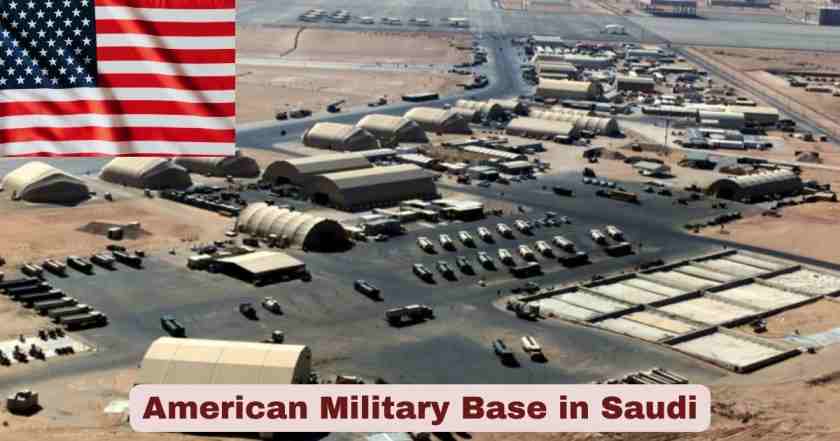
American Military Base in Saudi 2026
The American military base in Saudi 2026 represents a critical component of United States strategic positioning throughout the Middle East and Arabian Peninsula. Prince Sultan Air Base (PSAB), located approximately 80 kilometers south of Riyadh in the closed city of Al Kharj, serves as the primary installation for American forces operating within the Kingdom of Saudi Arabia. This facility has evolved dramatically since U.S. forces first deployed there following the Khobar Towers bombing in 1996, transitioning from a temporary expeditionary outpost into an increasingly permanent presence supporting regional deterrence and defense operations.
The American military presence in Saudi 2026 reflects a complex relationship spanning more than eight decades, marked by periods of expansion, withdrawal, and renewed commitment driven by evolving regional security threats. Following complete withdrawal of U.S. combat forces from Saudi Arabia in 2003, American troops returned to Prince Sultan Air Base in June 2019 amid escalating tensions with Iran. Today, the installation hosts approximately 2,700 American servicemembers who operate advanced air and missile defense systems, fighter squadrons, aerial refueling aircraft, and intelligence platforms that form an essential component of U.S. Central Command’s ability to project power, deter aggression, and respond to crises throughout the volatile Middle East theater.
Key Facts About American Military Base in Saudi 2026
| Category | Details |
|---|---|
| Primary Base Name | Prince Sultan Air Base (PSAB) |
| Location | Al Kharj, approximately 80 km (50 miles) south of Riyadh |
| U.S. Personnel (2024-2026) | Approximately 2,321-2,700 American troops |
| Primary U.S. Unit | 378th Air Expeditionary Wing (378 AEW) |
| Wing Activation Date | December 17, 2019 (current activation) |
| Elevation | 503 meters (1,650 feet) above sea level |
| Runways | 2 asphalt runways (17L/35R and 17R/35L), each 4,000 m × 60 m (13,123 ft × 197 ft) |
| Total Base Area | Approximately 80 square miles (Saudi-controlled facility) |
| Host Nation Partner | Royal Saudi Air Force |
| Construction Year | 1951 (base established) |
Data sources: White House reports, Jerusalem Post, Shafaq News, Wikipedia, GlobalSecurity.org, Council on Foreign Relations (2024-2026)
The American military base in Saudi 2026 operates under the framework of multiple bilateral defense agreements and the recent Strategic Defense Agreement signed in November 2025, which elevated Saudi Arabia to Major Non-NATO Ally status. According to a White House report released in 2024, exactly 2,321 U.S. troops were stationed in the Kingdom, though this number has fluctuated to approximately 2,700 personnel as reported by other sources in 2025-2026. These forces operate in close coordination with Saudi military personnel, providing critical air and missile defense capabilities while supporting the operation of U.S. military aircraft conducting regional operations.
The 378th Air Expeditionary Wing serves as the primary American operational unit at Prince Sultan Air Base, formally activated on December 17, 2019 in response to increasing tensions with Iran following attacks on Saudi oil facilities. The base’s two parallel runways, each measuring over 13,000 feet in length, provide exceptional operational flexibility for diverse aircraft operations ranging from heavy cargo aircraft to advanced fighter jets and aerial refueling tankers. The installation’s elevation of 1,650 feet and strategic location 80 kilometers south of Riyadh position it beyond the range of many short-range Iranian missile systems while maintaining proximity to critical Saudi infrastructure and Persian Gulf operational areas.
Recent Defense Agreements and Military Cooperation in Saudi 2026
| Agreement Element | Details |
|---|---|
| Strategic Defense Agreement (SDA) | Signed November 18, 2025 |
| Major Non-NATO Ally Status | Designated November 18, 2025 |
| Defense Sales Package | $142 billion (announced May 13, 2025) |
| F-35 Fighter Sales | Future deliveries approved (November 2025) |
| Abrams Tank Purchase | Nearly 300 tanks approved |
| State Partnership Program | Indiana and Oklahoma National Guard (August 21, 2025) |
| Total Saudi Investment | Nearly $1 trillion commitment to U.S. |
| Active FMS Cases | Over $129 billion in active Foreign Military Sales |
Data sources: White House Fact Sheets, Al Jazeera, Breaking Defense, Army Recognition, U.S. Army official reports (May-November 2025)
The year 2025 witnessed unprecedented expansion in U.S.-Saudi defense cooperation, culminating in the signing of the Strategic Defense Agreement on November 18, 2025 during Saudi Crown Prince Mohammed bin Salman’s visit to Washington. President Donald Trump formally designated Saudi Arabia as the twentieth Major Non-NATO Ally of the United States, a status that provides foreign partners with certain benefits in defense trade and security cooperation without requiring any mutual defense commitments or congressional approval for treaty obligations.
The $142 billion defense sales agreement announced during President Trump’s visit to Riyadh on May 13, 2025 represents what the White House called “the largest defense cooperation agreement in U.S. history,” though analysis from the Stimson Center noted that similar grand announcements during Trump’s first term ultimately resulted in substantially lower actual sales figures. The package encompasses five broad categories: air force advancement and space capabilities, air and missile defense, maritime and coastal security, border security and land forces modernization, and information and communication systems upgrades. More than a dozen U.S. defense contractors, including Lockheed Martin, RTX, Boeing, Northrop Grumman, and Palantir, are involved in delivering these capabilities to Saudi Arabia over the coming years.
Aircraft and Military Systems at American Base in Saudi 2026
| Aircraft/System Type | Mission Role | Status in 2026 |
|---|---|---|
| F-16 Fighting Falcon | Multi-role fighter | Primary fighter squadron operations |
| F-15E Strike Eagle | Multi-role strike fighter | Previous deployments (2020) |
| F-15C Eagle | Air superiority fighter | Deployed 2020 (returned October 2020) |
| KC-135 Stratotanker | Aerial refueling | 22 aircraft deployed (June 2025) |
| KC-10 Extender | Aerial refueling | Last combat sortie October 3, 2023 |
| E-11A BACN | Airborne communications | 430th Expeditionary Electronic Combat Squadron |
| E-3 Sentry (AWACS) | Airborne early warning | ACE exercises |
| C-130 Hercules | Tactical transport | 10 aircraft deployed (June 2025) |
| Patriot PAC-3 MSE | Air defense missile system | 34 M903 launchers operated by Saudi Arabia |
| THAAD | Ballistic missile defense | Terminal High Altitude Area Defense system |
Data sources: Wikipedia, Air & Space Forces Magazine, Bulgarian Military, Jerusalem Post, Army Recognition (2019-2025)
The American military base in Saudi 2026 supports a diverse fleet of combat and support aircraft that reflect evolving operational requirements and threat environments. Recent satellite imagery analyzed on June 20-21, 2025 revealed a significant concentration of U.S. Air Force assets at Prince Sultan Air Base, including 53 F-16 Fighting Falcon fighters, 22 KC-135 Stratotanker aerial refueling aircraft, and 10 C-130 Hercules tactical transports, signaling heightened military activity amid regional tensions involving Iran and Houthi forces in Yemen.
The F-16 Fighting Falcon serves as the primary combat aircraft, with multiple deployments from units including the 55th Expeditionary Fighter Squadron, 77th Expeditionary Fighter Squadron, and 79th Expeditionary Fighter Squadron. On July 31, 2025, the 378th Air Expeditionary Wing conducted a rapid airpower generation exercise demonstrating the installation’s ability to launch multiple airframes within minimal timelines, a critical capability for responding to escalating threats with little warning. The 22 KC-135 Stratotankers deployed in June 2025 replaced the venerable KC-10 Extender, which completed its final combat sortie from Prince Sultan on October 3, 2023 after more than 30 years of service in the region.
Strategic Defense Agreement and Major Non-NATO Ally Status in Saudi 2026
| Agreement Component | Specific Details |
|---|---|
| SDA Signing Date | November 18, 2025 |
| Primary Benefits | Easier U.S. defense firm operations in Saudi Arabia |
| Burden Sharing | New funds from Saudi Arabia to defray U.S. costs |
| Strategic Partnership | Affirms U.S. as Kingdom’s primary strategic partner |
| F-35 Acquisition | Unspecified number of fighters (48 requested) |
| Tank Purchase | Nearly 300 M1A2 Abrams tanks |
| Other MNNA in Region | Bahrain, Egypt, Israel, Jordan, Kuwait, Qatar |
| Civil Nuclear Cooperation | Joint Declaration signed November 18, 2025 |
Data sources: White House, Breaking Defense, Al Jazeera, Atlantic Council, English.AlArabiya.net (November 2025)
The Strategic Defense Agreement signed on November 18, 2025 fundamentally transformed the legal framework governing American military operations in Saudi 2026. This agreement makes it significantly easier for U.S. defense firms to operate within the Kingdom, secures new burden-sharing funds from Saudi Arabia to offset American military costs, and formally affirms that Riyadh views the United States as its primary strategic partner—a critical diplomatic statement amid competing influence from China and Russia in the region.
President Trump’s approval of F-35 Lightning II sales to Saudi Arabia represents a major policy shift that could alter the military balance of power throughout the Middle East. U.S. law mandates that Israel must maintain a “qualitative military edge” over regional neighbors, and Israel has been the only Middle Eastern nation operating the advanced fifth-generation stealth fighter until this approval. The Kingdom has reportedly requested to purchase 48 F-35A aircraft, which would provide Saudi Arabia with capabilities rivaling those of the Israeli Air Force. The nearly 300 M1A2 Abrams tanks approved for sale will significantly enhance Saudi armored capabilities, enabling the Kingdom to modernize aging tank fleets while safeguarding hundreds of American manufacturing jobs.
Air and Missile Defense Systems in Saudi 2026
| Defense System | Quantity | Capabilities |
|---|---|---|
| Patriot PAC-3 MSE | 34 M903 launchers | Advanced air and missile interception |
| THAAD | Terminal defense system | Ballistic missile defense (high altitude) |
| F-15SA Fighters (Saudi) | Modernization program | Upgraded to near F-15EX standard |
| AESA Radars | Integration planned | Active electronically scanned arrays |
| Patriot System Upgrades | Enhancement program | Advanced fire control software |
| Integrated Command Systems | Development ongoing | Networked sensor platforms |
| Space Surveillance | Partnership expansion | Riyadh’s space ambitions support |
Data sources: Army Recognition, Jerusalem Post, Newsweek, White House (2025)
The American military base in Saudi 2026 hosts some of the world’s most advanced air and missile defense systems, creating a layered defensive architecture designed to protect critical Saudi infrastructure, U.S. forces, and regional partners from ballistic missile threats emanating primarily from Iran and Iranian-backed proxies. The Patriot PAC-3 MSE (Missile Segment Enhancement) system forms the backbone of this defensive network, with Saudi Arabia currently operating 34 M903 launchers that provide medium-range interception capabilities against aircraft, cruise missiles, and tactical ballistic missiles.
The $142 billion defense agreement includes substantial enhancements to the Patriot system, potentially incorporating active electronically scanned array (AESA) radars, advanced fire control software, and integration interfaces compatible with other layered defense systems. These upgrades will significantly improve the system’s ability to engage multiple simultaneous threats, track faster incoming missiles, and integrate with broader command and control networks spanning U.S. and Saudi defensive systems. The Terminal High Altitude Area Defense (THAAD) system provides upper-tier ballistic missile defense, capable of intercepting medium-range ballistic missiles during their terminal phase at altitudes that the Patriot system cannot reach effectively.
Force Posture Comparison: U.S. Troops in Middle East 2026
| Country | Approximate U.S. Personnel | Primary Installations |
|---|---|---|
| Kuwait | ~13,500 | Camp Arifjan, Ali al-Salem Air Base |
| Qatar | ~10,000 | Al Udeid Air Base (CENTCOM forward HQ) |
| Bahrain | ~9,000 | Naval Support Activity Bahrain (Fifth Fleet) |
| United Arab Emirates | ~5,000 | Al Dhafra Air Base |
| Jordan | ~3,000 | Muwaffaq al-Salti Air Base (Azraq) |
| Saudi Arabia | ~2,700 | Prince Sultan Air Base |
| Iraq | ~2,500 | Ain al-Asad, Erbil Air Base |
| Syria | ~900 | Eastern Syria locations |
| Total Middle East | 40,000-50,000 | Multiple permanent and forward sites |
Data sources: Al Jazeera, Council on Foreign Relations, Shafaq News, Jerusalem Post (mid-2025)
As of mid-2025, the American military base in Saudi 2026 hosts approximately 2,700 U.S. personnel, representing the sixth-largest American troop concentration in the Middle East behind Kuwait, Qatar, Bahrain, the UAE, and Jordan. While these numbers are substantially lower than the 4,500 American troops stationed at Prince Sultan during the peak of Operation Southern Watch in the late 1990s and early 2000s, they represent a significant commitment to Saudi defense following the complete withdrawal of U.S. combat forces from the Kingdom in 2003.
The total U.S. military footprint across the Middle East comprises between 40,000 and 50,000 servicemembers, down from as many as 43,000 in October 2024 amid escalating tensions between Israel and Iran. Kuwait maintains the largest U.S. troop presence with approximately 13,500 personnel at facilities including Camp Arifjan and Ali al-Salem Air Base, serving as the primary logistics hub for American forces throughout the region. Al Udeid Air Base in Qatar, hosting approximately 10,000 troops, serves as the forward headquarters for U.S. Central Command and represents the Middle East’s largest American installation, though Prince Sultan Air Base provides unique strategic advantages including greater distance from potential Iranian missile attacks.
Historical Development of American Presence in Saudi 2026
| Period/Event | Key Development |
|---|---|
| 1951 | Prince Sultan Air Base constructed |
| July 1996 | Khobar Towers bombing kills 19 airmen in Dhahran |
| August 1996 | U.S. forces relocate from Dhahran/Riyadh to PSAB |
| 1997-2003 | Operation Southern Watch (up to 4,500 troops) |
| April 2003 | Complete U.S. withdrawal from Saudi Arabia |
| June 2019 | U.S. military returns to Prince Sultan Air Base |
| October 2019 | 2,000 additional troops deploy with F-22s, Patriots |
| December 17, 2019 | 378th Air Expeditionary Wing formally activated |
| May 13, 2025 | $142 billion defense agreement announced |
| August 21, 2025 | State Partnership Program with Indiana/Oklahoma |
| November 18, 2025 | Strategic Defense Agreement; MNNA designation |
Data sources: Wikipedia, DVIDS, GlobalSecurity.org, White House, U.S. Army (1996-2025)
The American military base in Saudi 2026 traces its origins to 1951, when the Kingdom constructed Prince Sultan Air Base at Al Kharj south of Riyadh. However, significant American presence did not materialize until after the Khobar Towers bombing on June 25, 1996, when a truck bomb exploded near U.S. Air Force housing in Dhahran, killing 19 airmen and wounding hundreds more. Following this devastating attack, Defense Secretary William Perry and Saudi Prince Sultan agreed to relocate all U.S. air operations and approximately 4,000 troops from Dhahran and Riyadh to the more secure Prince Sultan Air Base by August 1996.
During the decade following Operation Desert Storm, Prince Sultan hosted upwards of 4,500 U.S. military personnel supporting Operation Southern Watch, the enforcement of the no-fly zone over southern Iraq. The base served as home to coalition forces from the United States, United Kingdom, and France, with personnel living initially in tents and trailers before the Saudi government constructed a $112 million housing complex featuring 4,257 beds that opened in late 1998. In April 2003, following the invasion of Iraq, Defense Secretary Donald Rumsfeld and the Saudi defense minister agreed to withdraw U.S. troops from the base entirely, with the roughly 4,500 personnel redeploying to Qatar and leaving approximately 500 Americans in Saudi Arabia, primarily at Eskan Village.
378th Air Expeditionary Wing Mission and Operations in Saudi 2026
| Wing Component | Function |
|---|---|
| 378th Air Expeditionary Wing | Primary operational headquarters |
| 378th Air Base Group | Mission-centric force element (established August 2, 2023) |
| Expeditionary Fighter Squadrons | Combat air operations (F-16, F-15) |
| Expeditionary Fighter Generation Squadrons | Maintenance and aircraft generation |
| 378th Expeditionary Logistics Readiness Squadron | Largest tactical fuel site in CENTCOM AOR |
| 378th Expeditionary Civil Engineer Squadron | Infrastructure and base development |
| 378th Expeditionary Security Forces Squadron | Base defense and force protection |
| 430th Expeditionary Electronic Combat Squadron | E-11A BACN communications relay |
| Rapid Airpower Generation | Multi-capable Airmen concept |
Data sources: DVIDS, Air Forces Central Command, Wikipedia, Mirage News (2023-2025)
The 378th Air Expeditionary Wing serves as the operational heart of the American military base in Saudi 2026, with the mission to sustain and defend joint and partner forces at Prince Sultan Air Base while projecting combat airpower in support of theater plans and operations. Activated on December 17, 2019, the wing immediately began receiving combat aircraft, with F-15E Strike Eagles from the 494th Expeditionary Fighter Squadron arriving in early January 2020, followed by F-16 Fighting Falcons from the 555th Expeditionary Fighter Squadron (“Triple Nickel”) in late February 2020.
On August 2, 2023, the wing established the 378th Air Base Group (ABG) during a formal ceremony, representing a U.S. Air Force-wide shift in the execution of the Air Force Force Generation (AFFORGEN) deployment model. This reorganization transforms Air Expeditionary Wings into mission-centric force elements, incorporating nine expeditionary squadrons that include logistics readiness, maintenance, communications, medical, security forces, contracting, force support, and civil engineering units. The 378th Expeditionary Logistics Readiness Squadron operates the largest tactical fuel site within the CENTCOM area of responsibility, enabling rapid distribution of fuel and materiel that support mission continuity across all wing squadrons, even in austere environments.
Recent Military Operations and Deployments in Saudi 2026
| Deployment/Exercise | Date | Aircraft/Units |
|---|---|---|
| Rapid Airpower Generation Exercise | July 31, 2025 | Multiple airframes, F-16s |
| 53 F-16 / 22 KC-135 Buildup | June 20-21, 2025 | Major force concentration |
| Chief Master Sgt. Flosi Visit | August 11, 2025 | Wing inspection and all-call |
| 79th EFS/EFGS Deployment | May 2025 | F-16C Fighting Falcons |
| 378th Wing Change of Command | April 5, 2025 | Col. Keagan McLeese to Col. Kevin Hicok |
| KC-135 Arrival (Fairchild AFB) | October 2, 2023 | Replacement for KC-10 fleet |
| KC-10 Final Combat Sortie | October 3, 2023 | End of 30+ year deployment |
| 169th Fighter Wing Deployment | December 2020 | SC Air National Guard F-16s |
Data sources: DVIDS, Air Forces Central Command, Air & Space Forces Magazine, Bulgarian Military (2020-2025)
The American military base in Saudi 2026 has maintained a high operational tempo supporting combat operations, regional deterrence, and rapid response capabilities throughout the volatile Middle East theater. On July 31, 2025, the 378th Air Expeditionary Wing conducted a sophisticated rapid airpower generation exercise that demonstrated the installation’s ability to launch multiple aircraft types within compressed timelines. This exercise, built on the principles of multi-capable Airmen and rapid airpower generation, featured personnel from every mission generation force element across the wing, with all aircraft ready for takeoff within expected timelines despite evolving tactical scenarios.
Satellite imagery analyzed on June 20-21, 2025 revealed one of the most significant concentrations of U.S. Air Force assets at Prince Sultan in recent years, including 53 F-16 Fighting Falcon fighters, 22 KC-135 Stratotanker aerial refueling aircraft, and 10 C-130 Hercules tactical transports. This substantial buildup occurred amid heightened regional tensions and may have been configured to support potential strike operations against Iranian targets, though such operations were reportedly cancelled. The concentration of 22 tankers compared to only one transport aircraft suggested a shift toward offensive strike capability rather than logistics support, representing “war deployment” configuration according to military analysts.
State Partnership Program and National Guard Cooperation in Saudi 2026
| Partnership Element | Details |
|---|---|
| Program Entry | August 21, 2025 |
| Partner States | Indiana and Oklahoma National Guard |
| Signing Ceremony Location | Riyadh, Saudi Arabia |
| Saudi Signatory | Gen. Fayyad Al-Ruwaili (Chief of General Staff) |
| U.S. Signatories | Air Force Gen. Steve Nordhaus (Chief, NGB); MG Thomas Mancino (OK); BG Lawrence Muennich (IN) |
| Program Scope | 115-nation Department of Defense program |
| Annual Engagements | ~1,000 SPP engagements globally |
| Budget Efficiency | 1% of U.S. security cooperation budget |
Data sources: U.S. Army official report, National Guard Bureau (August 2025)
On August 21, 2025, the Kingdom of Saudi Arabia formalized its entry into the Department of Defense National Guard Bureau State Partnership Program through a ceremony in Riyadh attended by senior American and Saudi military leaders. Under this partnership, Indiana and Oklahoma National Guardsmen will train with Saudi Arabian Armed Forces counterparts to build collective readiness, enhance regional stability, and advance global security objectives. This represents a historic expansion of U.S.-Saudi defense cooperation beyond traditional active-duty military channels into National Guard reserve component engagement.
The State Partnership Program operates as a cost-effective model managed by the National Guard Bureau, guided by State Department foreign policy goals and executed by state adjutants general in support of combatant commander and U.S. Chief of Mission security cooperation objectives. Through the program, the National Guard of every state, territory, and the District of Columbia is partnered with nations on every continent except Antarctica. Last year, Guard elements executed approximately 1,000 SPP engagements at just 1 percent of the total U.S. security cooperation budget, demonstrating exceptional return on investment through troop-to-troop best practice exchanges and unit-level training exercises.
Civil Nuclear Energy and Critical Minerals Cooperation in Saudi 2026
| Agreement Type | Key Provisions |
|---|---|
| Civil Nuclear Cooperation | Joint Declaration signed November 18, 2025 |
| Partnership Duration | Decades-long, multi-billion-dollar program |
| U.S. Role | Primary civil nuclear cooperation partner |
| Nonproliferation Standards | Strong nonproliferation safeguards required |
| Critical Minerals Framework | Signed November 18, 2025 |
| Supply Chain Diversification | Align national strategies for critical minerals |
| AI Memorandum of Understanding | Access to world-leading American AI systems |
| Technology Protection | Protect U.S. technology from foreign influence |
Data sources: White House Fact Sheets, Atlantic Council, Al Jazeera, Breaking Defense (November 2025)
Beyond purely military cooperation, the November 2025 agreements between the United States and Saudi Arabia encompassed civilian nuclear energy, critical minerals, and artificial intelligence partnerships that significantly broaden the bilateral relationship. The Joint Declaration on the Completion of Negotiations on Civil Nuclear Energy Cooperation builds the legal foundation for a decades-long, multi-billion-dollar nuclear energy partnership with the Kingdom, confirming that the United States and American companies will serve as Saudi Arabia’s civil nuclear cooperation partners of choice while ensuring all cooperation proceeds consistent with strong nonproliferation standards.
The Critical Minerals Framework signed simultaneously deepens collaboration between the two nations and aligns their national strategies to diversify critical mineral supply chains, building on similar deals President Trump secured with other trading partners. This agreement contributes to economic development while enhancing the diversification and resilience of supply chains for essential minerals critical to advanced manufacturing, defense systems, renewable energy technologies, and electronics production. The AI Memorandum of Understanding grants Saudi Arabia access to world-leading American artificial intelligence systems while protecting U.S. technology from foreign influence, ensuring American innovators maintain their competitive edge while expanding market opportunities.
Future F-35 Capabilities and Air Force Modernization in Saudi 2026
| System | Modernization Details |
|---|---|
| F-35 Lightning II | Unspecified quantity approved (48 requested) |
| F-15SA Fighter Fleet | Upgrade to near F-15EX standard |
| Payload Capacity | Increased munitions carrying capability |
| Network Connectivity | Enhanced data fusion and communications |
| Next-Generation Munitions | Compatibility with advanced precision weapons |
| C-130J-30 Hercules | Specialized mission reconfiguration |
| C-17 Globemaster III | Navigation/electronic warfare/comms upgrades |
| AH-64E Apache (24 aircraft) | Upgrade to latest standard |
Data sources: Army Recognition, Breaking Defense, White House (2025)
The approval of F-35 Lightning II sales to Saudi Arabia represents the most significant transformation of the Kingdom’s air capabilities in decades, positioning Saudi Arabia to operate the world’s most advanced fifth-generation stealth fighter alongside Israel and the United Arab Emirates. Though the exact number remains unspecified in public announcements, the Kingdom has reportedly requested 48 F-35A aircraft, which would provide capabilities including advanced sensor fusion, network-centric warfare integration, extreme low observability (stealth), supersonic speed, and compatibility with the full range of modern precision-guided munitions.
The $142 billion defense package encompasses comprehensive modernization of Saudi Arabia’s existing F-15SA fighter fleet, with aircraft potentially upgraded to a configuration approaching the F-15EX standard. These enhancements would include increased payload capacity enabling carriage of more weapons per sortie, enhanced network connectivity for real-time data sharing with other platforms, and compatibility with next-generation munitions including advanced air-to-air missiles, precision-guided bombs, and standoff weapons. The 24 AH-64E Apache attack helicopters currently in Saudi service could receive upgrades to the most recent standard, potentially including optimized sensors, improved missile systems, and enhanced survivability features.
Strategic Importance and Regional Security Role in Saudi 2026
| Strategic Factor | Assessment |
|---|---|
| Geographic Position | 80 km from Riyadh; strategic depth from Iran |
| Iranian Missile Range | Beyond reach of short-range ballistic missiles |
| Regional Deterrence | Critical platform for countering Iranian aggression |
| Oil Infrastructure Protection | Defense of world’s largest petroleum reserves |
| Red Sea Security | Supporting operations against Houthi threats |
| Coalition Operations | Multinational training and integration |
| Saudi Defense Transformation | Vision 2030 military modernization |
| Long-Term Partnership | MNNA status ensures enduring cooperation |
Data sources: JINSA, Council on Foreign Relations, Newsweek, analysis based on DoD statements (2025-2026)
The American military base in Saudi 2026 occupies an essential position in U.S. strategy for deterring Iranian aggression and maintaining regional stability across the Middle East. Reports from July 2025 indicated that the United States was working to transform Prince Sultan Air Base into a major logistics hub, reflecting broader efforts to limit U.S. basing exposure to Iran’s short-range ballistic missiles. Many key American installations in the region, including Al Udeid in Qatar and various facilities in Iraq and Bahrain, sit within range of Iranian missile systems, creating vulnerability that the June 23, 2025 Iranian missile attack on a U.S. base in Qatar dramatically illustrated.
Prince Sultan’s location 80 kilometers south of Riyadh provides what military planners call “strategic standoff” and “defensive depth” with Iran, meaning the ability to counter Iranian threats from a distance while remaining outside the range of Tehran’s most numerous short-range ballistic missile arsenal. This positioning becomes increasingly critical as tensions escalate, with Israel conducting operations in June 2025 targeting Iran’s nuclear facilities, military sites, and top military commanders, prompting retaliatory Iranian missile strikes that targeted American assets. The base’s proximity to Saudi Arabia’s massive oil infrastructure, including the Aramco facilities that control approximately 17 percent of global proven petroleum reserves, makes its defensive capabilities essential to global energy security.
Challenges and Operational Constraints in Saudi 2026
| Challenge | Impact |
|---|---|
| Regional Tensions | Escalating Israel-Iran conflict |
| Iranian Missile Threats | Persistent threat to U.S./Saudi assets |
| Houthi Attacks | Yemen-based strikes on Saudi territory |
| Political Sensitivities | Abraham Accords normalization questions |
| Operational Security | OPSEC requirements limit public disclosure |
| Climate Extremes | Desert heat affects operations/logistics |
| Coalition Coordination | Managing multinational force integration |
| Technology Transfer Concerns | Israeli QME requirements for F-35 sales |
Data sources: Jerusalem Post, Al Jazeera, Atlantic Council, various news reports (2024-2026)
Despite substantial investments and expanding capabilities, the American military base in Saudi 2026 faces significant operational challenges stemming from the volatile regional security environment and complex political dynamics. The escalating conflict between Israel and Iran, marked by Israeli strikes on Iranian nuclear facilities in June 2025 and subsequent Iranian retaliatory missile attacks, places U.S. forces at Prince Sultan in potential crossfire. Iranian state media claimed Iran targeted American assets in Iraq following the attack on Qatar, though Iraqi authorities disputed these claims, highlighting the fog of war and information challenges American commanders face.
The Kingdom’s refusal to normalize relations with Israel through the Abraham Accords without credible progress toward Palestinian statehood creates diplomatic complications for trilateral U.S.-Saudi-Israeli defense cooperation. While Israeli officials indicated they would not oppose F-35 sales to Saudi Arabia contingent on normalization, the Saudis maintain their position that joining the Abraham Accords requires guaranteed pathways to Palestinian independence. This political impasse complicates the regional security architecture the United States seeks to build, potentially limiting intelligence sharing, combined exercises, and integrated air defense operations that would enhance deterrence against Iranian threats.
Disclaimer: This research report is compiled from publicly available sources. While reasonable efforts have been made to ensure accuracy, no representation or warranty, express or implied, is given as to the completeness or reliability of the information. We accept no liability for any errors, omissions, losses, or damages of any kind arising from the use of this report.