
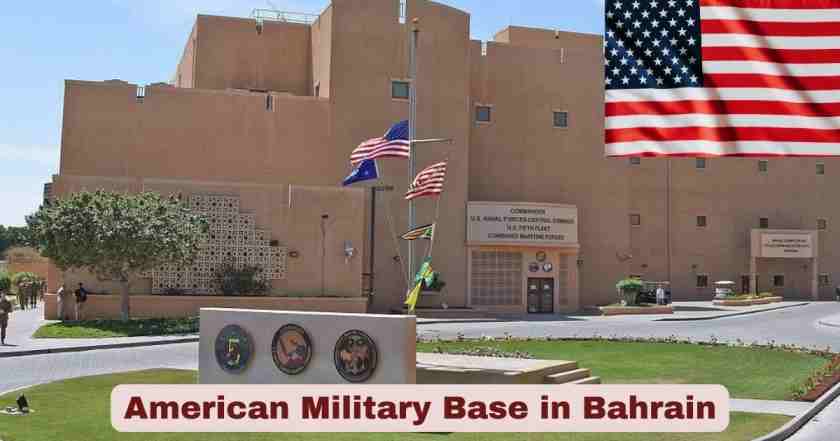
American Military Base in Bahrain 2026
The american military base in bahrain 2026 represents the United States Navy’s most strategically critical installation in the Middle East and the only permanent main operating base within the entire United States Central Command area of responsibility. Naval Support Activity Bahrain, located in Manama’s Juffair district, serves as the headquarters for both US Naval Forces Central Command (NAVCENT) and the US Fifth Fleet, overseeing naval operations across approximately 2.5 million square miles of vital waterways including the Persian Gulf, Red Sea, Arabian Sea, Gulf of Oman, and Gulf of Aden. This small 62-acre facility, often referred to as the “busiest 62 acres in the world,” hosts 78 tenant commands and supports critical maritime security operations protecting global energy transit routes, combating terrorism, countering piracy, and deterring regional aggression from Iran and other hostile actors.
The strategic importance of american military base in bahrain 2026 extends far beyond its compact physical footprint. Bahrain’s location at the heart of the Persian Gulf places American forces within striking distance of critical chokepoints including the Strait of Hormuz, through which approximately 21% of the world’s petroleum passes daily, the Suez Canal connecting the Mediterranean to the Red Sea, and the Strait of Bab el Mandeb at Yemen’s southern tip. The base supports approximately 8,500 military personnel and Department of Defense civilian employees as of 2025, with an additional 1,200 family members residing in the kingdom. The presence has been continuous since 1948 when the United States established Middle East Force, and formal since 1971 when the British Royal Navy transferred HMS Jufair to American control, making this the longest-standing permanent American military presence in the Arab world.
Interesting Facts and Latest Statistics on American Military Base in Bahrain 2026
| Category | Data Facts | Year |
|---|---|---|
| Total US Military Personnel | 8,500 military and DOD civilians (7,600 troops 900 civilians) | 2023-2025 |
| Total Dependent Family Members | 1,200 family members | 2025 |
| Base Physical Size | 62 acres primary facility plus 70 acres Mina Salman Port | 2015-2026 |
| Number of Tenant Commands | 78 tenant commands | 2025-2026 |
| Area of Responsibility Size | 2.5 million square miles of waterways | 2025-2026 |
| Annual Ship Movements | Approximately 100 ship visits annually | 2024-2025 |
| Countries in Fifth Fleet AOR | 20 countries under operational oversight | 2025-2026 |
| Annual Economic Contribution | Over $500 million to Manama economy | 2025 |
| FY2025 DOD Budget Bahrain | Over $770 million for personnel operations maintenance | FY2025 |
| Base Expansion Investment | $580 million expansion project completed | 2010-2015 |
| Mina Salman Pier Upgrade | $49 million pier expansion completed | 2021 |
| Port Security Barrier Cost | $18.9 million for world’s longest naval security barrier | 2021 |
| Off-Base Housing Units | 1,500 housing units in Juffair and Seef districts | 2025-2026 |
| Personnel Retention Rate | 95% retention rate Best-in-Class support | 2024 |
| FMS Active Cases Value | $6.08 billion in active Foreign Military Sales | January 2025 |
Data sources: Congressional Research Service (December 2025), US Department of Defense, US State Department (May 2025), Military Base Guides, NAVCENT official statements
The american military base in bahrain 2026 statistics demonstrate an installation operating at maximum capacity despite its relatively small size. With 8,500 military personnel and DOD civilians assigned to the base and 78 tenant commands squeezed onto just 62 acres, NSA Bahrain achieves an extraordinary operational density unmatched by any other American overseas installation. The base’s modest physical footprint belies its outsized strategic importance, as the Fifth Fleet area of responsibility covers 2.5 million square miles spanning 20 countries from Afghanistan to Yemen, including vital maritime chokepoints controlling 21% of global petroleum shipments. The approximately 100 annual ship visits include aircraft carrier strike groups, amphibious ready groups, guided-missile destroyers and cruisers, submarines, and logistics vessels requiring sophisticated port facilities and support infrastructure.
Economic and financial data underscore both American investment in the facility and its importance to Bahrain’s economy. The $580 million expansion project completed between 2010 and 2015 essentially doubled the base size from approximately 30 acres to 62 acres, adding new barracks, dining facilities, administrative buildings, recreational centers, and a flyover bridge connecting the main base to Mina Salman Port’s 70-acre waterfront facility. The $49 million Mina Salman pier upgrade completed in 2021 increased berthing capacity by 50%, enabling simultaneous docking of multiple warships including aircraft carriers, while the $18.9 million port security barrier protects up to 30 warships with the Navy’s longest continuous security installation. The FY2025 DOD budget allocation of over $770 million for personnel, operations, maintenance, and family housing demonstrates sustained American commitment, while the base’s $500 million annual economic contribution to Manama makes it a significant pillar of Bahrain’s economy. The $6.08 billion in active Foreign Military Sales cases as of January 2025 reflects deep defense cooperation extending beyond base operations to comprehensive security partnership.
US Military Personnel and Tenant Commands in the US 2026
| Command Organization | Personnel Count | Primary Mission |
|---|---|---|
| Total NSA Bahrain Personnel | 8,500 military and DOD civilians | All commands combined |
| Military Personnel | 7,600 active-duty servicemembers | Combat operational support |
| DOD Civilian Employees | Approximately 900 civilians | Administrative technical support |
| Family Members | 1,200 dependents | Military family population |
| US Naval Forces Central Command | Command headquarters staff | Fifth Fleet NAVCENT operations |
| US Fifth Fleet | Fleet headquarters command | Naval operations coordination |
| Fleet Anti-Terrorism Security Team | Company Central Bahrain | Base force protection security |
| Naval Special Warfare Group One | Detachment Bahrain | Special operations missions |
| Naval Surface Squadron 5 | Squadron headquarters | Surface ship coordination |
| Military Sealift Command Central | Command Bahrain | Logistics sealift operations |
| Navy Expeditionary Combat Forces | Central Command Bahrain | Expeditionary warfare support |
| US Marine Corps Fifth Marine Expeditionary Brigade | Forward-deployed Marines | Rapid reaction amphibious operations |
| Coast Guard Patrol Forces Southwest Asia | PATFORSWA detachment | Maritime law enforcement security |
| Tenant Commands Total | 78 organizations | Combined mission support |
Data sources: Military.com, Congressional Research Service (December 2025), US Navy official statements, Jane’s Defence
The personnel distribution at american military base in bahrain 2026 reveals a tightly integrated joint and coalition force structure operating from an extremely compact installation. The 8,500 total personnel comprising 7,600 military servicemembers and approximately 900 DOD civilian employees work alongside 78 distinct tenant commands, creating one of the highest personnel densities of any American overseas military facility. The US Naval Forces Central Command and US Fifth Fleet share a dual-hatted command structure, with the same Vice Admiral serving simultaneously as Commander NAVCENT (the naval component of US Central Command) and Commander Fifth Fleet (the operational fleet command), ensuring unified strategic direction and operational execution across the vast area of responsibility.
Major subordinate commands reflect the diverse mission set required for Middle East naval operations. The Fleet Anti-Terrorism Security Team Company Central – Bahrain provides specialized force protection and anti-terrorism response capabilities protecting the base and visiting naval vessels from asymmetric threats. Naval Special Warfare Group One Detachment Bahrain supports SEAL team operations, special reconnaissance, direct action missions, and training of partner nation special operations forces throughout the region. Naval Surface Squadron 5 coordinates operations for guided-missile destroyers and cruisers homeported or rotationally deployed to the Fifth Fleet, managing complex logistics, maintenance, and operational scheduling. Military Sealift Command Central Command – Bahrain operates logistics ships, replenishment oilers, dry cargo vessels, and hospital ships sustaining naval forces far from home ports, while Navy Expeditionary Combat Forces Central – Bahrain provides explosive ordnance disposal, construction battalions, maritime security, and riverine forces.
The US Marine Corps Fifth Marine Expeditionary Brigade maintains forward-deployed forces capable of rapid amphibious assault, noncombatant evacuation operations, crisis response, and integrated operations with Navy amphibious ready groups. The Coast Guard Patrol Forces Southwest Asia (PATFORSWA), representing the largest Coast Guard unit outside the United States, conducts port security, vessel boarding operations, maritime law enforcement, counter-smuggling patrols, and training of regional coast guards and maritime police forces. The 1,200 family members residing in Bahrain benefit from comprehensive support services including Department of Defense Education Activity schools, medical facilities, morale welfare and recreation programs, and access to 1,500 off-base housing units in Juffair and Seef neighborhoods, creating a cohesive military community despite the challenging deployment environment.
Fifth Fleet Operations and Strategic Mission in the US 2026
| Operational Area | Coverage Details | Strategic Significance |
|---|---|---|
| Total Area of Responsibility | 2.5 million square miles | Largest Fifth Fleet coverage |
| Persian Gulf | Complete operational coverage | Energy transit vital waterways |
| Arabian Sea | Eastern operations Indian Ocean | Counter-piracy power projection |
| Red Sea | Full operational authority | Suez Canal access Houthi threats |
| Gulf of Oman | Complete maritime domain | Strait of Hormuz approaches |
| Gulf of Aden | Counter-piracy operations | Yemen maritime security |
| Strait of Hormuz | Critical chokepoint | 21% of world petroleum transit |
| Suez Canal | Strategic waterway | Mediterranean-Red Sea connection |
| Strait of Bab el Mandeb | Yemen southern chokepoint | Red Sea-Gulf of Aden passage |
| Countries in AOR | 20 nations total | Afghanistan to Yemen coverage |
| Annual Ship Deployments | Approximately 100 movements | Carrier strike groups surface vessels |
| Task Force 50 | Battle Force CSG | Carrier strike operations |
| Task Force 51 | Amphibious Force ESG | Marine expeditionary operations |
| Task Force 53 | Logistics Force | Sealift replenishment operations |
| Combined Maritime Forces | 34-nation coalition | Counter-piracy counter-terrorism |
Data sources: US Naval Forces Central Command, US Fifth Fleet official website, Congressional Research Service, NAVSEA
The fifth fleet operations from american military base in bahrain 2026 encompass an extraordinarily vast and strategically critical maritime domain. The 2.5 million square miles of water under Fifth Fleet responsibility includes some of the world’s most contested and economically vital waterways. The Persian Gulf hosts the majority of global proven oil reserves and serves as the primary export route for petroleum from Saudi Arabia, Kuwait, Iraq, United Arab Emirates, Qatar, and Iran. The Strait of Hormuz, the narrow passage connecting the Persian Gulf to the Gulf of Oman, sees approximately 21% of the world’s petroleum shipments transit daily, making it arguably the single most important energy chokepoint on Earth. Any disruption to Hormuz shipping would trigger immediate global energy price spikes and potential economic crisis.
The Red Sea has emerged as an increasingly contested operational area following Houthi attacks on commercial shipping beginning in late 2023 and continuing through 2024-2025. The Fifth Fleet’s Operation Prosperity Guardian, a 34-nation coalition launched in December 2023, protects merchant vessels transiting between the Suez Canal and Bab el Mandeb Strait from drone attacks, anti-ship missile strikes, and attempted boarding by Houthi forces operating from Yemen. The Arabian Sea and Gulf of Aden require continuous counter-piracy patrols combating Somali pirates who have extended operations deep into the Indian Ocean using captured merchant vessels as mother ships, threatening an estimated 2.5 million square miles with piracy risk.
Operational task forces demonstrate the Fifth Fleet’s diverse mission portfolio. Task Force 50 (Battle Force) typically includes at least one carrier strike group with a nuclear-powered aircraft carrier, guided-missile cruisers, destroyers, submarines, and support vessels capable of projecting air power, conducting precision strikes, and establishing sea control across thousands of miles. Task Force 51 (Amphibious Force) integrates Navy amphibious assault ships with embarked Marines from the Fifth Marine Expeditionary Brigade, providing rapid crisis response including noncombatant evacuation operations, disaster relief, and forcible entry capabilities. Task Force 53 (Logistics Force) operates Military Sealift Command replenishment oilers, dry cargo ships, and hospital ships ensuring sustained operations far from resupply ports. The Combined Maritime Forces, a 34-nation coalition headquartered at NSA Bahrain, represents the world’s largest naval partnership, coordinating counter-piracy, counter-terrorism, and maritime security operations with regional and international navies including Bahrain, Saudi Arabia, United Arab Emirates, Kuwait, Pakistan, United Kingdom, France, and Australia.
Base Facilities Infrastructure and Recent Upgrades in the US 2026
| Facility Component | Specifications | Completion Status |
|---|---|---|
| Primary Base Acreage | 62 acres Juffair district Manama | Operational 2015-2026 |
| Mina Salman Port Facility | 70 acres waterfront port operations | Operational 2015-2026 |
| Total Expansion Investment | $580 million comprehensive project | Completed 2010-2015 |
| Personnel Barracks | Multiple buildings new construction | Completed 2015 |
| Dining Facilities | Expanded food service capabilities | Operational current |
| Navy Exchange | Retail shopping commissary services | Operational upgraded 2006 |
| Freedom Souq Food Court | Large dining entertainment complex | Operational since 2006 |
| Administrative Buildings | Multiple new office facilities | Completed 2015 |
| Recreation Center | Renovated MWR facilities | Operational upgraded |
| Flyover Bridge | NSA to Mina Salman connection | Completed 2015 |
| Perimeter Security Wall | Enhanced force protection barrier | Completed 2012 |
| Port Security Barrier | $18.9 million Navy’s longest barrier | Completed 2021 |
| Mina Salman Pier Upgrade | $49 million 50% capacity increase | Completed 2021 |
| Harbor Patrol Facility | Consolidated port operations center | Operational 2015 |
| Small Craft Basin | Protected boat operations area | Completed 2015 |
Data sources: Naval Support Activity Bahrain, GlobalSecurity.org, Gulf News, Wikipedia, Congressional Research Service
The facilities infrastructure at american military base in bahrain 2026 represents one of the most sophisticated and modern naval installations in the Middle East following the ambitious $580 million expansion project completed between 2010 and 2015. This comprehensive modernization initiative essentially doubled the base size from approximately 30 acres to 62 acres on the primary Juffair site, while simultaneously developing 70 additional acres of waterfront port facilities at Mina Salman. The expansion addressed critical overcrowding issues as the base population grew from approximately 4,400 personnel in earlier decades to the current 8,500 military and civilian workforce, plus 78 tenant commands requiring administrative space, operational facilities, and support infrastructure.
Phase one of the expansion project, completed in fall 2012, established foundational infrastructure including site utilities, a utilities building, a new perimeter wall providing enhanced force protection against vehicle-borne improvised explosive devices and unauthorized access, and a modern pass and identification gate with biometric screening capabilities. Phase two, completed in winter 2012, delivered a consolidated port operations and harbor patrol facility centralizing previously scattered maritime security functions, plus a small craft basin providing protected berthing for patrol boats, harbor security vessels, and small unit operations. Phase three constructed new personnel barracks alleviating chronic housing shortages, expanded dining facilities capable of serving thousands of meals daily, a renovated recreation center with fitness equipment, basketball courts, and indoor activities, and multiple administrative buildings housing command headquarters, intelligence facilities, and support offices.
The capstone phase four project completed the flyover bridge connecting NSA Bahrain’s main compound to the Mina Salman Port facility, eliminating previous reliance on congested surface roads through civilian areas and enhancing operational security by creating a controlled access corridor. The $49 million Mina Salman pier upgrade completed in 2021 increased berthing capacity by 50%, enabling simultaneous docking of larger and more numerous warships including aircraft carriers, amphibious assault ships, and multiple surface combatants. The $18.9 million port security barrier also completed in 2021 creates the Navy’s longest continuous security installation, protecting up to 30 warships from waterborne improvised explosive devices, swimmer attacks, and unauthorized vessel approaches using a combination of physical barriers, detection systems, and armed patrol boats.
Comprehensive Security Integration and Prosperity Agreement in the US 2026
| Agreement Component | Details | Implementation Date |
|---|---|---|
| Agreement Name | Comprehensive Security Integration and Prosperity Agreement C-SIPA | Signed September 13 2023 |
| Signing Parties | US Secretary of State Bahrain Crown Prince Prime Minister | September 13 2023 |
| Defense Commitments | Consultation assistance for imminent security threats | Active ongoing |
| External Aggression Clause | Immediate senior-level meetings determine responses | Treaty provision |
| Defense Working Group | Annual convening reviewing implementation progress | First meeting July 2024 |
| Military Integration | Strengthen armed forces coordination intelligence integration | Ongoing implementation |
| Economic Cooperation | Deepen trade investment strategic projects | Active framework |
| Science Technology | Collaboration emerging technologies trusted networks | Joint development |
| Regional Security | Foster broader Middle East security integration | Future expansion planned |
| Congressional Approval | Not required only congressional notification | Legally binding agreement |
| Major Non-NATO Ally Status | Bahrain designated MNNA since 2002 | Existing designation |
| Free Trade Agreement | US-Bahrain FTA signed 2004 | Operational since 2006 |
| Defense Cooperation Agreement | DCA in place since 1991 | Foundational agreement |
| FY2026 NDAA Provision | HR 1385 strategy to expand C-SIPA membership | Pending legislation |
| Annual Strategic Dialogue | Fourth annual dialogue held 2024 | Regular framework |
Data sources: US Embassy Bahrain, US State Department, Congressional Research Service (December 2025), Atlantic Council, Breaking Defense
The Comprehensive Security Integration and Prosperity Agreement signed September 13, 2023 represents an unprecedented deepening of the american military base in bahrain 2026 strategic partnership and establishes a new framework for US security commitments to Arab allies. Secretary of State Antony Blinken and Bahrain Crown Prince and Prime Minister Salman bin Hamad Al Khalifa signed C-SIPA at the State Department in Washington, creating what analysts characterize as the strongest security pledge the United States has ever extended to an Arab state short of a formal NATO Article 5-style defense treaty. The agreement commits the United States to immediately consult and provide assistance if Bahrain faces an imminent security threat, with provisions requiring immediate senior-level meetings to determine appropriate defense, economic, military, and political responses in the event of external aggression or threat of external aggression.
The defense and security pillar of C-SIPA builds on Bahrain’s existing Major Non-NATO Ally status granted in 2002, which provides preferential access to excess defense articles, expedited weapons sales processing, cooperative research and development opportunities, and priority delivery of military equipment. The agreement mandates annual Defense Working Group meetings, with the inaugural session convened in Washington in July 2024, advancing defense interoperability initiatives, addressing regional security challenges including Iran’s military activities and Houthi attacks on Red Sea shipping, and coordinating responses to evolving threats. The military integration components strengthen armed forces coordination through enhanced joint exercises, improve intelligence integration with shared threat assessments and real-time information exchange, and promote operational planning for contingencies ranging from Iranian aggression to terrorist attacks to regional instability.
C-SIPA’s economic, commercial, and trade cooperation pillar leverages the US-Bahrain Free Trade Agreement signed in 2004 and operational since 2006, which has increased bilateral trade fourfold from $780 million in 2005 to over $3 billion in recent years. The agreement promotes strategic investment opportunities benefiting both nations, develops supply chain resilience projects reducing dependence on potentially hostile actors, supports infrastructure development enhancing regional connectivity, and advances economic integration among C-SIPA parties and potential future members. The science and technology cooperation elements focus on responsible use of emerging technologies including artificial intelligence, advanced manufacturing, and biotechnology; network security protecting critical infrastructure from cyber attacks; and research and development creating high-value jobs and technological leadership. The agreement explicitly envisions welcoming additional parties to C-SIPA, potentially creating a broader Middle East security architecture, with pending FY2026 National Defense Authorization Act provisions (H.R. 1385) mandating State Department reporting on strategies to expand membership to other regional partners.
US-Bahrain Defense Cooperation and Military Sales in the US 2026
| Defense Sales Category | Amount Value | Details |
|---|---|---|
| Active FMS Cases | $6.08 billion total | Government-to-government sales |
| Direct Commercial Sales Since 2016 | $389 million authorized | Private defense contractor exports |
| Foreign Military Financing 2014-2025 | $22.5 million grants | Direct US funding assistance |
| DOD Military Grant Assistance | $28.423 million total | Defense Department grants |
| IMET Training 2014-2025 | $2.432 million investment | Military education training |
| Bahraini Personnel Trained US | Over 866 service members | Officers enlisted personnel |
| F-16 Block 70 Aircraft | First batch delivered 2024 | Most advanced F-16 variant |
| Patriot Missile Defense Systems | Multiple batteries delivered | Ballistic missile defense |
| AH-1Z Attack Helicopters | Delivered operational | Marine Corps variant |
| Guided MLRS Systems | Delivered operational | Precision rocket artillery |
| 35-Meter Fast Patrol Boats | Multiple vessels delivered | Coastal maritime security |
| TOW Missiles | Anti-tank guided missiles | Ground combat capabilities |
| Oliver Hazard Perry Class Ship | Former USS Robert G Bradley | Refurbished frigate transfer |
| F-16 Aircraft Upgrades | Modernization support packages | Enhanced capabilities |
| Bahrain Defense Budget 2024 | $2.5 billion annually | Total national defense spending |
Data sources: US State Department (May 2025 January 2025), Congressional Research Service (December 2025), Breaking Defense
The defense cooperation supporting american military base in bahrain 2026 extends far beyond base access to encompass comprehensive military partnership including weapons sales, training programs, joint exercises, and capability development. As of January 2025, the United States maintains $6.08 billion in active Foreign Military Sales cases with Bahrain under the government-to-government FMS program, representing one of the highest per-capita defense sales relationships globally for a nation of Bahrain’s size (approximately 1.5 million population with 750,000 Bahraini citizens). These sales include major platforms and systems transforming the Bahrain Defense Forces, estimated at 11,000 personnel, into one of the best-equipped militaries in the Gulf region despite being the smallest armed forces among Gulf Cooperation Council states.
Significant recent and ongoing defense sales demonstrate American commitment to Bahrain’s security. F-16 Block 70 fighter aircraft, with the first batch delivered in 2024, make Bahrain the first operator globally of this most advanced F-16 variant, featuring Active Electronically Scanned Array radar, advanced electronic warfare systems, precision-guided munitions capability, and enhanced avionics. Patriot missile defense systems, including multiple batteries and interceptor missiles, provide protection against Iranian ballistic missile threats, as demonstrated during the hypothetical June 2025 Israel-Iran conflict when Patriot batteries in Qatar successfully intercepted Iranian missiles. AH-1Z Viper attack helicopters, the same advanced variant operated by US Marine Corps, provide close air support, anti-armor capability, and armed reconnaissance. Guided Multiple Launch Rocket Systems (GMLRS) deliver precision rocket artillery out to 70 kilometers, while TOW anti-tank guided missiles equip ground forces against armored threats.
Naval capabilities have expanded through transfer of the former USS Robert G. Bradley, an Oliver Hazard Perry-class frigate, following comprehensive refurbishment and modernization, plus 35-meter fast patrol boats for coastal defense and maritime security operations. Since 2016, the United States has authorized $389 million in Direct Commercial Sales through private defense contractors, with top categories including gas turbine engines for ships and power generation, surface vessels of war for maritime security, and fire control/night vision devices enhancing combat effectiveness. Foreign Military Financing grants totaling $22.5 million since 2014 provide direct American funding for equipment purchases, while $28.423 million in DOD military grant assistance supplies critical capabilities, and $2.432 million in International Military Education and Training (IMET) has educated over 866 members of the Bahrain Armed Forces in the United States, building professional relationships and interoperability that endure throughout careers.
Historical Evolution and Regional Security Context in the US 2026
| Historical Milestone | Date | Significance |
|---|---|---|
| USS Ticonderoga First Transit | 1879 | First US warship through Strait of Hormuz |
| HMS Jufair Establishment | April 13 1935 | British Royal Navy base founded |
| US Middle East Force | January 20 1948 | First permanent US naval presence |
| Bahrain Independence | 1971 | Britain withdraws US assumes base |
| Administrative Support Unit | 1971 | Initial US facility designation |
| ASU Southwest Asia Renamed | 1992 | Expanded regional mission |
| US Fifth Fleet Reactivated | July 1995 | 48-year hiatus ended |
| NSA Bahrain Designation | 1997 | Current base name adopted |
| Major Non-NATO Ally Status | 2002 | Enhanced partnership status |
| Operation Iraqi Freedom | 2003-2011 | Base expansion support operations |
| US-Bahrain Free Trade Agreement | 2004 signed 2006 operational | Economic partnership |
| Base Expansion Groundbreaking | May 26 2010 | $580 million project begins |
| Abraham Accords | September 2020 | Bahrain-Israel normalization |
| Mina Salman Upgrade | 2021 completion | $49 million pier expansion |
| C-SIPA Signed | September 13 2023 | Comprehensive security agreement |
| Vigilant Resolve Exercise | March 2025 | Mass casualty evacuation drill |
Data sources: Congressional Research Service, US Naval Forces Central Command, Wikipedia, GlobalSecurity.org, US State Department
The historical evolution of american military base in bahrain 2026 traces back over 140 years to the first American naval presence in the Persian Gulf. USS Ticonderoga became the first US warship to transit the Strait of Hormuz in 1879, establishing a precedent for American naval operations in waters that would later become strategically critical to global energy security. The British Royal Navy established HMS Jufair on April 13, 1935 at Mina Salman Port to counter piracy threatening British maritime trade routes and protect British petroleum interests in the Gulf. This facility operated for 36 years as Britain’s primary naval installation in the region, hosting cruisers, destroyers, minesweepers, and support vessels monitoring Iranian waters, Arabian Peninsula coastlines, and approaches to the Indian Ocean.
The modern American military presence began January 20, 1948 when Commander-in-Chief, Northeastern Atlantic and Mediterranean, Admiral Conolly, created Task Force 126 to supervise Navy fleet oilers and chartered tankers picking up petroleum in the Persian Gulf. This task force evolved into Persian Gulf Forces by June 1949 and was redesignated Middle East Force (MIDEASTFOR) on August 16, 1949, establishing the first permanent American naval command in the region headquartered afloat aboard flagships rather than ashore. When Bahrain achieved independence from Britain in 1971, the Royal Navy’s treaty expired and the entire HMS Jufair site was transferred to American control with the Emir’s agreement. The initial 10-acre facility was designated Administrative Support Unit (ASU) Bahrain in 1979, renamed ASU Southwest Asia in 1992 reflecting expanded regional responsibilities, and finally designated Naval Support Activity Bahrain in 1997 under the Military Construction Program that initiated the first major infrastructure buildout.
The reactivation of US Fifth Fleet in July 1995 after a 48-year hiatus since World War II marked a watershed in American Middle East military posture, replacing MIDEASTFOR with a numbered fleet command capable of directing large-scale naval operations during the post-Gulf War era. The base expanded dramatically following Operation Iraqi Freedom beginning in 2003, with facilities construction accelerating to support increased personnel, additional tenant commands, and intensified operational tempo. The $580 million expansion project launched May 26, 2010 represented the largest investment in the facility’s history, doubling physical size and modernizing infrastructure to match 21st-century operational requirements. More recent milestones include Major Non-NATO Ally designation in 2002, the US-Bahrain Free Trade Agreement effective 2006, the Abraham Accords normalization with Israel in September 2020, and the landmark Comprehensive Security Integration and Prosperity Agreement signed September 13, 2023.
Quality of Life Support Services and Family Programs in the US 2026
| Support Service | Capacity Details | Beneficiary Population |
|---|---|---|
| Off-Base Housing Units | 1,500 units Juffair Seef districts | Military families E5-O10 |
| Transient Quarters | Limited on-base temporary lodging | Incoming personnel short-term |
| DoDEA School | American curriculum K-12 education | Dependent children |
| Naval Clinic | Primary healthcare outpatient services | All ID cardholders |
| Navy Exchange | Tax-free retail shopping | Active duty families retirees |
| Commissary | Tax-free grocery shopping | Authorized patrons |
| Freedom Souq Food Court | Multiple dining entertainment options | All base personnel |
| MWR Programs | Recreation fitness cultural events | Servicemembers families |
| Bahrain Grand Prix Outings | Annual Formula 1 race attendance | Base population organized trips |
| Manama Souq Tours | Cultural shopping excursions | Community integration programs |
| Beach Outings | Local beach access recreation | Family-friendly activities |
| Fitness Centers | Gyms cardio weight equipment | Health wellness programs |
| Relocation Assistance | Newcomer orientation cultural training | Incoming assignments |
| Housing Welcome Center | Rental assistance lease support | Personnel seeking housing |
| Sponsor Program | Pre-arrival information coordination | All incoming personnel |
Data sources: NSA Bahrain MWR, Navy Housing Bahrain, Military Bases, Military Base Guides, CNIC
The quality of life programs supporting american military base in bahrain 2026 personnel and families address the unique challenges of living and serving in the Middle East while maintaining morale, readiness, and family stability. Housing represents the most critical concern, with rank E5-E9 enlisted personnel and all officers expected to secure off-base accommodation in the local Bahraini housing market during their first 45 days while residing in temporary local hotels. The 1,500 off-base housing units available in Juffair and Seef districts range from apartments to villas, with the Housing Welcome Center providing rental assistance, lease negotiation support, landlord liaison services, and neighborhood orientation. All personnel must obtain non-availability stamps from Transient Quarters before checking into off-base hotels, as limited on-base temporary lodging cannot accommodate the steady influx of rotating personnel and visiting ship crews.
Education services for dependent children operate through the Bahrain Community Schools, two Department of Defense Education Activity facilities serving nearly 600 pre-K through grade 12 students as of school year 2024-25. The schools offer American curriculum fully accredited by US accreditation agencies, with high school students accessing 13 in-person Advanced Placement courses, participation in seven competitive sports, and membership in 26 extracurricular clubs. The schools maintain a 98% staffing rate as of September 2024, exceeding the DODEA-wide average of 96%, achieved through enhanced recruitment and retention strategies including 20% cost-of-living allowances and additional incentives for the designated hardship location. Approximately 9% of students receive special education services, with school leaders committed to providing high-quality education despite resource constraints for students with exceptionally high needs.
Medical services center on the Naval Health Clinic Bahrain providing primary healthcare, outpatient services, dental care, pharmacy, laboratory, radiology, and mental health counseling for active-duty personnel, family members, and eligible beneficiaries. The clinic operates Sunday through Thursday from 7:30 AM to 4:30 PM, with emergency and urgent care referrals to local Bahraini hospitals through TRICARE agreements. Commissary and Navy Exchange services provide tax-free shopping critical for managing Bahrain’s high cost of living, with the commissary operating seven days weekly from 8:00 AM to 8:00 PM offering American groceries, while the Exchange supplies retail goods, electronics, clothing, and household items at prices substantially below local Bahraini markets.
The Freedom Souq Food Court, opened in 2006 as part of earlier expansion projects, offers multiple dining options including American fast food, international cuisine, and coffee shops serving thousands of meals daily to base personnel unable to leave for lunch breaks. Morale, Welfare, and Recreation (MWR) programs operate fitness centers with cardio equipment, weight rooms, and group exercise classes, plus recreational activities including organized sports leagues, movie nights, cultural tours of Manama souqs exposing personnel to Bahraini culture and shopping, beach outings to local recreational areas, and annual special events such as Bahrain Grand Prix Formula 1 race attendance providing world-class entertainment. The Fleet and Family Support Center delivers information and referral services, deployment support, transition assistance, financial counseling, family advocacy programs, and Exceptional Family Member Program coordination ensuring families with special needs access appropriate educational and medical resources.
Regional Security Threats and Operational Challenges in the US 2026
| Threat Category | Details | Mitigation Measures |
|---|---|---|
| Strait of Hormuz Closure Threats | Iranian threats to close 21% of global oil transit | Fifth Fleet continuous patrols deterrence |
| Iranian Vessel Seizures | Illegal boarding detention of commercial ships | NAVCENT NCAGS coordination UKMTO registration |
| Iranian Mine Threats | Estimated 6000 naval mine inventory | Mine countermeasure vessels detection systems |
| Houthi Red Sea Attacks | Anti-ship missiles drones targeting | Operation Prosperity Guardian 34-nation coalition |
| Fast Attack Craft Swarms | IRGC small boat harassment tactics | Patrol boats defensive systems |
| Coastal Anti-Ship Missiles | Iranian shore-based missile batteries | Aegis defense systems counter-measures |
| Cyberattacks | Network intrusions espionage attempts | Enhanced cybersecurity protocols |
| Terrorism Threats | Al-Qaeda ISIS regional affiliates | Force protection intelligence sharing |
| Iranian Nuclear Program | Continued enrichment weapons potential | Monitoring diplomatic pressure sanctions |
| Regional Instability | Yemen Syria Iraq Lebanon conflicts | Crisis response humanitarian missions |
| Oil Price Volatility | 20-30% spike potential from disruptions | Strategic petroleum reserves coordination |
| June 2025 Israel-Iran Conflict | Operation Midnight Hammer nuclear strikes | Heightened alert status increased patrols |
| Iranian Domestic Unrest | December 2025 protests regime instability | Monitoring contingency planning |
| Carrier Strike Group Gaps | Temporary absence from Persian Gulf | Rotational deployments surge capacity |
Data sources: US Maritime Administration, Congressional Research Service, US State Department, International Crisis Group, Defense Intelligence Agency
The regional security threats facing american military base in bahrain 2026 reflect an increasingly volatile Middle East security environment with Iran as the primary destabilizing actor. Strait of Hormuz closure threats remain Iran’s most potent asymmetric leverage, with approximately 20% to 27% of the world’s crude oil and petroleum products transiting this narrow waterway daily, plus 22% of global liquefied natural gas (LNG) trade. At its narrowest point, the strait measures just 33 kilometers wide with shipping lanes only 3 kilometers across, making it vulnerable to Iranian mines, fast attack craft, coastal missiles, and harassment operations. Any prolonged closure could trigger 20-30% spikes in global oil prices, destabilizing energy markets worldwide and imposing billions in additional costs on energy-importing nations including India, China, Japan, and South Korea.
Iranian vessel seizures continue as a persistent harassment tactic, with the IRGC seizing the Marshall Islands-flagged tanker Talara in November 2025 as it transited from the UAE to Singapore, marking the first such interdiction in months following the June 2025 Israel-Iran conflict. The US Maritime Administration issued advisory 2025-009 warning that commercial vessels transiting Strait of Hormuz and Gulf of Oman remain at risk of illegal boarding, detention, or seizure by Iranian forces using small boats and helicopters during boarding operations. Iranian forces attempt to force vessels into Iranian territorial waters, creating diplomatic incidents and threatening freedom of navigation. The Fifth Fleet’s Naval Cooperation and Guidance for Shipping (NCAGS) operates 24/7 watch centers providing real-time threat information, voyage planning coordination, and recommendations to US-flagged vessels, while partnering with the United Kingdom Maritime Trade Office (UKMTO) for comprehensive maritime domain awareness.
Mine warfare capabilities represent Iran’s most cost-effective means of disrupting maritime traffic, with the Defense Intelligence Agency estimating Iran possesses over 6,000 naval mines as of 2025, including limpet mines attached to ship hulls, moored mines floating beneath the surface, and bottom mines resting on seabed. Iran mined the Strait of Hormuz during the 1980s Iran-Iraq War, prompting US military mine-clearing operations and demonstrating Tehran’s willingness to employ such tactics. Houthi attacks in the Red Sea beginning late 2023 and continuing through 2024-2025 employed anti-ship missiles, explosive drones, and attempted boarding operations against commercial vessels, leading to the Fifth Fleet’s Operation Prosperity Guardian assembling a 34-nation coalition protecting merchant ships transiting between Suez Canal and Bab el Mandeb Strait. The June 2025 Israel-Iran conflict, including Operation Midnight Hammer strikes against three Iranian nuclear facilities, escalated tensions dramatically, with US Maritime Advisory 2025-002A warning of potential retaliatory strikes throughout the Persian Gulf, Arabian Gulf, Gulf of Oman, and Arabian Sea.
Economic Impact and Regional Influence in the US 2026
| Economic Indicator | Amount Value | Regional Impact |
|---|---|---|
| Annual Contribution to Manama | Over $500 million | Significant economic pillar |
| Base Personnel Spending | Hundreds of millions annually | Local businesses retail services |
| Construction Contracts | Major infrastructure projects | Bahraini contractors employment |
| Housing Market Impact | 1500 units rental demand | Juffair Seef property values |
| Employment Direct | Base service positions | Bahraini nationals civilian jobs |
| Bahrain US Trade | Over $3 billion annually | FTA benefits since 2006 |
| Bahrain GDP | $44.4 billion | US base significant percentage |
| Strategic Investment | Billions in upgrades | Long-term commitment |
| Tourism Spillover | Visiting ship crews | Restaurants entertainment shopping |
| Educational Partnerships | IMET training cooperation | Professional development capacity |
| Medical Facility Usage | Local hospital referrals | Healthcare sector revenue |
| Infrastructure Development | Utilities roads communications | Broader economic modernization |
Data sources: Congressional Research Service, US State Department, Bahrain Economic Development Board, World Bank
The economic impact of american military base in bahrain 2026 extends far beyond direct defense cooperation to constitute a major pillar of Bahrain’s overall economy. The base contributes over $500 million annually to Manama’s economy through personnel spending, construction contracts, service procurement, and infrastructure development. With 8,500 military and DOD civilian personnel plus 1,200 family members residing in Bahrain, American military families inject hundreds of millions of dollars into the local economy through off-base housing rentals, shopping at Bahraini businesses, dining at local restaurants, entertainment spending, and tourism activities. The 1,500 off-base housing units in Juffair and Seef districts create sustained rental income for Bahraini property owners, with demand for American-style apartments and villas supporting higher property values and spurring residential development catering to Western expatriates.
Construction contracts associated with base expansion and modernization projects employ Bahraini contractors, engineers, laborers, and construction firms. The $580 million expansion project completed in 2010-2015 provided years of employment, the $49 million Mina Salman pier upgrade completed in 2021 supported shipyard workers and maritime construction specialists, and the $18.9 million port security barrier required specialized fabrication and installation expertise. Ongoing Facilities Improvement Program expenditures averaging $32.8 million annually under the 2022-2027 agreement sustain construction sector activity. Utilities costs of ¥13.3 billion annually flow to Bahraini electricity, water, gas, and fuel providers, while base procurement of food, supplies, equipment, and services supports Bahraini businesses across multiple sectors.
The US-Bahrain Free Trade Agreement operational since 2006 has increased bilateral trade fourfold from $780 million in 2005 to over $3 billion in recent years, with the military presence serving as an anchor for broader economic partnership. American defense contractors maintain permanent offices in Bahrain supporting equipment maintenance, training programs, and technical assistance, creating high-skilled employment for Bahraini engineers and technicians. The International Military Education and Training (IMET) program’s investment of $2.432 million since 2014 educating over 866 Bahraini military personnel in the United States builds professional skills transferable to civilian sectors. Ship visits inject tourism revenue as sailors spend liberty time exploring Manama souqs, visiting cultural sites, dining at restaurants, and purchasing souvenirs, with approximately 100 annual ship visits bringing thousands of sailors ashore for brief periods.
Strategic Value to US Middle East Policy in the US 2026
| Strategic Function | Capability Value | Policy Impact |
|---|---|---|
| Forward Presence | Permanent regional headquarters | Crisis response deterrence |
| Rapid Reaction | Fifth Fleet carrier strike groups | Power projection capability |
| Regional Partnerships | GCC bilateral cooperation | Alliance network strengthening |
| Energy Security | Strait of Hormuz protection | Global economic stability |
| Counter-Terrorism | CT operations intelligence | ISIS Al-Qaeda disruption |
| Humanitarian Assistance | Disaster relief capabilities | Soft power influence |
| Intelligence Collection | Strategic warning ISR | Threat assessment |
| Naval Logistics Hub | Repair resupply maintenance | Sustained operations |
| Coalition Coordination | Combined Maritime Forces HQ | 34-nation partnership |
| Diplomatic Leverage | Security umbrella confidence | Political influence |
| Iran Deterrence | Military credibility | Containment strategy |
| Israel Security | Regional stability | Abraham Accords support |
Data sources: Congressional Research Service, US Central Command, US State Department, Center for Strategic and International Studies
The strategic value of american military base in bahrain 2026 to US Middle East policy cannot be overstated, as NSA Bahrain serves as the only permanent US main operating base within the entire US Central Command area of responsibility spanning 20 countries from Afghanistan to Yemen. The forward presence of Fifth Fleet headquarters enables immediate crisis response capabilities impossible to replicate from bases in the United States or even forward-deployed locations in Europe. Carrier strike groups operating from or coordinated through Bahrain can launch air strikes deep into Iranian territory, conduct precision strikes against terrorist targets in Syria, Iraq, Yemen, or Afghanistan, establish sea control across 2.5 million square miles of contested waters, and conduct noncombatant evacuation operations extracting American citizens from collapsing states within hours rather than days or weeks required for transatlantic deployments.
Regional partnership facilitation through Bahrain’s position as headquarters for the 34-nation Combined Maritime Forces creates unprecedented coalition cooperation impossible through bilateral relationships alone. Partner navies including Saudi Arabia, UAE, Kuwait, Qatar, Oman, Pakistan, and European allies coordinate counter-piracy operations, counter-terrorism patrols, maritime security exercises, and information sharing through Combined Task Forces 150, 151, 152, and 153, all headquartered at NSA Bahrain. Energy security protection through continuous Fifth Fleet patrols in the Strait of Hormuz ensures 20-27% of global petroleum shipments and 22% of LNG trade can transit safely despite Iranian threats, preventing oil price spikes that would destabilize global economy and undermine American allies’ energy security.
Counter-terrorism operations leverage Bahrain as a staging base for Special Operations Forces, intelligence collection platforms, and strike aircraft targeting ISIS, Al-Qaeda in the Arabian Peninsula, and other terrorist organizations throughout the region. The Comprehensive Security Integration and Prosperity Agreement (C-SIPA) signed September 2023 elevates Bahrain to unprecedented security partnership status, creating framework for expanded defense cooperation potentially including additional Gulf states, and demonstrating American commitment to partner security encouraging resistance to Iranian coercion. The support for Abraham Accords normalization between Israel and Gulf Arab states relies partly on American security guarantees enabled by forward presence at NSA Bahrain, as Gulf states require confidence that normalizing with Israel won’t leave them vulnerable to Iranian retaliation without credible American protection.
Future Outlook and Modernization Plans in the US 2026
| Development Area | Plans Timeline | Strategic Impact |
|---|---|---|
| C-SIPA Expansion | Additional regional members | Broader Middle East security architecture |
| Infrastructure Modernization | Ongoing FIP funded upgrades | Enhanced capability readiness |
| Renewable Energy Projects | Solar wind installations | Sustainability reduced costs |
| Cybersecurity Enhancements | Network defense upgrades | Protection against Iranian attacks |
| Pier Capacity Expansion | Future berthing improvements | Accommodate larger vessels |
| Advanced Weapons Systems | Missile defense hypersonic | Counter evolving threats |
| Autonomous Systems Integration | Unmanned vessels drones | Force multiplication |
| AI-Enhanced Operations | Decision support targeting | Operational efficiency |
| Coalition Facility Improvements | CMF headquarters expansion | Enhanced partner coordination |
| Family Support Upgrades | Recreation housing schools | Quality of life retention |
| Environmental Compliance | Pollution reduction programs | Host nation relations |
| 5G Network Deployment | Communications modernization | Information superiority |
| Medical Facility Expansion | Enhanced healthcare services | Personnel readiness |
| Security Barrier Enhancements | Additional protection layers | Force protection |
Data sources: Naval Support Activity Bahrain, Congressional Research Service, US Department of Defense, Navy SPAWAR
The future outlook for american military base in bahrain 2026 anticipates sustained and potentially expanded American commitment to the Middle East despite periodic policy debates about reducing overseas footprints. The Comprehensive Security Integration and Prosperity Agreement (C-SIPA) framework explicitly envisions welcoming additional regional partners, with pending FY2026 National Defense Authorization Act provisions (H.R. 1385) mandating State Department strategies to expand membership potentially to UAE, Saudi Arabia, Qatar, Kuwait, Oman, and Jordan, creating a comprehensive Gulf security architecture rivaling NATO’s collective defense framework. Such expansion would necessitate enhanced coordination facilities at NSA Bahrain, additional staff positions, upgraded communications systems, and expanded port facilities accommodating partner nation naval vessels.
Infrastructure modernization continues through the Facilities Improvement Program allocating ¥164.1 billion ($1.09 billion) over the 2022-2027 five-year agreement period, funding energy-efficient building systems, renewable energy installations reducing dependence on purchased electricity, advanced water conservation systems addressing Bahrain’s freshwater scarcity, upgraded barracks and family housing improving quality of life, and modernized administrative facilities incorporating cyber-secure communications. Renewable energy projects including rooftop solar panels, battery storage systems, and potentially wind installations aim to reduce operational costs while demonstrating environmental stewardship enhancing host nation relations. Cybersecurity enhancements represent critical priorities given Iranian sophisticated cyber warfare capabilities and documented attacks against Gulf infrastructure, requiring investment in network defense systems, threat detection platforms, encryption technologies, and personnel training.
Advanced weapons systems integration will see deployment of next-generation missile defense interceptors countering Iranian hypersonic weapons development, directed energy weapons providing cost-effective drone and small boat defense, autonomous underwater vehicles for mine detection and clearance, and artificial intelligence-enhanced battle management systems improving decision-making speed and accuracy. The transformation of operational concepts incorporating unmanned systems, manned-unmanned teaming, and AI-enabled targeting will require upgraded command and control facilities, enhanced data processing capabilities, and improved bandwidth supporting real-time information sharing across geographically dispersed units. Coalition facility improvements supporting the Combined Maritime Forces’ 34-nation partnership will expand headquarters spaces, add secure conference facilities, enhance information sharing systems, and create training venues for partner nation personnel rotations.
Disclaimer: This research report is compiled from publicly available sources. While reasonable efforts have been made to ensure accuracy, no representation or warranty, express or implied, is given as to the completeness or reliability of the information. We accept no liability for any errors, omissions, losses, or damages of any kind arising from the use of this report.