
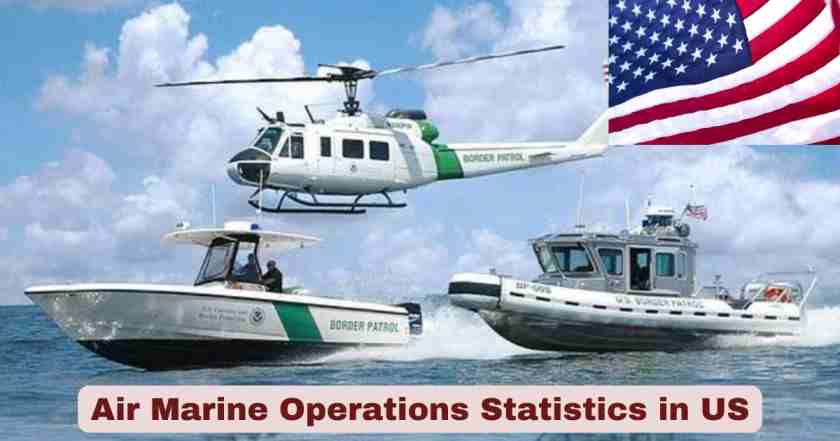
Air and Marine Operations in America 2025
The United States Customs and Border Protection’s Air and Marine Operations represents one of the most critical components of America’s border security infrastructure. Operating with cutting-edge aviation and maritime capabilities, AMO serves as the nation’s frontline defense against security threats approaching from air and sea environments. With approximately 1,800 federal agents and mission support personnel commanding 240 aircraft and 300 marine vessels across the United States, Puerto Rico, and the U.S. Virgin Islands, this elite force conducts operations that extend far beyond traditional borders. The organization’s mission encompasses interdicting unlawful entries, investigating criminal networks, providing comprehensive domain awareness, and responding to national emergencies with precision and expertise.
Throughout Fiscal Year 2024, Air and Marine Operations demonstrated exceptional effectiveness in protecting American borders through a multifaceted approach combining advanced technology, highly trained personnel, and strategic partnerships with federal, state, and local law enforcement agencies. The organization operates from branches and units strategically positioned throughout the country, enabling rapid response capabilities to emerging threats. AMO’s operations span three primary domains including land border security, maritime border security, and coordinated efforts with state, local, and tribal partners, creating a comprehensive security network that addresses threats across multiple dimensions.
Interesting Facts About Air and Marine Operations in the US 2025
| Key Fact Category | Statistic | Fiscal Year |
|---|---|---|
| Total Federal Agents and Support Personnel | 1,800 agents | FY 2024-2025 |
| Aircraft Fleet Size | 240 aircraft | FY 2024-2025 |
| Marine Vessel Fleet Size | 300 marine vessels | FY 2024-2025 |
| Total Arrests Conducted | 1,009 arrests | FY 2024 |
| Total Apprehensions of Illegal Aliens | 48,609 apprehensions | FY 2024 |
| Cocaine Seized or Disrupted | 244,781 pounds | FY 2024 |
| Fentanyl Seized or Disrupted | 2,235 pounds | FY 2024 |
| Methamphetamine Seized or Disrupted | 3,061 pounds | FY 2024 |
| Weapons Seized | 1,499 weapons | FY 2024 |
| Currency Seized | $12.5 million | FY 2024 |
| Search and Rescue Operations Conducted | 173 rescues | FY 2024 |
| Unmanned Aircraft System Total Flight Hours | 9,957 hours | FY 2021 |
| UAS Total Mission Count | 2,606 missions | FY 2021 |
Data Source: U.S. Customs and Border Protection Air and Marine Operations Statistics, Fiscal Year 2024
Air and Marine Operations achieved remarkable enforcement results during Fiscal Year 2024, with the organization conducting 1,009 arrests and 48,609 apprehensions of individuals attempting illegal entry into the United States. The scale of drug interdiction operations proved particularly impressive, with AMO agents seizing or disrupting 244,781 pounds of cocaine, representing one of the largest cocaine interdiction efforts in recent years. Additionally, the organization intercepted 2,235 pounds of fentanyl, a synthetic opioid responsible for tens of thousands of American deaths annually, and 3,061 pounds of methamphetamine, preventing these dangerous substances from reaching communities across the nation. Beyond narcotics enforcement, AMO seized 1,499 weapons and $12.5 million in currency linked to criminal organizations, disrupting the financial networks that fuel transnational crime.
The organizational structure supporting these operations includes approximately 1,800 federal agents and mission support personnel who operate an impressive fleet consisting of 240 aircraft and 300 marine vessels deployed strategically throughout the United States, Puerto Rico, and the U.S. Virgin Islands. This extensive infrastructure enables AMO to maintain continuous surveillance and rapid response capabilities across vast territories. The humanitarian aspect of AMO’s mission manifests through search and rescue efforts, with agents conducting 173 rescue operations in Fiscal Year 2024, saving lives while simultaneously enforcing border security laws. The integration of advanced unmanned aircraft systems has enhanced operational capabilities significantly, with UAS platforms flying 2,606 missions totaling 9,957 flight hours in Fiscal Year 2021, providing persistent surveillance coverage across challenging terrain and maritime environments where manned operations prove difficult or dangerous.
Enforcement Actions and Apprehensions by Air and Marine Operations in the US 2025
| Enforcement Category | FY 2023 | FY 2024 | Year-over-Year Change |
|---|---|---|---|
| Total Arrests | 1,004 | 1,009 | +0.5% |
| Apprehensions of Illegal Aliens | 89,909 | 48,609 | -45.9% |
| Total Enforcement Actions | 90,913 | 49,618 | -45.4% |
Data Source: U.S. Customs and Border Protection Air and Marine Operations Enforcement Statistics, Fiscal Years 2023-2024
Air and Marine Operations enforcement statistics for Fiscal Years 2023 and 2024 reveal significant operational shifts in border security dynamics. The organization conducted 1,009 arrests in FY 2024, representing a modest increase of 0.5% from the 1,004 arrests recorded in FY 2023. This relatively stable arrest rate suggests consistent identification and apprehension of individuals involved in criminal activities at and beyond the borders. However, apprehensions of illegal aliens decreased substantially from 89,909 in FY 2023 to 48,609 in FY 2024, marking a 45.9% reduction. This significant decline indicates either enhanced deterrence effects from enforcement operations, shifts in migration patterns, or reallocation of resources to other priority areas within border security operations.
The combined total of enforcement actions, which encompasses both arrests and apprehensions, decreased from 90,913 in FY 2023 to 49,618 in FY 2024, representing an overall 45.4% reduction. This substantial decrease in total enforcement actions reflects evolving border security challenges and potentially more targeted operational focus on high-value enforcement activities. While apprehension numbers declined, the consistency in arrest figures suggests AMO maintained effectiveness in identifying and detaining individuals involved in serious criminal violations. The data demonstrates AMO’s adaptive approach to border security, adjusting operational priorities based on threat assessments and resource availability while maintaining core law enforcement capabilities across air and maritime domains.
Drug Seizure Operations by Air and Marine Operations in the US 2024
| Drug Type | Pounds Seized or Disrupted FY 2023 | Pounds Seized or Disrupted FY 2024 | Change |
|---|---|---|---|
| Cocaine | 256,883 pounds | 244,781 pounds | -4.7% |
| Fentanyl | 2,049 pounds | 2,235 pounds | +9.1% |
| Methamphetamine | 4,050 pounds | 3,061 pounds | -24.4% |
| Marijuana | Data not specified | Data not specified | N/A |
Data Source: U.S. Customs and Border Protection Air and Marine Operations Drug Seizure Statistics, Fiscal Years 2023-2024
Drug interdiction remains a cornerstone mission for Air and Marine Operations, with FY 2024 statistics demonstrating the organization’s critical role in combating narcotics trafficking. AMO seized or disrupted 244,781 pounds of cocaine during FY 2024, representing a 4.7% decrease from the 256,883 pounds interdicted in FY 2023. Despite this slight reduction, the volume of cocaine seizures remains extraordinarily high, reflecting the persistent challenge of cocaine smuggling operations targeting the United States through maritime and air routes. The consistency of cocaine interdiction at these elevated levels demonstrates AMO’s sustained pressure on drug trafficking organizations attempting to move large quantities of narcotics across international boundaries.
Fentanyl seizures increased significantly during FY 2024, with AMO interdicting 2,235 pounds compared to 2,049 pounds in FY 2023, marking a 9.1% increase. This upward trend in fentanyl interdictions aligns with the nationwide opioid crisis, as this synthetic opioid continues claiming tens of thousands of American lives annually. The increased interdiction rate suggests either enhanced detection capabilities or expanding fentanyl trafficking operations that AMO successfully disrupted. Methamphetamine seizures decreased substantially from 4,050 pounds in FY 2023 to 3,061 pounds in FY 2024, representing a 24.4% decline. This reduction may indicate shifts in trafficking routes, improved deterrence effects, or changes in production and distribution patterns within methamphetamine trafficking networks. The comprehensive drug seizure operations conducted by AMO directly impact public health outcomes by preventing dangerous substances from reaching American communities.
Weapons and Currency Seizures by Air and Marine Operations in the US 2024
| Seizure Category | FY 2023 | FY 2024 | Year-over-Year Change |
|---|---|---|---|
| Weapons Seized | 2,200 weapons | 1,499 weapons | -31.9% |
| Currency Seized | $15.3 million | $12.5 million | -18.3% |
Data Source: U.S. Customs and Border Protection Air and Marine Operations Seizure Statistics, Fiscal Years 2023-2024
Weapons interdiction represents a critical component of Air and Marine Operations’ comprehensive border security strategy. During Fiscal Year 2024, AMO seized 1,499 weapons, representing a 31.9% decrease from the 2,200 weapons confiscated in FY 2023. This substantial reduction in weapons seizures could reflect multiple factors including shifts in weapons trafficking patterns, enhanced cooperation with other law enforcement agencies resulting in earlier interdictions, or changes in smuggling methodologies that made weapons detection more challenging. Despite the numerical decrease, each weapon seized represents a potential threat prevented from reaching criminal organizations or individuals who would use these firearms for illicit purposes. The weapons interdicted by AMO often include firearms destined for drug cartels, gang operations, and other criminal enterprises operating within and beyond United States borders.
Currency seizures by Air and Marine Operations totaled $12.5 million in FY 2024, declining 18.3% from the $15.3 million seized in FY 2023. These currency seizures directly target the financial infrastructure supporting transnational criminal organizations by denying them access to proceeds from illegal activities. The millions of dollars interdicted represent funds that would otherwise finance drug trafficking operations, weapons purchases, corruption of officials, and expansion of criminal networks. While the decrease from FY 2023 levels suggests either reduced smuggling activity or evolving methods for moving illicit funds, the $12.5 million seized in FY 2024 still represents a significant financial blow to criminal organizations. AMO’s integrated approach combining drug, weapons, and currency interdictions creates comprehensive pressure on criminal networks by targeting both their operations and financial sustainability simultaneously.
Search and Rescue Operations by Air and Marine Operations in the US 2019-2024
| Fiscal Year | Number of Rescues |
|---|---|
| FY 2019 | 377 rescues |
| FY 2020 | 184 rescues |
| FY 2021 | 373 rescues |
| FY 2022 | 447 rescues |
| FY 2023 | 187 rescues |
| FY 2024 | 173 rescues |
Data Source: U.S. Customs and Border Protection Air and Marine Operations Search and Rescue Statistics, Fiscal Years 2019-2024
Search and rescue operations constitute a vital humanitarian dimension of Air and Marine Operations’ mission, with AMO agents frequently conducting life-saving efforts while executing border security responsibilities. The data spanning FY 2019 through FY 2024 reveals significant fluctuations in rescue operations, with FY 2022 recording the highest number at 447 rescues, while FY 2024 showed 173 rescues, representing the lowest figure in the six-year period. The peak in FY 2022 coincided with increased migration patterns and challenging environmental conditions that placed more individuals in life-threatening situations requiring emergency intervention. The substantial decrease to 184 rescues in FY 2020 likely reflects impacts from the COVID-19 pandemic, including reduced migration flows and altered operational priorities during the global health crisis.
The 173 rescues conducted in FY 2024 demonstrate AMO’s continued commitment to preserving human life even while enforcing immigration and border security laws. Each rescue represents individuals facing potentially fatal circumstances in remote desert areas, treacherous maritime environments, or mountainous terrain who required immediate assistance from highly trained AMO personnel. The variation in annual rescue numbers from 173 to 447 across this period illustrates how environmental factors, migration trends, weather patterns, and smuggling tactics influence the frequency of life-threatening situations requiring AMO intervention. These rescue operations showcase the dual nature of AMO’s mission, balancing enforcement responsibilities with humanitarian obligations, and highlight the exceptional training and capabilities of AMO personnel who routinely operate in hazardous environments to save lives while maintaining border security.
Unmanned Aircraft System Operations by Air and Marine Operations in the US 2017-2021
| Mission Category | FY 2017 | FY 2018 | FY 2019 | FY 2020 | FY 2021 |
|---|---|---|---|---|---|
| Land Border Security Missions | 961 | 1,555 | 2,417 | 2,125 | 2,505 |
| Land Border Security Flight Hours | 7,120 | 7,642 | 7,849 | 8,164 | 9,159 |
| Maritime Border Security Missions | 20 | 59 | 75 | 57 | 96 |
| Maritime Border Security Flight Hours | 116 | 287 | 367 | 672 | 784 |
| State Local Tribal Coordination Missions | 9 | 2 | 3 | 0 | 5 |
| State Local Tribal Coordination Flight Hours | 40 | 14 | 11 | 0 | 14 |
| Total Missions | 990 | 1,616 | 2,495 | 2,182 | 2,606 |
| Total Flight Hours | 7,276 | 7,942 | 8,227 | 8,836 | 9,957 |
Data Source: U.S. Customs and Border Protection Air and Marine Operations UAS Statistics, Fiscal Years 2017-2021
Unmanned Aircraft System operations have become increasingly central to Air and Marine Operations’ comprehensive surveillance and interdiction strategy. The data from FY 2017 through FY 2021 demonstrates substantial growth in UAS utilization, with total missions increasing from 990 in FY 2017 to 2,606 in FY 2021, representing a 163% increase over the five-year period. Similarly, total flight hours expanded from 7,276 in FY 2017 to 9,957 in FY 2021, marking a 37% growth. Land border security missions dominate UAS operations, growing from 961 missions in FY 2017 to 2,505 missions in FY 2021, with corresponding flight hours increasing from 7,120 to 9,159 hours. This expansion reflects the strategic value of persistent surveillance capabilities that UAS platforms provide across vast stretches of border terrain where continuous manned aircraft presence would prove prohibitively expensive and logistically challenging.
Maritime border security UAS operations expanded significantly during this period, with missions increasing from just 20 in FY 2017 to 96 in FY 2021, while flight hours grew from 116 to 784 hours, representing a 576% increase in flight time. This dramatic expansion in maritime UAS operations demonstrates recognition of these platforms’ effectiveness in monitoring extensive coastal areas and maritime approaches where traditional surface vessel patrols alone cannot provide adequate coverage. State, local, and tribal coordination missions remained relatively limited throughout the period, fluctuating between 0 and 9 missions annually, reflecting the primary federal focus of AMO operations. The minimal coordination missions in FY 2020 with 0 missions and 0 flight hours likely resulted from operational adjustments during the COVID-19 pandemic. The comprehensive UAS program enhances AMO’s operational effectiveness by providing cost-efficient, persistent surveillance capabilities that complement manned aircraft and vessel operations.
Air and Marine Operations Organizational Structure in the US 2025
| Organizational Component | Quantity/Description |
|---|---|
| Total Federal Agents and Support Personnel | Approximately 1,800 |
| Aircraft Fleet | 240 aircraft |
| Marine Vessel Fleet | 300 marine vessels |
| Primary Operational Regions | United States, Puerto Rico, U.S. Virgin Islands |
| Primary Directorates | Operations, Training Safety and Standards, Mission Support |
| Executive Leadership | Executive Assistant Commissioner Jonathan P. Miller |
| Parent Agency | U.S. Customs and Border Protection |
| Department | Department of Homeland Security |
Data Source: U.S. Customs and Border Protection Air and Marine Operations Organizational Information, 2025
Air and Marine Operations maintains a sophisticated organizational structure designed to maximize operational effectiveness across diverse geographic regions and mission sets. The organization employs approximately 1,800 federal agents and mission support personnel who operate and maintain an extensive fleet of 240 aircraft and 300 marine vessels strategically positioned throughout the continental United States, Puerto Rico, and the U.S. Virgin Islands. This substantial workforce and equipment inventory enables AMO to maintain continuous operations across multiple time zones and geographic regions simultaneously. The organizational leadership structure includes three primary directorates focusing on Operations, Training Safety and Standards, and Mission Support, each fulfilling critical functions that sustain AMO’s complex operational requirements. The Operations directorate deploys aircraft, vessels, and personnel to air and marine branches and units nationwide, ensuring rapid response capabilities to emerging threats.
Executive Assistant Commissioner Jonathan P. Miller leads Air and Marine Operations, providing strategic direction and operational oversight for this critical component of U.S. Customs and Border Protection. AMO functions as an operational component within CBP, which itself operates under the Department of Homeland Security, integrating air and maritime law enforcement capabilities with broader border security and customs enforcement missions. The 240 aircraft fleet includes various platforms ranging from helicopters to fixed-wing surveillance aircraft and unmanned aerial systems, each optimized for specific operational requirements. The 300 marine vessels encompass diverse watercraft from small response boats to large offshore patrol vessels capable of extended maritime operations. This comprehensive organizational structure and resource allocation reflects the federal government’s recognition of air and maritime domains as critical vectors requiring dedicated law enforcement presence and capabilities to prevent illegal entries, drug smuggling, and other threats to national security.
Drug Trafficking Disruption Impact by Air and Marine Operations in the US 2024
| Impact Metric | FY 2024 Data |
|---|---|
| Total Cocaine Seized | 244,781 pounds |
| Estimated Cocaine Street Value | Approximately $2.4 billion |
| Total Fentanyl Seized | 2,235 pounds |
| Estimated Fentanyl Lethal Doses | Over 500 million doses |
| Total Methamphetamine Seized | 3,061 pounds |
| Estimated Methamphetamine Street Value | Approximately $30.6 million |
| Criminal Organizations Disrupted | Multiple transnational networks |
Data Source: U.S. Customs and Border Protection Air and Marine Operations Drug Seizure Statistics and DEA Pricing Data, Fiscal Year 2024
The drug trafficking disruption achieved by Air and Marine Operations in Fiscal Year 2024 represents an extraordinary impact on public health and safety throughout the United States. The 244,781 pounds of cocaine seized translates to approximately 2.4 billion dollars in estimated street value, representing massive financial losses for drug trafficking organizations and preventing incalculable harm to communities nationwide. Each pound of cocaine interdicted by AMO represents hundreds of potential users who avoided addiction, families spared from substance abuse devastation, and communities protected from the violence and crime that accompany drug distribution networks. The scale of cocaine interdiction demonstrates AMO’s effectiveness in targeting maritime and air smuggling routes favored by South American cocaine producers attempting to move product into United States markets.
The 2,235 pounds of fentanyl seized by AMO in FY 2024 represents over 500 million lethal doses of this extraordinarily potent synthetic opioid, based on the Drug Enforcement Administration’s estimate that just two milligrams constitutes a potentially fatal dose. This staggering quantity of interdicted fentanyl directly prevented countless overdose deaths in communities across America, where fentanyl has become the leading cause of overdose fatalities among young adults. The 3,061 pounds of methamphetamine seized carries an estimated street value of approximately 30.6 million dollars and represents thousands of pounds of a highly addictive stimulant that destroys lives, families, and communities. Beyond the immediate seizure statistics, AMO operations disrupt the operational capabilities of multiple transnational criminal organizations by forcing them to absorb significant product losses, diverting resources to operational security, and creating uncertainty that increases costs and reduces efficiency throughout their supply chains. The cumulative effect of these interdictions extends far beyond the seizure numbers themselves, contributing to broader law enforcement efforts to dismantle criminal networks and protect American communities from drug-related harm.
Technological Capabilities and Innovation in Air and Marine Operations in the US 2025
| Technology Category | Capabilities and Systems |
|---|---|
| Surveillance Systems | Radar systems, infrared sensors, electro-optical cameras |
| Unmanned Aircraft Systems | Multiple UAS platforms for extended surveillance missions |
| Maritime Vessels | Fast response boats, offshore patrol vessels, specialized interdiction craft |
| Aircraft Types | Helicopters, fixed-wing surveillance aircraft, light reconnaissance planes |
| Communications Systems | Secure encrypted communications, real-time data sharing networks |
| Integration Systems | Multi-agency information sharing platforms, coordinated operations centers |
Data Source: U.S. Customs and Border Protection Air and Marine Operations Capabilities Information, 2025
Air and Marine Operations leverages cutting-edge technological capabilities that enable sophisticated surveillance, interdiction, and domain awareness across air and maritime environments. The organization’s surveillance systems incorporate advanced radar technology capable of detecting aircraft and vessels at extended ranges, sophisticated infrared sensors that enable nighttime and adverse weather operations, and high-resolution electro-optical cameras providing detailed imagery for identification and evidence documentation. These integrated sensor systems operate from multiple platforms including aircraft, vessels, and ground-based installations, creating a comprehensive surveillance network that monitors approaches to United States borders continuously. The technological infrastructure supporting AMO operations enables agents to detect threats early, track targets persistently, and coordinate effective interdiction responses across vast geographic areas.
The 240 aircraft fleet encompasses diverse platforms optimized for specific mission requirements, including helicopters providing vertical lift capabilities for rescue operations and confined area interdictions, fixed-wing surveillance aircraft offering extended endurance for maritime patrol missions, and light reconnaissance planes enabling rapid response to emerging situations. The 300 marine vessels range from small fast response boats capable of pursuing smuggling vessels in shallow coastal waters to large offshore patrol vessels conducting extended operations far from shore. Unmanned Aircraft Systems represent increasingly critical components of AMO’s technological arsenal, with multiple UAS platforms providing cost-effective persistent surveillance across challenging terrain and maritime environments where continuous manned aircraft presence would prove impractical. Secure encrypted communications systems and real-time data sharing networks enable AMO personnel to coordinate seamlessly with other CBP components, federal law enforcement agencies, and international partners, creating integrated operational responses that maximize effectiveness while ensuring operational security. These technological capabilities position AMO at the forefront of law enforcement aviation and maritime operations, providing the tools necessary to confront evolving security threats effectively.
International and Interagency Partnerships by Air and Marine Operations in the US 2025
| Partnership Category | Collaboration Details |
|---|---|
| Federal Agency Partners | DEA, FBI, Coast Guard, ICE, DOD, and other federal agencies |
| State and Local Partnerships | Coordination with state police, local law enforcement, task forces |
| International Partnerships | Cooperation with foreign law enforcement in source and transit countries |
| Joint Operations | Combined operations with foreign governments in Western and Southern hemispheres |
| Information Sharing | Real-time intelligence exchange with domestic and international partners |
| Training Programs | Joint training exercises with partner agencies and foreign counterparts |
Data Source: U.S. Customs and Border Protection Air and Marine Operations Partnership Information, 2025
Air and Marine Operations maintains extensive partnerships across federal, state, local, and international law enforcement communities, recognizing that effective border security requires coordinated efforts spanning multiple jurisdictions and agencies. Federal partnerships include close collaboration with the Drug Enforcement Administration for narcotics investigations, the Federal Bureau of Investigation for counterterrorism and major crime investigations, the United States Coast Guard for maritime domain awareness and interdiction operations, Immigration and Customs Enforcement for interior enforcement support, and Department of Defense for intelligence sharing and operational coordination. These federal partnerships enable AMO to integrate its air and maritime capabilities within broader enforcement strategies that address threats comprehensively rather than through isolated agency efforts.
State and local partnerships extend AMO’s operational reach by leveraging resources and local knowledge possessed by state police agencies, county sheriffs, and municipal law enforcement departments throughout border regions and interior locations. Joint task forces bring together personnel from multiple agencies to focus on specific threats or geographic areas, with AMO providing unique aviation and maritime capabilities that complement ground-based law enforcement operations. International partnerships prove particularly critical for addressing threats in source and transit countries before they reach United States borders. AMO conducts combined and joint operations with foreign government partners in the Western and Southern hemispheres, fostering relationships that enable coordinated interdiction efforts, intelligence sharing, and capacity building initiatives that strengthen partner nations’ abilities to combat trafficking organizations within their territories. These international operations may include extraditing prisoners, conducting counter-trafficking operations with foreign government personnel riding aboard AMO vessels or aircraft, and coordinating with foreign air and surface assets to track and interdict targets across international boundaries. The comprehensive partnership network supporting AMO operations multiplies the organization’s effectiveness while building sustainable security cooperation that addresses threats through collaborative international efforts rather than isolated national responses.
Disclaimer: This research report is compiled from publicly available sources. While reasonable efforts have been made to ensure accuracy, no representation or warranty, express or implied, is given as to the completeness or reliability of the information. We accept no liability for any errors, omissions, losses, or damages of any kind arising from the use of this report.